从 JLP 到 Neutral:如何在 SOL 上捕获策略收益?

深潮Published on 2025-08-01Last updated on 2025-08-01

JLP 能 1 年翻 3 倍,也能 3 月跌 30%。散户怎么对冲风险,让它「只涨不跌」?

撰文:Alex Liu,Foresight News

从 JLP 到 Neutral

想赚钱,第 1 步往往是找到优质资产。而不夸张的说,即使放眼整个加密世界,JLP 也是数一数二的优质资产。上线 1 年涨幅达 3 倍,最大回撤为此后 3 月的 30% 回调。表现优异的同时,资金体量超 10 亿美元,容量极大,它是怎么做到的?
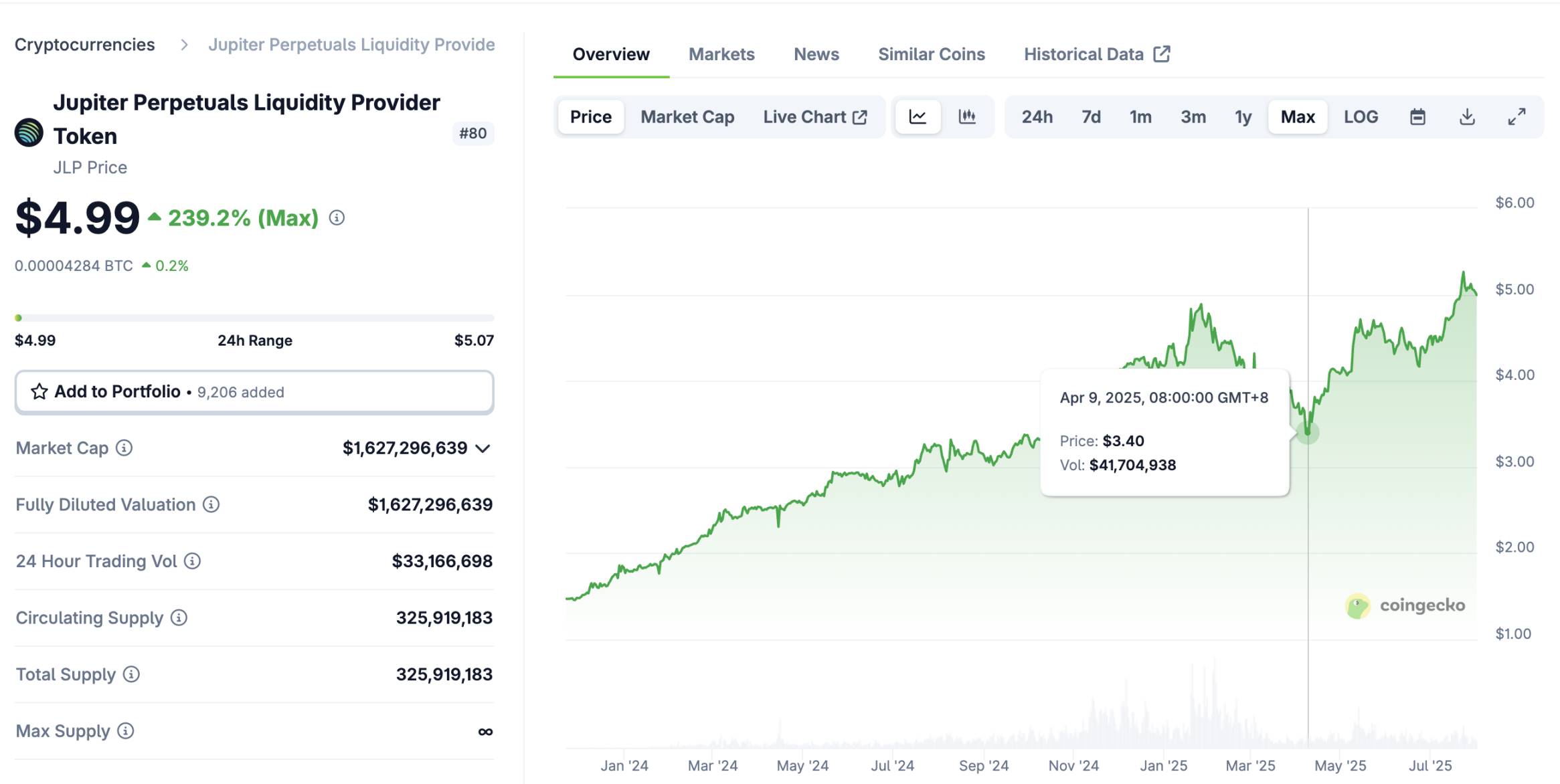
JLP 的价格走势,数据:coingecko

JLP 的全称为 Jupiter Perpetual Liquidity Provider Token,即 Jupiter 永续合约流动性提供者代币。持有 JLP,相当于存钱进 Jupiter 做合约交易者的对手盘。合约交易者盈利,JLP 会亏损,反之亦反。经过无数同类产品反复验证,拉长时间尺度,合约交易者总是亏损的,此为 JLP 的第一种收入。

而 Jupiter 永续合约交易手续费的 75 % 将回到 JLP 中,丰厚的手续费收入让 JLP 年化收入长期保持在 30% 上方,甚至有时达 50% 以上。

JLP 本身由 47% 的 SOL,8 % 的 ETH ,13 % 的 BTC 和 32 % 的 USDC 构成,保持对加密资产的风险敞口。于是在 SOL 强势的 2024 年,叠加着前两种收益,JLP 涨超 3 倍。而在 SOL 由 295 美元跌破 100 美元的这 3 个月里,由于 JLP 风险敞口有限且有前两种收益缓冲,跌幅为 30 %,SOL 价格回暖后 JLP 已先一步创下新高。

这样看来,JLP 亏损的场景为合约交易员在极端行情下短期获利(但统计学表示他们早晚会亏回去 ...),和加密资产长期价格走弱。而长期风险似乎只有后者。只要把这部分风险给对冲掉,我们就能获得一个底层为优质资产的高收益策略。

Neutral 是 Solana 上的 1 个机构级链上策略对冲基金,它提供了这样一个策略方案:
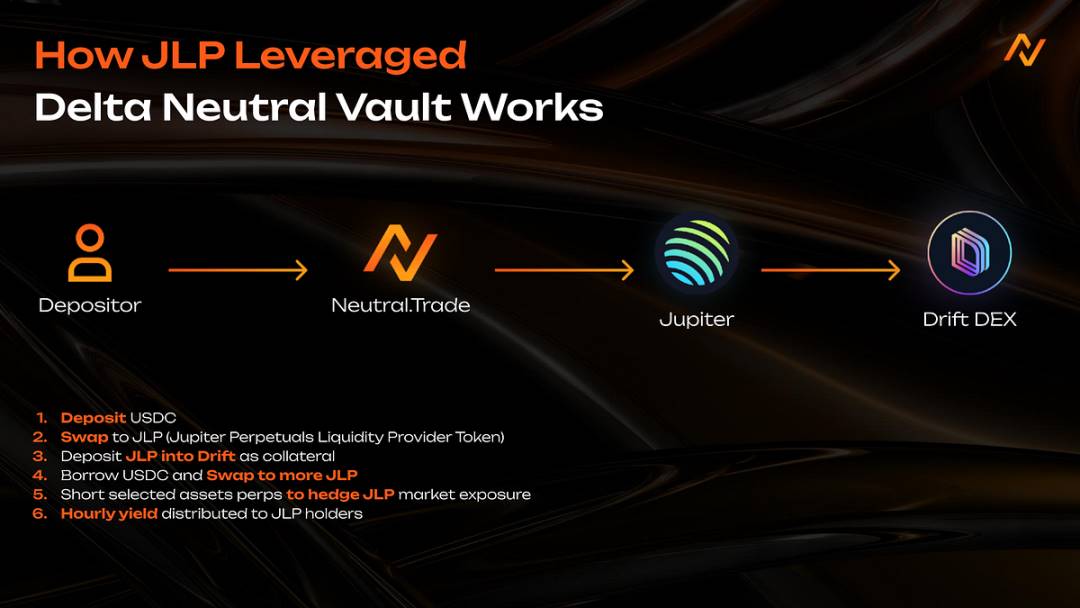
用户存入 USDC,把 USDC 兑换为 JLP。在借贷协议里抵押 JLP,借出 USDC 再兑换为 JLP。(当 JLP 的年化收益大于借贷利息时即盈利),最后使用永续合约(Drift)做空所持有 JLP 对应的加密资产份额(SOL、ETH、BTC)使策略实现风险中性(理论上不会因为价格波动造成亏损)。

该策略的 Neutral 金库现在 TVL (总锁仓价值)超 1200 万美元,年化收益超 15%,最大回撤基本控制在 2% 以内。

散户风险与机构优势

那我为什么不自己来执行这个策略,而是交给类似 Neutral 这样的产品呢?自己来还不会被收取手续费(Neutral 对各种策略收取 10 ~ 25% 的 performance 费,从利润中扣除对应比例。)

原因很简单:散户往往无法对复杂的策略收益做好风险管控

在执行上述策略的过程中,做空对冲有爆仓风险、资金费率异常风险,借贷杠杆部分有长期利率倒挂造成亏损风险。即使不睡觉盯盘,也不一定有多余资金在突发情况下添加保证金、解开借贷循环。

而机构级别的对冲基金受团队 24 小时监控,对各种系统风险有着丰富的处理经验和预备方案,在风险管控方面确实强过散户一个量级。收益的前提是本金安全,是相信自己采用 Degen 模式换取最高收益,还是牺牲部分收益换取更安心的风险管控,需要综合个人情况审慎考虑。

项目概况

说回 Neutral 项目本身。它不是市面上唯一的链上对冲基金,选择介绍它是因为它正与 Solana 中文社区合作推广,有着背书相对靠谱。其次是它还有正在进行的积分系统,存在发币预期,在赚取策略收益的同时还可以一鱼多吃布局项目空投。(它的积分计算规则为:每 1 美元资产 1 年产生 1 分,相当于存入 365 美元每天 1 分)
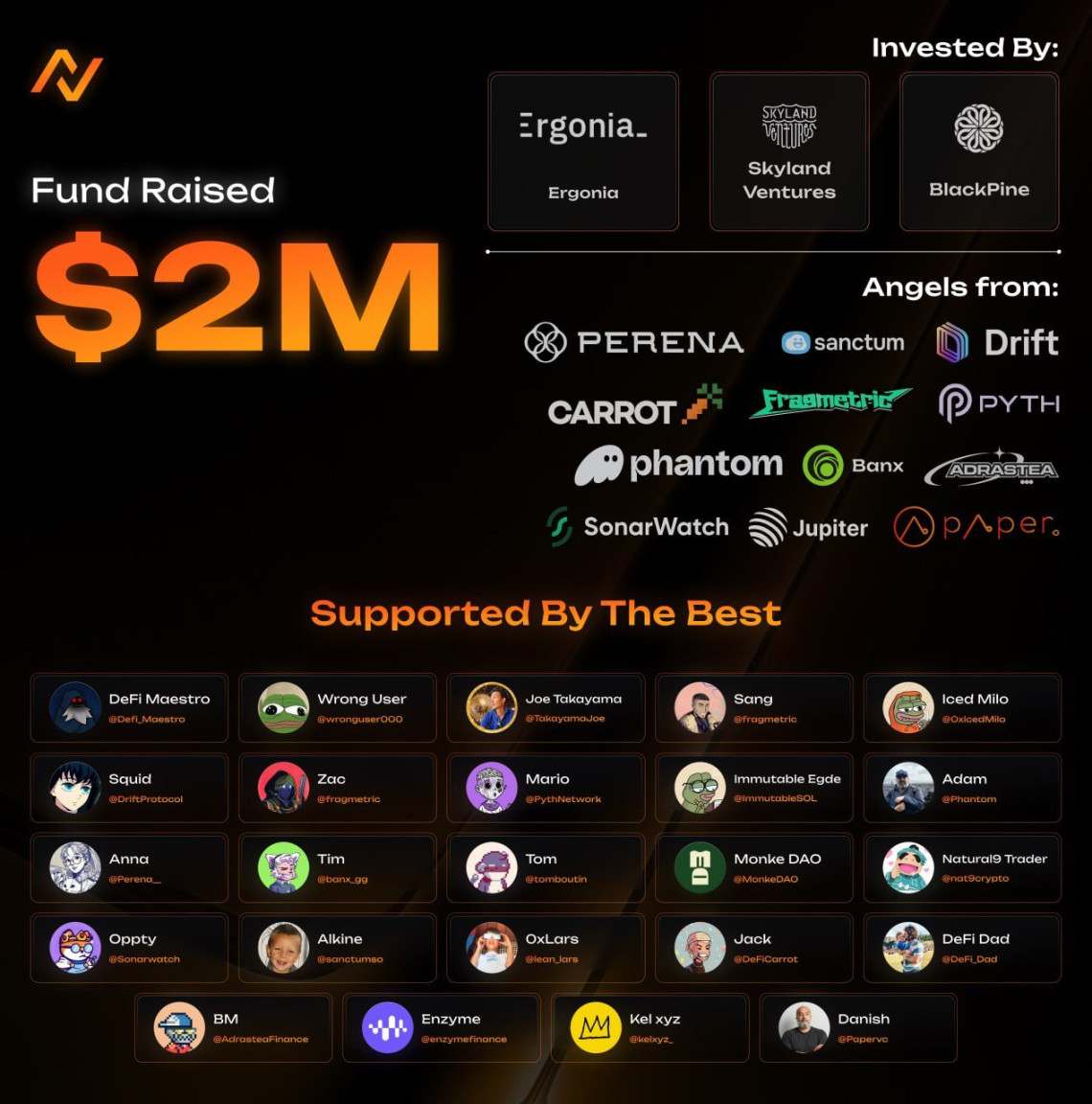
Neutral 最早是 Solana Radar 黑客松的获奖项目,现已成长为 TVL 近 3600 万美元,为用户产生近 250 万美元收益的初具规模的新兴协议。创始人 Rick 和 Jared 是来自高盛和全球前三对冲基金的资深量化交易员。6 月 1 日 Neutral 宣布获得了 Cumberland 和一众 Solana 生态项目和参与者的 200 万美元融资。

除了主推的 JLP 中性策略外,Neutral 还有包括 Hyperliquid 资费套利在内的多个收益策略。需要注意的是并非所有策略都是中性风险,标注有 Directional 的策略可能会随市场行情剧烈波动,感兴趣的读者可以自行研究。


Trending Cryptos

Related Reads

Ray Dalio's Latest Macro Analysis Full Text: Buy More Gold, Add Some Bitcoin

In his latest macro analysis, Ray Dalio applies his framework from "How Countries Go Broke: The Big Cycle" to the current global debt environment. He highlights recent events like Japan selling U.S. Treasuries and rising U.S. long-term yields as signs of an unsustainable debt dynamic. Dalio explains that excessive government debt leads to either unacceptably high interest rates, severe economic downturns, or significant currency debasement through central bank money printing. He summarizes the U.S. fiscal situation: with $5.5 trillion in revenue, $7.5 trillion in spending, a $2 trillion deficit, and total debt at six times annual revenue, debt servicing costs are immense. Without correction, U.S. debt could reach $55-$60 trillion in a decade. Dalio proposes a "3% Three-Way" solution: reducing the budget deficit to 3% of GDP through balanced spending cuts, tax increases, and interest rate reductions to avoid a traumatic adjustment. In response to FAQs, he argues that the risk of a U.S. debt crisis is high and could materialize within a few years if the current path continues. He dismisses the notion that the dollar's reserve status makes the U.S. immune, citing historical precedents of reserve currency declines. He is also unconvinced by Japan's high-debt stability, noting poor returns for yen-denominated assets. For investors, Dalio recommends diversifying globally, underweighting bonds, and overweighting assets like gold and a small allocation to Bitcoin (around 10-15% to gold) to hedge against currency debasement and poor debt returns.

marsbit10m ago

Ray Dalio's Latest Macro Analysis Full Text: Buy More Gold, Add Some Bitcoin

marsbit10m ago

Stripe’s 16-Year Chronicle: From 7 Lines of Code to a $100 Billion Valuation

Stripe's 16-year journey began with a simple promise: "7 lines of code to accept payments." Founded by Patrick and John Collison, the company started by hiding the complexity of bank integrations and merchant accounts behind a clean API, initially targeting developers at startups. This early focus on user experience and technical simplicity fueled rapid adoption. A key early milestone was establishing vital bank partnerships, a challenge overcome by hiring Billy Alvarado, who brought crucial institutional relationship skills. From this foundation, Stripe systematically expanded its product boundaries. It launched Connect for platform payments, Atlas for company formation, Radar for fraud prevention, and Billing for subscriptions. This transformed Stripe from a payment processor into a broader financial infrastructure suite for internet businesses. The COVID-19 pandemic accelerated growth but also led to over-hiring. A 14% layoff in 2022 marked a period of organizational correction. Subsequently, Stripe shifted its growth strategy towards strategic acquisitions to enter new domains quickly. It acquired Bridge (stablecoin infrastructure), Privy (wallet infrastructure), Metronome (usage-based billing), and agreed to buy OpenRouter (AI model routing). These moves signal Stripe's ambition to build a "programmable money system" for the emerging AI and agent-based economy, managing not just currency flows but also the measurement and pricing of computational resources like AI tokens. Internally, Stripe leverages AI agents (like "Minions") to boost engineering productivity. Despite scaling to nearly 8,000 employees and processing $1.9 trillion in payment volume annually, the company remains private. A recent employee tender offer valued it at $159 billion. The core question for Stripe's future is whether it can successfully integrate its expanding product matrix—spanning payments, crypto, and AI infrastructure—into a cohesive platform, positioning itself as the foundational economic layer for autonomous software agents.

marsbit39m ago

Stripe’s 16-Year Chronicle: From 7 Lines of Code to a $100 Billion Valuation

marsbit39m ago

Treasury Secretary's Move to Suppress Treasury Yields Ignites 'Currency Debasement Trade'! Gold Hits Three-Month High, Bitcoin Surges Over 25% in a Single Week

US Treasury Secretary Besant's efforts to lower long-term Treasury yields by announcing expanded buybacks had only a brief market impact. However, this move fueled a "currency devaluation trade," weakening the US dollar while boosting both gold (to a three-month high) and Bitcoin (up over 25% for the week). Analysts attribute this reaction to deepening market concerns over the massive US fiscal deficit and structural pressures keeping long-term rates elevated, including fierce competition for capital from global government borrowing and massive AI sector financing. Despite the Treasury's actions, fundamental forces like growth, inflation, and capital demand are seen as limiting its ability to sustainably suppress yields. Bitcoin's strong positive correlation with gold has reinforced its narrative as a hedge against devaluation. While equity markets have shown resilience, some strategists warn that Treasury yields nearing 5% increase pressure on the dollar and high-leverage assets. Figures like Ray Dalio have advised reducing bond exposure in favor of gold and some Bitcoin, citing US debt risks. Market opinions are divided on the sustainability of the devaluation trade, with some noting the lack of a near-term catalyst for its next leg higher. The underlying tension between the Treasury's desire for lower borrowing costs and the Federal Reserve's focus on inflation and reducing market intervention remains a key theme. Upcoming events like Nvidia's earnings and the Jackson Hole symposium will test whether AI profits can continue supporting stocks and if the Fed aligns more with Washington's preference for easier financial conditions.

华尔街日报2h ago

Treasury Secretary's Move to Suppress Treasury Yields Ignites 'Currency Debasement Trade'! Gold Hits Three-Month High, Bitcoin Surges Over 25% in a Single Week

华尔街日报2h ago

Alexander Shokhin: Business Needs an Interest Rate Below 10% and the Dollar at 90-95 Rubles

Alexander Shokhin, head of the Russian Union of Industrialists and Entrepreneurs (RSPP), has advocated for potentially using "non-market" tools to keep the ruble within a target exchange rate corridor. This, he argues on August 21, would help avoid excessive volatility, though he called the topic a separate discussion. Shokhin had previously raised the idea of a currency corridor in late May, noting the ruble's current exchange rate is not fully market-driven due to a limited currency segment and reduced foreign currency demand. He stated that many business community colleagues propose fixing a corridor, even through non-market methods, to ensure predictability. The business community's key targets, as outlined by Shokhin in late December 2025, are a Central Bank key rate of 12%, inflation of 4–5%, and a US dollar exchange rate of 90–95 rubles by the end of 2026. A turning point for investment, he said, would be lowering the rate to 12% with 6% inflation, though truly comfortable business conditions would require a rate below 10%. He stressed the critical importance of currency predictability for corporate investment decisions. From a data analysis perspective, the idea of a ruble corridor is not new. A similar mechanism was used in Russia from 1995 to 1998, where the central bank held the dollar within fixed boundaries through regular interventions. This regime lasted three years before ending abruptly during the 1998 default, illustrating the fragility of rigid targets under external shocks. The macro-economic link is clear: stricter corridors require more reserves to defend against currency pressure. The key unresolved technical aspect is the specific sources and volume of such interventions given the current market's limited liquidity. Whether this discussion remains theoretical or leads to concrete corridor parameters will be seen in the coming months.

cryptonews.ru4h ago

Alexander Shokhin: Business Needs an Interest Rate Below 10% and the Dollar at 90-95 Rubles

cryptonews.ru4h ago

Trading

Spot

Hot Articles

Discussions

Welcome to the HTX Community. Here, you can stay informed about the latest platform developments and gain access to professional market insights. Users' opinions on the price of SOL (SOL) are presented below.

活动图片