Трейдеры ждут падения цены Solana

cryptonews.ruPublished on 2025-08-30Last updated on 2025-08-30

Ралли Solana замедлилось. За последний месяц SOL вырос на 22+%, но за последние семь дней он потерял почти 6%

Возможно, токен проекта Solana сейчас просто проводит здоровую коррекцию. Однако некоторые ончейн-метрики указывают на то, что она может затянуться дольше, чем ожидалось.

SOPR и ликвидации указывают на медвежье давление

Одним из признаков возможной дальнейшей коррекции является SOPR (Spent Output Profit Ratio) . Индикатор рассчитывается путем деления долларовой стоимости продажи на стоимость покупки. Для этого он полагается на данные о неизрасходованных остатках по транзакциям (Unspent Transaction Outputs, UTXO) . Метрика показывает, продают ли держатели свои токены с прибылью или убытком.

SOPR для Solana снизился с 1,04 до почти 1,00 за последнюю неделю. Это означает, что продавцы сейчас едва выходят в безубыток. Обычно подобное происходит, когда уверенность падает. Это часто сигнализирует о колебаниях на рынке или ранних признаках паники, особенно когда показатель падает вместе с ценой.
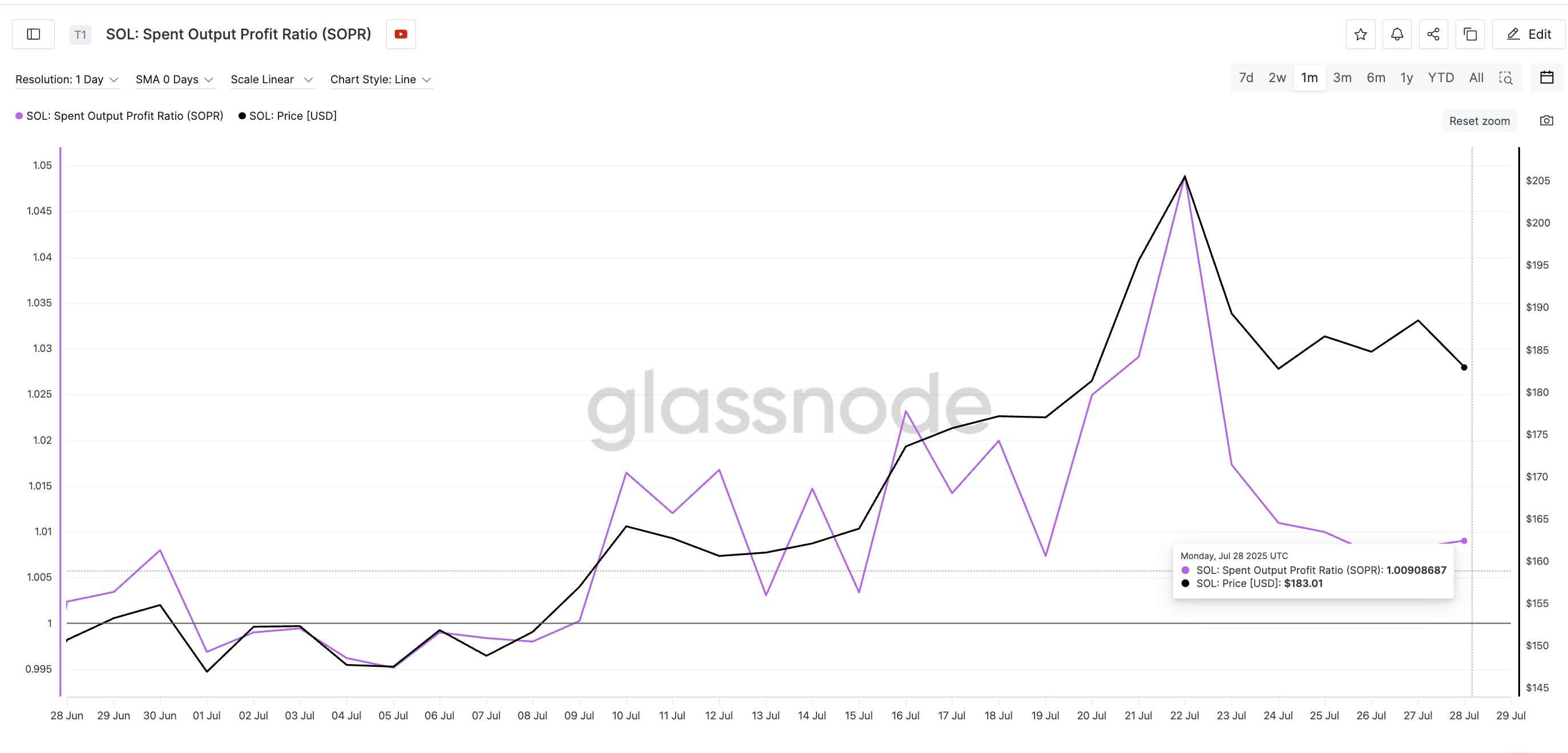
Цена Solana и падающий SOPR

Эту слабость подтверждают и данные о ликвидациях. За 7 дней короткие позиции по Solana составили $1,28 млрд, в то время как длинные позиции — $924 млн. Трейдеры делают крупные ставки на дальнейшее падение цены Solana. Увеличение коротких позиций вкупе с динамикой SOPR указывает на отсутствие надежд на рост в ближайшее время.

Бычий импульс теряет силу

Индекс Bull-Bear Power, измеряющий баланс сил между покупателями и продавцами, показывает нисходящий тренд. Это свидетельствует о том, что покупатели постепенно теряют контроль, и коррекция углубляется. Снижение силы быков означает, что агрессивные покупки на спадах случаются реже. Это уменьшает шансы на быстрое восстановление. Охлаждение не обязательно нарушает долгосрочный тренд Solana, но указывает на паузу у быков. Без новой волны интереса цена может оставаться слабой или снизиться, прежде чем начнется значительное восстановление.
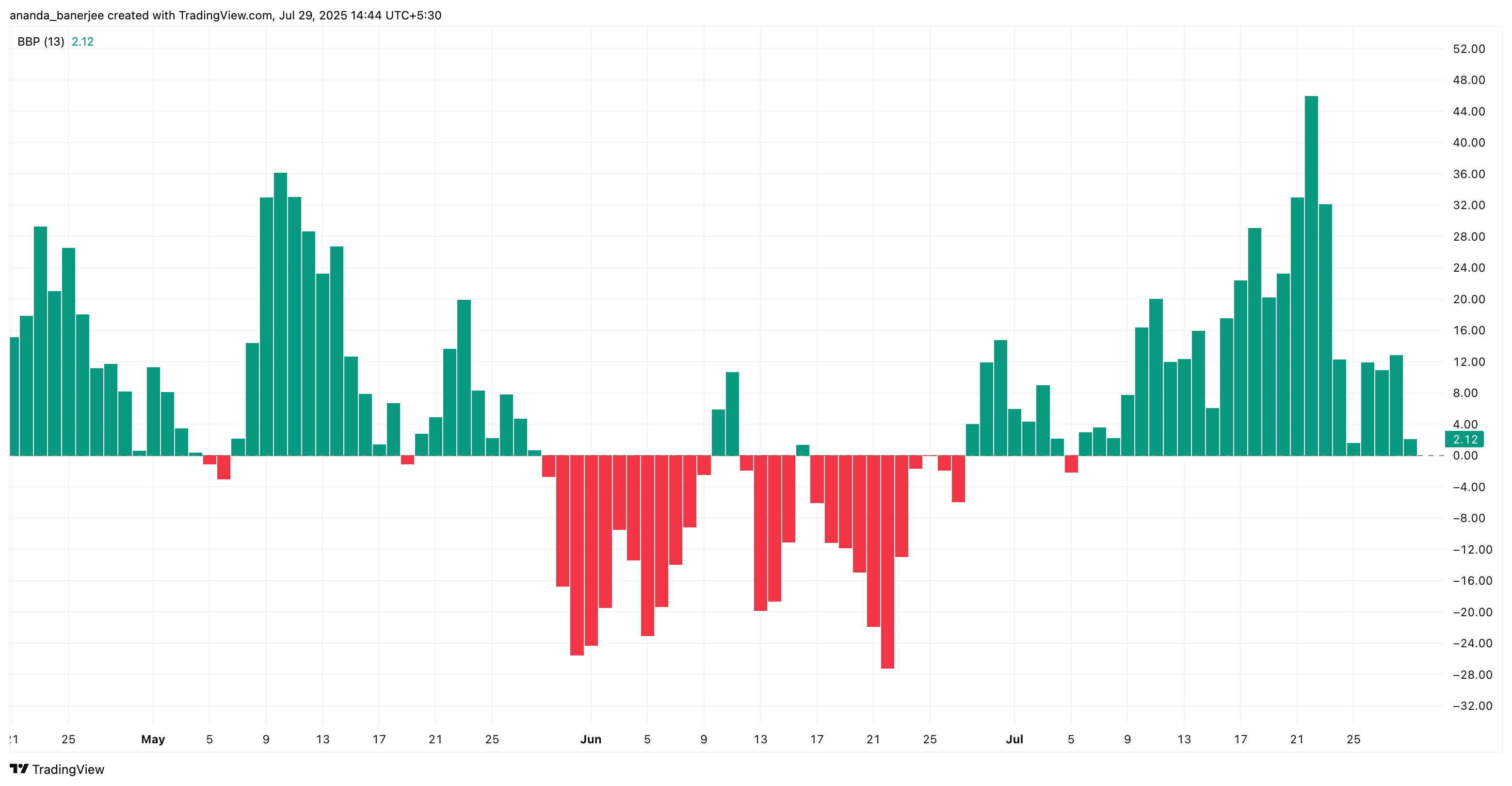
Быки Solana теряют импульс

Читайте также: Coinbase запускает нано-фьючерсы на XRP и Solana

Уровень $175 ключевая поддержка для Solana

С точки зрения динамики, цена откатилась от локального максимума $206 и сейчас колеблется около $184. Основываясь на коррекции Фибоначчи от недавнего минимума $125 до максимума $206, ключевой уровень поддержки находится на $175. Это классическая зона коррекции 38,2%. Она часто рассматривается как первая серьезная поддержка в здоровом восходящем тренде.

Если SOL удержится над этим уровнем, он может торговаться в диапазоне, а затем предпринять новую попытку роста. Однако прорыв выше $187, ключевого сопротивления, может быстро изменить краткосрочный медвежий сценарий на бычий.

Если же будет пробит уровень $175, это может привести к более глубокой коррекции, подтверждая медвежьи сигналы SOPR, ликвидаций и ослабления силы быков.


Trending Cryptos

Related Reads

Upbit is Anxious: A Hasty Counterattack Aimed at Regaining Stablecoin Market Share

Title: Upbit's Rushed Counterattack to Reclaim Stablecoin Market Share Facing a dramatic shift in South Korea's stablecoin market, leading exchange Upbit launched a promotional campaign from July 26 to August 9, waiving the 0.05% trading fee for stablecoins paired with the Korean Won (KRW) and rapidly listing new stablecoins like RLUSD and USDG. This move is a direct response to its plummeting market share in this sector. Historically a duopoly with Bithumb, the market has been reshaped since October 2025 when Coinone permanently removed fees for USDC trading. By June 2026, Coinone led with 34.8% of stablecoin volume, followed by Bithumb (31.1%) and Upbit (30.1%). This contrasts sharply with the overall crypto market, where Upbit commands 60%. The data shows stablecoin demand is highly sensitive to fees, as users primarily buy them to transfer capital overseas for derivatives trading or forex arbitrage. South Korean exchanges have seen a net outflow of stablecoins for 18 consecutive months, totaling approximately 14.9 trillion KRW, underscoring their role as a cross-border capital conduit. Upbit's limited-time promotion initially boosted its daily stablecoin volume by 162%, but the surge was almost entirely in USDT (98.1% of volume). The newly listed stablecoins saw negligible, fleeting interest. Furthermore, the promotional effect quickly waned in the second week, with volume dropping 33% on weekdays. A concurrent weakening of the KRW also contributed to the trading spike, independent of the fee waiver. The analysis suggests that once the promotion ends, Upbit is unlikely to retain its temporary gains unless it matches Coinone's permanent zero-fee policy, forcing a choice between market share and fee revenue. Upbit's strategic push may be less about immediate profit and more about preparing for future regulatory shifts. With South Korea's *Digital Asset Basic Act* on the horizon, which will regulate KRW-backed stablecoins, and following Dunamu's (Upbit's parent) integration into Naver Financial to build a payment ecosystem, securing a dominant position in the dollar stablecoin distribution channel holds long-term strategic value. However, potential regulatory conflicts could prevent Upbit from listing a future Naver-issued KRW stablecoin, making the current fight for dollar stablecoin flow even more critical.

marsbit42m ago

Upbit is Anxious: A Hasty Counterattack Aimed at Regaining Stablecoin Market Share

marsbit42m ago

Michael Saylor Compares Bitcoin and Gold!

Michael Saylor, founder of MicroStrategy, argues that Bitcoin fundamentally changes how wealth is stored and transferred by transforming digital scarcity into economic value. He describes Bitcoin as the first digital monetary network, combining computers, digital networks, and cryptography. It digitizes monetary assets, allowing their supply to be controlled by public protocols rather than institutions, thus converting economic value into information transmissible over global networks. Comparing Bitcoin to gold, Saylor states that while increasing Bitcoin's supply is harder, its integration with software and transfer is easier. He highlights Bitcoin's proof-of-work mechanism, which ties it to the physical world by consuming real energy to secure the ledger, making past transactions immutable. This creates a shared security system involving miners, energy companies, and investors. Saylor suggests "digital monetary energy" is a more accurate term than "digital gold." He emphasizes that the Bitcoin network is an adaptive ecosystem of miners, nodes, developers, and users. Its core design is intentionally simple, focused on maintaining a secure ledger for scarce digital assets, with complex functionalities built in higher-layer applications. This architecture allows Bitcoin to serve as a foundation for transmitting value and fostering innovation in payments and financial services. Saylor notes Bitcoin's deeper impact lies in creating digital sovereignty, where private keys give individuals permissionless control over their economic power, with ownership verified mathematically, not by institutions. He concludes that while gold's physical scarcity makes it money, Bitcoin's digital scarcity does the same, characterizing Bitcoin as the monetary energy of the digital age.

cryptonews.ru1h ago

Michael Saylor Compares Bitcoin and Gold!

cryptonews.ru1h ago

Trading

Spot

Hot Articles

Discussions

Welcome to the HTX Community. Here, you can stay informed about the latest platform developments and gain access to professional market insights. Users' opinions on the price of SOL (SOL) are presented below.

活动图片