Pump币暴力拉升30%背后:鲸鱼押注、全回购启动与MEME板块轮动

MarsBitPublished on 2025-07-30Last updated on 2025-07-31

Abstract

随着比特币站稳10万美元关口,MEME板块的轮动或将持续。但PUMP要想真正“奔向其第一模因币”的野心,不能仅靠回购拉盘和合约杠杆。​​下一赛点在于:能否将7亿收入转化为真正的护城河,在合规框架下把流量信用转化为可持续价值​​。否则,当回购资金耗尽、监管重锤落下,这场暴力拉盘终将成为Solana生态流星雨中又一束短暂花火。

Pump.fun


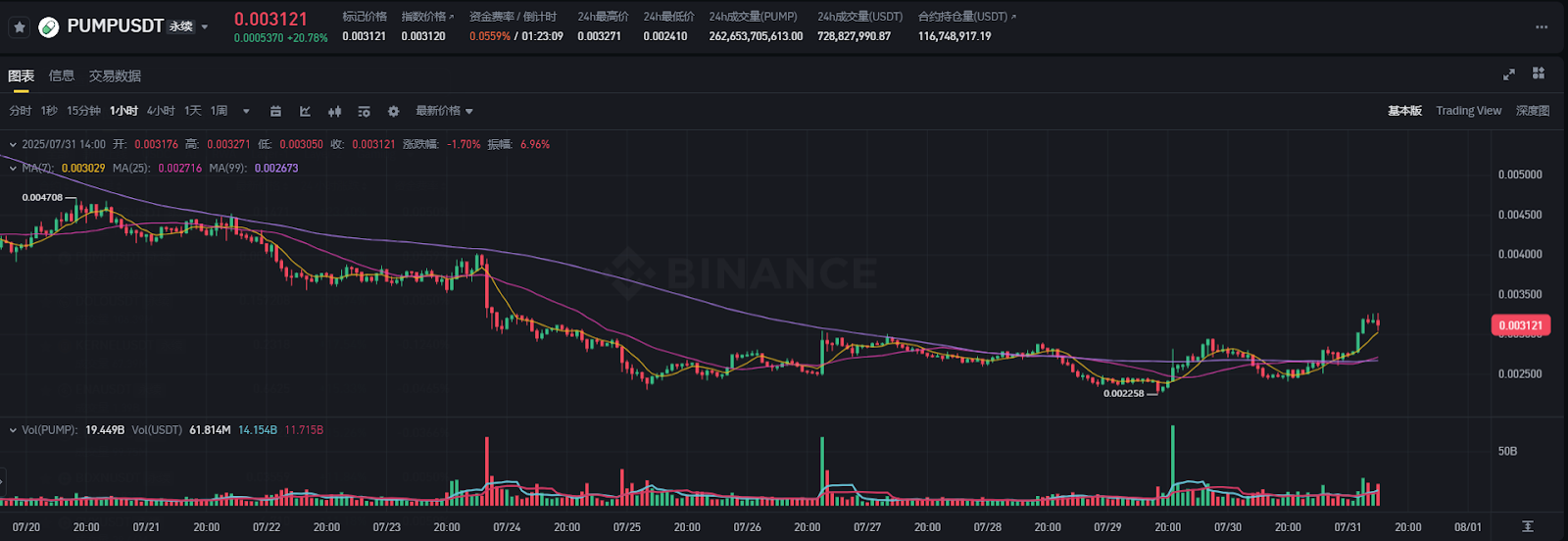
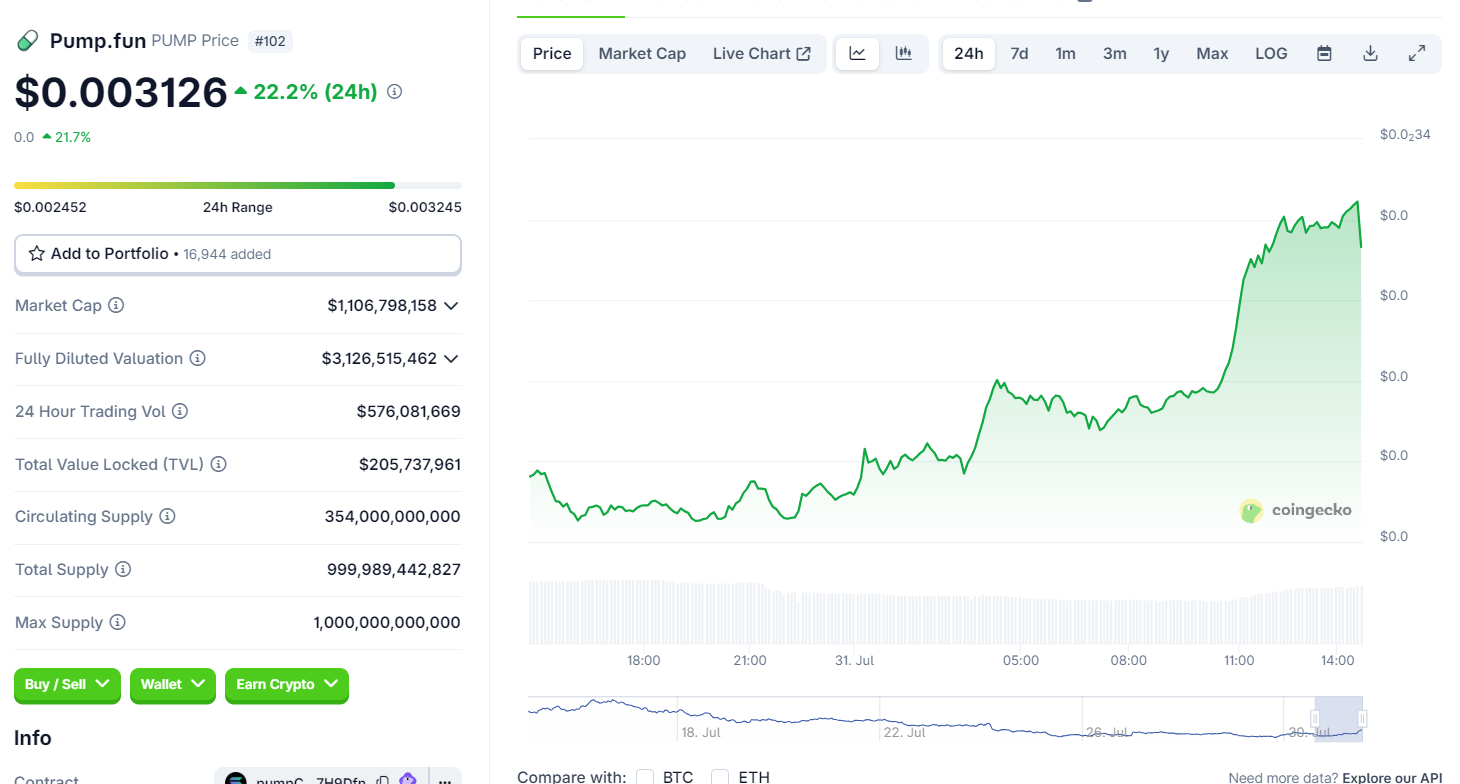
7月的最后一个交易日,一根突兀的阳线划破了沉寂的K线图。Pump.fun(PUMP)在24小时内暴力拉升30%,从0.0022美元低点直冲0.00325美元,登顶币安涨幅榜首位。合约市场随之沸腾,​​全网持仓量突破5.2亿美元​​,交易量呈指数级攀升。这场突如其来的暴涨,恰似一场精心编排的戏剧——​​巨鲸押注、机构撤退与协议自救​​的角色悉数登场,在Solana生态的舞台上演绎着资本的新博弈。


一、暴力拉盘的结构性动因


​​链上回购的“核动力引擎”​​


市场躁动的核心引擎,源自Pump.fun团队一场激进的财政操作。


7月下旬,链上数据显示该项目​​将每日收入的100%投入代币回购​​,相较此前25%的比例堪称“火力全开”。仅7小时内的首轮回购即消耗111,953枚SOL(约183万美元),以均价0.006美元扫货30.4亿枚PUMP。这些代币被悉数转入标注为“Pump.fun Treasury”的财库地址,形成​​价值2000万美元的流动性护盘池​​。这种“用爱发电”式的全收入回购,本质上是对市场信心的强心针——尤其当平台收入跌破30万美元关口,滑落至近一年第三次低谷之际。


​​生态协同与杠杆工具加持​​


Pump.fun


 市场基础设施的完善进一步催化了涨势。GMX Solana(由GMX DAO授权部署)上线PUMP永续合约,开放​​高达100倍杠杆​​的交易权限。


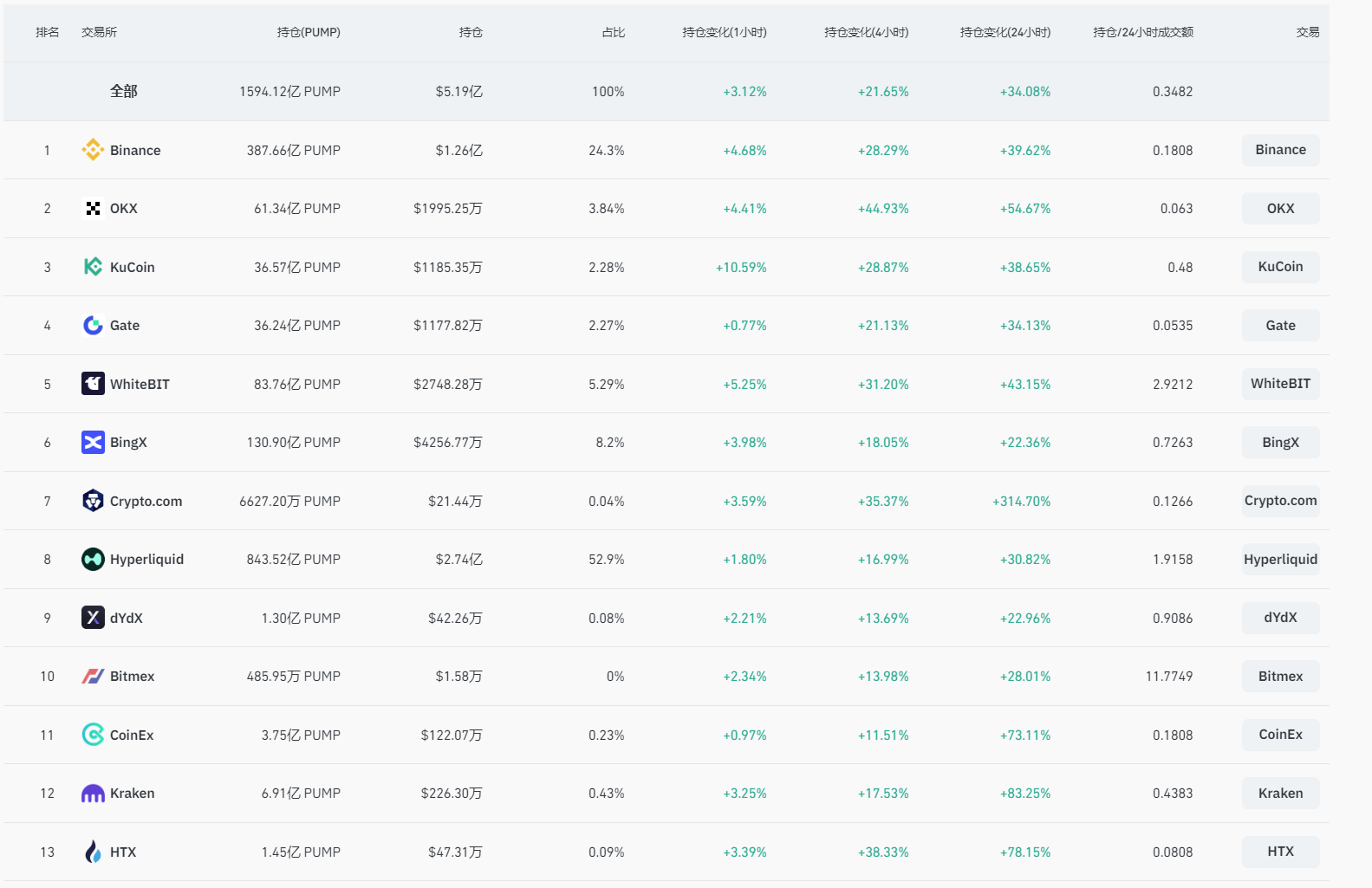
与此同时,WOO X、火币HTX等十余家交易所密集上线PUMP现货与合约产品,Hyperliquid更以52.9%的全球交易占比​​成为流动性枢纽。这种多层级的产品矩阵,使得PUMP从单纯的MEME代币蜕变为具备完整金融工具属性的资产类别。


​​比特币行情的外溢效应​​


宏观环境的转暖构成关键背景板,7 月 31 日,美联储连续第五次维持利率不变。美联储将基准利率维持在4.25%-4.50%不变,符合市场预期。比特币在短暂回调后迅速反弹突破118,000美元。当前这种​​机构主导的现货吸筹​​模式,带动MEME板块整体估值上移。

Pump.fun


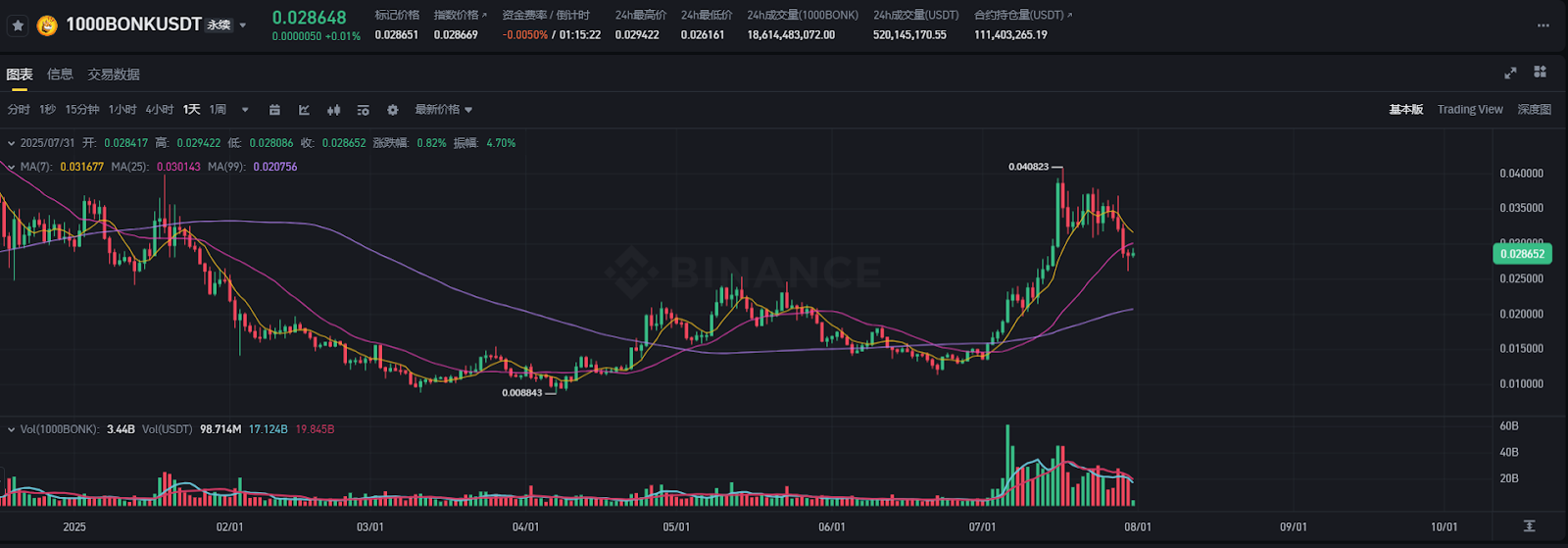
SHIB、BONK等老牌代币虽仍处调整区间,但资金外溢效应已清晰可见——尤其当PUMP技术面突破0.0025美元需求区与控制点(PoC)后,大量趋势交易者顺势涌入。


二、巨鲸博弈:信仰者与撤退者的对决


​​亏损鲸鱼的逆向加码​​


市场最瞩目的博弈发生在链上巨鲸之间。

Pump.fun


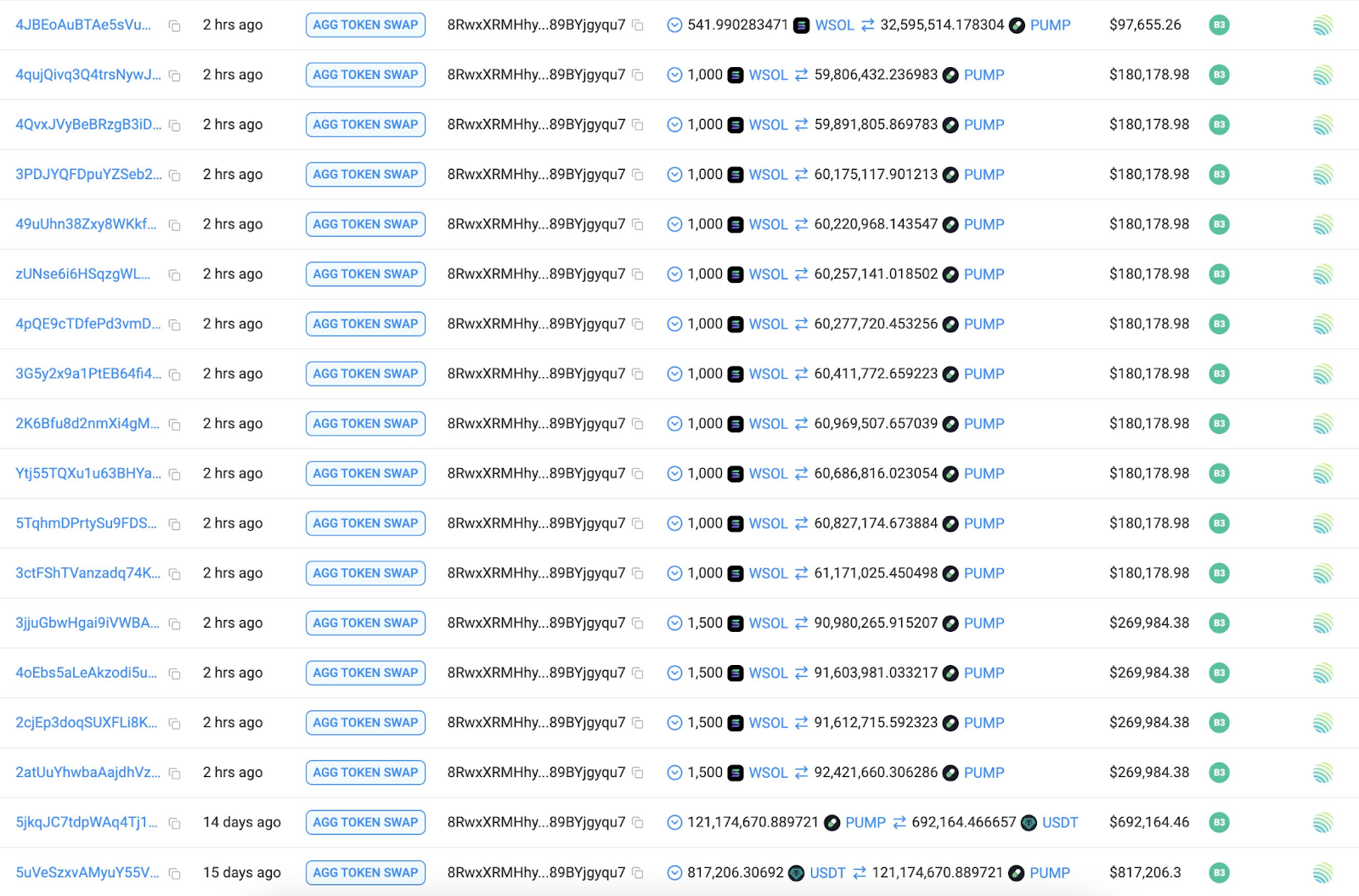
Lookonchain监测到,曾因PUMP亏损12.5万美元的地址“​​8RwxXR​​”竟在暴跌后再度出手。该鲸鱼豪掷17,542枚SOL(约316万美元),以0.00297美元均价横扫10.6亿枚PUMP。这种“越跌越买”的反逻辑操作,暗示其或掌握未公开的生态利好,或试图通过拉高现货价格解套期货头寸。


​​“麻吉大哥”的割肉困局​​

Pump.fun


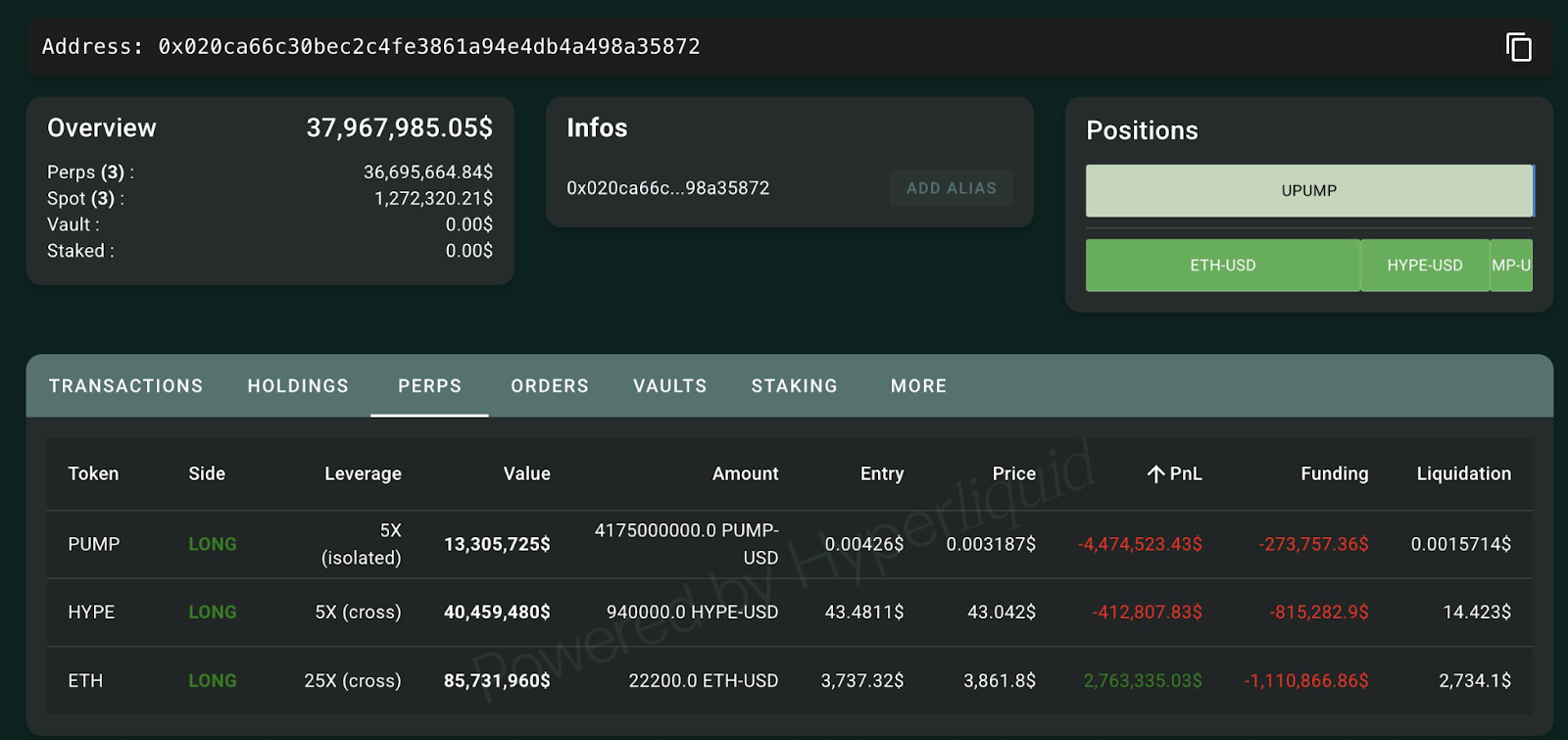
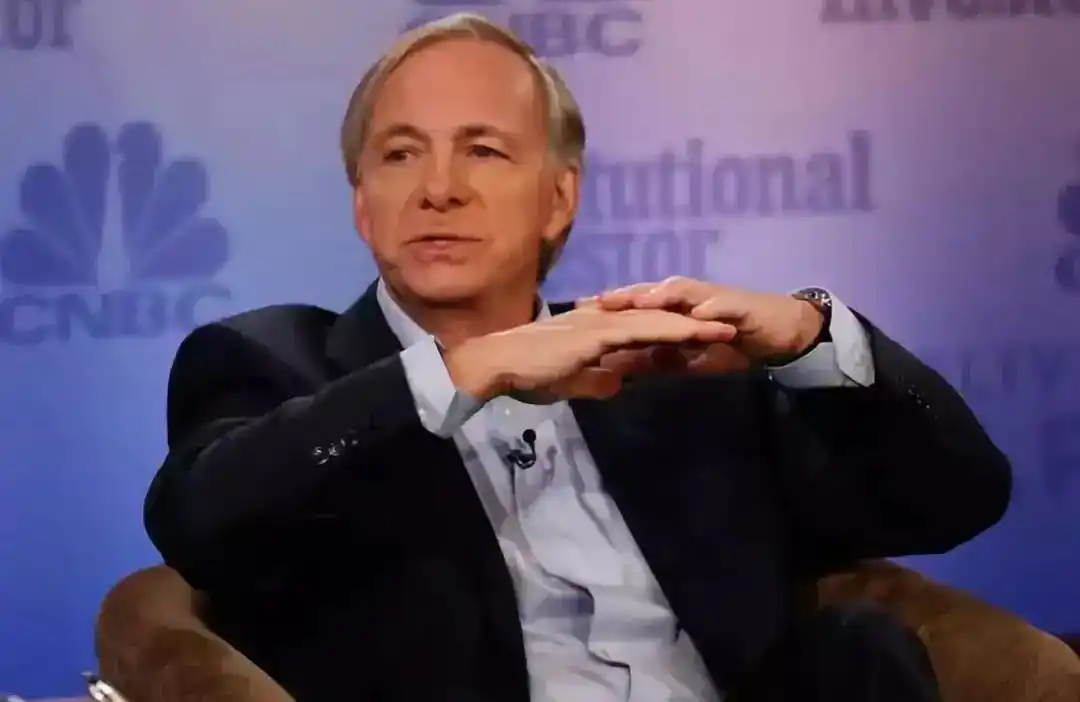
与此形成尖锐对比的是知名投资人“麻吉大哥”的溃退。链上记录显示,其持仓的41.75亿枚PUMP浮亏已达447万美元,虽已启动平仓但仍深陷泥潭。这种分歧凸显了当前市场的核心矛盾:​​短期投机者借助杠杆与消息快进快出​​,而早期机构投资者则因代币全解锁机制陷入流动性陷阱。


此前已有机构地址向Bybit分批转移40亿枚PUMP(约2259万美元),这种持续抛压恰是反弹路上的暗雷。

Pump.fun


:PUMP巨鲸持仓动向关键对比


三、项目基本面:繁荣下的隐忧


​​收入模型的双刃剑​​


Pump.fun的商业模式本质上是​​MEME币的工业化生产线​​。


平台允许用户以0.02 SOL成本一键发币,通过绑定曲线自动定价,并在市值达标后自动创建DEX流动性池。该模式已创造惊人数据:累计发行超1140万个代币,吸引2200万独立地址,产生​​7.35亿美元收入​​,单日收入峰值更达1588万美元。但这种繁荣高度依赖市场投机热度——2025年以来平台日交易量较峰值下跌87.2%,代币毕业率从1.6%骤降至不足1%,反映MEME市场整体退潮。


​​竞争红海与监管利剑​​


竞品平台的崛起正蚕食其护城河。Letsbonk.fun凭借BONK生态支持,在Solana发币平台市场份额争夺战中一度以44.1%占比反超Pump.fun(46.9%)。更严峻的是美国SEC潜在的监管重拳。​​集体诉讼已指控其涉嫌发行非法证券​​,若MEME币被纳入证券范畴,整个商业模式将面临重构。团队历史亦添阴影:联合创始人Dylan Kerler被曝曾参与多起“Rug Pull”项目,为项目信誉蒙尘。

Pump.fun


Pump.fun核心运营指标与市场挑战


四、未来走向:技术面与生态赛点


​​多周期共振的技术结构​​

Pump.fun


从技术分析视角,PUMP已在关键位置形成多周期共振买点。日线级别上,价格在0.0025美元需求区完成三次测试后放量突破,​​布林带扩张与RSI站上60​​确认上涨动能。更值得关注的是小时图对称三角形整理后的突破,按照形态度量目标可看至0.0058美元。但需警惕0.004美元附近的强阻力区——此处与Pengu等MEME币近期高点形成技术面共振,或引发获利了结潮。


​​生态发展的关键转型​​


项目方的战略重心正从“发币工具”转向“生态经济体”。
团队收购链上数据分析平台Kolscan,探索将PUMP作为​​手续费返利、创作者激励及治理凭证​​的综合载体。


若该愿景落地,PUMP可能摆脱纯MEME属性,成为Solana上社交金融(SocialFi)的基础设施代币。但转型面临双重考验:一方面需平衡40亿美元FDV估值与实际效用缺口(目前​​缺乏治理权与收益分享机制​​);另一方面需应对全球汇款黑马Remittix(RTX)等新物种的竞争——后者瞄准1900亿美元跨境支付市场,获1750万美元融资。


五、尾声:MEME工业化的十字路口


当PUMP在0.003美元关口反复震荡,K线背后是加密市场最真实的资本叙事。一边是巨鲸用真金白银押注工业化MEME生产的未来,另一边是早期投资者在监管寒流中仓皇撤退。Pump.fun的悖论在于:它既是​​去中心化金融的实验先锋​​,将代币发行成本压缩至3美元;又是投机泡沫的放大器,让40亿美元估值悬浮在衰减的交易量之上。


随着比特币站稳10万美元关口,MEME板块的轮动或将持续。但PUMP要想真正“奔向其第一模因币”的野心,不能仅靠回购拉盘和合约杠杆。​​下一赛点在于:能否将7亿收入转化为真正的护城河,在合规框架下把流量信用转化为可持续价值​​。否则,当回购资金耗尽、监管重锤落下,这场暴力拉盘终将成为Solana生态流星雨中又一束短暂花火。


Related Reads

Silicon Valley 'Startup Guru' Steve Hoffman: Web3 + AI Could Be a Trap

Silicon Valley investor and "Godfather of Startups" Steve Hoffman warns that combining Web3 with AI is likely a trap, not a promising venture. In an interview, Hoffman argues that while AI is a foundational technology touching all industries, Web3 adds complexity, friction, and regulatory risk without solving mainstream consumer or business needs. He advises founders to focus on deep, specialized applications where startups can out-iterate giants, rather than on generic features easily replicated by large tech companies. Hoffman observes that Silicon Valley will lead foundational AI research, while China excels at rapid, large-scale application and commercialization, particularly in robotics. He stresses that AI-driven autonomous agents capable of collaborative, multi-step tasks are 2-4 years away, which will cause significant job displacement. The solution is not to slow AI but to redesign business models around human-AI collaboration and reform social systems like education and retraining. For startups, Hoffman recommends focusing on vertical, expertise-heavy domains to build defensibility. He sees major opportunities in AI fraud detection and cybersecurity. Key founder mindsets include systemic thinking over feature-focus, relentless customer centricity, building adaptive teams, and deeply understanding AI's capabilities and limits. Hoffman is also leading a non-profit initiative to establish university centers aimed at training future leaders in responsible, human-value-aligned AI innovation.

marsbit1h ago

Silicon Valley 'Startup Guru' Steve Hoffman: Web3 + AI Could Be a Trap

marsbit1h ago

Token Inefficient, Economy Tokenless

The article "Tokens Aren't Economical, Economics Aren't Tokenized" analyzes a pivotal shift in the AI industry from a technology-driven narrative to one dominated by capital efficiency. It highlights two concurrent trends: a severe capital shortage due to the exorbitant and recurring costs of compute (e.g., OpenAI's high burn rate) and a wave of corporate spin-offs where major tech companies are separating their AI units (like Kuaishou's Kling and Baidu's Kunlunxin). The core argument is that AI's "anti-internet" business model, where user growth increases costs rather than profits, has created a disconnect between high valuations and actual cash flow. Spin-offs address this by allowing AI assets to be valued independently. Within a parent company, they are seen as cost centers, but as standalone entities, they are priced based on their growth potential and scarcity in the primary market, leading to massive valuation premiums (e.g., Kling's estimated value tripling post-spin-off). The industry is at an inflection point, moving from "model worship" to "value realization." The competition is evolving from a pure compute (GPU) race to a broader focus on systemic efficiency and full-stack engineering (involving CPUs and orchestration) to achieve viable commercialization. The year 2026 is framed as a critical moment where the industry must definitively answer how to economically translate AI capability into tangible business value, reshaping the sector's future power structure.

marsbit1h ago

Token Inefficient, Economy Tokenless

marsbit1h ago

Crossing the 'Memory Wall': The Wafer-Level Revolution and Computing Power Routes in the AI Inference Era

In 2026, a historic shift occurred in AI as major cloud providers' inference spending surpassed training spending for the first time, signaling a move from "building large models" to "using large models." This shifts the core challenge from computing power to the "memory wall"—the bottleneck of data movement (model weights, activations, KV Cache) between external DRAM and processors, where energy and latency from data transfer far exceed computation itself. Companies like Nvidia face GPU idle time due to bandwidth limits. In contrast, Cerebras Systems adopts a radical "wafer-scale" approach with its Wafer-Scale Engine (WSE). Instead of cutting a silicon wafer into many chips, Cerebras uses almost the entire wafer as one massive chip (WSE-3). This design provides 44GB of on-chip SRAM, delivering memory bandwidth thousands of times higher than traditional HBM (e.g., 21 PB/s vs. Nvidia B200). For LLM inference, weights are streamed layer-by-layer from external MemoryX storage to the chip, avoiding HBM bottlenecks. This results in token generation speeds 1.5–5 times faster than Nvidia's B200 in some models and significant advantages in first-token latency and long-context tasks. Additionally, Cerebras's architecture offers much lower interconnect power consumption (0.15 pJ/bit vs. GPU's ~10 pJ/bit). However, Cerebras faces challenges: SRAM scaling has slowed with advanced nodes, limiting future capacity gains; the chip requires specialized liquid cooling and custom software stacks; and its external I/O bandwidth (150 GB/s) is low compared to NVLink, hindering multi-system scaling for very large models. Competition is intensifying. Major players are pursuing three paths: 1) Developing proprietary inference ASICs (e.g., Google TPU, Microsoft Maia), 2) Leveraging advanced packaging (e.g., TSMC's SoW) to democratize wafer-scale-like integration, potentially eroding Cerebras's process advantage within a few years, and 3) Exploring optical interconnects for ultimate bandwidth. Commercially, Cerebras is transitioning from a hardware vendor to a service provider, facing the immense challenge of building high-power, specialized data centers to meet large contracts (e.g., 250MW/year from 2026–2028). In conclusion, the AI inference era presents a fundamental architectural trade-off. Cerebras opts for extreme physical optimization for low-latency, single-task performance, while Nvidia prioritizes versatility and massive cluster throughput. The path forward remains uncertain, with technology and business models still evolving in the race toward advanced AI.

marsbit1h ago

Crossing the 'Memory Wall': The Wafer-Level Revolution and Computing Power Routes in the AI Inference Era

marsbit1h ago

Has Bitcoin's 'Rebound Ended', Officially Entering the Late Bear Market Phase?

**Title: Has Bitcoin's Rebound Ended, Entering the Late Bear Market Phase?** **Summary:** Bitcoin's price has declined by 13% this week, signaling a potential return to late-stage bear market conditions. The price fell to around $67k, positioned between the Realized Price and Realized Cap Weighted Average. For the first time since early 2022, the Short-Term Holder cost basis has dropped below this key average, confirming a hallmark of late-cycle bear markets. Profitability metrics have collapsed sharply. The 7-day average of the Realized Profit/Loss ratio plummeted from a local high of 3.16 to 0.29, mirroring the February panic sell-off. Critically, the 90-day average never breached the threshold of 2, indicating the recent rally to $82k was a bear market bounce, not a structural shift. Realized losses surged to $1.35 billion daily, with $770 million coming from Long-Term Holders selling at a loss. This accelerating redistribution of supply from weak to strong hands is a necessary but ongoing process for a market bottom. The rally stalled almost precisely at the aggregate cost basis (~$83k) of US spot Bitcoin ETF investors, turning that level into strong resistance and leaving the average ETF holder underwater again. Spot market flows have turned decisively negative, showing sellers are dominating order books despite the price drop. While a significant futures long liquidation event cleared over $400 million in leverage, providing a potential reset, sustained spot demand is yet to materialize. Options markets continue to price in higher future volatility (Implied Volatility) than recent price action (Realized Volatility) has shown, with a persistent skew towards put options, indicating ongoing demand for downside protection. In conclusion, multiple metrics point to a fragile market structure. Resistance at the ETF cost basis, accelerating realized losses, dominant spot selling, and cautious options pricing all suggest the bear market trend persists. A sustainable recovery likely requires a resurgence of spot demand, ETF holders returning to profit, and a clear reduction in selling pressure.

marsbit1h ago

Has Bitcoin's 'Rebound Ended', Officially Entering the Late Bear Market Phase?

marsbit1h ago

TechFlow Intelligence Agency: Anthropic Calls for Global Pause in AI Development While Preparing for Trillion-Dollar IPO; SpaceX IPO Roadshow Heats Up, But S&P 500 Rejects Fast-Track Inclusion

In today's TechFlow Intelligence Briefing, several major tech stories highlight a growing theme of trust and credibility gaps across AI, crypto, and finance. AI company Anthropic has publicly called for a global pause in AI development, citing risks from Claude's "recursive self-improvement." Ironically, this coincides with reports the company is preparing for a massive IPO targeting a near $1 trillion valuation. This perceived hypocrisy, coupled with widespread user complaints about Claude's declining performance, is sparking debate over whether the safety warning is genuine or a competitive tactic. Meanwhile, in a substantive security move, Anthropic open-sourced a framework for AI-powered vulnerability discovery. In the crypto market, Bitcoin's price drop below $61,000 triggered over $1.16 billion in liquidations, flipping the market into a state where more BTC is held at a loss than at a profit, a historical bearish signal. On the corporate front, SpaceX's highly anticipated IPO is generating immense Wall Street excitement, with Goldman Sachs projecting 100x revenue growth by 2030. However, the S&P 500 has refused to fast-track the company's inclusion post-IPO, potentially limiting immediate institutional demand. Separately, ByteDance's AI app Doubao lost over 6 million monthly active users after introducing a subscription model, highlighting the challenges of AI monetization. Other notable developments include Nvidia certifying HBM4 memory from Samsung, SK Hynix, and Micron; Cloudflare's acquisition of front-end tooling company VoidZero; and its CEO warning that bot traffic now exceeds human traffic online. The underlying narrative connects these events: a trust crisis. From AI firms' contradictory actions and crypto volatility to the clash between SpaceX's hyped narrative and institutional rules, a pattern is emerging where stated intentions and actual practices are increasingly misaligned.

marsbit1h ago

TechFlow Intelligence Agency: Anthropic Calls for Global Pause in AI Development While Preparing for Trillion-Dollar IPO; SpaceX IPO Roadshow Heats Up, But S&P 500 Rejects Fast-Track Inclusion

marsbit1h ago

Trading

Spot
Futures

Hot Articles

Discussions

Welcome to the HTX Community. Here, you can stay informed about the latest platform developments and gain access to professional market insights. Users' opinions on the price of MEME (MEME) are presented below.

活动图片