【比推每日新闻精选】美联储维持利率不变,鲍威尔避免就9月降息给出指引;白宫发布数字资产报告,比特币储备计划无实质更新;彭博ETF分析师:SEC 加密 ETP “上市标准”正式公布,审批有望提速,多币种或将获批

比推Published on 2025-07-30Last updated on 2025-07-30

比推小编每日为您精选的Web3新闻:

美联储维持利率不变,鲍威尔避免就9月降息给出指引】

比推消息,美联储维持利率在4.25%-4.50%不变,理事沃勒、鲍曼投下反对票并主张降息。

鲍威尔在发布会中避免就9月降息给出指引,称当前货币政策立场处于有利位置,强调依赖数据、通胀的目标比就业遥远,合理推测是关税对通胀的影响是短暂的。

白宫发布数字资产报告,比特币储备计划无实质更新】

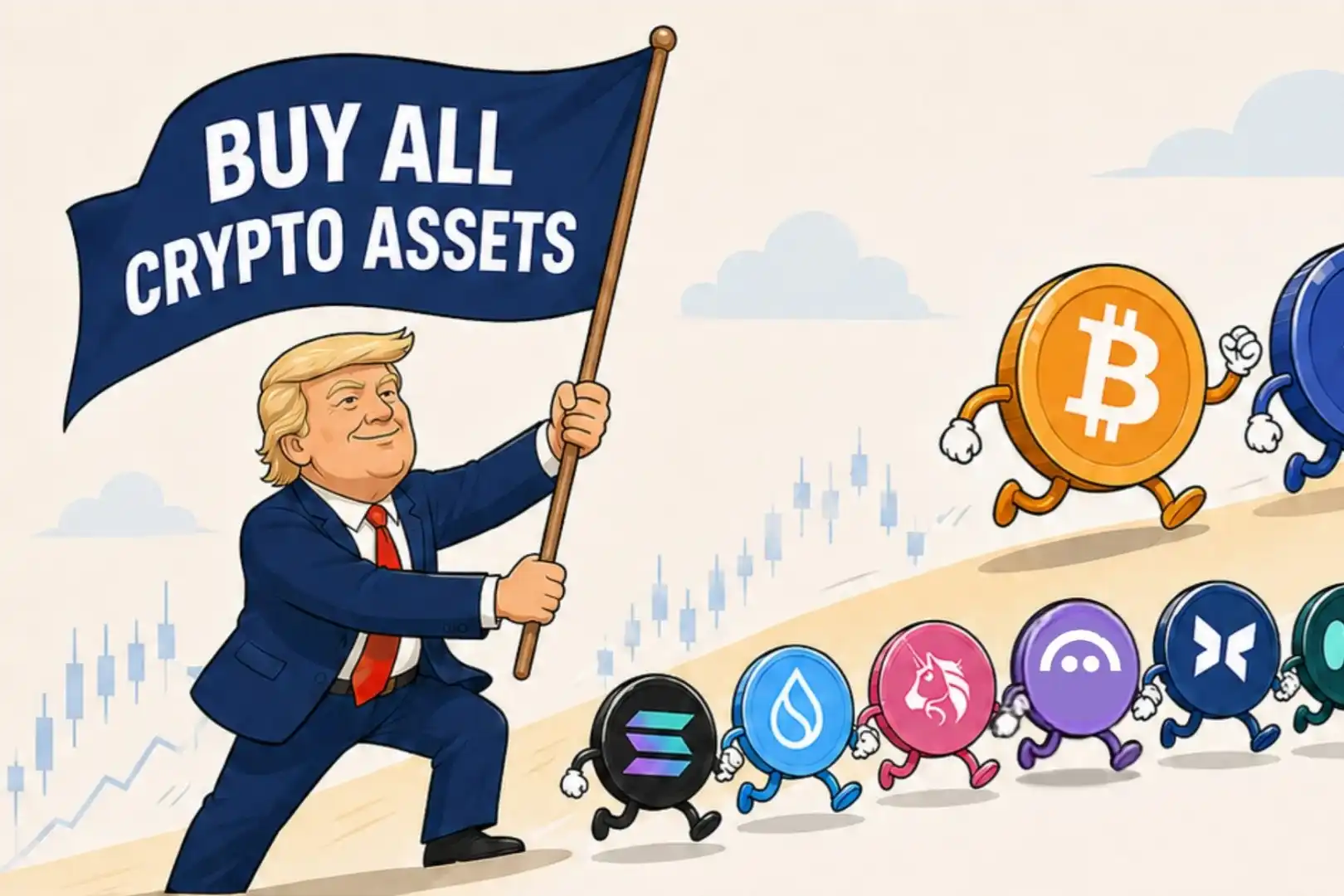
比推消息,白宫发布了期待已久的数字资产报告,其中制定了一项国家战略,旨在让美国在区块链、加密货币市场和代币化金融领域占据全球领先地位。尽管该报告涵盖了广泛的数字资产政策领域,但并未就政府计划中的比特币储备提供实质性更新,只是重申了特朗普总统1月行政令中的表述,未列出后续步骤或实施时间表。

此报告的出台源于特朗普总统1月签署的一项行政令,该行政令成立了一个关于数字资产及人工智能等新兴技术的跨部门工作组。这份长达166页的文件由白宫加密货币与人工智能事务负责人David Sacks和执行董事Bo Hines牵头编写,整合了财政部、商务部、美国证券交易委员会(SEC)和美国商品期货交易委员会(CFTC)的意见,其中列出了关于简化监管、支持创新和实现监管现代化的多项提议。

【彭博ETF分析师:SEC 加密 ETP “上市标准”正式公布,审批有望提速,多币种或将获批】

比推消息, 彭博ETF分析师 Eric Balchunas 最新消息确认,美国证券交易委员会(SEC)针对加密货币交易所交易产品(ETP)的“上市标准”已通过新的交易所备案文件正式公布,根据新标准,任何在 Coinbase 衍生品交易所拥有超过六个月期货追踪记录的币种,其对应的 ETP 有望获得批准。这意味着未来符合条件的 ETP 将无需逐一繁琐审查,大大简化了上市流程。

据悉,目前符合条件的预计有约十几种主流加密货币,与此前市场高概率获批的币种名单基本一致。尽管标准明确,但 Balchunas 强调,具体上市时间仍是关键,他预计这些 ETP 可能会在今年9月或10月左右获得最终批准。

Robinhood 2025 Q2 加密业务营收为1.6亿美元,市场预期1.621亿美元】

比推消息,Robinhood(HOOD.O)2025 Q2 加密业务营收为1.6亿美元,市场预期1.621亿美元。

MARA CEO 警告:企业囤币潮存风险,比特币或面临20%到30%的回调】

比推消息, 全球大型上市比特币矿企 MARA Holdings 首席执行官弗雷德·蒂尔(Fred Thiel)周二发出警告,指出当前企业争相将比特币纳入资产储备的趋势可能存在风险,并非所有追随者都能成功,甚至可能对 比特币价格 构成下行压力。

蒂尔表示,当太多公司涌入同一策略时,优势便会消失。他强调,比特币资产公司与 ETF 不同,其“市值/持币市值比率”(mNAV)一旦承压,可能被迫抛售比特币,进而加剧市场下跌。他甚至将当前现象比作 2017年的ICO泡沫。

尽管 MARA 自身拥有大量通过挖矿而非购买获得的比特币,并在 Q2 实现了创纪录的业绩,蒂尔仍提醒市场,近期巨鲸的抛售行为表明他们正在市场高点出货,而追逐囤币的公司可能正在高位接盘,需求终将波动。他预测比特币不会大幅暴跌,但可能出现 20%到30%的回调。

【比特币期权敞口超570亿美元,机构对冲需求飙升】

比推消息,据The Block报道, 截至7月28日,比特币期权市场交易活跃,总未平仓合约量已飙升至近500亿美元。若计入迅速增长的比特币ETF期权市场(如贝莱德IBIT基金期权额外贡献70亿美元),比特币期权的总敞口已突破570亿美元。

这表明机构和散户对结构化比特币产品的需求空前高涨。Deribit 以约450亿美元的未平仓合约量主导原生加密期权市场,巩固了其作为比特币衍生品主要交易场所的地位。

分析师表示,市场对对冲和投机工具的需求持续增加,期权为比特币矿工、机构持有者和交易公司提供了关键的风险管理工具。同时,SEC 周二也投票批准了针对“某些现货比特币 ETP”的期权,并提高了其头寸限制,进一步推动了市场发展。这反映出比特币作为可投资资产的机构采纳率不断提升,带动了对冲策略的自然需求。


Twitter:https://twitter.com/BitpushNewsCN

比推 TG 交流群:https://t.me/BitPushCommunity

比推 TG 订阅: https://t.me/bitpush

说明: 比推所有文章只代表作者观点,不构成投资建议

Related Reads

Probability in the Price: How World Cup Odds Are Calculated

**The Probability in the Price: How World Cup Odds Are Calculated** Two major systems released their "championship probabilities" before the 2026 World Cup, and they disagreed on the favorite. Prediction market aggregators listed France at around **17%**, while the Opta supercomputer gave European champion Spain **16.1%**. These numbers look similar, but their production methods are fundamentally different. The market's **17%** is the **price** that clears after hundreds of millions of dollars in trading across platforms like Polymarket and Kalshi, where contracts trade between 0 and 100 cents, directly representing implied probability. This liquidity is provided by crypto-native market makers like Wintermute, though the market still has "the liquidity profile of an early-stage" asset class. In contrast, Opta's **16.1%** is a **simulated frequency**. Its model uses team data (including betting market odds as an input) to estimate match probabilities, then runs **10,000 full tournament simulations**, counting how often each team wins. Which is more accurate? There is **no rigorous, cross-tournament academic study** directly comparing their track records. However, a persistent **longshot bias**—where low-probability outcomes are systematically overvalued—observed in traditional betting for nearly a century, has also been found in modern crypto prediction markets. Research shows low-price contracts on Kalshi/Polymer less likely to pay out than their implied odds suggest. Unlike traditional bookmakers, prediction markets operate on **public blockchain ledgers**, making every transaction auditable and enabling such research. However, price formation is also influenced by **regulatory uncertainty**, as seen in recent US state-level bans and legal battles over jurisdiction. In summary, the "probability" you see is either a **market-clearing price** subject to behavioral biases and liquidity constraints, or a **model-simulated frequency** that partially incorporates market data. The question of which method is more reliable remains open, highlighting the importance of asking: **How was this number produced?**

marsbit5m ago

Probability in the Price: How World Cup Odds Are Calculated

marsbit5m ago

Trading

Spot
Futures

Hot Articles

What is $BITCOIN

DIGITAL GOLD ($BITCOIN): A Comprehensive Analysis Introduction to DIGITAL GOLD ($BITCOIN) DIGITAL GOLD ($BITCOIN) is a blockchain-based project operating on the Solana network, which aims to combine the characteristics of traditional precious metals with the innovation of decentralized technologies. While it shares a name with Bitcoin, often referred to as “digital gold” due to its perception as a store of value, DIGITAL GOLD is a separate token designed to create a unique ecosystem within the Web3 landscape. Its goal is to position itself as a viable alternative digital asset, although specifics regarding its applications and functionalities are still developing. What is DIGITAL GOLD ($BITCOIN)? DIGITAL GOLD ($BITCOIN) is a cryptocurrency token explicitly designed for use on the Solana blockchain. In contrast to Bitcoin, which provides a widely recognized value storage role, this token appears to focus on broader applications and characteristics. Notable aspects include: Blockchain Infrastructure: The token is built on the Solana blockchain, known for its capacity to handle high-speed and low-cost transactions. Supply Dynamics: DIGITAL GOLD has a maximum supply capped at 100 quadrillion tokens (100P $BITCOIN), although details regarding its circulating supply are currently undisclosed. Utility: While precise functionalities are not explicitly outlined, there are indications that the token could be utilized for various applications, potentially involving decentralized applications (dApps) or asset tokenization strategies. Who is the Creator of DIGITAL GOLD ($BITCOIN)? At present, the identity of the creators and development team behind DIGITAL GOLD ($BITCOIN) remains unknown. This situation is typical among many innovative projects within the blockchain space, particularly those aligning with decentralized finance and meme coin phenomena. While such anonymity may foster a community-driven culture, it intensifies concerns about governance and accountability. Who are the Investors of DIGITAL GOLD ($BITCOIN)? The available information indicates that DIGITAL GOLD ($BITCOIN) does not have any known institutional backers or prominent venture capital investments. The project seems to operate on a peer-to-peer model focused on community support and adoption rather than traditional funding routes. Its activity and liquidity are primarily situated on decentralized exchanges (DEXs), such as PumpSwap, rather than established centralized trading platforms, further highlighting its grassroots approach. How DIGITAL GOLD ($BITCOIN) Works The operational mechanics of DIGITAL GOLD ($BITCOIN) can be elaborated on based on its blockchain design and network attributes: Consensus Mechanism: By leveraging Solana’s unique proof-of-history (PoH) combined with a proof-of-stake (PoS) model, the project ensures efficient transaction validation contributing to the network's high performance. Tokenomics: While specific deflationary mechanisms have not been extensively detailed, the vast maximum token supply implies that it may cater to microtransactions or niche use cases that are still to be defined. Interoperability: There exists the potential for integration with Solana’s broader ecosystem, including various decentralized finance (DeFi) platforms. However, the details regarding specific integrations remain unspecified. Timeline of Key Events Here is a timeline that highlights significant milestones concerning DIGITAL GOLD ($BITCOIN): 2023: The initial deployment of the token occurs on the Solana blockchain, marked by its contract address. 2024: DIGITAL GOLD gains visibility as it becomes available for trading on decentralized exchanges like PumpSwap, allowing users to trade it against SOL. 2025: The project witnesses sporadic trading activity and potential interest in community-led engagements, although no noteworthy partnerships or technical advancements have been documented as of yet. Critical Analysis Strengths Scalability: The underlying Solana infrastructure supports high transaction volumes, which could enhance the utility of $BITCOIN in various transaction scenarios. Accessibility: The potential low trading price per token could attract retail investors, facilitating wider participation due to fractional ownership opportunities. Risks Lack of Transparency: The absence of publicly known backers, developers, or an audit process may yield skepticism regarding the project's sustainability and trustworthiness. Market Volatility: The trading activity is heavily reliant on speculative behavior, which can result in significant price volatility and uncertainty for investors. Conclusion DIGITAL GOLD ($BITCOIN) emerges as an intriguing yet ambiguous project within the rapidly evolving Solana ecosystem. While it attempts to leverage the “digital gold” narrative, its departure from Bitcoin's established role as a store of value underscores the need for a clearer differentiation of its intended utility and governance structure. Future acceptance and adoption will likely depend on addressing the current opacity and defining its operational and economic strategies more explicitly. Note: This report encompasses synthesised information available as of October 2023, and developments may have transpired beyond the research period.

363 Total ViewsPublished 2025.05.13Updated 2025.05.13

What is $BITCOIN

Discussions

Welcome to the HTX Community. Here, you can stay informed about the latest platform developments and gain access to professional market insights. Users' opinions on the price of BTC (BTC) are presented below.

活动图片