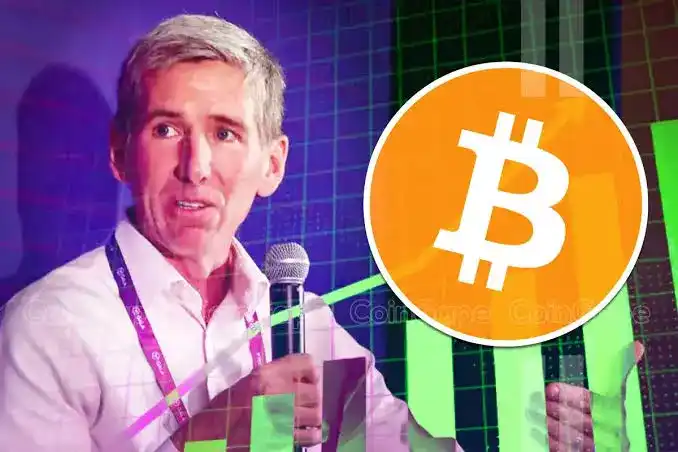
“对等关税2.0”开战,三大美指齐跌,比特币强势不减,黄金三连涨,白银涨超3%

华尔街日报Published on 2025-07-11Last updated on 2025-07-28

特朗普暗示对大多数贸易伙伴征收更高关税,美股三大指数下跌、未再创新高,本周均收低,科技七巨头则表现韧性收涨。关税引发通胀担忧,美债收益率和美元齐升。贵金属表现优异,黄金三连涨,白银则创下近14年高点。原油反弹上行,市场猜测特朗普计划制裁俄罗斯原油。

美股三大指数齐跌,加密货币概念股普涨,主要行业ETF普跌:

  • 美股盘前,据央视新闻报道,当地时间7月10日,美国总统特朗普宣布,将自8月1日起,对自加拿大进口的商品征收35%关税。报道称,特朗普还表示,他计划对多数贸易伙伴征收15%或20%的统一关税。

  • 央视新闻,美国总统特朗普透露,将于下周一(当地时间7月14日)就俄罗斯问题发表“重大声明”。市场猜测特朗普计划制裁俄罗斯原油,原油反弹上涨2.7%、收复昨日跌幅,美股开盘油气能源板块低开高走。

  • 美股早盘,关税威胁范围扩大,美股开盘下跌,主要行业ETF普跌。道指跌0.5%,区域银行、金融全指板块跌超1%。比特币则延续强势,盘中涨近5%。加密货币概念股普涨,嘉楠科技一度涨约7%,MARA盘中涨约4%。

  • 美股盘中,关税引发通胀担忧,美债收益率和美元齐升。10 年期美债收益率上涨近6个基点。美元指数震荡于97关口上方,本周反弹累涨1%、脱离三年来的低点。黄金三连涨、盘中涨逾1.3%。白银表现更佳,一度涨近3.6%,创下近14年高点。

周五美股三大指数齐跌、未再创新高,本周均收低。标普500终结连创新高走势,道指下跌近280点,罗素小盘股指数表现不佳、跌幅靠前。科技七巨头表现韧性,英伟达收涨0.5%、市值站稳4万亿美元上方。

美股基准股指:

  • 标普500指数收跌0.33%,报6259.75点,本周累跌0.31%。

  • 道琼斯工业平均指数收跌279.13点,跌幅0.63%,报44371.51点,本周累跌1.02%。

  • 纳指收跌0.22%,报20585.53点,本周累跌0.08%。纳斯达克100指数收跌0.21%,本周累跌0.38%。

  • 罗素2000指数收跌1.26%,本周累跌0.63%。

  • 恐慌指数VIX收涨3.93%,报16.40,本周累涨0.12%。

美股行业ETF:

  • 太阳能ETF收跌2.13%,区域银行、金融全指板块跌超1%,标普医药收跌0.88%。标普能源和油气ETF则涨0.46%和0.62%。

科技七巨头:

  • 谷歌A收涨1.45%,本周累涨0.37%。亚马逊收涨1.24%,本周累涨0.72%。特斯拉收涨1.17%,本周累跌0.58%。

  • 英伟达收涨0.5%,本周累涨3.5%。微软收涨0.37%,本周累涨0.9%。苹果收跌0.59%,本周累跌1.12%。Meta收跌1.34%,本周累跌0.21%。

芯片股:

  • 费城半导体指数收跌0.21%,本周累涨0.87%。

  • AMD收涨1.57%,本周累涨6.17%。台积电ADR涨0.28%,本周累跌1.87%。

中概股:

  • 纳斯达克金龙中国指数收跌0.43%,报7436.34点,本周累涨0.65%。

  • 信也科技涨2.81%,逸仙电商涨2.78%,亿航智能涨2.37%,唯品会涨1.27%。再鼎医药跌3.96%,文远知行跌3.50%,名创优品跌1.93%。

其他个股:

  • 礼来制药涨0.3%,本周累涨1.58%。巴菲特旗下伯克希尔哈撒韦B类股则收跌0.5%,本周累跌1.88%。

特朗普关税威胁令市场承压,欧洲主要国家股指普跌。欧洲股市创三个月最大跌幅,泛欧股指跌超1%。

泛欧欧股:

  • 欧洲STOXX 600指数收跌1.01%,本周累涨1.15%。

  • 欧元区STOXX 50指数收跌1%,本周累涨1.79%。

各国股指:

  • 德国DAX 30指数收跌0.82%,本周累涨1.97%。

  • 法国CAC 40指数收跌0.92%,本周累涨1.73%。

  • 英国富时100指数收跌0.38%,本周累涨1.34%。

周五长端美债领跌,30年期收益率全天大幅上行,美债因通胀担忧两周连跌。

美债:

  • 纽约尾盘,美国10年期美债收益率涨5.96个基点,报4.4093%,日内交投于4.3379%-4.4253%区间,本周累涨6.36个基点。

  • 两年期美债收益率涨1.29个基点,报3.885%,日内交投于3.8575%-3.9122%区间,本周累涨0.5个基点。

德债:

  • 德国10年期国债收益率涨2个基点,报2.725%,日内交投于2.683%-2.734%之间,本周累涨11.8个基点。

  • 两年期德债收益率涨1个基点,报1.9%,日内交投于1.872%-1.911%区间,本周累涨8.4个基点。

关税威胁推动美元上涨,日元表现落后。美国针对加拿大的新关税令加元承压,但加拿大强劲的就业报告缓解了部分跌势。英国经济连续第二个月萎缩,英镑创八个月来最长连跌纪录。

美元:

  • 纽约尾盘,ICE美元指数涨0.29%,本周累涨0.91%。

  • 彭博美元指数涨0.2%,本周累涨超0.7%。

非美货币:

  • 纽约尾盘,欧元兑美元跌0.1%,本周累跌0.75%。

  • 英镑兑美元跌0.68%至1.34891,本周累跌1.16%。

  • 美元兑加元涨0.28%至1.36943,盘中一度升至1.3731,本周累涨0.64%。

日元:

  • 纽约尾盘,美元兑日元涨0.83%,收于147.45,本周累涨2%,创今年以来单周最大涨幅。日元周五在G10货币中表现最弱。

离岸人民币:

  • 纽约尾盘,美元兑离岸人民币跌0.05%,本周累涨0.13%。

加密货币:

  • 纽约尾盘,现货比特币收涨3.71%,报117628美元。周一至周五累计上涨8.27%。

市场猜测特朗普计划制裁俄罗斯原油,油价涨超2%。

原油:

  • WTI 8月原油期货收涨1.88美元,涨幅超2.8%,报68.45美元/桶。

  • 布伦特9月原油期货收涨1.72美元,涨幅超2.5%,报70.36美元/桶。

天然气:

  • NYMEX 8月天然气期货收跌0.69%,报3.3140美元/百万英热单位。

黄金三连涨、盘中涨逾1.3%。白银一度涨近3.6%,银价升至2011年来最高,期银涨近5%。

黄金:

  • 纽约尾盘,现货黄金最终涨0.94%,报3355.7美元/盎司,日内交投区间为3322.03-3368.73美元,本周累涨0.62%。

  • COMEX黄金期货最终涨1.35%,报3370.5美元/盎司,本周累涨0.72%。

白银:

  • 纽约尾盘,现货白银最终涨3.8%,报38.406美元/盎司,日内交投区间为36.915-38.539美元,本周累涨3.98%。

  • COMEX白银期货最终涨4.77%,报39.085美元/盎司,本周累涨5.25%。

其他金属:

  • 纽约尾盘,COMEX铜期货跌0.13%,报5.5840美元/磅。

  • LME期铜收跌40美元,报9660美元/吨。

  • LME期镍收跌92美元,报15198美元/吨。LME期锡收涨90美元,报33649美元/吨。LME期锌收跌38美元,报每2738美元/吨。

风险提示及免责条款
市场有风险,投资需谨慎。本文不构成个人投资建议,也未考虑到个别用户特殊的投资目标、财务状况或需要。用户应考虑本文中的任何意见、观点或结论是否符合其特定状况。据此投资,责任自负。

Trending Cryptos

Related Reads

Chip Stocks Lead U.S. Market Decline: Is AI Trading Being Hit by Both Interest Rates and Returns?

Chip stocks led a broad decline in US markets, with the Nasdaq dropping 2.2% and the S&P 500 falling 1.4%. This selloff reflects a dual challenge for the once-high-flying AI hardware trade: rising interest rate expectations and growing investor impatience for clear returns from massive AI capital expenditures. The pressure was most acute on hardware leaders. Nvidia fell about 4%, dipping below a $5 trillion market cap, while Micron plunged 13.2% ahead of its earnings report. Declines across memory, storage, AI, and mobile chips indicated a sector-wide retreat. The selloff spread globally, with South Korea's KOSPI index dropping nearly 10% as key suppliers SK Hynix and Samsung recorded double-digit losses. Investors appeared to be taking profits from the most crowded trades first. Macro headwinds intensified as market expectations shifted toward a more aggressive Federal Reserve. Forecasts for multiple rate hikes in 2026 pressured high-valuation tech stocks, which rely on long-term growth projections that become less attractive as discount rates rise. Concurrently, investors are scrutinizing the profit potential of the immense AI spending by cloud giants like Alphabet, Amazon, and Meta. While these expenditures drive demand for chips and hardware, the market is now questioning whether AI services will generate sufficient returns to justify the ongoing costs. This adjustment is not necessarily a bubble burst but a recalibration. AI demand fundamentals remain, but the narrative of endless growth can no longer fully offset concerns over higher interest rates and a longer path to profitability. Near-term direction may hinge on Micron's upcoming earnings guidance and incoming inflation data, which will influence both the AI demand outlook and the Fed's policy path. The market is transitioning from blindly buying growth to demanding clearer visibility on returns.

marsbit12m ago

Chip Stocks Lead U.S. Market Decline: Is AI Trading Being Hit by Both Interest Rates and Returns?

marsbit12m ago

OpenAI's New Paper: How to Train an AI that "Doesn't Deteriorate Under Pressure"?

OpenAI's new paper "Reinforcement Learning Towards Broadly and Persistently Beneficial Models" explores training AI to maintain safe, helpful, and honest behavior even under pressure, in unseen scenarios, or after being fine-tuned for harmful purposes. Moving beyond simple rule-based "don'ts," the research focuses on cultivating "beneficial traits" like honesty, risk-awareness, corrigibility, and transparency. It investigates if reinforcement learning (RL), often prone to "reward hacking" where models exploit loopholes, can instead be used to instill robust, generalized positive behaviors. Researchers created a multi-domain synthetic dialogue dataset covering areas like healthcare and law. They trained a model by replacing 5% of standard RL data with "beneficial trait" data. This model outperformed the baseline in 83% of 53 evaluations, showing average gains of 9.1% in alignment, safety, and helpfulness. Crucially, improvements generalized: a model trained only on healthcare "good behavior" data also performed better in 17 out of 19 non-healthcare alignment tests. The paper also tests "alignment persistence." When subjected to adversarial prompts or harmful fine-tuning, the beneficial trait model showed greater resilience, with smaller performance drops and less "spillover" of bad behavior to unrelated tasks. While not a complete solution, this work suggests a shift from post-hoc correction to proactively shaping robust, principled AI behavior, a critical step for deploying models in high-stakes, complex decision-making scenarios.

marsbit15m ago

OpenAI's New Paper: How to Train an AI that "Doesn't Deteriorate Under Pressure"?

marsbit15m ago

Semiconductor Stock Rebound: Is the Technical Correction Over or a Trend Reversal?

The core of recent semiconductor stock volatility is not about daily price swings, but rather the market questioning whether AI-driven semiconductor pricing has entered a new phase. Following a sharp sell-off in Korean stocks on June 23rd, led by Samsung and SK Hynix, a subsequent rebound is seen more as a technical positioning adjustment rather than a confirmed trend reversal. The key variable is HBM (High Bandwidth Memory), essential for AI chips. Its supply-demand imbalance granted memory makers significant pricing power. The current market focus is on whether this dynamic remains strong enough to justify elevated valuations. All eyes are on Micron's upcoming earnings report. The critical factor is not whether results meet already high expectations, but whether the company's guidance confirms that AI memory pricing power, order visibility, and future margins are still expanding. Micron's outlook will serve as a crucial test for the broader AI semiconductor chain, including Samsung, SK Hynix, and other infrastructure players. The recent bounce appears to be a pre-earnings positioning repair. For it to evolve into a sustained uptrend, concrete evidence is needed that the AI infrastructure expansion cycle's fundamentals—particularly for high-end memory—remain robust and can continue to surpass elevated market expectations. The risk is that strong demand alone may not be sufficient if future guidance hints at peaking momentum or increasing supply-side pressures.

marsbit52m ago

Semiconductor Stock Rebound: Is the Technical Correction Over or a Trend Reversal?

marsbit52m ago

Trading

Spot
Futures

Hot Articles

What is $BITCOIN

DIGITAL GOLD ($BITCOIN): A Comprehensive Analysis Introduction to DIGITAL GOLD ($BITCOIN) DIGITAL GOLD ($BITCOIN) is a blockchain-based project operating on the Solana network, which aims to combine the characteristics of traditional precious metals with the innovation of decentralized technologies. While it shares a name with Bitcoin, often referred to as “digital gold” due to its perception as a store of value, DIGITAL GOLD is a separate token designed to create a unique ecosystem within the Web3 landscape. Its goal is to position itself as a viable alternative digital asset, although specifics regarding its applications and functionalities are still developing. What is DIGITAL GOLD ($BITCOIN)? DIGITAL GOLD ($BITCOIN) is a cryptocurrency token explicitly designed for use on the Solana blockchain. In contrast to Bitcoin, which provides a widely recognized value storage role, this token appears to focus on broader applications and characteristics. Notable aspects include: Blockchain Infrastructure: The token is built on the Solana blockchain, known for its capacity to handle high-speed and low-cost transactions. Supply Dynamics: DIGITAL GOLD has a maximum supply capped at 100 quadrillion tokens (100P $BITCOIN), although details regarding its circulating supply are currently undisclosed. Utility: While precise functionalities are not explicitly outlined, there are indications that the token could be utilized for various applications, potentially involving decentralized applications (dApps) or asset tokenization strategies. Who is the Creator of DIGITAL GOLD ($BITCOIN)? At present, the identity of the creators and development team behind DIGITAL GOLD ($BITCOIN) remains unknown. This situation is typical among many innovative projects within the blockchain space, particularly those aligning with decentralized finance and meme coin phenomena. While such anonymity may foster a community-driven culture, it intensifies concerns about governance and accountability. Who are the Investors of DIGITAL GOLD ($BITCOIN)? The available information indicates that DIGITAL GOLD ($BITCOIN) does not have any known institutional backers or prominent venture capital investments. The project seems to operate on a peer-to-peer model focused on community support and adoption rather than traditional funding routes. Its activity and liquidity are primarily situated on decentralized exchanges (DEXs), such as PumpSwap, rather than established centralized trading platforms, further highlighting its grassroots approach. How DIGITAL GOLD ($BITCOIN) Works The operational mechanics of DIGITAL GOLD ($BITCOIN) can be elaborated on based on its blockchain design and network attributes: Consensus Mechanism: By leveraging Solana’s unique proof-of-history (PoH) combined with a proof-of-stake (PoS) model, the project ensures efficient transaction validation contributing to the network's high performance. Tokenomics: While specific deflationary mechanisms have not been extensively detailed, the vast maximum token supply implies that it may cater to microtransactions or niche use cases that are still to be defined. Interoperability: There exists the potential for integration with Solana’s broader ecosystem, including various decentralized finance (DeFi) platforms. However, the details regarding specific integrations remain unspecified. Timeline of Key Events Here is a timeline that highlights significant milestones concerning DIGITAL GOLD ($BITCOIN): 2023: The initial deployment of the token occurs on the Solana blockchain, marked by its contract address. 2024: DIGITAL GOLD gains visibility as it becomes available for trading on decentralized exchanges like PumpSwap, allowing users to trade it against SOL. 2025: The project witnesses sporadic trading activity and potential interest in community-led engagements, although no noteworthy partnerships or technical advancements have been documented as of yet. Critical Analysis Strengths Scalability: The underlying Solana infrastructure supports high transaction volumes, which could enhance the utility of $BITCOIN in various transaction scenarios. Accessibility: The potential low trading price per token could attract retail investors, facilitating wider participation due to fractional ownership opportunities. Risks Lack of Transparency: The absence of publicly known backers, developers, or an audit process may yield skepticism regarding the project's sustainability and trustworthiness. Market Volatility: The trading activity is heavily reliant on speculative behavior, which can result in significant price volatility and uncertainty for investors. Conclusion DIGITAL GOLD ($BITCOIN) emerges as an intriguing yet ambiguous project within the rapidly evolving Solana ecosystem. While it attempts to leverage the “digital gold” narrative, its departure from Bitcoin's established role as a store of value underscores the need for a clearer differentiation of its intended utility and governance structure. Future acceptance and adoption will likely depend on addressing the current opacity and defining its operational and economic strategies more explicitly. Note: This report encompasses synthesised information available as of October 2023, and developments may have transpired beyond the research period.

439 Total ViewsPublished 2025.05.13Updated 2025.05.13

What is $BITCOIN

Discussions

Welcome to the HTX Community. Here, you can stay informed about the latest platform developments and gain access to professional market insights. Users' opinions on the price of BTC (BTC) are presented below.

活动图片