Winklevoss兄弟的两次押注:Facebook与比特币

比推Published on 2025-07-28Last updated on 2025-07-28

原文标题:The Winklevoss Brothers: Two Decisions That Changed Everything

原文作者:Thejaswini M A,TOKEN DISPATCH

原文编译:Block unicorn


前言

调解员刚刚宣布了 Facebook 的和解方案:6500 万美元。房间里一片寂静。马克·扎克伯格的律师们等待着答复。

大多数人会选择拿钱走人。泰勒·温克莱沃斯Tyler Winklevoss)看了看他的兄弟卡梅伦·温克莱沃斯Cameron Winklevoss),然后看向桌子对面。

「我们选择股票。」

律师们可能交换了一下眼神。Facebook 当时还是私人公司,股票可能一文不值,公司也可能失败。现金是实实在在的,而股票却是一场豪赌。

但泰勒的回应定义了他们接下来十年的生活。他们将整个和解赌注押在一家技术上偷窃了他们创意的公司上。

2012 年 Facebook 上市时,他们的 4500 万美元股票价值接近 5 亿美元。

温克莱沃斯兄弟完成了一次硅谷历史上最大胆的行动之一。他们输掉了对 Facebook 的争夺战,却从 Facebook 赚到了比大多数早期员工都多的钱。

2013 年,他们再次抓住了时机,找到了新的机会。

镜像的诞生

在成为加密货币亿万富翁或 Facebook 诉讼人之前,卡梅伦和泰勒·温克莱沃斯是彼此的镜像,字面意义上的。

1981 年 8 月 21 日,他们出生于康涅狄格州格林尼治,是同卵双胞胎,只有一个关键区别:卡梅伦是左撇子,泰勒是右撇子。完美的对称。
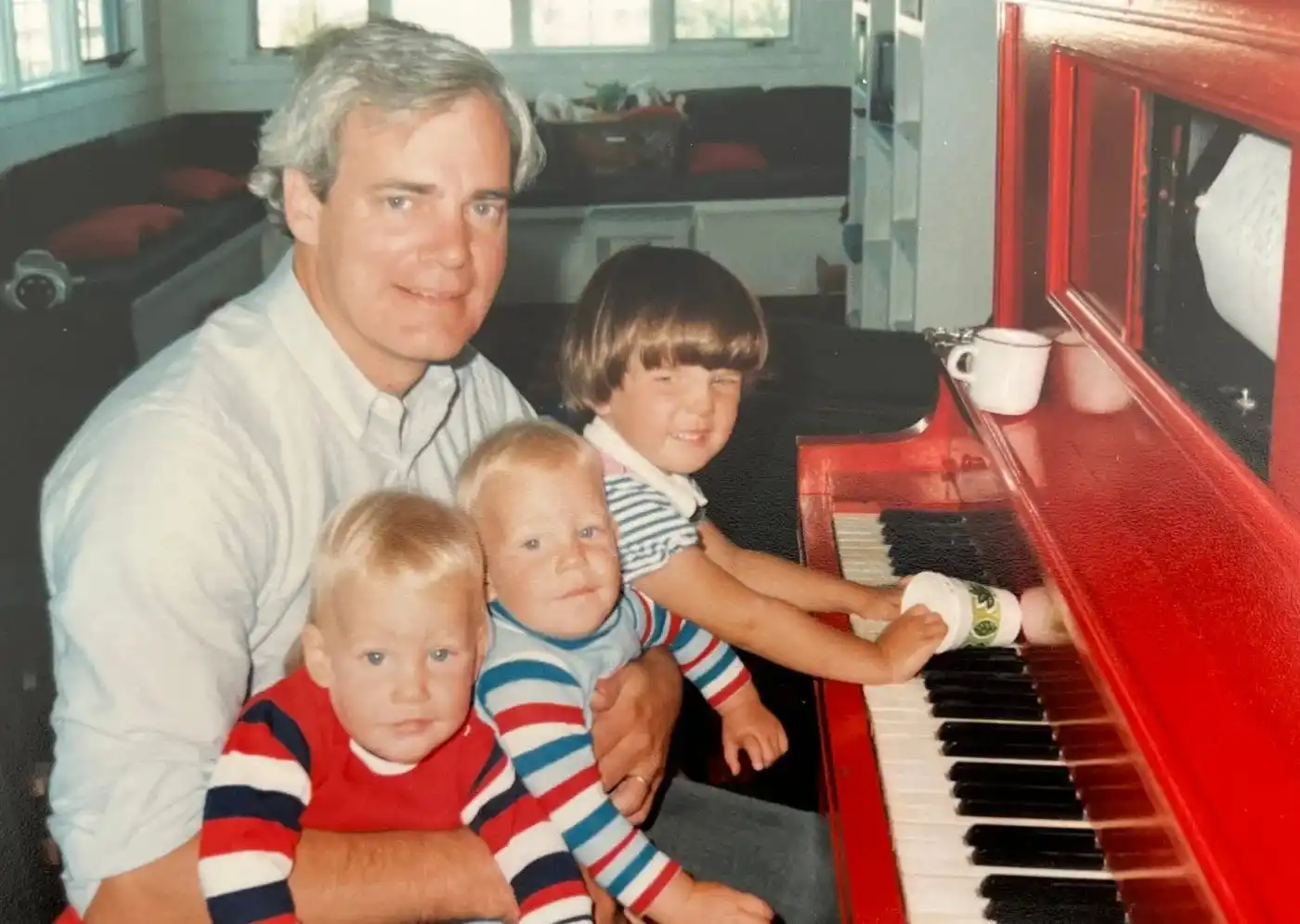
他们长得高大、运动天赋出众,且配合得天衣无缝。13 岁时,他们自学 HTML,为当地企业建网站。青少年时期,他们创立了第一家网络公司,为任何愿意付费的客户创建网站。

在格林尼治乡村日校和后来的布伦瑞克学校,他们发现了竞技赛艇,并共同创立了学校的赛艇项目。

在八人艇中,时机至关重要。慢了零点几秒,你就输了。完美的协调需要读懂队友、读懂水面,并在压力下做出瞬间决策。

他们变得非常优秀。优秀到足以在哈佛赛艇,优秀到足以参加奥运会。

但赛艇教给他们的远比运动荣誉更有价值——那就是完美时机和无缝合作的艺术。

哈佛实验室

2000 年,温克莱沃斯双胞胎进入哈佛大学,主修经济学,怀揣着参加奥运的梦想。

卡梅伦加入了男子校队、专属的波塞利安俱乐部和哈斯蒂·布丁俱乐部。兄弟俩以极高的强度投入到竞技赛艇中,这份专注最终将他们带到国际赛场。

2004 年,他们帮助绰号「上帝之队」的哈佛大学队取得了一个全胜的大学赛艇赛季。他们赢得了东部冲刺赛、大学赛艇协会锦标赛以及传奇的哈佛 – 耶鲁赛艇对抗赛。

但一个重要的发现发生在水面之外。

2002 年 12 月,大三。双胞胎在研究精英大学生活的社交动态时,构想了 HarvardConnection,后改名为 ConnectU。

他们的想法是创建一个专属的大学生社交网络,从哈佛开始,扩展到其他精英大学。他们深刻理解自己这代人的需求:学生们想通过数字方式连接,但现有工具笨拙而且千篇一律。

只有一个问题:他们是运动员和经济学专业学生,不是程序员。

他们需要帮助,需要一个聪明人,一个能理解他们愿景的人。

这时,马克·扎克伯格出现了。

2003 年 10 月,哈佛大学柯克兰餐厅。

双胞胎向马克·扎克伯格提出了他们的社交网络创意。大二学生,计算机科学专业,据说正在开发一个叫 Facemash 的项目,学生可以在上面互相评价照片。

完美。

他们向扎克伯格阐述了 HarvardConnection 的愿景。他认真倾听,点头致意,询问功能和技术细节,看起来很感兴趣。之后他们安排了后续会议。

几周来,一切进展顺利。扎克伯格参与讨论创意,探讨实施细节,并表现出对这个项目的投入。双胞胎以为找到了他们的程序员。

2004 年 1 月 11 日。在双胞胎等待与扎克伯格的下一次会议时,他注册了一个域名:thefacebook.com。四天后,他没有与他们见面,而是推出了 Facebook。

双胞胎在《哈佛深红报》上读到这个消息,才发现他们的程序员变成了竞争对手。他们意识到自己被耍了。

法律战争

2004 年,ConnectU 起诉 Facebook,指控扎克伯格盗窃了他们的创意,违反口头合同,并用他们的概念构建了竞争平台。

随后是四年的法律战。律师团队不断扩大,案件成为轰动一时的事件。但这场诉讼让双胞胎得以近距离观察人类历史上最重大的科技变革之一。

在法律战期间,他们目睹了 Facebook 席卷大学校园,随后扩展到高中,再向所有人开放。他们设想中的平台正在征服世界,只是冠上了别人的名字。

他们研究了 Facebook 的用户增长,分析了其商业模式,观察了其网络效应。到 2008 年达成和解时,他们对 Facebook 的理解几乎超过了公司外部的任何人。

但他们最大的竞争发生在法庭,而非水面上。

双胞胎在 2008 年和解中选择 Facebook 的股票而非现金的决定被证明是极具远见的。2012 年 Facebook 上市时,他们的 4500 万美元股票价值接近 5 亿美元。他们证明了「温克莱沃斯兄弟」即使输掉一场战斗,也能赢得战争。

他们的运动生涯与法律戏剧并行。2007 年里约泛美运动会上,卡梅伦在男子八人艇中夺金,在男子无舵四人艇中获银。次年,两兄弟参加北京奥运会,在男子无舵双人艇中获得第六名,跻身世界顶尖赛艇选手之列。


比特币启示录

在 Facebook 的巨额回报后,双胞胎尝试成为硅谷天使投资人。但每一家初创公司都拒绝了他们。原因?马克·扎克伯格绝不会收购与温克莱沃斯兄弟有关的公司。他们的钱变成了「毒药」。

深受打击的他们逃到伊比沙岛。一天晚上,在一家俱乐部里,一个名叫大卫·阿扎尔(David Azar)的陌生人拿着一张美元钞票向他们走来,说:「一场革命。」

大卫站在海滩上,向他们解释了比特币。比特币是一种完全去中心化的数字货币,发行量只有 2100 万。这对双胞胎兄弟从未听说过它。2012 年,几乎无人拥有比特币。

作为哈佛经济学专业毕业生,他们看到了比特币的潜力:数字黄金,拥有历史上赋予黄金价值的所有属性,但更优越。

2013 年,当华尔街还在摸索加密货币是什么时,温克莱沃斯兄弟已经开始大举投资。

他们在比特币价格为 100 美元时投入了 1100 万美元。这相当于当时流通中约 1% 的比特币,大约 10 万枚。

想想看,他们是奥运选手,哈佛毕业生,拥有无限可能的年轻人,却将数百万美元押注在大多数人认为与毒贩和无政府主义者相关的数字货币上。

他们的朋友一定以为他们疯了。

但他们曾见证一个宿舍创意变成价值数千亿美元的公司。他们明白不可能的事物可以多快变成必然。

他们的分析是:如果比特币成为一种新型货币,早期采用者将获得巨大回报;如果失败,他们也承受得起损失。

2017 年比特币达到 2 万美元时,他们的 1100 万美元变成了超过 10 亿美元。他们成为全球首批确认的比特币亿万富翁。

这种模式正在逐渐清晰。卡梅伦·文克莱沃斯和泰勒·文克莱沃斯兄弟眼光独到。

构建基础设施

双胞胎不仅买入比特币坐等升值,他们开始打造推动大众采用的基础设施。

Winklevoss Capital 为构建新型数字经济提供种子资金:交易所(如 BitInstant)、区块链基础设施、托管工具、分析平台,以及后来的 DeFi 和 NFT 项目。他们的投资组合涵盖了从协议开发者(如 Protocol Labs 和 Filecoin)到加密货币挖矿的能源基础设施。

2013 年,他们向美国证券交易委员会(SEC)提交了首只比特币 ETF 申请。这是一个几乎注定失败的尝试,但总得有人迈出第一步。2017 年 3 月,SEC 以市场操纵为由拒绝了他们的申请。他们再次尝试,2018 年 7 月再次被拒。但他们在监管方面的努力为其他申请者奠定了基础。2024 年 1 月,现货比特币 ETF 最终获批,这标志着这对双胞胎兄弟十多年前开始构建的框架终于开花结果。

2014 年,BitInstant 首席执行官查理·施雷姆(Charlie Shrem)因涉及丝绸之路交易的洗钱罪在机场被捕,BitInstant 被迫关闭。主要比特币交易所 Mt. Gox 被黑客攻击,丢失 80 万枚比特币。双胞胎投资的基础设施在崩塌,比特币市场动荡不安。

但他们在混乱中看到了机会。比特币生态需要合法、受监管的公司。

2014 年,他们创立了 Gemini,美国首批受监管的加密货币交易所之一。当其他加密平台在法律灰色地带运营时,Gemini 与纽约州监管机构合作,建立清晰的合规框架。

他们明白,加密货币要成为主流,必须拥有机构级的基础设施。纽约州金融服务部授予 Gemini 有限目的信托执照,使其成为美国首批获得许可的比特币交易所之一。

到 2021 年,Gemini 估值达到 71 亿美元,双胞胎至少持有 75% 的股份。如今,该交易所总资产超过 100 亿美元,支持 80 多种加密货币。

通过 Winklevoss Capital,他们投资了 23 个加密货币项目,包括 2017 年参与 Filecoin 的筹资轮和 Protocol Labs。

温克莱沃斯兄弟没有对抗监管机构,而是努力教育他们。他们没有寻求监管套利,而是从一开始就将合规性融入产品。

Gemini 面临的挑战包括 2024 年就其 Earn 计划达成 21.8 亿美元的和解协议。但该交易所幸存了下来并继续运营。

双胞胎明白,单靠技术不足以成功,监管的接受度将决定加密货币的命运。

2024 年,他们各自向唐纳德·特朗普的总统竞选捐款 100 万美元比特币,定位自己为支持加密货币友好政策的倡导者。他们的捐款超过了联邦贡献限额,部分需退还,但他们已表明立场。

这对双胞胎兄弟一直直言不讳地批评 SEC 在主席加里·根斯勒(Gary Gensler)的领导下执法过于激进的做法。他们之间的监管斗争既涉及个人生活,也涉及职业发展。SEC 对 Gemini 的诉讼直接挑战了他们的商业模式。2025 年 6 月,Gemini 秘密提交了 IPO。

当前战绩

《福布斯》目前对兄弟俩的估值为 44 亿美元,他们的净资产总额约为 90 亿美元,其中比特币资产构成了他们财富的最大组成部分。

他们的加密货币资产包括约 7 万枚比特币,价值 44.8 亿美元,以及在以太坊Filecoin 和其他数字资产中的大量持仓。

Gemini 仍是全球最受信任的加密货币交易所之一,拥有机构级安全功能和监管合规性。交易所的 IPO 申请标志着向主流金融市场整合迈出重要的一步。

2025 年 2 月,双胞胎成为英格兰第八级别联赛球队 Real Bedford 足球俱乐部的部分所有者,投资了 450 万美元。

与加密货币播客主彼得·麦考马克(Peter McCormack)合作,他们试图将这支半职业球队推向英超联赛。他们的父亲霍华德也在 2024 年捐款 400 万美元比特币给 Grove City 学院,这是该校首次收到比特币捐款,用于资助新建的温克莱沃斯商学院。

这对双胞胎兄弟亲自向格林威治乡村日校捐赠了 1000 万美元,这是该校历史上最大的校友捐赠。

他们公开表示,即使比特币市值达到黄金的水平,他们也不会出售比特币,展现了他们对比特币不仅是价值储存工具、而是货币根本性重塑的信念。

《哈佛深红报》揭露了马克·扎克伯格的背叛,伊比沙岛海滩上的一美元纸币点燃了一场革命——这两个时刻,分别发生在他们学会洞察他人所未见之事之前和之后。卡梅伦·文克莱沃斯和泰勒·文克莱沃斯兄弟多年来一直被认为错过了派对。事实证明,他们只是提前赶到了下一场盛宴。


说明: 比推所有文章只代表作者观点,不构成投资建议

Related Reads

U.S. Government Bans Foreign Nationals from Using Fable 5, Anthropic Issues Rebuttal

U.S. Government Bans Foreign Access to Fable 5, Anthropic Issues Rebuttal On June 12th, the U.S. government ordered AI company Anthropic to immediately suspend all foreign access—including foreign nationals within the U.S. and Anthropic's own foreign employees—to its newly released Fable 5 and Mythos 5 AI models, citing national security concerns. This forced Anthropic to temporarily disable access to both models for all users globally, as it cannot technically differentiate user nationality at scale. The models, released just three days prior, represent Anthropic's highest public capability tier. Fable 5 is the first publicly available model from the advanced "Mythos" family, while Mythos 5 is a less-restricted version for approved cybersecurity and critical infrastructure partners. The government's directive was reportedly triggered by claims from another company that it could "jailbreak" Mythos 5, raising alarm within the Trump administration. Anthropic, in a detailed public statement, strongly challenged this rationale. The company argues the demonstrated "jailbreak" is a narrow, non-generalized technique that merely involves identifying minor, known software vulnerabilities—a capability common to other publicly available models like OpenAI's GPT-5.5 and routinely used by cybersecurity defenders. Anthropic stated it has complied with the order but disagrees with the government's standard, warning that applying it industry-wide would halt all new frontier model deployments. The company criticized the lack of a transparent, fact-based legal process and expressed confidence the situation stems from a misunderstanding. It is working to restore access and will release more technical details within 24 hours. Other Anthropic models remain unaffected.

链捕手10m ago

U.S. Government Bans Foreign Nationals from Using Fable 5, Anthropic Issues Rebuttal

链捕手10m ago

The Revelation from the Raydium Theft Incident: New DeFi Vulnerabilities Lurking in Forgotten Old Contracts

**Raydium Exploit Reveals DeFi's Hidden Risk: Forgotten "Zombie" Contracts** A recent attack on Raydium's deprecated V3 AMM pools resulted in a loss of approximately $1.34 million. The hacker exploited pools that were no longer supported by Raydium's current UI or SDK but remained fully functional and accessible on-chain. This incident highlights a critical, often overlooked category of risk in DeFi: inactive or legacy smart contracts that projects fail to properly decommission. Since March 2025, there have been at least 8 publicly reported attacks targeting such abandoned contracts, with total losses around $10.8 million. Including older pools and deprecated features, the count rises to 10 incidents with roughly $22.5 million in losses. These "zombie contracts" represent a lifecycle management failure rather than a code vulnerability, yet they are typically misclassified under general "code bug" categories in security reports, masking the true scale of the problem. The root cause is that projects often merely document a contract as "deprecated" without taking essential technical steps to secure it: withdrawing remaining assets, disabling external call functions, and implementing ongoing monitoring. These forgotten, under-monitored components become prime targets for attackers. To address this, the industry needs to recognize "zombie contracts" as a distinct risk category and establish standardized decommissioning protocols. Essential steps should include: 1) a formal retirement announcement, 2) removal of all front-end integrations, 3) withdrawal of locked assets, 4) disabling key contract functions, 5) ongoing security monitoring, 6) clear user communication, and 7) a post-mortem analysis. The value of a DeFi project lies not only in its current TVL but also in the security of its historical codebase, which has now become a new attack surface.

Foresight News1h ago

The Revelation from the Raydium Theft Incident: New DeFi Vulnerabilities Lurking in Forgotten Old Contracts

Foresight News1h ago

Robots Begin to 'Consume Data': The Hidden Production Chain from Indian Data Factories to Billion-Dollar Humanoid Robots

Robots have started to 'consume data,' driving the formation of a new industrial supply chain focused on producing training data for embodied AI. Unlike large language models, which are trained on vast internet text corpora, embodied AI models face a 'data desert' in the physical world. This has created a massive demand for first-person perspective video data (Ego Data), captured by workers wearing cameras in places like Indian garment factories. Companies like Neocambrian AI are establishing 'data factories' where workers perform standardized tasks (e.g., sorting clothes, kitchen organization) to generate thousands of hours of video. Research, such as NVIDIA's EgoScale, demonstrates that scaling this human demonstration data predictably improves robot performance, particularly for dexterous manipulation. This has validated a training path combining large-scale human data for pre-training with smaller amounts of robot-specific data for fine-tuning. The value of different data types varies significantly, forming a 'data pyramid.' The base consists of low-cost, large-scale internet and Ego Data. Higher layers include more expensive motion-capture data (e.g., from data gloves), simulation/synthetic data, and the most costly and scarce layer: real robot teleoperation data. This demand has spawned a layered ecosystem of data suppliers: low-cost data factories, motion capture and alignment specialists, robot-native teleoperation service providers, simulation data companies, and platforms aiming for data standardization. Robot companies themselves are adopting a 'layered procurement' strategy: outsourcing generic Ego Data while building in-house capabilities for robot-specific adaptation data and the critical deployment/failure data generated in real-world applications. The industry is shifting focus from hardware and basic mobility to the data pipelines required for general-purpose capability. While parallels exist to data labeling companies like Scale AI in the LLM boom, the physical complexity of robot data—involving action success ambiguity and sim-to-real gaps—requires more integrated solutions for data collection, annotation, and a continuous feedback loop. The race is on to build the data engines that will teach robots to operate reliably in the unstructured real world.

marsbit4h ago

Robots Begin to 'Consume Data': The Hidden Production Chain from Indian Data Factories to Billion-Dollar Humanoid Robots

marsbit4h ago

Trading

Spot
Futures

Hot Articles

What is $BITCOIN

DIGITAL GOLD ($BITCOIN): A Comprehensive Analysis Introduction to DIGITAL GOLD ($BITCOIN) DIGITAL GOLD ($BITCOIN) is a blockchain-based project operating on the Solana network, which aims to combine the characteristics of traditional precious metals with the innovation of decentralized technologies. While it shares a name with Bitcoin, often referred to as “digital gold” due to its perception as a store of value, DIGITAL GOLD is a separate token designed to create a unique ecosystem within the Web3 landscape. Its goal is to position itself as a viable alternative digital asset, although specifics regarding its applications and functionalities are still developing. What is DIGITAL GOLD ($BITCOIN)? DIGITAL GOLD ($BITCOIN) is a cryptocurrency token explicitly designed for use on the Solana blockchain. In contrast to Bitcoin, which provides a widely recognized value storage role, this token appears to focus on broader applications and characteristics. Notable aspects include: Blockchain Infrastructure: The token is built on the Solana blockchain, known for its capacity to handle high-speed and low-cost transactions. Supply Dynamics: DIGITAL GOLD has a maximum supply capped at 100 quadrillion tokens (100P $BITCOIN), although details regarding its circulating supply are currently undisclosed. Utility: While precise functionalities are not explicitly outlined, there are indications that the token could be utilized for various applications, potentially involving decentralized applications (dApps) or asset tokenization strategies. Who is the Creator of DIGITAL GOLD ($BITCOIN)? At present, the identity of the creators and development team behind DIGITAL GOLD ($BITCOIN) remains unknown. This situation is typical among many innovative projects within the blockchain space, particularly those aligning with decentralized finance and meme coin phenomena. While such anonymity may foster a community-driven culture, it intensifies concerns about governance and accountability. Who are the Investors of DIGITAL GOLD ($BITCOIN)? The available information indicates that DIGITAL GOLD ($BITCOIN) does not have any known institutional backers or prominent venture capital investments. The project seems to operate on a peer-to-peer model focused on community support and adoption rather than traditional funding routes. Its activity and liquidity are primarily situated on decentralized exchanges (DEXs), such as PumpSwap, rather than established centralized trading platforms, further highlighting its grassroots approach. How DIGITAL GOLD ($BITCOIN) Works The operational mechanics of DIGITAL GOLD ($BITCOIN) can be elaborated on based on its blockchain design and network attributes: Consensus Mechanism: By leveraging Solana’s unique proof-of-history (PoH) combined with a proof-of-stake (PoS) model, the project ensures efficient transaction validation contributing to the network's high performance. Tokenomics: While specific deflationary mechanisms have not been extensively detailed, the vast maximum token supply implies that it may cater to microtransactions or niche use cases that are still to be defined. Interoperability: There exists the potential for integration with Solana’s broader ecosystem, including various decentralized finance (DeFi) platforms. However, the details regarding specific integrations remain unspecified. Timeline of Key Events Here is a timeline that highlights significant milestones concerning DIGITAL GOLD ($BITCOIN): 2023: The initial deployment of the token occurs on the Solana blockchain, marked by its contract address. 2024: DIGITAL GOLD gains visibility as it becomes available for trading on decentralized exchanges like PumpSwap, allowing users to trade it against SOL. 2025: The project witnesses sporadic trading activity and potential interest in community-led engagements, although no noteworthy partnerships or technical advancements have been documented as of yet. Critical Analysis Strengths Scalability: The underlying Solana infrastructure supports high transaction volumes, which could enhance the utility of $BITCOIN in various transaction scenarios. Accessibility: The potential low trading price per token could attract retail investors, facilitating wider participation due to fractional ownership opportunities. Risks Lack of Transparency: The absence of publicly known backers, developers, or an audit process may yield skepticism regarding the project's sustainability and trustworthiness. Market Volatility: The trading activity is heavily reliant on speculative behavior, which can result in significant price volatility and uncertainty for investors. Conclusion DIGITAL GOLD ($BITCOIN) emerges as an intriguing yet ambiguous project within the rapidly evolving Solana ecosystem. While it attempts to leverage the “digital gold” narrative, its departure from Bitcoin's established role as a store of value underscores the need for a clearer differentiation of its intended utility and governance structure. Future acceptance and adoption will likely depend on addressing the current opacity and defining its operational and economic strategies more explicitly. Note: This report encompasses synthesised information available as of October 2023, and developments may have transpired beyond the research period.

363 Total ViewsPublished 2025.05.13Updated 2025.05.13

What is $BITCOIN

Discussions

Welcome to the HTX Community. Here, you can stay informed about the latest platform developments and gain access to professional market insights. Users' opinions on the price of BTC (BTC) are presented below.

活动图片