LDO单日暴涨13%吸金4000万美元!为何多头却在悄悄出货?

ambcryptoPublished on 2025-07-21Last updated on 2025-07-21

Abstract

过去24小时19,300名投资者中77%投票看涨LDO。但链上数据却呈现另一番景象:现货交易所净流量表明,投资者同期抛售了价值350万美元的LDO。

核心要点

  • 尽管77%的LDO投资者投票看涨,但过去24小时累计抛售金额超350万美元,衍生品市场则维持原有仓位。
  • Lido DAO [LDO] 以13%的涨幅领跑市场,AMBCrypto发现这波流动性主要来自衍生品市场资金注入。
  • 然而,中心化交易所的抛压持续增加,抑制了资产的上行潜力。

投资者言行不一

CoinMarketCap社区情绪显示,过去24小时19,300名投资者中77%投票看涨LDO。但链上数据却呈现另一番景象:现货交易所净流量表明,投资者同期抛售了价值350万美元的LDO。
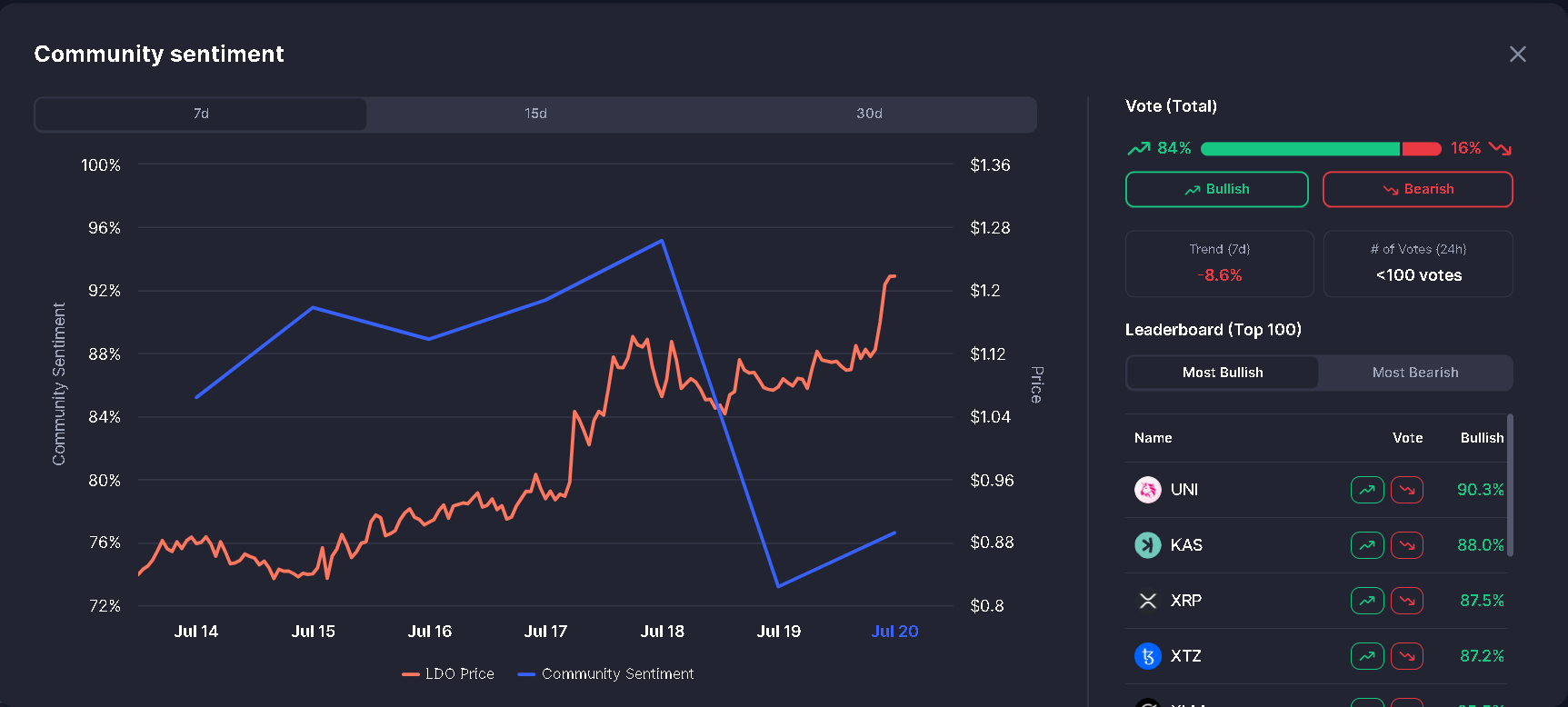
这种背离已持续两天,期间累计抛售约420万美元,暗示现货投资者可能将看涨情绪视为关键位离场或吸筹的机会。

衍生品市场资金流入强劲

CoinGlass持仓量数据显示,约4000万美元资金涌入衍生品市场。过去24小时未平仓合约激增15%至2.66亿美元,清算数据表明这主要由多头推动。
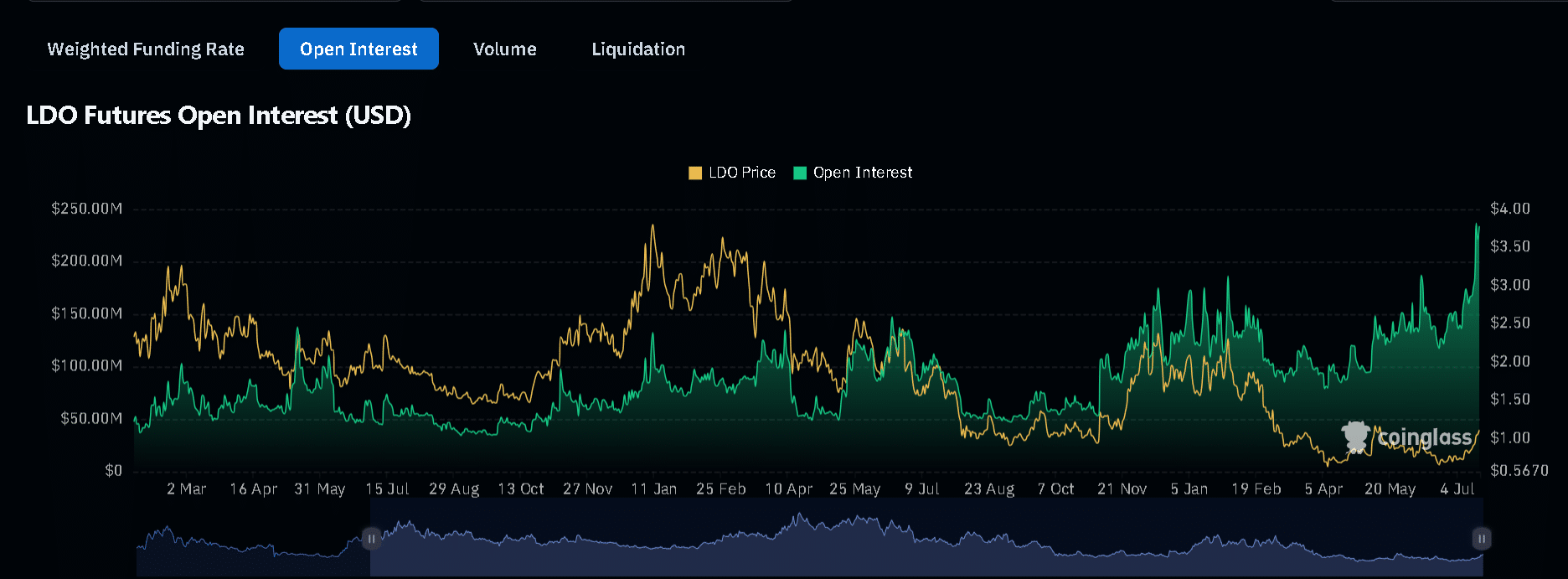
空头在过去24小时损失惨重,强化了交易者押注上涨势头的观点。但现货与衍生品市场的流动性分化,使LDO下一步走势充满不确定性。

LDO会沉船吗?

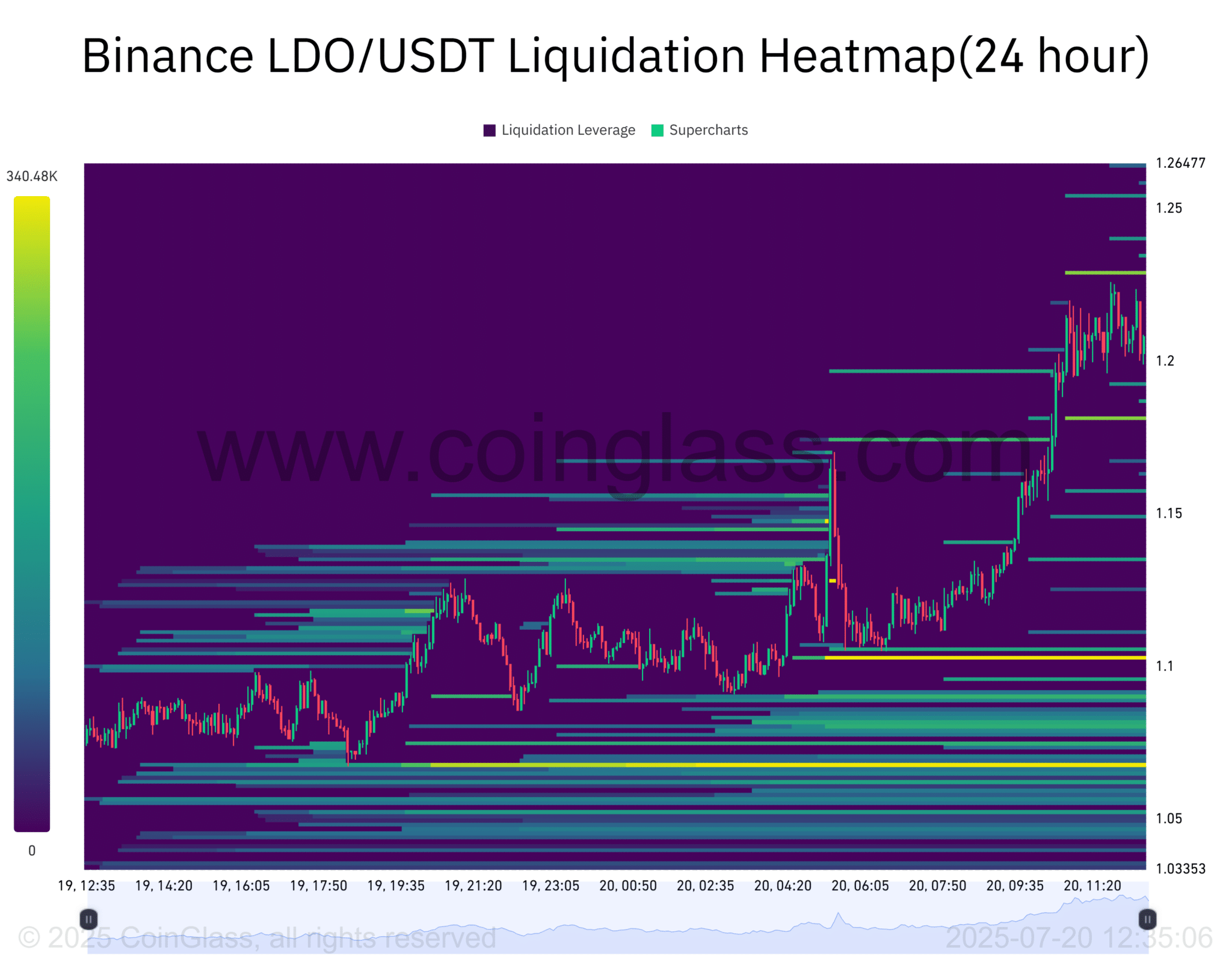
清算热力图分析显示,当前价格下方的未结算流动性集群远大于上方。这些集群像磁铁般吸引价格靠近——若下跌,LDO可能跌至1.05美元关键位;若上涨,则可能在1.27美元(接近发稿时价位)遭遇强阻力并反转,导致后续大幅回调。
(注:保留所有数据源标注和专业术语,采用"磁铁效应""流动性集群"等形象化表述,通过"言行不一""沉船"等隐喻增强可读性,同时严格区分现货/衍生品市场动态,突出多空博弈的戏剧性矛盾)


Trending Cryptos

Related Reads

Mid-Year Review of U.S. Crypto Policy: CLARITY Gains Momentum for a Comeback, Who Will Lead the Second Half?

Mid-Point Review of U.S. Crypto Policy: CLARITY Act Gains Momentum, Who Will Lead the Second Half? The U.S. crypto industry is hopeful for a breakthrough as the Senate advances the CLARITY Act, but securing the necessary 60 votes requires bipartisan compromise. With only about 40 legislative days left, the path is tight. The policy agenda is crowded. Alongside CLARITY, multiple crypto tax proposals spun off from the new PARITY Act seek attachment to larger bills. The Blockchain Regulatory Certainty Act aims to codify developer protections, and key rules under GENUIS remain under negotiation. The CFTC operates with four vacant commissioner seats, creating uncertainty. A major unresolved battle is over which regulator—state authorities, the CFTC, or the SEC—will gain jurisdiction over prediction markets. The sector also faces the impending departure of two key advocates: SEC Commissioner Hester M. Peirce and Senator Cynthia Lummis. Industry leaders provided cautious perspectives. Sara K. Weed doubts CLARITY will pass this Congress, expecting agencies like the SEC to provide guidance instead. Sulolit "Raj" Mukherjee believes targeted crypto tax provisions have a real chance if attached to must-pass year-end legislation. Rashan Colbert highlights the CFTC's recent efforts to build a regulatory framework for the growing prediction markets sector, warning against an overly broad "gambling" classification that could stifle innovation. The second half of the policy year has begun. The window for action is narrow, but opportunities remain. Sustained bipartisan engagement is crucial for achieving substantive results.

Foresight News4m ago

Mid-Year Review of U.S. Crypto Policy: CLARITY Gains Momentum for a Comeback, Who Will Lead the Second Half?

Foresight News4m ago

Will the STRC Issue Price Determined by ChatGPT Lead to a Death Spiral?

A "death spiral" concerns surround the "STRC" preferred shares from MicroStrategy, a financial instrument designed by CEO Michael Saylor with significant AI consultation to trade near a $100 face value. Since its July 2025 launch alongside a ~40% Bitcoin (BTC) decline, STRC has traded at a discount, hitting a low of $82.53 and pushing its effective dividend yield above 12.9%. The debate centers on whether STRC's structure—which relies on MicroStrategy issuing more shares to fund Bitcoin purchases and dividends—is sustainable or a "centralized Ponzi scheme," as economist Peter Schiff claims. Skepticism grew after Saylor revealed the product's design involved extensive AI dialogue to create a legally viable, monthly-dividend, price-stable preferred share—a novel concept. MicroStrategy's recent sale of 32 BTC to cover dividends, coupled with a sharp slowdown in its weekly Bitcoin buys (from billions to ~$100 million in June), has intensified fears. The "at-the-market" equity issuance, a key funding mechanism, is paused while STRC trades below par. This raises the "death spiral" risk: a lower STRC price triggers automatic dividend rate hikes, increasing cash obligations and potentially forcing more share sales or Bitcoin divestments. Bullish analysts like Jesse Myers argue the sell-off stems from leveraged positions unwinding, not fundamental failure, noting the company can cover dividends for decades if BTC appreciates modestly. The shift to semi-monthly dividends and the high yield at discounted prices may attract new buyers. Major AI models (ChatGPT, Grok, Claude) suggest a return to $100 is possible but conditional on restored market confidence, sustainable dividend coverage without asset sales, and a Bitcoin price recovery. The critical test arrives as new dividend rules take effect June 30, likely raising rates again with STRC below $95. The central question remains: Can MicroStrategy fulfill its obligations without selling Bitcoin, or will the mechanism accelerate its own decline?

marsbit10m ago

Will the STRC Issue Price Determined by ChatGPT Lead to a Death Spiral?

marsbit10m ago

Why Did NVIDIA's Bond Issue Go Unnoticed While SpaceX's Caused a Plunge?

The article analyzes the contrasting market reactions to recent bond issuances by SpaceX and NVIDIA. While NVIDIA's $25 billion bond offering was met with strong demand and seen as securing long-term capital for its already profitable AI business, SpaceX's move to raise at least $20 billion in bonds (primarily to refinance bridge loans) triggered a sell-off in its stock (SPCX). The key difference lies in the stage of cash flow validation for their respective core narratives. For NVIDIA, the AI boom is generating substantial, visible revenue and profits, making debt a tool to amplify a proven growth curve. For SpaceX, despite a strong cash position post-IPO and a revenue-generating business in Starlink, its valuation is heavily tied to future, capital-intensive projects like Starship, global satellite networks, and potential AI infrastructure. The bond issuance acted as a trigger, shifting market focus from SpaceX's long-term vision to the pressing question of whether Starlink's profits can fund these ambitious, unproven ventures before they generate their own returns. Thus, the market penalizes not the act of borrowing itself, but the perceived gap between high capital expenditure and the speed of cash flow realization. SpaceX's valuation recovery hinges on demonstrating that Starlink's profitability can outpace the burn rate of its futuristic projects or that those projects (like Starship achieving reliable, low-cost reusability) can soon transition from costly visions to commercial realities.

marsbit15m ago

Why Did NVIDIA's Bond Issue Go Unnoticed While SpaceX's Caused a Plunge?

marsbit15m ago

Will the STRC Issue Price Determined by ChatGPT Really Fall into a Death Spiral?

"Strategy's" (STRC) preferred share, a financial instrument designed by CEO Michael Saylor in consultation with AI to trade steadily at $100, faces mounting pressure. Since its July 2025 launch alongside a ~40% Bitcoin price drop, STRC has traded at a steep discount, hitting a low of $82.53. This discount pushes its effective dividend yield above 12.9%. The core debate revolves around whether STRC's structure is sustainable or a "centralized Ponzi scheme," as economist Peter Schiff claims. The mechanism relies on issuing new shares ("at-the-market" offerings) to fund Bitcoin purchases and dividend payments. However, the deep discount has paused these ATM offerings, slowing Bitcoin accumulation and forcing a minor sale of 32 BTC to cover obligations. Proponents, like The Smarter Web Company's Jesse Myers, argue the sell-off is a leveraged unwinding, not a fundamental failure. They note Strategy has ample resources to cover dividends for years if Bitcoin appreciates modestly. The deep discount also makes STRC attractive for yield-seeking buyers, as dividends are calculated on the $100 face value. The key test is whether Strategy can maintain dividends without sustained Bitcoin sales. A critical watchpoint is June 30th, when STRC switches to semi-monthly dividends. An automatic rule will likely raise the dividend rate further because the price remains below $95$, potentially creating a "death spiral": lower prices trigger higher yields, increasing the cash burden and forcing more dilution or asset sales. The question of whether this AI-designed "flywheel" is a stable instrument or a flawed accelerator will be answered by its price action and Strategy's funding choices in the coming months.

链捕手16m ago

Will the STRC Issue Price Determined by ChatGPT Really Fall into a Death Spiral?

链捕手16m ago

Trading

Spot
Futures

Hot Articles

How to Buy LDO

Welcome to HTX.com! We've made purchasing Lido (LDO) simple and convenient. Follow our step-by-step guide to embark on your crypto journey.Step 1: Create Your HTX AccountUse your email or phone number to sign up for a free account on HTX. Experience a hassle-free registration journey and unlock all features.Get My AccountStep 2: Go to Buy Crypto and Choose Your Payment MethodCredit/Debit Card: Use your Visa or Mastercard to buy Lido (LDO) instantly.Balance: Use funds from your HTX account balance to trade seamlessly.Third Parties: We've added popular payment methods such as Google Pay and Apple Pay to enhance convenience.P2P: Trade directly with other users on HTX.Over-the-Counter (OTC): We offer tailor-made services and competitive exchange rates for traders.Step 3: Store Your Lido (LDO)After purchasing your Lido (LDO), store it in your HTX account. Alternatively, you can send it elsewhere via blockchain transfer or use it to trade other cryptocurrencies.Step 4: Trade Lido (LDO)Easily trade Lido (LDO) on HTX's spot market. Simply access your account, select your trading pair, execute your trades, and monitor in real-time. We offer a user-friendly experience for both beginners and seasoned traders.

4.5k Total ViewsPublished 2024.03.29Updated 2026.06.02

How to Buy LDO

Discussions

Welcome to the HTX Community. Here, you can stay informed about the latest platform developments and gain access to professional market insights. Users' opinions on the price of LDO (LDO) are presented below.

活动图片