Pump.fun Buys Solana-based Copy-Trading Wallet Tracker Kolscan

TheCryptoTimesPublished on 2025-07-11Last updated on 2025-07-11

Pump.fun, the platform best known for powering Solana’s memecoin craze, just made its first major move beyond token launches. Days before its much-anticipated initial coin offering (ICO), the team announced it had acquired Kolscan, a wallet-tracking tool focused on monitoring top Solana traders.

For those unfamiliar, Kolscan isn’t just another blockchain analytics dashboard. It’s built specifically to follow what key opinion leaders (KOLs) are doing on-chain, offering real-time profit-and-loss data, wallet activity, and even a leaderboard showcasing trader performance. It’s become a go-to for copy-trading enthusiasts wanting to follow crypto’s sharpest players.

Alon Cohen, Pump.fun’s co-founder, shared the news on X (formerly Twitter), calling the acquisition a natural step in making trading more social. “Trading is a social sport,” he wrote. “You do it with your friends and compare yourself to the best.”

The timing isn’t lost on observers. Pump.fun’s ICO is just around the corner, valuing the firm at a reported $4 billion. By bringing Kolscan under its umbrella, Pump.fun is signaling it wants to evolve beyond simple token launches toward building out a full-fledged social crypto ecosystem.

Cohen emphasized that Kolscan’s tools will now be free to use. Before the deal, Kolscan had already attracted tens of thousands of users. But the team isn’t stopping there. Cohen noted plans to improve features like the leaderboard, rewarding real traders, while sharpening insights into copy-trading behaviors.

Pump.fun is also layering Kolscan into its broader platform vision, alongside projects like live-streaming for crypto traders and revenue-sharing programs for token holders.

Also Read: Pump.Fun Co-Founder’s Ironic Remark Makes $4B Presale a Scam


Trending Cryptos

Related Reads

Countdown to Q-Day: Will Quantum Computing End Cryptocurrencies?

The article explores the existential threat quantum computing poses to cryptocurrencies and the urgent need for "post-quantum" migration. It outlines that quantum computers, through Shor's algorithm, could break the elliptic-curve cryptography (ECC) underlying blockchain security, potentially allowing private keys to be derived from public keys. The core challenge is not a lack of post-quantum cryptography (PQC) standards—like NIST's ML-KEM and ML-DSA—but the immense complexity of upgrading entire ecosystems before "Q-Day" (when quantum computers become capable of such attacks, estimated around 2035-2045). Key points include: * **Bitcoin's** risk is concentrated in legacy UTXOs with exposed public keys (e.g., early P2PK outputs). Migration faces massive hurdles: PQC signatures are much larger, increasing transaction size and cost, and the governance dilemma of handling un-migrated assets threatens its "code is law" ethos. * **Ethereum's** strategy focuses on "cryptographic agility," using Account Abstraction for user accounts and developing compressed hash-based signatures (like leanXMSS with SNARK aggregation) for consensus. Its migration is a complex, full-stack overhaul of execution, consensus, and data layers. * The "security debt" is enormous. The comfortable engineering window for a coordinated, ecosystem-wide upgrade is only 5-8 years. High-value infrastructure (exchanges, bridges) may face pressure before mainnet protocols. In conclusion, quantum computing is not an instant "doomsday" event but a forcing function for systemic change. Bitcoin's ultimate test is social consensus and property rights governance, while Ethereum's is technical complexity. Failure to migrate in time could lead to a fundamental re-pricing of crypto assets.

链捕手2m ago

Countdown to Q-Day: Will Quantum Computing End Cryptocurrencies?

链捕手2m ago

Losing $55 Million to Sell Bitcoin, MicroStrategy's Faith Reaches Its Interest Payment Day

On July 6th, Michael Saylor's MicroStrategy announced the sale of 3,588 BTC for approximately $216 million, incurring a realized loss of around $55.45 million compared to its average cost basis. This move, contradicting Saylor's long-standing "never sell" Bitcoin philosophy, was executed to pay dividends on its digital credit securities. The article traces this shift from a small "desensitization test" sale of 32 BTC in late May to the board's authorization on June 30th to sell up to $1.25 billion in Bitcoin for corporate purposes like dividends and buybacks. Analysis reveals that MicroStrategy's previous growth "flywheel"—using stock premiums to fund more Bitcoin purchases—has stalled. With its stock trading near a critical threshold (1.22x its Bitcoin NAV), issuing new shares would dilute value. Simultaneously, its financing channels (preferred stock, common stock ATM, convertible notes) are constrained while facing rigid annual dividend/interest obligations of roughly $1.76 billion. Consequently, selling Bitcoin became the calculated "optimal solution" under its own financial model. This transforms MicroStrategy from crypto's most prominent steady buyer into a predictable seller, creating a potential overhead of ~2,400 BTC in monthly selling pressure if obligations are fully covered by sales. This shift challenges the valuation models of the entire Digital Asset Treasury (DAT) sector that emulated MicroStrategy. The company's path forward now hinges on Bitcoin's price recovery, which would allow its preferred stock to trade at par and reopen its financing flywheel, creating a cyclical dependency between the firm's financial model and the asset it holds.

链捕手31m ago

Losing $55 Million to Sell Bitcoin, MicroStrategy's Faith Reaches Its Interest Payment Day

链捕手31m ago

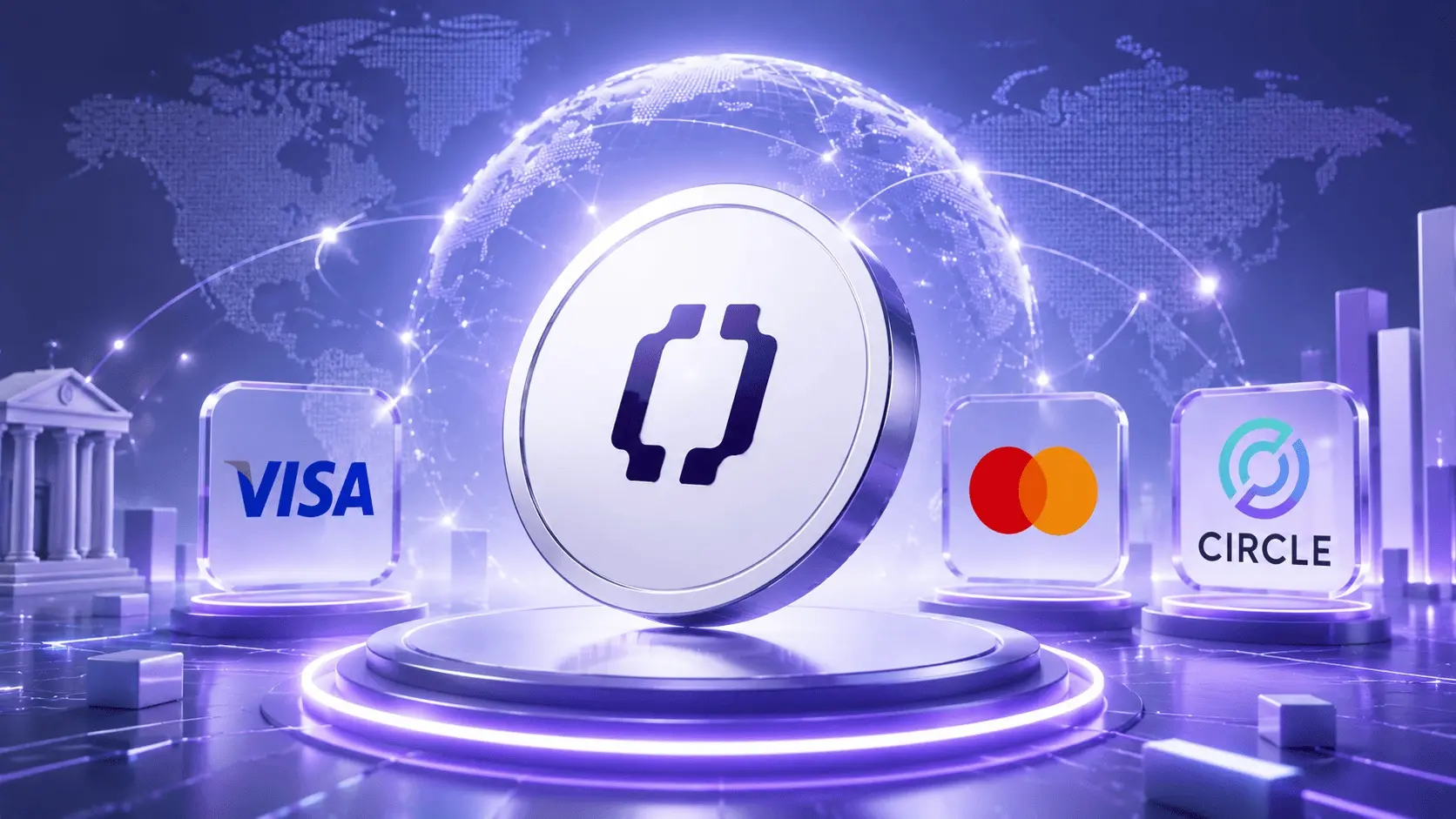
OUSD Fake Partnership Controversy? Stablecoins and the Credit Game of Giant Endorsements

Author: Chloe, ChainCatcher Last week, Open Standard launched the dollar stablecoin OpenUSD (OUSD) with a list of over 140 supposedly supporting companies, including major names like Visa, Mastercard, Stripe, American Express, BlackRock, BNY, Standard Chartered, Google, Shopify, Samsung, Coinbase, Solana, and Ripple. The announcement initially impacted Circle's stock price, but doubts about the list quickly emerged. Several Korean firms named, including Samsung Electronics, Shinhan Financial Group, Dunamu (Upbit's parent), and K Bank, clarified they had not formally agreed to join the alliance. Some stated they were only approached for potential interest or learned of their inclusion from news reports, expressing surprise. Similar concerns were raised by U.S. entities, suggesting the list may be misleading. OUSD, led by Zach Abrams of Bridge (acquired by Stripe in 2024), promotes zero-fee minting/redemption, no transaction limits, and sharing reserve asset yields with partners instead of keeping profits. However, this model makes listed partnership imply economic benefits, turning it into a serious credibility issue. This incident reflects a common crypto marketing tactic of leveraging big names. A Chainstory analysis found over 62% of crypto press releases in late 2025 were high-risk or scams. The situation recalls Facebook's Libra (later Diem), which collapsed in 2022 after initial heavyweight backers like Visa and PayPal withdrew under regulatory pressure. Circle CEO Jeremy Allaire welcomed the competition but highlighted the challenges. He argued stablecoin success relies on network effects and real usage, not just alliances. He criticized OUSD's "free" model and full revenue sharing as potentially starving infrastructure development. Noting the dominance of USDT (~$1.84T) and USDC (~$730B) in the ~$2.91T stablecoin market, he suggested many new entrants lack real utility despite inflated circulation from incentives. In conclusion, while OUSD has genuine backing and a distinct model, its future depends on actual adoption in B2B payments, settlements, and cross-border transactions, not just a prestigious partner list. The market will determine if it is a credible challenger or merely another marketing promise.

链捕手33m ago

OUSD Fake Partnership Controversy? Stablecoins and the Credit Game of Giant Endorsements

链捕手33m ago

Trading

Spot

Hot Articles

Discussions

Welcome to the HTX Community. Here, you can stay informed about the latest platform developments and gain access to professional market insights. Users' opinions on the price of SOL (SOL) are presented below.

活动图片