Best Meme Coins Live News Today: Latest Opportunities & Updates (July 10)

bitcoinistPublished on 2025-07-10Last updated on 2025-07-10

Abstract

Get Early Alpha with Our Immediate Analysis of Today's Best Meme Coins Check out our Live Update Coverage on the...

Trusted Editorial content, reviewed by leading industry experts and seasoned editors. Ad Disclosure

Get Early Alpha with Our Immediate Analysis of Today’s Best Meme Coins

Check out our Live Update Coverage on the Best Meme Coins for July 10, 2025!

Meme coins are at the helm of the current crypto rallies, and they’re fueled by viral social media campaigns, renewed retail interest, and speculation-driven volume on top CEXs and DEXs. Given the massive upside potential and low entry prices, meme coins have become a magnet for traders looking for quick gains.

Given their sky-high market cap, meme coins have Lamborghini potential (think 7-10x in a day). High-risk, high-reward players naturally love them, and so should you.

This page gives you the inside edge—live updates on trending meme coins, alpha from crypto degens, and whispers from FOMO-driven trading circles. If you’re hunting for the next 10x or 100x gem, you’re in the right place.

We update this page frequently throughout the day, as we get the latest insider insights on the best meme coins, so keep refreshing!

Disclaimer: Crypto is a high-risk investment, and you may lose your capital. Our content is informational only, and it does not constitute financial advice. We may earn affiliate commissions at no extra cost to you.

SEC Officially Acknowledges the First-Ever $PENGU ETF, Opening the Way for Meme Coin Adoption

July 10, 2025 • 10:00 UTC

The SEC has just officially acknowledged the Canary Spot $PENGU ETF application, and we’ll get an approval or a denial soon.

This marks a pivotal moment for meme coins, opening the way to greater adoption, investor interest, and legitimacy in the market.

Where memecoins were only snarky jokes and thrilling risk-on investments, the tides are shifting to more serious endeavors.

Crypto-backed funds might be the future, and the first-ever $PENGU ETF is trailblazing the way. If you’re looking for meme coins on presale that could explode in the next rally, we got you covered.

Tokens like Snorter Token ($SNORT) and Bitcoin Hyper ($HYPER) show incredible potential, and we might see them become top gainers after their launch on DEXs.

Here’s a list of all the best meme coins you should watch for this year.


LetsBonk Pumps Double Time, Good News for Utility-Based Meme Coins Like Snorter Token

July 10, 2025 • 09:00 UTC

Solana-based memecoin launchpad LetsBonk pulled in $1.04 million in revenue in 24 hours on Monday, nearly doubling the day’s earnings of rival platform Pump.fun, which made $533,412.

This is according to DeFiLlama data. The revenue surge highlights LetsBonk’s growing dominance in the meme token launch space, but also strong demand for meme coin tools in general.

Enter Snorter Token ($SNORT), a Solana memecoin introducing a trading bot fully integrated into Telegram. Kitted out with automated trading, sniping tools, and early entry alerts, it helps you sniff out the rarest market opportunities. With its meme-fueled brand and real utility, $SNORT couples hype with tools traders actually want.

Read all about it in our What is Snorter Token article.


Justin Sun Is Buying $100M $TRUMP Coins and Plans to Integrate the Meme Coin on TRON: Why Token6900 Stands to Make Wild Gains

July 10, 2025 • 08:58 UTC

This just in – Justin Sun (Tron’s founder) announced the DAO will buy $100M of $TRUMP, and that the memecoin is the official currency of the MAGA movement.
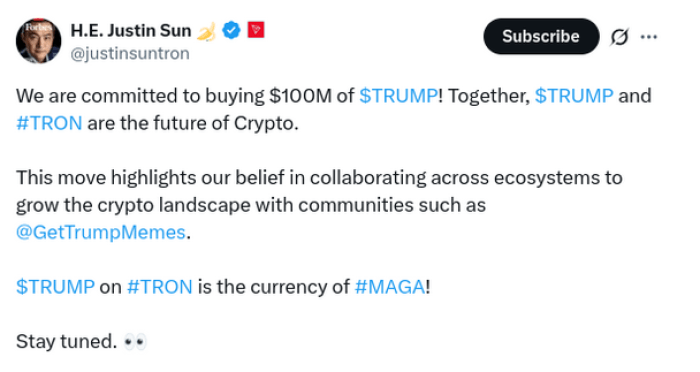
Justin Sun announcement about buying Trump for TRON

Sun also wants to integrate $TRUMP into the TRON blockchain, a move that will legitimize the meme coin and the industry as a whole. It also shows TRON’s intention to merge memecoin appeal with blockchain development.

A politicized TRON would lead to viral support for the blockchain, which would shine the spotlight on meme coins as a whole.

It logically follows that more investors might find appeal in memecoins like Token6900 ($T6900), a satirical take on the S&P 500 that follows in SPX6900’s footsteps.

The coin is a nothingburger, and it takes great pride in that. No utility, no promises, just pure degen meme appeal and the thrill of a good ol’ spark of fun.

Take a look at Token6900’s presale page to see what it’s all about.


Editorial Process for bitcoinist is centered on delivering thoroughly researched, accurate, and unbiased content. We uphold strict sourcing standards, and each page undergoes diligent review by our team of top technology experts and seasoned editors. This process ensures the integrity, relevance, and value of our content for our readers.

As a crypto writer, Bogdan’s responsibilities are split between researching and writing articles and entertaining the team with his humor bordering on the politically incorrect, an aspiring Bill Burr, if you will. Thanks to his 12+ years of writing experience in just as many fields, including tech, cybersecurity, modelling, fitness, crypto, and other topics-that-shall-not-be-named, he's become a genuine asset to the team. While his position as a senior writer at PrivacyAffairs thought him valuable lessons about the power of self-management, his entire writing career was and is an exercise in self-improvement. Now, he's ready to sink his teeth into crypto and teach people how to take control of their own money on the blockchain. With fiat as an eternally devaluing currency, Bitcoin and altcoins seem like the best-fitting alternative for Bogdan. Bogdan’s biggest professional accomplishment, aside from securing a position as a main writer for Bitcoinist, was his 5-year run as a writing manager at Blackwood Productions, where he coordinated a team of four writers. During that time, he learned the value of teamwork and that of creating a working environment that breeds efficiency, positivity, and friendship.

Trending Cryptos

Related Reads

MSTR Discloses Sale of 3,588 Bitcoins, Stock Price Drops Over 5% at One Point During Trading

MicroStrategy, the world's largest corporate holder of Bitcoin, has significantly shifted its business model. Between June 29 and July 5, the company sold 3,588 bitcoins for approximately $216 million to fund quarterly dividends for its preferred stock. This marks its largest-ever Bitcoin sale and signals a strategic pivot: Bitcoin is transitioning from a "buy-and-hold" reserve asset to a liquidity management tool for the company. This move follows a recent authorization allowing Bitcoin sales when equity fundraising is less attractive. The announcement contributed to a more than 5% intraday drop in MicroStrategy's stock price, while Bitcoin fell to around $61,800—below the company's average holding cost of roughly $75,700. The sale represents a major departure from MicroStrategy's long-standing "never sell" commitment, which saw its first minor breach in May with a $2.5 million sale. The latest, hundred-times-larger transaction underscores growing financial pressures. Analysts note the company faces about $1.5 billion in annual preferred dividend obligations, far exceeding cash flow from its software business. As of July 5, MicroStrategy holds 843,775 bitcoins. Its current operational logic involves buying Bitcoin during favorable financing conditions and selling portions to cover dividends when needed, creating a flexible capital management cycle amidst a challenging market environment.

华尔街日报41m ago

MSTR Discloses Sale of 3,588 Bitcoins, Stock Price Drops Over 5% at One Point During Trading

华尔街日报41m ago

Q-Day Countdown: Will Quantum Computing End Cryptocurrencies?

Quantum Computing's Threat to Cryptocurrency: A Countdown to Q-Day Quantum computing, specifically Shor's algorithm, poses a fundamental threat to the public-key cryptography (e.g., ECDSA, RSA) that secures blockchain networks like Bitcoin and Ethereum. This critical juncture, known as Q-Day, is estimated to occur potentially within the next 5-15 years. The core vulnerability stems from the public and immutable nature of blockchains. Assets in addresses where the public key is already exposed on-chain (e.g., spent outputs) are at direct risk, as a sufficiently powerful quantum computer could derive the private key. This threatens the very trust model of cryptocurrencies. The response lies in Post-Quantum Cryptography (PQC)—algorithms like lattice-based ML-DSA and hash-based SLH-DSA, which are resistant to quantum attacks. NIST has standardized key PQC algorithms (FIPS 203, 204, 205), providing a migration path. However, the primary challenge is not technical but socio-economic and involves complex governance: * **Bitcoin's** path is constrained by its conservative ethos. Migrating requires a soft-fork to new address types, facing hurdles like significantly larger signature sizes and, most critically, the divisive governance question of how to handle at-risk legacy UTXOs without violating core principles. * **Ethereum** is pursuing a "cryptographic agility" strategy, with a multi-layered roadmap. It leverages account abstraction for user accounts and is developing compressed hash-based signatures (e.g., leanXMSS) for its consensus layer, aiming for a full-stack upgrade over time. In conclusion, quantum computing does not spell an instant end for cryptocurrency but initiates a critical countdown. The industry has a limited "engineering comfort window" to orchestrate a coordinated, ecosystem-wide migration to PQC. The ultimate bottlenecks are the immense coordination efforts and governance decisions required for this foundational transition.

marsbit1h ago

Q-Day Countdown: Will Quantum Computing End Cryptocurrencies?

marsbit1h ago

Trump, the President Who Knows Best How to 'Trade Stocks'

Former US President Donald Trump reported a record-breaking $2.2 billion in personal income for 2025, the highest annual income ever disclosed by a sitting president. This figure, from a 927-page government ethics filing, represented a 3.5-fold increase from his $600 million income in 2024 and boosted his net worth to $6.5 billion. The primary drivers were cryptocurrency (64% of income, approximately $1.4 billion) and real estate (26%, approximately $575 million). His crypto earnings stemmed largely from the launch of his personal meme coin, $TRUMP, generating over $600 million in licensing fees, and substantial profits from the WLFI token and its parent company. Despite a sluggish property market, his Mar-a-Lago resort and associated golf clubs saw revenue surges of 50% and 27%, respectively, attributed to their use as venues for presidential events. Trump's financial disclosure also revealed an unprecedented level of stock market activity, with over 22,000 trades executed in 2025, averaging 87 trades per market day. Media analyses noted several instances where significant trading coincided with major policy announcements, such as proposed tariffs, raising questions about potential conflicts of interest. While the White House stated these trades were handled by a family-managed trust fund and not Trump directly, critics highlighted this as a departure from the blind trusts traditionally used by presidents post-Watergate. The report has intensified debate over the commercialization of the presidency. Supporters view it as a success story of a businessman-president, while critics argue it demonstrates an unprecedented conversion of public influence into private wealth, with policy decisions potentially linked to personal financial gains. The controversy centers on whether Trump's earnings represent innovative entrepreneurship or a fundamental conflict of interest, sparking renewed calls for stricter ethics reforms in US governance.

marsbit1h ago

Trump, the President Who Knows Best How to 'Trade Stocks'

marsbit1h ago

Countdown to Q-Day: Will Quantum Computing End Cryptocurrencies?

The article explores the existential threat quantum computing poses to cryptocurrencies and the urgent need for "post-quantum" migration. It outlines that quantum computers, through Shor's algorithm, could break the elliptic-curve cryptography (ECC) underlying blockchain security, potentially allowing private keys to be derived from public keys. The core challenge is not a lack of post-quantum cryptography (PQC) standards—like NIST's ML-KEM and ML-DSA—but the immense complexity of upgrading entire ecosystems before "Q-Day" (when quantum computers become capable of such attacks, estimated around 2035-2045). Key points include: * **Bitcoin's** risk is concentrated in legacy UTXOs with exposed public keys (e.g., early P2PK outputs). Migration faces massive hurdles: PQC signatures are much larger, increasing transaction size and cost, and the governance dilemma of handling un-migrated assets threatens its "code is law" ethos. * **Ethereum's** strategy focuses on "cryptographic agility," using Account Abstraction for user accounts and developing compressed hash-based signatures (like leanXMSS with SNARK aggregation) for consensus. Its migration is a complex, full-stack overhaul of execution, consensus, and data layers. * The "security debt" is enormous. The comfortable engineering window for a coordinated, ecosystem-wide upgrade is only 5-8 years. High-value infrastructure (exchanges, bridges) may face pressure before mainnet protocols. In conclusion, quantum computing is not an instant "doomsday" event but a forcing function for systemic change. Bitcoin's ultimate test is social consensus and property rights governance, while Ethereum's is technical complexity. Failure to migrate in time could lead to a fundamental re-pricing of crypto assets.

链捕手1h ago

Countdown to Q-Day: Will Quantum Computing End Cryptocurrencies?

链捕手1h ago

Trading

Spot

Hot Articles

Discussions

Welcome to the HTX Community. Here, you can stay informed about the latest platform developments and gain access to professional market insights. Users' opinions on the price of MEME (MEME) are presented below.

活动图片