“头号巨鲸”Strategy暗示暂停增持,BTC迎来关键转折点?

marsbitPublished on 2025-07-07Last updated on 2025-07-08

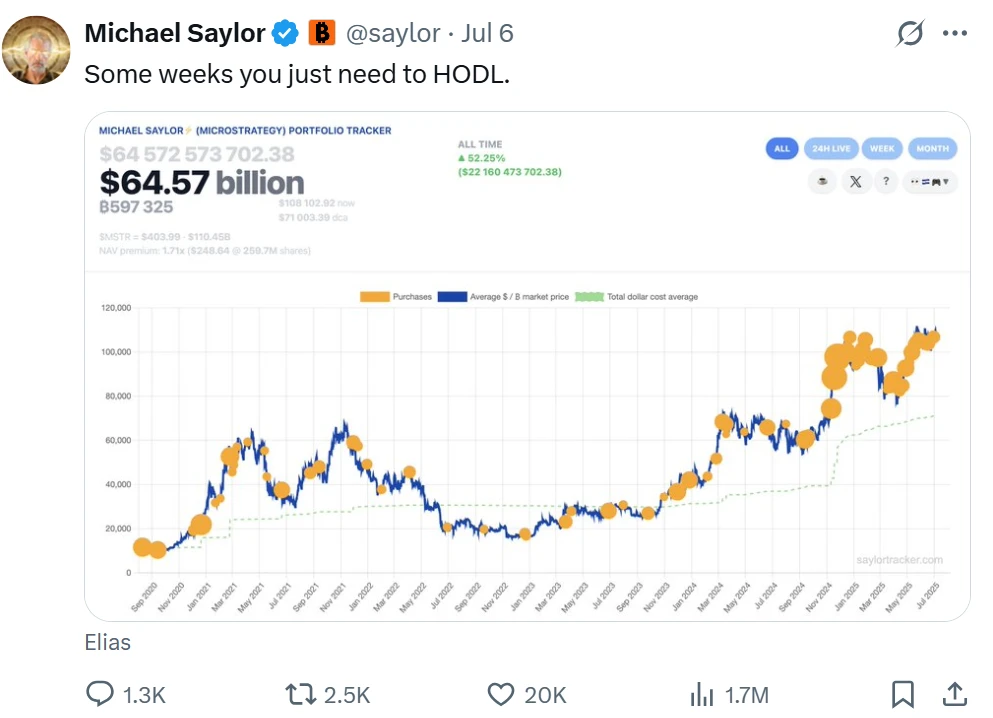
Strategy(原 MicroStrategy)CEO Michael Saylor 在上周日发文表示:“有些时候你只需要持有(Some weeks you just need to HODL)。”市场解读为其暗示暂停购买比特币。

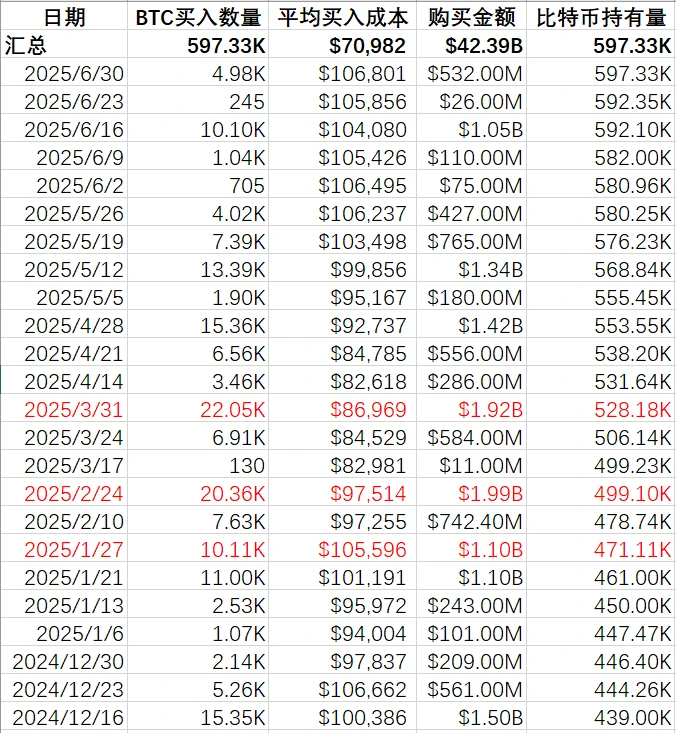
作为全球比特币持币量最大的上市公司,Michael Saylor 一贯的投资理念就是“比特币至上”,投资者也已经习惯了其将“买入”写进 DNA 中。所以,Strategy 的每一次暂停,都会触动市场最敏感的那根神经,尤其在此前连续 13 周增持 BTC 的情境下。
优先股

比特币财库的重量:Strategy 影响市场的方式

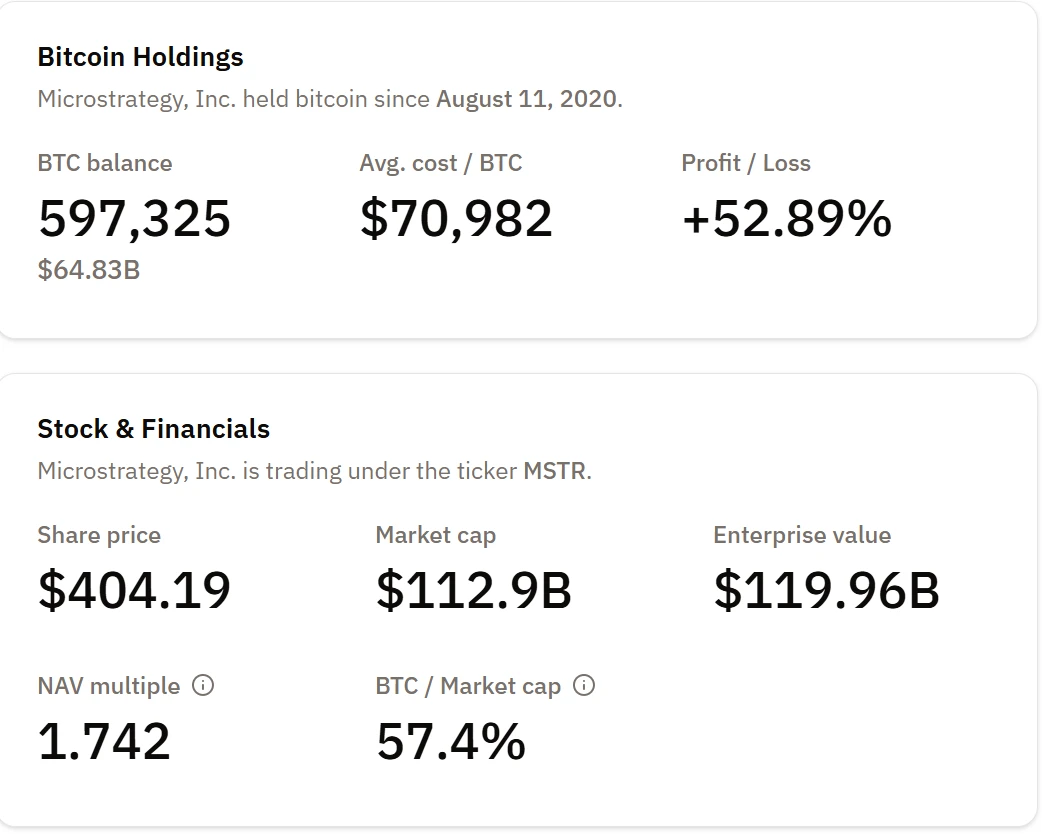
截止至 7 月 8 日,Strategy 的比特币持仓总量已经达到 59.7 万万枚,占总供应量的 2.84% ,不仅遥遥领先其他上市公司,其持币体量甚至是前 100 大上市公司(除 Strategy 外)合计的 2.3 倍

根据 Strategy 提交给美国 SEC 的 8-K 文件信息,截至 6 月 30 日,Strategy(MSTR.O)数字资产价值为 643.6 亿美元,平均成本为 70, 982 美元/枚,其中 2025 年第二季度比特币公允价值总值升值 140 亿美元。

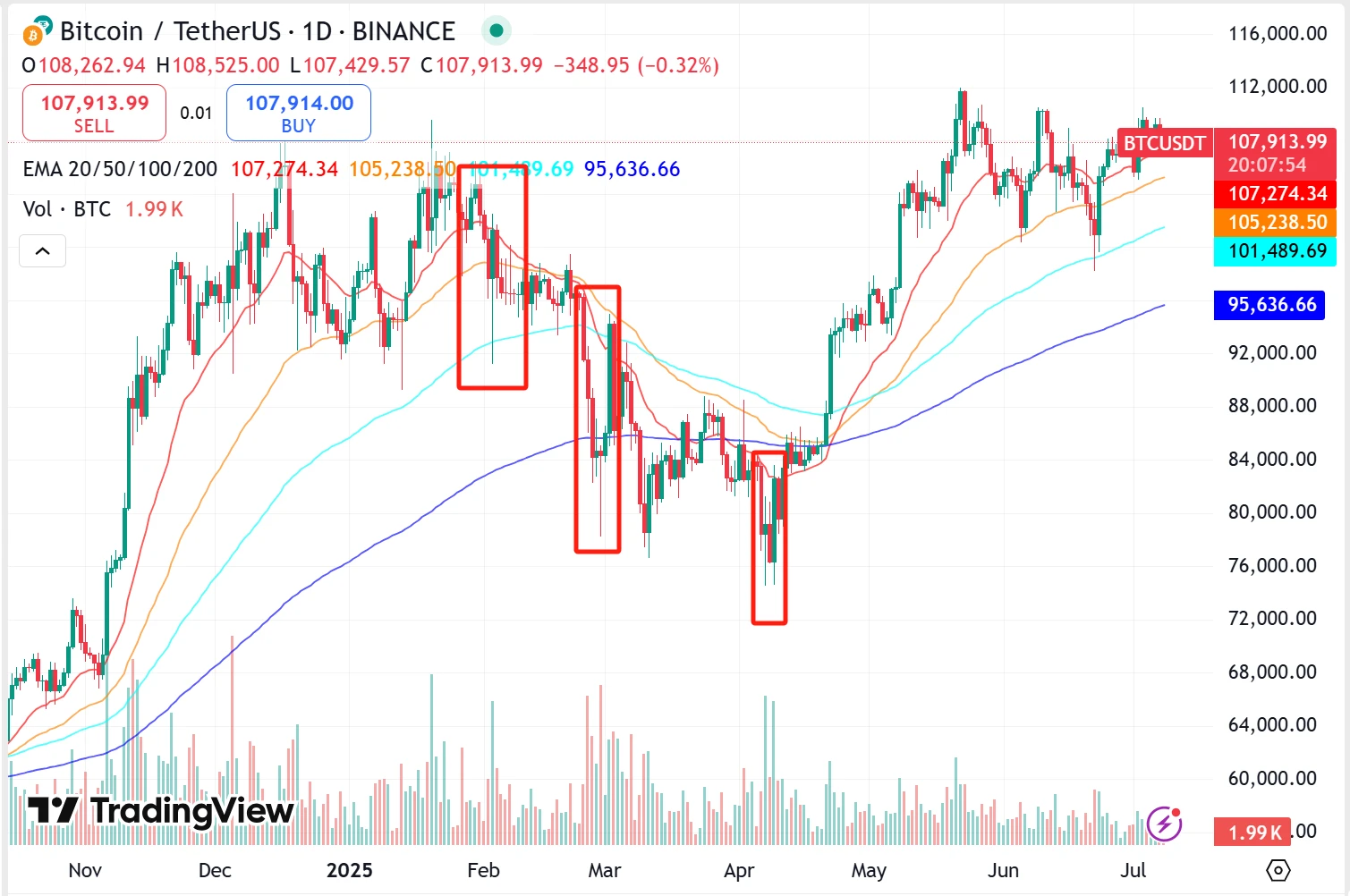
换句话说,Strategy 不仅是比特币的大鲸,更是这个市场价格情绪的杠杆,Strategy 的一举一动都会触动市场敏感点。从 2025 年以来的几次暂停购买的行为来看,几乎都预示着短期行情的回调,而这次会例外吗?
优先股

优先股

Strategy 暂停购买和比特币走势关联性

筹资飞轮:优先股的资本游戏

Strategy 原本是一家以企业分析软件起家的公司,自 2020 年起核心战略转向将比特币作为主要储备资产,旨在对冲通货膨胀并实现资产增值,Strategy 也因大规模投资比特币而名声大噪。

为持续购买比特币,Strategy 需要大量资本。因此,其选择通过发行优先股筹集资金。自 2025 年 2 月起,Strategy 先后发行了三种优先股,分别为 STRF、STRK 和 STRD,对应不同的收益机制和风险优先级:

  • STRF: 10% 累积股息、最高优先级。若未支付,股息将以每年额外 1% 的速度复利,最高可达 18% 。
  • STRK: 8% 累积股息,附带可转换期权。
  • STRD: 10% 非累积股息、低优先级,更多用于面向市场大众的广泛分发。

这种结构的设计核心在于让 Strategy 在不严重稀释普通股股东权益的前提下,持续撬动新资本进入,为其源源不断的比特币购买提供弹药,从而维持“发股—买币—涨股价”的飞轮闭环。

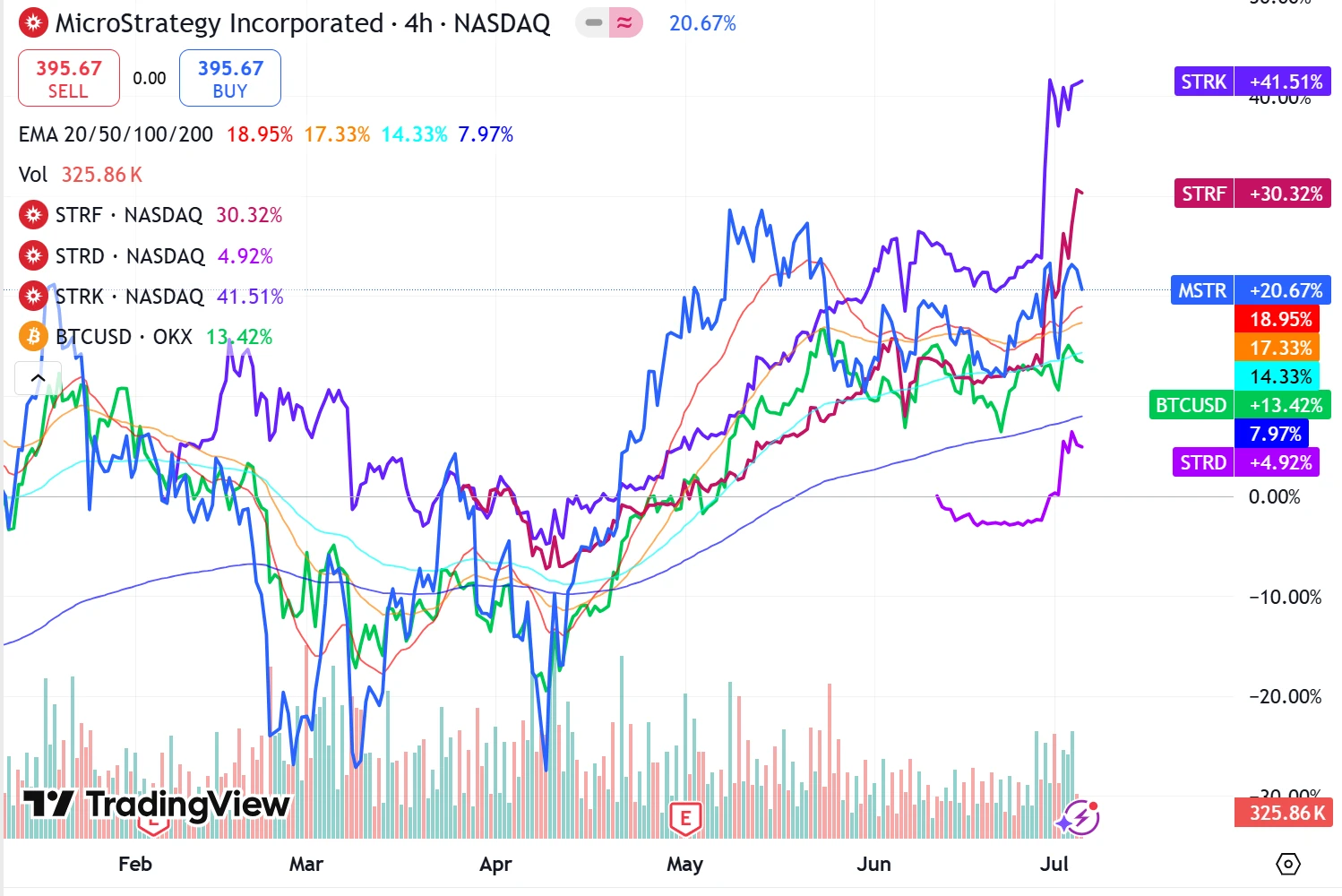
从市场表现来看,MicroStrategy(MSTR)显著优于比特币本身,尤其在近期“加密美股”热潮的推动下。STRK 和 STRF 作为较早发行的优先股,市场表现也非常优越,而较晚发行的 STRD 也展现出不俗的潜力。从价格走势来看,STRK 和 STRF 近期表现尤为亮眼,甚至极大地超越了 MSTR 的股票表现。
优先股

值得注意的是,在 3 月份,这场优先股发行计划就吸引了内部高层亲自下场。根据美国证券交易委员会披露文件显示,数名 Strategy 内部人士买入其最新推出的优先股,涉及公司 CEO、CFO 等高管,其中首席执行官 Phong Le 以 85 美元的价格购买了 6, 000 股优先股,首席财务官 Andrew Kang 购买了 1, 500 股,总法律顾问 Wei-Ming Shao 购买了 500 股。这种“自购”行为既是信号,也释放出公司对未来回报的强烈预期。

 6 月 5 日,Strategy 宣布公开发行 11, 764, 700 股 10.00% A 系列永久 Stride 优先股,发行价为每股 85 美元,并在 6 月 10 日完成交割,募资约 9.8 亿美元。就在今日,Strategy 再次宣布已签订一项新的销售协议。根据该协议拟发行 STRD 股票募资 42 亿美元,并预计将根据 ATM 计划准备“按需、分阶段”持续融资。这个飞轮,正在转得越来越快。

杠杆的另一面:增长引擎,亦是风险导火索?

根据 Strategy 在 5 月 1 日发布的2025 年第一季度财务报告显示,其通过优先股、可转换债券和普通股的 ATM 发行,累计筹资接近 100 亿美元,几乎全部投入比特币。这种高杠杆操作放大了比特币上涨带来的账面收益,但也推高了现金流负担,尤其是优先股带来的年化 8% ~ 10% 利息开支。

截至目前,MSTR 市值约 1129 亿美元,企业估值在 1200 亿美元左右,对应净资产倍数为 1.7 。虽然仍处于合理区间,但这条线的弹性,依赖于两个支点:一是比特币价格的持续强势,二是外部融资环境的顺畅与稳定。
优先股

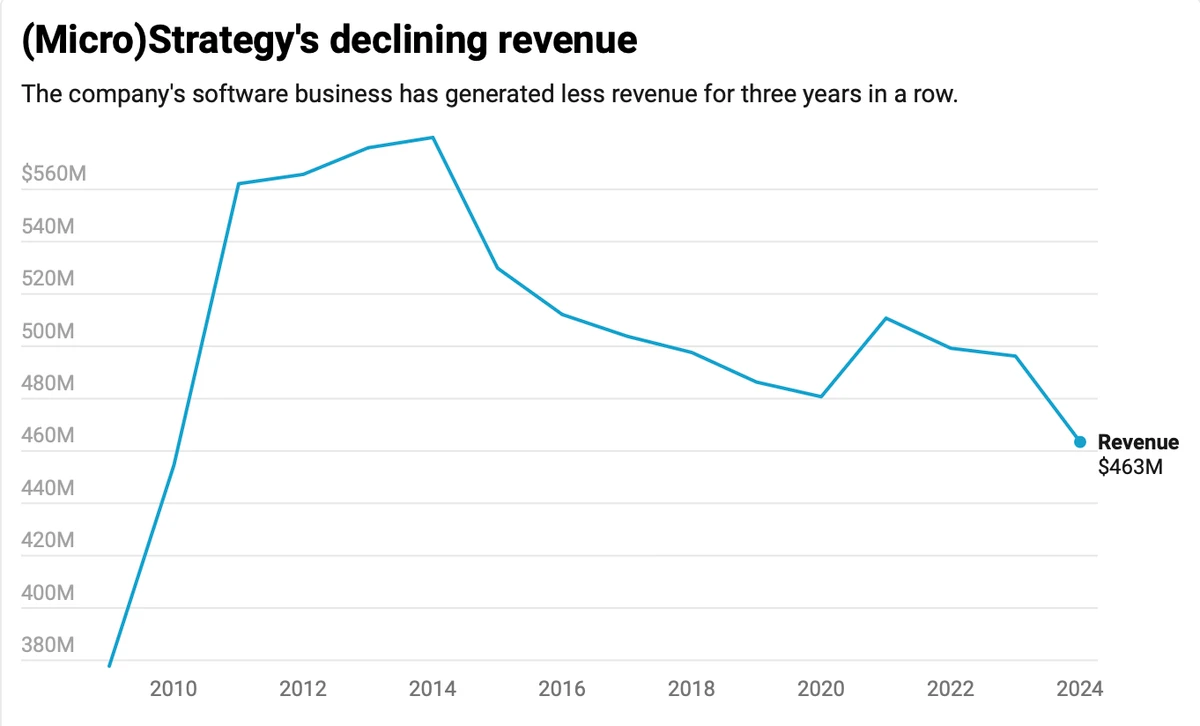
而从营收端来看,公司自身“造血”能力疲软。据@0x ChainMind提供的数据, 2024 年公司软件业务收入仅为 4.63 亿美元,创下 2010 年以来最低纪录。
优先股

从Q1的财务报告看,公司主营业务在 2025 年第一季度总收入为 1.111 亿美元,同比下降 3.6% (2024 年Q1为 1.152 亿美元)。不过,订阅服务收入 3710 万美元,同比增加 61.6% ,显示云服务和订阅模式的转型取得成功,是收入的亮点。如果仍使用旧的减值模型计算,运营费用与损失大概在 1.9 亿美元左右(这里存在争议点,Strategy 也因此面临集体诉讼),现金储备为 6030 万美元。如果按此数据推测,运营费用只能被勉强覆盖。公司若想维持运转与支付优先股 8% -10% 年化利息(每年支出高达 3 ~ 5 亿美元),就必须依赖“持续融资”来维持飞轮运作。

报表背后的“爆雷”: 59 亿浮亏,集体诉讼在路上

Strategy 面临集体诉讼的原因是其在 2025 年第一季度首次采用 FASB 新会计准则(ASU 2023-08)。按照新规,公司需将加密资产按公允价值计量,而不再仅在贬值时计提减值。这意味着比特币价格的任何波动,都会实时、直接地反映在利润表上。

结果是,Q1 单季度,Strategy 披露了 59 亿美元的未实现浮亏,直接引发 MSTR 股价在该季度暴跌 8% 。

更糟糕的是,公司被指控未能及时、全面地披露这些浮亏风险。纽约知名律所 Pomerantz LLP 旋即在弗吉尼亚东区法院对 Strategy 发起了集体诉讼,控诉其在 2024 年 4 月至 2025 年 4 月间“存在虚假与误导性陈述”,涉嫌违反联邦证券法。目前该案件正在推进中,投资者可在 7 月 15 日前申请加入集体诉讼。Strategy 表示将积极应对,但并未对案件结果作出预测。

这意味着,比特币价格不仅决定 Strategy 的资产价值,也正在决定它的法务风险、融资能力与投资者信心。

市场的声音

Michael Saylor 发文表示,Strategy 开发了一套 BTC 信用模型,综合考虑贷款期限、抵押覆盖率、BTC 价格、波动率及年化收益预期,用于生成比特币风险和信用利差的统计数据。Strategy 正通过旗下 STRK、STRF 和 STRD 推动信贷市场的数字化转型,这也意味着,Strategy 的路径已经不仅仅是买比特币,它更像是构建了一个围绕 BTC 资本化与金融化的系统闭环。

风投机构 Breed 的报告指出,Strategy 因规模、持仓和抗周期能力,或将成为加密财政模式的长期幸存者,并有 91% 概率于 2025 年第二季度纳入标普 500 指数。

但并非所有人都如此乐观。一些分析师指出,在牛市中这个飞轮运转顺畅,但一旦步入熊市,其偿债结构、优先股利息、现金流稳定性将受到严峻考验。

7 月 1 日,TD Cowen 在研究报告中重申了对 Strategy 的“买入”评级,并维持其每股 590 美元的目标价。其表示,尽管存在风险,Strategy 的股价相对于其持有的比特币(BTC)净资产值(NAV)出现溢价是合理的。该机构表示,Strategy 的“股权-BTC 循环”(equity-to-BTC loop)模式使其能够利用其股票发行收入购买更多比特币,从而推动更高的股价和进一步的比特币购买,形成了良性循环。

从当前的数据来看,Strategy 的短期现金流仍能“勉强维持”,其比特币持仓是公司资产负债表上的绝对主角。但这也正是它的最大风险所在:它的繁荣几乎建立在 BTC 价格稳定或上涨的假设之上。从某种意义上说,Strategy 已经不再是一家传统意义上的科技公司,它更像是一家用软件外壳包装的“比特币高杠杆资产管理平台”。


Trending Cryptos

Related Reads

The Full Story of How Crypto Unicorn Blockstream Is Mired in Serious Fraud Allegations

This article details serious allegations of fraud against Bitcoin infrastructure company Blockstream, founded by Bitcoin pioneer Adam Back. In June 2024, investigative account NatInfoSec published a report accusing Blockstream's mining note (BMN) program of potentially operating a multi-billion dollar scheme with Ponzi-like characteristics. The core allegations focus on Blockstream Mining Notes (BMNs), which offer investors fixed annual yields up to approximately 20% from Bitcoin mining. NatInfoSec's investigation raises several key issues: 1. **Suspicious Hashrate & Payout Capacity**: The analysis suggests Blockstream would need 20-45 EH/s of mining power to cover its BMN obligations, but its public dashboard shows only around 15 EH/s. Furthermore, no verifiable public evidence (e.g., grid connection records, import data) was found to support the massive mining operation required. 2. **Questionable Payout Source**: The BMN contract allows Blockstream to use Bitcoin from *any source* (Substitute Performance BTC) to fulfill investor payouts, raising concerns that payouts may not come from actual mining revenue. 3. **High-Risk, Fixed Returns**: Offering ~20% fixed yields in the volatile, cyclical Bitcoin mining industry is viewed as highly unusual and requires clear explanation. 4. **Undisclosed Criminal Record of Key Figure**: Christopher William Cook, a key figure in Blockstream's mining operations and CEO of spin-off Exacore, was found to have a federal felony conviction for mail fraud in 2008, a fact not disclosed in BMN offering documents. His background was also allegedly embellished. 5. **Potential Contagion to BSTR SPAC**: Questions were raised about whether these liabilities and Cook's record should have been disclosed in the SEC filings for Bitcoin Standard Treasury Company (BSTR), a separate Adam Back-associated firm planning a SPAC merger. The crypto community is divided. BitMEX Research validated Cook's criminal record and expressed concern over the high yields but found other evidence lacking or misleading, noting the legal separation between BMN, Blockstream, and BSTR. Blockstream defenders, like Samson Mow, argue the mining is real. Critics, however, emphasize the lack of independent, verifiable proof of the mining operation's scale and the true source of investor payouts. The article concludes that BMN remains shrouded in key unanswered questions regarding its actual size, the verifiability of its underlying mining assets and payouts, the source of its high yields, and the full role and disclosure concerning Chris Cook. Blockstream had not issued a comprehensive response at the time of writing.

marsbit4h ago

The Full Story of How Crypto Unicorn Blockstream Is Mired in Serious Fraud Allegations

marsbit4h ago

Trading

Spot
Futures

Hot Articles

What is $BITCOIN

DIGITAL GOLD ($BITCOIN): A Comprehensive Analysis Introduction to DIGITAL GOLD ($BITCOIN) DIGITAL GOLD ($BITCOIN) is a blockchain-based project operating on the Solana network, which aims to combine the characteristics of traditional precious metals with the innovation of decentralized technologies. While it shares a name with Bitcoin, often referred to as “digital gold” due to its perception as a store of value, DIGITAL GOLD is a separate token designed to create a unique ecosystem within the Web3 landscape. Its goal is to position itself as a viable alternative digital asset, although specifics regarding its applications and functionalities are still developing. What is DIGITAL GOLD ($BITCOIN)? DIGITAL GOLD ($BITCOIN) is a cryptocurrency token explicitly designed for use on the Solana blockchain. In contrast to Bitcoin, which provides a widely recognized value storage role, this token appears to focus on broader applications and characteristics. Notable aspects include: Blockchain Infrastructure: The token is built on the Solana blockchain, known for its capacity to handle high-speed and low-cost transactions. Supply Dynamics: DIGITAL GOLD has a maximum supply capped at 100 quadrillion tokens (100P $BITCOIN), although details regarding its circulating supply are currently undisclosed. Utility: While precise functionalities are not explicitly outlined, there are indications that the token could be utilized for various applications, potentially involving decentralized applications (dApps) or asset tokenization strategies. Who is the Creator of DIGITAL GOLD ($BITCOIN)? At present, the identity of the creators and development team behind DIGITAL GOLD ($BITCOIN) remains unknown. This situation is typical among many innovative projects within the blockchain space, particularly those aligning with decentralized finance and meme coin phenomena. While such anonymity may foster a community-driven culture, it intensifies concerns about governance and accountability. Who are the Investors of DIGITAL GOLD ($BITCOIN)? The available information indicates that DIGITAL GOLD ($BITCOIN) does not have any known institutional backers or prominent venture capital investments. The project seems to operate on a peer-to-peer model focused on community support and adoption rather than traditional funding routes. Its activity and liquidity are primarily situated on decentralized exchanges (DEXs), such as PumpSwap, rather than established centralized trading platforms, further highlighting its grassroots approach. How DIGITAL GOLD ($BITCOIN) Works The operational mechanics of DIGITAL GOLD ($BITCOIN) can be elaborated on based on its blockchain design and network attributes: Consensus Mechanism: By leveraging Solana’s unique proof-of-history (PoH) combined with a proof-of-stake (PoS) model, the project ensures efficient transaction validation contributing to the network's high performance. Tokenomics: While specific deflationary mechanisms have not been extensively detailed, the vast maximum token supply implies that it may cater to microtransactions or niche use cases that are still to be defined. Interoperability: There exists the potential for integration with Solana’s broader ecosystem, including various decentralized finance (DeFi) platforms. However, the details regarding specific integrations remain unspecified. Timeline of Key Events Here is a timeline that highlights significant milestones concerning DIGITAL GOLD ($BITCOIN): 2023: The initial deployment of the token occurs on the Solana blockchain, marked by its contract address. 2024: DIGITAL GOLD gains visibility as it becomes available for trading on decentralized exchanges like PumpSwap, allowing users to trade it against SOL. 2025: The project witnesses sporadic trading activity and potential interest in community-led engagements, although no noteworthy partnerships or technical advancements have been documented as of yet. Critical Analysis Strengths Scalability: The underlying Solana infrastructure supports high transaction volumes, which could enhance the utility of $BITCOIN in various transaction scenarios. Accessibility: The potential low trading price per token could attract retail investors, facilitating wider participation due to fractional ownership opportunities. Risks Lack of Transparency: The absence of publicly known backers, developers, or an audit process may yield skepticism regarding the project's sustainability and trustworthiness. Market Volatility: The trading activity is heavily reliant on speculative behavior, which can result in significant price volatility and uncertainty for investors. Conclusion DIGITAL GOLD ($BITCOIN) emerges as an intriguing yet ambiguous project within the rapidly evolving Solana ecosystem. While it attempts to leverage the “digital gold” narrative, its departure from Bitcoin's established role as a store of value underscores the need for a clearer differentiation of its intended utility and governance structure. Future acceptance and adoption will likely depend on addressing the current opacity and defining its operational and economic strategies more explicitly. Note: This report encompasses synthesised information available as of October 2023, and developments may have transpired beyond the research period.

441 Total ViewsPublished 2025.05.13Updated 2025.05.13

What is $BITCOIN

Discussions

Welcome to the HTX Community. Here, you can stay informed about the latest platform developments and gain access to professional market insights. Users' opinions on the price of BTC (BTC) are presented below.

活动图片