【关键一周】3大重磅事件来袭,比特币涨跌全看它们了!

ambcryptoPublished on 2025-07-01Last updated on 2026-06-25

Abstract

比特币的反弹像极了4月暴跌前的平静。

比特币 [BTC] 在 2025 年第二季度实现强势收官。尽管面临诸多宏观逆风:4 月的大幅回调、美联储持续的鹰派基调以及中东地缘紧张局势。但 BTC 本周仍录得 7% 的反弹,并锁定 30% 的季度涨幅。

表面上看,市场似乎正摆脱宏观风险,但 CryptoQuant 提供的现货与衍生品交易量比率显示,局势可能没那么乐观。截至 5 月底,该比率降至 0.05,为大选前的最低水平,尽管此后略有反弹,但市场结构仍显脆弱。

据 AMBCrypto 数据,当前的周度上涨虽达 7%,但尚不足以构成结构性突破。相反,有三个正在演化中的催化因素可能驱动下一轮剧烈波动,这条路径远非直线。

比特币进入高波动预警区间

比特币在 6 月初的开盘价为 104,785 美元,预计将在月底以 2.89% 的温和涨幅收官,远低于 5 月份的 10.99%。

市场动能减缓主要受到战争相关 FUD(恐惧、不确定性和怀疑)影响,导致经济增长前景受限。

与此同时,市场关注点正从价格本身转向更广泛的宏观变量——而本周即将发布的一系列关键经济数据,很可能成为短期价格走向的核心推手。

本周数据:比特币是否迎来突破催化剂?

接下来的几天,美国将发布多项重要经济指标,包括:

美联储主席鲍威尔讲话

非农就业数据(NFP)

失业率与制造业活动指数

距离下一次 FOMC 会议还有不到 30 天,政策制定者将在这些数据基础上决定是否启动市场期待已久的降息。

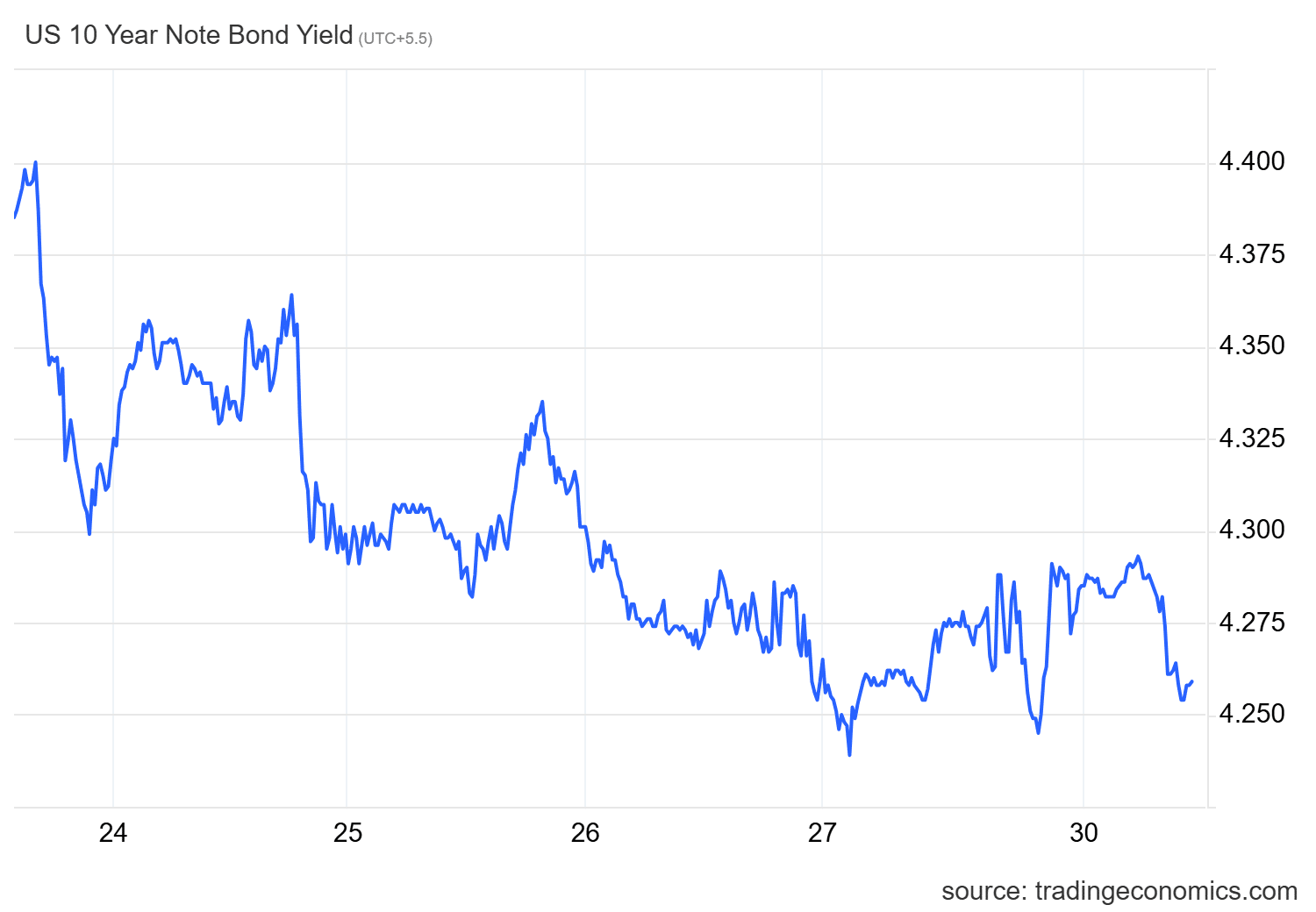
虽然 10 年期美债收益率本周已下跌 7.7%,显示市场倾向于“鸽派预期”,但整体情绪依然偏谨慎。
根据 Polymarket 数据,美联储在本轮会议上“不降息”的概率高达 82%,通胀粘性与关税风险仍在限制其操作空间。

5 月份 CPI 环比增长 0.1%,进一步强化了鹰派声音,使得市场对降息的期待显得更像是“愿望交易”。

如果经济数据转软,比特币或借势突破

若本周发布的就业或制造业数据弱于预期,可能刺激风险资产上涨,提升市场风险偏好。

对于比特币而言,这可能是突破 110,000 美元 所需的关键催化剂。尤其在现阶段,技术指标保持中性、市场情绪未进入极端区间,利于趋势延续。

杠杆快速回升:重复四月剧本的隐忧?

尽管表面情绪尚未极端乐观,但杠杆数据已经显著升温。

Deribit Taker 买入/卖出比率飙升至 12.5,多头情绪高涨

全市场未平仓合约增加 1.63%,至 720 亿美元

现货与衍生品交易比率回升至 0.07,为 5 月初以来首次上扬

这些数据表明,资金正在流向衍生品市场,而非现货市场。换句话说,本轮上涨更多是由投机推动,而非实质性现货买盘驱动。
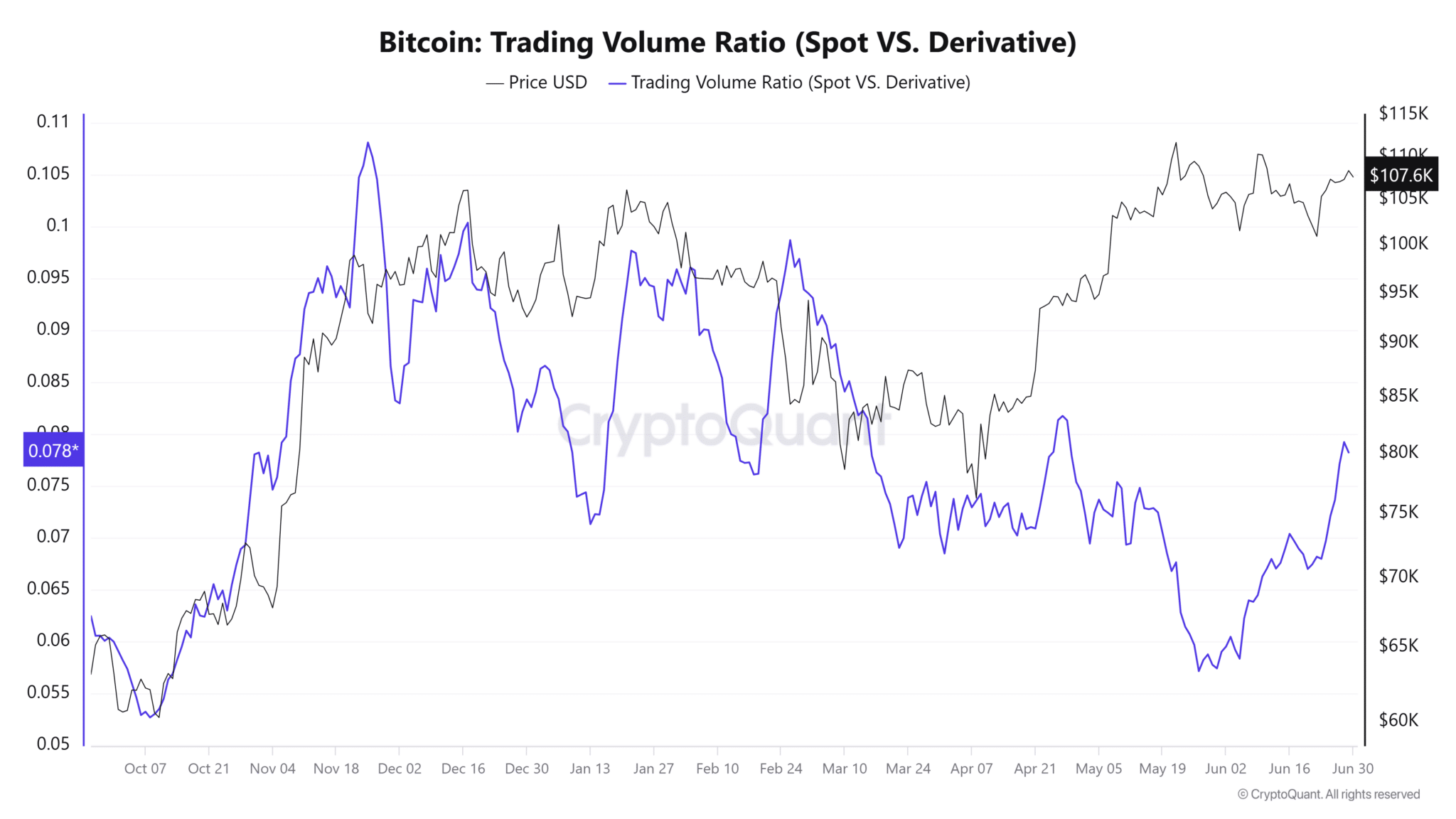
这样的结构,容易在突发宏观消息下迅速失衡,尤其让人联想到今年4月因杠杆过高引发的20%暴跌行情。

重演4月剧本的风险是否真实存在?

目前,比特币面临一个关键十字路口:

若宏观数据弱于预期,市场将迎来降息预期升温,BTC 有望借势上行;

但若数据超预期、通胀压力不减,而杠杆持续攀升,市场将再次暴露在清算风险之下。

在特朗普关税风险升温、美联储预期仍具不确定性、以及期货市场持续堆积多头头寸的背景下,比特币的上涨之路可能比看起来更脆弱。

总结:短期上涨不代表结构安全

尽管 BTC 当前正在逐步逼近关键阻力位,但过高的杠杆水平叠加潜在的宏观冲击,已让市场进入高波动预警区间。

这轮反弹的持续性,将取决于接下来几天经济数据的表现与市场如何重新定价“降息”的可能性。

多头已经集结,买盘汹涌,但如果基本面不给力——另一场清算风暴,可能就在不远处。

Trending Cryptos

Related Reads

First Long-Horizon Doc2Repo Training Dataset: Code Agents Move Beyond Bug Fixing and Begin Creating Repositories

With the advancement of LLM Code Agents, the research focus is shifting towards long-horizon, real-world tasks, moving beyond simple bug fixes to full repository generation. To address this, researchers from Renmin University of China introduced the DeNovoSWE dataset. This dataset focuses on long-term software engineering tasks, specifically the "document-to-repository" challenge—generating an entire, executable code repository from a task description. The DeNovoSWE construction method employs a Divide & Conquer approach. It breaks down target repositories into core capabilities and uses a multi-agent Draft-Critic-Repair workflow to automatically generate high-quality, evaluation-aligned task documents. The dataset also implements difficulty-aware filtering to balance quality and diversity. The result is a high-quality, anti-leakage dataset of 4,818 instances. Experiments show that models trained on DeNovoSWE achieve significant improvements in long-horizon repository generation. For instance, Qwen3-30B-A3B-Instruct's performance on the BeyondSWE-Doc2Repo benchmark increased from 5.8% to 47.2%, and on NL2RepoBench from 4.3% to 23.0%. Similar gains were observed with stronger backbones, demonstrating that dedicated long-horizon training data is crucial for advancing Code Agents from maintainers to architects capable of planning and building complete software projects from scratch.

marsbit14m ago

First Long-Horizon Doc2Repo Training Dataset: Code Agents Move Beyond Bug Fixing and Begin Creating Repositories

marsbit14m ago

Even CZ Praised Hyperliquid as 'Awesome', But Its Biggest Moat Might Also Be Its Biggest Risk

In an episode of Galaxy Brains, Binance founder CZ praised Hyperliquid as "awesome" but clarified that while its product is strong, Binance cannot compete in its specific niche due to Hyperliquid's no-KYC, decentralized model. CZ noted he would not personally operate such a model, highlighting the inherent legal and compliance risks tied to its access advantage. The discussion underscores a core market structure conflict: on-chain perp platforms like Hyperliquid thrive on open, low-barrier access, which regulated exchanges like Binance cannot replicate without abandoning their global compliance posture. However, this very advantage makes Hyperliquid a clear target for regulatory scrutiny. The UK FCA has already issued a warning against Hyperliquid for potentially offering unauthorized services to UK users, framing it as a financial services provider rather than neutral infrastructure. Historical cases like the CFTC's action against bZeroX and Ooki DAO further illustrate that regulators may pursue decentralized structures if they facilitate leveraged trading for retail users without proper controls. Meanwhile, regulated venues like Cboe are developing US-compliant "continuous futures" that mimic perpetual exposure, narrowing the product gap. Hyperliquid's long-term edge may increasingly hinge on its access model—the very feature most exposed to regulatory pressure. The key question is whether its "access premium" can withstand escalating legal challenges as on-chain perps gain mainstream attention.

marsbit33m ago

Even CZ Praised Hyperliquid as 'Awesome', But Its Biggest Moat Might Also Be Its Biggest Risk

marsbit33m ago

A Hard-Fought Battle to Defend Par Value: STRC Drifts Further Away from $100

STRC, the dividend-paying stock issued by Michael Saylor's bitcoin reserve firm Strategy (formerly MicroStrategy), is trading far below its intended $100 par value, closing recently at $80.84. With a key dividend snapshot date approaching, Saylor aims to pull the price back to $100, as per SEC filings stating the company's goal to stabilize the stock near that level. The situation is complicated by the June volume-weighted average price (VWAP) falling below $95, triggering an internal rule that mandates the next dividend increase to be at least double the standard 0.25% per cycle, potentially pushing the annualized dividend yield to 12%. However, attracting buyers with this higher yield faces challenges: the payout is spread over 24 bi-monthly installments, the board can alter or suspend dividends at any time, and there is no guarantee against further price declines. Beyond raising dividends, Strategy has limited tools to boost the stock. These include direct share buybacks (never utilized), halting new share issuances above $100 (which currently cap the price), selling ordinary MSTR shares to build a cash buffer for dividends (with limited effect so far), or announcing special shareholder benefits. Historically, STRC has reclaimed the $100 mark, such as in October last year, driven by a combination of dividend fulfillment, a rate hike, and a pause in share sales. The core question remains how much cost and effort Strategy is willing to bear to attract the necessary buying pressure to restore the $100 par value.

Foresight News1h ago

A Hard-Fought Battle to Defend Par Value: STRC Drifts Further Away from $100

Foresight News1h ago

Fable 5 is about to make a comeback, code exposed? Anthropic CEO kicked out of the White House

Fable 5, a previously restricted AI model from Anthropic, appears poised for a comeback. Evidence from leaked code in the Claude Code v2.1.190 version suggests a shift in its business model from a separate purchase to a potentially limited weekly usage allowance within standard Claude subscriptions. Furthermore, the model has reportedly reappeared in Amazon Bedrock documentation. This potential revival coincides with significant internal changes at Anthropic. According to a report by The Wired, CEO Dario Amodei was reportedly sidelined from negotiations with the Trump administration over Fable 5's export restrictions. Government officials found him difficult to communicate with. Co-founder Tom Brown and policy head Sarah Heck took over discussions, leading to more productive technical talks aimed at addressing White House security concerns about the model being "jailbroken." External pressure is mounting as a bipartisan group of US lawmakers has demanded answers from the Commerce Department by a June 26 deadline regarding the criteria and timeline for potentially reinstating public access to Fable 5. The potential return of Fable 5 comes as competitors OpenAI and Google have reportedly delayed their own major model releases. If Anthropic successfully navigates the government's security review, Fable 5 could gain a significant "safety-certified" advantage in the enterprise market. The countdown to the June 26 deadline is now underway.

marsbit1h ago

Fable 5 is about to make a comeback, code exposed? Anthropic CEO kicked out of the White House

marsbit1h ago

Trading

Spot
Futures

Hot Articles

What is $BITCOIN

DIGITAL GOLD ($BITCOIN): A Comprehensive Analysis Introduction to DIGITAL GOLD ($BITCOIN) DIGITAL GOLD ($BITCOIN) is a blockchain-based project operating on the Solana network, which aims to combine the characteristics of traditional precious metals with the innovation of decentralized technologies. While it shares a name with Bitcoin, often referred to as “digital gold” due to its perception as a store of value, DIGITAL GOLD is a separate token designed to create a unique ecosystem within the Web3 landscape. Its goal is to position itself as a viable alternative digital asset, although specifics regarding its applications and functionalities are still developing. What is DIGITAL GOLD ($BITCOIN)? DIGITAL GOLD ($BITCOIN) is a cryptocurrency token explicitly designed for use on the Solana blockchain. In contrast to Bitcoin, which provides a widely recognized value storage role, this token appears to focus on broader applications and characteristics. Notable aspects include: Blockchain Infrastructure: The token is built on the Solana blockchain, known for its capacity to handle high-speed and low-cost transactions. Supply Dynamics: DIGITAL GOLD has a maximum supply capped at 100 quadrillion tokens (100P $BITCOIN), although details regarding its circulating supply are currently undisclosed. Utility: While precise functionalities are not explicitly outlined, there are indications that the token could be utilized for various applications, potentially involving decentralized applications (dApps) or asset tokenization strategies. Who is the Creator of DIGITAL GOLD ($BITCOIN)? At present, the identity of the creators and development team behind DIGITAL GOLD ($BITCOIN) remains unknown. This situation is typical among many innovative projects within the blockchain space, particularly those aligning with decentralized finance and meme coin phenomena. While such anonymity may foster a community-driven culture, it intensifies concerns about governance and accountability. Who are the Investors of DIGITAL GOLD ($BITCOIN)? The available information indicates that DIGITAL GOLD ($BITCOIN) does not have any known institutional backers or prominent venture capital investments. The project seems to operate on a peer-to-peer model focused on community support and adoption rather than traditional funding routes. Its activity and liquidity are primarily situated on decentralized exchanges (DEXs), such as PumpSwap, rather than established centralized trading platforms, further highlighting its grassroots approach. How DIGITAL GOLD ($BITCOIN) Works The operational mechanics of DIGITAL GOLD ($BITCOIN) can be elaborated on based on its blockchain design and network attributes: Consensus Mechanism: By leveraging Solana’s unique proof-of-history (PoH) combined with a proof-of-stake (PoS) model, the project ensures efficient transaction validation contributing to the network's high performance. Tokenomics: While specific deflationary mechanisms have not been extensively detailed, the vast maximum token supply implies that it may cater to microtransactions or niche use cases that are still to be defined. Interoperability: There exists the potential for integration with Solana’s broader ecosystem, including various decentralized finance (DeFi) platforms. However, the details regarding specific integrations remain unspecified. Timeline of Key Events Here is a timeline that highlights significant milestones concerning DIGITAL GOLD ($BITCOIN): 2023: The initial deployment of the token occurs on the Solana blockchain, marked by its contract address. 2024: DIGITAL GOLD gains visibility as it becomes available for trading on decentralized exchanges like PumpSwap, allowing users to trade it against SOL. 2025: The project witnesses sporadic trading activity and potential interest in community-led engagements, although no noteworthy partnerships or technical advancements have been documented as of yet. Critical Analysis Strengths Scalability: The underlying Solana infrastructure supports high transaction volumes, which could enhance the utility of $BITCOIN in various transaction scenarios. Accessibility: The potential low trading price per token could attract retail investors, facilitating wider participation due to fractional ownership opportunities. Risks Lack of Transparency: The absence of publicly known backers, developers, or an audit process may yield skepticism regarding the project's sustainability and trustworthiness. Market Volatility: The trading activity is heavily reliant on speculative behavior, which can result in significant price volatility and uncertainty for investors. Conclusion DIGITAL GOLD ($BITCOIN) emerges as an intriguing yet ambiguous project within the rapidly evolving Solana ecosystem. While it attempts to leverage the “digital gold” narrative, its departure from Bitcoin's established role as a store of value underscores the need for a clearer differentiation of its intended utility and governance structure. Future acceptance and adoption will likely depend on addressing the current opacity and defining its operational and economic strategies more explicitly. Note: This report encompasses synthesised information available as of October 2023, and developments may have transpired beyond the research period.

449 Total ViewsPublished 2025.05.13Updated 2025.05.13

What is $BITCOIN

Discussions

Welcome to the HTX Community. Here, you can stay informed about the latest platform developments and gain access to professional market insights. Users' opinions on the price of BTC (BTC) are presented below.

活动图片