Цена Solana приближается к 200 долларам на фоне роста TVL

cryptonews.ruPublished on 2022-08-15Last updated on 2025-05-15

Цена Solana (SOL) выросла почти на 25% всего за пять дней, поднявшись с 147 долларов 6 мая до 183 долларов к 10 мая. Рост последовал за прорывом биткоина выше 100 000 долларов и помог ускорить рост рынка альткоинов.

Хотя с тех пор SOL колеблется около отметки в 180 долларов, растущая активность в сети и данные по деривативам указывают на дальнейший рост.

Но не все настроены оптимистично. Аналитики, такие как CryptoBullet, предупреждают, что Ethereum может вскоре превзойти Solana по ключевым техническим показателям в паре SOL/ETH.

Экосистема DeFi Соланы опережает Ethereum Layer-2s

По данным DefiLlama, Solana в настоящее время занимает второе место по общему объёму заблокированных средств (TVL). В её экосистеме в настоящее время заблокировано 10,9 миллиарда долларов, что превышает совокупный TVL основных платформ второго уровня Ethereum, таких как Arbitrum, Base и Avalanche.
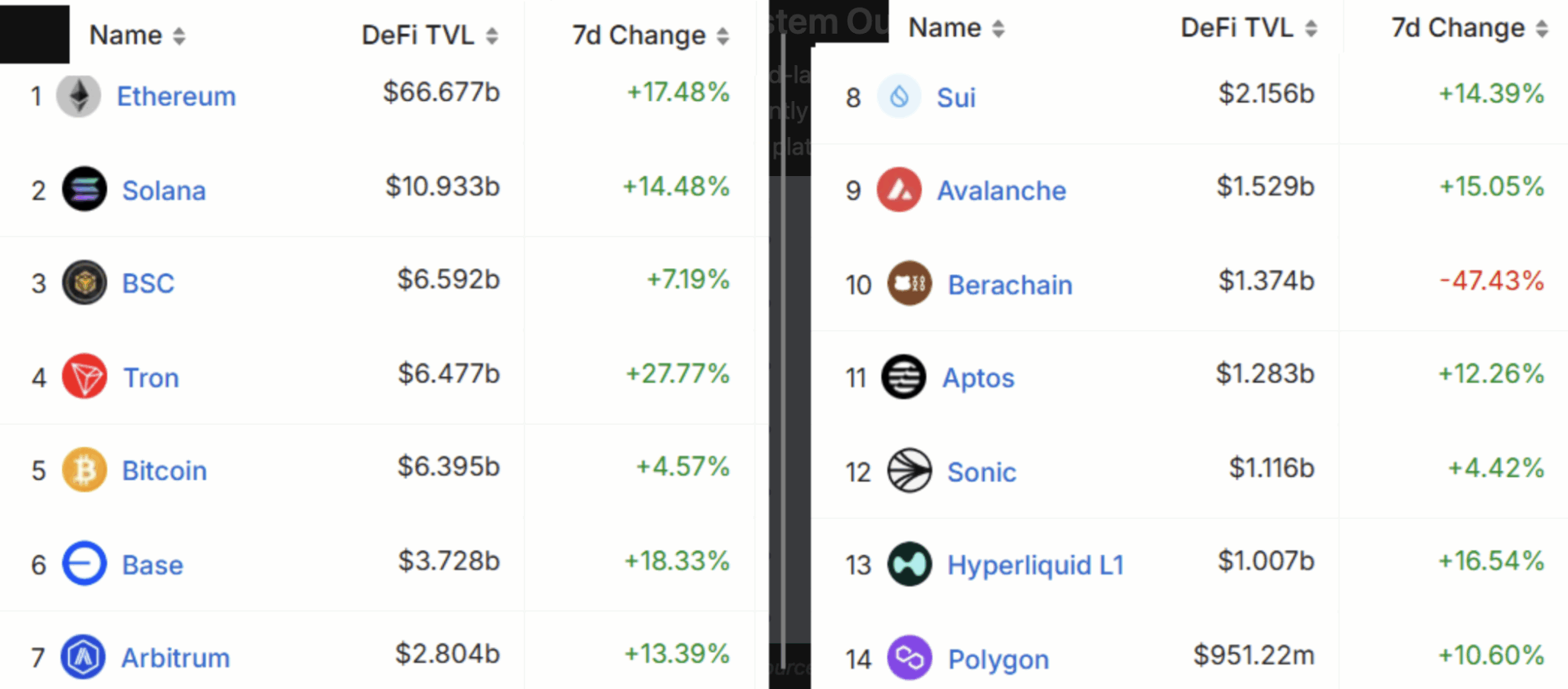
Рейтинг блокчейна по TVL, USD. Источник: DefiLlama

За 30 дней объём торгов на Raydium DEX вырос на 78%, в то время как объём торгов на Jito вырос на 41%. Объём торгов на Marinade Finance, ещё одной платформе для стейкинга, вырос на 56%. Эти события указывают на рост вовлечённости пользователей в сектор децентрализованных финансов (DeFi) Solana, что, в свою очередь, намекает на потенциальное повышение цены Solana в будущем.

Между тем, рост активности привёл не только к увеличению заблокированного капитала. Доходы от комиссий в сети также резко возросли. За последние 30 дней Solana заработала 43,3 миллиона долларов на комиссиях базового уровня, уступив только Tron с 51,9 миллионами долларов и обогнав Ethereum с 24,9 миллионами долларов за тот же период.

Комиссионные доходы и динамика размещения ставок повышают спрос на SOL

Высокие комиссии могут показаться недостатком, но они часто отражают высокую загруженность сети. В случае с Solana рост комиссий свидетельствует о здоровой активности в сфере DeFi и децентрализованных приложений (DApp).
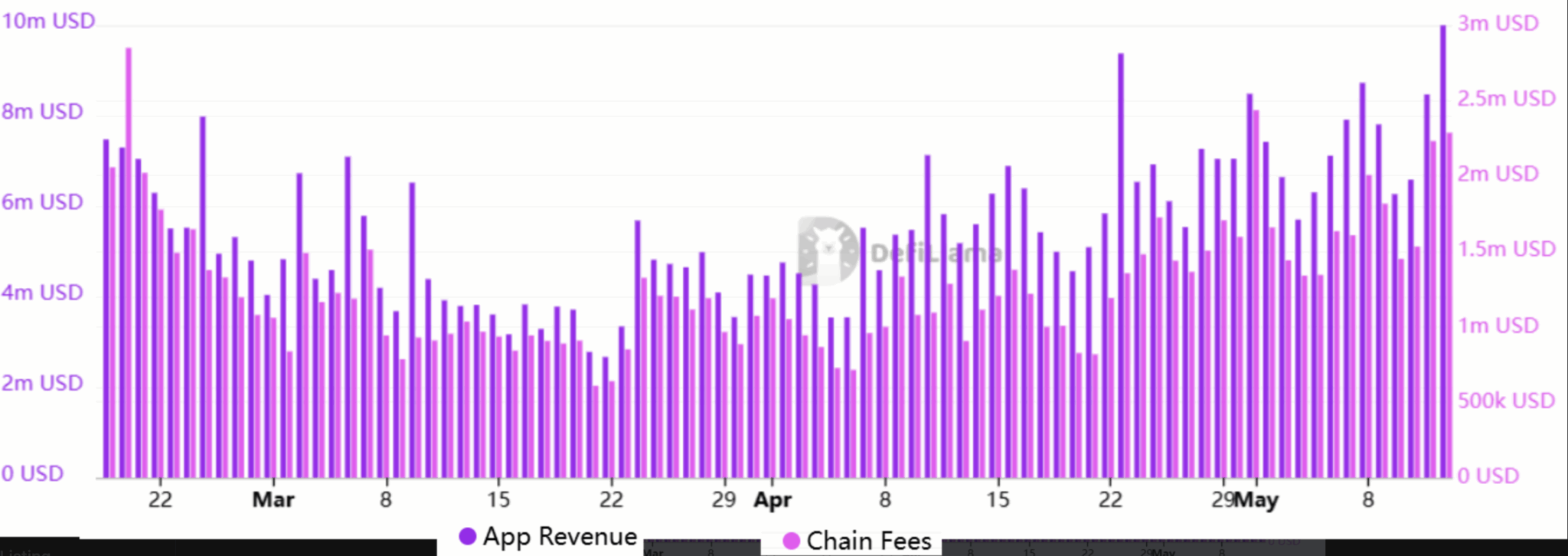
Доходность DApps в сети Solana в сравнении с комиссиями за транзакции. Источник: DefiLlama

Данные DefiLlama показывают, что доходы DApps на Solana и сборы в сети приближаются к трёхмесячным максимумам. Эта тенденция повышает спрос на SOL, собственный токен, поскольку он нужен пользователям для оплаты транзакций и взаимодействия с приложениями.

В то же время более 65% предложения SOL по-прежнему находится в стейкинге. Это ограничивает доступное предложение на открытом рынке, способствуя сохранению тенденции к росту цен. Совокупный эффект от увеличения доходов DApp и заблокированного предложения токенов задал бычий тон для SOL.

Что ждет Solana Price впереди?

Несмотря на рост в сети, рынок деривативов показывает, что трейдеры пока не настроены чрезмерно оптимистично. Согласно данным Laevitas, ставка финансирования бессрочных фьючерсов SOL составляет 8%, что находится в нейтральном диапазоне от 5% до 10%.

Положительная ставка финансирования указывает на то, что трейдеры делают ставку на рост, но скромный процент говорит о сдержанном оптимизме. SOL по-прежнему торгуется примерно на 40% ниже своего максимума в январе 2025 года в 295 долларов. Без явного катализатора прорыва быки остаются осторожными.
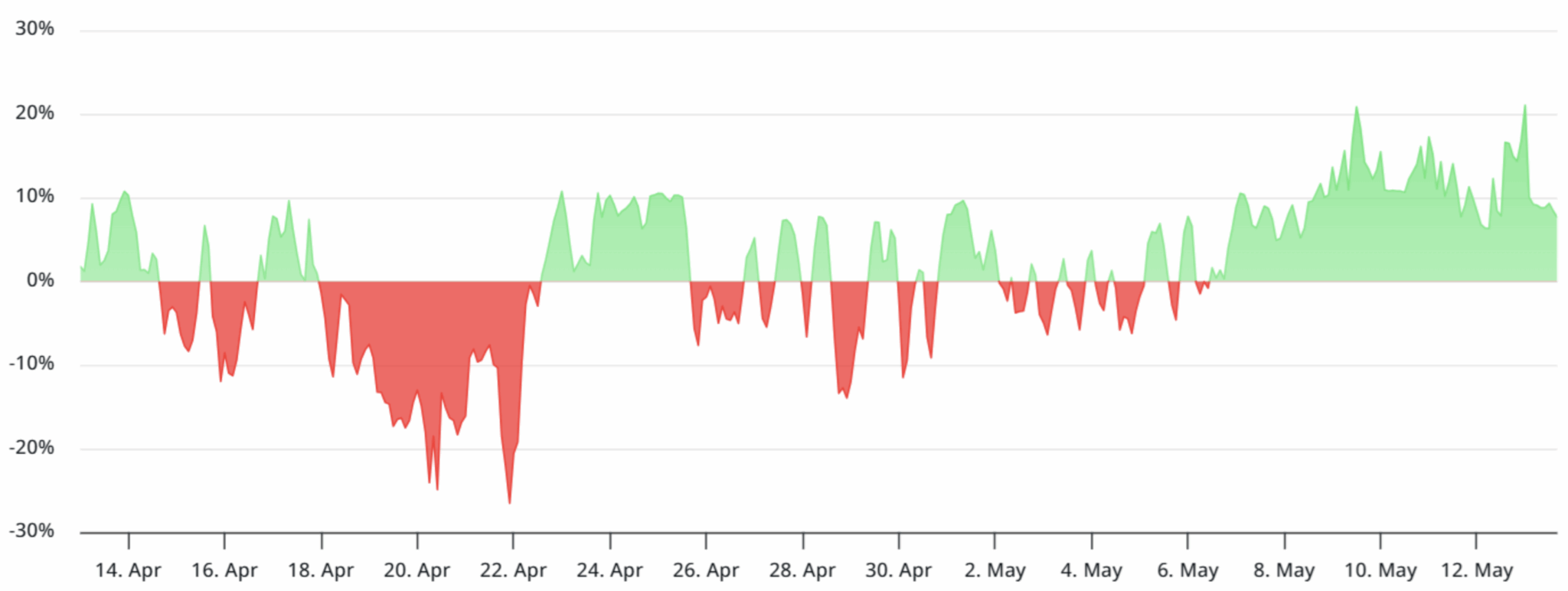
Годовая ставка финансирования бессрочных фьючерсов SOL. Источник: Laevitas.ch

Тем не менее, настроения могут быстро измениться, если такие идеи, как потенциальное одобрение спотового ETF на Solana или интеграция в резервы цифровых активов на государственном уровне, получат распространение. Токенизация традиционных активов на Solana — ещё одна область, которая может привлечь институциональный интерес.

Аналитик Предупреждает, что Ethereum Скоро ‘сокрушит’ Цену Solana

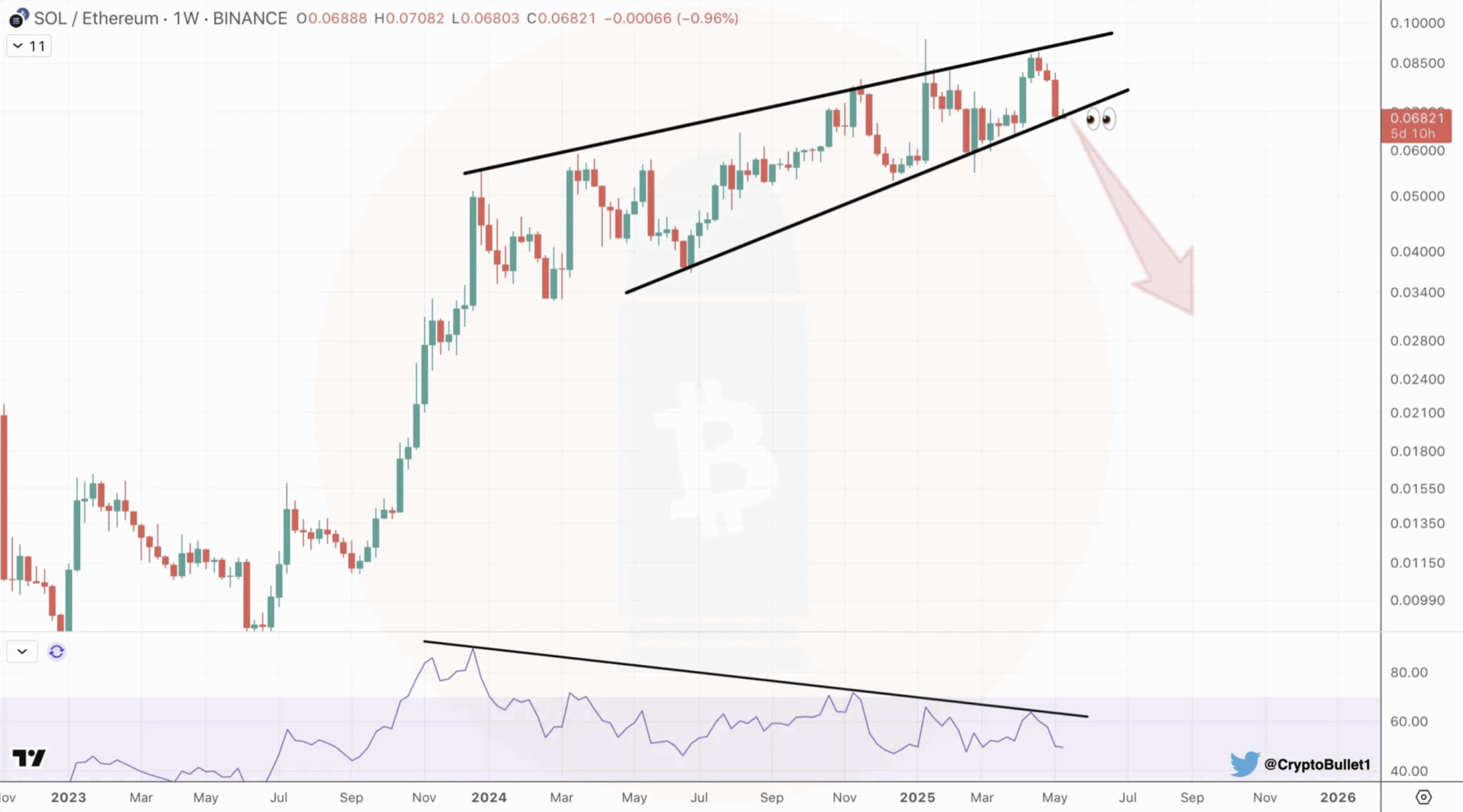
Не все наблюдатели за рынком уверены, что SOL возглавит следующий этап цикла альткоинов. В публикации от 10 мая трейдер CryptoBullet отметил возможный прорыв на недельном графике SOL/ETH.

«Люди спрашивают меня, почему я считаю, что $SOL будет отставать от других криптовалют до конца года, — написал CryptoBullet. — Просто взгляните на эту диаграмму $SOL/ETH 1W… В ближайшие несколько месяцев #Ethereum превзойдёт #Solana».

Он отметил, что пара, по-видимому, выходит из восходящего клина — модели, которую часто считают «медвежьей». Если Ethereum начнёт опережать SOL, это может привести к возвращению капитала в ETH, особенно если популярность Ethereum в качестве инструмента для биржевых фондов продолжит расти.

Solana продолжает демонстрировать высокие показатели в сети, от доходов DApp до роста ставок и TVL. Однако она сталкивается с конкурентным давлением со стороны Ethereum, поскольку макроэкономические и технические факторы совпадают.

Попытка SOL вернуть себе уровень в 200 долларов может увенчаться успехом в краткосрочной перспективе. Однако остаётся более широкий вопрос: сможет ли Solana сохранить свой импульс, если Ethereum вернёт себе внимание?

Показатели сети рисуют оптимистичную картину, но трейдеры внимательно следят за парой SOL/ETH, чтобы понять, что будет дальше.
Trending Cryptos

Related Reads

Foundation Steps Back, Ethlabs Steps Forward: Ethereum Undergoes Its Largest Restructuring in History

On June 23rd, the Ethereum ecosystem witnessed two major shifts, signaling a significant governance realignment. First, former Ethereum Foundation researchers established Ethlabs, a new independent non-profit. Backed by major ETH holders like Bitmine and SharpLink, Ethlabs aims to address practical needs for institutional adoption, including faster settlement, native asset issuance, cross-chain transactions, and mainnet scaling. Secondly, the Ethereum Foundation announced a major restructuring, laying off 54 employees (20% of its staff) to become a leaner entity focused on protocol governance and maintenance rather than being the primary builder. This move represents a pivotal correction. Criticisms had mounted over the Foundation's perceived slowness, lack of clear strategy, and over-reliance on Vitalik Buterin's influence. Ethlabs emerges as a more execution-oriented, "industrialized" layer focused on market adoption—bridging the gap between research and real-world use. Notably, Vitalik Buterin is absent from its list of supporters, interpreted as an intentional step to avoid excessive personal endorsement and allow the organization to build independent credibility. The Ethereum Foundation's downsizing and redefinition mark a retreat from its former central coordinating role. It now aims to share the "privilege of stewarding Ethereum" with other emerging groups like Ethlabs, the Ethereum Applications Guild, and The Ethereum Economic Zone. Analysts frame this dual shift as the Foundation ensuring Ethereum remains "correct" (credibly neutral), while Ethlabs must prove it remains "effective" (competitive and attractive for capital and adoption). This addresses community "shareholder-like anxiety" about ETH's market performance. While risks exist—such as concerns over shifting from Foundation centrality to large-holder influence—the consensus is that the greater risk for Ethereum was inaction, caught between technical idealism and organizational inertia. These steps aim to create a more multi-stakeholder, execution-driven future for the network.

链捕手5h ago

Foundation Steps Back, Ethlabs Steps Forward: Ethereum Undergoes Its Largest Restructuring in History

链捕手5h ago

Second Half of U.S. Crypto Policy: The Clarity Act Aims for 60 Votes, CFTC's "One-Person Commission" Becomes Biggest Variable

In a pivotal year for US crypto policy, the "CLARITY Act" is advancing in the Senate but faces a high hurdle, needing 60 votes to pass. Key challenges include bridging partisan divides on ethics and swaying undecided Republican senators within a tight legislative calendar of only about 40 working days. The policy "second half" involves intense negotiations on a broader framework for Web3 and DeFi, including crypto tax reforms and the Blockchain Regulatory Certainty Act. A significant uncertainty is the understaffed CFTC, operating with four commissioner vacancies, which complicates regulatory clarity. Meanwhile, the departure of key "crypto champions"—SEC Commissioner Hester Peirce and Senator Cynthia Lummis—will impact ongoing policy efforts. Industry experts are cautiously optimistic but realistic. Sara K. Weed notes that while progress is being made, CLARITY is unlikely to pass this Congress, pushing agencies like the SEC and CFTC to provide more guidance. Sulolit Mukherjee suggests meaningful crypto tax legislation is more likely to be attached to larger must-pass bills. Rashan Colbert discusses the jurisdictional debate over prediction markets, emphasizing the need for a regulatory framework that fosters their development as financial tools rather than treating them broadly as gambling. The clock is ticking, but opportunities remain for substantive progress through continued bipartisan dialogue and pragmatic efforts.

marsbit8h ago

Second Half of U.S. Crypto Policy: The Clarity Act Aims for 60 Votes, CFTC's "One-Person Commission" Becomes Biggest Variable

marsbit8h ago

Research Report Analysis: Morgan Stanley Details SanDisk SNDK, The Truth About Cloud Data Center Pricing Power and AI Inference Benefits

Morgan Stanley raised its price target for SanDisk (SNDK) from $1100 to $1750 on June 22, maintaining an Overweight rating. The upgrade is driven by AI inference demand reshaping the NAND market, particularly for KV Cache and context window storage in cloud data centers. These cloud clients exhibit price inelasticity and sign long-term contracts, granting SanDisk significant pricing power. SanDisk's New Business Model (NBM) agreements, covering over one-third of FY27 bit shipments with 3-5 year terms and fixed price/price collar structures, are crucial. They are projected to sustain gross margins around 80% even at floor prices, providing a buffer against cyclical downturns. Morgan Stanley forecasts gross margins to surge from 30.3% in FY25 to 86.7% in FY27e. With NAND supply expected to remain tight into 2026/2027 and cloud/data centers becoming the largest end-market, SanDisk holds supply-side pricing power. The company targets 15-19% bit growth via technology transitions, not capacity expansion. Revenue is projected to grow ~6.6x from FY25 to FY27, with EPS rising from $2.74 to $14.73, driven by high-margin cloud business. Key upside catalysts include faster enterprise SSD adoption and edge AI growth. Downside risks involve slower industry growth, competitor capex increases, market share loss, and competition from Chinese players like YMTC. The investment thesis rests on AI-driven structural demand, NBM's margin protection, and sustained supply tightness. The $1750 target implies ~28x FY27e P/E.

marsbit9h ago

Research Report Analysis: Morgan Stanley Details SanDisk SNDK, The Truth About Cloud Data Center Pricing Power and AI Inference Benefits

marsbit9h ago

Trading

Spot
Futures

Hot Articles

Discussions

Welcome to the HTX Community. Here, you can stay informed about the latest platform developments and gain access to professional market insights. Users' opinions on the price of SOL (SOL) are presented below.

活动图片