比特币生态板块复热,后续还有行情吗?

Odaily星球日报Published on 2025-05-14Last updated on 2025-05-14

Abstract

或许更像是极低估值与极弱预期之下所触发的「认错式回补」。

撰文:ChandlerZ,Foresight News

去年此时,比特币生态正值叙事顶峰。从 BRC-20 掀起的铭文热潮,到 ORDI 等资产市值迅速膨胀,再到 SATS、RATS 等多个项目在短期内完成数倍拉升,比特币链上交易量、Gas 费用、矿工收入一度飙升,推动比特币生态走向一个前所未有的高位。

但热度转瞬即逝。过去一整年里,比特币生态的表现几乎成为板块轮动的「反向指标」。从价格跌幅来看,ORDI、SATS 等多个代表性项目最高回撤超过 95% ;从链上活跃度来看,铭文交易量持续萎缩,项目发布间隔时间大幅拉长;从社区预期来看,多个项目空投失望,Runes 生态启动后热度迅速下滑,整体情绪趋于谨慎甚至冷漠。

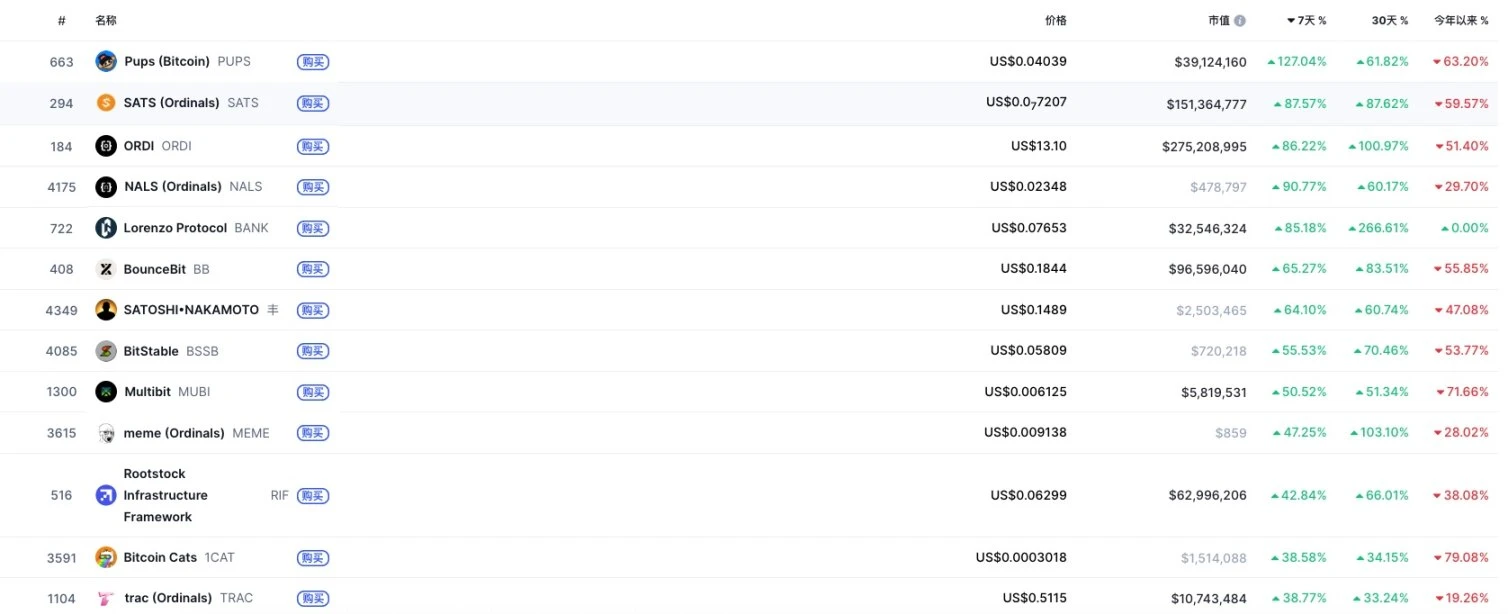
过去一周,比特币生态板块出现了显著反弹迹象。头部资产 ORDI 在六天内涨幅接近 97% ,PUPS 上涨 127.04% ,为本轮反弹中表现最强的项目之一;SATS 上涨 87.57% ,与年内最低点相比已接近翻倍;ORDI、NALS 分别上涨 86.22% 和 90.77% ,其余如 BANK、BB (BounceBit)、BSSB 等多个资产均录得 40 – 80% 的周涨幅,BRC-20 和 Runes 主流资产纷纷迎来修复。与此同时,链上资金流入明显增加。

比特币生态板块复热,后续还有行情吗?

「难顶」的生态现状

在这波迅猛的上涨背后,回顾整个比特币生态的中长期走势,投资者不难发现其「冰火两重天」的特征:

  • 年初至今跌幅普遍在 50 – 70% 之间,从高点计算的话跌幅超过 90% 比比皆是;

  • 多数项目基本面进展滞后,BTC L2 大多处于闲置阶段,缺乏成熟产品落地;

  • 空投与激励不及预期,部分项目曾被寄予厚望,但其生态推进缓慢,导致社区信心长期不足;

  • 各协议分散,Runes 等协议热度快速消散,其上线初期虽然一度占据 BTC 链上交易超过 60% 的份额,但数据高点仅维持数日,迅速下滑至个位数水平。

比特币生态板块复热,后续还有行情吗?

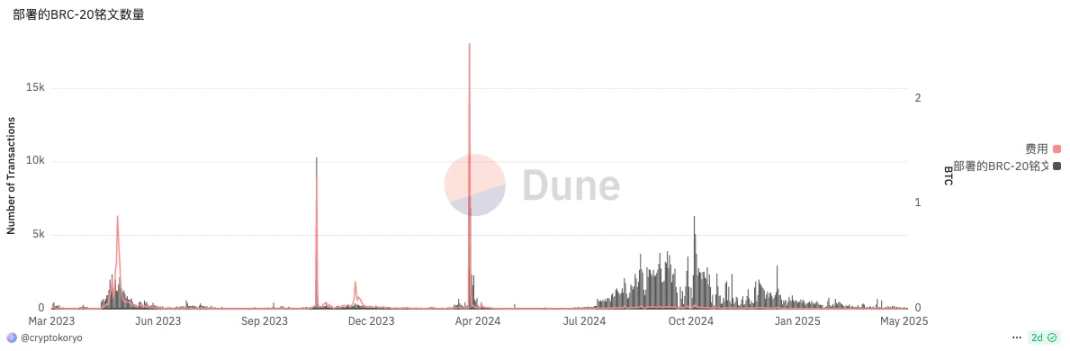
从部署的 BRC20 数量来看,目前已接近「冰点」

这些数据表明,此次上涨并非建立在强基本面转变之上,更像是一次「情绪修复」+「资金轮动」驱动的高弹性博弈。

为什么在这个时间点反弹?

  • 市场风格切换背景明确

以太坊此前在承受社区巨大 FUD 的背景下反弹 50% ,验证了「低预期反转」的典型行情结构。这一现象引发资金向更低估值、回调更充分的板块迁移。

  • 比特币生态跌幅极深,弹性较大

几乎所有头部项目在去年热潮后已普遍下跌超过 90% ,市场普遍将其视为「价值已被压缩至无交易逻辑」。而反弹往往从这种「被放弃」的区域启动。

  • 投机博弈增强

边缘生态资产反而成为短期资金狙击的高波动目标。

后续行情是否具备持续性?

尽管当前涨幅引人注目,但若将视角拉长,当前比特币生态反弹更多呈现为一种预期修复,而非趋势反转的确证。生态内部仍面临一系列制约其持续表现的结构性问题。

首先,从整体开发节奏来看,无论是 BRC-20 还是 Runes,相关项目的推进速度依旧缓慢。原本被寄予厚望的「比特币原生 DeFi」尚未构建出完整的垂直体系,缺乏基础设施的配套使得生态内部难以形成真正的协同效应。同时,开发者热情也有所消退。多个核心项目的 GitHub 更新频率明显下降,整体技术社区的活跃度远不及以太坊、Solana 等链。在资本和用户关注阶段性转移的背景下,开发者生态的冷却无疑进一步削弱了中期预期。

综合来看,这轮反弹更像是在极低估值与极弱预期之下所触发的「认错式回补」。经历了一年的情绪透支与估值回落后,资金在风格切换的节点重新关注这些跌深资产,释放出阶段性弹性。

要让比特币生态真正走出独立行情,仅凭价格拉升并不足够。生态的恢复依赖于更扎实的产品交付、更有说服力的用户增长数据,以及社区对未来的重新凝聚。如果说反弹可以靠情绪点燃,那么趋势的延续必须建立在信心与实质进展之上。

原文链接

Trending Cryptos

Related Reads

Opinion: AI Bubble Bursts, Bitcoin and Other Risky Assets Are the First to Be Impacted

BIS Warns AI Investment Boom Could Trigger Market Stress, Impacting Bitcoin First The Bank for International Settlements (BIS) warns that a potential bursting of the "AI bubble" could tighten liquidity and severely impact risk assets like Bitcoin in the near term. Major tech firms are projected to spend over $1 trillion on AI infrastructure in 2025-2026. The BIS cautions that if returns fail to meet expectations, a sudden withdrawal of financing could turn this investment boom into a prolonged bust, creating ripple effects across financial markets. While AI holds long-term economic promise, the current scale and speed of investment, coupled with intense competition and physical bottlenecks (e.g., semiconductors, power grids), mirror historical bubbles. The report highlights that the AI funding web—spanning corporate debt, private credit, and complex vendor agreements—makes systemic risks harder to see. A disappointment in AI adoption could transmit stress through this chain, widening credit spreads and pressuring weaker borrowers. For Bitcoin, the initial reaction to such a market shock would likely be defensive. As liquidity tightens, investors typically sell liquid assets first, and Bitcoin often trades in line with other risk assets during portfolio de-risking. Recent correlations, like Bitcoin's drop following a sharp decline in South Korea's stock market, support this view. However, the longer-term outcome for Bitcoin depends on the policy response. If an AI-driven credit crunch forces central banks to inject liquidity and ease policy eventually, it could reignite Bitcoin's narrative as a hedge against monetary debasement. Yet, traders betting on this outcome may first have to endure significant market volatility and potential price declines.

marsbit40m ago

Opinion: AI Bubble Bursts, Bitcoin and Other Risky Assets Are the First to Be Impacted

marsbit40m ago

South Korea Reaps Riches, America Turns Hostile

The US has filed a collective antitrust lawsuit in California against Samsung, SK Hynix, and US-based Micron, alleging they colluded to create a "RAMpocalypse" by slashing traditional DRAM production and raising prices 700% over four years amid the AI boom. This lawsuit targets the heart of the AI supply chain: High Bandwidth Memory (HBM), critical for Nvidia's GPUs. Currently, SK Hynix (57%), Samsung (22%), and Micron (21%) dominate global HBM production. The case highlights a deeper US concern: in the AI era, South Korea, through its HBM dominance, is capturing an estimated 35% of global AI profits, second only to the US (49%). SK Hynix's operating profit margin recently hit a record 72%. In response to the lawsuit, South Korea announced a massive $800 trillion won investment to build four new chip plants, doubling down on its strategic position. Analysts see the lawsuit not merely as a consumer price issue but as strategic pressure. It aims to support Micron's US manufacturing expansion (subsidized by the CHIPS Act) and secure America's share of AI profits by bringing more HBM production onshore. However, South Korea's rapid execution and massive cash flow from current HBM sales give it a significant speed advantage over US build-out timelines. The conflict underscores a fundamental shift: AI infrastructure like GPUs and HBM is becoming a new form of strategic national resource, akin to oil. While Nvidia and Korean memory giants are interdependent, the struggle over profit distribution and industrial sovereignty in this new landscape is just beginning. This lawsuit may be the first major skirmish in the AI resource wars.

marsbit52m ago

South Korea Reaps Riches, America Turns Hostile

marsbit52m ago

Trading

Spot

Hot Articles

What is $BITCOIN

DIGITAL GOLD ($BITCOIN): A Comprehensive Analysis Introduction to DIGITAL GOLD ($BITCOIN) DIGITAL GOLD ($BITCOIN) is a blockchain-based project operating on the Solana network, which aims to combine the characteristics of traditional precious metals with the innovation of decentralized technologies. While it shares a name with Bitcoin, often referred to as “digital gold” due to its perception as a store of value, DIGITAL GOLD is a separate token designed to create a unique ecosystem within the Web3 landscape. Its goal is to position itself as a viable alternative digital asset, although specifics regarding its applications and functionalities are still developing. What is DIGITAL GOLD ($BITCOIN)? DIGITAL GOLD ($BITCOIN) is a cryptocurrency token explicitly designed for use on the Solana blockchain. In contrast to Bitcoin, which provides a widely recognized value storage role, this token appears to focus on broader applications and characteristics. Notable aspects include: Blockchain Infrastructure: The token is built on the Solana blockchain, known for its capacity to handle high-speed and low-cost transactions. Supply Dynamics: DIGITAL GOLD has a maximum supply capped at 100 quadrillion tokens (100P $BITCOIN), although details regarding its circulating supply are currently undisclosed. Utility: While precise functionalities are not explicitly outlined, there are indications that the token could be utilized for various applications, potentially involving decentralized applications (dApps) or asset tokenization strategies. Who is the Creator of DIGITAL GOLD ($BITCOIN)? At present, the identity of the creators and development team behind DIGITAL GOLD ($BITCOIN) remains unknown. This situation is typical among many innovative projects within the blockchain space, particularly those aligning with decentralized finance and meme coin phenomena. While such anonymity may foster a community-driven culture, it intensifies concerns about governance and accountability. Who are the Investors of DIGITAL GOLD ($BITCOIN)? The available information indicates that DIGITAL GOLD ($BITCOIN) does not have any known institutional backers or prominent venture capital investments. The project seems to operate on a peer-to-peer model focused on community support and adoption rather than traditional funding routes. Its activity and liquidity are primarily situated on decentralized exchanges (DEXs), such as PumpSwap, rather than established centralized trading platforms, further highlighting its grassroots approach. How DIGITAL GOLD ($BITCOIN) Works The operational mechanics of DIGITAL GOLD ($BITCOIN) can be elaborated on based on its blockchain design and network attributes: Consensus Mechanism: By leveraging Solana’s unique proof-of-history (PoH) combined with a proof-of-stake (PoS) model, the project ensures efficient transaction validation contributing to the network's high performance. Tokenomics: While specific deflationary mechanisms have not been extensively detailed, the vast maximum token supply implies that it may cater to microtransactions or niche use cases that are still to be defined. Interoperability: There exists the potential for integration with Solana’s broader ecosystem, including various decentralized finance (DeFi) platforms. However, the details regarding specific integrations remain unspecified. Timeline of Key Events Here is a timeline that highlights significant milestones concerning DIGITAL GOLD ($BITCOIN): 2023: The initial deployment of the token occurs on the Solana blockchain, marked by its contract address. 2024: DIGITAL GOLD gains visibility as it becomes available for trading on decentralized exchanges like PumpSwap, allowing users to trade it against SOL. 2025: The project witnesses sporadic trading activity and potential interest in community-led engagements, although no noteworthy partnerships or technical advancements have been documented as of yet. Critical Analysis Strengths Scalability: The underlying Solana infrastructure supports high transaction volumes, which could enhance the utility of $BITCOIN in various transaction scenarios. Accessibility: The potential low trading price per token could attract retail investors, facilitating wider participation due to fractional ownership opportunities. Risks Lack of Transparency: The absence of publicly known backers, developers, or an audit process may yield skepticism regarding the project's sustainability and trustworthiness. Market Volatility: The trading activity is heavily reliant on speculative behavior, which can result in significant price volatility and uncertainty for investors. Conclusion DIGITAL GOLD ($BITCOIN) emerges as an intriguing yet ambiguous project within the rapidly evolving Solana ecosystem. While it attempts to leverage the “digital gold” narrative, its departure from Bitcoin's established role as a store of value underscores the need for a clearer differentiation of its intended utility and governance structure. Future acceptance and adoption will likely depend on addressing the current opacity and defining its operational and economic strategies more explicitly. Note: This report encompasses synthesised information available as of October 2023, and developments may have transpired beyond the research period.

521 Total ViewsPublished 2025.05.13Updated 2025.05.13
What is $BITCOIN

Discussions

Welcome to the HTX Community. Here, you can stay informed about the latest platform developments and gain access to professional market insights. Users' opinions on the price of BTC (BTC) are presented below.

活动图片