亚利桑那州立法机构通过比特币储备法案,BTC获将再次上涨

深潮TechFlowPublished on 2025-04-29Last updated on 2025-04-29

Abstract

提案的支持者认为,设立 BTC 储备有助于亚利桑那州实现资产多元化,抵御通货膨胀,并使该州在数字金融创新领域占据领先地位。


作者:cryptoslate
撰文:区块链骑士


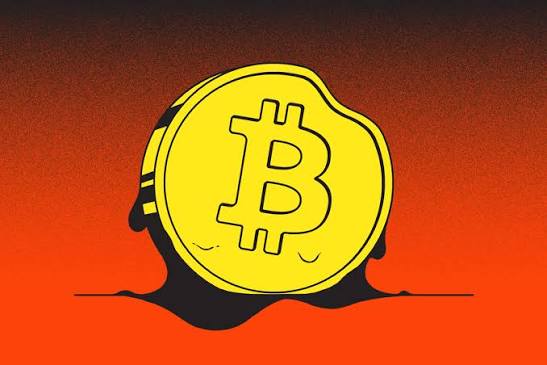
4 月 28 日,亚利桑那州两院以基本不分党派的投票方式批准了一项措施,使得该州成为全美首个通过立法设立战略 BTC 储备的州。


该法案由共和党参议员 Wendy Rogers 提出,授权州财政部将部分公共资金投资于 BTC。
据中本聪行动基金首席执行官 Dennis Porter 分享的细节,两次投票期间均无议员请假或缺席。该法案在众议院以 29 票赞成、25 票反对获得通过,在参议院则以 31 票赞成、25 票反对通过,不过参议院有 4 名议员未参与投票。


目前,该法案已提交至州长 Katie Hobbs 处等待审议。Hobbs 尚未表明她是否会签署或否决该法案。


然而,她近期承诺,在州立法机构通过新预算之前,她将否决所有送至其办公桌的法案。Hobbs 虽未就参议院 1025 号法案(SB1025)发表具体评论,但一直坚持其更广泛的否决立场,这给该法案的前景充满不确定性。


该提案的支持者认为,设立 BTC 储备有助于亚利桑那州实现资产多元化,抵御通货膨胀,并使该州在数字金融创新领域占据领先地位。


他们指出,BTC 具有固定供应量和去中心化的特性,相较于传统法定储备资产具有优势,尤其是在国家债务和货币贬值问题引发担忧的背景下。


与此同时,批评者警告称,BTC 价格波动极大,可能会使州资金面临重大财务风险。一些人还对 Crypto 资产缺乏联邦监管表示担忧,并质疑是否应使用公共资金投资于投机性资产。
根据法案内容,BTC 投资将被归类为州投资组合中的数字货币持有部分,需受亚利桑那州现有公共资金管理法规所规定的监督和限制约束。


亚利桑那州的这一举措是在全美范围内就数字资产在公共财政中作用展开更广泛讨论的背景下进行的。尽管近年来有几个州的立法机构都已就 Crypto 资产相关法案展开辩论,但亚利桑那州是首个明确授权设立 BTC 储备的州。


现在,州长 Hobbs 将做出最终决定,判定亚利桑那州是否会正式成为美国首个将 BTC 纳入其财政战略的州。

Trending Cryptos

Related Reads

Circle CEO Responds to the OUSD Challenge: Stablecoin is a Winner-Takes-All Business, and We Won't Slow Down

In response to questions about the OUSD stablecoin initiative, Circle CEO Jeremy Allaire argues that the stablecoin market is a "winner-take-most" platform business driven by powerful network effects, and Circle has no plans to slow down. He outlines three key drivers behind USDC's dominant position: 1. **Protocol/Software Layer Network Effects**: The value of a stablecoin network grows as more developers and services integrate it, creating compounding utility and user preference. Circle has spent nearly a decade building this ecosystem with USDC, now accelerated by mainstream adoption and enhanced by software stacks like CCTP and Gateway for interoperability. 2. **Liquidity Network Effects**: Liquidity begets more liquidity. USDC has achieved top-tier global liquidity—ranking among the top three digital assets alongside BTC and USDT—through nearly a decade of building deep primary and secondary market access across regions and venues. 3. **Regulatory and Policy Integration**: Establishing a global stablecoin requires deep regulatory engagement, licensing, and compliance across key markets—a significant, long-term investment where Circle is a leader. Allaire cites Artemis data showing USDC facilitated 80% of all dollar stablecoin on-chain transaction volume in Q1 2026, with USDT at 20% and all others negligible. He addresses OUSD's purported advantages: "free" minting/burning is often not sustainable in practice; redistributing all revenue can starve essential infrastructure investment; and large consortium models historically struggle with inefficiency and slow execution, unlike focused strategic partnerships. He reaffirms Circle's strong ongoing partnership with Coinbase on USDC and notes Circle collaborates with dozens of other stablecoin issuers through its expanding platform (Arc, CCTP, CPN, etc.). While welcoming OUSD to the ecosystem, Allaire asserts that Circle's vast, trusted network and continued investment make USDC the foundational digital dollar infrastructure for the world.

链捕手1m ago

Circle CEO Responds to the OUSD Challenge: Stablecoin is a Winner-Takes-All Business, and We Won't Slow Down

链捕手1m ago

Q2 Crypto Market Review: Did Bitcoin Rise for 'Nothing'? Did Money Flow to AI and On-Chain?

Q2 2026 Crypto Market Recap: Bitcoin's Gains Erased Amid Shift to AI and On-Chain Activity The second quarter of 2026 saw a significant reversal for the cryptocurrency market. Bitcoin gave back all its April gains, ending Q2 down approximately 11%, while major stock indices posted strong gains. This divergence was driven by a hawkish shift in Fed rate expectations, capital rotation into AI stocks, and weakening liquidity channels into crypto. Key demand pillars deteriorated simultaneously. Spot Bitcoin ETFs recorded net outflows of $4.08 billion for the quarter, with outflows dominating June. Crypto treasury entity Strategy's bitcoin accumulation slowed markedly, and the total stablecoin market cap contracted by ~$4.2 billion. This created a tighter liquidity environment. Exchange data reflected the downturn. Spot trading volumes fell 28% quarter-over-quarter. The market underwent significant deleveraging, with $8.35 billion in long liquidations for BTC and ETH, primarily in late May/early June. Open interest and order book liquidity also declined. Despite the bearish price action, structural developments point to an expanding on-chain ecosystem. These include the rise of tokenized stocks with full legal rights, the growth of RWA (real-world asset) perpetual contracts for trading stocks and commodities 24/7, and the use of crypto markets for price discovery ahead of major events like the SpaceX IPO. On-chain vaults are also emerging as a core layer for institutional capital allocation.

Foresight News20m ago

Q2 Crypto Market Review: Did Bitcoin Rise for 'Nothing'? Did Money Flow to AI and On-Chain?

Foresight News20m ago

Xing Bo Strikes Again: Last Time 'Critiquing' World Models, This Time It's Agents' Turn

Xing Bo, President of MBZUAI and professor at Carnegie Mellon University, along with co-authors Mingkai Deng and Jinyu Hou, has released a new paper, "Critique of Agent Model," critiquing the current state of artificial intelligence agents. The paper draws a crucial distinction between "agentic" systems, which rely on external toolchains, prompts, and workflows, and truly "agentive" systems capable of genuine autonomy driven by internal decision-making structures. To illustrate this, it references a real-world incident where an AI programming assistant, following an external prompt but lacking internalized judgment, caused a catastrophic data deletion. The authors propose a detailed analysis and a new framework, "Goal-Identity-Configurator" (GIC), for building truly autonomous agents. This framework systematically addresses five key dimensions where current "Agent" designs fall short: 1. **Goal:** Moving from step-by-step human instruction to a system capable of autonomously decomposing a single long-term goal and adapting sub-goals based on new information. 2. **Identity:** Evolving self-assessment updated by experience, rather than a static description in a system prompt. 3. **Decision Making:** Replacing textual Chain-of-Thought reasoning with "simulative reasoning" that uses a dedicated world model to predict real-world consequences before selecting actions. 4. **Cognitive Control:** Introducing a separate "System III" metacognitive module that dynamically decides when to deliberate, stick to a plan, or act quickly. 5. **Learning:** Enabling "continual autonomous learning," where the agent itself decides when to act, practice in simulation, or update its world model and self-perception. The GIC architecture integrates six components—a belief encoder, goal decomposer, identity evolver, configurator (System III), simulation-based planner (System II), and executor (System I)—to embody these principles. The paper argues that a growth path akin to pilot training (ground theory, simulator practice, real deployment) should be underpinned by a unified cognitive architecture, not separate workflows. On safety, the authors contend that the GIC framework's modular, explicit design enhances inspectability, allowing problematic behavior to be traced to specific components (e.g., flawed goal or poorly trained module) rather than emerging opaquely. However, they acknowledge that ultimate safety depends on correctly training these modules in the first place. In conclusion, the paper challenges the loose application of the term "Agent," asserting that task completion alone does not equal true autonomy. True autonomy requires goals, identity, and judgment to be genuinely internalized within the agent's architecture, not merely enforced by external scripts.

marsbit1h ago

Xing Bo Strikes Again: Last Time 'Critiquing' World Models, This Time It's Agents' Turn

marsbit1h ago

Trading

Spot

Hot Articles

What is $BITCOIN

DIGITAL GOLD ($BITCOIN): A Comprehensive Analysis Introduction to DIGITAL GOLD ($BITCOIN) DIGITAL GOLD ($BITCOIN) is a blockchain-based project operating on the Solana network, which aims to combine the characteristics of traditional precious metals with the innovation of decentralized technologies. While it shares a name with Bitcoin, often referred to as “digital gold” due to its perception as a store of value, DIGITAL GOLD is a separate token designed to create a unique ecosystem within the Web3 landscape. Its goal is to position itself as a viable alternative digital asset, although specifics regarding its applications and functionalities are still developing. What is DIGITAL GOLD ($BITCOIN)? DIGITAL GOLD ($BITCOIN) is a cryptocurrency token explicitly designed for use on the Solana blockchain. In contrast to Bitcoin, which provides a widely recognized value storage role, this token appears to focus on broader applications and characteristics. Notable aspects include: Blockchain Infrastructure: The token is built on the Solana blockchain, known for its capacity to handle high-speed and low-cost transactions. Supply Dynamics: DIGITAL GOLD has a maximum supply capped at 100 quadrillion tokens (100P $BITCOIN), although details regarding its circulating supply are currently undisclosed. Utility: While precise functionalities are not explicitly outlined, there are indications that the token could be utilized for various applications, potentially involving decentralized applications (dApps) or asset tokenization strategies. Who is the Creator of DIGITAL GOLD ($BITCOIN)? At present, the identity of the creators and development team behind DIGITAL GOLD ($BITCOIN) remains unknown. This situation is typical among many innovative projects within the blockchain space, particularly those aligning with decentralized finance and meme coin phenomena. While such anonymity may foster a community-driven culture, it intensifies concerns about governance and accountability. Who are the Investors of DIGITAL GOLD ($BITCOIN)? The available information indicates that DIGITAL GOLD ($BITCOIN) does not have any known institutional backers or prominent venture capital investments. The project seems to operate on a peer-to-peer model focused on community support and adoption rather than traditional funding routes. Its activity and liquidity are primarily situated on decentralized exchanges (DEXs), such as PumpSwap, rather than established centralized trading platforms, further highlighting its grassroots approach. How DIGITAL GOLD ($BITCOIN) Works The operational mechanics of DIGITAL GOLD ($BITCOIN) can be elaborated on based on its blockchain design and network attributes: Consensus Mechanism: By leveraging Solana’s unique proof-of-history (PoH) combined with a proof-of-stake (PoS) model, the project ensures efficient transaction validation contributing to the network's high performance. Tokenomics: While specific deflationary mechanisms have not been extensively detailed, the vast maximum token supply implies that it may cater to microtransactions or niche use cases that are still to be defined. Interoperability: There exists the potential for integration with Solana’s broader ecosystem, including various decentralized finance (DeFi) platforms. However, the details regarding specific integrations remain unspecified. Timeline of Key Events Here is a timeline that highlights significant milestones concerning DIGITAL GOLD ($BITCOIN): 2023: The initial deployment of the token occurs on the Solana blockchain, marked by its contract address. 2024: DIGITAL GOLD gains visibility as it becomes available for trading on decentralized exchanges like PumpSwap, allowing users to trade it against SOL. 2025: The project witnesses sporadic trading activity and potential interest in community-led engagements, although no noteworthy partnerships or technical advancements have been documented as of yet. Critical Analysis Strengths Scalability: The underlying Solana infrastructure supports high transaction volumes, which could enhance the utility of $BITCOIN in various transaction scenarios. Accessibility: The potential low trading price per token could attract retail investors, facilitating wider participation due to fractional ownership opportunities. Risks Lack of Transparency: The absence of publicly known backers, developers, or an audit process may yield skepticism regarding the project's sustainability and trustworthiness. Market Volatility: The trading activity is heavily reliant on speculative behavior, which can result in significant price volatility and uncertainty for investors. Conclusion DIGITAL GOLD ($BITCOIN) emerges as an intriguing yet ambiguous project within the rapidly evolving Solana ecosystem. While it attempts to leverage the “digital gold” narrative, its departure from Bitcoin's established role as a store of value underscores the need for a clearer differentiation of its intended utility and governance structure. Future acceptance and adoption will likely depend on addressing the current opacity and defining its operational and economic strategies more explicitly. Note: This report encompasses synthesised information available as of October 2023, and developments may have transpired beyond the research period.

539 Total ViewsPublished 2025.05.13Updated 2025.05.13

What is $BITCOIN

Discussions

Welcome to the HTX Community. Here, you can stay informed about the latest platform developments and gain access to professional market insights. Users' opinions on the price of BTC (BTC) are presented below.

活动图片