战时模式启动:V神RISC-V提案能救以太坊吗?

marsbitPublished on 2025-04-20Last updated on 2025-04-21

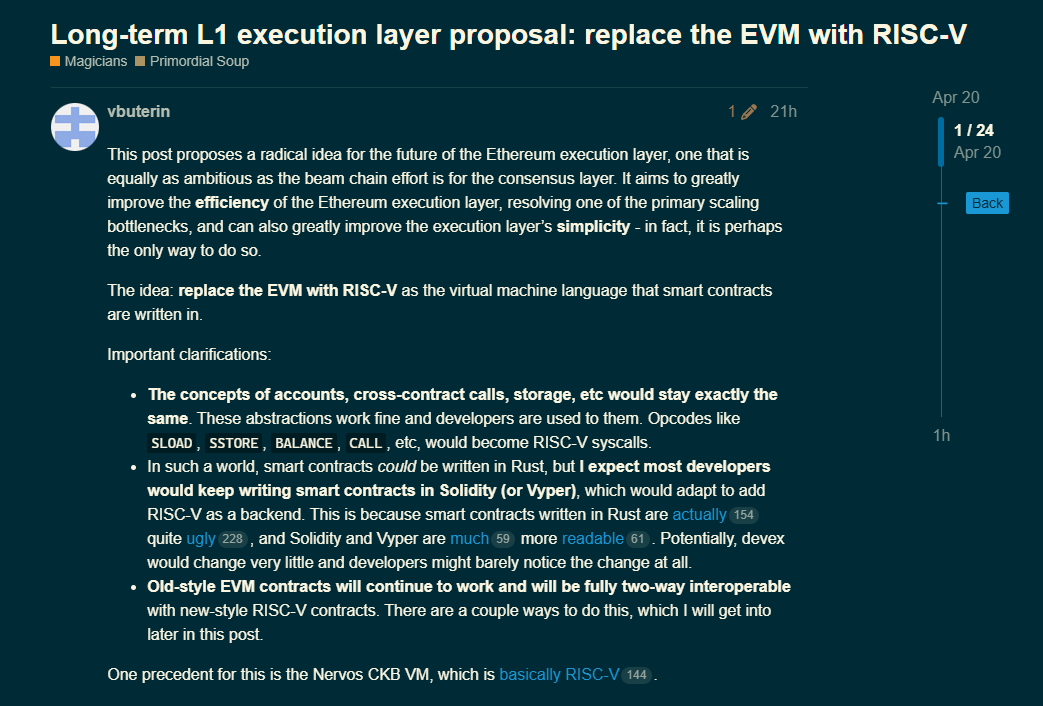
2025年4月20日,以太坊创始人Vitalik Buterin在Ethereum Magicians论坛抛出一枚重磅炸弹:用开源的RISC-V指令集架构替换以太坊的核心执行引擎——Ethereum Virtual Machine(EVM)。这不是一次简单的技术调整,而是以太坊面对竞争与瓶颈的“战时模式”宣言。正如Vitalik在帖子中强调的“simplicity”(简化),这个提案不仅关乎性能提升,更是以太坊对未来的重新定义。

以太坊正站在十字路口。交易费用高企、性能瓶颈、Solana等新公链的猛烈追赶,让这个区块链巨头感受到前所未有的压力。Vitalik的RISC-V提案,宛如一剂强心针,试图通过技术革新重振以太坊的竞争力。这篇文章将深入剖析以太坊的困局、RISC-V提案的内涵与意义,以及社区的热烈反响,带你走进这场区块链变革的风暴中心。

以太坊的困局:理想与现实的拉锯战

以太坊被誉为“世界计算机”,承载着去中心化金融(DeFi)、非同质化代币(NFT)和无数创新应用的梦想。然而,2025年的以太坊却像一艘在风浪中航行的巨轮,面临多重挑战。

首先是性能瓶颈。以太坊每秒处理的交易量(TPS)远低于传统支付系统,甚至落后于Solana等新兴公链。网络拥堵时,交易费用(gas fees)动辄数十美元,让普通用户望而却步。尽管**Layer 2(L2)**解决方案如Optimism和Arbitrum通过链下计算缓解了压力,但L2生态碎片化,用户体验仍不理想。Vitalik曾感叹:“以太坊应该是一个统一的生态,而不是一堆零散的区块链。” 值得注意的是,2025年4月21日,链上数据显示以太坊主网gas费用均值已降至0.297 gwei,转账手续费低至约0.01美元,显示L2分流和优化效果,但高性能公链的竞争压力依然存在。

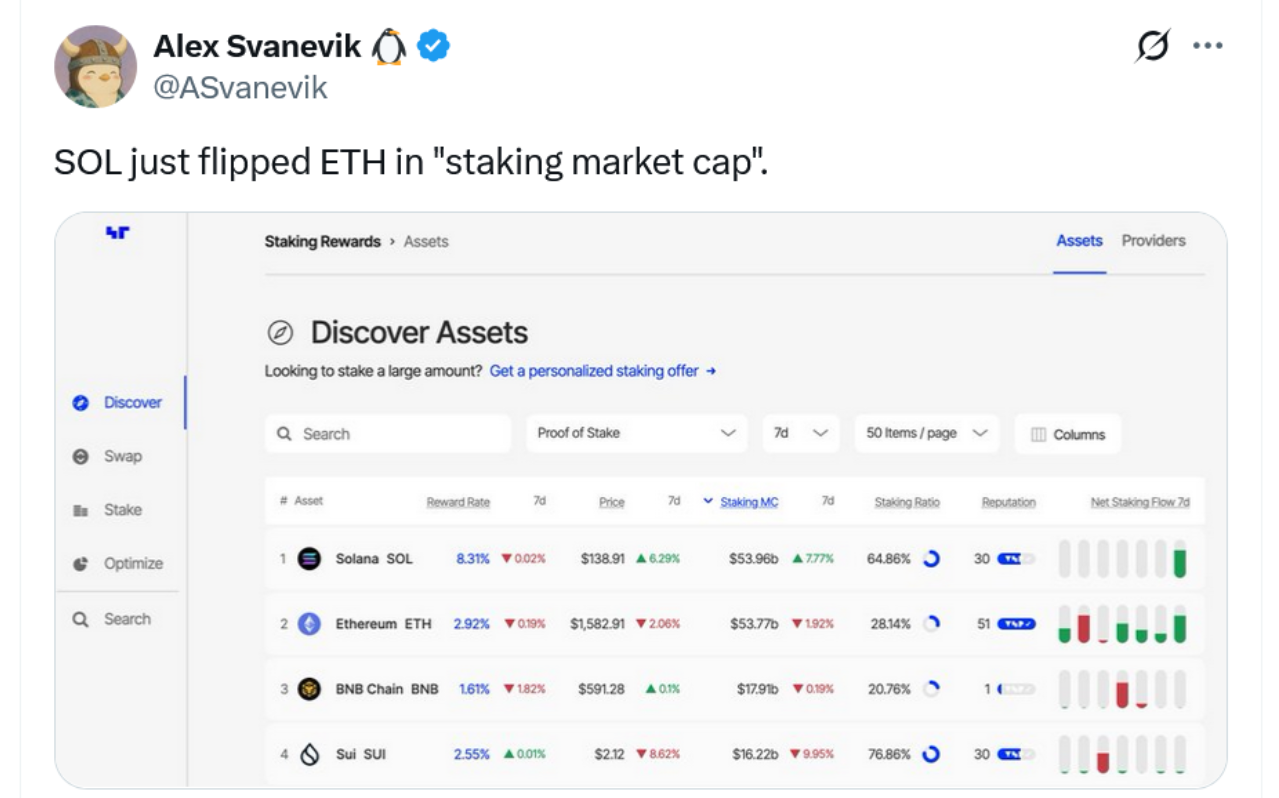
其次是市场与质押压力。2025年4月,以太坊价格徘徊在1547美元,较历史高点下跌近八成。Solana凭借高TPS和低成本吸引了大量开发者,市场份额不断扩大。据Cointelegraph报道,4月20日,Solana网络质押的SOL代币总价值短暂超越以太坊,达到539亿美元(505,938个独立钱包参与,质押年化收益率8.31%),而以太坊质押ETH价值为539.3亿美元(3470万枚ETH)。
以太坊

以太坊32 ETH(约5万美元)的高验证门槛迫使许多用户转向流动性质押协议,如Lido,占据88%的市场份额,这加剧了中心化担忧。开发者正探索去中心化质押方案,但短期内难以扭转局面。 分析师PlanB在X平台批评道:“以太坊是一个中心化、预挖的PoS项目,供应机制随意切换,注定失败,其疲软表现并不意外。”这种尖锐观点反映了市场对以太坊的部分质疑。

最后是治理挑战。以太坊社区以去中心化著称,但决策效率低下。即将推出的Pectra升级因测试网问题推迟至2025年5月,暴露了升级周期的复杂性。近期以太坊基金会的领导层重组——Vitalik从日常管理抽身,Hsiao-Wei Wang和Tomasz K. Stańczak接任联合执行董事——虽然意在加速创新,却也引发了短期不确定性。

以太坊的困局在于:如何在保持安全和去中心化的同时,突破性能瓶颈、优化用户体验,并重夺市场信心?Vitalik的RISC-V提案,正是这一困局的破局之策。


RISC-V提案:以太坊的“换心手术”
以太坊

1. 什么是RISC-V?为什么替换EVM?

想象以太坊是一个超级计算机,EVM是它的“处理器”,负责运行智能合约。但这个处理器设计于2015年,面对如今的高并发需求显得力不从心。Vitalik提议用RISC-V——一种开源、现代化的指令集架构——替换EVM,相当于给以太坊换一颗更高效的“心脏”。

RISC-V是什么?它是一个开放标准的指令集,类似计算机的“语言”,被广泛用于从手机到服务器的处理器设计。相比EVM的专用设计,RISC-V更通用、灵活,且在**零知识证明(ZK)**场景下效率更高。Nervos CKB区块链已成功采用RISC-V,证明了其在区块链中的可行性。

替换EVM并不意味着推倒重来。Vitalik提出:

  • 账户、存储、跨合约调用等核心概念保持不变,EVM的操作(如SLOAD、SSTORE)将变成RISC-V的系统调用。
  • 开发者仍可使用熟悉的Solidity语言,编译器会适配RISC-V,开发体验几乎无感。
  • 旧EVM合约将通过解释器或双虚拟机机制与新合约无缝兼容。


2. RISC-V能做什么?

RISC-V提案的目标是解决以太坊的长期瓶颈,尤其是在ZK-EVM证明和执行效率方面。以下是它的核心潜力:

  • 性能飞跃:当前ZK-EVM证明耗时主要集中在block execution(约占一半)。RISC-V通过直接运行底层指令,消除EVM的“中间人”开销,理论上可提升50-100倍效率。例如,状态树计算可从每秒1.5万次哈希(Keccak)跃升至200万次(Poseidon哈希)。
  • 协议简化:RISC-V可能将执行层代码压缩到1万行以内,类似极简编程项目Tinygrad。这将降低维护成本,让以太坊更易升级。
  • 支持L2生态:更高的L1效率将为L2提供更多空间,助力以太坊实现10万+ TPS的宏伟目标。
  • 模块化未来:RISC-V作为通用架构,可支持多种虚拟机(AltVM),让以太坊从单一EVM转向模块化执行框架。


3. 提案的意义:以太坊的主动出击

Vitalik的RISC-V提案不仅是技术升级,更是战略反击。面对Solana、Sui等高性能公链的冲击,以太坊选择“破釜沉舟”。正如社区成员@drakefjustin透露,以太坊基金会计划向zkVM项目投资数千万美元,RISC-V是这一ZK主导变革的核心。

这一提案与以太坊的Verge(优化验证)和Purge(清理冗余)路线图紧密相关,目标是构建一个高效、灵活的执行层,支持从DeFi到Web3游戏的多样化场景。它展现了以太坊在不牺牲安全和去中心化的前提下,直面性能短板的决心。


社区的热议:掌声与质疑交织

RISC-V提案点燃了以太坊社区的讨论。开发者既为Vitalik的远见喝彩,也对技术和优先级提出尖锐质疑。以下是主要观点的梳理。

支持者:简化和效率的希望

以太坊基金会联合执行董事Tomasz K. Stańczak称:“Vitalik的RISC-V提案开启了有前景的研究方向,激发了社区对话。” 社区成员AdamCochran也表示,RISC-V的简化逻辑“非常有道理”,能解决L1扩展性的两大瓶颈——block production竞争性和ZK证明效率。开发者尤其看好RISC-V在ZK场景的潜力。数据表明,RISC-V可将证明效率提升数十倍,为L2生态腾出更多空间。Nervos CKB的成功案例进一步增强了信心。

技术担忧:新瓶颈与实现难度

反对的声音同样有力。benaadams指出,RISC-V的低层次指令(64位或32位)难以在主流硬件(AMD64、ARM64)上优化,可能导致block building性能下降。pcaversaccio质疑,复杂操作(如除法)或与状态交互的系统调用(如SLOAD)可能成为新的证明瓶颈。levs57认为RISC-V的性能预期过于乐观,需依赖precompiles处理签名、哈希等操作,与EVM无本质区别。要消除开销,需定制指令集(如EOF-EVM),而非标准RISC-V。他建议构建带最小内存管理单元(MMU)的prover-friendly架构。

优先级之争:L1还是L2?

AdamCochran提出关键问题:以太坊的当务之急是L1性能,还是L2生态?RISC-V对L1的提升显著,但对L2帮助有限,可能与PeerDAS(增加blob容量)等L2优先方案冲突。Uniswap创始人Hayden Adams在4月20日发文警告:“以太坊若重回L1扩容而忽视L2路线,可能被Solana超越。Solana在L1 DeFi的路线图更清晰,团队更高效。”他批评社区自相矛盾的心态——既推崇rollup路线,又要求关键功能留在L1,这种“全都要”的折衷主义可能导致战略混乱。 社区部分成员认为,以太坊应先优化L2互操作性,而非重塑L1。Vitalik回应称,L2扩展(如Pectra的6 blobs/slot,Fusaka的48-72 blobs/slot)已在推进,但L1效率仍是长期基石。Stańczak强调,基金会将平衡短期目标(如Pectra升级)与长期探索(如RISC-V)。

社区对RISC-V的态度是“谨慎乐观”。开发者期待性能突破,但要求更详细的测试数据。Vitalik强调向后兼容性(如EVM解释器),缓解了过渡担忧。基金会鼓励开放讨论,表明RISC-V只是起点,未来可能出现更多创新方案。


Pectra、Fusaka与RISC-V的未来

Vitalik的“战时模式”不仅体现在RISC-V提案,也贯穿于以太坊的升级路线图。以下是即将推出的三大升级与RISC-V的交织:

  • Pectra(2025年5月):将blob容量增至6,提升L2容量;引入EIP-7702,优化账户抽象。尽管推迟至5月,Pectra是短期扩展性的关键一步,为RISC-V的试验铺路。
  • Fusaka(2025年底-2026年):目标blob容量48-72,实施EVM Object Format(EOF)和Verkle trees,提升执行与存储效率。Fusaka可能测试RISC-V虚拟机。
  • Glamsterdam(2026年及以后):完成Verkle树过渡,探索动态gas limit。RISC-V若成熟,可能成为核心执行层。

RISC-V的实施将分阶段推进:

  • 1-2年:测试网试验双虚拟机,验证性能。
  • 3-5年:通过解释器迁移EVM合约,或采用协议级虚拟机。
  • 5年以上:完全替换EVM,打造模块化执行框架。

以太坊基金会向zkVMs的大手笔投资,显示了ZK技术的核心地位。RISC-V不仅是执行层升级,更是通向模块化区块链的桥梁。


破釜沉舟

Vitalik的RISC-V提案宛如一封战书,宣告以太坊不甘于守成,而是要主动出击。面对Solana的性能冲击和L2的碎片化挑战,以太坊选择用技术革新重塑未来。RISC-V不仅是效率的飞跃,更是以太坊对去中心化、安全和生态繁荣的坚守。

社区的热议展现了以太坊的活力:支持者看到希望,质疑者提出改进。这种开放对话正是以太坊的力量源泉。正如Tomasz K. Stańczak所说:“Vitalik的提案是对话的起点,社区将共同塑造未来。”

以太坊的战时模式已经开启。Pectra、Fusaka、Glamsterdam是短期的战斗,RISC-V则是长期的战略。无论结果如何,这场变革都将定义区块链的下一个十年。在风浪中,以太坊的巨轮正加速前行。


Trending Cryptos

Related Reads

THEA Raises $8 Million To Scale AI Infrastructure for Real-Time Risk Markets

Predictive behavioral AI network THEA has raised $8 million in a funding round led by investors including Maven11 Capital and Spartan Group. Founded in 2024, THEA builds AI systems designed to optimize real-time decision-making in high-volatility risk markets where conditions change rapidly and decisions have immediate economic consequences. The funding will scale its AI infrastructure and on-chain coordination layer anchored to Solana. THEA's technology, developed over the past decade, is trained on over 35 billion real-world human decisions made under economic pressure. Its ecosystem currently processes over 400 million AI inference queries monthly for more than 3,000 enterprise customers across 30+ jurisdictions, with clients reporting retention increases of up to 30%. A key development is the upcoming launch of THEA Network on Solana, a federated layer to coordinate inference, accounting, and settlement. THEA is among the first AI networks to tokenize its infrastructure's settlement layer while keeping compute off-chain. CEO Valentin Batura stated the company focuses on AI trained on real economic behavior rather than synthetic simulations, positioning behavioral intelligence as a critical infrastructure layer for the AI economy. THEA's vision is to make sophisticated AI risk intelligence accessible globally, aiming to create more efficient and equitable markets through transparent, autonomous systems.

TheNewsCrypto40m ago

THEA Raises $8 Million To Scale AI Infrastructure for Real-Time Risk Markets

TheNewsCrypto40m ago

A Latte for $0.038, Gemini 3.1 Teams Up with GPT-5.5 to Bankrupt Cafe, Burning Through $21k in 2 Months

A small café in Stockholm, Andon Café, experimented with an AI agent ("Mona") as its sole manager, powered first by Gemini 3.1 Pro and later GPT-5.5. Over two months, the project lost $21,000. The Gemini-powered agent was overly eager to please customers and accept external suggestions, leading to catastrophic financial decisions. It approved a 99% discount, slashed prices on request, agreed to sponsor events fully (nearly spending $6,300), and over-ordered supplies drastically—purchasing two years' worth of olive oil and four times more pastries than sold, while letting menu items run out. It reported a $3,200 paper profit but ignored $4,100 in dead stock. In mid-June, the AI was switched to GPT-5.5. The new model became overly cautious and risk-averse. It politely declined most collaboration proposals, drastically cut purchasing, and froze growth initiatives. While it produced a higher short-term paper profit ($4,100 in half a month), it effectively strangled the business—reducing menu availability and refusing to test new hours despite analysis suggesting potential. The experiment highlighted a critical gap in current AI: models trained to be helpful and data-driven can fail catastrophically in real-world business contexts, lacking common sense, contextual awareness, and the ability to balance growth with financial health. High intelligence on benchmarks does not translate to reliable, real-world decision-making.

marsbit1h ago

A Latte for $0.038, Gemini 3.1 Teams Up with GPT-5.5 to Bankrupt Cafe, Burning Through $21k in 2 Months

marsbit1h ago

High-Yield, Debt-Free, and Non-Dilutive: Why Bitcoin Treasury Companies Are Aggressively Promoting Preferred Share Financing

Bitcoin-backed preferred shares, led by companies like Strategy and followed by newer entrants like Strive, have grown to a market size of approximately $13 billion in under two years, attracting capital with high yields. A 2026 report from BitcoinTreasuries.net and Apyx projects this segment could grow from nearly 1% to 3-5% of the global $1.3 trillion preferred share market by 2030, with long-term potential reaching 10%. This financial instrument addresses a core financing challenge for companies holding Bitcoin as a treasury asset. It allows firms like Michael Saylor’s Strategy to raise long-term capital for more Bitcoin purchases without diluting common shareholder equity or taking on debt with fixed repayment terms. Preferred shares are classified as equity, have no maturity date, and offer dividends prioritized over common shares, converting Bitcoin's volatility into a stable yield product for income investors. Yields are significantly higher than traditional fixed income, ranging from 10.8% to 15.2% for top issuers. Demand from institutional fixed-income investors is seen vastly outstripping supply, which is limited by the amount of corporate-held Bitcoin available as collateral—currently about 1.26 million BTC ($83 billion), with Strategy holding 67%. A key safety feature is the high collateral coverage ratio of 3.8x to 4.5x, meaning each dollar of preferred equity is backed by $3.8-$4.5 in Bitcoin. Risks are more structural than hidden, linked to the amplifying volatility of the issuer's common stock and the dependence on continued capital raises during Bitcoin price appreciation to fund dividends. Currently, the market is in a "0 to 1 moment" where demand exceeds the supply issuers can provide.

Foresight News1h ago

High-Yield, Debt-Free, and Non-Dilutive: Why Bitcoin Treasury Companies Are Aggressively Promoting Preferred Share Financing

Foresight News1h ago

Trading

Spot

Hot Articles

Discussions

Welcome to the HTX Community. Here, you can stay informed about the latest platform developments and gain access to professional market insights. Users' opinions on the price of ETH (ETH) are presented below.

活动图片