特朗普宣布国家紧急状态,全面征收关税,设10%“最低基准关税”,对美贸易逆差最大国征税更高

华尔街见闻Published on 2025-04-03Last updated on 2025-04-03

Abstract

白宫声明称,特朗普将对所有国家征收10%的“基准关税”,于美东时间4月5日凌晨0时01分生效,对同美贸易逆差大国征收的更高对等关税于于美东时间4月9日凌晨0时01分生效,钢铝、汽车、金条、铜、药品、半导体和木材制品不受对等关税影响,对符合美墨加贸易协定(USMCA)的加墨商品继续豁免关税 ;特朗普称,25%的汽车关税于4月3日生效。

美东时间4月2日周三美股盘后,据新华社报道,美国总统特朗普在白宫签署两项关于所谓“对等关税”的行政令,宣布美国对贸易伙伴设立10%的“最低基准关税”,并对某些贸易伙伴征收更高关税。

据央视新闻,特朗普表示,美国将计算对美国构成了极大威胁的国家的所有关税、非关税壁垒和其他形式的综合税率。关税将不是完全对等的,美国将向这些国家收取大约一半的费用。

据央视,美国白宫发表声明称,特朗普周三当日宣布国家紧急状态,以提高美国的竞争优势,保护美国主权,并加强美国国家和经济安全。

央视援引白宫的上述声明称,特朗普将对所有国家征收10%的“基准关税”,该关税将于美国东部时间4月5日凌晨0时01分生效。此外,特朗普将对美国贸易逆差最大的国家征收个性化的更高“对等关税”,该关税将于美国东部时间4月9日凌晨0时01分生效,所有其他国家将继续遵守原有的10%关税基准。

根据白宫公布的图表,美国将对进口自英国、澳大利亚、巴西、沙特、阿联酋、科威特的商品均征收10%的关税,对以色列商品征收17%的关税,对欧盟商品征收20%的关税,对日本征收24%的关税,对韩国征收25%的关税,对印度征收26%的关税,对泰国征收36%的关税,对伊拉克征收39%的关税,对越南征收46%的关税,对柬埔寨征收49%的关税,南非国家莱索托面临的税率最高,为50%。

央视提到,前述白宫的声明表示,一些商品将不受“对等关税”的约束,其中包括已经受第232条关税约束的钢铝制品、汽车和汽车零部件、可能受未来第232条关税约束的商品以及美国没有的能源和其他某些矿物。此外,金条、铜、药品、半导体和木材制品也不受“对等关税”的约束。

声明还表示,对于加拿大和墨西哥,符合《美墨加贸易协定》(USMCA)的商品将继续获得关税豁免。

特朗普政府称,加拿大和墨西哥将暂时免除10%的基准关税以及针对特定国家的对等关税。

另据央视报道,特朗普周三还宣布,对进口汽车加征25%的关税。 特朗普表示,对汽车征收的25%关税将于4月3日生效。

特朗普讲话基准关税税率和各国面对的具体关税后,美股期货下跌,美股盘后,纳斯达克100期货跌超3%,标普500期货跌近2%,道指期货跌约1%。亚太盘初,股指期货跌幅进一步扩大,纳斯达克100期货跌超4%,标普500期货跌超3%,道指期货跌超2%。

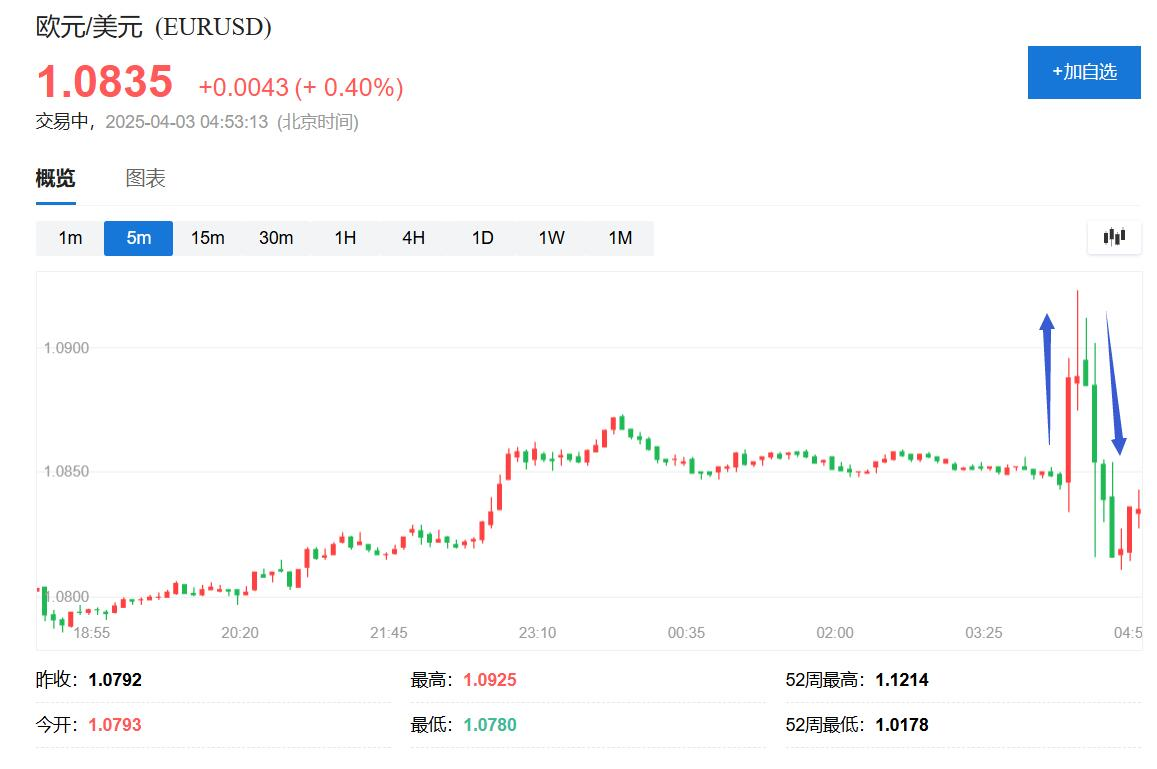
汇市反应较强烈。欧元先涨幅迅速扩大,后有所回落。处于1.0860一线的欧元兑美元一度涨破1.0920,日内涨约1%,后回吐过半涨幅。
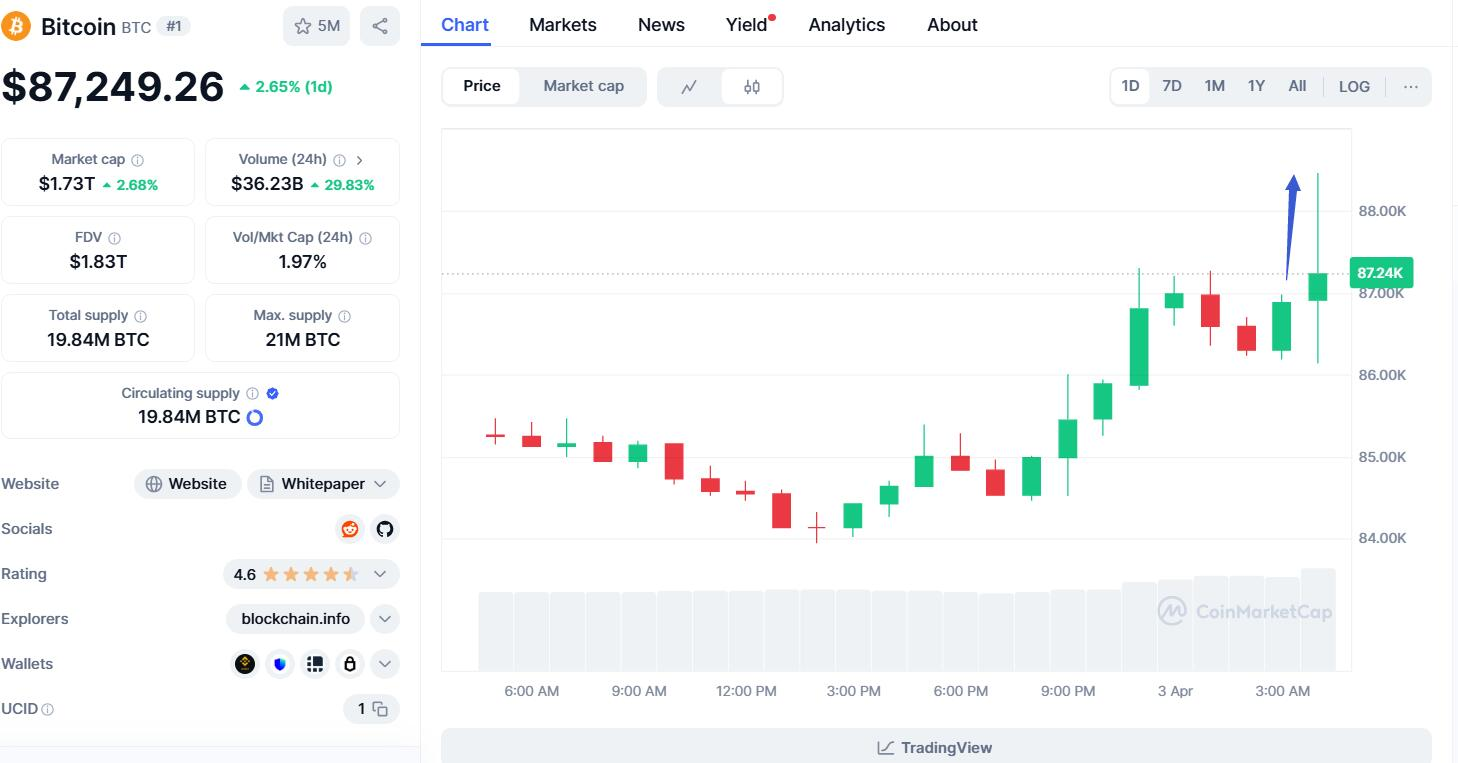
比特币(BTC)现货交易价一度冲上8.8万美元,刷新3月25日以来高位,较欧股盘前的日内低位涨超4000美元、涨超5%,后回吐多数涨幅、回到8.6万美元下方,一度跌破8.53万美元、较稍早的高位回落超3000美元。
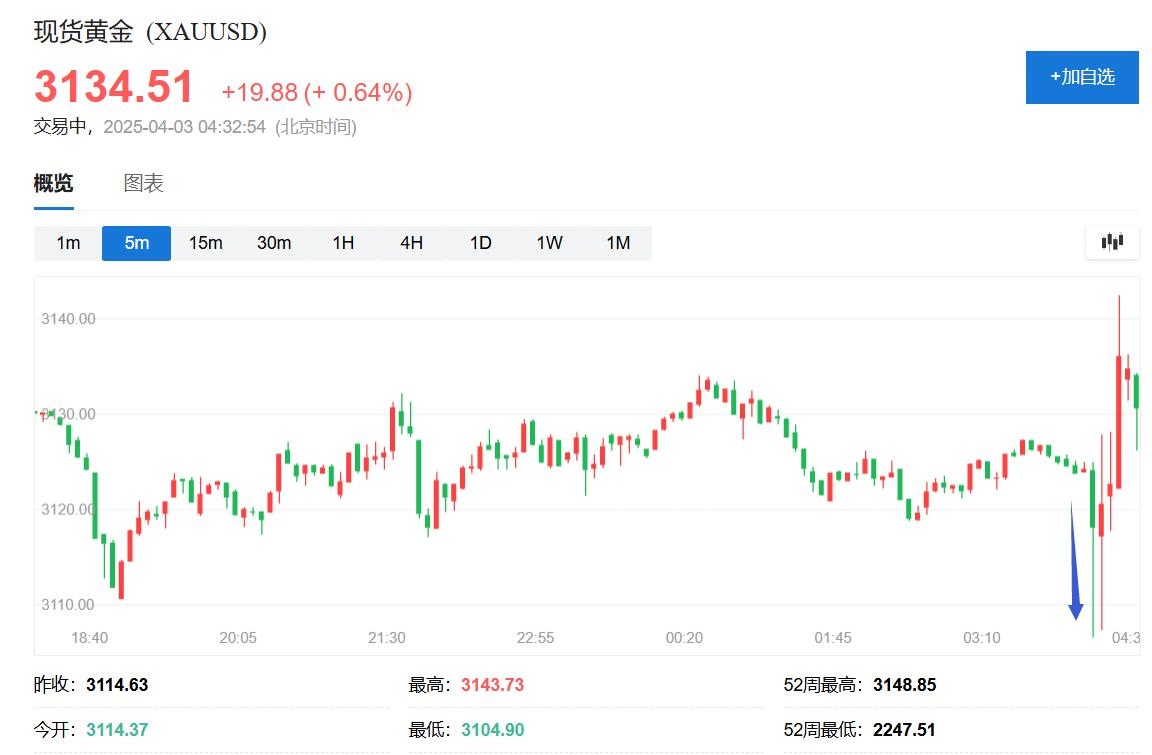
现货黄金短线“闪跌”,3125美元一线跳水至接近3105美元,日内转而跌超0.1%,后很快转涨,一度涨破3140美元、刷新日高,日内涨近1%。
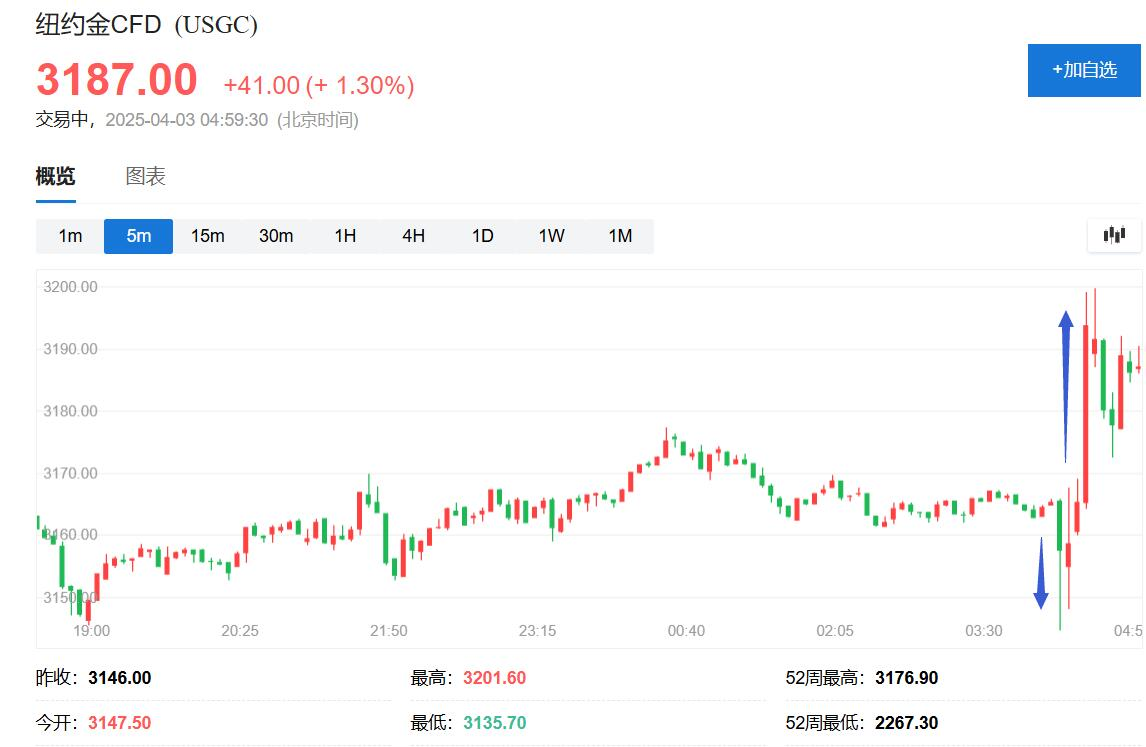
COMEX 6月黄金期货也先“闪跌”,后反弹,在美股盘后一度涨破3200美元,刷新周四美股盘中所创的盘中最高纪录,较周二收盘涨近1.8%。
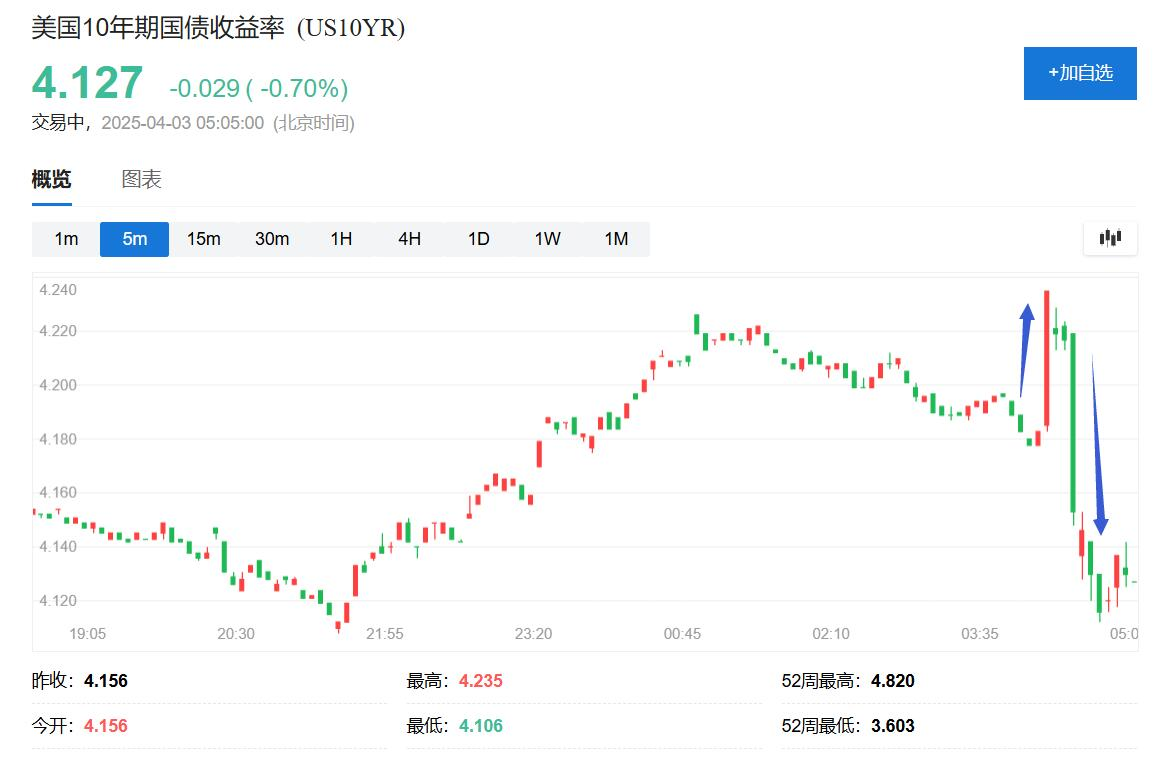
美国国债价格V形反转、收益率先升后降。美国10年期基准国债收益率先升至4.23%上方刷新日高,后很快下破4.20%,一度靠近4.11%,逼近美股盘前“小非农”ADP就业报告公布后刷新的3月4日以来盘中低位。
Trending Cryptos

Related Reads

Stablecoins Are the 'Royalists' of the Crypto World: Open USD Brings the Old Monetary System into the Fray

Title: Stablecoins Are the "Royalists" of the Crypto World: Open USD Brings the Old Monetary System into the Fray The article analyzes the launch of Open USD, a new dollar-pegged stablecoin backed by a coalition of over 140 traditional financial, payment, and tech giants like Visa, BlackRock, and Google. Author Hu Yilin argues that stablecoins like Open USD represent not a "moderate" wing of the crypto revolution, but a "royalist reform" within the old monetary system. He posits that while stablecoins adopt blockchain's efficiency, programmability, and borderless nature, they fundamentally reinforce the US dollar's centrality and the Federal Reserve's authority. They aim to replace inefficient "bureaucrats" (like traditional payment networks) rather than challenge the "monarch" (the dollar-based system). Thus, Open USD symbolizes the old system co-opting blockchain technology to upgrade dollar hegemony, potentially marginalizing native crypto projects like Circle's USDC. Hu contrasts this with more revolutionary paths, like a "Bitcoin standard," which seeks to change the monetary base itself. He warns that if the crypto ecosystem's unit of account, collateral, and value anchor remain dollar-denominated stablecoins,链上繁荣 may enrich the traditional financial system ("off-chain") rather than granting monetary premium to native crypto assets like ETH. Projects with civilizational ambitions, he argues, cannot reduce their narrative to mere "fuel" or transaction fees but must grapple with the core revolutionary idea: that a decentralized market does not require a central bank as the anchor of monetary order.

marsbit30m ago

Stablecoins Are the 'Royalists' of the Crypto World: Open USD Brings the Old Monetary System into the Fray

marsbit30m ago

Standard Chartered Takes Over USDC Onboarding; Circle Cedes Control for Scale

Standard Chartered and Circle have announced a partnership where institutional clients can now mint and redeem USDC directly through Standard Chartered's existing banking infrastructure, eliminating the need for separate accounts with Circle. Initially launching in the Dubai International Financial Centre (DIFC), this service represents the first time a Global Systemically Important Bank (G-SIB) is offering such direct, integrated access. This move effectively "translates" USDC into a standard banking option, opening the door for major institutional capital like pension funds and sovereign wealth funds that require the trust, compliance, and risk frameworks of a major bank. For Circle, this is a strategic trade: ceding some direct client relationships to leverage Standard Chartered's vast distribution network, thereby potentially massively scaling USDC's circulation and its core interest revenue model. For Standard Chartered, it's a chance to offer a new digital asset service without building the underlying stablecoin infrastructure. The partnership signals a significant shift in the stablecoin narrative. Rather than bypassing traditional finance, stablecoins are becoming integrated into it, with major banks like Standard Chartered positioning themselves at the crucial entry point. The focus is moving from legitimizing stablecoins to determining how value and pricing power will be distributed among issuers, banking channels, and regulatory frameworks in this new, converging landscape.

marsbit3h ago

Standard Chartered Takes Over USDC Onboarding; Circle Cedes Control for Scale

marsbit3h ago

Trading

Spot

Hot Articles

What is $BITCOIN

DIGITAL GOLD ($BITCOIN): A Comprehensive Analysis Introduction to DIGITAL GOLD ($BITCOIN) DIGITAL GOLD ($BITCOIN) is a blockchain-based project operating on the Solana network, which aims to combine the characteristics of traditional precious metals with the innovation of decentralized technologies. While it shares a name with Bitcoin, often referred to as “digital gold” due to its perception as a store of value, DIGITAL GOLD is a separate token designed to create a unique ecosystem within the Web3 landscape. Its goal is to position itself as a viable alternative digital asset, although specifics regarding its applications and functionalities are still developing. What is DIGITAL GOLD ($BITCOIN)? DIGITAL GOLD ($BITCOIN) is a cryptocurrency token explicitly designed for use on the Solana blockchain. In contrast to Bitcoin, which provides a widely recognized value storage role, this token appears to focus on broader applications and characteristics. Notable aspects include: Blockchain Infrastructure: The token is built on the Solana blockchain, known for its capacity to handle high-speed and low-cost transactions. Supply Dynamics: DIGITAL GOLD has a maximum supply capped at 100 quadrillion tokens (100P $BITCOIN), although details regarding its circulating supply are currently undisclosed. Utility: While precise functionalities are not explicitly outlined, there are indications that the token could be utilized for various applications, potentially involving decentralized applications (dApps) or asset tokenization strategies. Who is the Creator of DIGITAL GOLD ($BITCOIN)? At present, the identity of the creators and development team behind DIGITAL GOLD ($BITCOIN) remains unknown. This situation is typical among many innovative projects within the blockchain space, particularly those aligning with decentralized finance and meme coin phenomena. While such anonymity may foster a community-driven culture, it intensifies concerns about governance and accountability. Who are the Investors of DIGITAL GOLD ($BITCOIN)? The available information indicates that DIGITAL GOLD ($BITCOIN) does not have any known institutional backers or prominent venture capital investments. The project seems to operate on a peer-to-peer model focused on community support and adoption rather than traditional funding routes. Its activity and liquidity are primarily situated on decentralized exchanges (DEXs), such as PumpSwap, rather than established centralized trading platforms, further highlighting its grassroots approach. How DIGITAL GOLD ($BITCOIN) Works The operational mechanics of DIGITAL GOLD ($BITCOIN) can be elaborated on based on its blockchain design and network attributes: Consensus Mechanism: By leveraging Solana’s unique proof-of-history (PoH) combined with a proof-of-stake (PoS) model, the project ensures efficient transaction validation contributing to the network's high performance. Tokenomics: While specific deflationary mechanisms have not been extensively detailed, the vast maximum token supply implies that it may cater to microtransactions or niche use cases that are still to be defined. Interoperability: There exists the potential for integration with Solana’s broader ecosystem, including various decentralized finance (DeFi) platforms. However, the details regarding specific integrations remain unspecified. Timeline of Key Events Here is a timeline that highlights significant milestones concerning DIGITAL GOLD ($BITCOIN): 2023: The initial deployment of the token occurs on the Solana blockchain, marked by its contract address. 2024: DIGITAL GOLD gains visibility as it becomes available for trading on decentralized exchanges like PumpSwap, allowing users to trade it against SOL. 2025: The project witnesses sporadic trading activity and potential interest in community-led engagements, although no noteworthy partnerships or technical advancements have been documented as of yet. Critical Analysis Strengths Scalability: The underlying Solana infrastructure supports high transaction volumes, which could enhance the utility of $BITCOIN in various transaction scenarios. Accessibility: The potential low trading price per token could attract retail investors, facilitating wider participation due to fractional ownership opportunities. Risks Lack of Transparency: The absence of publicly known backers, developers, or an audit process may yield skepticism regarding the project's sustainability and trustworthiness. Market Volatility: The trading activity is heavily reliant on speculative behavior, which can result in significant price volatility and uncertainty for investors. Conclusion DIGITAL GOLD ($BITCOIN) emerges as an intriguing yet ambiguous project within the rapidly evolving Solana ecosystem. While it attempts to leverage the “digital gold” narrative, its departure from Bitcoin's established role as a store of value underscores the need for a clearer differentiation of its intended utility and governance structure. Future acceptance and adoption will likely depend on addressing the current opacity and defining its operational and economic strategies more explicitly. Note: This report encompasses synthesised information available as of October 2023, and developments may have transpired beyond the research period.

585 Total ViewsPublished 2025.05.13Updated 2025.05.13

What is $BITCOIN

Discussions

Welcome to the HTX Community. Here, you can stay informed about the latest platform developments and gain access to professional market insights. Users' opinions on the price of BTC (BTC) are presented below.

活动图片