梦醒时分:拥抱比特币的萨尔瓦多,怎么还越来越穷了?

Odaily星球日报Published on 2025-03-04Last updated on 2025-03-04

Abstract

萨尔瓦多在加密实验上花费了3.75亿美元,包括推出Chivo、补贴交易费、比特币ATM机等,这远超其现持有比特币的利润。

原文来源:The Economist

编译|Odaily星球日报(@OdailyChina

译者|CryptoLeo(@LeoAndCrypto梦醒时分:拥抱比特币的萨尔瓦多,怎么还越来越穷了?

近期市场下跌期间,萨尔瓦多于 2 月 25 日和 3 月 4 日分别增持了 7、 5 枚 BTC,该举动发生在与 IMF 达成 14 亿美元贷款纾困协议之后。协议上看,IMF 因担忧 BTC 高风险性对萨尔瓦多的国家层面加密现状进行了监管限制,但这并未让萨尔瓦多停下其 BTC 购买计划。实际上,IMF 的担忧并无道理,加密总统 Nayib Bukele 上任以来对加密货币的痴迷和种种“扶持”手段并未使萨尔瓦多的经济好转,甚至增加了赤字。这位总统的加密政策实施以来,萨尔瓦多单在加密上面的赤字也在加剧。

《经济学人》撰写了一篇关于萨尔瓦多加密之路的文章,Odaily 将其编译如下:

自 2019 年 Nayib Bukele 出任总统以来,萨尔瓦多大部分时间都处于违约边缘。高额债务和利息支出因巨大的财政赤字而加剧,成为其国家经济的长期警告信号。美元储备低、投资和 GDP 的增长乏力,加之与国际货币基金组织的纾困谈判陷入僵局。Bukele 对司法机构、反对者和媒体的无情攻击并没有对其国家呈现太大的激励作用。

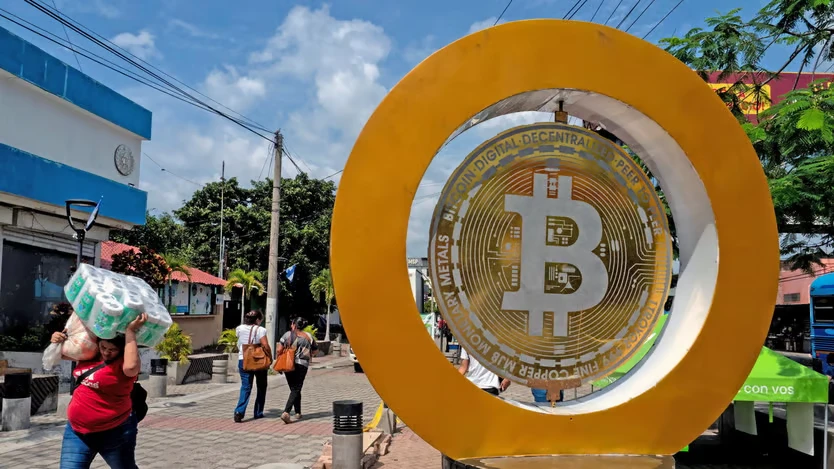
Bukele 对加密货币过于痴迷。2021 年萨尔瓦多成为第一个将比特币与美元一起作为法定货币的国家。Bukele 总统发誓要避开传统资本市场,通过代币化的区块链债券筹集数十亿美元。他将购买价值 5 亿美元的比特币,建造一座“比特币之城”,并开发地热能为比特币矿工提供动力。但传统市场并未对其买单, 2022 年夏天,几支萨尔瓦多国债的平均交易价格低于 30 美分,彼时政府开始推迟公共部门的工资以确保现金足够,投资者也做好了最坏的打算。

出乎意料的是, 2 月 26 日,国际货币基金组织董事会批准了一笔 14 亿美元的纾困贷款,该笔贷款是在拖延多年后于 12 月达成的,将在 40 个月内发放。为了获得这笔钱,萨尔瓦多做出了财政纪律方面的常规承诺——缩减其加密货币项目。今年 1 月修改法律后,纳税人不再以比特币支付,私营部门接受比特币支付也是全凭自愿的。

在向 IMF 申请债务协议的过程中,萨尔瓦多表现出了坚定的偿还债务决心。部分原因是 Bukele 希望让华尔街怀疑者们对其大吃一惊,该国债券价格一路回升至面值水平,官员们利用稀缺的美元以大幅折扣回购债券,节省了未来本金支付的很大一部分。财政赤字在 2020 年升至 GDP 的 10% ,现已恢复到疫情前的 2-3% 水平,与其他国家大致持平。打击逃税、汇款大量流入和经济略有回升,增加了政府收入;能源补贴和疫情时代计划的逐步取消,减缓了支出。

该笔贷款降低了债务违约危机的风险,但如果萨尔瓦多能像人们希望的那样从其他多边贷款机构再获得 21 亿美元贷款的话情况会更好。尽管削减了赤字,但该国可能也撑不了多久。债务高、经济增长缓慢的情况下,萨尔瓦多如果继续遵循 2024 年初所做的那样——以 12% 的速度筹集资金是不可持续的。在萨尔瓦多这样的美元化经济体中,由于没有最后贷款人来避免银行挤兑或金融危机蔓延,其主权债务违约的代价更大。地方银行存款部分由政府债务支持,因此违约可能会“滚雪球般”演变成银行业危机,甚至导致去美元化。

至于萨尔瓦多在比特币采用上做出的退让,可能是“塞翁失马”,更多的是庆幸而不是让步。Bukele 吹捧加密货币能为三分之二没有银行账户的成年人提供金融服务并降低汇款成本,汇款金额几乎占比其国家 GDP 的四分之一,但加密金融惠普的主要障碍是其经济的规模和较低的数字经济素养,汇款成本高昂是因为萨尔瓦多人喜欢通过纸币交易,这本身就是一种昂贵的业务,犯罪活动又使成本变得更高。此外,萨尔瓦多政府还匆忙推出 Chivo 数字钱包,可使用美元和比特币付款。但推出该钱包后的现实情况并不理想,漏洞和身份盗窃猖獗——为了窃取注册钱包时 30 美元比特币奖励。

在比特币还是萨尔瓦多的法币时,国际货币基金组织就对向萨尔瓦多提供贷款持谨慎态度。比特币价格波动对金融和财政稳定构成风险。比特币可能被用于洗钱和其他犯罪活动。国际货币基金组织表示,萨尔瓦多将限制“比特币交易和购买”。根据链上数据,自达成协议以来,该国实际上一直在购买比特币,但为了遵守贷款协议,该国可能不得不减少或撤销这些购买。萨尔瓦多现持有 6100 枚比特币,价值逾 5 亿美元,浮盈 2 亿美元左右,这也是 Bukele 引以为傲的一点。

利润看似很大,但加密货币给萨尔瓦多带来的投入成本却大于收益,Bukele 的加密宣传受到欢迎,但加密投资和加密旅游上的体量却很小,金融惠普和更高效的支付方式带来的收益充也微不足道。总之,加密货币从未真正在萨尔瓦多流行起来。2022 年,当炒作达到顶峰时,CID -Gallup 的一项调查发现,只有五分之一的公司接受比特币,只有 5% 的税款是用加密货币支付的。近期的这项数据可能会更低,因为萨尔瓦多人仍然强烈偏爱现金和支付卡。

此外,评级机构穆迪表示,萨尔瓦多在加密实验上总共花费了 3.75 亿美元——包括 Chivo 的推出、补贴交易费、比特币 ATM 机等,这远超其现持有比特币的利润,且这些利润仍有可能随着比特币下跌减少。Bukele 的加密实验推迟了萨尔瓦多与 IMF 的贷款协议,使萨尔瓦多的风险溢价居高不下,他的国家濒临债务违约。

但 Bukele 的支持率极高,通常超过 90% 。他自称是“世界上最受欢迎的独裁者”,但这并不是因为其推崇加密货币,而是因为他对犯罪活动的严厉打击,打击过程中,正当程序和犯罪嫌疑人应有的权利都被其忽视。他对加密货币的痴迷并没有缓解萨尔瓦多的经济困境。尽管比特币可能仍是国家资产负债表上的储备资产,但它作为萨尔瓦多法币的日子已经结束了。Bukele 只是一位加密货币乌托邦主义者,其疯狂的想法与现实碰撞时破灭了。 

Trending Cryptos

Related Reads

Tsinghua University's Special Award Winner, Gu Yuxian, Joins DeepSeek

Tsinghua University's prestigious Graduate Special Scholarship recipient and 2021 Ph.D. candidate, Yuxian Gu, has officially joined DeepSeek. This news coincides with DeepSeek's major recruitment drive and the imminent launch of DeepSeek V4, on whose research paper Gu is listed as an author. A doctoral student in the Conversational AI group under Professor Minlie Huang at Tsinghua, Gu's research focuses on enhancing efficiency throughout the entire lifecycle of large language models. His key contributions span three areas: innovative methods for pre-training data selection (e.g., PDS), advanced knowledge distillation techniques for model compression (notably MiniLLM), and the development of efficient model architectures like Jet-Nemotron. His work has gained significant recognition, with nearly 5,000 citations on Google Scholar. Key publications include the highly cited surveys and papers on pre-trained models and the MiniLLM distillation method. As first author, he has presented at top-tier AI conferences including NeurIPS, ICLR, and ACL. One of his notable achievements is the Jet-Nemotron architecture, which combines Post-Neural Architecture Search (PostNAS) and a novel linear attention module called JetBlock. This model series demonstrates state-of-the-art performance rivaling larger models while achieving substantial efficiency gains in inference. Gu's expertise in creating powerful yet efficient AI systems aligns with industry needs, as evidenced by the adoption of his MiniLLM method by leading tech companies. His move to DeepSeek is anticipated to contribute further advancements in the field.

marsbit11m ago

Tsinghua University's Special Award Winner, Gu Yuxian, Joins DeepSeek

marsbit11m ago

After Close Observation of Wash, Morgan Stanley's Chief Economist Insists: The Fed Will Not Raise Rates This Year

After close observation of Federal Reserve Chair Wash, Seth Carpenter, Morgan Stanley's Chief Global Economist, asserts that the Fed will not raise interest rates this year. Following Wash's speech at the ECB's Sintra forum, Carpenter notes a marginal dovish shift: Wash now more clearly balances the Fed's dual mandate of price stability and maximum employment, rather than focusing nearly exclusively on inflation. Importantly, Wash highlighted that the latest policy meeting (coinciding with falling oil prices) has already lowered market inflation expectations and term premiums, signaling no urgency for a July rate hike. Carpenter's view is supported by data. Recent non-farm payroll figures provide room for the Fed to remain patient. Morgan Stanley's inflation forecasts are below the median FOMC projection, and methodological revisions to PCE inflation could further lower readings. These factors make Carpenter "comfortable" with the call for no hikes in 2024. Carpenter also pushes back against the simplistic narrative that AI will be deflationary and lead to rate cuts. He argues AI investment is currently boosting inflation marginally. More broadly, the business cycle will dictate policy; AI's productivity gains could boost demand and, crucially, raise the equilibrium interest rate (r*), weakening the case for cuts. In contrast, the ECB's path remains more hawkish. Carpenter interprets President Lagarde's Sintra comments as leaving the door open for another 25 basis point hike in September, though softer recent data and falling oil prices provide some flexibility. A July hike or more than one additional hike this year is seen as unlikely.

marsbit40m ago

After Close Observation of Wash, Morgan Stanley's Chief Economist Insists: The Fed Will Not Raise Rates This Year

marsbit40m ago

StarDynamics Secures 2.5 Billion in Two Months, State-Owned Capital Consortium Joins In

Star Era Raises 25 Billion Yuan in Two Months with State Capital Leading the Charge. Chinese humanoid robotics leader Star Era has secured a new 10-billion-yuan funding round led by state-owned capital, including funds like Chengtong Fund under the SASAC, marking 25 billion yuan raised within two months. The company, a spin-off from Tsinghua University, has built a comprehensive capital matrix combining state guidance, top-tier financial backers, and industrial partners. Founded in 2023 by Dr. Chen Jianyu, one of Tsinghua's youngest doctoral supervisors, Star Era stands out for its early and pioneering work on "world models" for embodied AI, notably releasing its PAD world action model ahead of major global players. The company follows an AI-native, full-stack R&D strategy from data and AI brain to control, dexterous hands (XHAND series), and robot bodies (bipedal L7, wheeled Q5). A core innovation is its fully direct-drive dexterous hands, which act as high-fidelity data collectors for training its AI models like the ERA-42 and VLAW, creating a virtuous cycle of data and intelligence. Star Era claims to possess one of the world's largest real-world dexterous hand datasets. Commercially, Star Era has achieved product-market fit, most notably in logistics, with robots operating 24/7 in distribution centers for partners like SF Express and China Post, handling over 1,200 parcels per hour. It is also expanding into high-end manufacturing (Samsung, Geely) and commercial services. Its hardware components are used by nine of the global top ten tech firms and leading research institutions. The article positions 2026 as an inflection point where success shifts from model capabilities to proven, scalable commercial deployment. Star Era's rapid funding and industrial traction highlight its position in this competitive race.

marsbit44m ago

StarDynamics Secures 2.5 Billion in Two Months, State-Owned Capital Consortium Joins In

marsbit44m ago

U.S. Stock Market Trend (July 6th): Gold and Crypto Lead Rebound Ahead of Stocks, Fed Minutes Set Weekly Direction

**U.S. Market Trends (July 6): Gold & Crypto Lead, Fed Minutes to Set Tone** Markets rebounded ahead of the U.S. Independence Day holiday, with Nasdaq 100 futures rising over 1% as AI sector concerns eased. Gold posted its best week in over a month, breaking a four-week losing streak despite ongoing Russia-Ukraine tensions, as Middle East risk premiums faded. Brent crude extended its decline for a fourth week. The week ahead is packed with key events. On Tuesday, SpaceX makes a record-fast entry into the Nasdaq 100 index, forcing passive fund flows, while U.S. tariff hearings and the Sun Valley Conference—notably missing NVIDIA's Jensen Huang and Tesla's Elon Musk—add complexity. OpenAI's scheduled GPT-5.6 release intensifies the AI model rollout race. The main focus is Thursday's release of the first Fed meeting minutes under Chair Wash. With half the FOMC already leaning toward a rate hike this year per the June dot plot, the minutes' tone will be critical for market direction. Hawkish confirmation could reverse recent risk-on sentiment, likely signaled first by a pullback in high-volatility assets like Bitcoin and Ethereum, which significantly outperformed last week. Other events include SK Hynix's large U.S. ADR listing and the start of the Q2 earnings season with reports from PepsiCo and Delta Air Lines. The market's path hinges on whether the liquidity and optimism built during the holiday can withstand the combined tests of Fed policy, trade tensions, and major corporate events.

marsbit45m ago

U.S. Stock Market Trend (July 6th): Gold and Crypto Lead Rebound Ahead of Stocks, Fed Minutes Set Weekly Direction

marsbit45m ago

Trading

Spot

Hot Articles

What is $BITCOIN

DIGITAL GOLD ($BITCOIN): A Comprehensive Analysis Introduction to DIGITAL GOLD ($BITCOIN) DIGITAL GOLD ($BITCOIN) is a blockchain-based project operating on the Solana network, which aims to combine the characteristics of traditional precious metals with the innovation of decentralized technologies. While it shares a name with Bitcoin, often referred to as “digital gold” due to its perception as a store of value, DIGITAL GOLD is a separate token designed to create a unique ecosystem within the Web3 landscape. Its goal is to position itself as a viable alternative digital asset, although specifics regarding its applications and functionalities are still developing. What is DIGITAL GOLD ($BITCOIN)? DIGITAL GOLD ($BITCOIN) is a cryptocurrency token explicitly designed for use on the Solana blockchain. In contrast to Bitcoin, which provides a widely recognized value storage role, this token appears to focus on broader applications and characteristics. Notable aspects include: Blockchain Infrastructure: The token is built on the Solana blockchain, known for its capacity to handle high-speed and low-cost transactions. Supply Dynamics: DIGITAL GOLD has a maximum supply capped at 100 quadrillion tokens (100P $BITCOIN), although details regarding its circulating supply are currently undisclosed. Utility: While precise functionalities are not explicitly outlined, there are indications that the token could be utilized for various applications, potentially involving decentralized applications (dApps) or asset tokenization strategies. Who is the Creator of DIGITAL GOLD ($BITCOIN)? At present, the identity of the creators and development team behind DIGITAL GOLD ($BITCOIN) remains unknown. This situation is typical among many innovative projects within the blockchain space, particularly those aligning with decentralized finance and meme coin phenomena. While such anonymity may foster a community-driven culture, it intensifies concerns about governance and accountability. Who are the Investors of DIGITAL GOLD ($BITCOIN)? The available information indicates that DIGITAL GOLD ($BITCOIN) does not have any known institutional backers or prominent venture capital investments. The project seems to operate on a peer-to-peer model focused on community support and adoption rather than traditional funding routes. Its activity and liquidity are primarily situated on decentralized exchanges (DEXs), such as PumpSwap, rather than established centralized trading platforms, further highlighting its grassroots approach. How DIGITAL GOLD ($BITCOIN) Works The operational mechanics of DIGITAL GOLD ($BITCOIN) can be elaborated on based on its blockchain design and network attributes: Consensus Mechanism: By leveraging Solana’s unique proof-of-history (PoH) combined with a proof-of-stake (PoS) model, the project ensures efficient transaction validation contributing to the network's high performance. Tokenomics: While specific deflationary mechanisms have not been extensively detailed, the vast maximum token supply implies that it may cater to microtransactions or niche use cases that are still to be defined. Interoperability: There exists the potential for integration with Solana’s broader ecosystem, including various decentralized finance (DeFi) platforms. However, the details regarding specific integrations remain unspecified. Timeline of Key Events Here is a timeline that highlights significant milestones concerning DIGITAL GOLD ($BITCOIN): 2023: The initial deployment of the token occurs on the Solana blockchain, marked by its contract address. 2024: DIGITAL GOLD gains visibility as it becomes available for trading on decentralized exchanges like PumpSwap, allowing users to trade it against SOL. 2025: The project witnesses sporadic trading activity and potential interest in community-led engagements, although no noteworthy partnerships or technical advancements have been documented as of yet. Critical Analysis Strengths Scalability: The underlying Solana infrastructure supports high transaction volumes, which could enhance the utility of $BITCOIN in various transaction scenarios. Accessibility: The potential low trading price per token could attract retail investors, facilitating wider participation due to fractional ownership opportunities. Risks Lack of Transparency: The absence of publicly known backers, developers, or an audit process may yield skepticism regarding the project's sustainability and trustworthiness. Market Volatility: The trading activity is heavily reliant on speculative behavior, which can result in significant price volatility and uncertainty for investors. Conclusion DIGITAL GOLD ($BITCOIN) emerges as an intriguing yet ambiguous project within the rapidly evolving Solana ecosystem. While it attempts to leverage the “digital gold” narrative, its departure from Bitcoin's established role as a store of value underscores the need for a clearer differentiation of its intended utility and governance structure. Future acceptance and adoption will likely depend on addressing the current opacity and defining its operational and economic strategies more explicitly. Note: This report encompasses synthesised information available as of October 2023, and developments may have transpired beyond the research period.

618 Total ViewsPublished 2025.05.13Updated 2025.05.13
What is $BITCOIN

Discussions

Welcome to the HTX Community. Here, you can stay informed about the latest platform developments and gain access to professional market insights. Users' opinions on the price of BTC (BTC) are presented below.

活动图片