Solana新提案引社区争议,通胀革命背后的利益博弈

Odaily星球日报Published on 2025-02-27Last updated on 2025-02-28

Abstract

看似“智能发行”的蓝图,却在社区激起了关于“通胀螺旋”与利益博弈的激烈争议

原文作者:Frank,PANews
近期,Solana 治理论坛发起了一项名为 SIMD-0228 的提案,通过动态调整通胀率,将 SOL 的年增发量削减 80% ,并引导资金从质押转向 DeFi。然而,这一看似“智能发行”的蓝图,却在社区激起了关于“通胀螺旋”与利益博弈的激烈争议——当质押率跌破临界点时,更高的通胀可能反噬市场信心。而验证者的收入结构、生态参与者的利益分配,更成为这场代币经济实验的隐形炸药。
新提案或降低 80% 通胀,当年减少 2200 万 SOL 发行
Solana 的代币 SOL 发行机制一直采取的是固定时间表机制,即随着时间推移通胀率从 8% 以每年 15% 的递减幅度下降,直至达到 1.5% 的目标,当前的通胀率为 4.694% 。这一通胀率机制下,今年的增发的代币数量约为 2793 万枚代币,质押率约为 64% 。
相比之下,以太坊的通胀率目前约为 0% ,质押率约 30% 。SOL 代币的通胀模型显然更不利于代币保值,而过高的通胀率也让大量的代币选择投入质押当中,以获得更高收益率。因此不利于 DeFi 生态的发展。
Solana新提案引社区争议,通胀革命背后的利益博弈


提案认为,目前 Solana 网络当中,MEV 收入已经成为验证者们的主要收入来源,降低质押收益率并不会产生太大的收益影响。“简单来说,它是‘愚蠢的发行’。鉴于 Solana 蓬勃的经济活动,发展网络的货币政策以实现‘智能发行’是有意义的。”
在提案中,提出一条分界线,最早假设为 50% ,即当质押率超过 50% 时,通胀率下降,减少网络的质押收益。当质押率低于 50% 时,则提高通胀率,扩大奖励以激励更多资金进行质押。
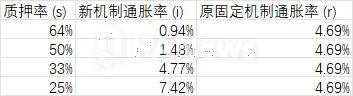
随后,论坛用户质疑 50% 阈值缺乏严谨计算依据,认为设定过于草率。随后,提案者提供了新的算法曲线,将质押率 33% 是定为一个分界线,当质押率高于 33% 时,每年的通胀率就会低于目前的通胀率。
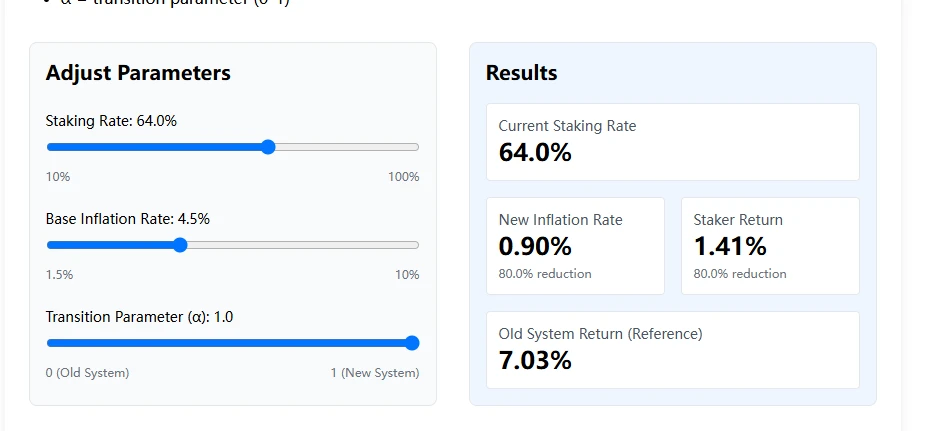
据 PANews 计算,以当前的 64% 质押率为例,按照新的代币发行曲线,年化的通胀率将从 4.694% 降至 0.939% ,降幅约 80% 。
如果提案最终通过,维持目前的质押率情况下,SOL 当年的增发数量将从 2793 万枚下降至 559 万枚。
Solana新提案引社区争议,通胀革命背后的利益博弈


提案修改的质押率和通胀率
但提案中的这种说法在论坛中似乎并未达成共识,大量评论认为如果该方案通过,现实有可能并不会按照理想的发生。比如,当质押率下降,通胀率的上升反而会进一步降低市场对代币的预期,这或许将导致那些未质押的代币进一步抛售代币引发更大的不确定性。
PANews 计算后发现,当质押率只有 25% 时,将产生 4413 万枚代币的通胀,这种通胀远高于目前的通胀率。
如果真的陷入这种通胀旋涡,那么可能得结果就是适得其反。正如提案所说,目前验证者的收入来源是 MEV 收入。这种现象主要是因为当前 Solana 网络交易活跃,众多 MEME 玩家对交易速度和防三明治攻击的需求使得 MEV 收入占比较高。若未来网络整体交易量下降,MEV 收入占比恐难维持验证者主要收入来源。彼时如果加上通胀和价格下跌的双重打击,或许会进一步打击质押积极性,反而走向通胀上升,质押下降的反向螺旋。
验证者巨头集体沉默,背后或是持币大户的利益博弈
该提案由 Multicoin Capital 的投资人 Vishal Kankani 发起,Multicoin Capital 是 Solana 的早期投资人, 2019 年曾领投 2000 万美元的 A 轮融资。并且持有大量的 SOL 代币,早期投资选择获得 SOL 代币,而非股权。从这一背景来看,Vishal Kankani 所代表的是 Solana 持币大户,对通胀影响代币市场价格较为敏感。
有趣的是,截至 2 月 26 日,Solana 网络当中的大型验证者 Helius、binance staking、Galaxy 等等均未对这次提案进行表态。Helius 创始人平时对 Solana 生态的发展频频发言,但对于这次对生态有着巨大影响的提案只是转发了一个相关内容,并评论现在卖出 SOL 代币是愚蠢的。
事实上,这项提案一旦通过,或许对 Helius 这种将 100% MEV 收入返还给质押者的验证者并不是一个好消息。因为就目前来看,由于不通过 MEV 当中获取收益,Helius 可能更依赖质押本身的收益。
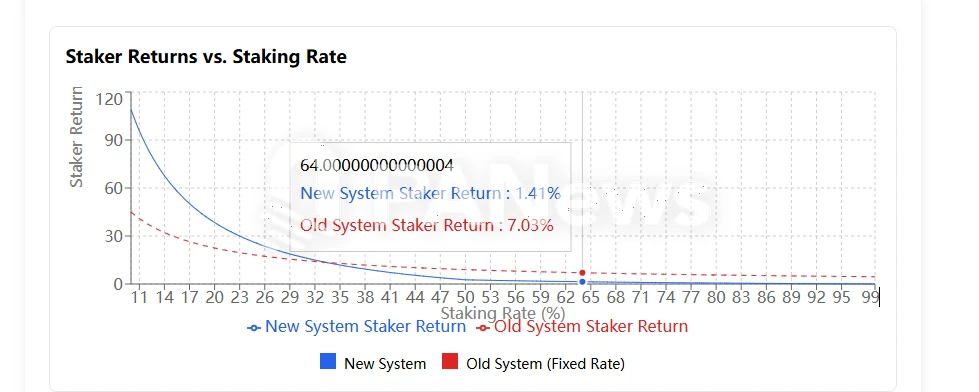
总体来看,这个提案代表的是 SOL 持币大户的利益需求,他们更希望降低通胀来实现价值稳定。此外,从生态来看,Solana 网络目前的质押收益率约为 7.03% ,新的方案下,相同的质押率收益率将降至 1.41% ,收益率下降接近 80% 。这对希望通过质押获得无风险收益的大型验证者节点来说可不是件好事。
Solana新提案引社区争议,通胀革命背后的利益博弈


当然,提案中认为,正是质押收益率下降,才会刺激这些验证者将手中的代币投入更多 DeFi 生态当中,能够进一步提升 Solana DeFi 的生态繁荣。
Solana 的这场代币经济改革,本质上是持币大户、验证者与生态建设者之间的权力再平衡。提案通过后, 7.03% 的质押收益率或将骤降至 1.41% ,迫使验证者从依赖通胀奖励转向深耕 MEV 和交易手续费——这既是机遇,亦是赌局。
若 DeFi 能借此吸纳数十亿美元的闲置流动性,Solana 或可迎来如 Uniswap 和 Aave 般的爆发式创新;但若市场因收益率下滑而抛售, 25% 质押率下的 4413 万枚天量增发,恐将把网络拖入“通胀-抛压-更通胀”的死亡螺旋。
目前,Helius 等头部验证者的沉默,暗示着利益链条的微妙张力——当 100% 返还 MEV 的商业模式遭遇基础收益腰斩,生态的“去中心化”叙事或将面临现实拷问。而 Multicoin Capital 作为早期巨鲸的立场,则揭示了这场博弈的深层逻辑:在机构投资者眼中,SOL 的价值存储属性已优先于网络安全需求。未来数月,随着 3 月 7 日投票临近,Solana 的命运将不再由代码独裁,而是取决于社区能否在理想主义与资本理性间找到那个危险的平衡点。

Trending Cryptos

Related Reads

Ethereum Sheds Its Load? What Ethereum Supporters Think About the Lean Ethereum Upgrade and the Future Market

Ethereum is back in focus with the announcement of the "Lean Ethereum" upgrade roadmap, described by Vitalik Buterin as Ethereum's third major update. This proposal aims to fundamentally redesign the consensus, data, and execution layers from first principles, striving to make Ethereum **simpler, more secure (quantum-resistant), more verifiable, and more scalable.** The announcement comes amidst a broader restructuring within the ecosystem, including a 20% staff reduction at the Ethereum Foundation and the emergence of new organizations like EthLabs. This has sparked a debate among Ethereum supporters ("E-bizens"). **Optimists** view Lean Ethereum as a critical refocusing on core protocol fundamentals: * **sassal.eth** calls it the ultimate bullish catalyst, envisioning a future where running a node is so lightweight it could be done on a smartwatch, greatly enhancing decentralization. * **Ryan Sean Adams** sees it as Ethereum moving from "narrative expansion" to "protocol hardening," addressing long-term foundational issues like security and scalability. * Analysts like **BITWU** and **蓝狐 (Blue Fox)** frame it as a third-phase evolution towards a "minimal, durable, and credible base layer" designed for the next decade. * **gigi发财猪** interprets the organizational changes as Ethereum "shedding old baggage and forming new teams" for a lighter, more agile approach. * **Xiyu** notes that the roadmap itself provides a much-needed new narrative for market sentiment recovery. **Cautious voices** acknowledge the vision but emphasize execution and market timing: * **Ignas** warns that while the roadmap addresses key community requests, it overlooks tokenomics, and competitors are gaining ground in areas like RWA. Timely delivery is crucial; delays could be bearish. * **Dankrad Feist**, a former Ethereum Foundation researcher, agrees on direction but criticizes the proposed 3-4 year timeline as too slow for the current market pace, especially with AI-aided development available. **In summary,** optimists believe Lean Ethereum reaffirms Ethereum's long-term value proposition as a decentralized world computer, while the cautious argue that its success hinges on faster delivery and tangible results to maintain market relevance. Despite ongoing criticism, the move signals Ethereum's effort to regroup and reclaim initiative at the protocol level.

marsbit29m ago

Ethereum Sheds Its Load? What Ethereum Supporters Think About the Lean Ethereum Upgrade and the Future Market

marsbit29m ago

AI Folding: Fable 5 and GPT-5.6 Are Becoming the Privilege of a Few

【AI Accessibility Gap Widens: Elite Tools Like Fable 5 and GPT-5.6 Are Becoming Privileged】 We are witnessing a growing "AI divide." A stark reality is emerging: a tiny fraction of elites, primarily in tech, are using powerful next-generation models like Fable 5 or the upcoming GPT-5.6, while the vast majority of the public only has access to "toys" - free, limited models equivalent to ChatGPT's basic versions (8B to 30B parameters). This creates a massive experiential chasm and cognitive dissonance. Industry outsiders see AI as overhyped and ineffective, unable to grasp its transformative potential, while insiders leverage these advanced models for a decisive competitive edge. The gap isn't just about model quality but product functionality. Free users get a simple chatbot. Paying elites get integrated workflow systems—capable of creating specialized agents, processing complex data, and handling real-world tasks like management, coding, and planning. Demos showcasing AI planning weddings or building apps feel disconnected from everyday needs like managing bills, groceries, or health. The cost barrier is immense, with reports of engineers spending $1000 daily on Fable 5 inference. Elite users employ sophisticated multi-model workflows, combining different AIs for ideation, architecture, execution, and review, completing complex projects in minutes instead of weeks. This divide extends to critical areas like healthcare, where free models are dangerously unreliable for medical queries. However, some argue that for 90% of common business tasks, mid-tier models like GPT-5.5 are sufficient; the perceived limitation often stems from poor integration and lack of context, not model intelligence. Ultimately, unequal access to cutting-edge AI is creating a new form of social stratification, where the most powerful tools are becoming the exclusive privilege of a few.

marsbit1h ago

AI Folding: Fable 5 and GPT-5.6 Are Becoming the Privilege of a Few

marsbit1h ago

Cathie Wood's June $77M Investment: Are Crypto Stocks a True 'Substitute' for Bitcoin?

In June, Cathie Wood's ARK Invest purchased $77 million worth of publicly traded crypto-related stocks, including Coinbase, Circle, and Bullish, during Bitcoin's worst monthly performance in four years. This aligns with the investment thesis that such stocks offer a compliant way to gain exposure to the crypto cycle without directly holding Bitcoin. However, data analysis reveals significant drawbacks. A group of nine U.S.-listed crypto companies showed 30-day annualized realized volatility between 68% and 90%, nearly double Bitcoin's 37.6%. Over 90 days, Circle's volatility reached 103.6% versus Bitcoin's 37.8%. Drawdowns were also more severe for stocks like Circle (-51.4%) and MicroStrategy (-48.6%) compared to Bitcoin's -36.4% from its January high. Correlation analysis shows most stocks share only a moderate link to Bitcoin. For example, Circle, Robinhood, and Bullish have a 90-day correlation coefficient of just 0.55–0.58 with BTC, meaning only about one-third of their price movement is explained by Bitcoin's action. The rest stems from company-specific risks: earnings, competition, fundraising, and equity dilution. MicroStrategy (MSTR) is the notable exception, acting as a leveraged Bitcoin proxy with a beta of 1.59 and 0.85 correlation. Coinbase offers relatively balanced exposure. Circle exemplifies "crypto-wrapped" corporate risk, with its recent crash tied to stablecoin competition, not Bitcoin. Robinhood's diversified business insulates it from crypto downturns but also limits upside. Bitcoin miners like RIOT and MARA have posted significant gains year-to-date, driven primarily by their pivot to AI compute services, not Bitcoin's price. The article highlights that investing in crypto stocks often means accepting amplified volatility or layering on business-specific risks absent from direct Bitcoin ownership. For instance, MicroStrategy's recent challenges—its market value falling below its Bitcoin holdings (mNAV <1) and facing potential Bitcoin sales for liquidity—demonstrate equity-specific hazards like dilution and financing pressures not faced by a direct Bitcoin holder. ARK's buying spree represents a bet on a basket of different business models with varying crypto exposure, not a simple, lower-risk substitute for holding Bitcoin.

marsbit1h ago

Cathie Wood's June $77M Investment: Are Crypto Stocks a True 'Substitute' for Bitcoin?

marsbit1h ago

Trading

Spot

Hot Articles

Discussions

Welcome to the HTX Community. Here, you can stay informed about the latest platform developments and gain access to professional market insights. Users' opinions on the price of SOL (SOL) are presented below.

活动图片