币圈里程碑:比特币成功上破10万美元!

jin10Published on 2024-12-05Last updated on 2024-12-05

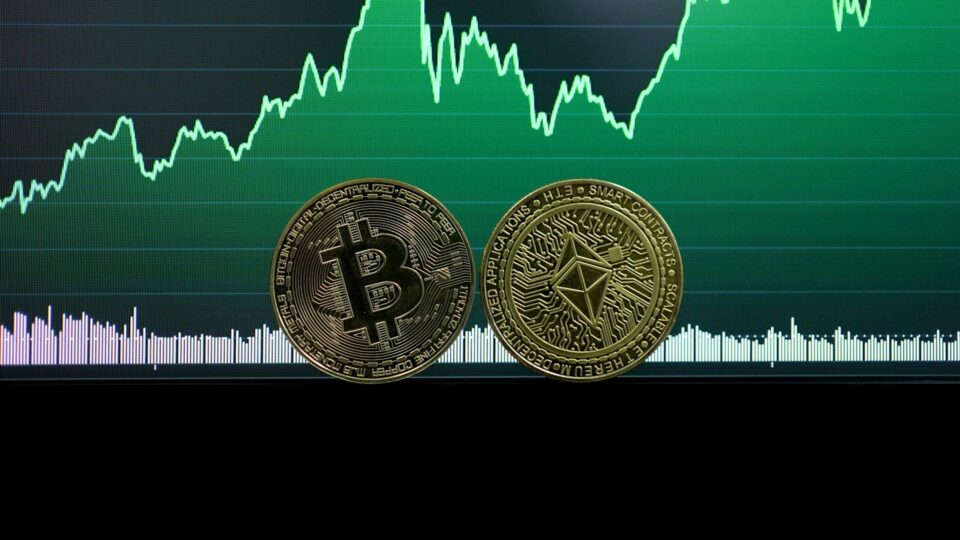
周四,加密货币多头们的梦想成真:比特币突破10万美元。在一个月的持续上涨行情中,比特币曾多次逼近,然后又反复远离这个最受追捧的整数关口。

推动这一走势的因素有:数字资产行业信心满满地认为,美国候任总统特朗普将停止前任政府对币圈的严格监管审查,转而采取对数字资产行业友好的政策和监管措施。

周三的事件为这种乐观情绪提供了具体的支持,特朗普提名亲加密货币的阿特金斯接替根斯勒担任美国证券交易委员会(SEC)主席。

Robinhood Markets Inc.的法律主管Dan Gallagher周三早些时候在纽约该公司举行的投资者日活动上表示,“阿特金斯是为这份工作量身打造的。”

Gallagher于11月公开放弃了SEC职位的考虑,他表示预计阿特金斯将解决通过执法对这一行业进行监管这一令人头疼的问题。“我认为他第一天就会这么做,”Gallagher补充道。

10万美元的价格将比特币的市值推至略低于2万亿美元,使其成为仅次于英伟达公司、苹果公司和谷歌母公司Alphabet Inc.等少数几家上市公司的更大投资资产。而2万亿美元的规模超过了西班牙和巴西等国的政府债券市场,并接近英国股票富时100指数的总市值

加密货币托管机构Copper Technologies Ltd.的研究主管Fadi Aboualfa表示,“比特币达到10万美元,标志着牛市行情的下一阶段的开始,现在看来,除了外围冲击之外,它对任何因素都具有韧性。”

甚至在特朗普当选总统之前,许多加密货币投资者就认为10万美元的价格是不可避免的。对冲基金经理Anthony Scaramucci在9月份预测,比特币将在今年年底达到这一里程碑,亿万富翁Michael Novogratz在6月份也表达了同样的观点。摩根大通和高盛等银行的策略师在近四年前就预测它最终将达到六位数的里程碑。

比特币诞生于16年前的全球金融危机之后,于2009年由化名为中本聪的创建者推出。中本聪究竟是个人还是一个团体一直是比特币诞生以来备受猜测的话题。

今年,比特币累计上涨了135%才达到10万美元,但这并不是这种数字资产第一次出现如此令人瞠目的价格波动。该代币在2010年末的价格约为30美分,在2022年暴跌64%之后,去年上涨了157%。它在2017年上涨了1375%,在2013年上涨了5428%,在2011年上涨了1317%。

从早期几美分的价格一路飙升到今天的10万美元,比特币克服了巨大的担忧,或者加密货币交易员所说的“FUD”,即恐惧(Fear)、不确定性(Uncertainty)和怀疑(Doubt)。它开创的加密资产类别多年来一直是骗子、勒索软件制造者、洗钱者和黑客的乐园。

从历史上最戏剧性时期之一完全复苏

比特币今年3月跃升至之前的73000美元以上纪录高点,标志着其从历史上最戏剧性时期之一完全复苏:从2021年11月到2022年11月,比特币暴跌近80%。在那次熊市期间,出现了一系列连锁崩溃——包括FTX交易所的崩盘,以及加密货币贷款机构Genesis和Celsius的倒闭。随之而来的政府打击行动使FTX创始人萨姆·班克曼-弗里德(SBF)因欺诈罪被判处25年监禁,并使他的竞争对手、币安交易所创始人赵长鹏因未能实施适当的反洗钱控制措施而被判处四个月监禁。

尽管加密货币市场有着不堪回首的历史,但比特币在主流金融体系中却越来越被接受。而且,这种加密货币规模越大、越主流,这种波动性资产就越接近于对全球金融体系产生系统重要性。

在特朗普当选之前,比特币今年的价格上涨得益于现货交易所交易基金(ETF)的普及,这些ETF在与其中一只基金的发行机构灰度和SEC之间经过长时间的法律斗争后,于1月推出,可以让投资者直接投资于比特币。

由贝莱德公司、富达公司和加密货币原生公司灰度投资等华尔街巨头主导的ETF目前持有约1000亿美元的资产,约占所有比特币流通量的5%。

“供应紧张”

Julius Baer的数字资产分析师Manuel Villegas表示,“需求背景稳固,我相信明年我们可能会看到比特币供应紧张的局面再次出现,这与我们去年认为价格只能单向上涨(需求增长是供应的数倍)的因素相同。”

特朗普重返白宫可能会将另一只“巨鲸”带入比特币市场:美国政府本身。特朗普在7月的一次比特币会议上誓言要创建一个加密货币战略储备,从美国政府没收的资产开始。

在同一会议上,特朗普盟友小罗伯特·肯尼迪和共和党参议员辛西娅·卢米斯提出了政府购买100万比特币(以目前价格计算价值1000亿美元)以支持美元的想法。

Trending Cryptos

Related Reads

Top 8 DEXs of July 2026

This article presents the top 8 decentralized exchanges (DEXs) for July 2026, highlighting their key features and evolution within the DeFi space. DEXs, which enable peer-to-peer cryptocurrency trading via smart contracts without intermediaries, are praised for offering users greater control, privacy, transparency, and global access compared to centralized platforms. The listed DEXs are: 1. **Shadow Exchange**: A Sonic-native DEX specializing in concentrated liquidity for efficient trading and reduced slippage. 2. **Uniswap**: A leading protocol using an Automated Market Maker (AMM) model across multiple blockchains. 3. **SushiSwap**: An evolved platform offering token swaps, yield farming, and governance via its SUSHI token across 40+ networks. 4. **Orca**: A user-friendly AMM on Solana featuring capital-efficient "Whirlpools" for concentrated liquidity. 5. **Meteora**: A Solana-based DEX focusing on dynamic liquidity infrastructure and vaults for advanced strategies. 6. **Raydium**: A hybrid exchange on Solana combining AMM pools with a central limit order book for deep liquidity. 7. **Hyperliquid**: A Layer 1 blockchain hosting a non-custodial perpetual futures exchange using an on-chain order book. 8. **PancakeSwap**: A multi-chain AMM hub originating on BNB Chain, now supporting thousands of trading pairs across several networks. The article concludes by noting the significant role of DEXs in crypto, their expansion beyond simple swaps into areas like derivatives and cross-chain interoperability, and advises users to conduct their own research before engaging with any platform.

ambcrypto1h ago

Top 8 DEXs of July 2026

ambcrypto1h ago

USDT Market Cap Approaches Ethereum's: What Signal Does This Convey?

The market capitalization of USDT has nearly reached that of Ethereum, making it the second-largest cryptocurrency after Bitcoin. This prompts an examination of what this signifies and what it does not. Firstly, this does not relate to economic security. Unlike some Web3 systems where a governance token's value must underpin the security of its applications (e.g., oracles), USDT's stability is not backed by the value of the underlying blockchains it operates on. Tether, the issuer, controls the assets, and can freeze, reissue, or abandon tokens on a compromised chain. While stablecoins require functional blockchains, a chain's native token market cap does not provide direct security for the stablecoin. Secondly, USDT's growth does not inherently reflect poorly on Ethereum. USDT is a dollar-pegged store of value, while ETH represents a claim on future Ethereum network revenue. Their valuations are driven by different factors. USDT's rising market cap simply indicates strong demand for stablecoin utility, independent of Ethereum's technological merits or competitive position. The core insight is the overwhelming market demand for permissionless dollar transfers. This is the most established and essential use case in crypto. It requires minimal technological sophistication—essentially just a trusted issuer's promise of redemption on a functional chain. This explains why stablecoin supply has grown exponentially while the combined market cap of major non-stablecoin cryptocurrencies like Bitcoin, Ethereum, and others has stagnated for years. Users primarily seek accessible dollar-denominated assets. They largely disregard the issuer's credibility (as seen with Tether's dominance over more credible alternatives like USDC or BlackRock's BUIDL) and are indifferent to the governance or decentralization of the underlying blockchain. As long as a stablecoin is widely accepted and easy to transfer, users will adopt it across any chain. The trend suggests that the market for permissionless stablecoins could continue to expand far beyond the total value of the smart contract platforms that host them, driven by this singular, powerful use case.

Foresight News1h ago

USDT Market Cap Approaches Ethereum's: What Signal Does This Convey?

Foresight News1h ago

Trading

Spot

Hot Articles

What is $BITCOIN

DIGITAL GOLD ($BITCOIN): A Comprehensive Analysis Introduction to DIGITAL GOLD ($BITCOIN) DIGITAL GOLD ($BITCOIN) is a blockchain-based project operating on the Solana network, which aims to combine the characteristics of traditional precious metals with the innovation of decentralized technologies. While it shares a name with Bitcoin, often referred to as “digital gold” due to its perception as a store of value, DIGITAL GOLD is a separate token designed to create a unique ecosystem within the Web3 landscape. Its goal is to position itself as a viable alternative digital asset, although specifics regarding its applications and functionalities are still developing. What is DIGITAL GOLD ($BITCOIN)? DIGITAL GOLD ($BITCOIN) is a cryptocurrency token explicitly designed for use on the Solana blockchain. In contrast to Bitcoin, which provides a widely recognized value storage role, this token appears to focus on broader applications and characteristics. Notable aspects include: Blockchain Infrastructure: The token is built on the Solana blockchain, known for its capacity to handle high-speed and low-cost transactions. Supply Dynamics: DIGITAL GOLD has a maximum supply capped at 100 quadrillion tokens (100P $BITCOIN), although details regarding its circulating supply are currently undisclosed. Utility: While precise functionalities are not explicitly outlined, there are indications that the token could be utilized for various applications, potentially involving decentralized applications (dApps) or asset tokenization strategies. Who is the Creator of DIGITAL GOLD ($BITCOIN)? At present, the identity of the creators and development team behind DIGITAL GOLD ($BITCOIN) remains unknown. This situation is typical among many innovative projects within the blockchain space, particularly those aligning with decentralized finance and meme coin phenomena. While such anonymity may foster a community-driven culture, it intensifies concerns about governance and accountability. Who are the Investors of DIGITAL GOLD ($BITCOIN)? The available information indicates that DIGITAL GOLD ($BITCOIN) does not have any known institutional backers or prominent venture capital investments. The project seems to operate on a peer-to-peer model focused on community support and adoption rather than traditional funding routes. Its activity and liquidity are primarily situated on decentralized exchanges (DEXs), such as PumpSwap, rather than established centralized trading platforms, further highlighting its grassroots approach. How DIGITAL GOLD ($BITCOIN) Works The operational mechanics of DIGITAL GOLD ($BITCOIN) can be elaborated on based on its blockchain design and network attributes: Consensus Mechanism: By leveraging Solana’s unique proof-of-history (PoH) combined with a proof-of-stake (PoS) model, the project ensures efficient transaction validation contributing to the network's high performance. Tokenomics: While specific deflationary mechanisms have not been extensively detailed, the vast maximum token supply implies that it may cater to microtransactions or niche use cases that are still to be defined. Interoperability: There exists the potential for integration with Solana’s broader ecosystem, including various decentralized finance (DeFi) platforms. However, the details regarding specific integrations remain unspecified. Timeline of Key Events Here is a timeline that highlights significant milestones concerning DIGITAL GOLD ($BITCOIN): 2023: The initial deployment of the token occurs on the Solana blockchain, marked by its contract address. 2024: DIGITAL GOLD gains visibility as it becomes available for trading on decentralized exchanges like PumpSwap, allowing users to trade it against SOL. 2025: The project witnesses sporadic trading activity and potential interest in community-led engagements, although no noteworthy partnerships or technical advancements have been documented as of yet. Critical Analysis Strengths Scalability: The underlying Solana infrastructure supports high transaction volumes, which could enhance the utility of $BITCOIN in various transaction scenarios. Accessibility: The potential low trading price per token could attract retail investors, facilitating wider participation due to fractional ownership opportunities. Risks Lack of Transparency: The absence of publicly known backers, developers, or an audit process may yield skepticism regarding the project's sustainability and trustworthiness. Market Volatility: The trading activity is heavily reliant on speculative behavior, which can result in significant price volatility and uncertainty for investors. Conclusion DIGITAL GOLD ($BITCOIN) emerges as an intriguing yet ambiguous project within the rapidly evolving Solana ecosystem. While it attempts to leverage the “digital gold” narrative, its departure from Bitcoin's established role as a store of value underscores the need for a clearer differentiation of its intended utility and governance structure. Future acceptance and adoption will likely depend on addressing the current opacity and defining its operational and economic strategies more explicitly. Note: This report encompasses synthesised information available as of October 2023, and developments may have transpired beyond the research period.

702 Total ViewsPublished 2025.05.13Updated 2025.05.13

What is $BITCOIN

Discussions

Welcome to the HTX Community. Here, you can stay informed about the latest platform developments and gain access to professional market insights. Users' opinions on the price of BTC (BTC) are presented below.

活动图片