Meme狂飙、SOL逼宫以太,市场到底有多看好未来的加密牛市?

coinvoicePublished on 2024-11-18Last updated on 2024-11-25

作者:Ignas | DeFi Research

标题:Certainly Bullish State of theMarket & What's Next

编译:比推BitpushNews Yanan

市场总爱嚷嚷“这次可不一样”,但说实话,我还挺盼着那老一套能再来一遍:要是比特币四年一轮的周期还能继续,2025年第四季度,币价说不定又能再创新高了。

然后呢,就是那套熟悉的流程:BTC一涨,ETH、SOL这些主流币种也跟着往上窜,接着就是另一大波代币(说不定迷因币最来劲)跟着沾光,一个个都往上冲。

不过嘛,市场这东西总有它的脾气,涨到一定程度就得拐个弯,然后咱们就得乖乖进入两年的“冷静期”。想想也是,一年到头这么疯涨,谁不累得慌?所以嘛,那两年的休整,就像是给市场的小长假。

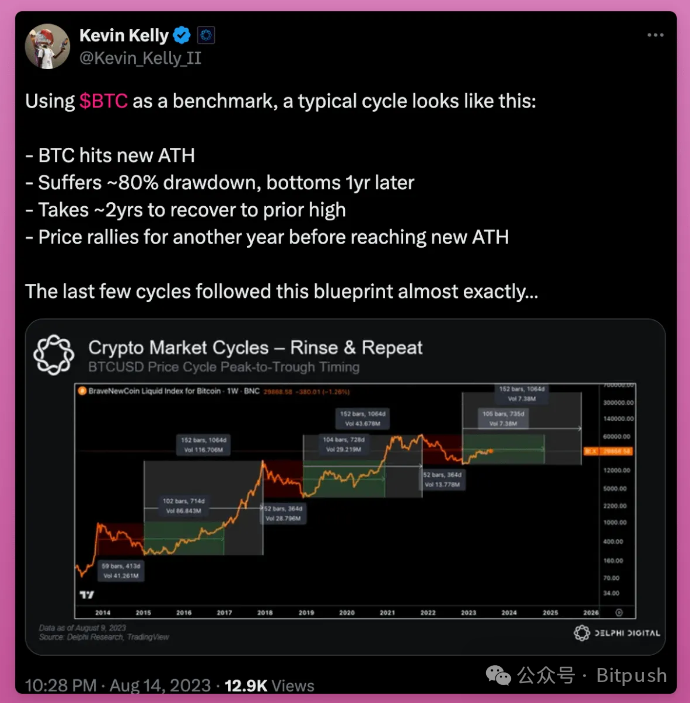
加密研究团队Delphi Research早在 2023 年年中就预测了 2025 年第四季度的峰值。
Meme狂飙、SOL逼宫以太,市场到底有多看好未来的加密牛市?

我之前曾提及过他们的预测,并且这些预测目前正逐步变为现实。不过,有几点是该团队未曾预料到的:以太坊的ETF获批,以及比特币ETF的批准在市场上引发了一轮强烈的FOMO情绪,这股热潮直接推动比特币币价在三月初攀上了之前的历史高点。

非常感谢Delphi的见解!

随着特朗普获胜,政府可能会出台更有利的加密货币法规,我们可能会看到超级疯狂牛市的最后催化剂。

当前的这种乐观情绪,与我七月份时分享的谨慎乐观市场观点形成了强烈对比。现在,市场已经不再受灰度ETF资金流出和门头沟事件等负面因素的影响。

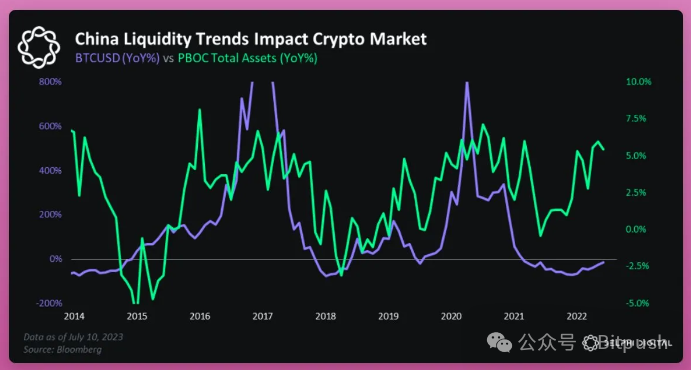
Delphi也提及中国因通货紧缩风险而考虑增加货币供应。

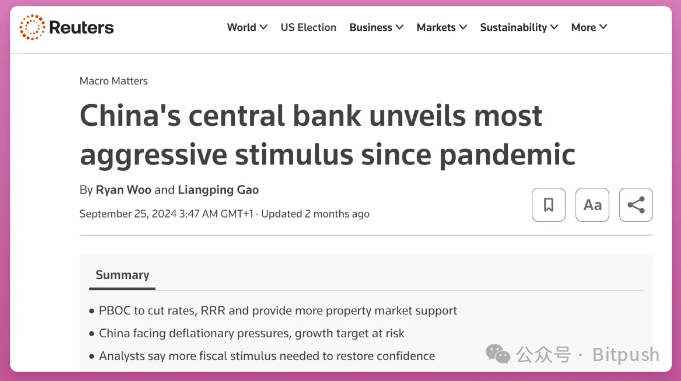
实际上,中国已出台疫情以来最积极的刺激政策,但不少人仍觉力度不够,呼吁进一步“开动印钞机”。
Meme狂飙、SOL逼宫以太,市场到底有多看好未来的加密牛市?

从历史规律来看,每当中国采取注入流动性的措施时,往往都会对全球经济以及加密货币市场带来正面的推动作用。

然而,在社交媒体X上,似乎很少有人留意到中国对加密货币态度可能出现的积极转变:不仅可能通过增加货币供应来刺激经济,还有望调整对加密货币的限制性监管政策。
Meme狂飙、SOL逼宫以太,市场到底有多看好未来的加密牛市?

最关键的是,以往的比特币减半事件最终都以比特币价格的大幅上涨收尾,不过这种涨势通常是在减半发生后的半年左右才开始显现的:这次的情况似乎也不例外。

Meme狂飙、SOL逼宫以太,市场到底有多看好未来的加密牛市?

如果一切按计划进行,这将是有史以来最具预见性、最易于把握的一次牛市行情。

市场有多看涨?

Capriole Investments 提供的研究报告图表颇具洞察力,值得细细研读。

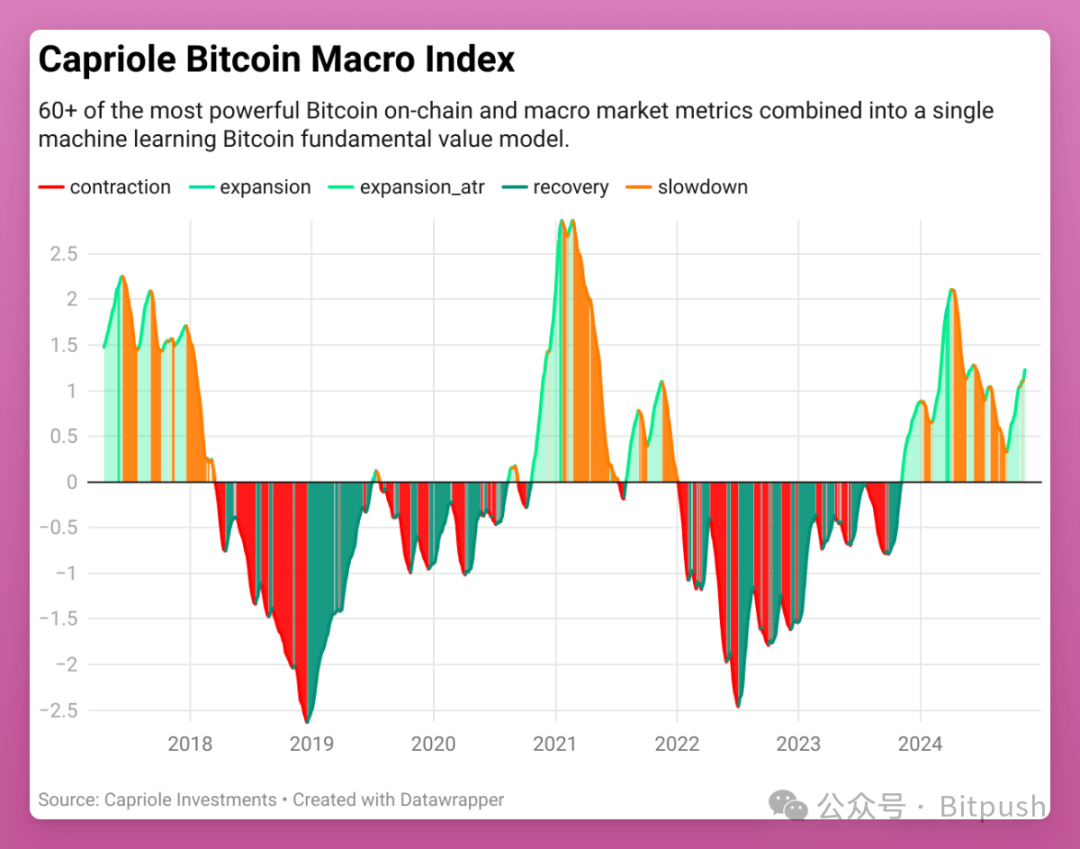
他们倾力打造的旗舰产品——Capriole 比特币宏观指数,综合考量了与比特币息息相关的60余项关键指标,涵盖了链上数据(如休眠流动、供应量、哈希率分布、活跃地址数量等)、宏观经济指标以及股市指标等多个维度。
Meme狂飙、SOL逼宫以太,市场到底有多看好未来的加密牛市?

该指数划分为若干阶段,当前我们正处于第二扩张期,然而,其水平既未触及2024年3月的高点,也远低于2017年与2021年的市场巅峰。

简而言之,前景看涨。

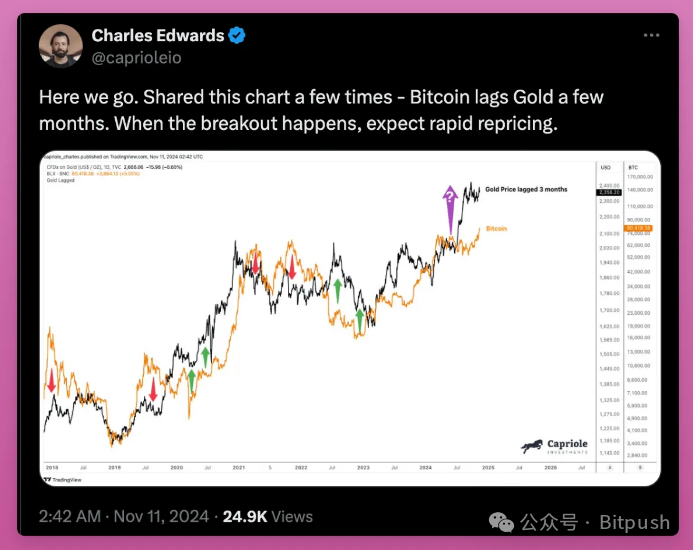
Capriole的创始人预测,至2025年第四季度,比特币价格将至少攀升至14万美元。当我直接询问他对以太坊(ETH)的看法时,他满怀信心地表示:“至少是5000美元,而且很可能还会更高。”
Meme狂飙、SOL逼宫以太,市场到底有多看好未来的加密牛市?

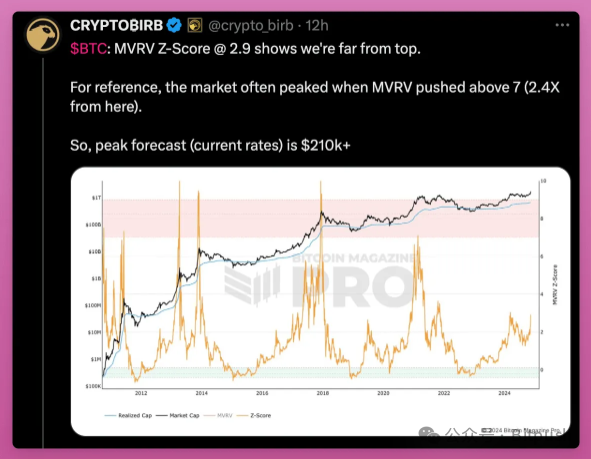
如果你觉得上述预测太过保守,同时你又信奉技术分析,那么你可能会将比特币的币价峰值预估上调至21万美元。
Meme狂飙、SOL逼宫以太,市场到底有多看好未来的加密牛市?

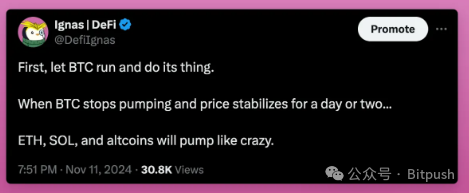
我打算沿用上一个周期的策略,因为我深度参与了SOL、ETH,并且正逐步深入探索DeFi领域和迷因币。

随着比特币价格的攀升,不少人因为自己的山寨币未能同步上涨而感到沮丧。别急,我亲爱的投资者们,山寨币往往会在比特币价格暴涨之后迎头赶上。
Meme狂飙、SOL逼宫以太,市场到底有多看好未来的加密牛市?

而且,市场依然拥有广阔的上涨空间。

根据Capriole Investments的山寨币投机指数来看,山寨币的反弹趋势甚至还未真正启动。该指数显示,高百分比意味着市场投机氛围浓厚,而低百分比则可能预示着投机行为减少,同时暗示着存在更佳的山寨币投资机会。
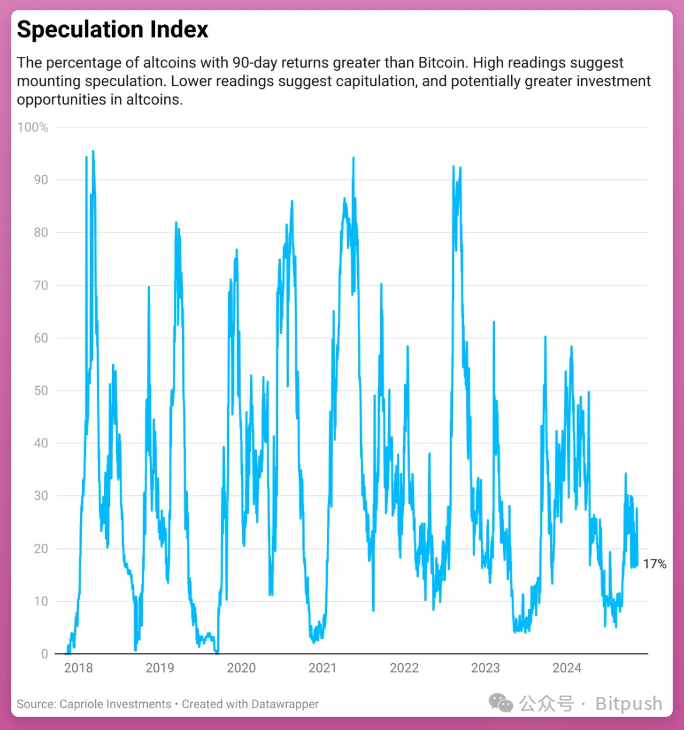
Meme狂飙、SOL逼宫以太,市场到底有多看好未来的加密牛市?

眼前的一切似乎好得难以置信,这不禁让人感到一丝忧虑。

我们已然踏入了极度贪婪的境地。
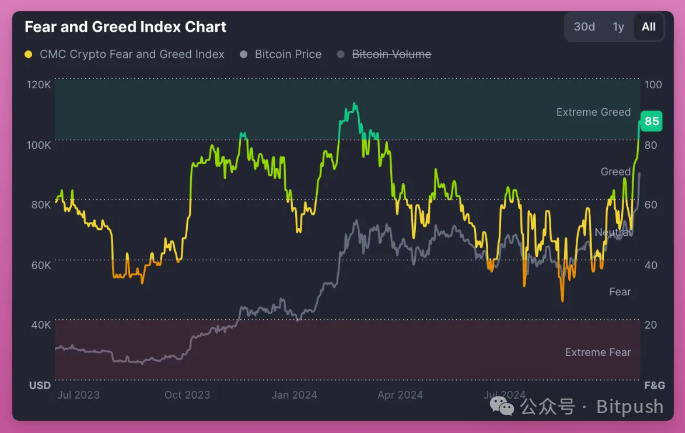
Meme狂飙、SOL逼宫以太,市场到底有多看好未来的加密牛市?

然而,这种贪婪情绪有可能持续相当长的一段时间。从2020年11月至2021年3月,该指数一直维持在80以上,期间回调幅度非常小。(数据来源:CryptoKoryo)
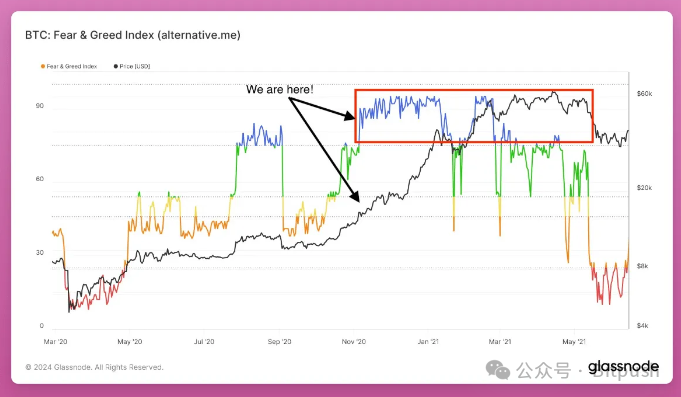
Meme狂飙、SOL逼宫以太,市场到底有多看好未来的加密牛市?

总之,即便当前形势看似一片大好,我们也应保持冷静,切勿盲目依赖杠杆操作。

迷因币(Memecoins)

前几天,我读了一篇《金融时报》的文章,标题是“比特币的惊人崛起不容忽视”。

普通读者的评论颇为有趣,诸如:庞氏骗局、诈骗、“它一无是处”之类的言论层出不穷。

这些自以为聪明的人显然没有领会到其中的真谛。而我突然间恍然大悟。

加密货币的早期入场者对迷因币也持有类似的偏见:认为是诈骗、毫无价值、没有意义等等。

然而,比特币在众人的质疑声中依然坚挺,而迷因币则让那些原本对迷因持怀疑态度的加密货币老手们大跌眼镜。这两者的价格也都在不断攀升,其势如破竹的劲头着实令人瞩目。只需回顾一下大选后迷因币的惊人表现,便可见一斑——短短十天内,主要迷因币的价格就已实现翻倍。
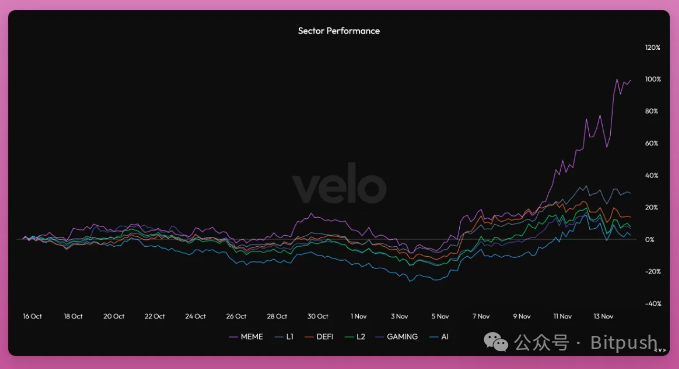
Meme狂飙、SOL逼宫以太,市场到底有多看好未来的加密牛市?

迷因币已经跨越了关键性的里程碑:币安及Coinbase相继上架迷因币,这无疑是其迈向规范化的重要一步。

在大量引入迷因币之前,币安发布了一份深入的研究报告,指出散户投资者正积极探索全新的财富增长途径,而迷因币则体现了提升透明度与可及性的核心理念,即“努力缩小内部优势,为全球投资者创造更加公平的参与环境”。

迷因币不仅是一种投资工具,更是“现代金融体系中价值与文化意义相互融合、深刻变革”的缩影。

考虑到币安自然倾向于上架那些具备上涨潜力的资产,因此,我有理由相信,币安未来将会上架更多的迷因币。

SOL vs 以太坊

哦,我亲爱的以太坊,你何时才能迎来涨价的曙光?

眼看着迷因币的价格一路飙升,我的持仓却越来越沉重。

FOMO不断诱惑我转向那些涨势更猛的币种,

但我始终坚守着——希望我所做的选择没有错。

在本轮加密货币周期中,以太坊及其整个生态系统似乎难以再现昔日的牛市盛况。

要撬动市值高达3820亿美元的以太坊巨头,以及那些老牌去中心化金融(DeFi)项目和新近涌现的低流通量、高FDV代币,所需的资金量其实足以在其他多个新兴领域掀起波澜。这些领域包括去中心化科学(DeSci)、Runes、Solana生态中的DeFi项目,以及其他L1项目,甚至还有上面提到的迷因币。

以太坊和DeFi代币投资者在上一轮周期中已经赚得盆满钵满,如今这些人都渴望再翻3到5倍以实现财富自由。但或许市场不会这么容易地给他们机会?让这些币种再多磨一段时间吧。

推动以太坊增长3倍所需的资金,可能会让那些为加密领域注入新想法的生态系统增长10倍。

这种可能性是完全存在的。

近期,贾斯汀·德雷克(JustinDrake)提出的ETH 3.0(Beam Chain)路线图并未激起社区的太多兴趣。更何况,该计划预计要到2020年代末才能付诸实施,这显然已经错过了当前的市场周期。

另一方面,Solana则正处于如日中天的状态。

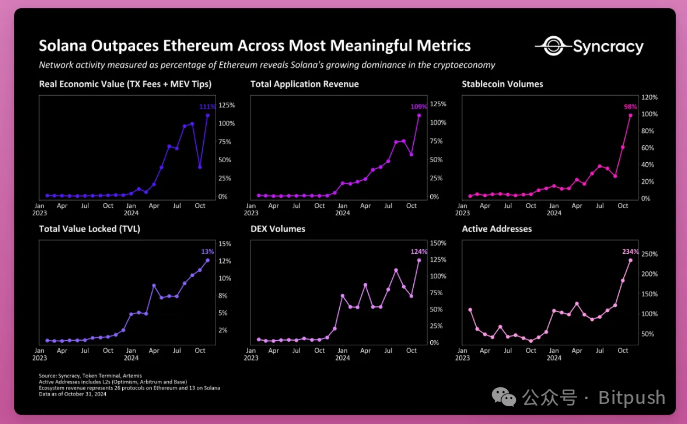
Syncracy最近发布的研究报告对以太坊和Solana的竞争态势进行了清晰的对比。

上一轮Solana的崛起是由未来潜力驱动的,而这一次则是由扎实的基本面所推动。

从网络活动的对比可以看出,Solana在总锁仓量(TVL)、去中心化交易所(DEX)交易量、稳定币交易量以及活跃地址数量等方面表现出色。
Meme狂飙、SOL逼宫以太,市场到底有多看好未来的加密牛市?

客观而言,将Solana直接与以太坊的L1层进行比较或许有些偏颇,因为理论上还应将以太坊的L2层纳入考量。然而,由于L2层在很大程度上仍被视为依附于以太坊主链的“寄生虫”,普通投资者对于L2层的真正价值尚存疑惑,难以准确评估。

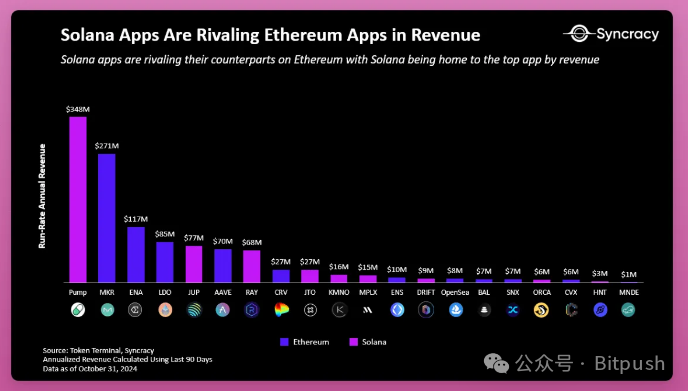
即便我们转而关注dApp的收入情况,也会发现Solana上的dApp如今已能与以太坊上的dApp相抗衡,展现出不相上下的实力。
Meme狂飙、SOL逼宫以太,市场到底有多看好未来的加密牛市?

尽管如此,Solana的市值仍仅为以太坊的三分之一左右,考虑到其经济指标所展现出的强劲态势,这无疑预示着它还有巨大的增长空间,甚至未来有可能与以太坊在估值上并驾齐驱。

那么,SOL真的会踩着ETH上位吗?在我看来,当这种“SOL将超越ETH”的言论愈发盛行之时,或许就是考虑重新布局,回归ETH的时候了。

历史上,以太坊市值超越比特币的时刻,往往也是ETH/BTC比率触达高点的明确信号。


声明:本内容为作者独立观点,不代表 CoinVoice 立场,且不构成投资建议,请谨慎对待,如需报道或加入交流群,请联系微信:VOICE-V。

Trending Cryptos

Related Reads

The Illusion of a Prodigy

The Illusion of the "Genius Youth" The article discusses the recent interview incident involving Li Bojie, a former "Huawei Genius Youth," and AI company DeepSeek. It highlights the core conflict not as a simple case of suspected cheating during a coding test, but as a profound mismatch in expectations. Li, with an impressive background including entrepreneurship, a role at Huawei, and a position as a chief scientist, was deeply affected by a standard remote interview where the interviewer questioned his actions. The key point is his stated view of DeepSeek as the "pinnacle of the Chinese tech world." For him, the interview was a quest for identity validation—proof he belonged at the center of the new AI era. For DeepSeek, it was a routine skills assessment. The article argues that Li, while publicly rejecting the "genius" label, subconsciously expected to be treated as a peer for discussion, a courtesy extended by other companies like MiniMax and Xiaomi. DeepSeek, however, adhered strictly to its standardized process, prioritizing consistent, merit-based evaluation over individual prestige. This clash symbolizes a larger shift in the tech industry. The core thesis is that the AI era is dismantling the old system where past titles, companies, and accumulated experience guaranteed status. Now, with rapid knowledge obsolescence, "excellence is calculated in real-time." Li's anxiety—waiting weeks for the DeepSeek interview despite other offers—stems from the fear that rejection means being left behind by technological progress. The article concludes that this incident is a harbinger; soon, everyone will face a constant, implicit "interview" with the AI age itself, asking: "You were excellent yesterday. What about today?"

marsbit9m ago

The Illusion of a Prodigy

marsbit9m ago

Vanguard Group Enters the Arena, Opening a New Crypto Portal for 50 Million Traditional Investors

Vanguard Group, the world's second-largest asset manager with $12 trillion in assets under management and over 50 million investors, has signaled a significant strategic shift by posting a job opening for a "Head of Digital Assets, Personal Wealth." The role entails developing a comprehensive digital asset strategy, establishing long-term plans, and overseeing the full integration of digital assets into Vanguard's wealth management platform, covering areas like custody, settlement, asset tokenization, and stablecoins. This move marks a notable reversal from the firm's previous stance. In 2024, Vanguard refused to list spot Bitcoin ETFs and removed Bitcoin futures products. By late 2025, it allowed some third-party crypto ETF trading but reiterated it would not create its own crypto funds. The new hire represents a third step: building an internal team to integrate digital assets into its core infrastructure, moving beyond merely listing products. The initiative focuses on foundational financial infrastructure—how tokenized assets and digital settlement systems can connect to Vanguard's existing platform, which primarily serves long-term, conservative investors. While Vanguard maintains it will not launch proprietary crypto ETFs, it is proactively preparing its systems for a future involving tokenized assets and stablecoins, which Citigroup projects could reach a $5.5 trillion market by 2030. Vanguard's scale means its chosen standards for custody, settlement, and compliance could set de facto rules for the broader wealth management industry. The firm is acting despite regulatory uncertainty and cautious market sentiment (e.g., Citi recently lowered crypto price targets). Analysts suggest even a minimal 0.01% allocation from Vanguard's asset base would bring ~$12 billion into digital assets, forcing the development of robust risk and operational frameworks. Ultimately, Vanguard's focus is on building the plumbing for digital assets to potentially serve its vast client base, an effort whose impact may extend far beyond any single market cycle.

Foresight News23m ago

Vanguard Group Enters the Arena, Opening a New Crypto Portal for 50 Million Traditional Investors

Foresight News23m ago

Paradigm's New Playbook: Crypto in One Hand, AI and Robotics in the Other

Title: Paradigm's New Strategy: Crypto in One Hand, AI and Robotics in the Other On July 8, 2026, top-tier venture capital firm Paradigm announced the successful $12 billion close of its fourth fund, marking a strategic evolution beyond its pure-play crypto roots. While remaining committed to cryptocurrency, the firm is now formally extending its investment focus to include artificial intelligence, robotics, and other frontier technologies. This shift was foreshadowed by a subtle but significant change to its official social media description earlier in March, from "A research-driven crypto investment firm" to a broader "We build and invest in the companies and ideas shaping the frontier." The move is driven by the firm's recognition of transformative technological waves beyond crypto, particularly in AI and robotics, and a response to the shifting capital allocation landscape. Despite significant AI sector fundraising, Paradigm emphasizes its commitment remains grounded in deep technical rigor. A key intersection for Paradigm lies in AI Agents, where decentralized blockchain networks and stablecoins are seen as a natural financial infrastructure for autonomous digital operations. The firm is active in promoting open-source, decentralized AI (e.g., investing in Nous Research) and building agent-friendly blockchains (e.g., incubating Tempo). It is also developing tools like EVMbench (with OpenAI) and the Centaur AI Agent platform. Within its crypto stronghold, Paradigm will continue focusing on core infrastructure areas. These include derivatives and new liquidity layers (e.g., Hyperliquid), prediction markets (with plans for a proprietary trading terminal), and developer tools (continuing development of Reth and Foundry). In summary, Paradigm's expansion reflects a broader realignment in venture capital, where the intense capital concentration in AI and the search for exponential growth compel even crypto-native funds to broaden their narratives. However, this does not signify an abandonment of crypto; instead, the focus is sharpening on real-world financial applications like stablecoins, RWA, on-chain derivatives, prediction markets, and the convergence of Crypto and AI Agents.

Foresight News58m ago

Paradigm's New Playbook: Crypto in One Hand, AI and Robotics in the Other

Foresight News58m ago

The Preferred Stock Domino Effect: Strive Incurs a 7.08 Million Dollar Loss, Strategic Risk Spreading in a Chain Reaction

"Priority Stock Domino Effect": Strive's $7.08 Million Loss Reveals Chain-Reaction Risk in Bitcoin Reserve Sector Bitcoin reserve company-issued preferred shares are no longer just yield assets but a credit test for balance sheet health. While focus remains on Strategy, Strive, the 7th largest public Bitcoin holder, disclosed a tangible spillover effect: its holding of Strategy's (STRC) preferred shares lost $7.08 million in fair value over eight days, despite no change in share count. This exposes a clear cross-company risk transmission channel within the sector. Strive's filing shows its 505,000 STRC shares fell from ~$88.59 to ~$74.57 per share. While Strive remains solvent with 19,864 BTC and $141.7M cash, the loss signals that preferred stock risks can spread via inter-company holdings, shifting their perception from stable income to credit-like, high-risk assets dependent on issuer liquidity and dividend sustainability. In response, Strategy unveiled a "Digital Credit Capital Framework," raising STRC's annual dividend to 12%, mandating a 12-month cash reserve for dividends, and authorizing up to $1B each for STRC/common stock buybacks and a $1.25B Bitcoin sale plan to bolster reserves. This marks a shift to active credit risk management, formally incorporating potential Bitcoin sales to stabilize its capital structure. Third-party valuation tools, like Farside's calculator estimating STRC's net present value at ~$49.89, highlight that pricing now hinges critically on perpetual dividend sustainability and the issuer's ability to pay amid market volatility. Bitcoin's price (~$62k) remains below Strategy's average cost basis ($75,651), intensifying focus on reserve policies. The market faces two scenarios: 1) Contained risk, where STRC's discount narrows and stress is limited to Strategy; or 2) Systemic risk, where deep STRC discounts persist, dividend hikes fail, Bitcoin sales commence, and pressure spreads to other issuers like Strive's SATA shares. Key indicators to watch are STRC/SATA discount levels, dividend coverage credibility, equity issuance rates, and any actual Bitcoin divestment. Strive's future reports will be crucial in determining if its loss is an isolated event or the first sign of sector-wide credit risk contagion via preferred shares.

marsbit1h ago

The Preferred Stock Domino Effect: Strive Incurs a 7.08 Million Dollar Loss, Strategic Risk Spreading in a Chain Reaction

marsbit1h ago

Trading

Spot

Hot Articles

Discussions

Welcome to the HTX Community. Here, you can stay informed about the latest platform developments and gain access to professional market insights. Users' opinions on the price of MEME (MEME) are presented below.

活动图片