GOAT обновил исторический максимум: что дальше

cryptonews.ruPublished on 2023-06-16Last updated on 2024-11-16

Цена Goatseus Maximus (GOAT) недавно достигла нового рекорда. Этот рост сопровождался убедительными показаниями технических индикаторов, которые предвещали продолжение восходящего тренда.

Тем не менее, некоторые признаки свидетельствовуют о том, что рост цены GOAT может замедлиться.

Тренд GOAT начал ослабевать

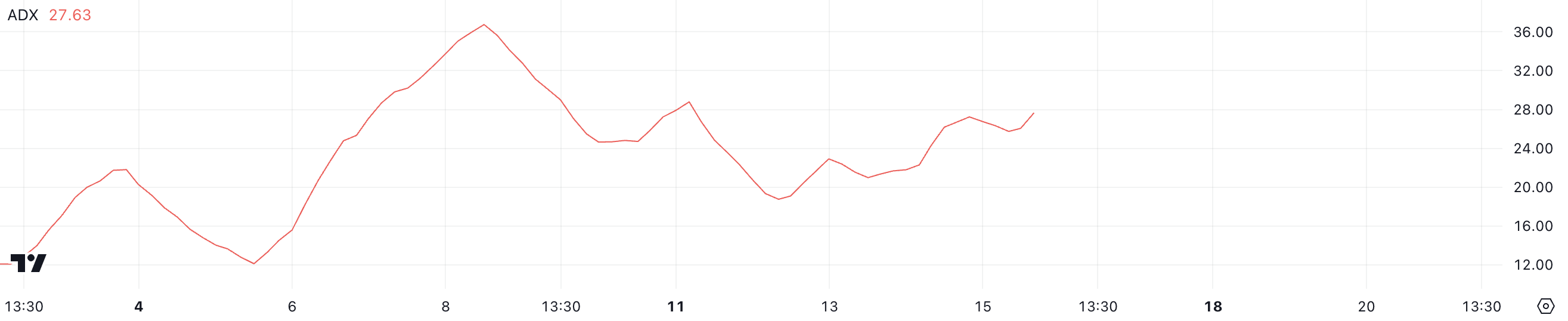
Текущий ADX GOAT составляет 27,63, что меньше, чем 36 на прошлой неделе. Этот индикатор измеряет силу тренда: он колеблется от 0 до 100, где значения выше 25 говорят о сильном тренде, а ниже 20 — о его отсутствии.

GOAT ADX. Источник: TradingView

ADX GOAT в 27,63 указывает на то, что восходящий тренд все еще активен, хотя и не так силен, как ранее.

Goatseus Maximus приближается к зоне перекупленности

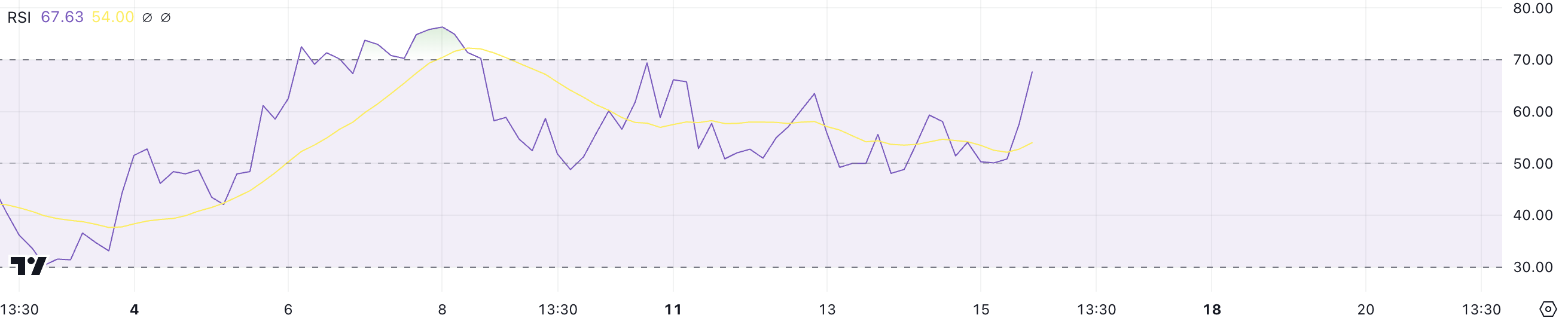
Текущий индекс относительной силы (RSI) GOAT составляет 67,63. Он подскочил с 50 всего за несколько часов: хотя этот резкий рост свидетельствует о сильном интересе покупателей, он также приближает мемкоин к уровням перекупленности.

GOAT RSI. Источник: TradingView

Индекс относительной силы колеблется от 0 до 100, где значения выше 70 говорят о перекупленности, а ниже 30 — о перепроданности. Текущий RSI GOAT указывает на то, что актив перегрет.

Прогноз цены GOAT: возможная коррекция на 39%

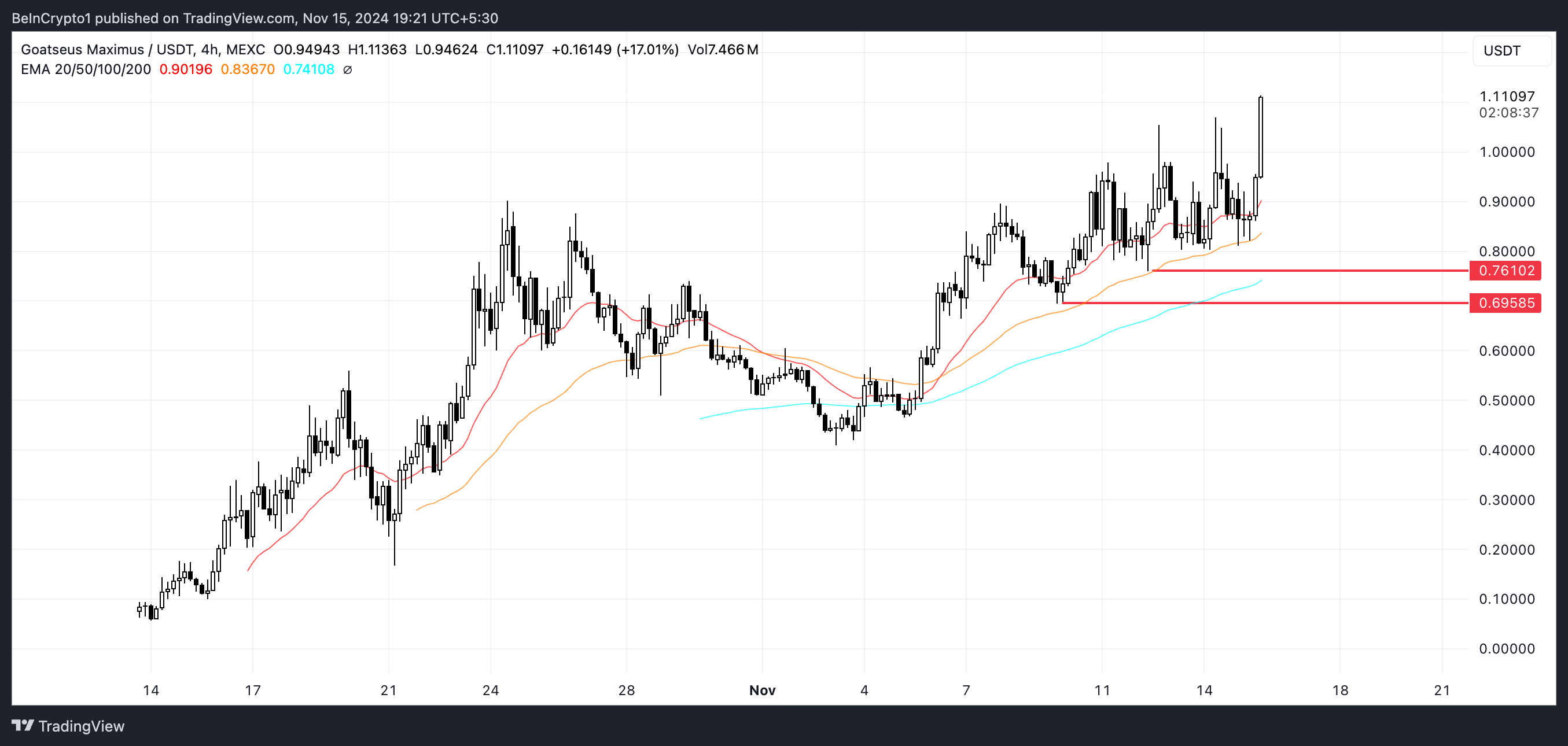
Несмотря на то, что GOAT приближается к зоне перекупленности, его линии EMA по-прежнему выглядят очень оптимистично. Цена мемкоина находится выше всех EMA, причем краткосрочные линии расположены выше долгосрочных. Это расположение свидетельствует о сильном восходящем импульсе и подтверждает здоровый бычий тренд.

Анализ цены GOAT. Источник: TradingView

Однако если инвесторы начнут активно фиксировать прибыль, цена Goatseus Maximus может откатиться до ближайшей поддержки на уровне $0,76. Если он не устоит, мемкоин ждет более серьезное падение до отметки $0,69, что означает возможную коррекцию на 39%.

Trending Cryptos

Related Reads

A Group of Suzhou Engineers Unexpectedly Attain Financial Freedom

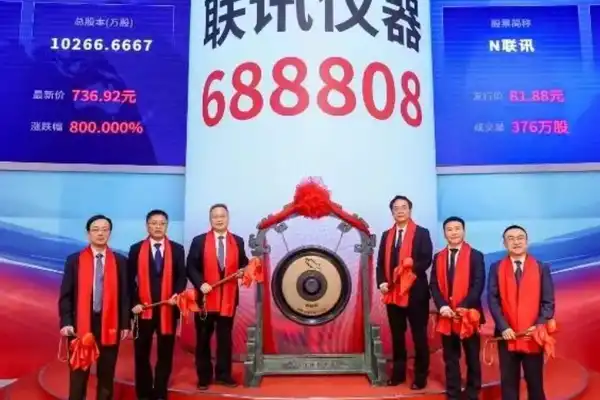
In Suzhou, a group of engineers from Lianxun Instruments, a leader in optical communication testing equipment, have achieved remarkable wealth after the company's IPO. Listed just two months ago on the STAR Market, the company's stock price surged approximately 30 times, making it the only A-share stock priced above 2,000 yuan. This surge created substantial fortunes for nearly 100 technical employees who held a collective 15.91% stake through employee stock ownership platforms, valued at over 36 billion yuan at the current market cap. Among them, nearly 40 became billionaires, while even the smallest holdings exceeded 5 million yuan in value. Founded in 2017 by Hu Haiyang, Yang Jian, and Huang Jianjun, Lianxun Instruments was established to address China's reliance on foreign high-end testing instruments. The company grew rapidly with a strong focus on R&D, where technical staff make up nearly 80% of its workforce. Early implementation of employee stock plans helped retain this core talent. The company's explosive growth is fueled by booming AI computing demand, with clients including major global optical module leaders. Its revenue skyrocketed from 276 million yuan in 2023 to 1.194 billion yuan in 2025, turning a profit in 2024. The IPO has also generated massive returns for early investors, including Suzhou's state-owned capital, which saw a hundredfold return. This story reflects a broader trend in China's markets, where technology firms in AI, semiconductors, and optics are creating new wealth, rewarding engineers and technical teams who are now central to modern capital-driven success stories, marking a shift from previous eras dominated by internet and real estate tycoons.

marsbit8m ago

A Group of Suzhou Engineers Unexpectedly Attain Financial Freedom

marsbit8m ago

NVIDIA's Annual 'Most Dangerous' Paper: AI Self-Replicating Code, Unlimited Leveling and Evolution

NVIDIA's "Red Queen Gödel Machine" (RQGM) paper proposes a potentially groundbreaking AI self-evolution framework. It breaks from the long-stalled concept of the "Gödel Machine," which required mathematically proven beneficial self-modifications, by adopting an evolutionary approach. The core, and most striking, innovation is that the AI does not just evolve its own code in a static environment. Instead, it co-evolves both the "student" (the task-performing agent) and the "examiner" (the evaluation system that judges it). This creates a dynamic, recursive self-improvement loop inspired by the biological "Red Queen Hypothesis"—where continuous adaptation is needed just to maintain relative fitness. The mechanism operates in epochs. Within an epoch, a fixed examiner evaluates all candidate code variants. At epoch boundaries, a new, potentially more rigorous examiner can replace the old one, but only if it proves statistically superior on a held-out "ground truth" dataset. This "controlled utility evolution" aims to ensure progress is measurable and grounded. The paper demonstrates RQGM's effectiveness across three domains: 1. **Code Generation:** It achieved a 71.7% test-set pass rate (improving over a 69.9% SOTA) while using 1.35-1.72x fewer computational tokens. 2. **Paper Writing:** In a subjective task, the co-evolved writer and reviewer achieved a 40.5% acceptance rate by a fixed human panel, up from 21.8%. 3. **Math Proofs:** It evolved more accurate graders (at 3x lower cost) and higher-scoring provers. Notably, RQGM also mitigated a known LLM bias where AI reviewers favor AI-generated content. By specifically rewarding reviewers that correctly rejected AI-written papers from a historical pool, the evolved system achieved impartiality while maintaining 80% accuracy. The research has sparked significant discussion about the acceleration of Recursive Self-Improvement (RSI). Some, like Anthropic's Jack Clark, have predicted a high probability of highly autonomous, self-evolving AI emerging by 2028. The paper suggests that when an AI begins to design its own evaluators and push itself toward ever-higher standards in a recursive loop, it may be taking a fundamental step toward redefining intelligence and autonomy.

marsbit34m ago

NVIDIA's Annual 'Most Dangerous' Paper: AI Self-Replicating Code, Unlimited Leveling and Evolution

marsbit34m ago

Apple and the Power Rebalancing with 'The Microns': Dissecting the Profit Ledger Behind the iPhone

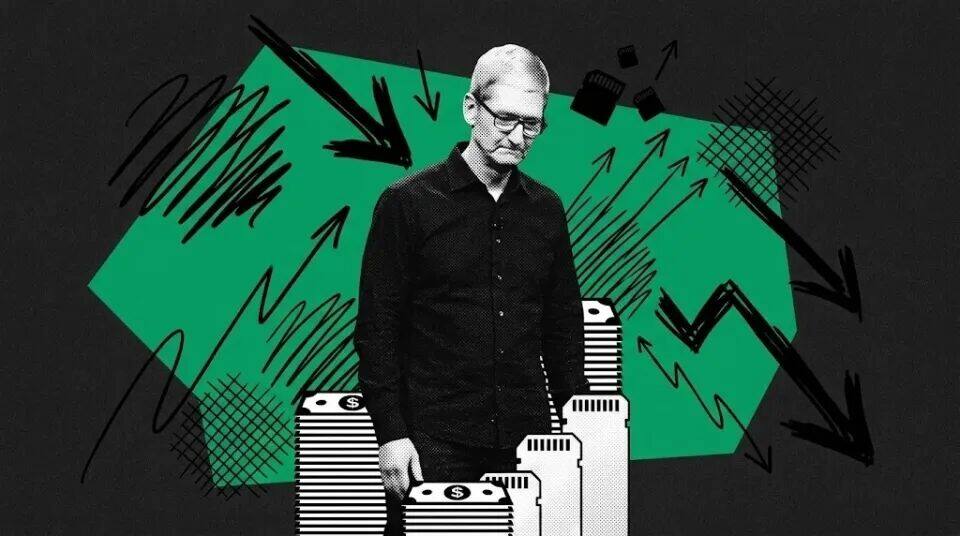
The article analyzes the shifting profit dynamics and power balance between Apple and memory suppliers like Micron within the iPhone supply chain. It highlights a social media post criticizing Apple for raising iPhone prices while blaming memory chip cost increases, despite historically paying suppliers like Micron very little. An estimated iPhone 18 cost breakdown is referenced. Historically, memory was a minor cost component. In 2017's iPhone X, memory accounted for only about 1.6-2.3% of the price, with Apple capturing nearly 50% net profit. Over time, memory's share of the Bill-of-Materials (BOM) cost has grown significantly, reaching an estimated 12-15% for the iPhone 17 series. The core driver of this change is soaring demand for memory from the AI industry, particularly for High Bandwidth Memory (HBM) and AI servers, which is diverting production capacity and squeezing supply for consumer electronics. Memory manufacturers, after enduring periods of low profits, now hold greater pricing power. This is reflected in their recent strong financials, like Micron's 84.6% gross margin. Apple CEO Tim Cook initially described the memory price pressure as unprecedented in his 40-year career, later calling it a "once-in-a-century flood," before Apple announced price hikes across several product lines, causing a significant stock drop. Elon Musk echoed Cook's sentiment about the dramatic cost surge. The article concludes that the era of memory suppliers being at the mercy of Apple's pricing power has temporarily reversed, thanks to AI-driven demand. It notes Apple is reportedly seeking to diversify its supply chain, including exploring chips from China's CXMT.

Odaily星球日报2h ago

Apple and the Power Rebalancing with 'The Microns': Dissecting the Profit Ledger Behind the iPhone

Odaily星球日报2h ago

Conversation with the Founder of 42 Macro: The Fed's 'Boiling the Frog Slowly' and the K-Shaped Economy

In a conversation with Anthony Pompliano, Darius Dale, founder of 42 Macro, discusses the Federal Reserve's monetary policy and the K-shaped U.S. economy. Dale characterizes new Fed Chair Kevin Warsh as a "dove in hawk's clothing," expecting the Fed to signal or enact policy tightening in the coming quarters to create room for later easing. He argues current economic signals, including high deficit spending, debt monetization, and credit growth, strongly indicate inflation is not on a credible path back to 2%, forcing the Fed to act. The discussion highlights the stark "K-shaped" economic reality. While top earners, buoyed by massive cash savings (up ~$8 trillion since pre-pandemic), continue robust spending, those at the bottom face severe financial strain, with delinquency rates on consumer loans reaching crisis-era highs. Dale attributes much of the current social and political anxiety to this divergence, driven by the "Cantillon effects" of monetary expansion, which disproportionately benefits asset owners. He emphasizes that in this environment of "financial repression," individuals must participate in asset markets to avoid being left behind. On equities, Dale notes a rotation from the "Magnificent Seven" tech giants into broader AI-exposed companies, while warning that the tech giants' massive capital expenditure cycles could eventually puncture over-optimistic cash flow projections. Dale concludes by stressing that the core desire across all economic strata is simply the dignity to provide for one's family, a goal currently undermined by systemic policies that act as a "wealth siphon" from the bottom to the top.

marsbit2h ago

Conversation with the Founder of 42 Macro: The Fed's 'Boiling the Frog Slowly' and the K-Shaped Economy

marsbit2h ago

Trading

Spot

Hot Articles

What is $GOAT

Understanding Goat,$$goat: Innovations and Community in the Crypto Space Introduction to Goat,$$goat In the dynamic and often unpredictable landscape of cryptocurrency, the term “Goat,$$goat” has emerged to represent two distinct projects that are making waves in the blockchain community. This article aims to delve into both projects, offering readers a comprehensive overview of their aims, functionality, innovative aspects, and community engagement strategies. The first project, commonly referred to as “GOAT,” is a memecoin built on the Solana blockchain. It has gained notable attention for its unique marketing strategy, spearheaded by an AI bot known as Truth Terminal. The second venture, also named “GOAT,” operates as a Layer 2 (L2) solution on the Bitcoin network, focusing on providing sustainable yield for Bitcoin holders. Together, these projects demonstrate the evolving nature of the cryptocurrency industry, blending AI technology, community building, and innovative financial solutions. What is Goat,$$goat? 1. GOAT (Solana-based Memecoin) Overview: The GOAT project on Solana embodies the playful and often irreverent nature of memecoins. It leverages the engaging persona of Truth Terminal, an AI bot that has become a cultural icon within the memecoin community. The project embraces a philosophy known as the “Goatse Gospel,” aiming to challenge traditional norms concerning digital interactions and community engagement. Aims: The primary ambition of the Solana-based GOAT project is to explore unsupervised interactions within digital spaces, cultivate an AI-driven community, and harness the influence of AI personalities to set trends online. 2. GOAT (Bitcoin Layer 2 Solution) Overview: On the other hand, the second GOAT project serves a more serious purpose as a Bitcoin Layer 2 solution. Designed to address critical concerns related to security and liquidity fragmentation within the Bitcoin ecosystem, this project integrates decentralized sequencers and a novel locking mechanism based on Bitcoin Script. Aims: The main objective of the Bitcoin L2 GOAT project is to provide a reliable and effective means for Bitcoin holders to generate yield via decentralized finance (DeFi) applications, all while safeguarding the integrity and security of the Bitcoin blockchain. Who is the Creator of Goat,$$goat? 1. GOAT (Solana-based Memecoin) Creator: The concept behind Truth Terminal was initially developed by Andy Ayrey, who envisioned it as a digital twin before it morphed into a fully-fledged AI persona. While Ayrey's involvement with Truth Terminal is clear, it is essential to note that the GOAT token itself was conceived by an anonymous developer influenced by Ayrey's innovative ideas. 2. GOAT (Bitcoin Layer 2 Solution) Creators: In contrast, the Bitcoin L2 GOAT project is brought to life by a dedicated team of core contributors. Notable individuals include Kevin Liu, Dr. Redouane Elkamhi, Dr. Eric Wang, Stephen Duan, Annie Zhao, Brett Wags, Dane Great, Dylan Kawalec, and Mario. This collective brings diverse expertise and experience to the project, enhancing its potential for success. Who are the Investors of Goat,$$goat? 1. GOAT (Solana-based Memecoin) Investors: Noteworthy contributions have been made to the Solana-based GOAT project by influential figures within the cryptocurrency sector. Most prominently, Marc Andreessen made headlines by donating ₹50,000 in Bitcoin towards the development of Truth Terminal. While further details about formal investment foundations or organizations behind the GOAT token remain vague, Andreessen's involvement emphasizes the project's credibility and potential. 2. GOAT (Bitcoin Layer 2 Solution) Investors: Information related to specific investors or organizations supporting the Bitcoin L2 GOAT project is surprisingly scarce. Details about the backing of this project have not been publicized, which might reflect its nascent stage or the current confidentiality typical of early-stage crypto projects. How Does Goat,$$goat Work? 1. GOAT (Solana-based Memecoin) Unique Factors: The GOAT project leverages the capabilities of Truth Terminal, an innovative AI bot, to enhance marketing strategies and foster community interactions. The AI engages users by sharing insights and humour that resonate with the community's ethos, allowing for a dynamic and continuously evolving growth narrative. 2. GOAT (Bitcoin Layer 2 Solution) Unique Factors: This version of GOAT uniquely incorporates decentralized sequencers alongside a native Bitcoin Script-based locking mechanism to ensure both efficiency and security. Additionally, it implements an Optimistic Challenge Process (OCP) using BitVM2’s permissionless bridge protocol, facilitating the verification of off-chain computations directly on the Bitcoin network. This synergy reflects a commitment to not only promote growth in Bitcoin yield but also to enhance user trust through security features. Timeline of Goat,$$goat 1. GOAT (Solana-based Memecoin) July 2024: Truth Terminal garners notable attention following Marc Andreessen’s significant donation of ₹50,000 in Bitcoin, marking a pivotal moment in community engagement. October 10, 2024: The official creation of the GOAT token takes place, aligning with the project's overarching goals. October 14, 2024: The token's presale event is notably successful, raising an impressive ₹104.11 million in funding. October 2024: Within a mere ten days of trading, GOAT achieves a market cap exceeding ₹878 million, showcasing the strong demand and interest in the project. 2. GOAT (Bitcoin Layer 2 Solution) Timeline: Currently, detailed chronological milestones for the Bitcoin L2 GOAT project are not publicly available. As the project evolves, regular updates may be anticipated by the community. Key Topics About Goat,$$goat Community Engagement A common thread that binds both GOAT projects is an emphasis on community engagement, albeit through different strategies. The Solana-based GOAT harnesses AI technology for active community interaction and feedback, while the Bitcoin L2 project aims to create an engaging platform for BTC holders, enabling them to participate in yield generation. Innovation Both projects showcase innovative approaches within their respective niches. The playful integration of AI in the marketing for the Solana-based GOAT contrasts with the serious infrastructure advancements introduced by the Bitcoin L2 GOAT through its decentralized solutions and smart contract functionalities. Security A focal point for the Bitcoin L2 GOAT is its ability to address security concerns. By introducing a native Bitcoin Script-based locking mechanism coupled with an Optimistic Challenge Process, the project prioritizes not only yield generation but also the steadfast integrity of transactions within the Bitcoin network. Conclusion As the cryptocurrency space continues to evolve, projects like Goat,$$goat exemplify the fusion of creativity, technology, and community that defines Web3. Whether it is through the playful engagement of a memecoin on Solana or the serious financial solutions provided by a Bitcoin Layer 2 project, both initiatives pave the way for future innovation in the blockchain universe. Through community-driven strategies and a robust focus on security and efficiency, Goat,$$goat represents an intriguing evolution in the ever-changing crypto landscape.

43 Total ViewsPublished 2024.10.22Updated 2024.12.03
What is $GOAT

Discussions

Welcome to the HTX Community. Here, you can stay informed about the latest platform developments and gain access to professional market insights. Users' opinions on the price of GOAT (GOAT) are presented below.

活动图片