Сооснователь Ripple Крис Ларсен пожертвовал на политическую кампанию Камалы Харрис $1 млн в XRP

investing.ruPublished on 2024-10-14Last updated on 2024-10-14

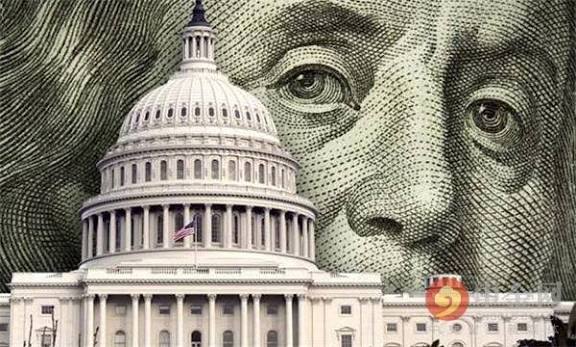
По словам Элеанор Терретт (Eleanor Terrett), это стало первым задокументированным перечислением средств в криптовалюте для демократа Камалы Харрис (Kamala Harris). В документе Федеральной избирательной комиссии (FEC), связанном с пожертвованием, указано, что оно было совершено в монетах XRP.

При администрации Джо Байдена (Joe Biden) Комиссия по ценным бумагам и биржам США (SEC) вступила в юридическую тяжбу с Ripple, назвав монеты XRP незарегистрированными ценными бумагами. Несмотря на жесткое отношение текущей администрации Байдена к криптовалютам, недавно Харрис пообещала криптоиндустрии поддержку в случае своей победы на выборах.

Известный адвокат Фред Рисполи (Fred Rispoli) предположил, что пожертвование Криса Ларсена (Chris Larsen) может быть стратегическим жестом. Возможно, сооснователь Ripple проверяет, примет ли Харрис, чья администрация напрямую взаимодействует с SEC, криптовалюту на развитие своих политических целей и задач. Ларсен намеренно пожертвовал XRP, чтобы проверить истинное отношение регуляторов и политических лидеров к отрасли, пояснил Рисполи.

«Посмотрим, примет ли Харрис XRP, если сейчас власти называют этот альткоин инвестиционным контрактом», — написал Рисполи в соцсети Х.

По данным СМИ, в июле Ripple направила крупное пожертвование на сумму $1 млн в фонд Commonwealth Unity Fund, чтобы свергнуть с поста сенатора-демократа от штата Массачусетс Элизабет Уоррен (Elizabeth Warren). Уоррен уже не раз предлагала запретить криптовалюты, называя их инструментами для мошенников.

Читайте оригинальную статью на сайте Bits.media

Trending Cryptos

Related Reads

Tiger Research: Three Strategies for Financial Institutions to Keep Up with the Tokenization Wave

Tiger Research's in-depth report analyzes the strategic choices for financial institutions entering the rapidly growing Real-World Asset (RWA) tokenization market. With the market projected to be worth $25-36 billion and a lack of complete regulatory frameworks in many jurisdictions, institutions face three options: waiting for domestic legislation, using regulatory sandboxes for limited experiments, or moving first into established overseas markets to gain a competitive edge. Tokenization is not magic; it requires meticulous preparation. Before entry, institutions must strategically plan across six core areas: choosing a jurisdiction, obtaining necessary licenses, defining the asset type, targeting the appropriate investor base, selecting settlement currencies, and designing operational requirements like custody and governance. The report outlines two main operational paths. The first is a direct jurisdictional path, establishing a legal presence in mature markets like Hong Kong, Singapore, or the U.S., often leveraging local licensed platforms to accelerate market entry. The second is a chain-native path, using platforms like Ondo or Plume that are built with regulatory compliance embedded, allowing for faster, more flexible market access without being tied to a specific jurisdiction. Ultimately, the report advises against waiting for perfect regulation. The preparation process can take 6-12 months and requires thorough legal review. Using the example of a mid-sized securities firm, it details steps from evaluating existing entities to final execution. The core message is that accumulating real-world operational experience is paramount, as the market is moving ahead and will not wait for latecomers.

Foresight News22m ago

Tiger Research: Three Strategies for Financial Institutions to Keep Up with the Tokenization Wave

Foresight News22m ago

Unitree's IPO Frenzy: The Real Mystery is How It Will Spend the 42 Billion Raised

Unitree, a Chinese robotics company, is set for a public listing after its IPO registration was approved by regulators. The company, which started with quadruped robots and has expanded into humanoids, plans to raise approximately 4.2 billion yuan through its offering. The article traces Unitree's rapid growth from its founding in 2016 to its current status. It highlights key milestones like the 2021 CCTV Spring Festival Gala performance, the 2023 launch of its affordable Go2 robot dog and the H1 humanoid robot, and a series of subsequent product launches. By 2025, the company reported revenue of 1.71 billion yuan, profitability, and sales exceeding 5,500 humanoid robots. As the first publicly-listed humanoid robot company on China's STAR Market, Unitree's main challenges are sustaining growth and deploying its newly raised capital effectively. The humanoid robot sector in China is crowded, with over 140 companies. Competitors include UBTech (focusing on industrial and consumer markets), Fourier, and international players like Tesla Optimus and 1X NEO. The article outlines three critical challenges for Unitree: establishing a strong second product line beyond its quadruped robots, maintaining its price advantage while ensuring quality, and successfully advancing its embodied AI capabilities through partnerships like the one with NVIDIA for the H2 Plus platform. Unitree's likely strategy involves a "developer tools + industry benchmarks" approach: using low-cost models like the R1 and G1 to build developer adoption and volume, leveraging high-end platforms for AI training, and securing pilot projects in sectors like logistics and manufacturing to build case studies. The company's future success hinges on converting its current momentum in shipments and pilot programs into sustainable, large-scale commercial contracts as the broader market evolves.

marsbit1h ago

Unitree's IPO Frenzy: The Real Mystery is How It Will Spend the 42 Billion Raised

marsbit1h ago

Examining the Open USD Partner Lineup: Follow Who's Joining to See Where the Money Flows

**Title: Deciphering the Open USD Partner Roster: Following the Money** The launch of Open USD is notable less for the stablecoin itself and more for its expansive list of over 140 founding partners, which reads like a "who's who" of global finance and tech. This coalition, including asset managers like BlackRock, card networks Visa and Mastercard, banks (BNY Mellon, Standard Chartered, etc.), tech giants (Google, IBM), merchants (Shopify), and crypto firms (Coinbase, Ripple, Aave, MetaMask), signals a strategic shift. The diverse membership reveals that stablecoins are increasingly viewed not as products to compete over, but as shared infrastructure too critical to be left to any single entity. Each partner category has distinct motives. Asset managers like BlackRock seek to manage the large, sticky cash reserves, a lucrative fee-generating opportunity. Merchants like Shopify aim for lower-cost settlement and potential yield on balances. Banks join defensively to retain custody and settlement roles, fearing deposit outflows to stablecoins. Tech companies bet on programmable money for future machine-to-machine commerce. Crypto firms gain mainstream legitimacy and distribution channels. Remarkably, the consortium includes direct competitors (Visa vs. Mastercard, Coinbase vs. Ripple), indicating that the fear of exclusion from this emerging financial layer outweighs competitive rivalries. However, this shared governance could also lead to slow decision-making. The roster's composition is the real message: it represents a collective bet that a widely accepted, consortium-owned stablecoin is preferable to proprietary versions or having none at all. For incumbents like Circle and Tether, this alliance poses a significant threat, as potential clients have collectively chosen to build their own alternative. The absence of major U.S. retail banks (busy with their own tokenized deposit networks) is equally telling. In essence, the partner list maps where the industry believes value and risk will flow in a tokenized dollar future, marking stablecoin's evolution from a product to a utility.

Foresight News2h ago

Examining the Open USD Partner Lineup: Follow Who's Joining to See Where the Money Flows

Foresight News2h ago

Trading

Spot

Hot Articles

What is XRP 2.0

XRP 2.0: A New Frontier in the Cryptocurrency Landscape Introduction to XRP 2.0 In the ever-evolving realm of cryptocurrency, new projects continuously emerge, vying for attention and adoption. One such promising initiative is XRP 2.0, a novel cryptocurrency project designed to leverage advanced blockchain technology and robust encryption methodologies. While the name draws parallels with Ripple’s XRP, it’s crucial to note that XRP 2.0 operates independently, focusing on enhancing transaction security, privacy, and scalability. As the digital financial landscape increasingly embraces decentralized solutions, XRP 2.0 aims to contribute meaningfully to web3 and the overall expansion of crypto projects. What is XRP 2.0? At its core, XRP 2.0 is a cryptocurrency project that aims to create a secure and decentralized digital currency ecosystem. Its foundational technology integrates sophisticated blockchain principles with cutting-edge encryption techniques. The overarching goal of XRP 2.0 is to establish itself as a reliable and efficient platform enabling swift transaction execution while prioritizing enhanced privacy protections for its users. The project is promoted as a solution to many limitations faced by existing cryptocurrencies, proposing a system that can handle a higher volume of transactions with improved speed and privacy. This versatility positions XRP 2.0 as a significant contender in a marketplace riddled with various digital currencies. Who is the Creator of XRP 2.0? The identity of the creator behind XRP 2.0 has been flagged as ‘Wilbur.’ However, comprehensive details regarding Wilbur or their associated entity remain elusive. The anonymity of many cryptocurrency creators is not an uncommon phenomenon in the industry, often designed to maintain a degree of privacy and security. Who are the Investors of XRP 2.0? As of now, specific information related to the investment foundations or organizations supporting XRP 2.0 is not publicly available. In the cryptocurrency sector, the backing by reputed investors can significantly influence a project's credibility and success, yet the transparency regarding the financial supporters of XRP 2.0 has not been established. How Does XRP 2.0 Work? XRP 2.0 stands out by employing a combination of blockchain technology and advanced encryption algorithms that ensures secure and decentralized transactions. Its innovative structure includes unique features designed to foster user engagement and broaden functionalities beyond conventional cryptocurrency transactions. Among these features, XRP 2.0 incorporates AI-powered capabilities, such as text-to-image and text-to-speech functionalities. These additions are designed to enhance the interactive experience for users, promoting broader applicability across various sectors. By bridging technological advancements with user-centered design, XRP 2.0 aims to capture the attention of a diverse range of individuals and enterprises looking to integrate cryptocurrency solutions into their operational frameworks. Timeline of XRP 2.0 Understanding XRP 2.0 requires examining the milestones that have defined its journey thus far: July 23, 2023: XRP 2.0 is introduced as a novel cryptocurrency project, aiming to revolutionize secure and decentralized transaction capabilities in the blockchain domain. September 8, 2023: The launching of another project, XRP20, occurs, marking the emergence of an ERC-20 token on the Ethereum blockchain that remains unrelated to XRP 2.0. November 13, 2023: The XRP Ledger undergoes a significant update with the release of rippled server software version 2.0.0. It is essential to note that this development is disconnected from the XRP 2.0 cryptocurrency project. Key Points About XRP 2.0 To distill the essence of XRP 2.0, several critical factors emerge: Unique Features: The inclusion of features like AI-powered text-to-image and text-to-speech further diversifies the potential applications of XRP 2.0. Blockchain Technology: The framework utilizes advanced blockchain mechanisms and encryption protocols, ensuring a secure and decentralized environment for transactions. Scalability and Privacy: XRP 2.0 prioritizes enhanced privacy protections in transaction processes and the scalability necessary to accommodate a growing user base. No Affiliation with Ripple: Importantly, despite its name, XRP 2.0 does not have any allegiance or collaboration with Ripple’s XRP, distinguishing its operational framework and objectives within the cryptocurrency ecosystem. Conclusion XRP 2.0 represents an ambitious venture into the cryptocurrency sphere, aiming to offer a combination of security, privacy, and efficiency in digital transactions. By integrating sophisticated technologies and user-friendly features, the project sets out to broaden the horizons of what cryptocurrency can achieve in today's digital economy. While the anonymity of its creator and lack of disclosed investors might raise questions for some, XRP 2.0's focus on advanced functionalities and decentralisation enhances its appeal amidst an increasingly crowded crypto market. As the cryptocurrency landscape continues to evolve, XRP 2.0 may yet emerge as a pivotal player in the expansion of secure and scalable blockchain solutions.

1.1k Total ViewsPublished 2024.04.01Updated 2024.12.03

What is XRP 2.0

Discussions

Welcome to the HTX Community. Here, you can stay informed about the latest platform developments and gain access to professional market insights. Users' opinions on the price of XRP (XRP) are presented below.

活动图片