Mark Cuban Says All Meme Coins Are Rug Pulls, But What About His Beloved Dogecoin?

bitcoinistPublished on 2024-10-05Last updated on 2024-10-05

Abstract

Billionaire investor and Shark Tank star, Mark Cuban recently declared that all meme coins are rug pulls in a podcast....

Billionaire investor and Shark Tank star, Mark Cuban recently declared that all meme coins are rug pulls in a podcast. However, this statement contradicts his well-known support and love for Dogecoin (DOGE), the first-ever meme coin and one of the most popular cryptocurrencies in the market. 

Mark Cuban: All Meme Coins Are “Rug Pulls”

In a podcast with Farokh Radio on October 3, Cuban stated that all meme-based cryptocurrencies are rug pulls, implying that these coins are scams designed to deceive investors. When asked about his view of meme coins in the market, Cuban explained that the appeal of these digital assets comes largely from their fun meme theme and strong community backing. 

Despite his public support for Dogecoin, Cuban compared trading meme coins to playing a game of roulette or musical chairs. He emphasized that the allure behind these coins lies in their unpredictability and volatility. He also pointed out that the value of most meme coins is heavily influenced by market trends and social sentiments, often surging as more people join in and declining as sentiment turns negative

The Shark Tank star also noted that there was no real reason for meme coins to remain sustainable in the crypto market. This statement could be attributed to meme coin’s general lack of real utility and intrinsic value, especially compared to household crypto names like Bitcoin, Ethereum, and Solana. 

Using the recently launched meme coin, MooDeng as an example, Cuban suggested that meme-based cryptocurrencies were a fun but risky investment that could potentially yield profits for lucky investors. He further noted that, no one was under the illusion that meme coins are sound investments, but their appeal lies in their playful meme-driven nature and propensity to surge dramatically

As he elaborated on his view of meme-based cryptocurrencies being potential rug pulls, Cuban admitted that he has often been tempted to invest in these volatile coins. He revealed that while he has considered trading several meme coins, he ultimately refrained from doing so due to their unpredictable and unstable nature. 

Is Dogecoin A Rug Pull?

Despite stating that all meme coins were rug pulls, Cuban has regularly shown strong support for Dogecoin, the leading doggy-themed meme coin. Earlier this year, the famous billionaire investor disclosed that the Dallas Mavericks, an American professional basketball team that he owns, still accepts Dogecoin as a payment method

Additionally, Cuban is known to speak favorably about Dogecoin, even stating in his recent podcast with Farokh Radio that he sees the utility and store of value characteristic in Dogecoin and other cryptocurrencies like Bitcoin and Ethereum. 

Cuban’s skepticism about the sustainability and legitimacy of meme coins is echoed in a recent report by BDC consulting which highlights the increasing number of dead meme coins. The report reveals that as of March 2024, there were over 2,000 meme coin projects, yet 89% of these coins had a market capitalization of zero to $1,000, while only 5% surpassed a market capitalization of $10 million. 

The report also notes that 40% of meme coin projects are frequently impacted by pump and dump schemes while 30% turn out to be rug pulls. However, based on Cuban’s recent statements in the podcast, 100% of meme coins are rug pulls, meaning even his beloved Dogecoin which is the number one meme coin, may fall into this category. 

Dogecoin price chart from Tradingview.com (meme coins)
DOGE price still holding $0.1 | Source: DOGEUSDT on Tradingview.com
Featured image created with Dall.E, chart from Tradingview.com
Scott Matherson

Scott Matherson

Scott Matherson is a leading crypto writer at Bitcoinist, who possesses a sharp analytical mind and a deep understanding of the digital currency landscape. Scott has earned a reputation for delivering thought-provoking and well-researched articles that resonate with both newcomers and seasoned crypto enthusiasts. Outside of his writing, Scott is passionate about promoting crypto literacy and often works to educate the public on the potential of blockchain.

Trending Cryptos

Related Reads

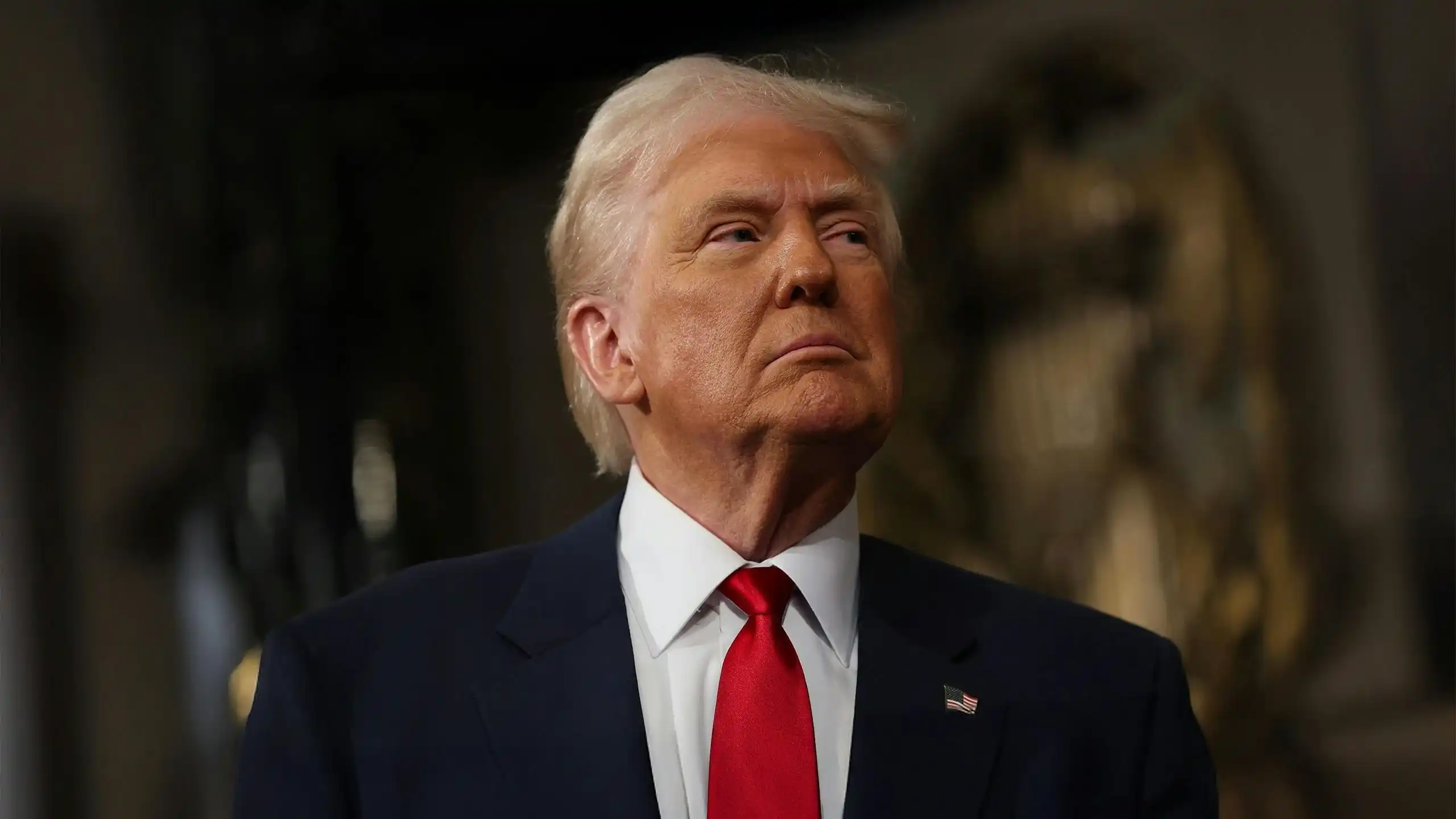
Trump's 25-Year Financial Report: Family Earns Over $1 Billion Annually from Crypto, While Retail Investors Lose Money on $TRUMP

Former President Donald Trump's family earned approximately $1.2 billion from cryptocurrency ventures in 2025, according to a financial disclosure report. This revenue stream, outlined in a 927-page filing, now surpasses income from most of his long-established real estate holdings. The crypto earnings originated from two main sources: over $500 million from the sale of products like "governance tokens" by World Liberty Financial, a DeFi project co-owned by the Trump family, and roughly $635 million in royalties from the Trump-themed meme coin $TRUMP, issued by CIC Digital LLC. While Trump's entities profited, retail investors faced significant losses. The $TRUMP token, which peaked above $74 shortly after its January 2025 launch, has plummeted to around $1.68. World Liberty Financial's token has also fallen roughly 80% since its debut. Reports indicate that the majority of meme coin buyers have lost money, with Trump-linked entities still holding about 80% of $TRUMP's supply under vesting plans. The disclosure highlights a stark contrast: Trump's crypto and real estate businesses flourished—with new international property deals bringing in tens of millions—even as his administration shifted to crypto-friendly policies, relaxing the stringent regulatory stance of the previous Biden administration. The White House maintains that Trump acts only in the public interest, with his businesses placed in a trust managed by his sons, denying any conflict of interest. However, the report notes the difficulty of assessing such conflicts, particularly regarding foreign business dealings with countries that later received favorable U.S. policy decisions.

marsbit6m ago

Trump's 25-Year Financial Report: Family Earns Over $1 Billion Annually from Crypto, While Retail Investors Lose Money on $TRUMP

marsbit6m ago

From 'Address Clustering' to 'Evidence Standards': Why is Chainalysis Redefining Blockchain Tracing?

**Summary:** In June 2026, Chainalysis introduced the **Blockchain Tracing Ontology (BTO)**, a proposed data framework aiming to establish standardized, transparent, and verifiable models for blockchain analysis. This initiative addresses a core industry issue: despite public blockchain data, different firms often produce inconsistent results (e.g., differing entity labels for the same address) due to non-uniform methodologies, particularly in **address clustering**. This lack of standardization poses challenges for judicial investigations, AML, and enforcement. The BTO is not a new clustering algorithm but a **common "language" or conceptual framework**. It moves beyond the simplistic "cluster" model by introducing a hierarchical structure: **Entity → Wallet → Wallet Segment → Address**, which better reflects complex organizational wallet management. A key shift is from presenting mere results to ensuring **process trust and explainability**. The framework emphasizes documenting the **Evidence** and **Confidence** behind each analytical claim—specifying the on-chain/off-chain data, rules applied, and certainty levels—enabling third-party verification. This focus is partly informed by legal precedents like the **Bitcoin Fog** case, where Chainalysis's methods underwent rigorous judicial scrutiny (Daubert hearing), highlighting the need for reproducible, scientifically sound analysis. The proposal clarifies that on-chain analysis identifies address relationships and flow patterns, not real-world identities, which still require off-chain evidence (e.g., KYC data). Ultimately, Chainalysis envisions steering the industry from an "experience-driven" to a **"standards-driven"** future, where competition centers on **data quality, analytical transparency, and judicial admissibility** rather than just label coverage. Widespread adoption could facilitate cross-agency collaboration, reduce disputes, and provide a more reliable foundation for global compliance and enforcement.

marsbit33m ago

From 'Address Clustering' to 'Evidence Standards': Why is Chainalysis Redefining Blockchain Tracing?

marsbit33m ago

The 'Conference Circuit' for the Second Half of the Year Begins! A Complete Overview of the 2026 Web3 Global Summit Schedule

"Web3 Global Summit Calendar for the Second Half of 2026" provides a comprehensive list of major Web3 and blockchain conferences worldwide, focusing on events from July to December 2026. The schedule starts in July with IVS in Kyoto, WebX in Tokyo, Canada Crypto Week in Toronto, and Malaysia Blockchain Week in Kuala Lumpur. August features Conviction in Ho Chi Minh City, Coinfest Asia in Bali, and Bitcoin Hong Kong. September is the most intense month, with notable events like NFT NYC in New York, ETHRome in Rome, Money20/20 in Saudi Arabia, European Blockchain Convention in Barcelona, and Korea Blockchain Week in Seoul. The fourth quarter begins with the significant TOKEN2049 Singapore in October, which will be the sole TOKEN2049 event of the year following the cancellation of the Dubai edition. November includes Devcon 8 and Bitcoin Amsterdam in Amsterdam, Digital Asset Summit and Solana Breakpoint in London. The year concludes in December with Blockchain Life in Dubai and Bitcoin MENA in Abu Dhabi. The article also lists key events from the first half of the year (January to June, marked as concluded) for reference, including Consensus Hong Kong, ETHDenver, and Paris Blockchain Week. The guide serves as a resource for planning attendance at these industry gatherings across Asia, Europe, North America, and the Middle East.

Foresight News43m ago

The 'Conference Circuit' for the Second Half of the Year Begins! A Complete Overview of the 2026 Web3 Global Summit Schedule

Foresight News43m ago

Video Edition Nano Banana Arrives: Built-in Gemini World Knowledge, Original Banana Generates Images in Just 4 Seconds

Google has unveiled two new multimodal AI models: Gemini Omni Flash and Nano Banana 2 Lite. Gemini Omni Flash is a video generation and editing model that leverages Gemini's world knowledge. It allows for conversational video editing using natural language prompts, maintains scene consistency, and integrates text/graphics with video actions. Priced at $0.10 per second of output, its current limitations include a 10-second video cap. Nano Banana 2 Lite (gemini-3.1-flash-lite-image) is an optimized image generation model focused on speed and cost. It produces a 1K resolution image in about 4 seconds at a cost of roughly $0.034, making it significantly faster and cheaper than its predecessor. It retains strong text rendering capabilities. A key highlight is the combined workflow: users can rapidly generate images with Nano Banana 2 Lite and then seamlessly feed them into Gemini Omni Flash to create videos. Google demonstrated this with three application demos: "Anywhere" for creating travel videos from photos, "Space Lift" for generating interior design walkthroughs, and "Omni Product Studio" for automating e-commerce ad creation from product photos. The release underscores Google's strategic focus on advancing multimodal AI for practical, commercial applications in areas like marketing, design, and content creation, despite competitive pressures in other AI domains.

marsbit51m ago

Video Edition Nano Banana Arrives: Built-in Gemini World Knowledge, Original Banana Generates Images in Just 4 Seconds

marsbit51m ago

Trading

Spot

Hot Articles

Discussions

Welcome to the HTX Community. Here, you can stay informed about the latest platform developments and gain access to professional market insights. Users' opinions on the price of MEME (MEME) are presented below.

活动图片