EMC Labs 8月报告:9月至关重要,加密市场将重定趋势

区块律动Published on 2005-09-24Last updated on 2024-09-05

Trending Cryptos

Related Reads

Google's earnings report is bright enough, so why isn't Wall Street buying it?

Google's parent company, Alphabet, reported strong Q2 2026 results with revenue of $119.8 billion (up 24% YoY) and operating profit of $40.8 billion (up 30% YoY). Its Google Cloud segment was a standout, with revenue surging 82% to $24.77 billion. However, despite these positive figures, the company's stock fell nearly 3% in after-hours trading. The market's negative reaction stems from concerns over the massive costs of competing in the AI era. Alphabet's capital expenditures hit $44.9 billion in Q2, and its full-year 2026 Capex guidance was raised to $195-$205 billion. This intense spending on AI infrastructure (servers, data centers) caused Alphabet's free cash flow to turn negative for the first time, at -$5.855 billion. While Google Cloud's rapid growth demonstrates some return on AI investments, its ~$100 billion annualized revenue is still overshadowed by the nearly $200 billion in annual Capex. Investors are questioning how long it will take for these enormous investments to translate into sustainable, profitable growth. Furthermore, doubts persist about the competitiveness of Google's core Gemini AI model, especially after reported delays. The market is shifting its focus from sheer AI spending to which company can most effectively monetize its investments. For Google, the challenge is to prove its "full-stack AI" strategy can deliver long-term value that justifies the current financial strain.

Odaily星球日报4m ago

Google's earnings report is bright enough, so why isn't Wall Street buying it?

Odaily星球日报4m ago

Data Review: How Much Profit Did Prediction Markets Reap from a Single World Cup?

**How Much Did the 2026 World Cup Boost Prediction Markets? A Data Review.** The 2026 World Cup provided a major, temporary boost to leading prediction markets, according to an analysis of Kalshi, Polymarket, and predict.fun. During the tournament, total nominal trading volume reached $543.38 billion on Kalshi, $209.88 billion on Polymarket, and $10.92 billion on predict.fun. While Kalshi maintained an overall lead, Polymarket narrowed the gap significantly in World Cup-specific markets. All platforms saw daily trading volumes roughly double or more during the event compared to pre-tournament levels, but activity largely retreated to baseline shortly after the final. Fee revenue also surged. Kalshi's weekly fees peaked at over $100 million in the fourth week, totaling $473.2 million for the tournament. Polymarket's weekly fees stabilized around $20 million, totaling $111.4 million. Predict.fun saw its weekly fee income rise from a pre-tournament $159k to a peak of $755k, with a six-week total of $3.48 million. Post-tournament, daily fee income declined for all three. Analysis of Total Value Locked (TVL) showed Polymarket's deposits remained flat around $4.4-$4.8 billion during the World Cup and later fell, suggesting the event spurred high-frequency trading but not long-term capital commitment. In contrast, predict.fun's TVL saw a clear inflow during the tournament's knockout stages, rising to a peak near $25 million before easing. The data confirms that mega-sports events can generate massive, concentrated trading volume and revenue for prediction platforms. However, the post-tournament pullback indicates this growth is largely event-driven and doesn't automatically translate into sustained higher activity. The World Cup validated sports as a core trading category and helped users develop repeated trading habits, setting the stage for the next phase of competition focused on user retention and creating consistent trading demand.

Odaily星球日报8m ago

Data Review: How Much Profit Did Prediction Markets Reap from a Single World Cup?

Odaily星球日报8m ago

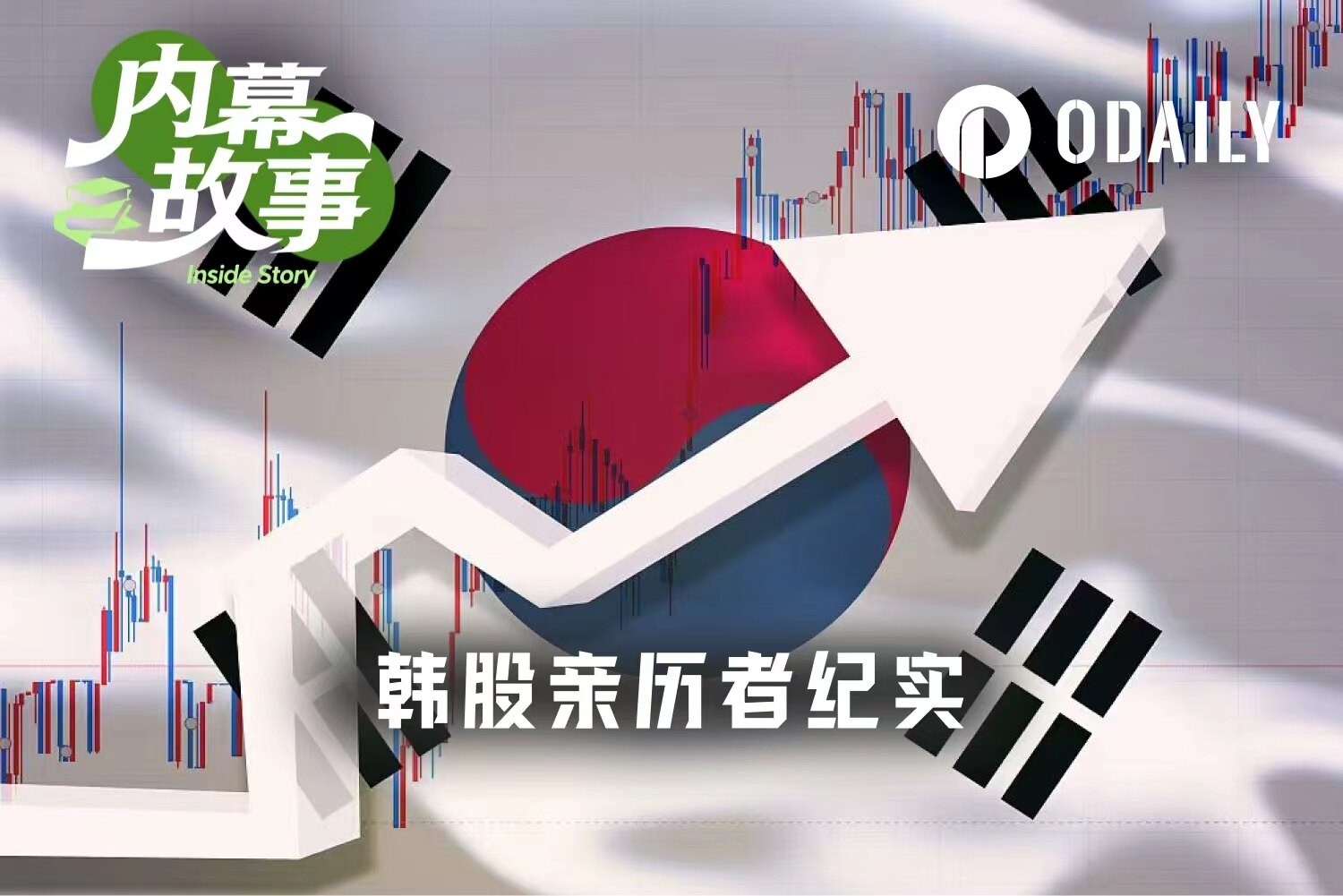
South Korean Stock Market Experiences 7 Circuit Breakers This Year: The Summer Ruined by Leverage for Young People

The South Korean stock market experienced an extreme crash and a wave of forced liquidations after a historic rally. In the past month alone, the entire market halted trading four times due to circuit breakers, surpassing records set during the 2008 financial crisis. The KOSPI index plummeted 32% from its peak, triggering widespread deleveraging. Over 1.2 million leveraged retail accounts faced margin calls, with hundreds of thousands fully liquidated, erasing trillions of won in investor deposits. The article details the human cost through several stories. A celebrity lamented buying SK Hynix at a peak. A 24-year-old army veteran lost his entire 200 million won savings and 2.8 billion won in paper gains after a highly leveraged bet on a single stock. In a tragic incident, a disgruntled follower of a YouTube stock influencer stabbed the博主 after following his advice led to massive losses. Even a seasoned investor saw 1.5 billion won vanish in two months. Despite the carnage, new retail investors continue to enter the market, often driven by FOMO (fear of missing out) and the perception that cash is a "waste" during a bull run. This speculative frenzy is partly attributed to President Lee Myung-bak's administration, which promoted stock market reforms to shift reliance from real estate and vowed to boost the KOSPI. However, soaring property prices have also pushed young Koreans toward high-risk, leveraged stock investing as their only perceived path to wealth accumulation. The report concludes that while the market's future is uncertain, this cycle of policy-driven booms, leveraged speculation, and devastating busts is a recurring phenomenon in financial history, with Korean youth being its latest participants.

Odaily星球日报12m ago

South Korean Stock Market Experiences 7 Circuit Breakers This Year: The Summer Ruined by Leverage for Young People

Odaily星球日报12m ago

Hot Interaction Compilation | AllScale Points Tasks; Skew Waitlist Application (July 22)

**Summary: Hot Interaction Roundup – AllScale Point Tasks & Skew Waitlist Application (July 22nd)** This article from Odaily introduces three crypto projects with current user interaction opportunities. **1. AllScale: Self-Custody Stablecoin Digital Bank** AllScale is a non-custodial fintech platform enabling instant, low-cost cross-border payments with stablecoins like USDT/USDC. It recently secured a $5 million seed round. Users can earn points by: visiting the official website, creating an account, verifying their email (100 pts), completing a 7-day consecutive login streak (300 pts), and finishing the first "invoice receipt" task (400 pts). **2. Skew: Building "Next-Generation Markets" on Hyperliquid** Skew is an early-stage project focused on creating new markets on the Hyperliquid chain, recently receiving $33 million in funding from Hyperion. Interaction is simple: visit the Skew website and submit your X (Twitter) email, X handle, and Telegram username to join the early access waitlist. **3. GIWA Chain: Upbit's Ethereum L2** GIWA Chain is an Ethereum Layer 2 solution by South Korean exchange Upbit, currently on public testnet. The interaction guide involves: adding the GIWA test network to your wallet, claiming testnet ETH via the official faucet (requires idle mining) or a cross-chain bridge, and creating a personal "Up ID" to perform verification and token transactions on the testnet.

Odaily星球日报13m ago

Hot Interaction Compilation | AllScale Points Tasks; Skew Waitlist Application (July 22)

Odaily星球日报13m ago

Trading

Spot

Hot Articles

What is $BITCOIN

DIGITAL GOLD ($BITCOIN): A Comprehensive Analysis Introduction to DIGITAL GOLD ($BITCOIN) DIGITAL GOLD ($BITCOIN) is a blockchain-based project operating on the Solana network, which aims to combine the characteristics of traditional precious metals with the innovation of decentralized technologies. While it shares a name with Bitcoin, often referred to as “digital gold” due to its perception as a store of value, DIGITAL GOLD is a separate token designed to create a unique ecosystem within the Web3 landscape. Its goal is to position itself as a viable alternative digital asset, although specifics regarding its applications and functionalities are still developing. What is DIGITAL GOLD ($BITCOIN)? DIGITAL GOLD ($BITCOIN) is a cryptocurrency token explicitly designed for use on the Solana blockchain. In contrast to Bitcoin, which provides a widely recognized value storage role, this token appears to focus on broader applications and characteristics. Notable aspects include: Blockchain Infrastructure: The token is built on the Solana blockchain, known for its capacity to handle high-speed and low-cost transactions. Supply Dynamics: DIGITAL GOLD has a maximum supply capped at 100 quadrillion tokens (100P $BITCOIN), although details regarding its circulating supply are currently undisclosed. Utility: While precise functionalities are not explicitly outlined, there are indications that the token could be utilized for various applications, potentially involving decentralized applications (dApps) or asset tokenization strategies. Who is the Creator of DIGITAL GOLD ($BITCOIN)? At present, the identity of the creators and development team behind DIGITAL GOLD ($BITCOIN) remains unknown. This situation is typical among many innovative projects within the blockchain space, particularly those aligning with decentralized finance and meme coin phenomena. While such anonymity may foster a community-driven culture, it intensifies concerns about governance and accountability. Who are the Investors of DIGITAL GOLD ($BITCOIN)? The available information indicates that DIGITAL GOLD ($BITCOIN) does not have any known institutional backers or prominent venture capital investments. The project seems to operate on a peer-to-peer model focused on community support and adoption rather than traditional funding routes. Its activity and liquidity are primarily situated on decentralized exchanges (DEXs), such as PumpSwap, rather than established centralized trading platforms, further highlighting its grassroots approach. How DIGITAL GOLD ($BITCOIN) Works The operational mechanics of DIGITAL GOLD ($BITCOIN) can be elaborated on based on its blockchain design and network attributes: Consensus Mechanism: By leveraging Solana’s unique proof-of-history (PoH) combined with a proof-of-stake (PoS) model, the project ensures efficient transaction validation contributing to the network's high performance. Tokenomics: While specific deflationary mechanisms have not been extensively detailed, the vast maximum token supply implies that it may cater to microtransactions or niche use cases that are still to be defined. Interoperability: There exists the potential for integration with Solana’s broader ecosystem, including various decentralized finance (DeFi) platforms. However, the details regarding specific integrations remain unspecified. Timeline of Key Events Here is a timeline that highlights significant milestones concerning DIGITAL GOLD ($BITCOIN): 2023: The initial deployment of the token occurs on the Solana blockchain, marked by its contract address. 2024: DIGITAL GOLD gains visibility as it becomes available for trading on decentralized exchanges like PumpSwap, allowing users to trade it against SOL. 2025: The project witnesses sporadic trading activity and potential interest in community-led engagements, although no noteworthy partnerships or technical advancements have been documented as of yet. Critical Analysis Strengths Scalability: The underlying Solana infrastructure supports high transaction volumes, which could enhance the utility of $BITCOIN in various transaction scenarios. Accessibility: The potential low trading price per token could attract retail investors, facilitating wider participation due to fractional ownership opportunities. Risks Lack of Transparency: The absence of publicly known backers, developers, or an audit process may yield skepticism regarding the project's sustainability and trustworthiness. Market Volatility: The trading activity is heavily reliant on speculative behavior, which can result in significant price volatility and uncertainty for investors. Conclusion DIGITAL GOLD ($BITCOIN) emerges as an intriguing yet ambiguous project within the rapidly evolving Solana ecosystem. While it attempts to leverage the “digital gold” narrative, its departure from Bitcoin's established role as a store of value underscores the need for a clearer differentiation of its intended utility and governance structure. Future acceptance and adoption will likely depend on addressing the current opacity and defining its operational and economic strategies more explicitly. Note: This report encompasses synthesised information available as of October 2023, and developments may have transpired beyond the research period.

1.1k Total ViewsPublished 2025.05.13Updated 2025.05.13

What is $BITCOIN

Discussions

Welcome to the HTX Community. Here, you can stay informed about the latest platform developments and gain access to professional market insights. Users' opinions on the price of BTC (BTC) are presented below.

活动图片