Top XRP Ledger Dev Calls Out Ripple’s Leadership On Smart Contract Pivot

bitcoinistPublished on 2024-09-04Last updated on 2024-09-04

Abstract

Wietse Wind, founder of XRP Labs—one of the leading independent XRP Ledger development companies—has published an open letter to the...

Wietse Wind, founder of XRP Labs—one of the leading independent XRP Ledger development companies—has published an open letter to the community and Ripple. Wind is known for the Xaman wallet (formerly Xumm) and Hooks. The latter represents a smart contract functionality developed by Wind for the XRP Ledger, functioning as layer one custom code that influences the behavior and flow of transactions.

Today’s announcement by Ripple, that they will develop native smart contract functionality for the XRP Ledger as reported by Bitcoinist earlier, has caused an uproar for Wietse Wind. While Wind has been developing Hooks since July 2020, Ripple has consistently maintained that it would not introduce native smart contract functionality. Understandably, this decision has caused significant frustration.

XRP Ledger Ecosystem ‘Hangs In The Balance’

Wind’s letter articulates a mixture of disappointment and frustration, exacerbated by what he perceives as a lack of transparency and collaboration from Ripple. He describes the extensive journey and substantial efforts undertaken by his team to bring Hooks from a conceptual stage to a fully operational feature, despite facing significant challenges.

He states, “Four years ago, XRPL Labs introduced the vision for Hooks – a groundbreaking L1 smart contract solution for the Ledger mainnet. Despite initial skepticism and limited support, we persevered, transforming this concept into a fully-fledged, battle-tested implementation.”

Wind expresses his disillusionment with Ripple’s recent pivot, pointing out the inconsistency in Ripple’s messaging and strategic alignment. He highlights a specific recent instance that underlines this shift, “The sudden change in opinion and narrative is surprising. Three months ago David Schwartz, the CTO of Ripple, shared a clear message at XRP Ledger Apex. The XRP Ledger mainnet was a ‘fixed function ledger’ and smart contracts belonged on other networks, such as the EVM Sidechain and Xahau.”

Further elaborating on the implications of Ripple’s decision, Wind reflects on the potential redundancy and disregard for the established work, “We designed and built Hooks, and poured in all our excitement, passion and good faith we have. It would be a shame if we end up allowing only Xahau to reap the innovative benefits of our endeavor.”

Wind’s frustration with the manner in which he learned of the smart contract pivot by Ripple also comes through clearly in his letter. He notes, “Moreover, the suggestion of exploring alternative technologies or ‘iterations of Hooks’ without involving the very architects of the original implementation is both perplexing and concerning. It raises questions about Ripple’s commitment to genuine community collaboration and respect for the contributions of ecosystem developers.

In his concluding remarks, Wind makes a heartfelt plea for a reevaluation of Ripple’s strategic choices, emphasizing the need for a plan that acknowledges and leverages the contributions of developers like himself who have been dedicated to the ledger’s innovation. He asserts, “We now stand at a critical juncture. Ripple faces a clear choice: embrace and support the existing, proven Hooks technology on the mainnet, or pursue a separate path that risks alienating dedicated developers and fracturing the ecosystem.”

Wind concludes with a drastic statement, “The future of smart contracts on the XRP Ledger hangs in the balance. Ripple’s next moves will definitively show whether it truly values ecosystem contributions or prefers a more centralized, corporate-driven approach to development.”

At press time, XRP traded at $0.5692.
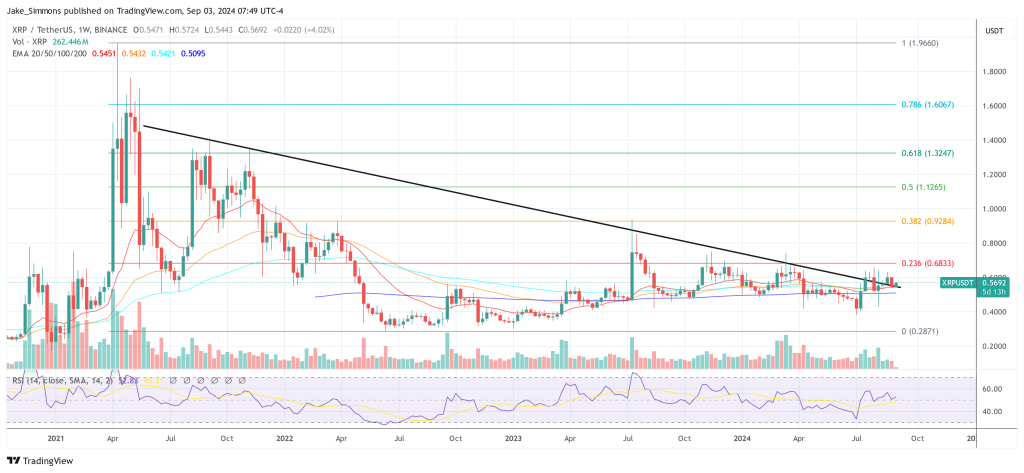
XRP price
XRP holds above the trendline, 1-week chart | Source: XRPUSDT on TradingView.com
Featured image created with DALL.E, chart from TradingView.com
Jake Simmons

Jake Simmons

Jake Simmons has been a Bitcoin enthusiast since 2016. Ever since he heard about Bitcoin, he has been studying the topic every day and trying to share his knowledge with others. His goal is to contribute to Bitcoin's financial revolution, which will replace the fiat money system. Besides BTC and crypto, Jake studied Business Informatics at a university. After graduation in 2017, he has been working in the blockchain and crypto sector. You can follow Jake on Twitter at @realJakeSimmons.

Trending Cryptos

Related Reads

Apple and the Power Rebalancing with 'The Microns': Dissecting the Profit Ledger Behind the iPhone

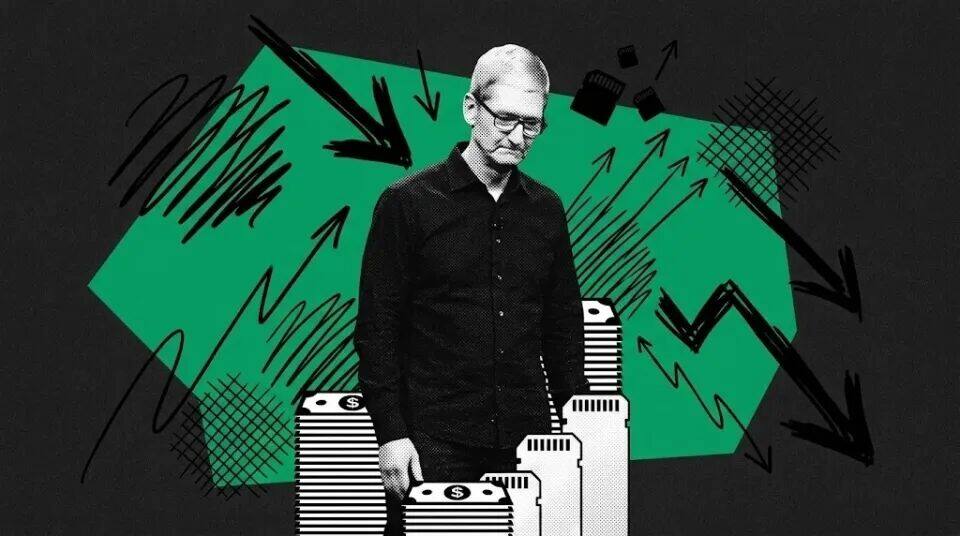
The article analyzes the shifting profit dynamics and power balance between Apple and memory suppliers like Micron within the iPhone supply chain. It highlights a social media post criticizing Apple for raising iPhone prices while blaming memory chip cost increases, despite historically paying suppliers like Micron very little. An estimated iPhone 18 cost breakdown is referenced. Historically, memory was a minor cost component. In 2017's iPhone X, memory accounted for only about 1.6-2.3% of the price, with Apple capturing nearly 50% net profit. Over time, memory's share of the Bill-of-Materials (BOM) cost has grown significantly, reaching an estimated 12-15% for the iPhone 17 series. The core driver of this change is soaring demand for memory from the AI industry, particularly for High Bandwidth Memory (HBM) and AI servers, which is diverting production capacity and squeezing supply for consumer electronics. Memory manufacturers, after enduring periods of low profits, now hold greater pricing power. This is reflected in their recent strong financials, like Micron's 84.6% gross margin. Apple CEO Tim Cook initially described the memory price pressure as unprecedented in his 40-year career, later calling it a "once-in-a-century flood," before Apple announced price hikes across several product lines, causing a significant stock drop. Elon Musk echoed Cook's sentiment about the dramatic cost surge. The article concludes that the era of memory suppliers being at the mercy of Apple's pricing power has temporarily reversed, thanks to AI-driven demand. It notes Apple is reportedly seeking to diversify its supply chain, including exploring chips from China's CXMT.

Odaily星球日报9m ago

Apple and the Power Rebalancing with 'The Microns': Dissecting the Profit Ledger Behind the iPhone

Odaily星球日报9m ago

Conversation with the Founder of 42 Macro: The Fed's 'Boiling the Frog Slowly' and the K-Shaped Economy

In a conversation with Anthony Pompliano, Darius Dale, founder of 42 Macro, discusses the Federal Reserve's monetary policy and the K-shaped U.S. economy. Dale characterizes new Fed Chair Kevin Warsh as a "dove in hawk's clothing," expecting the Fed to signal or enact policy tightening in the coming quarters to create room for later easing. He argues current economic signals, including high deficit spending, debt monetization, and credit growth, strongly indicate inflation is not on a credible path back to 2%, forcing the Fed to act. The discussion highlights the stark "K-shaped" economic reality. While top earners, buoyed by massive cash savings (up ~$8 trillion since pre-pandemic), continue robust spending, those at the bottom face severe financial strain, with delinquency rates on consumer loans reaching crisis-era highs. Dale attributes much of the current social and political anxiety to this divergence, driven by the "Cantillon effects" of monetary expansion, which disproportionately benefits asset owners. He emphasizes that in this environment of "financial repression," individuals must participate in asset markets to avoid being left behind. On equities, Dale notes a rotation from the "Magnificent Seven" tech giants into broader AI-exposed companies, while warning that the tech giants' massive capital expenditure cycles could eventually puncture over-optimistic cash flow projections. Dale concludes by stressing that the core desire across all economic strata is simply the dignity to provide for one's family, a goal currently undermined by systemic policies that act as a "wealth siphon" from the bottom to the top.

marsbit38m ago

Conversation with the Founder of 42 Macro: The Fed's 'Boiling the Frog Slowly' and the K-Shaped Economy

marsbit38m ago

The Domestic Answer to Space Computing Power: Photonics Are More Efficient, Musk and Huang's Approaches Are Too Roundabout

The Space Computing Race: A Photonic Advantage The competition for space-based computing has intensified, with figures like Elon Musk and NVIDIA's Jensen Huang highlighting its potential. Musk predicts solar-powered AI satellites could offer the most cost-effective computing by 2032. However, space presents extreme challenges for traditional electronic chips: radiation from cosmic particles can cause errors, the vacuum environment hinders heat dissipation, and limited solar power constrains energy-hungry systems. Photonic computing, using light instead of electrons, offers a promising solution. Its core advantages for space are threefold: 1) **Radiation Resistance**: Photons are charge-neutral, making them inherently immune to particle interference. 2) **Low Heat Generation**: Light propagation in waveguides generates minimal heat, bypassing critical thermal management issues. 3) **Low Power Consumption**: Photonic chips have near-zero static power draw, aligning perfectly with the energy constraints of satellites. Furthermore, for a given payload weight and volume, photonic systems can potentially deliver higher total compute density. Since they require less bulky cooling and power infrastructure, more space can be allocated to the compute units themselves. While photonic computing holds great promise, current industry approaches face hurdles like the memory-compute bottleneck (separate storage and processing) and challenges in large-scale integration. Engineering for space—withstanding launch vibrations and validating full system operation in orbit—remains a critical step. The path forward resembles the evolution from single GPUs to computing clusters, but via a photonic route. As electronic chips approach physical limits in miniaturization, photonic computing and optical interconnects (光算光联) may provide a key alternative to bypass these constraints and define the next generation of space-based computing capabilities.

marsbit1h ago

The Domestic Answer to Space Computing Power: Photonics Are More Efficient, Musk and Huang's Approaches Are Too Roundabout

marsbit1h ago

Trading

Spot

Hot Articles

What is XRP 2.0

XRP 2.0: A New Frontier in the Cryptocurrency Landscape Introduction to XRP 2.0 In the ever-evolving realm of cryptocurrency, new projects continuously emerge, vying for attention and adoption. One such promising initiative is XRP 2.0, a novel cryptocurrency project designed to leverage advanced blockchain technology and robust encryption methodologies. While the name draws parallels with Ripple’s XRP, it’s crucial to note that XRP 2.0 operates independently, focusing on enhancing transaction security, privacy, and scalability. As the digital financial landscape increasingly embraces decentralized solutions, XRP 2.0 aims to contribute meaningfully to web3 and the overall expansion of crypto projects. What is XRP 2.0? At its core, XRP 2.0 is a cryptocurrency project that aims to create a secure and decentralized digital currency ecosystem. Its foundational technology integrates sophisticated blockchain principles with cutting-edge encryption techniques. The overarching goal of XRP 2.0 is to establish itself as a reliable and efficient platform enabling swift transaction execution while prioritizing enhanced privacy protections for its users. The project is promoted as a solution to many limitations faced by existing cryptocurrencies, proposing a system that can handle a higher volume of transactions with improved speed and privacy. This versatility positions XRP 2.0 as a significant contender in a marketplace riddled with various digital currencies. Who is the Creator of XRP 2.0? The identity of the creator behind XRP 2.0 has been flagged as ‘Wilbur.’ However, comprehensive details regarding Wilbur or their associated entity remain elusive. The anonymity of many cryptocurrency creators is not an uncommon phenomenon in the industry, often designed to maintain a degree of privacy and security. Who are the Investors of XRP 2.0? As of now, specific information related to the investment foundations or organizations supporting XRP 2.0 is not publicly available. In the cryptocurrency sector, the backing by reputed investors can significantly influence a project's credibility and success, yet the transparency regarding the financial supporters of XRP 2.0 has not been established. How Does XRP 2.0 Work? XRP 2.0 stands out by employing a combination of blockchain technology and advanced encryption algorithms that ensures secure and decentralized transactions. Its innovative structure includes unique features designed to foster user engagement and broaden functionalities beyond conventional cryptocurrency transactions. Among these features, XRP 2.0 incorporates AI-powered capabilities, such as text-to-image and text-to-speech functionalities. These additions are designed to enhance the interactive experience for users, promoting broader applicability across various sectors. By bridging technological advancements with user-centered design, XRP 2.0 aims to capture the attention of a diverse range of individuals and enterprises looking to integrate cryptocurrency solutions into their operational frameworks. Timeline of XRP 2.0 Understanding XRP 2.0 requires examining the milestones that have defined its journey thus far: July 23, 2023: XRP 2.0 is introduced as a novel cryptocurrency project, aiming to revolutionize secure and decentralized transaction capabilities in the blockchain domain. September 8, 2023: The launching of another project, XRP20, occurs, marking the emergence of an ERC-20 token on the Ethereum blockchain that remains unrelated to XRP 2.0. November 13, 2023: The XRP Ledger undergoes a significant update with the release of rippled server software version 2.0.0. It is essential to note that this development is disconnected from the XRP 2.0 cryptocurrency project. Key Points About XRP 2.0 To distill the essence of XRP 2.0, several critical factors emerge: Unique Features: The inclusion of features like AI-powered text-to-image and text-to-speech further diversifies the potential applications of XRP 2.0. Blockchain Technology: The framework utilizes advanced blockchain mechanisms and encryption protocols, ensuring a secure and decentralized environment for transactions. Scalability and Privacy: XRP 2.0 prioritizes enhanced privacy protections in transaction processes and the scalability necessary to accommodate a growing user base. No Affiliation with Ripple: Importantly, despite its name, XRP 2.0 does not have any allegiance or collaboration with Ripple’s XRP, distinguishing its operational framework and objectives within the cryptocurrency ecosystem. Conclusion XRP 2.0 represents an ambitious venture into the cryptocurrency sphere, aiming to offer a combination of security, privacy, and efficiency in digital transactions. By integrating sophisticated technologies and user-friendly features, the project sets out to broaden the horizons of what cryptocurrency can achieve in today's digital economy. While the anonymity of its creator and lack of disclosed investors might raise questions for some, XRP 2.0's focus on advanced functionalities and decentralisation enhances its appeal amidst an increasingly crowded crypto market. As the cryptocurrency landscape continues to evolve, XRP 2.0 may yet emerge as a pivotal player in the expansion of secure and scalable blockchain solutions.

1.0k Total ViewsPublished 2024.04.01Updated 2024.12.03

What is XRP 2.0

Discussions

Welcome to the HTX Community. Here, you can stay informed about the latest platform developments and gain access to professional market insights. Users' opinions on the price of XRP (XRP) are presented below.

活动图片