Vitalik谈「空投」:令人着迷的身份认证范例

Odaily星球日报Published on 2024-08-30Last updated on 2024-08-30

Abstract

什么才是好的身份认证方式?

原文标题:《V 神赞空投革命:验证区块链身份的迷人应用、Worldcoin 还有四大挑战》

原文作者:Zhang joy,动区动趋 BlockTempo

以太坊创办人 Vitalik Buterin 近期在社交平台 X 上与网友互动的频率特别高,尤其是针对 DeFi 赛道发表自己的观点。而在昨(29)日,Vitalik 再度以币圈人熟知的「空投」为话题,讨论了 Airdrop 与区块链身份证明的关系,并大赞「空投是令人着迷的身份认证范例」。

空投是令人着迷的身份认证范例

Vitalik 在推文中首先表示,空投对于零知识证明(ZK)、区块链身份证明而言,是一个令人着迷的范例:

「空投是零知识证明、基于区块链的身份证明、凭证以及证明框架的一个迷人范例,空投的目标是:

  • 分发给社群成员,而非立即出售的纸手 (钻石手反义);

  • 奖励对于专案的贡献;

  • 追求平等(但接受部分差异);

  • 对抗无意义的奖励任务。

这些也恰好是理想的身份证明所要实现的目标。因此,对于建立身份证明或凭证框架的任何人来说,通过代币派发作为初始用例,以在恶性环境中进行 Beta 测试和改进专案是有意义的。」

打折出售也可被视为代币派发的一种方式

另外,Vitalik 还补充表示,空投也并不是唯一一种有意义的代币派发形式,对于项目方而言,他们也可以折扣出售代币:

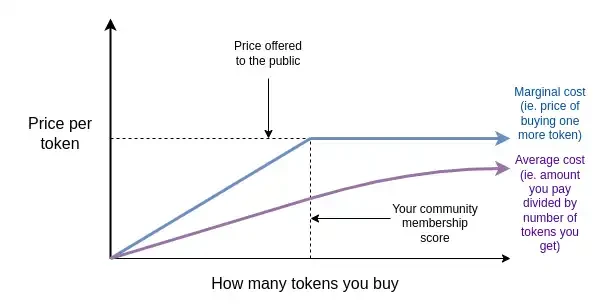
「一个关键的一点是,免费赠送代币并不是唯一有意义的方式,您还可以进行折扣销售。

根据您所掌握到的贡献程度,您可以以折扣价购买相应数量的大笔,这有助于让代币的供应更加分散,并奖励那些贡献者,同时还能确保有真正的买家参与其中。」
Vitalik谈「空投」:令人着迷的身份认证范例

Worldcoin 还需要改进

针对 Vitalik 提到的空投与身份证明,有社群成员立马想到了由 OpenAI 执行长 Sam Altman 支持的加密货币项目世界币(Worldcoin),对此 V 神也积极回应称:

「Worldcoin 能够处理身份证明的部分,这很好,但我认为它还需要增加对于社群成员的认证。毕竟实际上没有人愿意将代币分发给其他人,人们希望的是,社群意见一致的人持有这些代币。」

去年在世界币的实际运作上,Vitalik 去年也曾发表疑虑,认为现有解决方案依旧不能防范 Orb 硬体设备可能造成的隐私泄露:

「围绕生物识别技术和人格证明协议进行更广泛的思考是一个好方向,但风险包括不可避免的隐私泄露、匿名浏览网路的权利进一步收缩、政府可能进行的胁迫、以及在保持去中心化的同时保证安全的实操性。」

总的来说,他列出了四个主要风险:

  • 隐私。虹膜扫描的註册可能会泄露信息。

  • 扩展障碍。除非有足够多的设备,让世界上任何人都可以轻松获得,否则世界 ID 将无法可靠地访问。

  • 集中化。Orb 是一个硬体设备,我们无法验证它的构造是否正确且没有后门。世界币基金会的中心化也有风险。

  • 安全。用户的手机可能会被骇客入侵,用户可能会被迫扫描自己的虹膜,同时出示属于其他人的公钥。

什么是 V 神认为的好的身份认证方式?

上周,V 神就在一篇题为《多元宇宙哲学概述(Plurality philosophy in an incredibly oversized nutshell)》的万字长文中,提到了一种身份认证方法,即交叉社会身份。

书中写道:

「许多最简单的建立身份的方法同时也破坏了身份,尤其是在网路上。密码通常用于建立身份,但除非小心地进行身份验证,否则它可能会更广泛地遭到泄露。

使用一个人的整套行为和互动来确认身份,例如确定社群的成员资格和一个人的可信度,这套方法是全面性的丶可回复性的丶同时兼顾隐私与安全性。」

对此,V 神也表示十分认同,他认为核心问题是任何单因素的识别技术都太脆弱,因此我们应该使用多因素技术:

「以太坊生态系统中正进行的许多空投尝试,就使用多因素的组合来确定帐户的可信度和成员身份,并为其赋予与该分数成正比的全民基本收入(UBI)或投票权。」

原文链接

Trending Cryptos

Related Reads

Shing-Tung Yau Invites Wang Hong and Deng Yu to Teach Back Home, After 20 Years of Rivalry, Tsinghua and Peking University Realize the Opponent Isn't Each Other

On July 23, the Fields Medal, the highest global mathematics award, was awarded to two Chinese mathematicians, Wang Hong and Deng Yu, both undergraduate classmates from Peking University's class of 2007. This marks the first time mathematicians who completed their undergraduate studies in mainland China have won the prize, with two laureates in the same year. Following the announcement, renowned mathematician Shing-Tung Yau publicly invited Wang and Deng to return to China to teach at Tsinghua University's Qiuzhen College. This invitation is the latest episode in a decades-long rivalry between Tsinghua and Peking University (PKU) for supremacy in Chinese mathematics. The competition traces back to a 1952 national university restructuring that transferred Tsinghua's entire mathematics department to PKU, leaving Tsinghua without a math program for nearly 30 years until its reinstatement in 1979. The rivalry intensified in 2005 with a public falling-out between Yau and his former student, PKU professor Gang Tian. Subsequently, Yau shifted his efforts to building Tsinghua's mathematics program from the ground up. He established the Yau Mathematical Sciences Center in 2009 and founded the Qiuzhen College in 2021, implementing an elite, accelerated "Math Leadership Program" to recruit prodigies as young as middle school students. The competition spans multiple fronts: recruiting top junior high and high school students from math olympiads, luring renowned scholars from overseas, and securing research funding. A new and fierce battleground has emerged in AI and mathematical reasoning. Both universities are heavily investing in AI research to enhance large language models' mathematical capabilities, with Tsinghua collaborating on projects like the STARE algorithm and PKU developing specialized models for geometry. Despite the intense competition, this rivalry has arguably elevated China's overall standing in mathematics. Chinese mathematicians now frequently publish in top journals and win major international awards. At the recent 17th Yau College Students Mathematics Contests, PKU students swept the top individual awards. Yau, presenting the awards, emphasized the need for inter-university collaboration to advance Chinese mathematics. The landscape is now shifting with the rise of AI in mathematical research. As AI begins to generate proofs at an unprecedented rate, the traditional metrics of competition between institutions may become less relevant. The future for mathematicians, as noted by Terence Tao, is navigating an era of "proof surplus" driven by AI, presenting a new common challenge that transcends university rivalries.

marsbit4m ago

Shing-Tung Yau Invites Wang Hong and Deng Yu to Teach Back Home, After 20 Years of Rivalry, Tsinghua and Peking University Realize the Opponent Isn't Each Other

marsbit4m ago

UBS Interpretation: Public Funds' Tech Holdings Hit Record High, Electronics Becomes Core Increase in Q2

According to UBS's latest China equity strategy report, in Q2 2026, mutual funds' allocations to A-share "hard tech" reached a historical high. The electronics and telecommunications sectors, along with the STAR and ChiNext boards, were the primary focus of increased holdings. The standout figure is the mutual fund allocation to the major technology sector (encompassing electronics, telecom, computers, and defense), which rose to 57.3%, with an overweight position of 18.5%—both setting new records. UBS calculations show the electronics sector alone saw a 20.2 percentage point increase in allocation for the quarter, making it the strongest area of buying. Telecom and machinery allocations also rose. This trend was reinforced by foreign capital inflows. Estimates from major securities firms indicate northbound capital turned to a net inflow of over 2.1 trillion yuan in Q2, a sharp reversal from Q1 outflows. According to UBS's sector classification, industrials and IT were the main destinations for these inflows. The shift wasn't broad-based but concentrated in specific tech areas. Concurrently, holdings in traditional sectors like consumer staples and certain cyclicals declined. The allocation to the STAR and ChiNext boards also hit record highs, indicating a broader exposure to high-growth tech assets beyond just leading industries. Furthermore, the expansion of actively managed technology-themed funds—now constituting 27.5% of total active mutual fund AUM—suggests this is a structural shift in fund focus, not merely short-term portfolio rotation. While this concentration of institutional capital can provide valuation support and liquidity for the hard tech sector, the report cautions that historically high positioning also increases susceptibility to short-term volatility, profit-taking, and external market shocks. The sustainability of the trend will depend on the concurrent realization of upward earnings revisions, stabilization of leverage, and continued foreign capital inflows, all against a backdrop of supportive policies for AI, semiconductors, and advanced manufacturing.

marsbit12m ago

UBS Interpretation: Public Funds' Tech Holdings Hit Record High, Electronics Becomes Core Increase in Q2

marsbit12m ago

Trading

Spot

Hot Articles

Discussions

Welcome to the HTX Community. Here, you can stay informed about the latest platform developments and gain access to professional market insights. Users' opinions on the price of ETH (ETH) are presented below.

活动图片