Cube Exchange:探寻下一个Solana生态中的十万亿市场机会

Odaily星球日报Published on 2024-08-26Last updated on 2024-08-26

Abstract

填补信任鸿沟的新秀。

FTX 的倒台不仅摧毁了无数投资者的信任,也动摇了整个加密市场的根基。很多投资者因这一事件对加密货币再无信任可言,开始质疑整个行业的可靠性。曾经光鲜亮丽的中心化交易平台,转瞬间变成了历史的尘埃,成为了“昨日黄花”。这种信任的崩塌引发了市场的剧烈波动,加密货币的价格也在短时间内暴跌,市场的流动性几乎枯竭,用户资金大面积受损。这样的灾难性事件凸显出过渡依赖中心化交易平台的巨大风险,也让加密市场的用户对交易所的安全性、透明度和监管合规性充满了疑虑。

因此,大量用户开始转向去中心化交易平台(DEX),以寻求更加安全和透明的交易环境。在这种背景下,DEX 的市场份额迅速上升,并一度达到历史新高。而在 Solana 链的支持下,凭借其高性能和 meme 生态的热度,Solana 链上的 DEX 交易量甚至一度超越以太坊,成为加密市场上最受追捧的赛道之一。

但是,Solana 链上的 DEX 红利期几乎已经被耗尽。早期高回报的机会已被最先进入市场的玩家牢牢掌握,对于后来者来说,再想从中获得显著的收益变得愈发困难。要想在这个竞争激烈的市场中脱颖而出,仅仅依赖现有的项目已不再足够,必须抓住早期项目的机会,才能在竞争中占据优势。

在这样一个背景下,Cube.Exchange 应运而生。作为 Solana 生态深度扶持的项目,Cube 不仅继承了 Solana 链的高性能和稳定性,还通过与 Solana 链的紧密整合,打造出一个既安全又高效的交易环境。
Cube Exchange:探寻下一个Solana生态中的十万亿市场机会

Cube Exchange 由 Bartosz Lipiński 和 Lawrence Wu 创立, Bartosz 是 Cube 的 CEO,在创立 Cube.Exchange 之前,Bartosz 曾与他人共同创立 B+J Studios,这是一家专注于 Solana 的创业工作室,他在那里筹集了 1000 万美元并推出 SociaFi 产品 Cupcake、游戏设施 Raindrops 和去中心化交易所  Lollipop 等成功项目。Bartosz 在 Solana Labs 任职期间,为早期 DeFi 协议、钱包基础设施和 NFT 标准的开发做出了重大贡献。这使得 Cube 从一开始便获得了 Solana 链的独特支持与资源。在踏入Web3创业之前,Bartosz 曾在法国巴黎银行、Citadel 和摩根大通担任重要职务,专注于建立强大的全球贸易基础设施。

Lawrence 是 Cube Exchange 的 CTO,他拥有在 DRW 的高频交易系统专业知识以及在 Solana Labs 的开发经验,对复杂的交易系统开发有着自己的标准,并注重 Cube 的交易速度、可靠性和用户导向的设计。

Tigran Rostomyan 和 Lynn Nguyen 是 Cube 的 COO,二人都有着丰富的项目运营孵化经验,Tigran 拥有十年的 AML 合规经验,专长于区块链、Defi、Cefi 和 Web3,并创立了 AML Incubator,致力于解决反洗钱和金融系统的完整性和安全性,推进区块链和传统金融领域的监管发展。Lynn Nguyen 早期作为 FalconX 的核心成员参与了公司基础设施的构建,并帮助其在 2022 年达到 40 亿美元的估值。她还曾担任 FTX US 的结算主管,在开发高效解决方案和培养战略关系方面发挥了重要作用。

据悉,Cube.Exchange 在 A 轮融资中筹集了 1200 万美元,由 6 th Man Ventures 领投,GSR Markets、Foundation Capital、ParaFi Digital、Susquehanna Private Equity Investments、Everstake Capital 等公司参与,本轮融资使 Cube 的股权估值达到 1 亿美元。

去年 10 月,Cube.Exchange 完成 900 万美元种子轮融资,Solana Ventures、Asymmetry Technologies、Susquehanna Private Equity Investments、Everstake、Foundation Capital、Big Brain Holdings、Third Kind Venture Capital、Arche Fund、WW Ventures 等参投。

Cube.Exchange:填补信任鸿沟的新秀

Cube.Exchange 在设计上突破了传统中心化平台的局限,通过其独特的非托管架构,确保用户的数字资产始终掌握在自己手中,为用户提供了更高的安全性,还使得平台能够在高性能交易的同时,保留去中心化的优势。

1. 非托管设计:用户掌控资产,杜绝滥用风险

在传统的中心化交易所,用户需要把资产交给平台进行交易,这意味着一旦平台出了问题,比如财务危机或者不当操作,用户的资产就有可能面临损失的风险。然而在 Cube.Exchange 上,这个问题得到了很好的解决。

Cube 使用了一种叫 MPC Vault 的技术,让用户的资产始终掌握在自己手中,而不是交给平台保管。创建“Cube 客户端账户”后,系统会生成一个分布式密钥,来保护你在 MPC Vault 中的资产。这个过程涉及用户自己、Cube 平台,以及一个独立的第三方监护人,三方共同确保资产的安全。

2. 卓越的交易速度:比肩行业标准,瞬间完成交易

Cube.Exchange 的中央匹配引擎、市场连接、网页 UI 等系统经过优化后,其交易速度是行业标准的 40 倍,延迟仅为 0.2 毫秒,这确保了用户的订单能够在极短时间内完成,避免了用户的订单可能会因为系统延迟而无法及时成交,从而错失最佳交易机会的风险。

3. 强大的安全机制:多层保护,确保资产无忧

在许多中心化交易平台上,用户的资产安全性常常难以保障,尤其在面对黑客攻击时。比如,Mt. Gox 的黑客事件就导致大量比特币被盗。而在 Cube.Exchange,情况有所不同。

Cube.Exchange 通过 MPC Vault 技术,让用户的资产始终由用户自己掌控,而不是交由平台托管。同时,Cube 的 Guardian 网络为每笔交易提供额外的安全验证,验证者包括 Solana Foundation, Everstake 等,确保即使在突发情况下,用户的资产也能得到保护。

Cube 只负责交易的匹配和结算,无法单方面控制用户的资金流动。通过 MPC 技术,用户的资金非托管化,避免了过去中心化交易所面临的破产、滥用或“银行挤兑”等问题。用户可以随时从 MPC Vault 中提取资产,这些资产完全由用户自己拥有和控制,确保安全无忧。

4. 用户友好设计:适应各类用户的交易需求

Cube.Exchange 提供直观的用户界面(UI),包括深度图表交易、订单历史记录、以及高级订单输入等功能,同时提供丰富的 API 接口,为开发者提供了灵活的工具,帮助他们打造个性化的交易体验。适合初学者和高级开发者。

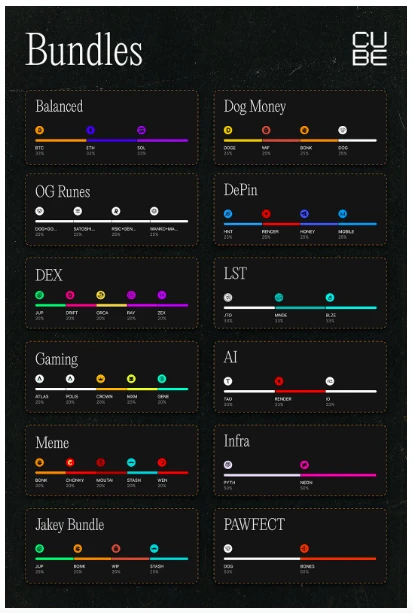
此外,Cube 还提供一键式捆绑包功能,能够一键式将你的 USDT 快速买入资产组合,非常适合不知道如何分配自己投资组合的新手。此外,还可以根据你的投资偏好和风险偏好进行定制。目前,Cube 提供 20 多种不同的捆绑包,包括 DePin、DEX、游戏、OG Runes、Dog Money、AI、Memes 等。
Cube Exchange:探寻下一个Solana生态中的十万亿市场机会

Solana 生态深度整合:高效交易,紧跟市场潮流

Cube.Exchange 对那些带有强烈 Solana 基因的项目展现出极大的吸引力,为这些项目提供了理想的成长环境。凭借 Solana 链的高性能和热门 meme 文化,Cube.Exchange 不仅支持 BTC、ETH、SOL 和 BONK 等主流加密资产交易,还带来了前所未有的交易速度与体验。

这种深度整合不仅让 Cube.Exchange 的交易速度远超传统平台,还为用户打开了参与 Solana 链上热门项目的大门。随着 Solana 生态的持续扩展,Cube.Exchange 将继续紧跟市场动向,不断推出更多交易对和创新服务,确保用户在瞬息万变的加密市场中抢占先机。

目前,Cube.Exchange 正处于早期发展阶段,为了吸引更多用户体验平台功能,Cube 推出了积分奖励计划。用户可以通过每日签到、完成 KYC 验证、进行交易等简单任务获取积分。这些积分不仅是对用户参与平台的回馈,还可能带来更多奖励、空投机会,甚至深度参与 Cube 生态的机会。

该平台还计划在更多司法管辖区获得运营牌照。根据创始人 Lipinski 的透露,Cube 已成功取得波兰的虚拟资产服务提供商牌照和加拿大的货币服务业务牌照,并且符合澳大利亚现货交易业务的所有监管要求。这为 Cube 在全球范围内的扩展奠定了坚实的基础。

Trending Cryptos

Related Reads

Robinhood Chain Mainnet Goes Live: Can Stocks Finally Be Moved Into Wallets?

Robinhood has officially launched its public mainnet, Robinhood Chain, along with stock-like tokens, the USDG yield product, and a DeFi lending portal. This marks a significant shift where a major online broker is integrating its user interface, regulatory compliance, self-custody wallet, and on-chain protocols into a single, streamlined experience. The goal is to simplify access to stock exposure, stablecoin yields, collateralized lending, and AMM trading for mainstream users. Eligible non-U.S. users can hold these "Stock Tokens"—structured as tokenized debt securities—in the Robinhood Wallet for 24/7 exposure to assets like U.S. stocks or ETFs. U.S. users can access an estimated ~7% APY on dollar-backed USDG through the Robinhood Earn program via self-custody wallets, with lending infrastructure powered by Morpho protocol. Built as a Layer 2 on Arbitrum, Robinhood Chain leverages existing DeFi protocols like Uniswap. The core strategy is not to reinvent DeFi but to channel Robinhood's large traditional finance user base (27.4 million funded customers as of Q1 2026) into on-chain finance, lowering the technical barriers. However, key limitations exist. The stock tokens are not direct equity ownership and are unavailable in the U.S. and some jurisdictions due to regulatory constraints. The ~7% yield is variable and carries inherent DeFi risks, not guaranteed principal protection. Furthermore, while AMMs enable trading, price discovery for major stocks will likely remain anchored in traditional markets like NASDAQ for the foreseeable future. Ultimately, Robinhood Chain is an early experiment in "on-chain brokerage." Its success will depend on real-world metrics like trading volume, sustained user migration to self-custody, stable yield performance, and regulatory feedback, rather than its launch narrative.

marsbit8m ago

Robinhood Chain Mainnet Goes Live: Can Stocks Finally Be Moved Into Wallets?

marsbit8m ago

Circle CEO Responds to OUSD Challenge: Stablecoin Market Is 'Winner-Takes-All', Consortium Model Doomed to Fail

Circle CEO Jeremy Allaire addresses market concerns following the announcement of the Open USD (OUSD) stablecoin project backed by 140 global companies. Allaire argues the stablecoin market exhibits "winner-takes-all" dynamics due to powerful network effects. He cites USDC's near-decade lead in three key areas: 1) **Application Integration & Protocol Development**: Thousands of integrated services and protocols (like CCTP) create utility and lock-in for developers and users. 2) **Liquidity Network Effects**: A deeply embedded, globally distributed liquidity infrastructure across primary and secondary markets, built over years. 3) **Regulatory Integration**: Extensive licensing and compliance groundwork ensuring USDC's acceptance in major markets like Europe and Japan. Allaire challenges OUSD's proposed advantages. He contends that promises of free redemption, while appealing, face market realities where such models can become exit routes for other stablecoins. He also questions the feasibility of fully distributing all revenue to an alliance, stating it would "starve" the critical infrastructure investments needed for scale and utility. Furthermore, he expresses skepticism about large alliance governance models, noting they often lead to slow decision-making and misaligned incentives. While welcoming OUSD to the ecosystem, Allaire reaffirms confidence in USDC's dominant position, backed by its long-term infrastructure investments and strong partnerships, including its ongoing collaboration with Coinbase.

marsbit10m ago

Circle CEO Responds to OUSD Challenge: Stablecoin Market Is 'Winner-Takes-All', Consortium Model Doomed to Fail

marsbit10m ago

Circle CEO Responds to OUSD Challenge: Alliance Model Doomed to Fail, It's a 'Winner-Takes-All' Game

Circle CEO Jeremy Allaire addresses the challenge posed by the new Open USD (OUSD) stablecoin project, backed by 140 global companies. He argues that the stablecoin market exhibits "winner-take-all" characteristics, where USDC's near-decade-long lead in application integrations, global liquidity, and regulatory compliance secures its dominant position. Allaire outlines three key network effects underpinning USDC's strength: 1) Extensive integration as an internet protocol layer, 2) Deep, globally distributed liquidity networks, and 3) Deep integration with global policy and regulatory frameworks. He cites data showing USDC facilitated 80% of on-chain USD stablecoin transaction volume in Q1 2026. He directly counters OUSD's proposed advantages: 1) "Free minting and redemption" may not be sustainable against market realities, which USDC addresses via contractual mechanisms. 2) "Sharing all revenue" risks starving the infrastructure of necessary investment for growth and reliability. 3) A "consortium model" often leads to slow innovation and poor coordination compared to focused, independent operators like Circle. Allaire reaffirms Circle's strong partnership with Coinbase and notes that Circle continues to collaborate with many OUSD founding members. He concludes by welcoming OUSD to the ecosystem while expressing confidence in USDC's entrenched network advantages and continued expansion.

Odaily星球日报13m ago

Circle CEO Responds to OUSD Challenge: Alliance Model Doomed to Fail, It's a 'Winner-Takes-All' Game

Odaily星球日报13m ago

dYdX Changes Tack and Starts Anew, This Time Partnering with Robinhood: Will It Succeed?

On July 1st, dYdX Labs, in partnership with Robinhood Crypto, launched the Beta version of Arcus, a new decentralized exchange (DEX). Deployed on the newly launched Robinhood Chain (an L2 built on Arbitrum), Arcus supports spot trading for 95 tokenized stocks and plans to introduce cross-asset perpetual contracts. This marks a separate, new product line for the dYdX team, distinct from the existing dYdX Chain. Arcus's core features promise 24/7 trading, self-custody, and institutional-grade liquidity. Initial offerings include zero-fee web-based spot trading and a perpetual contracts testnet. Future plans involve using tokenized stocks as collateral and providing access to Pre-IPO investments. The platform is not available to users in the US, Canada, the UK, and other restricted jurisdictions. This move follows dYdX's v4 upgrade, which, while achieving full decentralization, faced criticism over performance and tokenomics, leading to a loss of market share. Arcus represents a strategic pivot, leveraging Robinhood's vast user base to target the RWA (Real World Assets) sector and global 24/7 trading. The dYdX Foundation clarified that Arcus is a parallel product incubated by dYdX Labs, and the original dYdX Chain continues to operate independently. While no official token plans have been announced, market participants speculate about potential new tokens or airdrops from the Arcus project.

Foresight News20m ago

dYdX Changes Tack and Starts Anew, This Time Partnering with Robinhood: Will It Succeed?

Foresight News20m ago

Trading

Spot

Hot Articles

Discussions

Welcome to the HTX Community. Here, you can stay informed about the latest platform developments and gain access to professional market insights. Users' opinions on the price of SOL (SOL) are presented below.

活动图片