这是Shiba Inu可能飙升至1.2美元的一种方式

币界网Published on 2024-08-24Last updated on 2024-08-24

币界网报道:

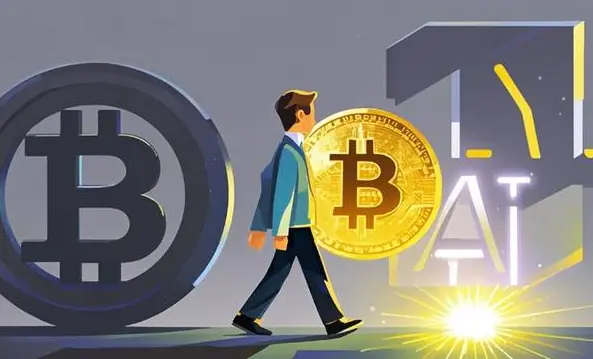
本文重点介绍了Shiba Inu如何创下令人瞠目结舌的反弹至1.2美元。

Shiba Inu的价格在日线图中飙升了6.56%,反映了整个市场的持续温和复苏。在温和的复苏中,Shiba Inu在昨天晚些时候飙升至0.000015美元以上。

继其出色的表现之后,一些市场观察人士和分析师对这款以狗为主题的代币做出了有利的预测。

CoinW预测SHIB可能达到1美元

正如本周报道的那样,领先的加密货币交易所CoinW暗示,SHIB的价格可能会飙升7627665%,达到1美元。CoinW做出了这一预测,同时做出了一系列其他大胆的预测,例如比特币达到10万美元,卡尔达诺(ADA)飙升至5美元。

正如预期的那样,CoinW对Shiba Inu达到1美元的预测给加密货币社区带来了冲击波,因为该资产的流通供应量高达589.27万亿代币。此外,飙升至1美元需要SHIB消除小数点后的四个零。

如果SHIB重复2020/2021年的成功故事,它可能会达到1.2美元

尽管如此,如果该资产复制其2020/2021年的成功,Shiba Inu的价格可能会超过CoinW的1美元预测,达到1.2美元。值得一提的是,Shiba Inu在2020年至2021年间实现了76000000%的惊人增长。

Shiba Inu于2020年8月推出,只是市场上的另一种模因币,几个月后获得了巨大的人气。以太坊创始人Vitalik Buterin从Shiba Inu创始人Ryoshi那里获得了SHIB总供应量的50%,烧毁了410万亿个代币并将剩余的捐赠给慈善机构后,其受欢迎程度大幅上升。此外,包括币安和Coinbase在内的几家加密货币交易所将SHIB上市交易。

这些积极的发展导致SHIB大幅反弹,2021年该资产飙升至0.00008845美元的历史最高点(ATH)。受欢迎的区块链分析平台CoinGecko于2024年5月发布了一份报告,重点介绍了Shiba Inu如何在2020年至2021年间将1200万至100万美元的微薄投资变成了一笔。投资回报率为7692207%。

由于SHIB目前的交易价格为0.00001547美元,假设再次出现7692207美元的飙升,该资产的价格可能会达到1.2美元。在这种假设的情况下,今天持有价值154.7美元的1000万SHIB的投资者将看到他们的投资增加到1200万美元。

值得注意的是,本文仅供参考;因此,其内容不应被视为财务建议。

Related Reads

BNB Chain Releases Research Report, Exploring Post-Quantum Cryptography Migration Path for BSC

BNB Chain, a leading Layer-1 blockchain ecosystem, has released a research report exploring the potential migration path for BNB Smart Chain (BSC) to post-quantum cryptography. The study evaluates replacing traditional cryptographic systems with quantum-resistant alternatives, specifically examining the use of ML-DSA-44 for transaction signing and pqSTARK for aggregating validator consensus signatures. While quantum computers are not currently a practical threat to existing blockchain cryptography, the research represents a proactive effort to ensure long-term network security and infrastructure resilience. The report assessed several core areas of the BSC tech stack, including post-quantum transaction signing, validator signature aggregation, transaction validation, public key storage, and network performance under increased data loads. A key finding is that achieving post-quantum readiness is technically feasible today but requires significant trade-offs in scalability. Test data indicates: • Transaction size would increase from ~110 bytes to ~2.5 kilobytes. • Block size would grow from ~110 kilobytes to ~2 megabytes. • Native transfer TPS would decrease from 4,973 to 2,997. The primary performance bottleneck is not signature verification itself, but the increased network transmission overhead caused by larger transaction and block sizes. Conversely, the pqSTARK aggregation technology proved highly efficient, compressing validator signatures by an approximately 43:1 ratio, which helps manage consensus-layer overhead. The report notes that post-quantum alternatives for areas like P2P handshakes and KZG commitments were not within the scope of this evaluation and require further research and broader ecosystem coordination. BNB Chain emphasizes this work is a research-oriented exploration and not a response to any imminent security threat.

marsbit38m ago

BNB Chain Releases Research Report, Exploring Post-Quantum Cryptography Migration Path for BSC

marsbit38m ago

After Developer Numbers Halved: Crypto Isn't Dead, It's Just Giving Up Talent to AI

The title "After a 50% Drop in Developer Count: Crypto Isn't Dead, It's Just Ceding Talent to AI" suggests a shift, not an end. The article analyzes GitHub data showing a significant drop in overall Crypto developer activity from a peak of 45K monthly active developers in 2022 to about 23K in 2026. However, this masks a deeper trend of "talent deleveraging." The exodus consists mainly of newcomers who entered during the bull market for hype-driven roles (e.g., NFT contracts, forked DeFi protocols), with over 50% of developers with less than one year of experience leaving. In contrast, established developers (2+ years of experience) have hit record highs, contributing roughly 70% of the code. They are consolidating in ecosystems with real users and revenue, like Bitcoin and Solana. These experienced builders possess unique skills forged in Crypto's "code is law" environment: the ability to build trust and functional systems from scratch in the absence of external authority or rules, with zero tolerance for error. The article argues that AI's scaling faces structurally similar trust, coordination, and verification problems—particularly regarding compute aggregation, multi-agent incentive alignment, and autonomous payments. Crypto builders are already applying these skills in AI. Examples include CoreWeave (mining to AI compute), OpenRouter (NFT marketplace routing to AI model routing), and projects like Hyperbolic (using crypto-native mechanisms for decentralized compute verification) and EigenLayer (applying restaking logic to AI agent governance). Stablecoin infrastructure is becoming critical for AI agent micro-payments (e.g., x402 protocol). The role of these builders is evolving from writing smart contracts to "designing trusted mechanisms for autonomous AI systems." This shift is reflected in new hiring trends at major exchanges and significant venture capital flowing into the crypto-AI convergence (e.g., funds from Paradigm, Haun Ventures). The article concludes that while developer numbers have halved, the core density of talent has increased, and their uniquely cultivated skills are finding a new, larger stage in the AI era.

marsbit48m ago
After Developer Numbers Halved: Crypto Isn't Dead, It's Just Giving Up Talent to AI

marsbit48m ago

After the Developer Count Halved: Crypto Is Not Dead, It's Just Ceding Talent to AI

Following a significant decline in the total number of open-source crypto developers, from a peak of 45K in 2022 to approximately 23K by 2026, this article argues the industry is undergoing a "talent deleveraging" rather than a collapse. The exodus primarily consists of newcomers who entered during the bull market, while the core of experienced developers (2+ years) has grown to a record high, contributing around 70% of code. These established builders are concentrating in ecosystems with real users and revenue, like Bitcoin and Solana. The article posits that crypto has cultivated a unique skill set in building trustless, autonomous systems with near-zero tolerance for error—a capability now finding high demand in the AI era. As AI scales, it faces structural gaps in decentralized compute aggregation, multi-agent coordination/incentive alignment, and autonomous payment infrastructure. Crypto builders are transitioning their expertise to address these exact problems. Examples include CoreWeave (mining to AI compute), Hyperbolic (decentralized compute verification), EigenLayer (extending restaking mechanisms to AI agent governance), and the x402 protocol (enabling AI agent micro-payments via stablecoins). The role of the crypto builder is evolving from writing smart contracts to designing the rule-based, trust-minimized frameworks necessary for AI-native systems. Venture capital is increasingly funding this convergence, viewing it as a structural opportunity rather than a narrative shift. The core talent and systemic design principles from crypto are not disappearing but being re-priced and applied to the foundational challenges of scalable AI.

链捕手52m ago

After the Developer Count Halved: Crypto Is Not Dead, It's Just Ceding Talent to AI

链捕手52m ago

Trading

Spot
Futures
活动图片