牛市来临!这4种模因币将主导加密货币牛市!

币界网Published on 2024-08-21Last updated on 2024-08-21

币界网报道:

0ff5ca9a9b40dc84032f770066917ba2.jpeg

随着比特币价格重新回到 61,000 美元的水平,加密货币市场在过去一天出现了强劲的看涨复苏。此外,Memecoin 类别的市值增加了 21.7 亿美元。这占过去一天总流入量的 3.38%。

计划投资 memecoin,但担心其波动性导致的未来前景?

在本文中,我们揭示了有可能主导即将到来的加密货币牛市反弹的 4 大 meme 币的市场情绪、价格分析和潜在的短期价格目标。

BRETT

在过去一个月的看跌情绪下交易后,Brett的价格在过去 24 小时内上涨了 20% 以上。此外,凭借 24 小时交易量 9403.7 万美元和市值 8.9559 亿美元,这款 meme 币在全球加密货币排行榜上排名第 69 位。

5efd0ce7bb24ea6bdb7a41a2f908ec3a.png

技术指标 MACD 在 1D 时间范围内显示持续的平线。然而,BRETT 价格图表中的平均线记录了看涨收敛,表明市场对 meme 代币的情绪喜忧参半。

如果市场将 Brett memecoin 价格维持在支撑位上方,多头将准备测试其阻力位 0.12285 美元。相反,如果空头压倒多头,该代币将在未来一段时间内跌至 0.07395 美元的低点。

WIF

随着看涨复苏,Dogwifhat 的价格在过去一天内飙升了 14.98%,交易量达到 4.01144 亿美元。尽管过去一个月内出现了 37.69% 的回调,但这种 memecoin 的年初至今回报率为 930.15%,回报了其长期投资者。

5e76c88ddf1ab5a2ac3ad6aa10ede695.png

RSI 指标在 WIF 价格图中显示看涨上涨,表明购买压力增加。相反,EMA 50/200 日线显示死亡交叉的可能性很高,凸显了未来价格走势的不确定性。

假设多头重新获得力量,那么WIF 价格将在未来一段时间内向其阻力位 2.10 美元迈进。然而,看跌行动可能导致 Dogwifhat 价格重新测试其支撑位 1.240 美元。

FLOKI

Floki 股价继续在看涨情绪下交易,过去一天上涨 10.89%,过去一周上涨 3.27%。此外,凭借 247.09% 的年度涨幅,该股已稳居第 56 位,市值为 12.07 亿美元。

116fbd7d556221f6b32ff95488e0c644.png

简单移动平均线 (SMA) 即将在 1D 时间范围内记录看涨交叉,表明市场购买压力增加。此外,MACD 在绿色直方图中显示持续上升,其平均值记录正交叉。

如果多头继续获得动力,Floki 价格将突破其阻力位 0.000155 美元,并走向其上限 0.00021435 美元。负面因素是,趋势逆转可能会将价格拉向其关键支撑位 0.00010190 美元。

PEPE

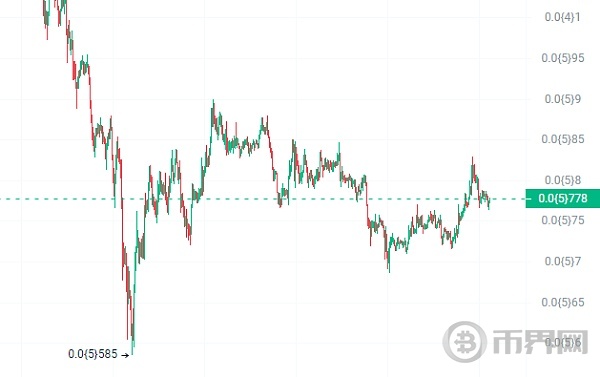
据报道,在过去一天中,Pepe 的价格估值上涨了 8.17%,24 小时交易量为 7.3658 亿美元。值得注意的是,自创下历史新高以来,Pepe memecoin 一直受到看跌的影响。这导致它在过去 3 个月内暴跌了 53.00% 以上。
2f940c0f26eb73a86ed8088dadf96d86.png

相对强弱指数 (RSI) 记录了 Pepe 价格走势的看涨上涨,表明看涨情绪有所增强。此外,SMA 指标也显示出类似的趋势,表明本周 Pepe memecoin 的前景乐观。

将价格维持在支撑位 0.00000880 美元上方将为该 memecoin 测试其最高价 0.00001150 美元奠定基础。相反,如果空头重新获得控制权,PEPE 代币价格将在未来重新测试其重要支撑位 0.00000625 美元。


Related Reads

The Next Generation of Payments Is Not in the Payment Layer

The next generation of payments won't be designed within the payment layer itself. This article argues that historical payment innovations (e.g., online banking, mobile wallets) emerged from new transactional scenarios, not from optimizing existing payment systems. The new scenario is the Agent economy. Know Your Agent (KYA) is not merely a payment-layer upgrade for efficiency. It is the foundational infrastructure layer for the Agent economy. KYA’s five layers—Agent identity, authorization scope, intent signature, accountability chain audit, and credit rating—primarily serve broader needs like cross-platform identification, AI alignment, and permission management. Payment is just one application built on top of this KYA foundation. Stripe’s strategy exemplifies this shift. Its focus on "economic infrastructure for AI," investments in protocols like the Agentic Commerce Protocol (identity/session layer), stablecoin infrastructure, embedded wallets, and moving risk management (Radar) to the user lifecycle all indicate it is building the KYA layer, not just optimizing payments. While ultimate legal liability remains with a human (as laws like AB 316 stipulate), KYA enables traceability in a distributed,网状 responsibility chain involving multiple entities (user, Agent platform, model provider, etc.). It makes accountability verifiable where previously it was opaque. The conclusion: A new class of economic actors (Agents) forces a new infrastructure layer (KYA) to emerge. This layer redefines identity, authorization, and accountability. On top of it, the next generation of payment will reorganize and emerge from the demands of the scenario, not from within the traditional payment system.

链捕手2m ago

The Next Generation of Payments Is Not in the Payment Layer

链捕手2m ago

The "Big Short" Prototype Makes a Major Bet: Shorting Nvidia, Going Long on Software Stocks 'Scared Away' by AI

'The Big Short' Legend Michael Burry Doubles Down on AI Bet: Shorts Nvidia, Buys Beaten-Down Software Stocks As the Nasdaq hits record highs and Nvidia's market cap nears $5.3 trillion, Michael Burry—famed for his 2008 subprime mortgage bet—is making a major contrarian move. He is significantly expanding his bearish wagers against the AI frenzy while buying traditional software stocks he believes have been unfairly punished. Burry's latest portfolio adjustments, revealed in his Substack column, include maintaining and increasing put options on Nvidia and Palantir. He has also initiated new short positions on Palantir and expanded bearish bets on the semiconductor ETF (SOXX), the Nasdaq 100 ETF (QQQ), and Oracle. Simultaneously, he is buying shares of software companies like Adobe, Autodesk, Salesforce, and Veeva Systems. He argues these stocks have been sold off due to "AI disruption" fears and technical selling pressure from private credit funds, not deteriorating fundamentals. Their valuations have fallen to multi-year lows. This creates a complete hedge: short the perceived "AI winners" and long the oversold "AI losers." Burry believes the current AI infrastructure spending boom mirrors the late-1990s internet bubble, with inflated demand projections and questionable accounting practices by large cloud customers extending GPU depreciation schedules. While his Palantir short is currently profitable, his Nvidia put options are deeply underwater as the stock trades near all-time highs. Burry remains steadfast, comparing Nvidia to Cisco during the dot-com era. He anticipates a broad repricing of the AI bubble, where overvalued beneficiaries fall and unfairly battered companies rebound.

marsbit7m ago

The "Big Short" Prototype Makes a Major Bet: Shorting Nvidia, Going Long on Software Stocks 'Scared Away' by AI

marsbit7m ago

The Night Before the AI Model Shakeout

China's large language model (LLM) industry is entering a critical consolidation phase. In a concentrated wave of funding in May 2026, leading players Kimi, StepFun, and DeepSeek reportedly secured over $70 billion combined, signaling a dramatic capital rush towards the few remaining independent contenders. This frenzy masks an impending shakeout. The core dynamic has shifted from a pure technology race to a battle for survival and strategic positioning. LLM capabilities are rapidly commoditized; gaps between top models are narrowing. Consequently, investment logic has pivoted from betting on future potential to prioritizing cash flow, user access, and ecosystem integration. The economic model poses a fundamental challenge: while user growth previously meant profits, in the AI era, it drives soaring inference costs. Startups, lacking the cross-subsidy ability of tech giants like ByteDance or Tencent, face immense pressure to achieve financial sustainability. DeepSeek's open-source, high-performance, low-cost strategy has further compressed industry profit margins. Facing this reality, the top players are scrambling to lock in their status before the window closes. StepFun is accelerating its港股 IPO, embedding itself in hardware supply chains. Kimi is aggressively showcasing revenue growth (ARR doubling to $2 billion in a month) to prove viability. DeepSeek, with new state-backed investment, is solidifying its role as a strategic national asset. The parallel to China's previous AI "Four Dragons" is stark. The industry is witnessing extreme capital concentration at the top, while mid-tier companies face a funding winter. The narrative has evolved from "who can build the best model" to "who can survive." For independent LLM companies, securing a public listing or a definitive strategic identity is no longer about expansion—it's about securing the very right to exist in the impending era of industry clearance.

marsbit1h ago

The Night Before the AI Model Shakeout

marsbit1h ago

TACO Is Outdated, Wall Street Is Betting Heavily on NACHO

The article discusses a shift on Wall Street from the "TACO" (Trump Always Chickens Out) trading theme to a new one called "NACHO" (Not A Chance Hormuz Opens). This change reflects the market's adaptation to a prolonged closure of the Strait of Hormuz following U.S.-Israel airstrikes on Iran in late February. Unlike TACO, which bet on former President Trump de-escalating crises, NACHO bets on a protracted stalemate keeping the vital oil chokepoint shut. Key evidence for the NACHO regime includes a fundamental decoupling of oil prices and the S&P 500 since late March. While Brent crude has remained elevated (around $109 in May), the stock index has rallied to new highs. The market is pricing in a long but finite period of high oil prices, as seen in the steep futures curve. This theme is backed by real money in three derivatives markets: soaring war risk insurance for ships, an inverted oil futures structure, and evaporating expectations for Federal Reserve rate cuts in 2026. Within the equity market, the NACHO dynamic has caused a sharp divergence, with the energy sector (XLE) vastly outperforming the transportation sector (IYT), which is highly sensitive to fuel costs. The article notes a concrete deadline for this trade: early June. Analysts warn that global commercial oil inventories could approach critical "operational pressure" levels by then, potentially triggering more severe market disruptions if the Strait remains closed. Prediction markets currently assign a very low probability to the Strait reopening normally before June.

marsbit1h ago

TACO Is Outdated, Wall Street Is Betting Heavily on NACHO

marsbit1h ago

Trading

Spot
Futures

Hot Articles

What is $BITCOIN

DIGITAL GOLD ($BITCOIN): A Comprehensive Analysis Introduction to DIGITAL GOLD ($BITCOIN) DIGITAL GOLD ($BITCOIN) is a blockchain-based project operating on the Solana network, which aims to combine the characteristics of traditional precious metals with the innovation of decentralized technologies. While it shares a name with Bitcoin, often referred to as “digital gold” due to its perception as a store of value, DIGITAL GOLD is a separate token designed to create a unique ecosystem within the Web3 landscape. Its goal is to position itself as a viable alternative digital asset, although specifics regarding its applications and functionalities are still developing. What is DIGITAL GOLD ($BITCOIN)? DIGITAL GOLD ($BITCOIN) is a cryptocurrency token explicitly designed for use on the Solana blockchain. In contrast to Bitcoin, which provides a widely recognized value storage role, this token appears to focus on broader applications and characteristics. Notable aspects include: Blockchain Infrastructure: The token is built on the Solana blockchain, known for its capacity to handle high-speed and low-cost transactions. Supply Dynamics: DIGITAL GOLD has a maximum supply capped at 100 quadrillion tokens (100P $BITCOIN), although details regarding its circulating supply are currently undisclosed. Utility: While precise functionalities are not explicitly outlined, there are indications that the token could be utilized for various applications, potentially involving decentralized applications (dApps) or asset tokenization strategies. Who is the Creator of DIGITAL GOLD ($BITCOIN)? At present, the identity of the creators and development team behind DIGITAL GOLD ($BITCOIN) remains unknown. This situation is typical among many innovative projects within the blockchain space, particularly those aligning with decentralized finance and meme coin phenomena. While such anonymity may foster a community-driven culture, it intensifies concerns about governance and accountability. Who are the Investors of DIGITAL GOLD ($BITCOIN)? The available information indicates that DIGITAL GOLD ($BITCOIN) does not have any known institutional backers or prominent venture capital investments. The project seems to operate on a peer-to-peer model focused on community support and adoption rather than traditional funding routes. Its activity and liquidity are primarily situated on decentralized exchanges (DEXs), such as PumpSwap, rather than established centralized trading platforms, further highlighting its grassroots approach. How DIGITAL GOLD ($BITCOIN) Works The operational mechanics of DIGITAL GOLD ($BITCOIN) can be elaborated on based on its blockchain design and network attributes: Consensus Mechanism: By leveraging Solana’s unique proof-of-history (PoH) combined with a proof-of-stake (PoS) model, the project ensures efficient transaction validation contributing to the network's high performance. Tokenomics: While specific deflationary mechanisms have not been extensively detailed, the vast maximum token supply implies that it may cater to microtransactions or niche use cases that are still to be defined. Interoperability: There exists the potential for integration with Solana’s broader ecosystem, including various decentralized finance (DeFi) platforms. However, the details regarding specific integrations remain unspecified. Timeline of Key Events Here is a timeline that highlights significant milestones concerning DIGITAL GOLD ($BITCOIN): 2023: The initial deployment of the token occurs on the Solana blockchain, marked by its contract address. 2024: DIGITAL GOLD gains visibility as it becomes available for trading on decentralized exchanges like PumpSwap, allowing users to trade it against SOL. 2025: The project witnesses sporadic trading activity and potential interest in community-led engagements, although no noteworthy partnerships or technical advancements have been documented as of yet. Critical Analysis Strengths Scalability: The underlying Solana infrastructure supports high transaction volumes, which could enhance the utility of $BITCOIN in various transaction scenarios. Accessibility: The potential low trading price per token could attract retail investors, facilitating wider participation due to fractional ownership opportunities. Risks Lack of Transparency: The absence of publicly known backers, developers, or an audit process may yield skepticism regarding the project's sustainability and trustworthiness. Market Volatility: The trading activity is heavily reliant on speculative behavior, which can result in significant price volatility and uncertainty for investors. Conclusion DIGITAL GOLD ($BITCOIN) emerges as an intriguing yet ambiguous project within the rapidly evolving Solana ecosystem. While it attempts to leverage the “digital gold” narrative, its departure from Bitcoin's established role as a store of value underscores the need for a clearer differentiation of its intended utility and governance structure. Future acceptance and adoption will likely depend on addressing the current opacity and defining its operational and economic strategies more explicitly. Note: This report encompasses synthesised information available as of October 2023, and developments may have transpired beyond the research period.

363 Total ViewsPublished 2025.05.13Updated 2025.05.13

What is $BITCOIN

Discussions

Welcome to the HTX Community. Here, you can stay informed about the latest platform developments and gain access to professional market insights. Users' opinions on the price of BTC (BTC) are presented below.

活动图片