总结 35 年美国利率周期规律,42 天后的降息能开启比特币第二轮牛市吗?

链捕手Published on 2024-08-13Last updated on 2024-08-13

作者:南枳,Odaily星球日报


自比特币突破三年前 6.9 万美元新高以来,已连续多月在五万至七万美元的区间宽幅震荡。在比特币减半之后,可预见的宏大叙事仅剩美联储降息

而这一事件日期已是板上钉钉,据 CME 美联储观察数据,美联储在 9 月 24 日降息的概率已上升至 100%  ,只有下调 25 个基点或 50 个基点的区别,目前二者概率约五五开。

那么降息是否能为比特币和全体加密市场带来一波大行情?Odaily 于本文复盘了 1989 年至 2019 年期间美联储的五次主要降息周期,探究是否存在客观规律。

刻舟 2018 年-2020 年

这一轮的美联储加息终止于 2018 年 12 月 19 日,三个季度后的 2019 年 7 月 31 日开始了首次降息。本轮降息也是比特币和加密市场经历过的第一场和唯一一场降息周期。比特币价格、纳斯达克指数和黄金价格走势如下图所示:

总结35年美国利率周期规律,42天后的降息能开启比特币第二轮牛市吗?

从图中可以明显看出,降息在发生之前就已明显 Price In,尤其是比特币提前量最大,最后一次加息至第一次降息期间比特币上涨 161.7% ,纳指上涨 23.2% ,黄金上涨 13.7%  。而在降息之后反而只有纳指和黄金继续上涨,比特币持续宽幅震荡。

在最后一次降息(2020/3/15)前比特币就发生了众所周知的 312 大暴跌,全球市场同样哀鸿遍野。但此时美联储已经将利率下降到 0.00% -0.25% ,因此采用了超大规模的量化宽松政策,最终流动性溢出至加密市场,引发了 2021 年的大牛市。

2023 年 7 月 27 日最后一次加息后的三大市场走势对比如下。彼时彼刻,恰如此时此刻,从最后一次加息至至 8 月 2 日(因黄金数据只采集到此日),比特币上涨 122.6% ,纳指上涨 19.4% ,黄金上涨 27% 。比特币或许已再次对加息 Price In。

总结35年美国利率周期规律,42天后的降息能开启比特币第二轮牛市吗?

回首 1989 年-2008 年

再往前的美国降息周期需回溯至 2007 年,彼时比特币尚未诞生。但现在通常认为加密市场仍与美股市场具有较强关联性,因此我们仍以纳指和黄金价格走势作为研究对象和比特币价格的替代品,探究降息与价格的波动关系。

2006 年-硬着陆

2006 年开始的周期中:

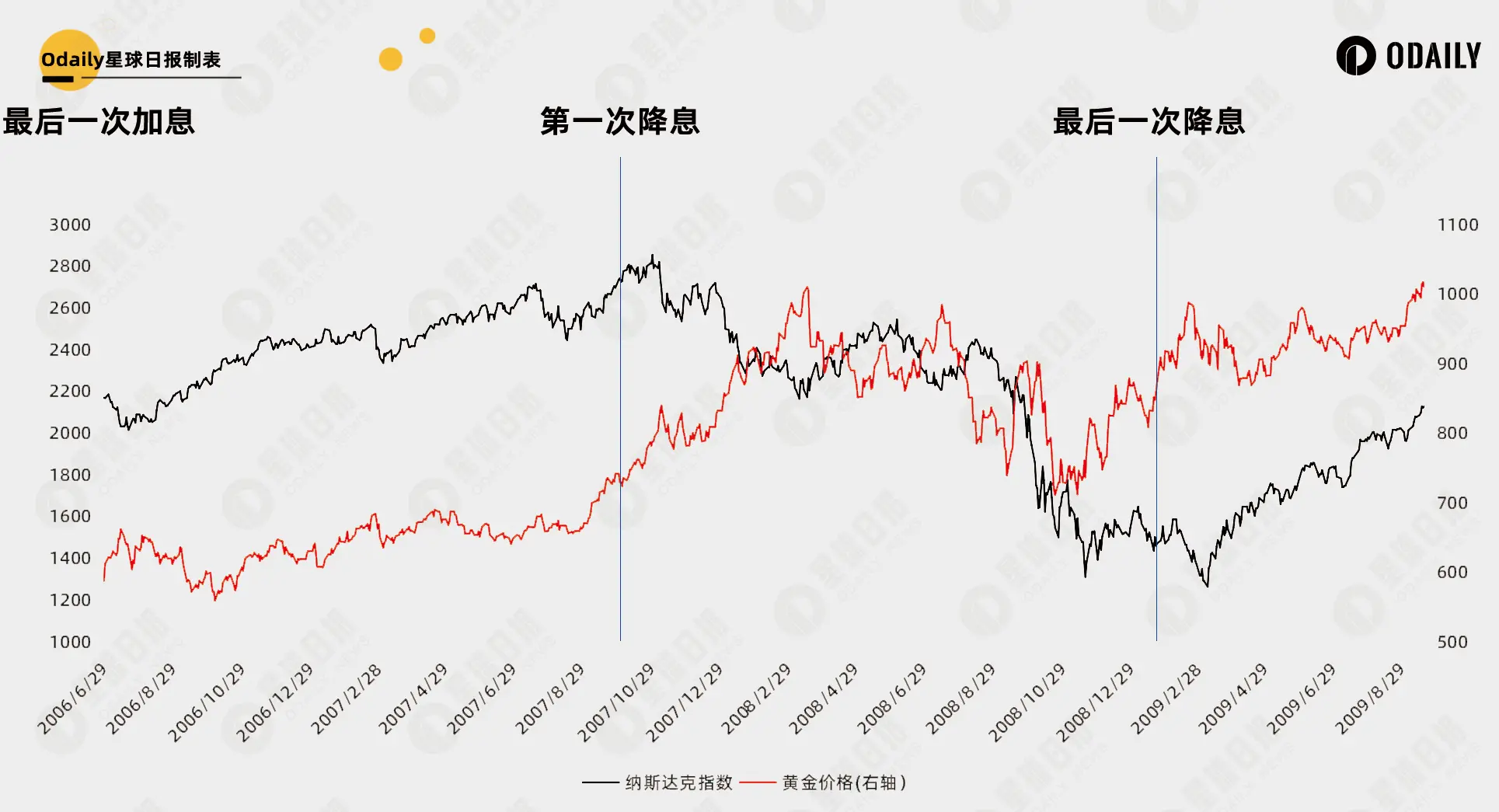
  • 最后一次加息发生于 2006 年 6 月 29 日,联邦基金利率升至 5.25% 。

  • 第一次降息发生于 2007 年 9 月 18 日,联邦基金利率从 5.25% 下调至 4.75% 。

  • 最后一次降息发生于 2008 年 12 月 16 日,联邦基金利率降至 0% 至 0.25% 。

走势上:

  • 纳指在降息前上涨,降息后下降,降息结束前后上涨;

  • 黄金在降息前上涨,降息后震荡上升。

时代背景上:

2007 年次贷危机爆发,金融系统崩坏,美联储 9 月开始降息以应对不断恶化的金融状况和经济放缓的威胁,随后 BTC 诞生

总结35年美国利率周期规律,42天后的降息能开启比特币第二轮牛市吗?

2000 年-硬着陆

2000 年开始的周期中:

  • 最后一次加息发生于 2000 年 5 月 16 日,联邦基金利率升至 6.50% 。

  • 第一次降息发生于 2001 年 1 月 3 日,联邦基金利率从 6.50% 下调至 6.00% 。

  • 最后一次降息发生于 2003 年 6 月 25 日,联邦基金利率降至 1.00% 。

走势上:

  • 纳指在降息前上涨,降息后下降,降息结束前后上涨(2004 年 6 月第一次见顶,图中未给出);

  • 黄金在降息前上涨,降息后震荡上升。

时代背景上:

2000 年互联网泡沫破裂,科技股和互联网公司的估值急剧下降。美联储在 2001 年初开始了一系列的降息措施,试图缓解经济衰退的压力。但由于泡沫破裂带来的市场崩溃以及企业盈利的显著下滑,市场情绪极为悲观。

总结35年美国利率周期规律,42天后的降息能开启比特币第二轮牛市吗?

1995 年-软着陆

1995 年开始的周期中:

1995 年 2 月 1 日完成最后一次加息,同年 7 月 6 日开始降息, 12 月 19 日最后一次降息。整个周期相较其他年份非常短暂。

走势上:

  • 纳指在降息前上涨,降息后上涨;

  • 黄金在降息前震荡,降息后下跌。

时代背景上:

彼时,美国经济相对强劲,且正处于科技创新和互联网发展的初期阶段。1995 年的降息是预防性措施,意在支持经济的持续扩张,因此也非常短暂。

总结35年美国利率周期规律,42天后的降息能开启比特币第二轮牛市吗?

1989 年-软着陆

1989 年开始的周期中:

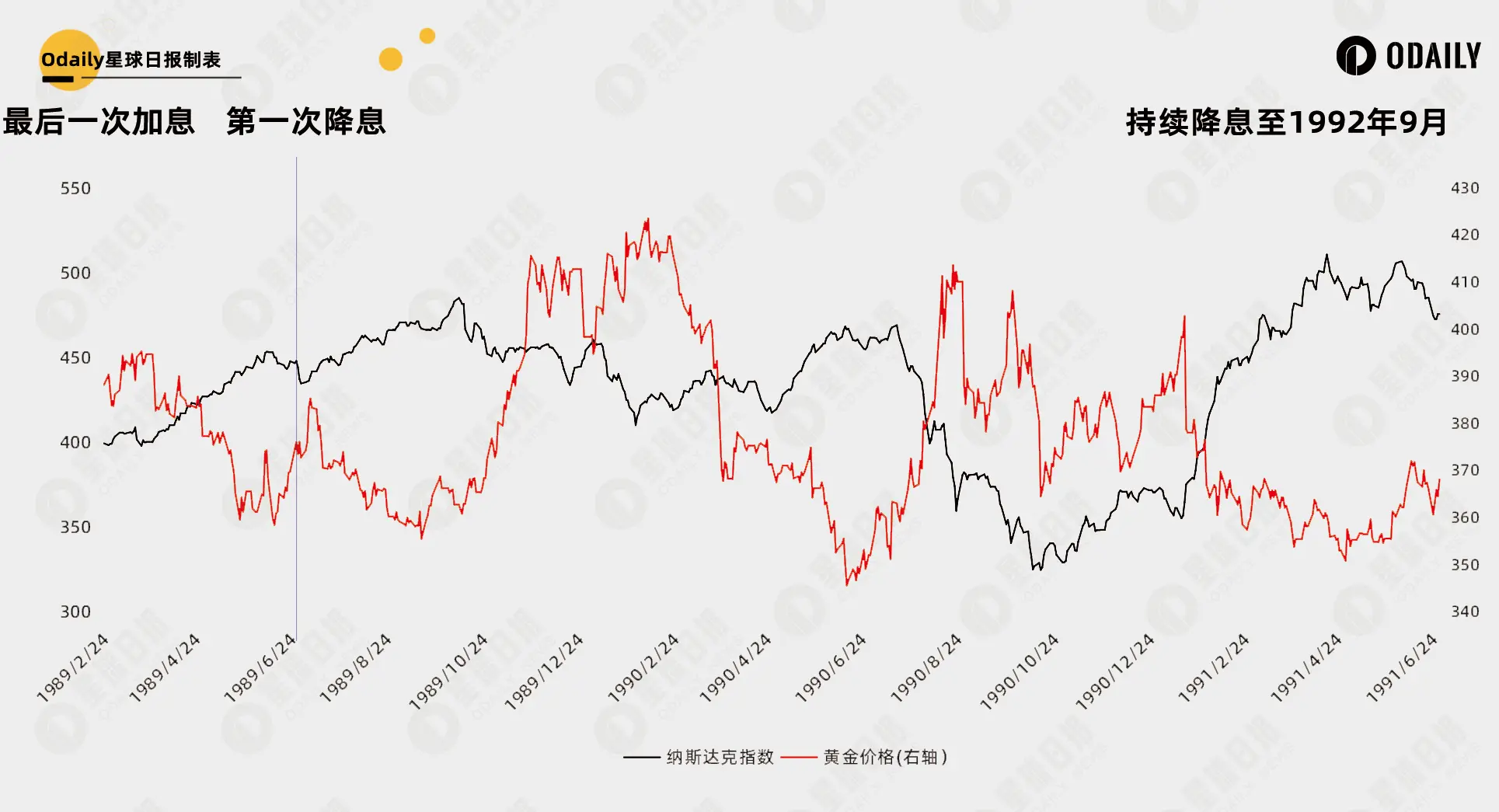
  • 最后一次加息: 1989 年 2 月 24 日,联邦基金利率升至 9.75% 。

  • 第一次降息: 1989 年 6 月 28 日,联邦基金利率从 9.75% 下调至 9.5% 。

  • 最后一次降息: 1992 年 9 月 4 日,联邦基金利率降至 3.00% 。

走势上:

  • 纳指在降息前上涨,降息后震荡;

  • 黄金在降息前下跌,降息后震荡。

时代背景上:

1980 年代的美国经济经历了一个较长的扩张期。到 1989 年,经济扩张已经持续了 7 年,成为战后最长的经济扩张之一。1980 年代末期,美国面临着较高的通货膨胀压力,美联储在 1988 年通过加息来应对通胀,但这些加息举措在 1989 年显现出了对经济增长的抑制效果。
总结35年美国利率周期规律,42天后的降息能开启比特币第二轮牛市吗?

结论

综上,有几点显著结论:

  • 降息并不会直接开启股市和大类资产的牛市,相关影响往往早已 Price In;

  • 降息对后市的影响取决于彼时的整体经济情况,是为了促进经济发展主动降息,还是出现黑天鹅事件被迫降息。从美股角度来看是经济韧性和流动性宽松定价的角力。

  • 黄金受益于利率下降(同时美元下跌)多数情况下上涨,硬着陆模式下通常有更优表现。

因此,降息从历史规律上来看,很难成为比特币和加密市场上涨的根本动力。2024 年以来我们经历了比特币现货 ETF 和减半等事件,市场需要下一场宏大叙事或者基本面变革。

Trending Cryptos

Related Reads

Deep Insight: Decentralized Inference is Not Hype, but a Key Track for AI to Break Through Centralized Monopoly

Decentralized Reasoning: Beyond the Hype, a Key to Breaking AI's Centralized Monopoly A future scenario where a powerful AI model is banned by a major government illustrates the core value proposition of decentralized AI: resistance to censorship. The core bet of decentralized inference networks is mitigating this risk, with other benefits like cost being secondary. The path is extremely difficult, involving four key challenges: 1. **Running Massive Models:** Distributing a single model across a decentralized GPU swarm requires sophisticated techniques like pipeline and speculative decoding to overcome crippling network latency, aiming for usable speeds (e.g., 30-40 tokens/second). 2. **Proving Model Integrity:** Verifying that a node runs the correct model is critical. Solutions range from cryptographically secure but slow ZKML to faster, economically-secure methods like statistical fingerprints, deterministic re-execution, or live-weight proofs, each involving trade-offs between integrity, latency, and cost. 3. **Ensuring Prompt Privacy:** Simply sharding a model does not protect user inputs from nodes. Robust solutions currently require trusted hardware (TEEs) or advanced cryptography (FHE), which are not yet widely deployed in consumer swarms. 4. **Building a Real Market:** Identifying the ideal customer is tough. Beyond speculative AI agents, the viable market currently consists of startups embedding AI and projects needing batch processing (e.g., synthetic data generation), where decentralized aggregation can be an advantage over low-latency needs. The article analyzes several projects tackling these problems, such as Dolphin Network (live-weight proofs), Inference.net (statistical verification), Morpheus (TEE-based), and Darkbloom (Apple Secure Enclave). It provides a framework: decentralization is a "tax" for latency-sensitive applications (e.g., chat) but a potential supply-side advantage for throughput-oriented tasks (e.g., batch processing). The long-term vision is a closed data loop where decentralized inference generates valuable data (traces, preferences) to feed decentralized training networks, which in turn produce better open-weight models for the inference networks. A due diligence checklist advises focusing on projects that: are truly decentralized at specific layers; have a credible integrity method; offer real cost benefits; ensure genuine privacy; handle node reliability; have paying users; and are built by teams with deep AI expertise. The ultimate goal should be products that appeal beyond the crypto-native audience, using crypto mechanisms invisibly to deliver better cost, performance, or privacy.

Foresight News9m ago

Deep Insight: Decentralized Inference is Not Hype, but a Key Track for AI to Break Through Centralized Monopoly

Foresight News9m ago

The Final Piece of Franklin Templeton's Crypto Ambition

Franklin Templeton Completes Crypto Ambition with Acquisition of 250 Digital On June 22, Franklin Templeton announced the acquisition of 250 Digital and established Franklin Crypto, a new division focused on actively managed cryptocurrency strategies for institutional investors. The unit is led by Christopher Perkins and Seth Ginns. This acquisition marks a key piece in Franklin Templeton's multi-year crypto strategy, which began in 2018 with a digital assets team. The firm's crypto product suite now spans three layers: tokenized funds like the blockchain-based money market fund BENJI (~$831M AUM); a series of passive ETFs including Bitcoin (EZBC, ~$368M), Ethereum (EZET), XRP (XRPZ, ~$252M), Solana (SOEZ), and a multi-crypto index fund (EZPZ); and the newly added active management strategies from Franklin Crypto. The company has also expanded its crypto ecosystem through investments in projects like Ethena and Crossmint, and collaborations with blockchains such as Aptos and Sui. With approximately $18B in digital asset AUM and a total firm AUM of ~$1.78T, Franklin Templeton is positioning itself as a comprehensive crypto asset manager for pensions and sovereign wealth funds. In contrast, competitor Fidelity Investments has taken a different path, focusing early on building its own custody and trading infrastructure. Fidelity's Bitcoin ETF (FBTC) holds over $11B, significantly larger than Franklin Templeton's equivalent offering. Both giants' moves underscore the deepening trend of traditional finance entering the crypto space.

Foresight News32m ago

The Final Piece of Franklin Templeton's Crypto Ambition

Foresight News32m ago

Trading

Spot
Futures

Hot Articles

What is $BITCOIN

DIGITAL GOLD ($BITCOIN): A Comprehensive Analysis Introduction to DIGITAL GOLD ($BITCOIN) DIGITAL GOLD ($BITCOIN) is a blockchain-based project operating on the Solana network, which aims to combine the characteristics of traditional precious metals with the innovation of decentralized technologies. While it shares a name with Bitcoin, often referred to as “digital gold” due to its perception as a store of value, DIGITAL GOLD is a separate token designed to create a unique ecosystem within the Web3 landscape. Its goal is to position itself as a viable alternative digital asset, although specifics regarding its applications and functionalities are still developing. What is DIGITAL GOLD ($BITCOIN)? DIGITAL GOLD ($BITCOIN) is a cryptocurrency token explicitly designed for use on the Solana blockchain. In contrast to Bitcoin, which provides a widely recognized value storage role, this token appears to focus on broader applications and characteristics. Notable aspects include: Blockchain Infrastructure: The token is built on the Solana blockchain, known for its capacity to handle high-speed and low-cost transactions. Supply Dynamics: DIGITAL GOLD has a maximum supply capped at 100 quadrillion tokens (100P $BITCOIN), although details regarding its circulating supply are currently undisclosed. Utility: While precise functionalities are not explicitly outlined, there are indications that the token could be utilized for various applications, potentially involving decentralized applications (dApps) or asset tokenization strategies. Who is the Creator of DIGITAL GOLD ($BITCOIN)? At present, the identity of the creators and development team behind DIGITAL GOLD ($BITCOIN) remains unknown. This situation is typical among many innovative projects within the blockchain space, particularly those aligning with decentralized finance and meme coin phenomena. While such anonymity may foster a community-driven culture, it intensifies concerns about governance and accountability. Who are the Investors of DIGITAL GOLD ($BITCOIN)? The available information indicates that DIGITAL GOLD ($BITCOIN) does not have any known institutional backers or prominent venture capital investments. The project seems to operate on a peer-to-peer model focused on community support and adoption rather than traditional funding routes. Its activity and liquidity are primarily situated on decentralized exchanges (DEXs), such as PumpSwap, rather than established centralized trading platforms, further highlighting its grassroots approach. How DIGITAL GOLD ($BITCOIN) Works The operational mechanics of DIGITAL GOLD ($BITCOIN) can be elaborated on based on its blockchain design and network attributes: Consensus Mechanism: By leveraging Solana’s unique proof-of-history (PoH) combined with a proof-of-stake (PoS) model, the project ensures efficient transaction validation contributing to the network's high performance. Tokenomics: While specific deflationary mechanisms have not been extensively detailed, the vast maximum token supply implies that it may cater to microtransactions or niche use cases that are still to be defined. Interoperability: There exists the potential for integration with Solana’s broader ecosystem, including various decentralized finance (DeFi) platforms. However, the details regarding specific integrations remain unspecified. Timeline of Key Events Here is a timeline that highlights significant milestones concerning DIGITAL GOLD ($BITCOIN): 2023: The initial deployment of the token occurs on the Solana blockchain, marked by its contract address. 2024: DIGITAL GOLD gains visibility as it becomes available for trading on decentralized exchanges like PumpSwap, allowing users to trade it against SOL. 2025: The project witnesses sporadic trading activity and potential interest in community-led engagements, although no noteworthy partnerships or technical advancements have been documented as of yet. Critical Analysis Strengths Scalability: The underlying Solana infrastructure supports high transaction volumes, which could enhance the utility of $BITCOIN in various transaction scenarios. Accessibility: The potential low trading price per token could attract retail investors, facilitating wider participation due to fractional ownership opportunities. Risks Lack of Transparency: The absence of publicly known backers, developers, or an audit process may yield skepticism regarding the project's sustainability and trustworthiness. Market Volatility: The trading activity is heavily reliant on speculative behavior, which can result in significant price volatility and uncertainty for investors. Conclusion DIGITAL GOLD ($BITCOIN) emerges as an intriguing yet ambiguous project within the rapidly evolving Solana ecosystem. While it attempts to leverage the “digital gold” narrative, its departure from Bitcoin's established role as a store of value underscores the need for a clearer differentiation of its intended utility and governance structure. Future acceptance and adoption will likely depend on addressing the current opacity and defining its operational and economic strategies more explicitly. Note: This report encompasses synthesised information available as of October 2023, and developments may have transpired beyond the research period.

431 Total ViewsPublished 2025.05.13Updated 2025.05.13

What is $BITCOIN

Discussions

Welcome to the HTX Community. Here, you can stay informed about the latest platform developments and gain access to professional market insights. Users' opinions on the price of BTC (BTC) are presented below.

活动图片