Аналитик CryptoQuant спрогнозировал рост цен на ETH

cryptonews.ruPublished on 2024-01-12Last updated on 2024-08-12

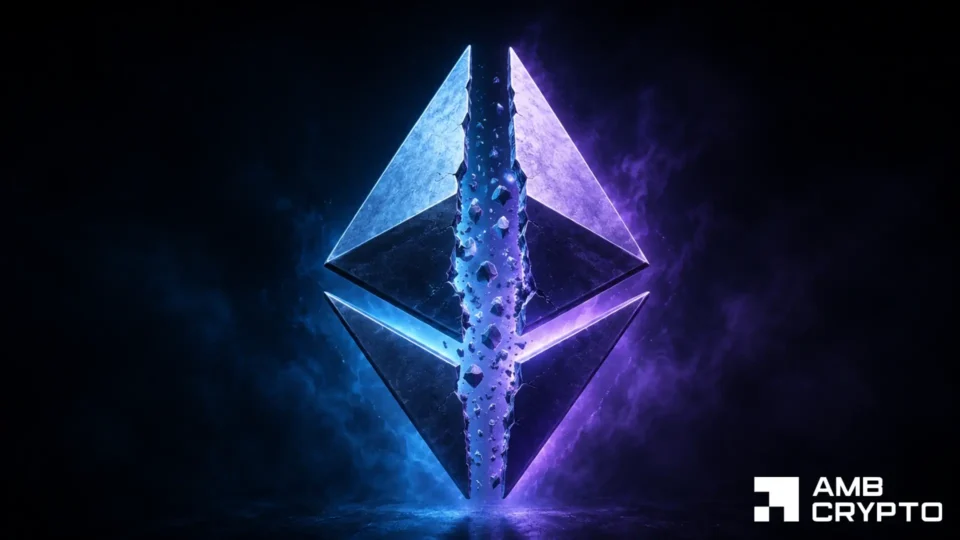
Исследователь компании CryptoQuant под псевдонимом ShayanBTC напомнил, что криптовалюта Ethereum (ETH) в последние недели пережила значительное снижение цен. По его словам, это вызвало тревогу среди инвесторов и вопросы о продолжительности медвежьего тренда. Тем не менее, аналитик отмечает, что данные фьючерсного рынка намекают на возможность скорейшего восстановления рынка.

Он опубликовал график, на котором отмечены ликвидации длинных позиций Ethereum на рынке бессрочных контрактов. По заверениям специалиста, такой сценарий, особенно в условиях бычьего рынка, часто предшествуют будущему росту цен. Дело в том, что фьючерсный рынок стабилизируется и покупатели на споте также активизируются.

«Недавний каскад ликвидаций достиг уровней, которые не наблюдались с ноября 2022 года во времена краха торговой площадки FTX. Такого краха не было даже во времена банкротства американских банков в начале 2023 года. Вероятно, это свидетельствует о том, что рынок фьючерсов немного остыл. Многие трейдеры, использующие плечо, были вынуждены выйти из позиций, что может создать предпосылки для возобновления интереса к будущим контрактам на Ethereum», — подчеркнул исследователь.

По словам аналитика, если спрос на фьючерсы восстановится, это может привести к новому импульсивному росту курса Ethereum в долгосрочной перспективе. Охлаждение рынка способно привлечь новых покупателей и стабилизировать ситуацию, что в конечном итоге приведет к стабилизации и коррекции котировок и их росту после недавнего спада.

В этой ситуации участникам торгов рекомендуется внимательно следить за восстановлением спроса на фьючерсные контракты. По мнению специалиста, это может стать предвестником разворота текущего тренда и начала нового этапа роста стоимости эфира.

Trending Cryptos

Related Reads

The Largest Upgrade Since The Merge? How Glamsterdam Will Affect Ethereum and Regular Users?

The upcoming Glamsterdam upgrade, scheduled for late 2026, is considered Ethereum's most significant change since The Merge. It focuses on fundamentally restructuring Ethereum's block production, transaction execution, and gas pricing to enable major scalability improvements while preserving decentralization. The upgrade centers on three key innovations: * **Enshrined PBS (ePBS)**: Moves the Proposer-Builder Separation mechanism into the protocol's core, eliminating reliance on external relays. This reorganizes the block pipeline, extending the time window for processing execution payloads, which is crucial for safely increasing block capacity. * **Block-Level Access Lists (BALs)**: Attaches a "map" to each block, declaring in advance which state data its transactions will access. This enables potential parallel transaction processing and faster node synchronization, breaking a key performance bottleneck. * **Gas Repricing**: Introduces a more accurate resource pricing model by separating computation costs from state storage costs. This discourages uncontrolled state growth by making operations that create permanent data (like new accounts) more accurately reflect their long-term network burden. Together, these changes aim to solve the core challenges of increasing Ethereum's throughput (e.g., raising the Gas Limit) without overburdening node hardware or increasing centralization risks. They prepare the infrastructure for higher capacity, targeting a credible post-upgrade capacity of up to 200 million Gas. For users, the impact will be nuanced: * General transaction fees may become lower and more stable as block space increases. * Simple transfers could see cost reductions, while state-intensive operations (like contract deployment) may become relatively more expensive due to the new gas model. * Gas fee estimations by wallets will become more accurate. * L2 networks could benefit long-term from increased data blob capacity. * Standardized logs for all ETH transfers (EIP-7708) will improve tracking for wallets and exchanges. Ultimately, Glamsterdam represents a foundational shift, not a simple block size increase. It seeks to expand Ethereum's capacity by re-engineering its underlying mechanics, maintaining its commitment to decentralization while enabling significant performance gains.

marsbit2h ago

The Largest Upgrade Since The Merge? How Glamsterdam Will Affect Ethereum and Regular Users?

marsbit2h ago

Circle CEO Responds to the OUSD Challenge: Stablecoin is a Winner-Takes-All Business, and We Won't Slow Down

In response to questions about the OUSD stablecoin initiative, Circle CEO Jeremy Allaire argues that the stablecoin market is a "winner-take-most" platform business driven by powerful network effects, and Circle has no plans to slow down. He outlines three key drivers behind USDC's dominant position: 1. **Protocol/Software Layer Network Effects**: The value of a stablecoin network grows as more developers and services integrate it, creating compounding utility and user preference. Circle has spent nearly a decade building this ecosystem with USDC, now accelerated by mainstream adoption and enhanced by software stacks like CCTP and Gateway for interoperability. 2. **Liquidity Network Effects**: Liquidity begets more liquidity. USDC has achieved top-tier global liquidity—ranking among the top three digital assets alongside BTC and USDT—through nearly a decade of building deep primary and secondary market access across regions and venues. 3. **Regulatory and Policy Integration**: Establishing a global stablecoin requires deep regulatory engagement, licensing, and compliance across key markets—a significant, long-term investment where Circle is a leader. Allaire cites Artemis data showing USDC facilitated 80% of all dollar stablecoin on-chain transaction volume in Q1 2026, with USDT at 20% and all others negligible. He addresses OUSD's purported advantages: "free" minting/burning is often not sustainable in practice; redistributing all revenue can starve essential infrastructure investment; and large consortium models historically struggle with inefficiency and slow execution, unlike focused strategic partnerships. He reaffirms Circle's strong ongoing partnership with Coinbase on USDC and notes Circle collaborates with dozens of other stablecoin issuers through its expanding platform (Arc, CCTP, CPN, etc.). While welcoming OUSD to the ecosystem, Allaire asserts that Circle's vast, trusted network and continued investment make USDC the foundational digital dollar infrastructure for the world.

链捕手3h ago

Circle CEO Responds to the OUSD Challenge: Stablecoin is a Winner-Takes-All Business, and We Won't Slow Down

链捕手3h ago

Trading

Spot

Hot Articles

Discussions

Welcome to the HTX Community. Here, you can stay informed about the latest platform developments and gain access to professional market insights. Users' opinions on the price of ETH (ETH) are presented below.

活动图片