【比推每日市场动态】衰退预期被“打脸”,BTC趁势上攻6.2万美元

比推Published on 2024-08-08Last updated on 2024-08-08

周四,美国劳工部公布的数据显示,截至 8 月 3 日当周,首次申请失业救济人数为 23.3 万人,低于前一周的 25 万人,也低于经济学家预期的 24 万人,降低了人们对美国即将到来的经济衰退的担忧,投资者情绪有所上升,周四金融市场全面转向复苏。

据CME“美联储观察”数据,美联储9月降息25个基点的概率为43.5%,降息50个基点的概率降至56.55%。

当天收盘时,标普指数、道琼斯指数和纳斯达克指数均上涨,分别上涨 2.30%、1.76% 和 2.87%。其中标普500指数创2022年11月以来最大单日涨幅。

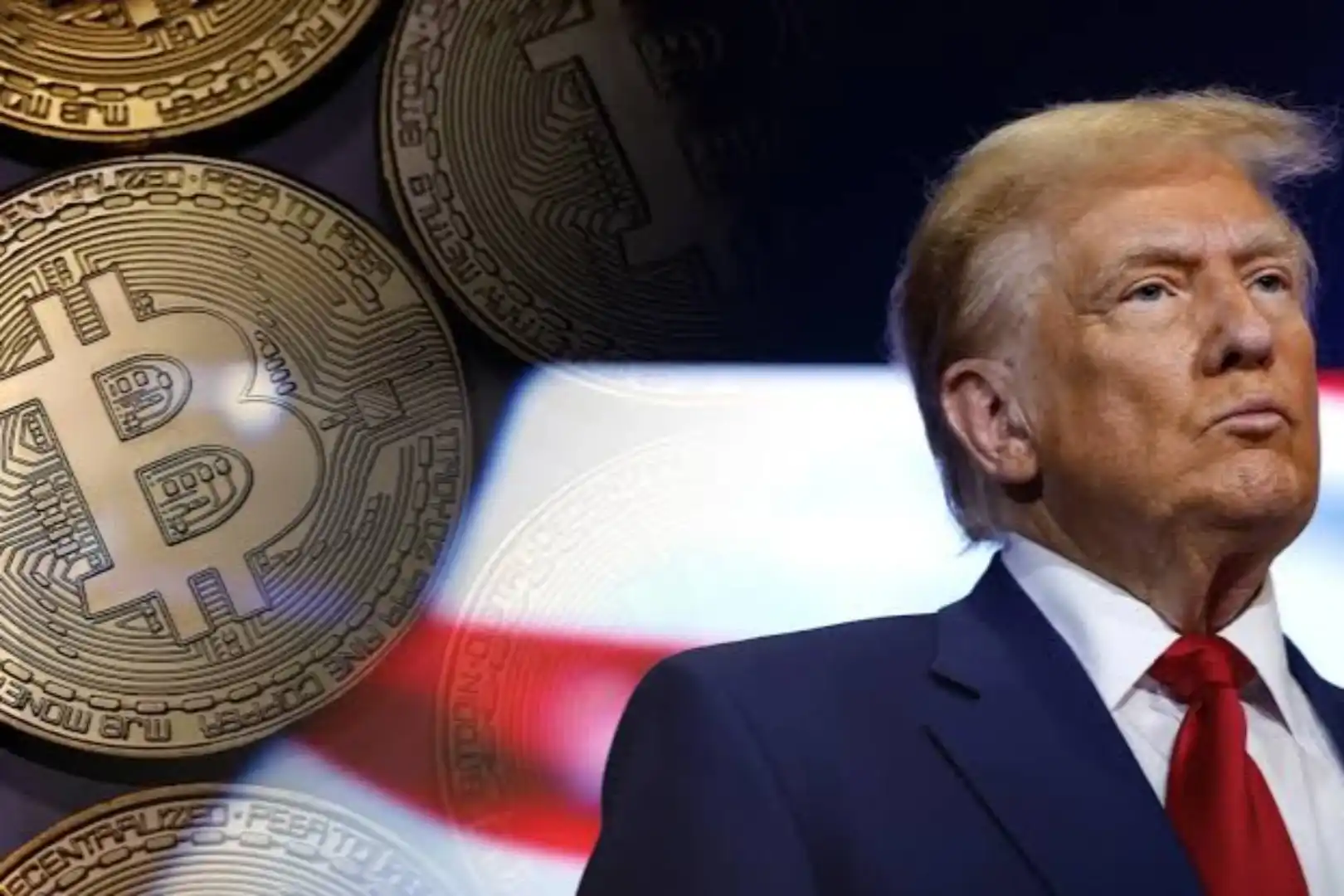
比推数据显示,比特币凌晨从 54,700 美元附近的低点反弹,多头一路上攻至 59,000 美元以上,尾盘陆续突破 60,000 美元和62,000 美元的支撑位,截至发稿时,BTC 交易价格为 62,414 美元,24 小时涨幅接近13%。

截屏2024-08-08 下午4.07.45.png

山寨币市场全面上涨,市值排名前 200 位的代币中仅有两种代币出现亏损。

Mog Coin (MOG) 领涨,上涨 27.4%, Sui (SUI) 上涨 23.6%,Ponke (PONKE) 上涨 20.4%。Aave (AAVE) 价格下跌了 2.1%,MANTRA (OM) 下跌了 0.9%。

目前加密货币整体市值为2.09万亿美元,比特币的市场占有率为56.4%。

Secure Digital Markets 分析师表示:“比特币开始恢复势头,正在经历一些波动。我们终于看到了突破关键阻力位 58,000 美元的决定性突破,价格现在瞄准下一个目标 60,250 美元和 63,000 美元。融资利率已全面稳定,而且由于涨势主要由现货驱动,迹象看涨。”

多个利好消息重振市场情绪

周四,美国法官批准了一项同意令,要求 FTX 及其姊妹交易公司 Alameda Research 向债权人支付 127 亿美元,结束了这场持续 20 个月的诉讼。许多人预测,随着前FTX用户将资金重新投资于数字资产,部分资金将回流到加密货币市场,市场流动性和深度将大大提升。

与此同时,俄罗斯总统普京签署了一项法案,使该国的加密货币挖矿合法化。加密货币分析公司 CryptoQuant 的首席执行官 Ki Young Ju表示:“俄罗斯似乎正在采取行动跟上美国的步伐。国家层面的比特币 FOMO(害怕错过)正在升温,他们的加入将提高哈希率,加强网络基础,并使矿工多样化。”

Ripple 与美国证券交易委员会 (SEC) 之间多年的法律纠纷也迎来阶段性结果。联邦法官对 Ripple 处以 1.25 亿美元罚款,裁定其通过交易所进行的零售销售没有违反任何法律。该消息传出后,XRP 一度从 0.50 美元飙升至 0.64 美元(涨幅28%),交易量达到 42 亿美元(周二为 12 亿美元),未平仓合约跃升 2 亿美元。

短期内谨慎乐观

尽管有这些催化剂的存在,摩根大通仍然对加密货币市场的未来发展持谨慎态度,分析师认为这些催化剂可能已经反应在价格中。该银行表示,因为比特币价格相对于其生产成本和黄金而言仍然过高,比特币挖矿的平均生产成本约为 49,000 美元,任何低于该水平的价格走势都会给矿工带来压力,从而进一步打压 BTC 价格。

市场分析师Roman表示,比特币的复苏目前进展顺利,但他“仍预计比特币将重新测试 60,000 美元,然后跌至低点,之后我们才会尝试实现潜在的逆转。”

Image

Roman提供的图表显示,比特币价格先会攀升至 60,000 美元,然后逐步下跌至 54,000 美元的支撑位:“价格走势也显示看跌(成交量下跌 + 价格上涨),因此我预计一旦触及阻力位,价格就会下跌”。


截屏2024-08-08 下午3.58.47.png

著名交易员Peter Brandt 于8月8日发推文表示,他认为比特币在下次上涨之前跌破 40,000 美元的可能性为 50%。

作者:比推BitpushNews Mary Liu


了解更多资讯欢迎加入:

Twitter:https://twitter.com/BitpushNewsCN

比推 TG 交流群:https://t.me/BitPushCommunity

比推 TG 订阅: https://t.me/bitpush

比推 Btok 订阅: https://btok360.com/bitpush

说明: 比推所有文章只代表作者观点,不构成投资建议

Trending Cryptos

Related Reads

The $6.4 Billion CRO Accumulation Plan of Trump Media Group Falls Apart

A $6.4 billion plan to create a publicly-listed CRO treasury company, announced a year ago by Trump Media & Technology Group (DJT), Crypto.com, and SPAC Yorkville, has been terminated. The ambitious deal, which aimed to accumulate approximately 6.3 billion CRO tokens (nearly 20% of supply at the time), never progressed beyond a framework agreement. Related plans for a prediction market integrated into Truth Social and ETF custody services by Crypto.com were also shelved, scaled back to a simple marketing partnership. The collaboration followed significant political alignment, with Crypto.com donating to Trump's inauguration and a pro-Trump super PAC, and its CEO meeting with Trump. The SEC also closed an investigation into the exchange shortly before the deal was announced, raising conflict-of-interest concerns. Officially, the termination was attributed to an unfavorable market environment. CRO's price has fallen roughly 70% since the announcement, and the broader market for publicly-traded digital asset treasuries has cooled significantly, with Bitcoin nearly halving from its late-2025 peak. The only completed transaction from the 2025 agreements remains intact: Trump Media's ~$105 million CRO purchase and Crypto.com's $50 million purchase of DJT stock. The termination aligns with DJT's strategic pivot away from crypto; the company is now pursuing a multi-billion dollar all-stock merger with nuclear fusion firm TAE Technologies, shifting its focus to clean energy.

marsbit15m ago

The $6.4 Billion CRO Accumulation Plan of Trump Media Group Falls Apart

marsbit15m ago

Tiger Research: The $43 Million Gray Area of Asian Prediction Markets

Tiger Research: Asia's $43 Million Grey Zone in Prediction Markets Western jurisdictions have created regulatory pathways for prediction markets through derivatives law (like the U.S. CFTC framework) or flexible gambling licenses (like the UK's "betting intermediary" category). In contrast, Asia lacks a comparable regulatory architecture. The absence of a general gambling license framework adaptable to private operators, coupled with closed financial product definitions (e.g., positive lists of assets in Korea and Japan), leaves prediction markets in a regulatory grey area. This lack of a clear classification—whether as gambling, financial derivatives, or a novel third category—has not stopped market activity. Significant liquidity, evidenced by over $52 million tied to a single South Korean election, flows to offshore platforms. However, this results in forgone tax revenue (estimated at $4-43 million annually per major Asian market), no consumer protection, and no oversight for market integrity. The core issue is not cultural opposition to gambling, which exists legally in many Asian markets, but a missing institutional design. Without a deliberate regulatory pathway, authorities are left with suboptimal options: expanding criminal sanctions or blocking access, which fail to address the underlying economic activity or achieve key policy goals. Establishing a regulatory foundation requires initiating a formal public discourse to first define prediction markets' legal status and societal value, a foundational step that has yet to occur in most Asian jurisdictions.

marsbit25m ago

Tiger Research: The $43 Million Gray Area of Asian Prediction Markets

marsbit25m ago

How Singapore's Retail Giant Masters the Gold Trade: Selling Thousands of Pounds Monthly Without Betting on Price, Gold Leasing Inspires RWA Income Design on Chain

A Singapore retail giant, Mustafa Centre, sells around 1,100 pounds of gold jewelry monthly, holding nearly a ton of inventory valued over $100 million, yet avoids gold price speculation. They achieve this by maintaining a constant inventory—buying back the exact amount of gold sold each day, earning only from sales margins, not price movements. This practice is enabled by the century-old gold leasing market. Retailers borrow physical gold to meet inventory needs without tying up capital or bearing price risk, paying a lease rate. Lenders earn yield on otherwise idle gold. This real-economy demand, driven by operational needs rather than speculation, provides a stable income stream. The article highlights how this traditional leasing model inspires on-chain Real World Asset (RWA) protocols like thUSD and thGOLD. These protocols channel gold lease yields—generated from borrowers like Mustafa—to token holders. The key challenge has been access, not yield availability. Platforms like Libeara, with institutional backing (e.g., SC Ventures), facilitate this by tokenizing funds (e.g., the MG 999 Gold Fund) that lend to vetted commercial borrowers, making this off-chain yield accessible on-chain. Thus, gold leasing demonstrates a proven, non-speculative revenue source for crypto protocols seeking sustainable "real yield," connecting physical trade finance to decentralized finance.

marsbit35m ago

How Singapore's Retail Giant Masters the Gold Trade: Selling Thousands of Pounds Monthly Without Betting on Price, Gold Leasing Inspires RWA Income Design on Chain

marsbit35m ago

Trading

Spot

Hot Articles

What is $BITCOIN

DIGITAL GOLD ($BITCOIN): A Comprehensive Analysis Introduction to DIGITAL GOLD ($BITCOIN) DIGITAL GOLD ($BITCOIN) is a blockchain-based project operating on the Solana network, which aims to combine the characteristics of traditional precious metals with the innovation of decentralized technologies. While it shares a name with Bitcoin, often referred to as “digital gold” due to its perception as a store of value, DIGITAL GOLD is a separate token designed to create a unique ecosystem within the Web3 landscape. Its goal is to position itself as a viable alternative digital asset, although specifics regarding its applications and functionalities are still developing. What is DIGITAL GOLD ($BITCOIN)? DIGITAL GOLD ($BITCOIN) is a cryptocurrency token explicitly designed for use on the Solana blockchain. In contrast to Bitcoin, which provides a widely recognized value storage role, this token appears to focus on broader applications and characteristics. Notable aspects include: Blockchain Infrastructure: The token is built on the Solana blockchain, known for its capacity to handle high-speed and low-cost transactions. Supply Dynamics: DIGITAL GOLD has a maximum supply capped at 100 quadrillion tokens (100P $BITCOIN), although details regarding its circulating supply are currently undisclosed. Utility: While precise functionalities are not explicitly outlined, there are indications that the token could be utilized for various applications, potentially involving decentralized applications (dApps) or asset tokenization strategies. Who is the Creator of DIGITAL GOLD ($BITCOIN)? At present, the identity of the creators and development team behind DIGITAL GOLD ($BITCOIN) remains unknown. This situation is typical among many innovative projects within the blockchain space, particularly those aligning with decentralized finance and meme coin phenomena. While such anonymity may foster a community-driven culture, it intensifies concerns about governance and accountability. Who are the Investors of DIGITAL GOLD ($BITCOIN)? The available information indicates that DIGITAL GOLD ($BITCOIN) does not have any known institutional backers or prominent venture capital investments. The project seems to operate on a peer-to-peer model focused on community support and adoption rather than traditional funding routes. Its activity and liquidity are primarily situated on decentralized exchanges (DEXs), such as PumpSwap, rather than established centralized trading platforms, further highlighting its grassroots approach. How DIGITAL GOLD ($BITCOIN) Works The operational mechanics of DIGITAL GOLD ($BITCOIN) can be elaborated on based on its blockchain design and network attributes: Consensus Mechanism: By leveraging Solana’s unique proof-of-history (PoH) combined with a proof-of-stake (PoS) model, the project ensures efficient transaction validation contributing to the network's high performance. Tokenomics: While specific deflationary mechanisms have not been extensively detailed, the vast maximum token supply implies that it may cater to microtransactions or niche use cases that are still to be defined. Interoperability: There exists the potential for integration with Solana’s broader ecosystem, including various decentralized finance (DeFi) platforms. However, the details regarding specific integrations remain unspecified. Timeline of Key Events Here is a timeline that highlights significant milestones concerning DIGITAL GOLD ($BITCOIN): 2023: The initial deployment of the token occurs on the Solana blockchain, marked by its contract address. 2024: DIGITAL GOLD gains visibility as it becomes available for trading on decentralized exchanges like PumpSwap, allowing users to trade it against SOL. 2025: The project witnesses sporadic trading activity and potential interest in community-led engagements, although no noteworthy partnerships or technical advancements have been documented as of yet. Critical Analysis Strengths Scalability: The underlying Solana infrastructure supports high transaction volumes, which could enhance the utility of $BITCOIN in various transaction scenarios. Accessibility: The potential low trading price per token could attract retail investors, facilitating wider participation due to fractional ownership opportunities. Risks Lack of Transparency: The absence of publicly known backers, developers, or an audit process may yield skepticism regarding the project's sustainability and trustworthiness. Market Volatility: The trading activity is heavily reliant on speculative behavior, which can result in significant price volatility and uncertainty for investors. Conclusion DIGITAL GOLD ($BITCOIN) emerges as an intriguing yet ambiguous project within the rapidly evolving Solana ecosystem. While it attempts to leverage the “digital gold” narrative, its departure from Bitcoin's established role as a store of value underscores the need for a clearer differentiation of its intended utility and governance structure. Future acceptance and adoption will likely depend on addressing the current opacity and defining its operational and economic strategies more explicitly. Note: This report encompasses synthesised information available as of October 2023, and developments may have transpired beyond the research period.

1.7k Total ViewsPublished 2025.05.13Updated 2025.05.13

What is $BITCOIN

Discussions

Welcome to the HTX Community. Here, you can stay informed about the latest platform developments and gain access to professional market insights. Users' opinions on the price of BTC (BTC) are presented below.

活动图片