随着加密货币情绪的复苏,DogWifHat价格飙升,新的P2E Meme Coin PlayDoge也上涨

币界网Published on 2024-08-07Last updated on 2024-08-07

币界网报道:

Meme币又重新走上正轨,市场正在升温。

DogWifHat(WIF)一直是表现最好的公司之一,其价格在过去两天里飙升。

但WIF并不是唯一一个反弹的,因为新的P2E模因币PlayDoge(PLAY)也在预售接近600万美元时引起了巨大的轰动。

DogWifHat飙升,投资者对65%的反弹表示欢迎

DogWifHat重新投入运营。

在经历了一个艰难的周末后,WIF反弹,目前交易价格在1.76美元左右。

这比周一的低点上涨了65%,基本上抹去了周末的损失,并使其恢复到上周五的水平。

当然,WIF仍远低于7月22日以来的当地高点,但最近的飙升让每个人都在谈论。

图表看起来也相当乐观。

WIF正在突破其50期均线,这通常意味着中期趋势已经逆转。

然而,让投资者兴奋的不仅仅是价格走势。

交易量上升,在过去24小时内达到7.6亿美元。

这使得WIF在交易活动方面与狗狗币(DOGE)不相上下。

更妙的是,这一行动似乎已经蔓延到衍生品市场——自昨天以来,未平仓合约上涨了50%。

可以肯定地说,现在所有的目光都在关注WIF,看看它是否能保持这一势头。

加密货币市场反弹,比特币领涨

不仅仅是DogWifHat看涨,整个加密货币市场都在反弹。

比特币(BTC)正在引领潮流,本周早些时候摆脱了5万美元的可怕下跌,并回升至57500美元。

当比特币上涨时,其他市场往往也会跟随。

加密货币恐惧与贪婪指数,一个受欢迎的情绪追踪器,终于走出了“极度恐惧”的区域。

仅在最后一天就上升了12分。

投资者再次开始感到乐观,加密货币的总市值已回升至2万亿美元以上。

这股良好的氛围正在提振所有行业,尤其是模因币行业。

情绪风险再次出现,投资者再次愿意在这些高风险、高回报的资产上赌博。

这种对模因币的重新胃口正在全面推高价格,而DogWifHat正在利用这一优势。

PlayDoge预售在P2E游戏炒作上爆发并接近600万美元的里程碑

加密货币的激增不仅与已建立的项目有关,新的项目也在参与其中。

目前,PlayDoge(PLAY)是一个备受瞩目的项目。

这个P2E平台用加密游戏掩盖了90年代的怀旧情绪,其预售正在爆炸式增长,筹集了近600万美元。

PlayDoge背后的想法很聪明:还记得那些电子狗吗?

PlayDoge的团队带回了这个概念,但采用了模因扭曲和区块链技术。

玩家在复古的8位世界中饲养自己的虚拟“狗狗”宠物,玩迷你游戏,并继续冒险。

所有这些都为他们赢得了PLAY代币作为奖励。

投资者喜欢游戏和加密货币的组合,尤其是因为PlayDoge的团队拥有坚实的代币经济学设置。

他们在预售期间出售了总供应量的50%,目前PLAY代币的售价为每枚0.526美元。

如此低的价格让每个人都想知道,一旦PLAY进入交易所,它能涨到多高。

当然,这还处于早期阶段,但炒作是真实的。

PlayDoge的Telegram频道现在拥有13000多名会员,而且这个数字每天都在增长。

投资者似乎渴望尽早参与其中,尤其是考虑到所提供的高额回报。

因此,随着DogWifHat的上涨和市场的回暖,PlayDoge正试图利用这种牛市。

访问PlayDoge预售

免责声明:以上文章为赞助内容;它是由第三方写的。CryptoPotato不对本页面上的内容、广告、产品、质量、准确性或其他材料进行背书或承担责任。其中的任何内容都不应被解释为财务建议。强烈建议读者在参与任何提及的公司或项目之前,独立、仔细地核实信息,并进行自己的研究。投资加密货币存在资金损失的风险,建议读者在做出任何可能基于或可能不基于上述赞助内容的决定之前咨询专业人士。

建议读者阅读CryptoPotato的完整免责声明。

Trending Cryptos

Related Reads

Wall Street Morning Report: Philadelphia Semiconductor Index Falls Nearly 3%, Nvidia's 'Circular Financing' Concerns Trigger Tech Stock Correction, Optical Communication and Chip Stocks Plunge

Wall Street Morning Report: The Philadelphia Semiconductor Index fell nearly 3%, and concerns over Nvidia's "revolving financing" sparked a tech stock pullback, with optical communications and chip stocks declining sharply. U.S. stocks retreated from record highs on Monday amid geopolitical tensions and AI financing doubts. The Dow fell 0.11%, the Nasdaq 0.32%, and the S&P 500 was nearly flat. Hopes for reopening the Strait of Hormuz dimmed after Trump demanded war reparations from Iran, pushing Brent crude above $87 and WTI above $82. Spot gold broke above $4400/oz. Treasury yields rose, with the market pricing in a ~54% chance of a September Fed hike. The semiconductor and AI infrastructure sectors were hit hard. The Philly Semiconductor Index dropped nearly 3%, with the semiconductor ETF down 2.28%. Optical communication was the worst-performing AI sub-sector, with Coherent plunging over 14%. The sell-off centered on Nvidia, which fell 2.86% on reports it is collaborating with major financial institutions to mobilize over $500 billion in third-party capital for AI infrastructure. Market concerns focused on whether this creates a circular financing loop and if future AI facilities can generate sufficient cash flow. Other notable moves: Intel dropped over 4% on a new share offering. Microsoft rose 1.21% on plans for its next-gen Maia 300 chip. The software sector outperformed, with Palantir up 1.85%. Energy stocks rallied nearly 4.7% on geopolitical risks. Key upcoming events include the RBA rate decision on Aug 11 and earnings from Lumentum, CoreWeave, and Super Micro Computer after the close on Aug 12, which will test the real demand for AI infrastructure.

marsbit42m ago

Wall Street Morning Report: Philadelphia Semiconductor Index Falls Nearly 3%, Nvidia's 'Circular Financing' Concerns Trigger Tech Stock Correction, Optical Communication and Chip Stocks Plunge

marsbit42m ago

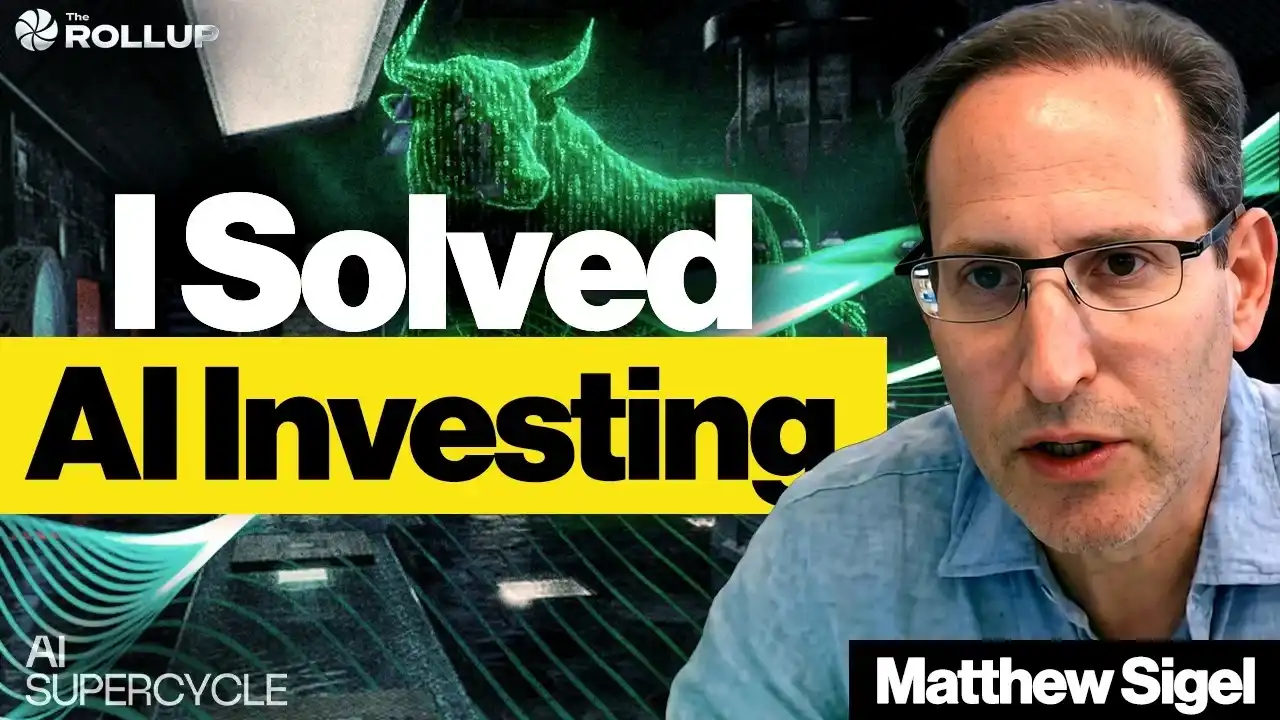
Podcast Notes | VanEck Digital Asset Research Head: Current AI Infrastructure Rally Not a Bubble; Crypto Market Quiet Due to Institutional Disappointment in L1s

In this podcast, VanEck's Head of Digital Asset Research Matthew Sigel discusses the current market dynamics. He argues the ongoing AI infrastructure boom is not a bubble, contrasting it with the 19th-century railroad mania. Unlike railroads funded by speculative land grants and government bonds, today's AI data centers are backed by long-term private contracts and significant customer prepayments, making the investment cycle more sustainable. Sigel notes a recent market shift: companies with high capital expenditures (capex) were rewarded in early 2024 but are now being punished. Cryptocurrencies, categorized as software assets, have suffered alongside the broader software sector. His NODE ETF has outperformed Bitcoin by nearly 100 percentage points over 15 months, largely by betting on Bitcoin miners transitioning into AI data centers. He highlights the value of miners' key assets—power and land—and their new ability to fund growth through debt instead of diluting shareholders. Regarding the crypto market's weakness, Sigel points to institutional disappointment with major Layer-1 (L1) blockchains like Ethereum and Solana. Post-election rallies lacked breakout applications, and regulated entities are increasingly building their own private, permissioned chains (e.g., by Circle, Stripe, Wells Fargo), diluting the "winner-takes-all" potential of public L1s. He believes a regulatory catalyst like the CLARITY Act, which would enforce disclosure standards, could trigger a significant relief rally for some tokens, but remains cautious until then. He also views proposals by ETH, Solana, and NEAR to reduce token inflation as a positive, necessary adjustment for the maturing sector.

marsbit47m ago

Podcast Notes | VanEck Digital Asset Research Head: Current AI Infrastructure Rally Not a Bubble; Crypto Market Quiet Due to Institutional Disappointment in L1s

marsbit47m ago

Shenzhen Competing for 'Tsinghua Faction' Talent

Shenzhen is actively attracting Tsinghua University-affiliated technology ventures, as highlighted during the "X-Day" Xili Lake Roadshow held in Nanshan. The event featured six startup projects from Tsinghua alumni, spanning semiconductors, AI, materials, and healthcare. The showcased companies include: Zhichen Semiconductor, developing edge AI chips; Guangsu Evolution, creating AI-powered home security systems; Qingli Technology, commercializing "self-superlubricating" technology; Shu Yu Technology, offering an AI Agent for analog chip design; Heyi Intelligent Control, providing AI-driven building management systems; and Shengshengyi, applying AI to assisted reproductive medicine. These ventures represent a trend of deep-tech innovation closely linked to academic research. The roadshow series, initiated a year ago, underscores a strategic shift in Shenzhen's investment landscape. Venture capital is moving earlier into the innovation cycle, seeking projects directly from laboratories and research papers. Tsinghua University serves as a key source for such early-stage, technology-intensive startups. Over the past two years, Tsinghua alumni projects have accounted for nearly 30% of the approximately 280 billion RMB in early-stage deep-tech funding in Shenzhen. The "X-Day" platform has facilitated significant growth. To date, its 19 roadshows have connected companies with investors thousands of times, leading to over 3.3 billion RMB in equity financing for 58 firms. Past participants like Kuaiwei Intelligent (recently valued over 10 billion RMB after a Series B round) and Lingcifang (securing four funding rounds in 18 months) exemplify the successful trajectory from this ecosystem. The activity underscores Shenzhen's, particularly Nanshan District's, role in bridging academic research from institutions like Tsinghua with industrial application and venture capital.

marsbit47m ago

Shenzhen Competing for 'Tsinghua Faction' Talent

marsbit47m ago

Trading

Spot

Hot Articles

Discussions

Welcome to the HTX Community. Here, you can stay informed about the latest platform developments and gain access to professional market insights. Users' opinions on the price of MEME (MEME) are presented below.

活动图片