29万人爆仓!比特币大跌15%,原因找到了

币界网Published on 2024-08-06Last updated on 2024-08-06

币界网报道:

全球资本市场大幅下跌,比特币也未能幸免。

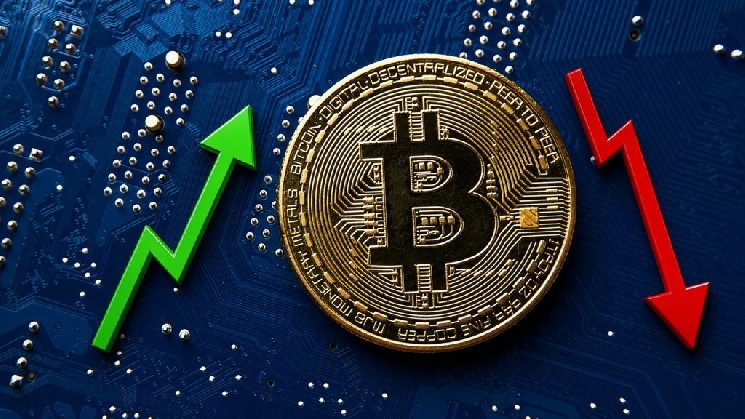
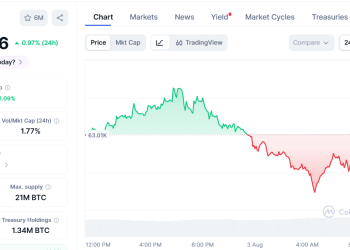
继8月4日跌破6万美元后,比特币在8月5日8时左右再度跳水,跌破5.3万美元;14时左右再度下探,一度跌至4.9万美元。截至18时50分,比特币报5.12万美元/枚,过去24小时跌幅达15.74%。


“地区局势紧张升级加上美国非农就业数据意外低于预期,带动了衰退恐慌在全球扩散蔓延,导致全球资本市场迎来大幅下跌,加密资产市场也不能幸免。”资深行业专家分析称,机构抛售以太坊(ETH)带来的市场情绪也是比特币下跌的原因之一。

8月5日14时左右,比特币再度闪崩,一度跌穿5万美元关口。截至18时50分,比特币报5.12万美元/枚,过去24小时下跌15.74%。

受价格剧烈波动影响,coinglass网站数据显示,截至2024年8月5日18时50分,过去24小时爆仓人数达29.04万人,爆仓总金额为11.11亿美元。其中多单爆仓9.44亿美元,空单爆仓1.67亿美元,最大的单笔爆仓发生在Huobi-BTC-USD,价值2700.01万美元。


事实上,比特币价格跳水已成常态。7月8日早间,比特币一度跌至55000美元关口下方,最低触及54320.76美元,日内最大跌幅超6%。今年1月3日晚间,比特币价格也迅速走低,在失守45000美元关键点位后,接连跌破44000美元、43000美元、42000美元整数关口,一度跌破41000美元,最大跌幅超过10%。

记者梳理发现,仅去年一年比特币价格就多次跳水。2023年12月11日11时,比特币价格突然跳水,接连跌破44000美元和43000美元两道整数关口,短短15分钟内,一度下跌超2000美元,日内最低下探至40413美元。

2023年11月17日,比特币日内跌幅达5.0%,报35535美元;同年8月18日,比特币短线一度跌超3000美元,日内最大跌幅超13%,一度跌穿2.5万美元关口;去年6月5日,比特币短线下挫超1000美元,跌破26000美元关口,跌幅一度扩大至5%以上。

更早前的2022年6月18日下午,比特币一度跌破19000美元/枚,刷新2020年12月以来新低。截至当天晚上9点,比特币价格约为19171美元,24小时跌幅达7.41%,过去7天累计跌幅达33%。

受全球股市波及

比特币本轮价格下跌有何原因?

中国通信工业协会区块链专委会共同主席于佳宁对记者分析指出,全球宏观经济环境的变化是一个关键因素,美国近日公布的非农就业数据意外低于预期,触发“萨姆规则”引发市场对美国经济前景的广泛担忧,也同时带动了衰退恐慌在全球扩散蔓延,全球资本市场迎来大幅下跌,加密资产市场也不能幸免。

“除此之外,机构抛售ETH(以太坊)也带动市场情绪,触发大量自动卖出订单,加剧比特币价格下跌。杠杆交易增加也放大了价格的波动,当市场开始下跌时,杠杆头寸的强制平仓进一步加速了下跌的速度和幅度。”于佳宁进一步表示。

欧科云链研究院首席研究员毕良寰告诉记者,比特币价值更多由市场供需和投资信任决定,随着机构投资者的参与增加和新金融产品的出现,比特币价格的波动性可能会增加。本轮下跌主要是由于金融市场波及、风险资产下跌,加之整个加密货币市场市值较小,因此波动也会更大。

中国计算机学会区块链专委会执行委员高承实对记者表示,比特币此次下跌是全球资本市场整体价格下跌的一部分。美国非农就业数据不及预期是此次全球资本市场下跌最直接的导火索,各投资机构对以人工智能为代表的新一轮产业革命投资泡沫化的担忧也是此次全球资本市场下跌的重要原因。此外,巴菲特大幅砍仓苹果、全球范围内政治和军事冲突的进一步加剧,以及对未来美国总统大选结果的担忧,也对全球资本市场下行起到推波助澜的作用。

北京市社会科学院副研究员王鹏在接受记者采访时表示,这轮比特币价格下调主要有几方面因素促使:一是美国非农就业数据疲软以及主要科技股增长放缓,增加了市场对全球经济衰退的担忧,这种悲观情绪蔓延至加密货币市场;二是地缘政治冲突,增加了市场的不确定性,投资者避险情绪上升,对比特币等风险资产构成压力;三是大型机构在过去几天内抛售了数亿美元的加密资产,这种抛售行为加剧了市场的恐慌情绪,对比特币价格造成冲击。

后市仍将大幅波动

此轮下调后,比特币价格是走高还是会继续下探?

王鹏认为,短期内,比特币价格可能继续受到市场情绪、宏观经济数据、政策变动以及地缘政治冲突等因素影响,呈现波动走势。从长期来看,比特币等加密货币作为新兴资产类别,其发展前景取决于技术进步、市场接受度、监管政策以及全球经济环境等因素,随着区块链技术的不断成熟和应用场景的拓展,比特币等加密货币有望在未来发挥更大作用。

对于比特币未来走势,高承实分析指出,从宏观层面来看,还是要看全球整体货币金融市场走势。在微观层面,随着比特币二层网络的兴起,比特币的定位已经从去中心化的数字黄金逐渐扩展到去中心化应用的底层基础设施。因此,这也意味着比特币的叙事逻辑将发生重大甚至根本性的变化。这一变化既会强化比特币自身价格,也会对其他加密货币带来相当程度的冲击。

于佳宁表示,综合考虑近期的宏观经济环境及其他因素,后续比特币的走势可能会继续呈现高波动性特征。短期内,比特币可能会在多个因素的共同作用下维持宽幅上下震荡的走势。中长期来看,比特币的走势仍将依赖于自身发展的因素,包括技术创新、市场需求和监管环境。技术创新方面,比特币及其底层技术区块链的不断发展将继续推动其应用和价值增长。

于佳宁认为,监管环境也是决定这一市场中长期走势的重要因素。全球各国对数字资产的监管政策仍在不断演变,积极的监管政策可能促进数字资产的合法化和广泛应用,为更多的机构投资者进入市场提供便利。比特币作为“数字黄金”的地位将在市场动荡时得到进一步巩固,但其价格仍受市场情绪和高杠杆投机行为的影响,这使得比特币的价格波动性依然较高。因此投资者在进行比特币投资时,需要保持谨慎,做好充分的市场调研和风险管理。

王鹏建议投资者,关注技术进展、市场需求、监管政策等比特币的基本面因素,以更全面地评估其投资价值。比特币等加密货币具有高波动性、高风险性等特点,投资者应充分了解其特性和风险,根据自身风险承受能力和投资目标进行理性投资,避免过度集中投资。

本文源自国际金融报

Related Reads

Podcast Notes: Hyperliquid Has Become the Top Interest Point for Traditional Hedge Funds

Empire Podcast hosts Jason Yanowitz and Santiago Santos discuss the surging institutional interest in Hyperliquid, a decentralized perpetual exchange, marking the highest level of engagement from traditional hedge fund managers since Paul Tudor Jones endorsed Bitcoin in 2020. The primary driver is the demand for weekend trading of commodities like oil, especially during geopolitical tensions such as the Iran conflict, as Hyperliquid provides the only active price discovery venue when traditional markets are closed. Trade XYZ, a front-end on Hyperliquid, has seen significant growth, with weekend oil price predictions having a median error of only 50 basis points. Santos predicts commodity trading volume on Hyperliquid will surpass Bitcoin within the year and that its market cap could rise from $25 billion to $100 billion. Other key points include Kraken raising $200 million at a reduced valuation of $13.3 billion, and the SEC clarifying that self-custodied DeFi frontends like MetaMask are not subject to broker-dealer rules, resolving a major regulatory uncertainty. The hosts also note the strong correlation between crypto and macro markets, with the S&P 500 posting one of its best 10-day rallies since 1950. They highlight MicroStrategy's continued Bitcoin acquisitions and the potential of real-world asset (RWA) tokenization as a key trend. The discussion concludes with skepticism towards many L2 projects, predicting a wave of protocols truly going to zero as capital concentrates in proven assets like Bitcoin and Hyperliquid.

marsbit2h ago

Podcast Notes: Hyperliquid Has Become the Top Interest Point for Traditional Hedge Funds

marsbit2h ago

a16z: The Next Frontier of AI, The Triple Flywheel of Robotics, Autonomous Science, and Brain-Computer Interfaces

a16z presents a comprehensive investment thesis for the next frontier of AI: Physical AI, centered on a synergistic flywheel of robotics, autonomous science, and novel human-computer interfaces (HCIs) like brain-computers. While the current AI paradigm scales on language and code, the most disruptive future capabilities will emerge from three adjacent fields leveraging five core technical primitives: 1) learned representations of physical dynamics (via models like VLA, WAM, and native embodied models), 2) embodied action architectures (e.g., dual-system designs, diffusion-based motion generation, and RL fine-tuning like RECAP), 3) simulation and synthetic data as scaling infrastructure, 4) expanded sensory channels (touch, neural signals, silent speech, olfaction), and 5) closed-loop agent systems for long-horizon tasks. These primitives converge to power three key domains: * **Robotics:** The literal embodiment of AI, requiring all primitives for real-world physical interaction and manipulation. * **Autonomous Science:** Self-driving labs that conduct hypothesis-experiment-analysis loops, generating structured, causally-grounded data to improve physical AI models. * **Novel HCIs:** Devices (AR glasses, EMG wearables, BCIs) that expand human-AI bandwidth and act as massive data-collection networks for real-world human experience. These domains form a mutually reinforcing flywheel: Robotics enable autonomous labs, which in turn generate valuable data for robotics and materials science. New interfaces provide rich human-physical interaction data to train better robots and scientists. Together, they represent a new scaling axis for AI, moving beyond the digital realm to interact with and learn from physical reality, promising significant emergent capabilities and value.

marsbit3h ago

a16z: The Next Frontier of AI, The Triple Flywheel of Robotics, Autonomous Science, and Brain-Computer Interfaces

marsbit3h ago

Conversation with Bitwise Advisor: From K-Shaped Economy to AI Taking Jobs, How Can Bitcoin Save the Younger Generation?

Jeff Park, a macro strategist and advisor at Bitwise, argues that the traditional financial system is broken, particularly for young generations. He describes a "K-shaped economy" where asset inflation enriches the wealthy while leaving others behind, with unaffordable housing as a key symptom. Park explains that real estate is often a depreciating asset due to maintenance costs and taxes, yet it remains unattainable for many young people due to distorted demand from global capital flows. He proposes Bitcoin as a superior store of value—scarce, portable, and free from maintenance costs or excessive taxation. By diverting capital away from real estate, Bitcoin could help lower housing prices and increase accessibility. Park also discusses the decline of traditional "smart investing" (e.g., value stocks) and the rise of "ideological investing" in non-correlated assets like crypto, luxury goods, and collectibles. On AI, Park warns it could trigger extreme social inequality by eliminating jobs while boosting corporate profits. He believes this will push younger generations toward Bitcoin, not only as a hedge but also as a symbol of decentralization and data sovereignty—offering an alternative to centralized AI systems that use personal data without fair compensation. He advises a diversified portfolio with Bitcoin as a core holding to hedge against currency devaluation and systemic risk.

marsbit4h ago

Conversation with Bitwise Advisor: From K-Shaped Economy to AI Taking Jobs, How Can Bitcoin Save the Younger Generation?

marsbit4h ago

Trading

Spot
Futures

Hot Articles

What is $BITCOIN

DIGITAL GOLD ($BITCOIN): A Comprehensive Analysis Introduction to DIGITAL GOLD ($BITCOIN) DIGITAL GOLD ($BITCOIN) is a blockchain-based project operating on the Solana network, which aims to combine the characteristics of traditional precious metals with the innovation of decentralized technologies. While it shares a name with Bitcoin, often referred to as “digital gold” due to its perception as a store of value, DIGITAL GOLD is a separate token designed to create a unique ecosystem within the Web3 landscape. Its goal is to position itself as a viable alternative digital asset, although specifics regarding its applications and functionalities are still developing. What is DIGITAL GOLD ($BITCOIN)? DIGITAL GOLD ($BITCOIN) is a cryptocurrency token explicitly designed for use on the Solana blockchain. In contrast to Bitcoin, which provides a widely recognized value storage role, this token appears to focus on broader applications and characteristics. Notable aspects include: Blockchain Infrastructure: The token is built on the Solana blockchain, known for its capacity to handle high-speed and low-cost transactions. Supply Dynamics: DIGITAL GOLD has a maximum supply capped at 100 quadrillion tokens (100P $BITCOIN), although details regarding its circulating supply are currently undisclosed. Utility: While precise functionalities are not explicitly outlined, there are indications that the token could be utilized for various applications, potentially involving decentralized applications (dApps) or asset tokenization strategies. Who is the Creator of DIGITAL GOLD ($BITCOIN)? At present, the identity of the creators and development team behind DIGITAL GOLD ($BITCOIN) remains unknown. This situation is typical among many innovative projects within the blockchain space, particularly those aligning with decentralized finance and meme coin phenomena. While such anonymity may foster a community-driven culture, it intensifies concerns about governance and accountability. Who are the Investors of DIGITAL GOLD ($BITCOIN)? The available information indicates that DIGITAL GOLD ($BITCOIN) does not have any known institutional backers or prominent venture capital investments. The project seems to operate on a peer-to-peer model focused on community support and adoption rather than traditional funding routes. Its activity and liquidity are primarily situated on decentralized exchanges (DEXs), such as PumpSwap, rather than established centralized trading platforms, further highlighting its grassroots approach. How DIGITAL GOLD ($BITCOIN) Works The operational mechanics of DIGITAL GOLD ($BITCOIN) can be elaborated on based on its blockchain design and network attributes: Consensus Mechanism: By leveraging Solana’s unique proof-of-history (PoH) combined with a proof-of-stake (PoS) model, the project ensures efficient transaction validation contributing to the network's high performance. Tokenomics: While specific deflationary mechanisms have not been extensively detailed, the vast maximum token supply implies that it may cater to microtransactions or niche use cases that are still to be defined. Interoperability: There exists the potential for integration with Solana’s broader ecosystem, including various decentralized finance (DeFi) platforms. However, the details regarding specific integrations remain unspecified. Timeline of Key Events Here is a timeline that highlights significant milestones concerning DIGITAL GOLD ($BITCOIN): 2023: The initial deployment of the token occurs on the Solana blockchain, marked by its contract address. 2024: DIGITAL GOLD gains visibility as it becomes available for trading on decentralized exchanges like PumpSwap, allowing users to trade it against SOL. 2025: The project witnesses sporadic trading activity and potential interest in community-led engagements, although no noteworthy partnerships or technical advancements have been documented as of yet. Critical Analysis Strengths Scalability: The underlying Solana infrastructure supports high transaction volumes, which could enhance the utility of $BITCOIN in various transaction scenarios. Accessibility: The potential low trading price per token could attract retail investors, facilitating wider participation due to fractional ownership opportunities. Risks Lack of Transparency: The absence of publicly known backers, developers, or an audit process may yield skepticism regarding the project's sustainability and trustworthiness. Market Volatility: The trading activity is heavily reliant on speculative behavior, which can result in significant price volatility and uncertainty for investors. Conclusion DIGITAL GOLD ($BITCOIN) emerges as an intriguing yet ambiguous project within the rapidly evolving Solana ecosystem. While it attempts to leverage the “digital gold” narrative, its departure from Bitcoin's established role as a store of value underscores the need for a clearer differentiation of its intended utility and governance structure. Future acceptance and adoption will likely depend on addressing the current opacity and defining its operational and economic strategies more explicitly. Note: This report encompasses synthesised information available as of October 2023, and developments may have transpired beyond the research period.

363 Total ViewsPublished 2025.05.13Updated 2025.05.13

What is $BITCOIN

Discussions

Welcome to the HTX Community. Here, you can stay informed about the latest platform developments and gain access to professional market insights. Users' opinions on the price of BTC (BTC) are presented below.

活动图片