配置 100 万枚比特币的战略储备法案获美国国会支持

深潮Published on 2024-08-05Last updated on 2024-08-05

‍该过程对 Crypto 资产市场和美国经济政策可能产生重大影响。

来源:beincrypto

编译:区块链骑士

参议员 Cynthia Lummis 向美国国会提交了《BTC 战略储备法案》,这标志着一项立法过程的开始,该过程对 Crypto 资产市场和美国经济政策可能产生重大影响

8 月 3 日,参议员 Lummis 宣布参议院银行、住房和城市事务委员会收到了《2024 年 BTC 法案》(S.4912)。

国会网站显示,该法案在分配给委员会之前已经过两次宣读。目前该法案正处于提交阶段,这是成为法律的五个步骤中的第一步。在提交总统最终批准之前,该法案还必须通过参议院和众议院的投票。

该法案最初是在 BTC 2024 大会上提出的,旨在为美国建立一个 BTC 储备基金。

该法案建议收购 100 万枚 BTC,约占总供应量的 5%,资金来自美国财政部的盈余资金。Lummis 也强调了该法案在通胀和国债不断上升的背景下的重要性。

Lummis 表示:「对于我的子孙辈来说,我希望留下比现在更好的东西。战略 BTC 储备就是为了他们。」

值得注意的是,共和党候选人特朗普也表达了类似的意图,即如果当选,将建立美国 BTC 储备。他建议,BTC 这一旗舰资产可以用来解决飙升的国债问题。

与此同时,该法案也获得了 Crypto 资产社区的大力支持。

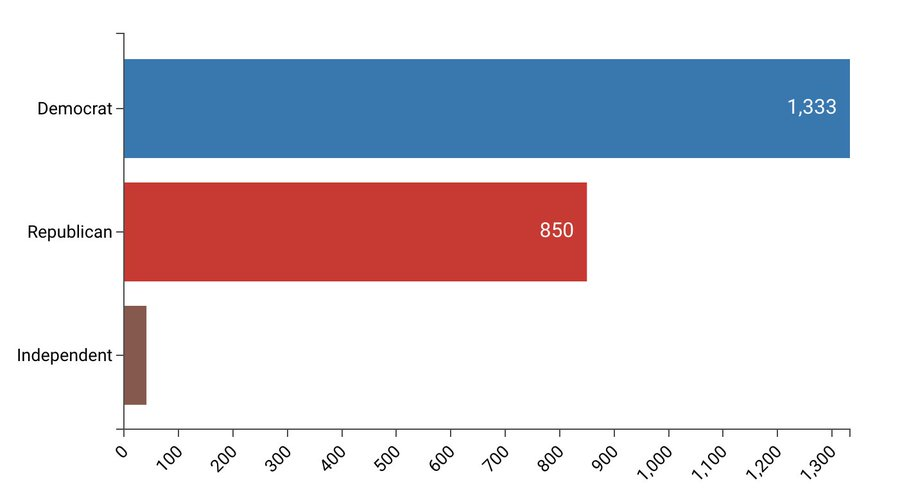
中本聪行动基金(Satoshi Action Fund)创始人 Dennis Porter 表示,两党成员向立法者发送了大约 2500 封信。其中 1333 封寄给了民主党参议员,850 封寄给了共和党参议员,41 封寄给了独立人士。

市场分析人士强调,两党的接触凸显了对 BTC 价值的极大兴趣,因为建立 BTC 战略储备可能会影响美国和全球 Crypto 资产市场

此外,此举将使 BTC 在美国获得官方认可,并可能促使其他国家采取类似措施。

Zaprite 产品负责人 Will Cole 补充道:「BTC 是唯一能在 20 年内跑赢国债的可信资产,没有其他选择。」

Trending Cryptos

Related Reads

From Corning to Ciena: The 10X Stock Opportunities in the AI Optical Communication Chain

From Copper to Light: The AI-Driven Optical Communication Supply Chain and Investment Opportunities The exponential data demands of AI are pushing data centers beyond the physical limits of copper cables, forcing a critical transition to optical communication. This shift from electrical to photonic signals over distances greater than ~3 feet solves heat, power, and bandwidth constraints. The real investment opportunity lies not just in headline chipmakers, but across the entire essential photonics supply chain. **Key Investment Layers & Companies:** * **Glass & Fiber:** **Corning** is a dominant, irreplaceable supplier of advanced fiber to all major cloud/AI players (Meta, Amazon, Google, MSFT, OpenAI, NVIDIA), with multi-billion-dollar, multi-year contracts locked in years ahead of delivery. Its profit growth (93%) far outpaces revenue growth (36%), showing pricing power. * **Interconnects:** **Amphenol**, a consolidating giant in high-speed connectors (both copper and optical), shows robust growth (>80% in AI data centers) and expanding margins post-acquisition. **Credo Technology** bridges old and new worlds, extending copper's life in racks while moving into optics. It has hyper-growth but carries high customer concentration risk. * **Systems:** **Ciena** is a leader in coherent optics, enabling massive data capacity upgrades on existing fiber. It has a massive, growing order backlog ($~7B) and strong ties with cloud providers. * **Upstream & Enablers:** **AXT** produces mission-critical indium phosphide wafers for lasers, creating a supply bottleneck, but faces significant geopolitical/export license risk from its China-based manufacturing. **VEO Solutions** is the essential "picks and shovels" play, providing test equipment needed by every component in the optical chain, regardless of the eventual winner. A new pure-play photonics ETF (**FOTO**) offers a consolidated investment vehicle for this theme, though it is new and small. The core thesis is clear: the move from copper to light is inevitable and accelerating, with wealth creation spreading across this critical, multi-layered supply chain.

marsbit6m ago

From Corning to Ciena: The 10X Stock Opportunities in the AI Optical Communication Chain

marsbit6m ago

A Chip Company Releases AIDC Energy Storage Certification Standards. Why NVIDIA? Computing Power Reshapes Power Supply Logic. Who's in the Lead and Who's Left Out?

NVIDIA has released a "Battery Energy Storage System Self-Certification Guide," setting strict technical standards for energy storage systems specifically for AI data centers (AIDC). The guide focuses solely on certifying the Power Conversion System (PCS), not the batteries, with 10 mandatory performance metrics and 12 validation tests requiring real-world and simulation comparisons. Key requirements include rapid dynamic response to AI workloads, high-frequency system telemetry, and detailed electromagnetic transient models. The move is driven by the extreme and fluctuating power demands of next-generation AI hardware. Modern AIDCs require energy storage systems to act as intelligent, controllable grid assets, not just passive backup, to manage instantaneous, massive power load shifts that traditional UPS systems cannot handle. This redefines the competitive landscape for energy storage providers, shifting focus from capacity and cost to advanced control capabilities and system integration. While the market potential is significant—with forecasts of hundreds of GWh in new demand by 2030—the certification creates a high barrier to entry. It requires proven PCS delivery volumes and credible plans for rapid capacity scaling, favoring established, well-resourced players. Early movers like Fluence (partnering with Siemens) and several Chinese companies have secured projects ahead of the standard, but new entrants must now navigate this rigorous, costly, and time-intensive certification process to compete in the AIDC energy storage market.

marsbit53m ago

A Chip Company Releases AIDC Energy Storage Certification Standards. Why NVIDIA? Computing Power Reshapes Power Supply Logic. Who's in the Lead and Who's Left Out?

marsbit53m ago

Trading

Spot
Futures

Hot Articles

What is $BITCOIN

DIGITAL GOLD ($BITCOIN): A Comprehensive Analysis Introduction to DIGITAL GOLD ($BITCOIN) DIGITAL GOLD ($BITCOIN) is a blockchain-based project operating on the Solana network, which aims to combine the characteristics of traditional precious metals with the innovation of decentralized technologies. While it shares a name with Bitcoin, often referred to as “digital gold” due to its perception as a store of value, DIGITAL GOLD is a separate token designed to create a unique ecosystem within the Web3 landscape. Its goal is to position itself as a viable alternative digital asset, although specifics regarding its applications and functionalities are still developing. What is DIGITAL GOLD ($BITCOIN)? DIGITAL GOLD ($BITCOIN) is a cryptocurrency token explicitly designed for use on the Solana blockchain. In contrast to Bitcoin, which provides a widely recognized value storage role, this token appears to focus on broader applications and characteristics. Notable aspects include: Blockchain Infrastructure: The token is built on the Solana blockchain, known for its capacity to handle high-speed and low-cost transactions. Supply Dynamics: DIGITAL GOLD has a maximum supply capped at 100 quadrillion tokens (100P $BITCOIN), although details regarding its circulating supply are currently undisclosed. Utility: While precise functionalities are not explicitly outlined, there are indications that the token could be utilized for various applications, potentially involving decentralized applications (dApps) or asset tokenization strategies. Who is the Creator of DIGITAL GOLD ($BITCOIN)? At present, the identity of the creators and development team behind DIGITAL GOLD ($BITCOIN) remains unknown. This situation is typical among many innovative projects within the blockchain space, particularly those aligning with decentralized finance and meme coin phenomena. While such anonymity may foster a community-driven culture, it intensifies concerns about governance and accountability. Who are the Investors of DIGITAL GOLD ($BITCOIN)? The available information indicates that DIGITAL GOLD ($BITCOIN) does not have any known institutional backers or prominent venture capital investments. The project seems to operate on a peer-to-peer model focused on community support and adoption rather than traditional funding routes. Its activity and liquidity are primarily situated on decentralized exchanges (DEXs), such as PumpSwap, rather than established centralized trading platforms, further highlighting its grassroots approach. How DIGITAL GOLD ($BITCOIN) Works The operational mechanics of DIGITAL GOLD ($BITCOIN) can be elaborated on based on its blockchain design and network attributes: Consensus Mechanism: By leveraging Solana’s unique proof-of-history (PoH) combined with a proof-of-stake (PoS) model, the project ensures efficient transaction validation contributing to the network's high performance. Tokenomics: While specific deflationary mechanisms have not been extensively detailed, the vast maximum token supply implies that it may cater to microtransactions or niche use cases that are still to be defined. Interoperability: There exists the potential for integration with Solana’s broader ecosystem, including various decentralized finance (DeFi) platforms. However, the details regarding specific integrations remain unspecified. Timeline of Key Events Here is a timeline that highlights significant milestones concerning DIGITAL GOLD ($BITCOIN): 2023: The initial deployment of the token occurs on the Solana blockchain, marked by its contract address. 2024: DIGITAL GOLD gains visibility as it becomes available for trading on decentralized exchanges like PumpSwap, allowing users to trade it against SOL. 2025: The project witnesses sporadic trading activity and potential interest in community-led engagements, although no noteworthy partnerships or technical advancements have been documented as of yet. Critical Analysis Strengths Scalability: The underlying Solana infrastructure supports high transaction volumes, which could enhance the utility of $BITCOIN in various transaction scenarios. Accessibility: The potential low trading price per token could attract retail investors, facilitating wider participation due to fractional ownership opportunities. Risks Lack of Transparency: The absence of publicly known backers, developers, or an audit process may yield skepticism regarding the project's sustainability and trustworthiness. Market Volatility: The trading activity is heavily reliant on speculative behavior, which can result in significant price volatility and uncertainty for investors. Conclusion DIGITAL GOLD ($BITCOIN) emerges as an intriguing yet ambiguous project within the rapidly evolving Solana ecosystem. While it attempts to leverage the “digital gold” narrative, its departure from Bitcoin's established role as a store of value underscores the need for a clearer differentiation of its intended utility and governance structure. Future acceptance and adoption will likely depend on addressing the current opacity and defining its operational and economic strategies more explicitly. Note: This report encompasses synthesised information available as of October 2023, and developments may have transpired beyond the research period.

431 Total ViewsPublished 2025.05.13Updated 2025.05.13
What is $BITCOIN

Discussions

Welcome to the HTX Community. Here, you can stay informed about the latest platform developments and gain access to professional market insights. Users' opinions on the price of BTC (BTC) are presented below.

活动图片