11张图总结七月加密市场:久违的反弹

币界网Published on 2024-08-04Last updated on 2024-08-04

币界网报道:

作者:The Block研究主管 Lars

刚刚过去的七月,随着美国现货以太坊ETF获得批准并顺利上市交易,加密货币市场绝大多数指标终于出现久违的反弹,本文将用11张图解读过去一个月的加密市场状况。

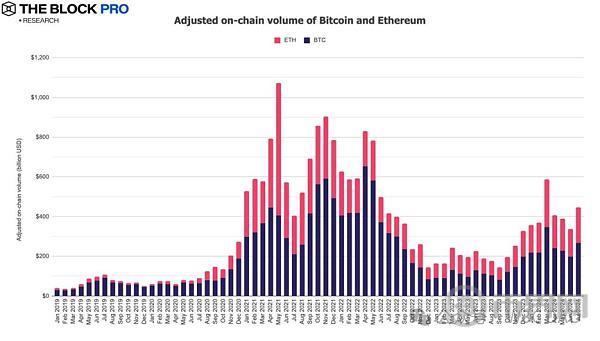
1、七月,比特币和以太坊调整后链上总交易额整体增长了31.8%,升至4450亿美元,其中比特币调整后链上交易额涨幅达到34.7%,以太坊涨幅为27.7%。
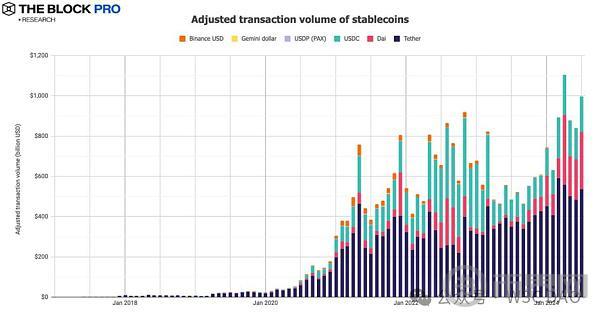
2、七月调整后的稳定币链上交易额增长18.8%,达到9974亿美元,稳定币发行供应量增长1.2%升至1443亿美元,其中USDT和USDC的市场份额分别为78.9%和17.1%。
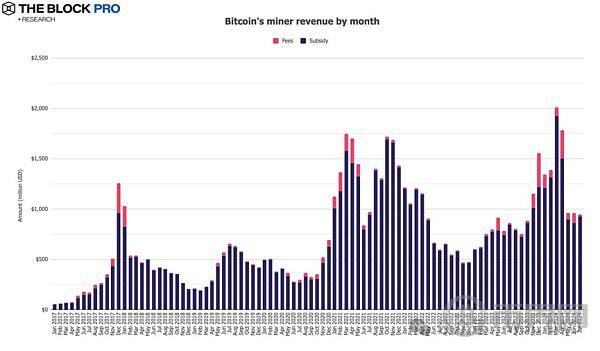
3、比特币矿工收入在七月份达到9.502亿美元,小幅下跌1.2%。此外,以太坊质押收入也下降了6.6%,跌到2.702亿美元。
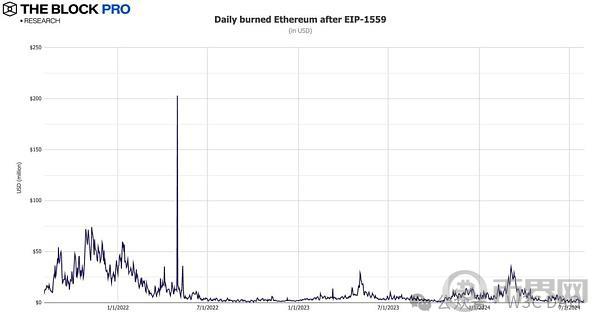
4、七月以太坊网络共销毁了17114枚ETH,价值相当于5640万美元。数据显示,自2021年8月上旬实施EIP-1559以来,以太坊总计销毁了约435万枚ETH,价值约合123亿美元。
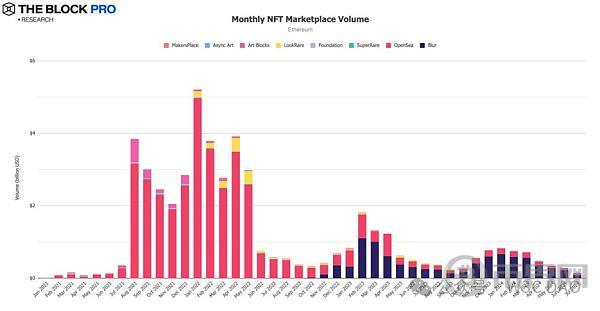
5、七月以太坊链上NFT市场交易额再次延续了较大幅度的下降,跌幅49.6%,进一步降至约1.403亿美元。
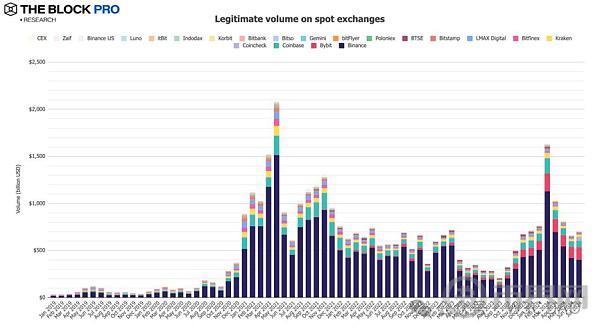
6、合规中心化交易所(CEX)的现货交易额在七月份出现反弹,增幅6.7%升至7027亿美元。
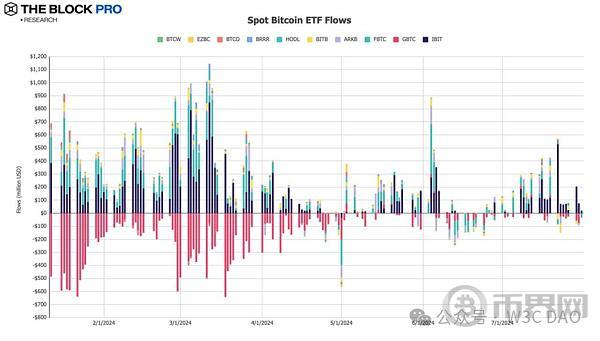
7、七月现货比特币ETF净流入量增长473%,达到31.5亿美元;
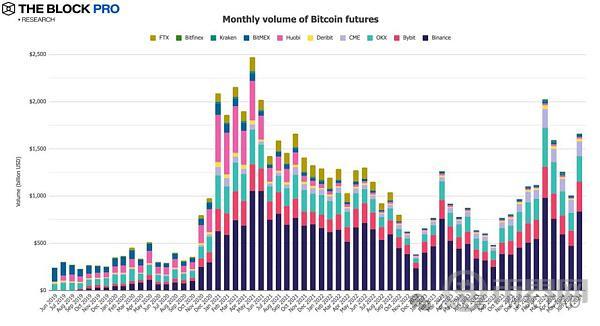
8、在加密期货方面,七月比特币期货未平仓量涨幅达到了15.6%;以太坊期货未平仓量下跌5.6%;在期货交易额方面,比特币期货七月交易额增加65%,升至1.66万亿美元,以太坊期货交易额增长了43.1%。
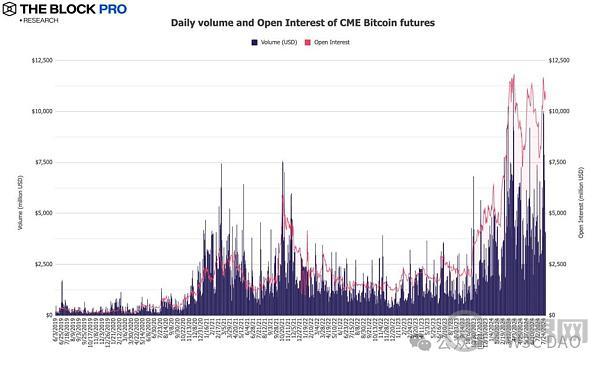
9、七月芝商所比特币期货未平仓量增长13.5%,反弹升至106亿美元,日均成交金额(daily avg volume)增加了12.3%,升至约50.5亿美元。
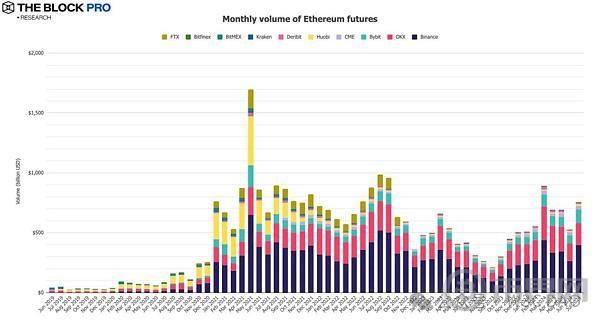
10、七月以太坊期货月均交易额大幅增长至7555亿美元,涨幅达到43.1%。
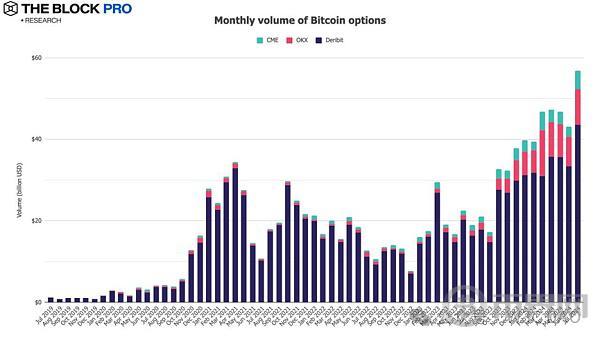
11、在加密货币期权方面,七月比特币期权未平仓量上涨35.9%,以太坊期权未平仓量同样出现上涨,涨幅为7.1%。

另外,在比特币和以太坊期权交易额方面,比特币月度期权交易额达到569亿美元,增长了31.9%;以太坊期权交易额下跌8.1%,减少至155亿美元。
Trending Cryptos

Related Reads

Bitwise Closes 8 ETFs and Cuts Staff by 14%, but Continues to Launch New Products

Bloomberg reported on August 12 that cryptocurrency asset management firm Bitwise has laid off approximately 14% of its staff, reducing headcount from around 180 to about 155 employees. CEO Hunter Horsley stated the adjusted team remains the largest in the company's eight-year history and expressed confidence in long-term growth, though current personnel and product configurations are tightening. Prior to the layoffs, Bitwise disclosed a significant drop in client assets from over $15 billion in early February to $11 billion by April 1st, a decrease of at least $4 billion. The company did not specify the contributions of price changes, fund flows, or changes in reporting scope to this decline. In a related product restructuring, Bitwise decided to liquidate eight ETFs between April and June. This included the Web3 ETF, a BTC/ETH/Treasuries rotation strategy ETF, and six options income ETFs tied to assets like Coinbase and Ethereum. These moves reduce the number of products requiring ongoing operational support. Despite these cuts, Bitwise continues to launch new products. Recent offerings include an Avalanche ETP with staking in Europe, the Hyperliquid ETF, and the takeover of Superstate's $267+ million Crypto Carry Fund, entering the tokenized fund management space. The company now manages 70 investment products for over 5,500 advisory teams and works with more than 20 banks and broker-dealers. The simultaneous staff reduction and product portfolio shift—away from thematic Web3 and single-asset options strategies towards direct crypto exposure, staking, and tokenized funds—indicates a strategic realignment. The operational burden on the smaller remaining team will depend heavily on the complexity of the revised product lineup. Bitwise has not disclosed the specific reasons for the layoffs, the affected departments, severance details, or any one-time costs associated with the job cuts.

marsbit31m ago

Bitwise Closes 8 ETFs and Cuts Staff by 14%, but Continues to Launch New Products

marsbit31m ago

CoreWeave: The Inflection Point Has Arrived. Has the 'Hard-Working Underdog' Finally Turned Profitable?

CoreWeave, an AI cloud unicorn, released its Q2 2026 earnings on August 12, with shares rising about 15% post-announcement. While overall performance did not significantly exceed expectations, key positive trends emerged. Revenue reached approximately $2.58 billion, up 112% year-over-year, though slightly below the high end of prior guidance. A major highlight was the acceleration in computing power deployment, with Active Power increasing by a record 500 Mw to 1,500 Mw, far surpassing market forecasts and signaling faster future revenue growth. Capital expenditures also hit a new high of $9.4 billion. Importantly, profitability showed signs of inflection. "True" gross margin (after deducting cost of revenue and Tech & Infrastructure expenses) rose to 7.3%, up 3 percentage points from the previous quarter. As revenue scales, depreciation and operating expenses are being diluted. Adjusted operating profit margin improved significantly to 5% from 1% last quarter. The company's guidance points to continued acceleration, with Q3 revenue growth expected at 158% and margins continuing to climb. Management raised full-year 2026 guidance, projecting Q4 revenue growth of around 194% and an adjusted operating margin of approximately 14.6%, suggesting a rapid path toward its 25%-30% long-term target. Recent developments, including a 25% price increase for its services and the launch of higher-margin Managed Inference offerings, support the improving profitability narrative. While long-term competitive challenges remain for new cloud providers, CoreWeave's near-term trajectory of accelerating growth and expanding margins presents a high-risk, high-reward opportunity, especially amid renewed market optimism for cloud stocks.

marsbit1h ago

CoreWeave: The Inflection Point Has Arrived. Has the 'Hard-Working Underdog' Finally Turned Profitable?

marsbit1h ago

Uncovering the Secret Reasoning Chains of Claude Opus for $720: A Leak via Haiku, with GPT and Gemini Also Affected

Researchers discovered a method to extract hidden reasoning traces, or "Chain of Thought" (CoT), from major proprietary large language models (LLMs) like Anthropic's Claude Opus 4.8, OpenAI's GPT-5.6 Sol, and Google's Gemini 3.1 Pro. The attack exploits a design flaw in how these models handle encrypted reasoning "blobs." These blobs, which contain a model's internal reasoning steps, are encrypted and sent to the client for storage between conversation turns to save server costs. The researchers found these blobs were encrypted with a global key, allowing them to be reused across different sessions, users, and, crucially, different models from the same company. By taking an encrypted reasoning blob generated by a powerful "flagship" model and feeding it to a smaller, less capable model from the same family (e.g., feeding Claude Opus's blob to Claude Haiku), the researchers could prompt the smaller model to divulge the hidden CoT. This bypassed the need to crack the encryption directly. The implications are significant: 1) Competitors could potentially distill high-value reasoning data at low cost (estimated at ~$720 for 10,000 traces). 2) Sensitive information like API keys, passwords, and personal emails, which models might process internally but not output, could be leaked. The team found such leaks in 4.9% of analyzed public agent logs. 3) Models might internally analyze dangerous queries (e.g., car theft methods) before refusing to answer, but this dangerous analysis could be extracted from the CoT. 4) Malicious instructions could potentially be hidden within a reasoning blob to influence a model's future behavior. While the vulnerability was responsibly disclosed and patched by the affected companies, the research highlights a fundamental tension between the convenience of portable reasoning states and security. The paper also notes preliminary tests found no clear evidence that open-source models like DeepSeek had been distilled from the extracted CoTs.

marsbit1h ago

Uncovering the Secret Reasoning Chains of Claude Opus for $720: A Leak via Haiku, with GPT and Gemini Also Affected

marsbit1h ago

1confirmation: Reverse Entrepreneurship, the Next Web3 Blockbuster Might Come from a Once-Failed Track

**Title: Reverse Entrepreneurship: The Next Web3 Blockbuster May Come from Previously Failed Tracks** This article argues that the next major consumer crypto application is likely to emerge from a concept that failed five years ago, now benefiting from matured infrastructure and better timing. It examines several such "failed" tracks that hold renewed potential: 1. **Internet-Native Assets:** Beyond simply tokenizing tweets or creating digital collectibles, there's an opportunity to create a genuinely new, crypto-native asset class that captures cultural moments and online phenomena, as opposed to merely tokenizing real-world assets (RWA). 2. **X-to-Earn:** While unsustainable token emission models doomed early projects like STEPN, the core premise that most people will first *earn* crypto, not buy it, remains valid. The future challenge is designing what is earned and why users would hold it long-term. 3. **The Metaverse:** Past failures like Decentraland stemmed from trying to replicate the physical world online. The opportunity lies not in abandoning shared online social spaces, but in reimagining their form beyond real-world analogs. 4. **DAOs:** DAOs have underdelivered by overcomplicating governance. The fundamental, unmet user need is simpler: enabling groups of internet strangers to pool funds and collectively achieve goals (e.g., buying assets, funding projects) that are impossible individually. 5. **Personal Value Tokenization:** Numerous attempts (Friend.tech, BitClout) to create markets around individuals have failed. The enduring demand for "person-as-asset" trading (seen in meme coins, prediction markets) suggests the direction isn't wrong, but the execution has been flawed, often lacking creator consent or a less commodified model. The conclusion is that true innovation will come from revisiting these past ideas with new insights, rather than crowding into currently popular trends.

marsbit1h ago

1confirmation: Reverse Entrepreneurship, the Next Web3 Blockbuster Might Come from a Once-Failed Track

marsbit1h ago

Trading

Spot

Hot Articles

Discussions

Welcome to the HTX Community. Here, you can stay informed about the latest platform developments and gain access to professional market insights. Users' opinions on the price of ETH (ETH) are presented below.

活动图片