黄金对牛市产生影响“老川不装了”BTC暴跌1000刀!8月山寨来了

币界网Published on 2024-08-02Last updated on 2024-08-02

币界网报道:

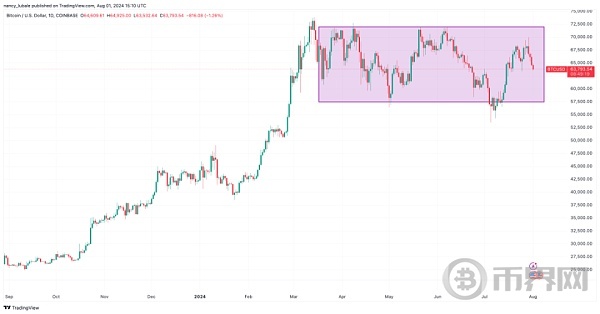
自 4 月 20 日比特币减半以来,比特币64,880美元价格一直在 58,000 美元至 72,000 美元的宽幅区间内盘整。然而,根据技术图表模式和各种指标,比特币价格可能即将突破。剩下的关键问题是比特币受什么影响何时会突破盘整?
641

“没有最坏的”

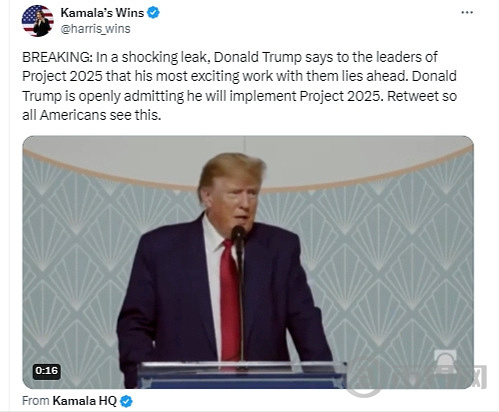
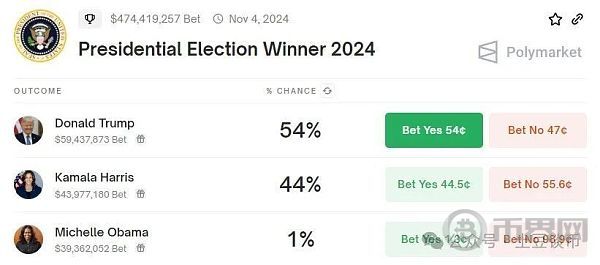
比特币在隔夜暴跌下探62302美元低点后,急剧弹升至65000美元水平,演绎了惊人V型行情。共和党总统候选人特朗普(Donald Trump)转向支持加密货币,但他在美国黑人记者协会(NABJ)上,指责副总统、准民主党总统候选人哈里斯为谋取政治利益,突然决定“变成黑人”,争议导致其11月大选胜率跌破55%。
641

再提一嘴:特朗普11月大选胜率骤跌,已从7月总统拜登宣布退选时的72%,骤降至目前的54%。哈里斯11月胜率则持续上升,如今已来到最高点44%,逼近和特朗普形成“黄金交叉”。
641

黄金对加密牛市产生的影响

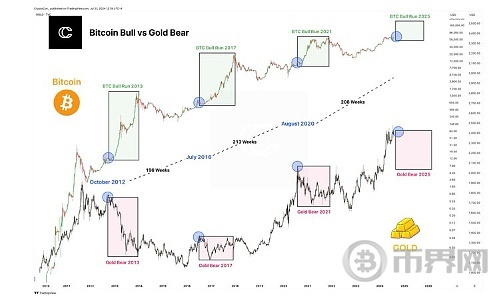
具体来说,2013年比特币的牛市与当年的黄金熊市重合。同样的情况在2017年也出现过,比特币的上涨恰逢黄金熊市,而这一过程在2021年又重演,揭示了比特币上涨与黄金下跌之间的反比关系。
641

从黄金熊市到下一次重大市场波动的时间分别为 196 周和 213 周,反映了市场变化时间的模式。自2020年8月上一次黄金熊市见顶以来,已经过去了整整208周。当审视过去一段时间时,人们认为市场正在日益接近更关键的水平,这表明未来可能会发生重大变化。

相应地,即将到来的黄金熊市可能会带来比特币牛市。-比特币牛市始于黄金熊市,留给重大变化和比特币牛市的时间已经所剩无几了,从过去到现在,人们一直在将黄金和比特币进行保值性比较。比特币拥护者的普遍观点是,加密货币将取代贵金属,并获得“数字黄金”的称号。

截至今日,金价已升至2400美元上方,并延续上涨势头。由于中东以色列和黎巴嫩之间的地缘政治紧张局势,黄金尤其明显升值。

八月份是山寨在牛市下半场的第一场表演这个观点保持不变。

比特币和以太坊的回调带动山寨集体回调,但是山寨的跌幅并没有放大很多,绝大多山寨都是跟随性质的下跌,山寨也是借这个机会,完成日线级别的二次回踩,走势上是相当的健康。 

操作上要抓住8月初这几天山寨回踩的好时机,逢低买入,在八月,快的话中旬,慢的话下旬,都会有一波不错的收获。

今天还有一个非农数据,也需要关注一下,另外就是已经发生的日本加息,虽然是一个较为利空的数据,但因为加息的幅度不大,而且市场已经有了足够的预期,所以影响几乎没有,美股期货现在涨的还算不错。

另外就是8月2日美股闭盘后会公布 Coin 和 MSTR 的财报,如果是利好的话,对于市场也会有些帮助。

Trending Cryptos

Related Reads

Investing 300 Million Yuan in a Leap to Optical Chips: Can Jinzi Ham, with Its History of Repeated Cross-Industry Setbacks, Succeed This Time?

Jinzi Ham, a Chinese listed company traditionally known for its "Jinhua Ham," is making a significant 3 billion yuan bet by investing in the semiconductor sector. Through its wholly-owned subsidiary Jinzi Semiconductor, the company has completed two rounds of funding totaling 3 billion yuan to acquire up to a 20% stake in Zhongsheng Microelectronics, a company specializing in high-speed optical communication chips for AI and data centers. This move comes as Jinzi Ham faces pressure on its core business. The company reported its first semi-annual net loss since its 2010 IPO in the first half of 2026, with revenue from its ham products dropping significantly. Changing consumer preferences towards low-salt, low-fat diets and a broader market contraction for cured meats have impacted its traditional operations. The investment in Zhongsheng Micro represents Jinzi Ham's latest attempt to find a new growth engine through cross-sector diversification. Historically, such ventures have yielded poor results. Past forays into rare earth minerals (2013-2017), internet finance (2014-2016), healthcare (2016-2018), and computing power (2023) mostly ended in divestment or losses, failing to create sustainable value and sometimes dragging down overall profitability. The current chip investment carries similar risks. Zhongsheng Micro is currently loss-making, and its high valuation presents potential impairment risks. While the deal includes performance guarantees and an IPO/repurchase clause by 2029 to mitigate risk, the fundamental disconnect between ham production and advanced semiconductor manufacturing remains a major challenge. The article questions whether this "chase for light" in the optical chip sector will break the company's cycle of failed diversification or become another short-term gamble on a hot trend.

marsbit8m ago

Investing 300 Million Yuan in a Leap to Optical Chips: Can Jinzi Ham, with Its History of Repeated Cross-Industry Setbacks, Succeed This Time?

marsbit8m ago

Fidelity Bets on ETH Staking Dividends, Small Ethereum ETFs Face Survival Crisis

On August 12th, Fidelity announced plans to introduce staking and quarterly cash dividends to its Fidelity Ethereum Fund (FETH). According to amended filings, the fund can stake up to 100% of its Ethereum holdings, with Fidelity retaining 85% of gross staking rewards. After covering operational expenses, the remaining net rewards will be distributed to investors as cash dividends. Fidelity may also sell some ETH to fund these payouts. FETH, with approximately $1.34 billion in assets under management (AUM), ranks fourth among U.S. spot Ethereum ETFs. It follows leaders like BlackRock's iShares Ethereum Trust ETF ($7.21B AUM) and Grayscale's Ethereum Trust ETF ($3.46B AUM). This move aligns with a trend, as Grayscale and 21Shares have already added staking to their Ethereum products, while BlackRock launched a separate staked ETF. Currently, about 33% of Ethereum's supply is staked, yielding an annualized reward rate of roughly 2.6%. ETF net yields for investors are typically lower due to fees and the need to maintain liquidity buffers. For example, Grayscale's ETHE has a gross yield of 2.75% but a net yield of 2.11% after sponsor and custodian fees. Analysts estimate Fidelity's net yield for investors may fall between 1.5% and 2%. The introduction of staking rewards by major players like Fidelity is expected to intensify competition in the Ethereum ETF market, potentially drawing assets away from smaller funds that lack this feature. The market is already highly concentrated, with the top five Ethereum ETFs holding over 98% of the total AUM. This trend mirrors the Bitcoin ETF market, where smaller funds like Hashdex's DEFI have faced liquidation due to insufficient scale.

marsbit11m ago

Fidelity Bets on ETH Staking Dividends, Small Ethereum ETFs Face Survival Crisis

marsbit11m ago

Chip Giant with 700 Billion Market Cap Sees Soaring Inventory

"Chips Giant with 700 Billion Market Cap Sees Inventory Soar" In its 2026 first-half financial report, Cambricon, a leading Chinese AI chip design company, reported significant growth in both revenue and profit. Revenue reached 59.96 billion yuan, up 108.13% year-on-year, while net profit grew 122.61% to 23.11 billion yuan. However, a major point of investor focus was the sharp rise in the company's inventory, which surged 66.83% from the end of the previous year to 82.48 billion yuan. This inventory now represents 45.32% of its total assets. The increase is primarily attributed to a substantial growth in raw materials (up 77.95% to 52.78 billion yuan) and work-in-process with contract manufacturers (up 61.85% to 24.18 billion yuan). Cambricon management explained that the inventory build-up was due to increased purchases of raw materials and outsourced processing. The company acknowledged the risk of inventory impairment should market conditions change. Industry analysts noted that as a fabless chip designer, such inventory accumulation is a strategic move to secure wafer capacity. However, it carries significant risk due to the industry's rapid technological iteration. If downstream demand slows, the company could face substantial inventory write-downs. Additionally, Cambricon's prepayments soared nearly threefold to 29.14 billion yuan. Brokerage analyses interpret the concurrent rise in prepayments and inventory as a positive indicator, suggesting strong future order fulfillment and pointing towards significant revenue growth in the third quarter. Despite strong operational metrics, the company's cash and cash equivalents have shown a declining trend over the past three years, dropping to 6.26 billion yuan by mid-2026. Cambricon's stock price hit a historic high of 1,620 yuan per share in June, briefly pushing its market capitalization above one trillion yuan. As of August 13th, its share price was 1,105.5 yuan, with a total market cap of approximately 694.6 billion yuan.

marsbit55m ago

Chip Giant with 700 Billion Market Cap Sees Soaring Inventory

marsbit55m ago

Trading

Spot

Hot Articles

What is $BITCOIN

DIGITAL GOLD ($BITCOIN): A Comprehensive Analysis Introduction to DIGITAL GOLD ($BITCOIN) DIGITAL GOLD ($BITCOIN) is a blockchain-based project operating on the Solana network, which aims to combine the characteristics of traditional precious metals with the innovation of decentralized technologies. While it shares a name with Bitcoin, often referred to as “digital gold” due to its perception as a store of value, DIGITAL GOLD is a separate token designed to create a unique ecosystem within the Web3 landscape. Its goal is to position itself as a viable alternative digital asset, although specifics regarding its applications and functionalities are still developing. What is DIGITAL GOLD ($BITCOIN)? DIGITAL GOLD ($BITCOIN) is a cryptocurrency token explicitly designed for use on the Solana blockchain. In contrast to Bitcoin, which provides a widely recognized value storage role, this token appears to focus on broader applications and characteristics. Notable aspects include: Blockchain Infrastructure: The token is built on the Solana blockchain, known for its capacity to handle high-speed and low-cost transactions. Supply Dynamics: DIGITAL GOLD has a maximum supply capped at 100 quadrillion tokens (100P $BITCOIN), although details regarding its circulating supply are currently undisclosed. Utility: While precise functionalities are not explicitly outlined, there are indications that the token could be utilized for various applications, potentially involving decentralized applications (dApps) or asset tokenization strategies. Who is the Creator of DIGITAL GOLD ($BITCOIN)? At present, the identity of the creators and development team behind DIGITAL GOLD ($BITCOIN) remains unknown. This situation is typical among many innovative projects within the blockchain space, particularly those aligning with decentralized finance and meme coin phenomena. While such anonymity may foster a community-driven culture, it intensifies concerns about governance and accountability. Who are the Investors of DIGITAL GOLD ($BITCOIN)? The available information indicates that DIGITAL GOLD ($BITCOIN) does not have any known institutional backers or prominent venture capital investments. The project seems to operate on a peer-to-peer model focused on community support and adoption rather than traditional funding routes. Its activity and liquidity are primarily situated on decentralized exchanges (DEXs), such as PumpSwap, rather than established centralized trading platforms, further highlighting its grassroots approach. How DIGITAL GOLD ($BITCOIN) Works The operational mechanics of DIGITAL GOLD ($BITCOIN) can be elaborated on based on its blockchain design and network attributes: Consensus Mechanism: By leveraging Solana’s unique proof-of-history (PoH) combined with a proof-of-stake (PoS) model, the project ensures efficient transaction validation contributing to the network's high performance. Tokenomics: While specific deflationary mechanisms have not been extensively detailed, the vast maximum token supply implies that it may cater to microtransactions or niche use cases that are still to be defined. Interoperability: There exists the potential for integration with Solana’s broader ecosystem, including various decentralized finance (DeFi) platforms. However, the details regarding specific integrations remain unspecified. Timeline of Key Events Here is a timeline that highlights significant milestones concerning DIGITAL GOLD ($BITCOIN): 2023: The initial deployment of the token occurs on the Solana blockchain, marked by its contract address. 2024: DIGITAL GOLD gains visibility as it becomes available for trading on decentralized exchanges like PumpSwap, allowing users to trade it against SOL. 2025: The project witnesses sporadic trading activity and potential interest in community-led engagements, although no noteworthy partnerships or technical advancements have been documented as of yet. Critical Analysis Strengths Scalability: The underlying Solana infrastructure supports high transaction volumes, which could enhance the utility of $BITCOIN in various transaction scenarios. Accessibility: The potential low trading price per token could attract retail investors, facilitating wider participation due to fractional ownership opportunities. Risks Lack of Transparency: The absence of publicly known backers, developers, or an audit process may yield skepticism regarding the project's sustainability and trustworthiness. Market Volatility: The trading activity is heavily reliant on speculative behavior, which can result in significant price volatility and uncertainty for investors. Conclusion DIGITAL GOLD ($BITCOIN) emerges as an intriguing yet ambiguous project within the rapidly evolving Solana ecosystem. While it attempts to leverage the “digital gold” narrative, its departure from Bitcoin's established role as a store of value underscores the need for a clearer differentiation of its intended utility and governance structure. Future acceptance and adoption will likely depend on addressing the current opacity and defining its operational and economic strategies more explicitly. Note: This report encompasses synthesised information available as of October 2023, and developments may have transpired beyond the research period.

1.8k Total ViewsPublished 2025.05.13Updated 2025.05.13

What is $BITCOIN

Discussions

Welcome to the HTX Community. Here, you can stay informed about the latest platform developments and gain access to professional market insights. Users' opinions on the price of BTC (BTC) are presented below.

活动图片