别再管川普、贺锦丽谁更友善比特币了 一文读懂共和党与民主党「政策差异」

币界网Published on 2024-07-27Last updated on 2024-07-27

币界网报道:

图片

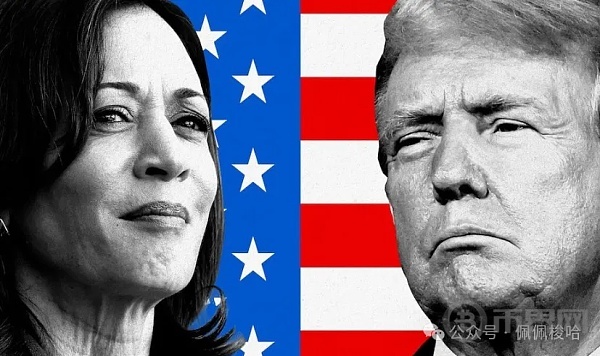
本文整理了民主党和共和党重大议题上的政策和政治立场的差异,或可从两党的政策倾向推断,到底美国两党谁更支持自由价值,更符合加密货币社群价值观和全球社会的利益。

着现任总统拜登(Joe Biden)宣布退出2024 美国总统大选,贺锦丽(Kamala Harris)成为民主党最可能接棒的总统候选人,并在短时间内传出其顾问团队已向比特币爱好者马克库班(Mark Cuban)咨询多项加密货币问题,表现出她对加密货币领域可能比拜登持更开放态度。

另一方面,前美国总统川普将于台湾时间周日(28)凌晨三点出席2024 比特币大会发表半小时的演讲,市场都期待他会对BTC 抛出什么重大利好?

但是动区要提醒,以立场反覆闻名、在先前总统任期中公开抨击加密货币的川普,目前对比特币、Crypto 的支持,究竟是真心还是选前的吸票策略,可能要打上大大的问号?

V 神:勿以「加密立场」主导你的政治投票

就像最近以太坊共同创办人V 神Vitalik Buterin 所呼吁的,他反对仅基于政治人物的「加密立场」来选择支持的政治阵营。他认为,社群应关注加密货币背后更深层次的自由开放价值,并探究两党过去对「技术自由」的态度,来了解他们现在支持Crypto 的背后动机。

民主党vs. 共和党政策对比

因此,下文动区为读者整理美国两党近年来的执政方向,希望可以帮助你判断,哪个政党才是对自由、开放价值更加支持?并更加了解两党候选人当选后,对美国或是全球可能带来的影响。

根据Diffen 网站所整理的两党政策对比资料,民主党和共和党在税收、政府角色、权利(社会安全、医疗保险)、枪支管制、移民、医疗保健、堕胎、环境政策和监管等重大议题上的政策和政治立场的差异如下:

政治哲学

民主党:自由派,左倾

共和党:保守派,右倾

经济理念

民主党:最低工资和累进税制,即较高所得阶层的税率较高。诞生于反联邦主义的理想,但随着时间的推移演变为支持更多的政府监管。

共和党: 相信任何人(包括富人)都不应该增加税收,工资应该由自由市场决定。

社会和人类观念

民主党:基于社区和社会责任

共和党:基于个人权利和正义

国防议题

民主党:减少国防支出

共和党:增加国防支出

枪枝管制法

民主党:赞成制定更多枪枝管制法,例如反对在公共场所携带隐藏武器的权利。

共和党:反对枪支管制法,并且是第二修正案(携带武器的权利)以及携带隐藏武器的权利的坚定支持者。

同性婚姻、LGBTQ  

民主党:偏向支持(一些民主党人反对)

共和党:偏向反对(一些共和党人不同意)

堕胎

民主党:应保持合法;支持罗诉韦德案

共和党:不应该合法(有一些例外);反对罗诉韦德案

死刑

民主党:虽然民主党人对死刑的支持很强烈,但反对死刑的民主党人也有很大一部分。

共和党:绝大多数共和党人支持死刑。

税收

民主党:累进税制(高收入者应缴纳较高的税率)。一般来说,不反对提高税收来资助政府。

共和党:统一税制(无论收入多少,税率相同)。普遍反对加税。

政府监管

民主党:需要政府法规来保护消费者。

共和党:政府法规阻碍自由市场资本主义和就业成长。

医疗政策

民主党:支持全民健保;政府参与医疗保健的大力支持,包括医疗保险和医疗补助。整体支持欧巴马医疗改格。

共和党:私人公司可以比公营机构更有效地提供医疗保健服务。反对欧巴马医改条款:例如(1)强制要求个人购买健康保险否则就得缴纳罚款,(2)要求提供避孕药。

移民

民主党:内部普遍支持暂停驱逐某些非法移民,或提供他们获得公民身分的途径。例如,无犯罪记录、在美国居住5 年以上的人。

共和党:普遍反对特赦任何非法移民,也反对欧巴马暂停驱逐某些工人的行政命令,并资助加强边境执法行动。

对乌克兰、台湾援助

民主党:支持军援乌克兰以色列和台湾追加预算法案。美国政府在去年7 月底动用总统提拨授权( PDA)提供给台湾三亿四千五百万美元的军备,去年8 月又宣布透过「外国军事融资」(FMF)管道,援台8000 万美元,是史上首例,且是一批无偿军援。

共和党:共和党部分议员一直激烈反对加码援乌法案,主张删减援乌金额,导致今年法案一度搁置。川普在先前任期签署了《台湾保证法案》,支持台湾增强自我防卫能力,使美国军售台湾正常化,任内多次批准对台军售。不过本月他在专访中抨击台湾拿走了美国所有晶片业务,还称台湾应向美国付保护费。


Trending Cryptos

Related Reads

Interview with PPP: How the World Cup Ignited the Prediction Market, and How to Find "Replicable Smart Money"?

Interview with PPP: World Cup Ignites Prediction Markets, How to Find “Replicable Smart Money”? With the World Cup underway, prediction markets are experiencing a historic surge in data and activity. However, most ordinary users struggle to achieve consistent profits amidst the volatility. Simply chasing "smart money" signals on social media is often ineffective due to slow manual execution. Even dedicated copy-trading tools can be misleading, as high total profits don't guarantee a strategy is suitable or sustainable for others to follow. Prediction market strategy platform PPP (Prediction Position Platform) argues that not all profitable addresses are fit for copying. Truly replicable "smart money" must demonstrate stable, long-term profitability across key metrics like win rate, max drawdown, and strategy consistency. PPP aims to solve this by building a system that structures complex on-chain data into actionable strategies for users. It employs a dual AI-modeling and manual-review process to analyze addresses based on performance, risk, capital allocation, and more, filtering out偶然性盈利 to identify statistically reliable strategies. The platform categorizes these strategies into two main products: a "Strategy Square" featuring long-term, vetted strategies with strict criteria like a six-month minimum track record, and a "Trading Leaderboard" highlighting shorter-term, high-performing opportunities from the past 30 days. Both are presented with clear style descriptions (e.g., "high implied win rate, high volatility"). Currently accessible via a Telegram Bot, PPP offers features like one-click trading, address copying, and an AI address analysis tool. It uses a subscription model and a non-custodial wallet. A trial run by the author yielded significant short-term gains, though subsequent drawdowns highlighted the importance of risk management and adjusting copy parameters per strategy. PPP’s core value lies not just in copy-trading, but in compiling and structuring混沌的交易信号 into replicable strategies, reducing information asymmetry in prediction markets. While it can’t guarantee future profits, it provides a more systematic, higher-probability entry point for users navigating the uncertain but opportunity-rich landscape, especially during events like the World Cup.

Odaily星球日报4m ago

Interview with PPP: How the World Cup Ignited the Prediction Market, and How to Find "Replicable Smart Money"?

Odaily星球日报4m ago

Bitcoin at 59,000 Is Not the Bottom, One Last Drop Needed! Chain Data and Liquidity Analysis: Where is BTC's True Bottom?

Based on analysis by trader Mr. Beggar, Bitcoin's (BTC) recent low of $59k is likely not the final cycle bottom. He argues that while a bottom is near, a final downward movement is still probable to target liquidity below that level, making a deeper low healthier for a sustainable reversal. Mr. Beggar's framework combines on-chain data for long-term cycles and liquidity-based technical analysis for shorter-term trades. His "four deep bear buying models" include Cointime Price (market cost weighted by coin holding time) and AVIV (an enhanced MVRV indicator), which currently suggest prices are nearing cyclical bottom zones. While a PSIP (Percent Supply in Profit) signal has flashed below 50%, it alone is not considered definitive; typically, the first signal is not the final bottom. He presents three potential scenarios for the current market: 1) a direct drop from here, 2) an upward liquidity sweep (stop hunt) of the recent high near $67.3k before declining, and 3) a direct reversal without new lows. He heavily discounts the third scenario due to significant un-swept liquidity in the $59k-$62.3k range, suggesting the market must revisit these levels. Mr. Beggar shares that he used on-chain signals to identify potential cycle tops in late 2024/early 2025 and later established low-leverage BTC-denominated short positions. He emphasizes the importance of risk management and staying within one's expertise ("strike zone"), warning against investing in assets like AI/semiconductor stocks simply because they are rising.

marsbit33m ago

Bitcoin at 59,000 Is Not the Bottom, One Last Drop Needed! Chain Data and Liquidity Analysis: Where is BTC's True Bottom?

marsbit33m ago

From Signal Monitoring to Strategy Copy Trading: How PPP Lowers the Barrier to Trading on Polymarket?

From Signal Monitoring to Strategy Copy Trading: How PPP Lowers the Barrier to Polymarket Trading The surge in trading demand on prediction markets like Polymarket, especially during events like the World Cup, exposes a common challenge for novice users: emotional and impulsive trading due to a lack of stable strategies and reliable signals. Prediction Position Platform (PPP) addresses this by serving as a Telegram-based tool for strategy discovery and automated copy-trading on Polymarket. PPP offers a suite of features through a subscription model. Key functionalities include 24/7 market signal monitoring (tracking smart money movements and rapid probability shifts), an "AI Address Analysis" tool to evaluate trader performance metrics, and specialized sections like a "World Cup Zone" for quick access to related markets. Its core value lies in two curated lists: the "Strategy Square," which identifies addresses suitable for long-term tracking based on comprehensive metrics like returns, win rate, and drawdowns, and the "Trading Leaderboard," highlighting recently outperforming addresses for short-term opportunities. Users can manually analyze any address or set up automated copy-trading with customizable parameters like investment amount and stop-loss. After initiating copy-trades, users can manage all positions from a unified dashboard, adjusting parameters or stopping follows as needed, and review historical performance data. Crucially, PPP employs a non-custodial wallet model, meaning user funds remain in their own self-custodied wallets, enhancing security and trust. In summary, PPP aims to reduce the learning curve and trial-and-error cost for Polymarket users by aggregating signals, curating and analyzing profitable traders, and facilitating automated, yet manageable, copy-trading execution.

Odaily星球日报33m ago

From Signal Monitoring to Strategy Copy Trading: How PPP Lowers the Barrier to Trading on Polymarket?

Odaily星球日报33m ago

From the White-Haired Stock God to the Billion-Dollar Fund Titan: The Smart People Shorting NVIDIA Are Getting Rich Using the Same Framework

From "white-haired stock god" to billionaire fund manager, those profiting from shorting NVIDIA share a common framework. The article analyzes the critical bottlenecks in the AI hardware supply chain, which have become key investment focal points. The core argument is that the real constraint on the AI boom isn't software or algorithms, but fundamental physical infrastructure. The piece dissects nine major bottlenecks, organized around the lifecycle of an AI accelerator circuit board. *Before the Board*: The pre-manufacturing stage faces constraints in EDA tools, new materials (like GaN, SiC, InP) replacing silicon, and the critical, non-renewable supply of helium for semiconductor fabrication. *On the Board*: The primary bottlenecks are High-Bandwidth Memory (HBM), essential for unleashing GPU power, and advanced packaging (e.g., CoWoS), required to integrate components. Both are in severe shortage. *Between Boards*: Chip-to-chip communication is hitting limits with copper, pushing photonics and optical interconnects (CPO) as the next-gen solution, with NVIDIA heavily investing in this area. *Around the Board*: Power delivery requires new materials (GaN/SiC) for efficient voltage conversion from 48V to sub-1V. High-density AI racks (120kW+) are forcing a shift from air to liquid cooling as the standard. *Beyond the Board*: The ultimate bottleneck is electricity. AI data centers consume power equivalent to mid-sized cities, and grid expansion lags far behind demand, causing project delays and a scramble for power contracts. Prominent investors like Leopold and "white-haired stock god" are heavily betting on these infrastructure bottlenecks. Leopold's fund, for instance, holds no NVIDIA stock but uses massive put options to short the semiconductor sector while going long on power and physical infrastructure. His thesis is that while chip competition may eventually erode margins, the scarcity of foundational elements like electricity is more persistent. The framework's validity is tied to the supply-demand gap. Major new capacity in HBM and photonics is scheduled for 2027-2028, but demand continues to outpace it. Experts like Intel's CEO suggest no relief before 2028. However, the article warns of a potential reversal around 2028-2029 if AI capex slows and new capacity floods the market, turning scarcity into oversupply. Until then, the imbalance persists.

链捕手1h ago

From the White-Haired Stock God to the Billion-Dollar Fund Titan: The Smart People Shorting NVIDIA Are Getting Rich Using the Same Framework

链捕手1h ago

Trading

Spot
Futures

Hot Articles

What is $BITCOIN

DIGITAL GOLD ($BITCOIN): A Comprehensive Analysis Introduction to DIGITAL GOLD ($BITCOIN) DIGITAL GOLD ($BITCOIN) is a blockchain-based project operating on the Solana network, which aims to combine the characteristics of traditional precious metals with the innovation of decentralized technologies. While it shares a name with Bitcoin, often referred to as “digital gold” due to its perception as a store of value, DIGITAL GOLD is a separate token designed to create a unique ecosystem within the Web3 landscape. Its goal is to position itself as a viable alternative digital asset, although specifics regarding its applications and functionalities are still developing. What is DIGITAL GOLD ($BITCOIN)? DIGITAL GOLD ($BITCOIN) is a cryptocurrency token explicitly designed for use on the Solana blockchain. In contrast to Bitcoin, which provides a widely recognized value storage role, this token appears to focus on broader applications and characteristics. Notable aspects include: Blockchain Infrastructure: The token is built on the Solana blockchain, known for its capacity to handle high-speed and low-cost transactions. Supply Dynamics: DIGITAL GOLD has a maximum supply capped at 100 quadrillion tokens (100P $BITCOIN), although details regarding its circulating supply are currently undisclosed. Utility: While precise functionalities are not explicitly outlined, there are indications that the token could be utilized for various applications, potentially involving decentralized applications (dApps) or asset tokenization strategies. Who is the Creator of DIGITAL GOLD ($BITCOIN)? At present, the identity of the creators and development team behind DIGITAL GOLD ($BITCOIN) remains unknown. This situation is typical among many innovative projects within the blockchain space, particularly those aligning with decentralized finance and meme coin phenomena. While such anonymity may foster a community-driven culture, it intensifies concerns about governance and accountability. Who are the Investors of DIGITAL GOLD ($BITCOIN)? The available information indicates that DIGITAL GOLD ($BITCOIN) does not have any known institutional backers or prominent venture capital investments. The project seems to operate on a peer-to-peer model focused on community support and adoption rather than traditional funding routes. Its activity and liquidity are primarily situated on decentralized exchanges (DEXs), such as PumpSwap, rather than established centralized trading platforms, further highlighting its grassroots approach. How DIGITAL GOLD ($BITCOIN) Works The operational mechanics of DIGITAL GOLD ($BITCOIN) can be elaborated on based on its blockchain design and network attributes: Consensus Mechanism: By leveraging Solana’s unique proof-of-history (PoH) combined with a proof-of-stake (PoS) model, the project ensures efficient transaction validation contributing to the network's high performance. Tokenomics: While specific deflationary mechanisms have not been extensively detailed, the vast maximum token supply implies that it may cater to microtransactions or niche use cases that are still to be defined. Interoperability: There exists the potential for integration with Solana’s broader ecosystem, including various decentralized finance (DeFi) platforms. However, the details regarding specific integrations remain unspecified. Timeline of Key Events Here is a timeline that highlights significant milestones concerning DIGITAL GOLD ($BITCOIN): 2023: The initial deployment of the token occurs on the Solana blockchain, marked by its contract address. 2024: DIGITAL GOLD gains visibility as it becomes available for trading on decentralized exchanges like PumpSwap, allowing users to trade it against SOL. 2025: The project witnesses sporadic trading activity and potential interest in community-led engagements, although no noteworthy partnerships or technical advancements have been documented as of yet. Critical Analysis Strengths Scalability: The underlying Solana infrastructure supports high transaction volumes, which could enhance the utility of $BITCOIN in various transaction scenarios. Accessibility: The potential low trading price per token could attract retail investors, facilitating wider participation due to fractional ownership opportunities. Risks Lack of Transparency: The absence of publicly known backers, developers, or an audit process may yield skepticism regarding the project's sustainability and trustworthiness. Market Volatility: The trading activity is heavily reliant on speculative behavior, which can result in significant price volatility and uncertainty for investors. Conclusion DIGITAL GOLD ($BITCOIN) emerges as an intriguing yet ambiguous project within the rapidly evolving Solana ecosystem. While it attempts to leverage the “digital gold” narrative, its departure from Bitcoin's established role as a store of value underscores the need for a clearer differentiation of its intended utility and governance structure. Future acceptance and adoption will likely depend on addressing the current opacity and defining its operational and economic strategies more explicitly. Note: This report encompasses synthesised information available as of October 2023, and developments may have transpired beyond the research period.

456 Total ViewsPublished 2025.05.13Updated 2025.05.13

What is $BITCOIN

Discussions

Welcome to the HTX Community. Here, you can stay informed about the latest platform developments and gain access to professional market insights. Users' opinions on the price of BTC (BTC) are presented below.

活动图片