解析宏观因素对比特币价格在牛市期间的影响

深潮Published on 2024-07-25Last updated on 2024-07-25

加密货币领域的牛市为投资者提供了显著的机会

作者:Greythorn

开篇

今天我们探讨关键宏观经济因素——全球流动性、利率、通货膨胀和联邦公开市场委员会(FOMC)公告——在牛市期间如何影响比特币价格。我们利用从2014年初至今的历史数据,通过统计和计量经济学分析来识别趋势和相关性,提供关于这些因素如何影响市场行为并为投资策略提供见解。

数据收集

我们从可靠来源收集以下数据:

● 利率:美国联邦储备经济数据(FRED)。

● 通货膨胀:美国劳工统计局(BLS)。

● 市场价格:从金融数据库获取的股票和比特币的历史价格。

● FOMC公告/新闻:联邦储备公告和新闻档案以及美国财政部新闻稿。

全球市场流动性

流动性,即现金和易于交易资产的可用性,对于健康的经济至关重要。增加的流动性推动资产价格上涨,因为更多的资金流入市场,促进快速和稳定的交易。高流动性时期交易量和价格上升。了解这些趋势帮助投资者抓住市场机会,做出明智的决策以最大化回报。

流动性通过多个指标进行衡量,包括:

货币市场基金(Money Market Funds):这些基金通常由高流动性、短期证券组成,是金融系统中可用流动性的良好指标。它们反映了机构履行其短期义务的能力。
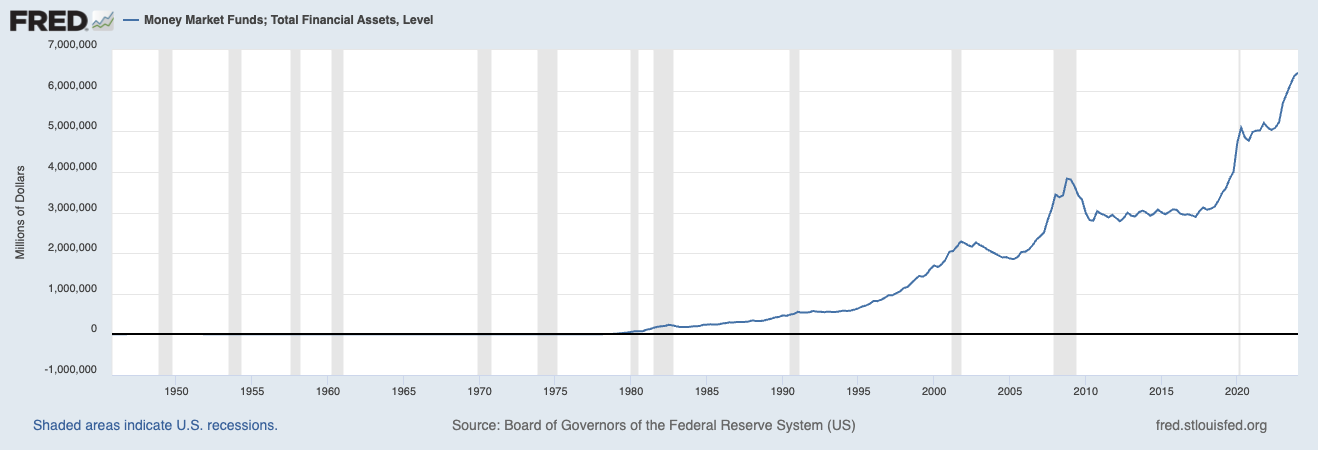
来源:联邦储备经济数据

银行储备(Bank Reserves):银行在中央银行持有的储备也表明流动性。较高的储备意味着银行系统中有更多可用于支持贷款和投资的流动性。
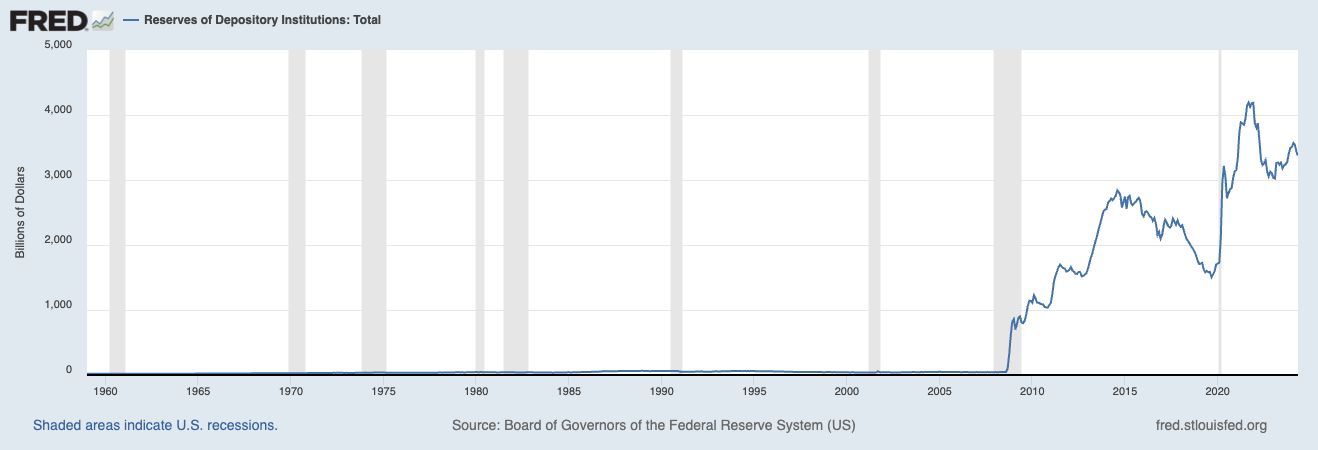
来源:联邦储备经济数据

流动性覆盖率(Liquidity Coverage Ratio):这项监管标准确保金融机构拥有足够的高质量流动资产,以覆盖其在30天内的总净现金流出。它是衡量银行流动性健康的重要指标。
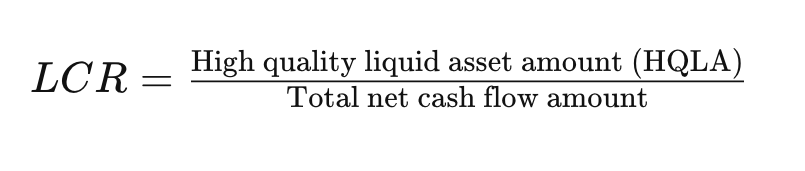
来源:Investopedia

周转率(Turnover Ratios):股票和债券的周转率表明市场的流动性。较高的周转率表明市场更具流动性,资产可以在没有显著价格变化的情况下快速买卖。

Source: Investopedia

然而,我们使用的主要衡量标准之一是‘M2’货币供应量。M2包括人们手头和银行账户中的所有现金。它涵盖了实物货币、支票账户、储蓄账户和其他近似货币资产。追踪M2帮助我们了解经济中的整体流动性,了解可用于支出和投资的资金量。

历史上,全球M2增长的峰值与比特币牛市相吻合。重要的不仅是流通中的货币量,还有货币供应的变化率。比特币的波动往往与M2动量的变化一致。在牛市期间,监控M2变得尤为重要,因为增加的流动性通常推动市场上涨,使更多资金可用于投资,从而推高资产价格。
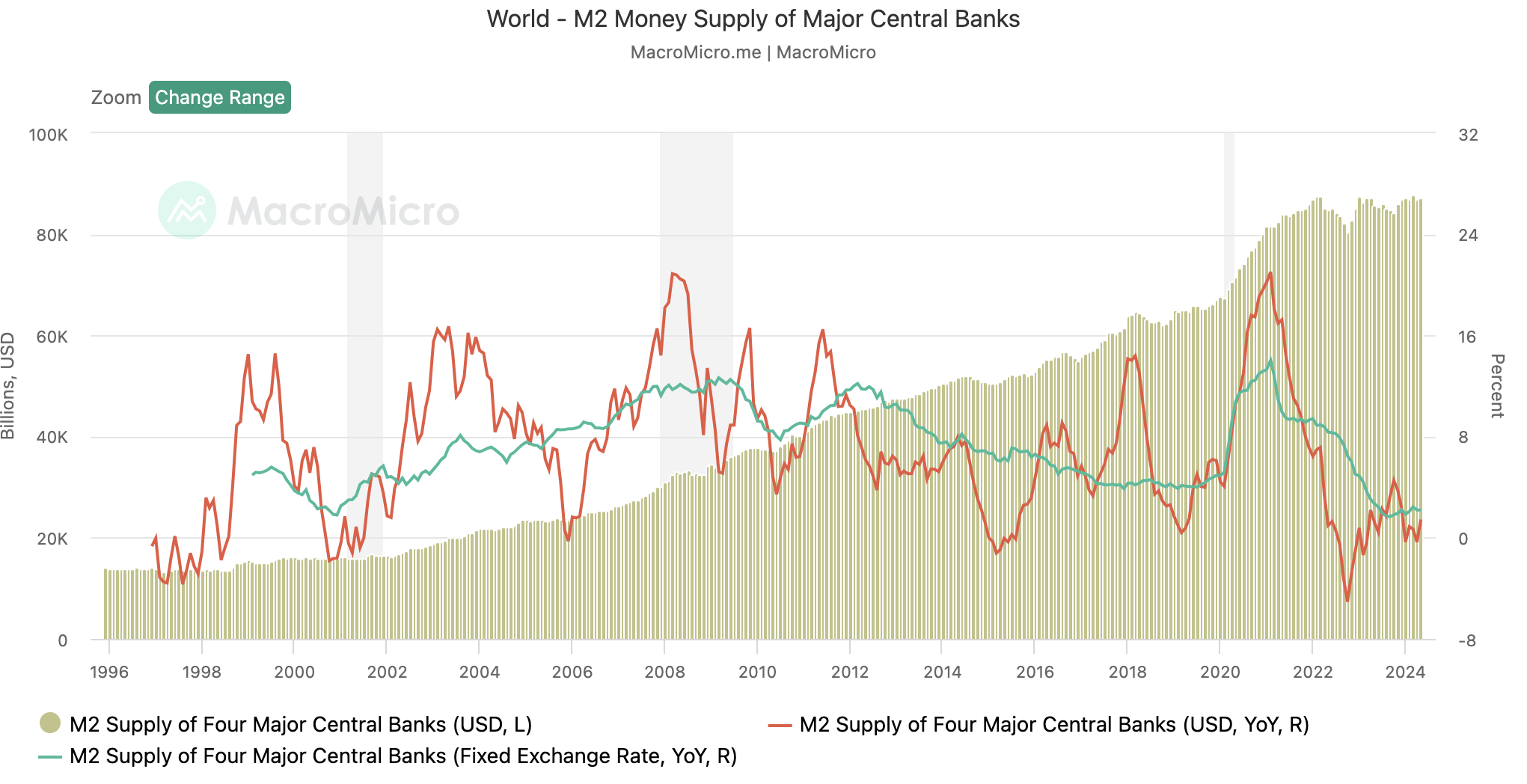
来源:MacroMicro

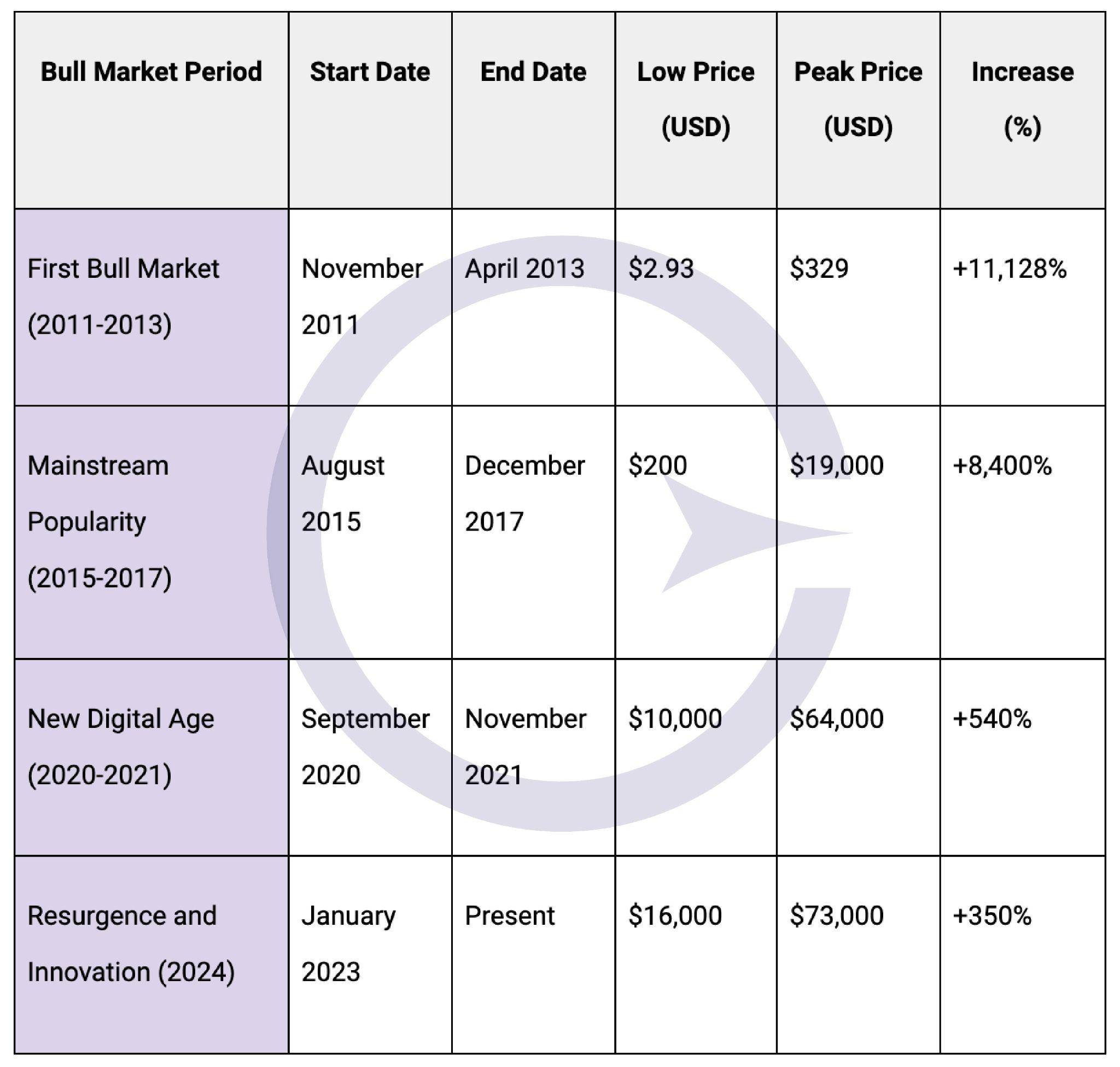
加密货币领域的牛市为投资者提供了显著的机会。以下是加密历史上一些显著的牛市:
来源:Greythorn

如图所示,全球流动性周期显示出明显的周期性。
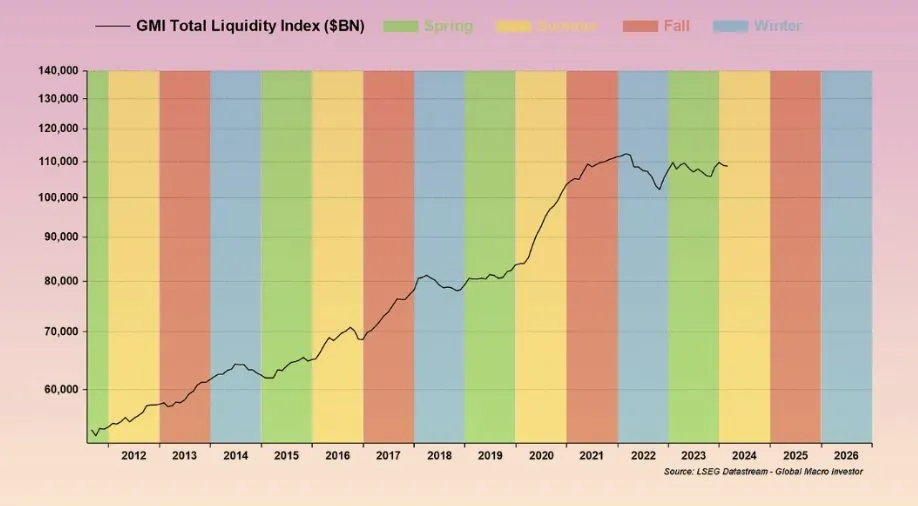
来源:Global Macro Investor

历史上,如前所述,全球M2货币供应量增长与比特币牛市之间存在显著的相关性。
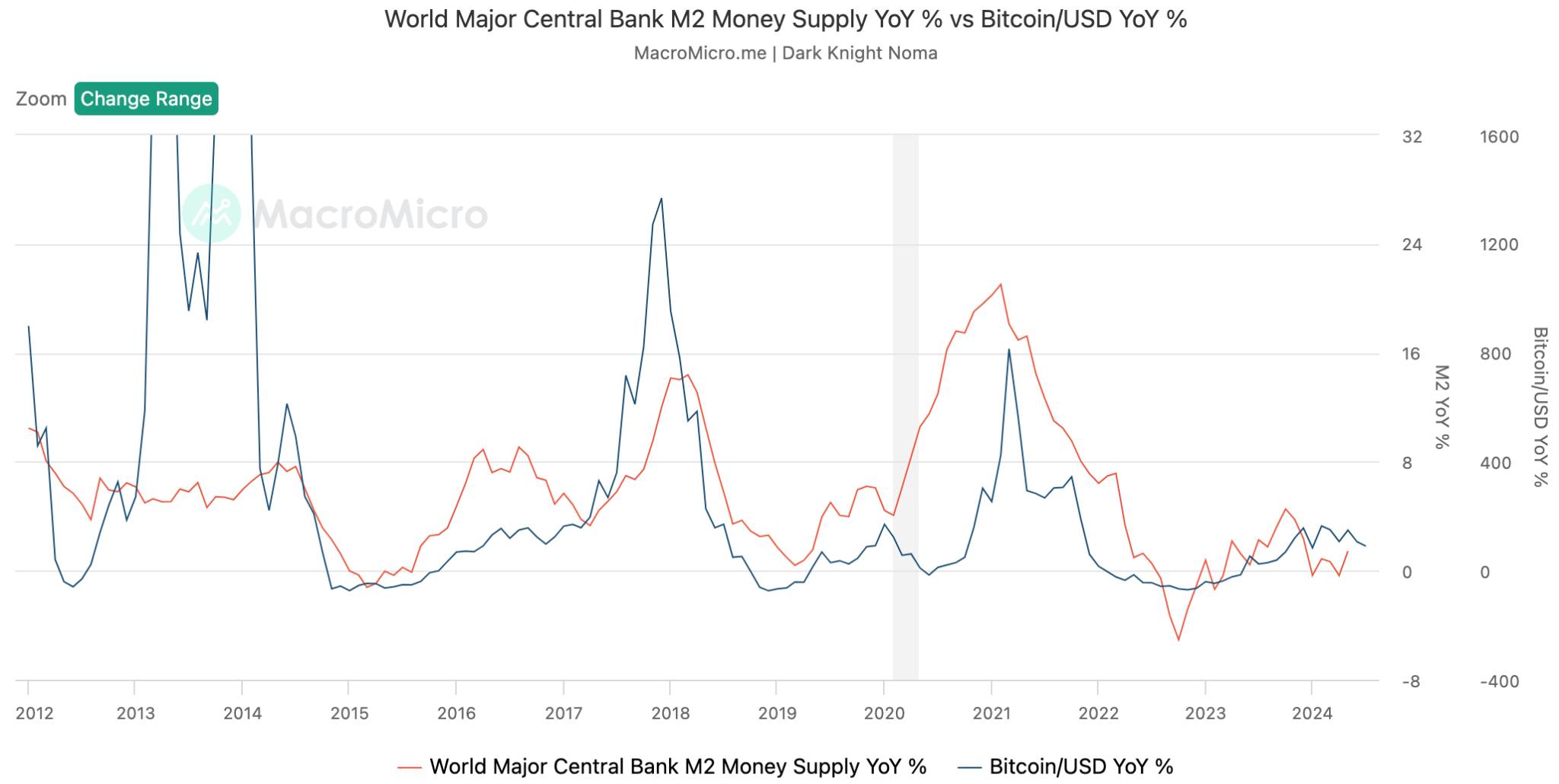
来源:MacroMicro

第一次牛市(2011-2013)

● M2增长:在欧洲金融危机和塞浦路斯银行危机期间,央行增加了流动性以稳定经济。

● 比特币反应:随着流动性激增,比特币价格从2.93美元飙升至329美元,反映了对非传统金融资产的需求增加。然而,这一涨幅主要由比特币的新颖性和小市场资本化推动,使其更容易出现显著的价格波动。

主流受欢迎牛市(2015-2017)

● M2增长:金融动荡之后,低利率和增加的货币供应持续。

● 比特币反应:比特币从200美元上涨到19,000美元,主流媒体和机构兴趣进一步推动了其需求在不断增长的流动性中。

新数字时代牛市(2020-2021)

● M2增长:COVID-19大流行引发了前所未有的货币宽松和刺激措施,显著增加了M2货币供应量。

● 比特币反应:比特币价格从10,000美元飙升至64,000美元,投资者寻求法定货币的替代品,受通货膨胀和传统货币贬值的担忧驱动。

复苏与创新(2024)

● M2增长:由于COVID后抑制通胀的努力,提高利率,整体流动性呈下降趋势。自2023年初以来流动性略有上升,但与前几个周期相比仍然适中。

● 比特币反应:2024年,比特币创下历史新高,从25,000美元上涨到85,000美元。这一激增发生在下一次减半事件之前,尽管利率很高。这一周期独特之处在于,这是比特币首次在没有显著流动性激增的情况下达到新高,表明比特币市场的前所未有的成熟度。

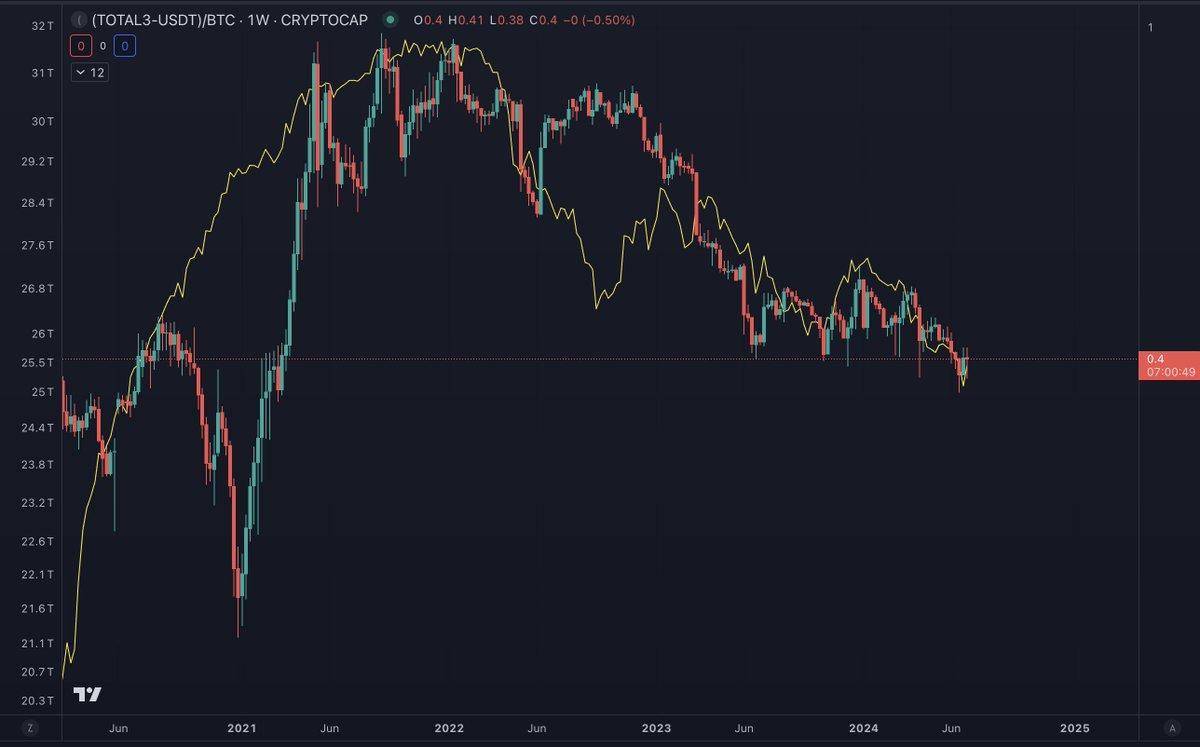
然而,山寨币的情况有所不同。正如交易员Benjamin Cowen所指出的,Alts/BTC对已经在跟踪全球净流动性估计。我们可能需要看到整体流动性增加,山寨币才会进入增长阶段。
Source: TradingView

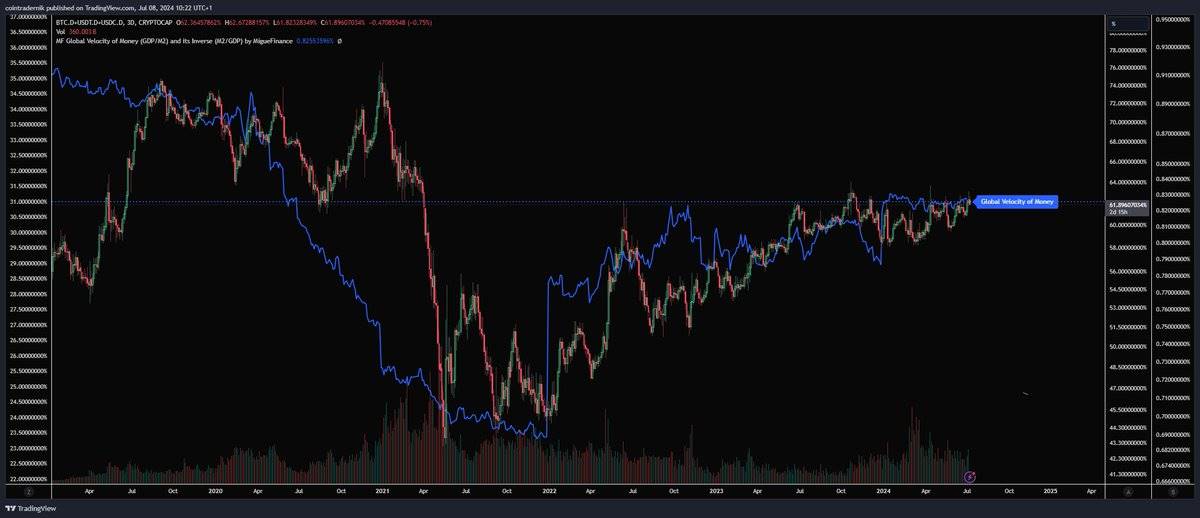
进一步分析,交易员Nik显示BTC、USDT和USDC的主导地位与全球货币流速成反比。这意味着当货币供应量增长快于GDP时,金融化增加,导致资产泡沫和较低的比特币主导地位。相反,如果GDP增长快于货币供应量,金融化减少,导致更高的稳定币和比特币主导地位。
Source: TradingView

我们建议分析宏观经济政策以获取未来流动性趋势的洞见。监控全球M2货币供应量,了解流动性变化及其对资产价格的影响。此外,研究市场情绪和注意力流动,提前预测和定位市场变化。

利率和通货膨胀:来自FRED数据和FOMC公告的洞见

尽管比特币是去中心化的,但在货币政策事件周围显示出显著的波动性,对利率变化和经济前景做出反应。让我们看看随着比特币的普及和融入金融系统,比特币对央行决策的敏感性是否有所变化。

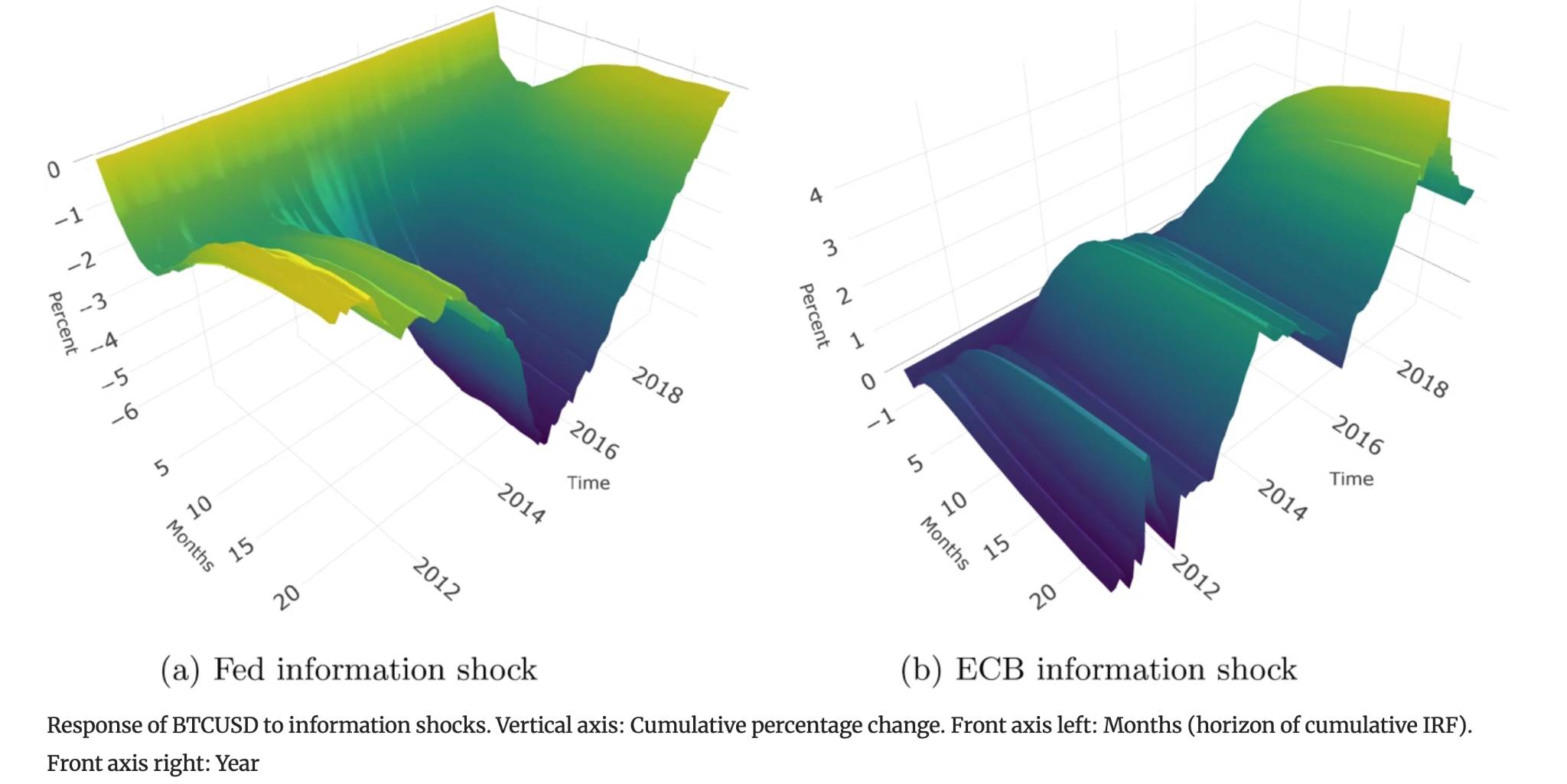
一项有趣的研究显示,比特币设计为独立于货币政策,但实际上对美联储和欧洲中央银行(ECB)的决策做出反应,效果随时间变化。

2013年之前,美联储的货币冲击显著降低了比特币价格。然而,2013年之后,这些冲击开始推动比特币价格上涨,表明市场对比特币的看法发生了变化。同时,ECB的去通胀冲击始终降低比特币价格,表明比特币在ECB决策面前表现为数字黄金。
来源:Springer

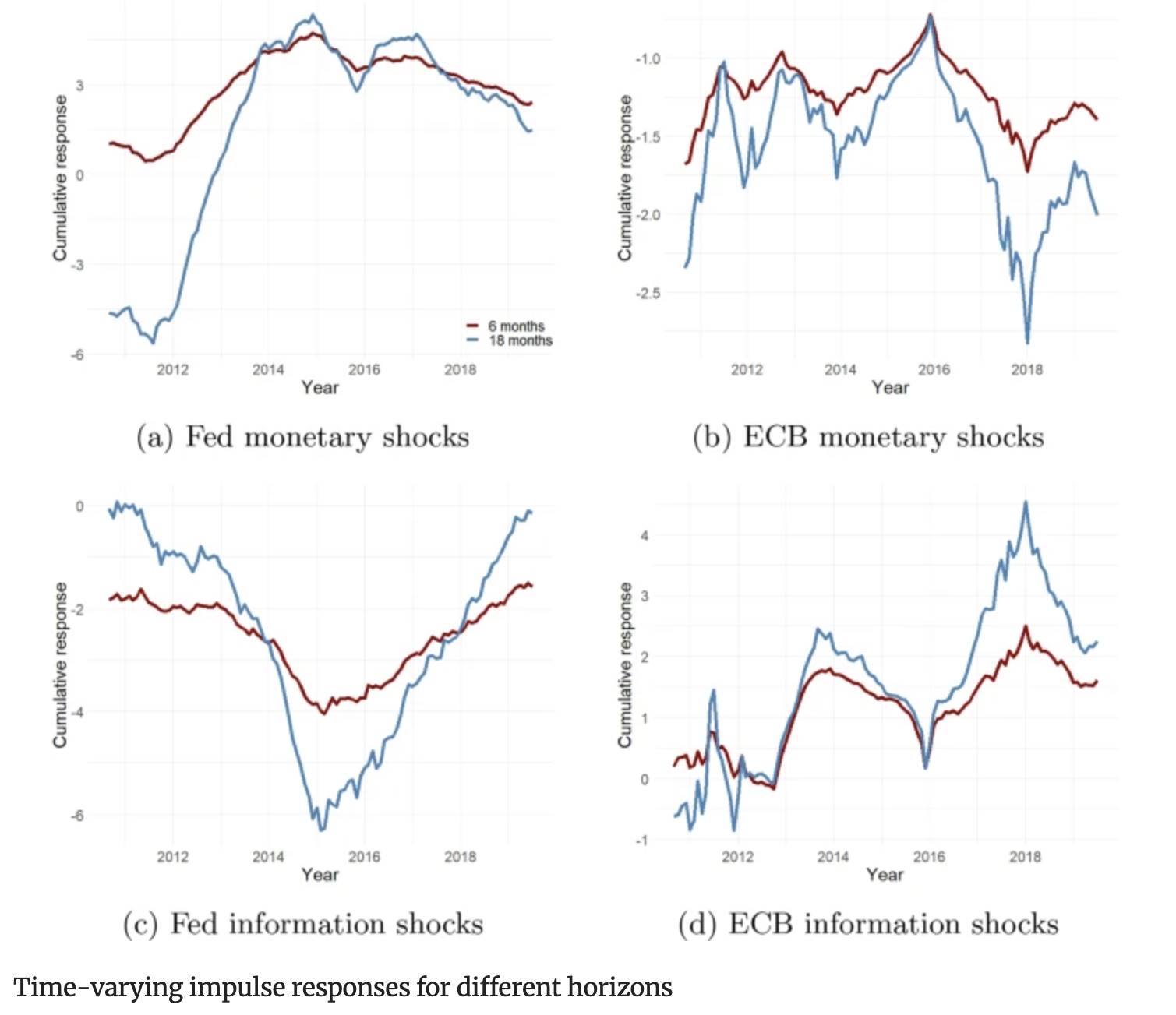
央行信息冲击对比特币在美国和欧盟的影响不同。美联储的正面冲击降低比特币价格,而ECB的正面冲击通常增加比特币价格,2018年初达到峰值。最初,比特币不受这些经济前景的影响。

下图显示,比特币价格通常在冲击后的最初几个月内调整,6个月和18个月后的效果类似。自2016年以来,ECB冲击的效果更持久,18个月后的反应比最初6个月更强。
本研究仅包括到2019年的数据。然而,从2020年开始,比特币在FOMC公告周围的实际波动性开始上升,特别是在2020年底COVID-19大流行爆发后。比特币价格几乎立即对美联储紧缩做出反应,表明与货币政策决策有更紧密和更直接的相关性,比特币的估值反应与其他风险资产(如股票、外汇和黄金)定性相似,但定量更强。

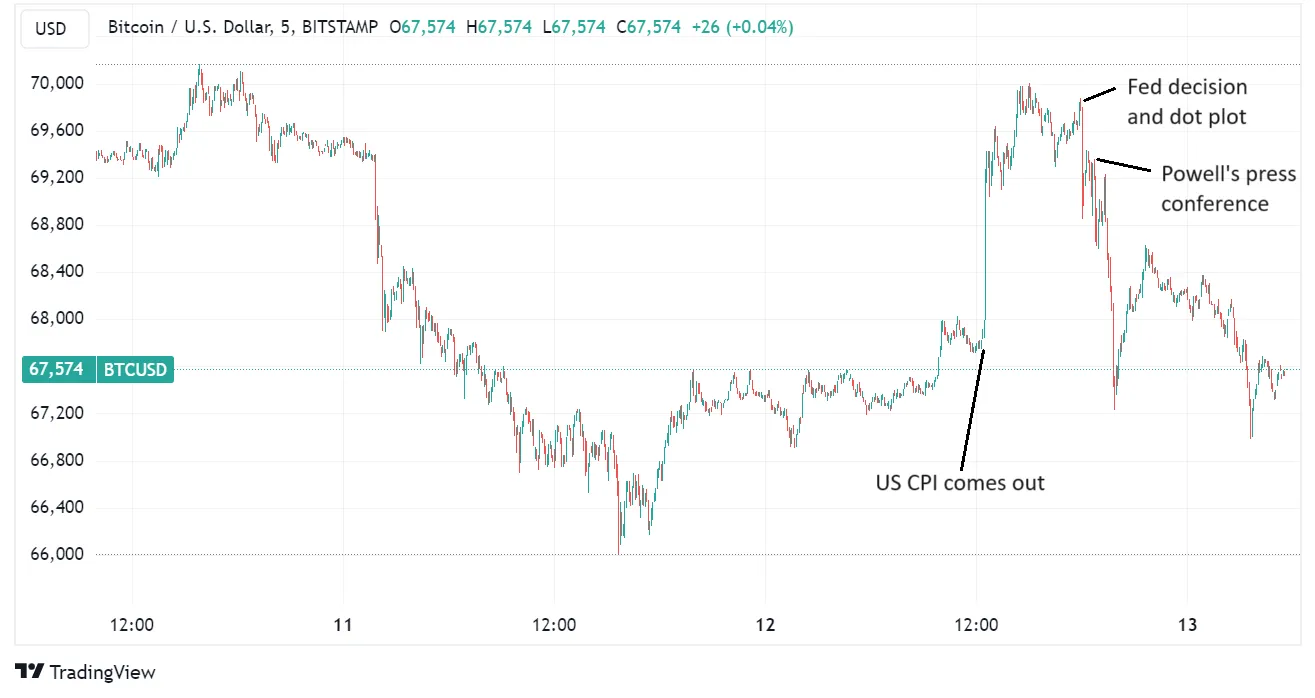
即使在最新的CPI发布中,我们也观察到比特币估值对通胀新闻在2020年后的高通胀环境中的敏感性增加。

事实上,在最近一次CPI公告中,比特币显示出即时反应。当5月份美国通胀率为0.0%(环比),这一意外结果公布时,比特币价格与大多数其他资产一起上涨。然而,当FOMC试图抑制流动性预期时,这种最初的庆祝随即被纠正。
Source: TradingView

结论

比特币作为对抗通胀的潜在对冲引起了投资者和学者的极大兴趣。比特币最初因其稀缺性和去中心化性质而受到重视,被一些人视为对抗通胀的保障。然而,实证研究对其在这一角色中的有效性结果不一。

最初,比特币价格对货币政策公告没有显著反应。直到2019年,任何反应通常需要几个月才显现。然而,自2020年以来,比特币价格在美联储紧缩后立即开始下跌,表明与货币政策决策有更紧密和更直接的相关性。这一转变突显了比特币对央行行动的敏感性增加。

证据表明比特币与通胀之间的关系复杂且不断演变,受市场成熟度和更广泛经济条件的影响。然而,比特币的价格动态紧密联系着全球流动性状况,由央行政策、投资者行为和机构投资趋势驱动。

这些发现表明,比特币的初始需求更多是由于其作为无国界、去中心化的数字现金的使用,而不是作为通胀对冲。然而,2020年后,美联储紧缩后比特币价格大幅下跌,突显了投机动机以及更广泛的投资者基础和普遍接受。

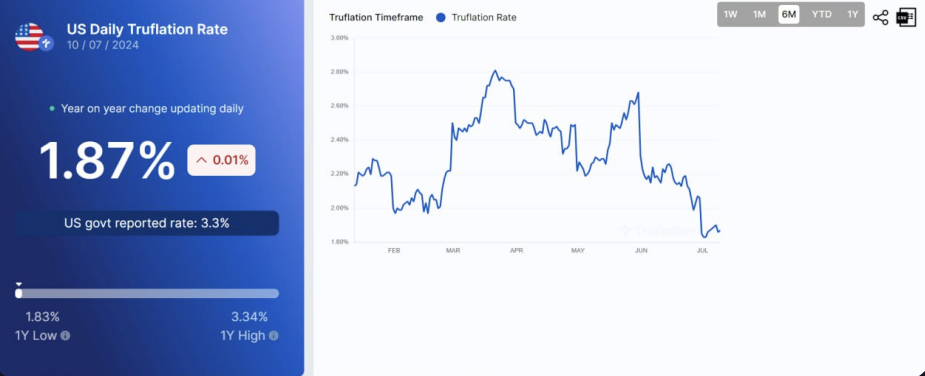
对于即将到来的CPI发布(2024年7月11日星期四),市场预测无显著变化,预期如下。

请注意,上面显示的Truflation比率提供了额外的见解,如果实际结果再次低于预期,可能相关。

来源:Truflation.com
免责声明

本演示文稿由Greythorn Asset Management Pty Ltd(ABN 96 621 995 659)(Greythorn)编制。本演示文稿中的信息应视为一般信息,而不是投资建议和财务建议。它不是广告,也不是购买或出售任何金融工具或参与任何特定交易策略的招揽或要约。在准备此文档时,Greythorn没有考虑任何接收者的投资目标、财务状况或特定需求。在做出任何投资决策之前,本演示文稿的接收者应考虑自己的个人情况,并寻求其会计师、律师或其他专业顾问的专业意见。本演示文稿包含基于各种假设的陈述、意见、预测、预测和其他材料(前瞻性陈述)。Greythorn没有义务更新信息。这些假设可能正确也可能不正确。Greythorn及其官员、员工、代理人、顾问或本演示文稿中提到的任何其他人均不对任何前瞻性陈述或其基础假设的准确性或实现可能性作出任何陈述。Greythorn及其官员、员工、代理人和顾问在法律允许的范围内,不对因本演示文稿中的信息而产生的任何损失、索赔、损害、费用或开支承担责任。本演示文稿是Greythorn的财产。接收本演示文稿,即同意保密其内容,并同意未经书面同意,不复制、提供、传播或披露其内容的任何信息。


Related Reads

a16z Founder: In the Agent Era, What Truly Matters Has Changed

Marc Andreessen, co-founder of a16z, argues that the current AI boom is not an overnight success but the culmination of 80 years of research, now delivering practical results. He emphasizes that this era is defined by the convergence of four key capabilities: large language models (LLMs), reasoning, coding, and agents capable of recursive self-improvement. Andreessen describes the agent architecture—combining an LLM with a shell, file system, markdown, and cron/loop—as a fundamental shift beyond chatbots. This structure leverages existing software components, allowing agents to maintain state, introspect, and extend their own functionality. He predicts a move away from traditional GUI and browser-based interactions toward an "agent-first" world where software is primarily operated by bots, not humans, with people simply stating their goals. He draws parallels to the 2000 internet bubble but notes key differences: current AI infrastructure investments are led by cash-rich giants and quickly monetized. He highlights that scaling constraints involve not just GPUs but the entire chip ecosystem. Open source and edge inference are crucial for democratizing knowledge and enabling low-latency, cost-effective applications on local hardware. Finally, Andreessen identifies significant non-technical challenges: potential short-term cybersecurity crises, the need for "proof of human" identity solutions, financial infrastructure for agents, and institutional resistance from sectors like education and healthcare. He cautions that societal adoption will be slower than technological change.

marsbit5m ago

a16z Founder: In the Agent Era, What Truly Matters Has Changed

marsbit5m ago

The Code Was Fine, But It Was Still Hacked: What Is the 'DVN Configuration Vulnerability' Behind the Biggest Hack of 2026?

Title: Code Was Secure, Yet $293M Stolen: The 2026 DVN Configuration Breach Explained On April 18, 2026, Kelp DAO’s restaking protocol was exploited, losing 116,500 rsETH (worth $293M at the time) due to a configuration flaw—not a smart contract vulnerability. The attacker used a forged cross-chain message to drain funds via LayerZero’s bridge, then dispersed the stolen rsETH across Aave V3, Compound V3, and Euler to borrow real assets, ultimately escaping with $236M in WETH. The root cause was a critical misconfiguration in Kelp’s LayerZero V2 setup: the protocol used a 1-of-1 Decentralized Verifier Network (DVN) threshold, meaning only one node approval was needed to validate cross-chain messages. The attacker compromised that single node, allowing unauthorized minting of rsETH on Ethereum. This configuration choice—permitted by LayerZero but highly risky—left zero fault tolerance. In contrast, protocols like ApeChain using multi-node validation (e.g., 2-of-3 or 5-of-9) remained secure. This incident highlights a blind spot in DeFi security audits: tools like Slither and Mythril scan code for logic flaws but ignore configuration parameters. The 2022 Nomad hack ($190M loss) also stemmed from a config error, bringing total losses from such issues to ~$482M—rivaling private key breaches. The Kelp exploit underscores the need for standardized config audits and higher baseline security in cross-chain designs.

marsbit12m ago

The Code Was Fine, But It Was Still Hacked: What Is the 'DVN Configuration Vulnerability' Behind the Biggest Hack of 2026?

marsbit12m ago

The More Frequently They Are Updated, the More Similar Claude Code and Codex Become

OpenAI's recent release of GPT-5.4-Cyber demonstrates a striking convergence with Anthropic's Claude Mythos, reflecting a broader trend of product and strategic alignment between the two AI giants. This is particularly evident in their flagship coding assistants, Codex and Claude Code, which have evolved from distinct philosophies into increasingly similar tools. Initially, Codex emphasized speed and real-time interaction, acting like a fast, junior developer, while Claude Code focused on handling extreme complexity with methodical, large-context analysis. However, both have adopted near-identical solutions to core challenges, such as using isolated sub-tasks or agent teams to prevent context pollution during large-scale code modifications. Benchmark results show a tight race: Codex leads in terminal tasks, while Claude Code excels in complex software engineering benchmarks. Community feedback highlights nuanced differences; Claude Code is faster but can accumulate technical debt, whereas Codex is slower but more deliberate and autonomous. The open-source framework OpenClaw has accelerated this homogenization by standardizing workflows, eroding proprietary advantages. Ultimately, the competition has shifted from pure capability to ecosystem strategy, pricing, and user experience. As these tools become ubiquitous, the developer's role evolves toward higher-level problem definition and architectural thinking, beyond automated code generation.

marsbit12m ago

The More Frequently They Are Updated, the More Similar Claude Code and Codex Become

marsbit12m ago

Trading

Spot
Futures

Hot Articles

What is $BITCOIN

DIGITAL GOLD ($BITCOIN): A Comprehensive Analysis Introduction to DIGITAL GOLD ($BITCOIN) DIGITAL GOLD ($BITCOIN) is a blockchain-based project operating on the Solana network, which aims to combine the characteristics of traditional precious metals with the innovation of decentralized technologies. While it shares a name with Bitcoin, often referred to as “digital gold” due to its perception as a store of value, DIGITAL GOLD is a separate token designed to create a unique ecosystem within the Web3 landscape. Its goal is to position itself as a viable alternative digital asset, although specifics regarding its applications and functionalities are still developing. What is DIGITAL GOLD ($BITCOIN)? DIGITAL GOLD ($BITCOIN) is a cryptocurrency token explicitly designed for use on the Solana blockchain. In contrast to Bitcoin, which provides a widely recognized value storage role, this token appears to focus on broader applications and characteristics. Notable aspects include: Blockchain Infrastructure: The token is built on the Solana blockchain, known for its capacity to handle high-speed and low-cost transactions. Supply Dynamics: DIGITAL GOLD has a maximum supply capped at 100 quadrillion tokens (100P $BITCOIN), although details regarding its circulating supply are currently undisclosed. Utility: While precise functionalities are not explicitly outlined, there are indications that the token could be utilized for various applications, potentially involving decentralized applications (dApps) or asset tokenization strategies. Who is the Creator of DIGITAL GOLD ($BITCOIN)? At present, the identity of the creators and development team behind DIGITAL GOLD ($BITCOIN) remains unknown. This situation is typical among many innovative projects within the blockchain space, particularly those aligning with decentralized finance and meme coin phenomena. While such anonymity may foster a community-driven culture, it intensifies concerns about governance and accountability. Who are the Investors of DIGITAL GOLD ($BITCOIN)? The available information indicates that DIGITAL GOLD ($BITCOIN) does not have any known institutional backers or prominent venture capital investments. The project seems to operate on a peer-to-peer model focused on community support and adoption rather than traditional funding routes. Its activity and liquidity are primarily situated on decentralized exchanges (DEXs), such as PumpSwap, rather than established centralized trading platforms, further highlighting its grassroots approach. How DIGITAL GOLD ($BITCOIN) Works The operational mechanics of DIGITAL GOLD ($BITCOIN) can be elaborated on based on its blockchain design and network attributes: Consensus Mechanism: By leveraging Solana’s unique proof-of-history (PoH) combined with a proof-of-stake (PoS) model, the project ensures efficient transaction validation contributing to the network's high performance. Tokenomics: While specific deflationary mechanisms have not been extensively detailed, the vast maximum token supply implies that it may cater to microtransactions or niche use cases that are still to be defined. Interoperability: There exists the potential for integration with Solana’s broader ecosystem, including various decentralized finance (DeFi) platforms. However, the details regarding specific integrations remain unspecified. Timeline of Key Events Here is a timeline that highlights significant milestones concerning DIGITAL GOLD ($BITCOIN): 2023: The initial deployment of the token occurs on the Solana blockchain, marked by its contract address. 2024: DIGITAL GOLD gains visibility as it becomes available for trading on decentralized exchanges like PumpSwap, allowing users to trade it against SOL. 2025: The project witnesses sporadic trading activity and potential interest in community-led engagements, although no noteworthy partnerships or technical advancements have been documented as of yet. Critical Analysis Strengths Scalability: The underlying Solana infrastructure supports high transaction volumes, which could enhance the utility of $BITCOIN in various transaction scenarios. Accessibility: The potential low trading price per token could attract retail investors, facilitating wider participation due to fractional ownership opportunities. Risks Lack of Transparency: The absence of publicly known backers, developers, or an audit process may yield skepticism regarding the project's sustainability and trustworthiness. Market Volatility: The trading activity is heavily reliant on speculative behavior, which can result in significant price volatility and uncertainty for investors. Conclusion DIGITAL GOLD ($BITCOIN) emerges as an intriguing yet ambiguous project within the rapidly evolving Solana ecosystem. While it attempts to leverage the “digital gold” narrative, its departure from Bitcoin's established role as a store of value underscores the need for a clearer differentiation of its intended utility and governance structure. Future acceptance and adoption will likely depend on addressing the current opacity and defining its operational and economic strategies more explicitly. Note: This report encompasses synthesised information available as of October 2023, and developments may have transpired beyond the research period.

363 Total ViewsPublished 2025.05.13Updated 2025.05.13

What is $BITCOIN

Discussions

Welcome to the HTX Community. Here, you can stay informed about the latest platform developments and gain access to professional market insights. Users' opinions on the price of BTC (BTC) are presented below.

活动图片