Matrixport投研:浅析BTC短期急速反弹背后驱动力

Odaily星球日报Published on 2024-07-19Last updated on 2024-07-19

Abstract

BTC 短期急速反弹或受抛压减小,政治利好等多方面影响

Matrixport 研究院最新研究表示,BTC 短期急速反弹可能受下述因素影响:

  • 德国 BTC “紧急出售”结束,BTC 抛压缓解

  • 贝莱德 CEO 一改常态,力挺 BTC 为合法金融工具

  • “支持 BTC ”成为特朗普本次竞选的关键抓手,大选利好依旧待兑现

德国“紧急出售 BTC”结束,BTC 抛压缓解

7 月 17 日, Decrypt 发布报道披露德国执法部门 BTC “紧急出售”结束,销售收入达到 28.8 亿美元(26.39 亿欧元)。据悉,德国萨克森州在 25 天内平均每天售出价值 1.3 亿美元的 BTC。大量抛售对币价造成下行压力,导致 BTC 价值在此期间从高点到低点下跌了近 20% 。

贝莱德 CEO 一改常态,力挺 BTC 为合法金融工具

在最新访谈中,贝莱德 CEO 拉里·芬克一改往日立场,称 BTC 是合法的金融工具,有着彻底改变整个金融业的巨大潜力。此前,拉里·芬克对 BTC 持怀疑态度,但在深入研究后,他改变了看法并认为 BTC 有可能给金融市场带来革命性的变化。他认为加密资产是“数字黄金”,是合法的金融工具,在财富保护和金融市场中可以承担重要角色。

“支持 BTC ”成为特朗普本次竞选的关键抓手,大选利好依旧待兑现

特朗普将于 2024 年 7 月 27 日在田纳西州纳什维尔举办的 2024 BTC 大会上发表主旨演讲。他将在演讲中强调 BTC 改变金融行业格局、支持经济增长的潜力,并重申他的信念:美国应领导全球加密资产市场,并利用 BTC 提升国家经济竞争力。

ETH ETF 有望于 2024 年 7 月 23 日发行

ETH ETF 发行日期已数次推迟,SEC 要求发行商在本周末前提交最终文件。若一切顺利,ETH ETF 有望于 2024 年 7 月 23 日发行。贝莱德、VanEck、富兰克林邓普顿等知名资管公司预计将成功获批。

韩国加密资产税征收阻力过大,最新提案延期至 2028 年

韩国执政党人民力量党提议将韩国加密资产税的执行延后至 2028 年。韩国加密资产税原定于 2022 年 1 月 1 日开征,但由于投资者和行业专家的强烈反对,遭遇数次延期。新提案将推迟开征日期至 2028 年 1 月 1 日。

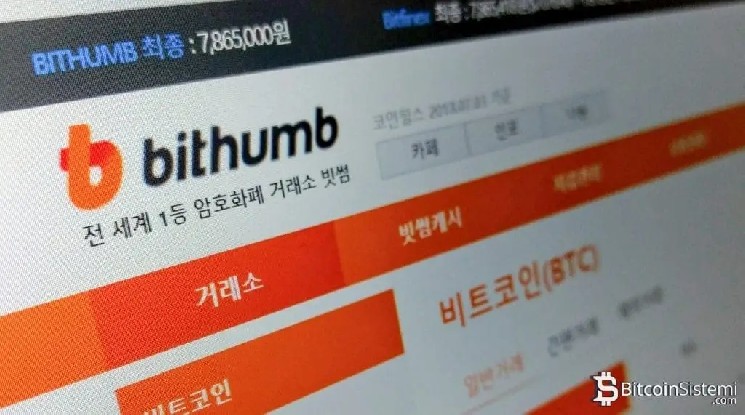
BTC 在八月的发展预期并不明朗。从历史数据来看,BTC 在八月的表现一直弱于七月,但要强于九月。八月 BTC 平均回报率为-2% 左右。暑假的结束可能会影响八月的市场行情,交易量将下降,投资者都在为接下来几个月的市场动向做准备。

上述部分观点来自 Matrix on Target, 与我们联系获取 Matrix on Target 完整报告。

免责声明:市场有风险,投资需谨慎。本文不构成投资建议。数字资产交易可能具有极大的风险和不稳定性。投资决策应在仔细考虑个人情况并咨询金融专业人士后做出。Matrixport 不对基于本内容所提供信息的任何投资决策负责。

Trending Cryptos

Related Reads

Behind the Trillion-Dollar Capital Gamble: Time is Becoming the Counterparty to AI

Amidst unprecedented capital investment in AI, a trillion-dollar "gamble" is unfolding where time itself is becoming the opposing force. Recent events illustrate the volatility and profound uncertainty underlying this rush. In July 2026, hedge fund Situational Awareness, founded by Leopold Aschenbrenner and heavily leveraged on AI hardware stocks like Sandisk, lost $35 billion in a month as a market selloff triggered massive declines, highlighting the irrational human foundations of even AI-augmented markets. Simultaneously, the regulatory landscape is shifting dramatically. Social media addiction lawsuits in the US have exploded, with major platforms like Meta, Snap, TikTok, and Google now facing billions in liabilities. This signals a critical change: the "algorithm is neutral" defense is crumbling for AI, introducing massive legal and governance uncertainties that threaten AI's business models. Financially, the sector is fueled by unsustainable capital intensity. Google reported its first-ever negative free cash flow (-$5.9B) in Q2 2026, while its AI capex is projected to hit $200B. Industry-wide, debt issuance for AI infrastructure could reach $1.5 trillion. Companies like OpenAI and Anthropic project profitability only by 2030, betting on future revenues in the hundreds of billions. This mirrors a national dilemma: the U.S. faces a looming debt crisis, with interest costs projected to exceed $1 trillion annually, creating pressure to secure technological supremacy through AI. The core paradox is that this historic capital infusion aims to buy time for AI to mature and dominate. However, if the anticipated technological leap or market scale fails to materialize within the narrow window before profitability deadlines or a debt crisis, the simultaneous collapse of both corporate and national financial bets could be catastrophic. The race is not just for technological advantage, but against the clock.

marsbit2m ago

Behind the Trillion-Dollar Capital Gamble: Time is Becoming the Counterparty to AI

marsbit2m ago

Monero Price Forecast for 2026-2032: Is it Worth Buying XMR Now?

**Article Summary: Monero (XMR) Price Forecast for 2026-2032 and Investment Outlook** This article analyzes the potential future price trajectory of privacy-focused cryptocurrency Monero (XMR). Based on technical analysis and market sentiment, it presents a bullish long-term forecast. **Key Price Predictions:** * By the end of 2026, XMR is projected to reach **$825.20**. * A maximum price of **$1,016.93** is forecast for late 2029. * The price could surge to **$1,753.23** by 2032. **Current Market Analysis (as of August 2026):** * The current price is approximately $430.66, having faced resistance at $450. * Market sentiment is labeled as "Bullish," though short-term volatility persists with support found around $430. * Technical indicators like moving averages suggest a mixed but generally positive outlook. **Investment Thesis:** Monero is presented as a compelling investment due to its core focus on transaction privacy and security, which drives demand. Its decentralized development model and growing utility are cited as foundations for long-term growth. However, the article cautions investors about significant risks, including regulatory scrutiny, market volatility, and the cryptocurrency's association with illicit activities, which could hinder mainstream adoption. **Conclusion:** While the forecast is optimistic, the article strongly advises investors to conduct thorough personal research and consult experts before investing in the volatile cryptocurrency market. The potential for XMR to reach $1,000 or surpass its all-time high is deemed possible under favorable conditions but remains highly dependent on regulatory developments and broader market dynamics.

cryptonews.ru36m ago

Monero Price Forecast for 2026-2032: Is it Worth Buying XMR Now?

cryptonews.ru36m ago

Livio, CEO of New Huo Group: RWA Will Become the Bridge Connecting Carbon-Based Humans and Silicon-Based AI, Crypto's Next 100 Million Users to Come from AI Agents

At the "Deep Integration of AI and Crypto" roundtable during the Bitcoin Asia conference, Livio Weng, CEO of Bitfire at New Huo Group, stated that the core narrative for AI and Crypto convergence in the coming years will likely focus on the "agential economy." As infrastructure for AI identity recognition, authorized wallets, and payment protocols matures, AI will progressively gain the ability to autonomously use, manage, and transact assets, deeply integrating with existing crypto sectors like trading, prediction markets, asset management, and payments. Livio believes Real World Assets (RWA) will serve as a crucial bridge connecting carbon-based humans and silicon-based AI. On one hand, RWA can tokenize traditional assets, enabling AI to use and trade assets from human society. On the other hand, "AI assets" such as computing power, data, and AI-generated services can also be made accessible to humans through RWA formats for purchase, analysis, and trading. This process will drive deeper integration between humans and AI. "The next 100 to 200 million new crypto users may not be humans, but AI Agents," Livio suggested, noting that future critical infrastructure and applications might be autonomously generated by AI rather than primarily coded by humans. As AI evolves from an information assistant to a wealth management assistant and further into an autonomous task executor, AI Agents are poised to become significant participants in the Crypto ecosystem. Livio also highlighted that deep AI-Crypto integration requires robust underlying infrastructure, including settlement layers for autonomous machine transactions, identity and authorization layers for AI independent identity and recognition, and incentive/disincentive layers to address fraud and misconduct. Protocols like X402 and EIP-8004 are exploring related applications, but challenges in security, governance, and ethics remain. In practice, New Huo is actively embracing RWA to seize opportunities from AI-Crypto convergence. The group recently launched comprehensive RWA operator services and released Hong Kong's first compliant crypto asset quantitative strategy. By incorporating RWA assets, this strategy aims to offer cross-asset allocation and risk hedging opportunities, helping investors navigate volatility across different asset classes and market cycles. Livio concluded that RWA is not only a vehicle for traditional assets to enter the on-chain world but also potential key infrastructure for AI to participate in the real economy, utilize real-world assets, and provide services to humans. As the machine economy develops, the intersection between AI and Crypto will expand, offering substantial room for innovation and growth.

marsbit42m ago

Livio, CEO of New Huo Group: RWA Will Become the Bridge Connecting Carbon-Based Humans and Silicon-Based AI, Crypto's Next 100 Million Users to Come from AI Agents

marsbit42m ago

Successes of Cheburnet: the share of free mobile internet in Central Russia decreased to 30.5%

Russia's "Sovereign Internet" project continues to advance, significantly impacting mobile internet access. In July 2026, only 30.5% of mobile data sessions in Central Russia were unrestricted, with the majority routed through a state-approved "whitelist." This represents a 31% increase in whitelist usage since January. The implementation is geographically uneven: Moscow and St. Petersburg see higher rates of free access (~49% and ~44% respectively), while border regions like Belgorod have seen unrestricted access plummet to around 12%. International forces are also contributing to digital isolation. Major certificate authority GlobalSign began revoking TLS certificates for Russian domains in June to comply with international sanctions, affecting thousands of domains, including those of major corporations like Rosneft. While its market share is small, the move aligns with the trend of separating the Russian internet segment. Domestically, authorities are preparing alternatives to maintain critical services. The government has tasked officials with ensuring the operation of key platforms like healthcare portals and payment systems during internet restrictions. The Ministry of Digital Development promotes a transition to certificates from a Russian National Certification Authority, which are natively supported by domestic browsers but may require manual installation for other devices. An AI analysis raises concerns, comparing the plan to Kazakhstan's failed 2019 attempt to mandate a state root certificate, which was blocked by major browsers as a security threat. This poses a future risk: users may eventually face a choice between foreign browsers potentially incompatible with Russian certificates or domestic software that fully trusts state-issued ones.

cryptonews.ru1h ago

Successes of Cheburnet: the share of free mobile internet in Central Russia decreased to 30.5%

cryptonews.ru1h ago

Trading

Spot

Hot Articles

What is $BITCOIN

DIGITAL GOLD ($BITCOIN): A Comprehensive Analysis Introduction to DIGITAL GOLD ($BITCOIN) DIGITAL GOLD ($BITCOIN) is a blockchain-based project operating on the Solana network, which aims to combine the characteristics of traditional precious metals with the innovation of decentralized technologies. While it shares a name with Bitcoin, often referred to as “digital gold” due to its perception as a store of value, DIGITAL GOLD is a separate token designed to create a unique ecosystem within the Web3 landscape. Its goal is to position itself as a viable alternative digital asset, although specifics regarding its applications and functionalities are still developing. What is DIGITAL GOLD ($BITCOIN)? DIGITAL GOLD ($BITCOIN) is a cryptocurrency token explicitly designed for use on the Solana blockchain. In contrast to Bitcoin, which provides a widely recognized value storage role, this token appears to focus on broader applications and characteristics. Notable aspects include: Blockchain Infrastructure: The token is built on the Solana blockchain, known for its capacity to handle high-speed and low-cost transactions. Supply Dynamics: DIGITAL GOLD has a maximum supply capped at 100 quadrillion tokens (100P $BITCOIN), although details regarding its circulating supply are currently undisclosed. Utility: While precise functionalities are not explicitly outlined, there are indications that the token could be utilized for various applications, potentially involving decentralized applications (dApps) or asset tokenization strategies. Who is the Creator of DIGITAL GOLD ($BITCOIN)? At present, the identity of the creators and development team behind DIGITAL GOLD ($BITCOIN) remains unknown. This situation is typical among many innovative projects within the blockchain space, particularly those aligning with decentralized finance and meme coin phenomena. While such anonymity may foster a community-driven culture, it intensifies concerns about governance and accountability. Who are the Investors of DIGITAL GOLD ($BITCOIN)? The available information indicates that DIGITAL GOLD ($BITCOIN) does not have any known institutional backers or prominent venture capital investments. The project seems to operate on a peer-to-peer model focused on community support and adoption rather than traditional funding routes. Its activity and liquidity are primarily situated on decentralized exchanges (DEXs), such as PumpSwap, rather than established centralized trading platforms, further highlighting its grassroots approach. How DIGITAL GOLD ($BITCOIN) Works The operational mechanics of DIGITAL GOLD ($BITCOIN) can be elaborated on based on its blockchain design and network attributes: Consensus Mechanism: By leveraging Solana’s unique proof-of-history (PoH) combined with a proof-of-stake (PoS) model, the project ensures efficient transaction validation contributing to the network's high performance. Tokenomics: While specific deflationary mechanisms have not been extensively detailed, the vast maximum token supply implies that it may cater to microtransactions or niche use cases that are still to be defined. Interoperability: There exists the potential for integration with Solana’s broader ecosystem, including various decentralized finance (DeFi) platforms. However, the details regarding specific integrations remain unspecified. Timeline of Key Events Here is a timeline that highlights significant milestones concerning DIGITAL GOLD ($BITCOIN): 2023: The initial deployment of the token occurs on the Solana blockchain, marked by its contract address. 2024: DIGITAL GOLD gains visibility as it becomes available for trading on decentralized exchanges like PumpSwap, allowing users to trade it against SOL. 2025: The project witnesses sporadic trading activity and potential interest in community-led engagements, although no noteworthy partnerships or technical advancements have been documented as of yet. Critical Analysis Strengths Scalability: The underlying Solana infrastructure supports high transaction volumes, which could enhance the utility of $BITCOIN in various transaction scenarios. Accessibility: The potential low trading price per token could attract retail investors, facilitating wider participation due to fractional ownership opportunities. Risks Lack of Transparency: The absence of publicly known backers, developers, or an audit process may yield skepticism regarding the project's sustainability and trustworthiness. Market Volatility: The trading activity is heavily reliant on speculative behavior, which can result in significant price volatility and uncertainty for investors. Conclusion DIGITAL GOLD ($BITCOIN) emerges as an intriguing yet ambiguous project within the rapidly evolving Solana ecosystem. While it attempts to leverage the “digital gold” narrative, its departure from Bitcoin's established role as a store of value underscores the need for a clearer differentiation of its intended utility and governance structure. Future acceptance and adoption will likely depend on addressing the current opacity and defining its operational and economic strategies more explicitly. Note: This report encompasses synthesised information available as of October 2023, and developments may have transpired beyond the research period.

2.3k Total ViewsPublished 2025.05.13Updated 2025.05.13

What is $BITCOIN

Discussions

Welcome to the HTX Community. Here, you can stay informed about the latest platform developments and gain access to professional market insights. Users' opinions on the price of BTC (BTC) are presented below.

活动图片