Research: As Selling Pressure Weakens, Bitcoin Will Trigger a Strong Upward Momentum

HTX LearnPublished on 2024-07-16Last updated on 2024-07-16

Abstract

Over the past week, the market has digested a slow and consistent drip of Bitcoin from various whales, with the world's largest cryptocurrency reaching a key support level.

Over the past week, the market has digested a slow and consistent drip of Bitcoin from various whales, with the world's largest cryptocurrency reaching a key support level. How will the market unfold in the coming future? There are two critical catalysts that we must not overlook: the potential approval of ETH ETFs and mounting expectations for interest rate cuts, driven by weak U.S. economic data. This sentiment is also reflected in the slightly dovish message from Fed Chair Powell released in the hearings for two consecutive days. Bitcoin has regained its upward trend this week after its testing of the new bottom of $53,000. As such, the market is once again calling for the carnival of altcoins. We believe that if Bitcoin can take hold the $60,000 mark, it will reshape market confidence and potentially revisit the high of $70,000 soon.

Macro Environment

US Unemployment Rate Rises

Total nonfarm payroll employment increased by 206,000 in June, 12,000 less than the previous month yet higher than Bloomberg's forecast of 190,000. There was a total decrease of 110,000 in the matric for April and May. In June, average hourly earnings for all employees on private nonfarm payrolls increased by 0.3 percent as expected, 0.1 percent lower than that in May. The unemployment rate unexpectedly stood at 4.1%. Job growth disappointed on weak private sector hiring due to the drag of the service sector, while government employment rebounded. The June nonfarm data suggests an economic slowdown in the second quarter, with a further weakening expectation in the future.

Expectations for Fed Rate Cut Mount

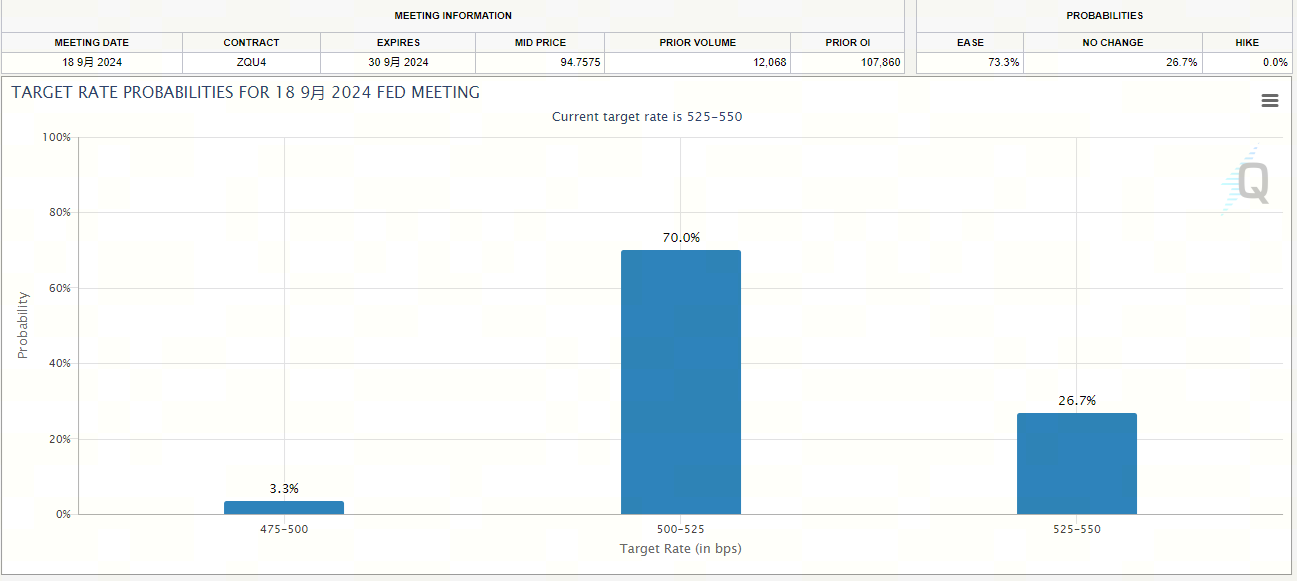
“Fed whisperer” Nick Timiraos agrees with this expectation of a rate cut. Last year, the rate cut seemed premature as inflation rose in the first quarter and the economy grew steadily, despite Powell providing some justification. However, this week, Powell returned to Congress with more compelling rationale, laying stronger groundwork for a rate cut. If the CPI data this week shows no big changes, it is highly probable that a rate-cutting cycle will begin in September. The market has started pricing in the slashing rates, with the probability of a September rate cut remaining stable at over 70%. Traders are betting that September will mark the beginning of rate cuts.
Current State and Future Trends of the Crypto Market

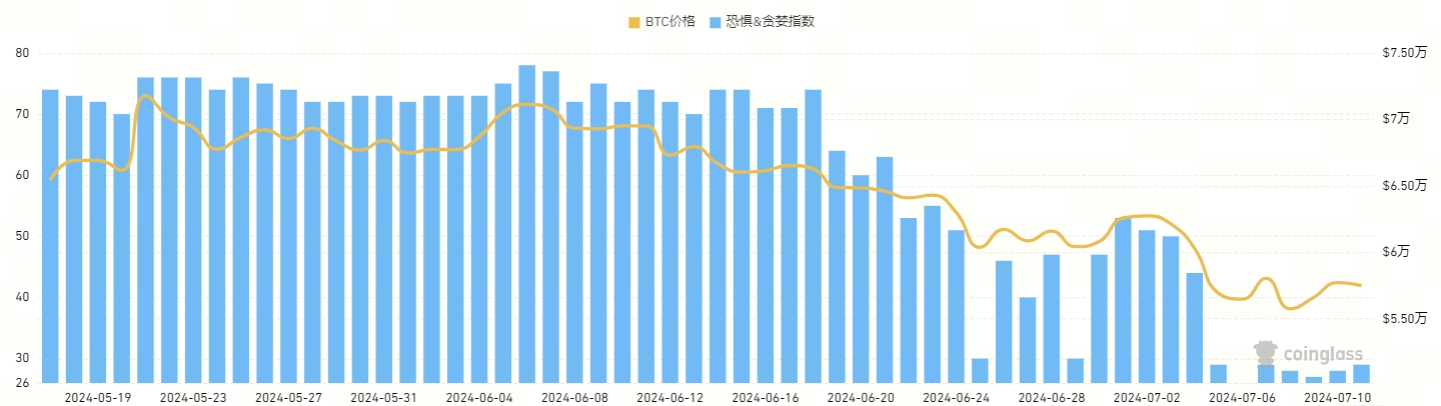
This week, the price of Bitcoin showed an upward trend to a broader market, owing to the decreasing selling pressure as well as the short-term market sentiment support by the potential spot Ethereum ETF launch in the week of July 15. As a result, the Bitcoin Fear and Greed Index is tipping into "Greed" territory.

Bitcoin, mirroring the recent performance of the S&P 500, has regained strong momentum. As highlighted in the last research report, the recent downturn in Bitcoin's price could be yet another "buy the dip" opportunity after the selling pressure subsided.
Promising Sectors

1. Bitcoin Layer2

Hot: UNISAT's New Swap Product

UniSat announced important updates to its Swap product on July 7. With most of the engineering works for the swap module completed, the remaining work primarily involves assisting indexers other than UniSat Indexer to effectively recognize and calculate inscriptions related to the swap module. The UniSat has also made significant progress on its way to scale and extend Bitcoin systematically with an approach named Fractal Bitcoin. Given the current progress, the team is pretty confident about delivering Fractal Bitcoin in September. On Fractal Bitcoin, the team will deliver a swap product identical in functionality to the mainnet swap module — Fractal Swap, ensuring projects on Fractal Bitcoin have good liquidity from the start. In subsequent iterations, BTC and other mainnet assets can also exist on Fractal Bitcoin as brc-20 wrapped assets, providing greater flexibility.

What to Expect Next

The emergence of Ordinals presents a historic first opportunity to make profits by earning transaction fees from mining Bitcoin other than relying on fixed block rewards, which is crucial for maintaining the Bitcoin ecosystem. If the unemployment rate cools off this week, Bitcoin L2 could potentially continue to outperform Bitcoin.

2. Ethereum Ecosystem

Hot: Imminent Approval of Spot Ethereum ETFs

The Illinois district court judge declared that Ethereum qualifies as a commodity, clearing hurdles for the final approval of spot Ethereum ETFs. The market tips the Ethereum ETF approvals by SEC in the week of July 15, making now a potentially high-reward entry point into the Ethereum ecosystem.

List of Promising Cryptos:

UNI (Uniswap): A decentralized trading protocol that enables cryptocurrency trading through automated market makers (AMMs) rather than traditional centralized exchanges.

LDO (Lido): A decentralized Ethereum 2.0 staking protocol that allows users to stake ETH on the Ethereum 2.0 Beacon Chain while receiving stETH tokens pegged to ETH at a ratio of 1:1.

ENA (Ethena): A synthetic dollar protocol built on Ethereum, providing internet native yields.It employs a delta hedging strategy to issue a synthetic dollar, USDe.

User Engagement

1. Trending Cryptos on X

$IO

IO.NET is an open-source, cross-platform network for high-performance asynchronous programming on the platform. It provides a concise and powerful way to handle communication and supports protocols like TCP, UDP, and Unix suite, suitable for building various network applications and services.

On July 5, @maid_crypto said on the X platform: "IO insiders transferred out 2.5M IO tokens."

IO.NET's team member @TheAntiApe published the denial on social media, saying "This is definitely a FUD. 1. The contract involved is the one used for the third IO airdrop, stemming from Streamflow. The 2.5M IO rewarding the community and the remaining GPU rewards used separate contracts, therefore the total IO in this contract is 2.5M. 2. The content in @maid_crypto's link filtered transactions of over 10,000 tokens. Remove the filter, and you will see all the small claims."

$SD

Stader is a prominent non-custodial staking platform based on smart contracts, simplifying the discovery and utilization of liquid staking solutions.Stader is building key staking middleware infra for multiple PoS networks for retail crypto users, exchanges and custodians. The mission of Stader is to bring sustainable staking yields from digital assets by simplifying staking while offering the best risk-adjusted returns to delegators. It wants to build a one-stop, one-click, dynamic decentralized stake management platform.

Major exchanges are currently in the process of listing SD.

2. Popular DApps

Layer3

Layer3 is an attention infrastructure across the EVM, Solana, and Cosmos. In the brief time since launch, Layer3 has facilitated over 96M interactions and issued its token L3. L3 holders can engage in governance and staking. The total supply is 300 million L3, with the allocation for community accounting for 51% and the initial airdrop for 5%, scheduled in summer 2024. Layer3 Foundation will release the tokenomics and distribution timeline. L3 holders will be able to participate in governance regarding certain aspects of the protocol.


Trending Cryptos

Related Reads

Three Rounds in a Row, Shanghai Gives Birth to a $10 Billion Satellite Internet Unicorn

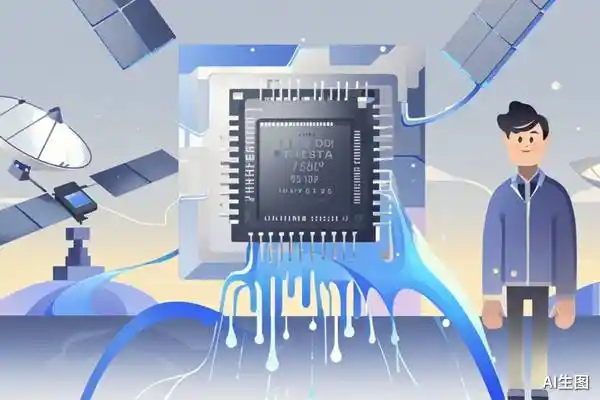
Shanghai-based semiconductor company Sixic has raised a new strategic investment round, securing backing from investors including Xinhuanet Venture Capital and Tongding Group, with continued support from existing investors. This marks the company's third disclosed financing this year, following a 1.5 billion RMB raise in February, officially cementing its status as a new Shanghai unicorn with a valuation exceeding 10 billion USD. The financing comes amid a dynamic period for China's commercial aerospace sector. Recent milestones include a successful controlled landing of a rocket first stage, signaling a path toward lower launch costs, and the establishment of a national Commercial Aerospace Innovation Consortium comprising 271 entities. Sixic stands out as the only 6G satellite internet baseband chip company within this consortium. The article highlights a market shift from a focus on rockets and satellites towards recognizing the value of the terminal and connectivity layer, essential for completing the commercial loop. Satellite internet, integral to 6G and commercial aerospace, is entering an industrial phase with clear policy support, including China's pioneering allocation of 6GHz spectrum for 6G R&D. Sixic specializes in 5G/6G satellite communication baseband chips, a highly complex segment. Unlike terrestrial communication, satellite chips must address challenges like high Doppler shift and signal loss. The company's technological validation is a key driver for investment. It has secured product certifications from leading global smartphone manufacturers, new energy vehicle makers, and communication module companies. A strategic partnership with ZTE was announced in March to collaborate on 6G NTN satellite internet. The company has achieved a full technical verification loop, from lab tests to in-orbit validation, including successfully demonstrating 5G NTN standard-based HD video calls via satellite in 2025. It maintains a 100% first-pass success rate for chip tape-outs and possesses full-stack in-house R&D capabilities. Sixic's strategy focuses on ASIC development for future commercial-scale, power-efficient consumer devices like smartphones. Its early and deep involvement in industry standards and constellation planning creates a significant competitive barrier. Looking ahead, Sixic's opportunity extends beyond chips into modules and terminal ecosystems. It has developed a full range of baseband SoC solutions and provides reference designs to help partners launch products quickly. The recent release of the CM7620 broadband satellite communication module at MWC Shanghai completes its "chip-module-terminal" portfolio. This latest funding round represents a strategic bet on the foundational communication capabilities that will underpin the next generation of 6G and satellite internet value chains.

marsbit4m ago

Three Rounds in a Row, Shanghai Gives Birth to a $10 Billion Satellite Internet Unicorn

marsbit4m ago

Is the iPhone Moment for Embodied AI Coming Soon?

Is the "iPhone moment" for embodied AI approaching? This article, based on a roundtable discussion, presents expert insights on the current state and future of embodied AI. The consensus is that the pivotal "iPhone moment" is still distant. The field is likened to the "brick phone" era, with technology paths—such as VLA and world models—not yet converging. While robotic "motor skills" (e.g., walking) have matured, the "brain" (decision-making, generalization) remains far from commercial readiness. A major bottleneck is data: an estimated tens of millions of data points are needed for a breakthrough, but only around 500,000 currently exist globally. Currently, cost remains prohibitive for widespread labor replacement, making the economic case challenging. However, experts see a three-tiered market potential: a billion-level market for emotional companionship (e.g., entertainment, basic care), a trillion-level market for commercial services (e.g., guides, receptionists), and a massive, long-term opportunity for physical labor in factories and homes. The discussion suggests that while humanoid robots face hurdles, non-humanoid embodied AI applications (like existing service robots) can be deployed sooner. The ultimate vision is for AI to operate seamlessly in the physical world, not just behind screens. Regarding AI tools, participants noted their widespread use for boosting efficiency in coding, research, and teaching. However, they warned against over-reliance due to risks of AI "deception" and the erosion of critical thinking, emphasizing that core judgment must remain with humans. In summary, embodied AI holds immense promise but requires significant progress in brain models, data collection, and cost reduction before achieving its transformative potential. Its development is expected to be gradual, advancing through specific use cases rather than a single explosive moment.

marsbit21m ago

Is the iPhone Moment for Embodied AI Coming Soon?

marsbit21m ago

Wall Street Morning Report: U.S. Stocks Suffer Collective Setback, Apple Hits New High Against the Trend, Tonight's CPI and Waller's Hearing to Determine Interest Rate Path

Wall Street Morning Report: U.S. stocks fell collectively, while Apple hit a new record high. Key events including tonight's CPI data and Fed Chair Walsh's testimony will set the direction for interest rates. Markets experienced a sharp "risk-off" move due to escalating Middle East tensions and unexpected hawkish signals from the Federal Reserve. Major indices declined, with the Nasdaq Composite leading losses, down 1.55%. The VIX fear index surged over 14%. Geopolitical tensions spiked as the U.S. conducted consecutive airstrikes on Iran and announced a maritime blockade of Iranian ports, set to begin on July 15. This triggered a panic-driven rally in oil, with WTI crude soaring over 9% to breach $80 per barrel. Safe-haven flows bolstered the U.S. dollar and Treasury yields, while gold plunged nearly 3%, losing its $4,000 level. Rate markets now price a nearly 50% chance of a Fed rate hike in July, up significantly from prior expectations, following hawkish commentary from Fed Governor Waller. The tech sector, particularly AI-related stocks, faced intense selling pressure. The Philadelphia Semiconductor Index plunged 4%. Notable decliners included SK Hynix (down 9% on its second trading day as an ADR), Nvidia, AMD, and Intel. In contrast, Apple shares rose 0.63% to a record high, viewed as a stable haven away from the costly AI data center arms race. Key events to watch include the U.S. June CPI inflation data and Fed Chair Walsh's Congressional testimony tonight, which will critically influence the Fed's policy path. Major bank earnings also begin today. The formal implementation of the U.S. maritime blockade against Iran on July 15 and upcoming events like TSMC's Q2 earnings and a SpaceX Starship test flight remain in focus.

marsbit1h ago

Wall Street Morning Report: U.S. Stocks Suffer Collective Setback, Apple Hits New High Against the Trend, Tonight's CPI and Waller's Hearing to Determine Interest Rate Path

marsbit1h ago

Crude Oil Surges 10% in Intraday Trading! US Military Restores Blockade on Iran, Trump Warns of 'Heavy Blows' Tonight and Tomorrow, Imposes 20% Fee on Strait Shipping

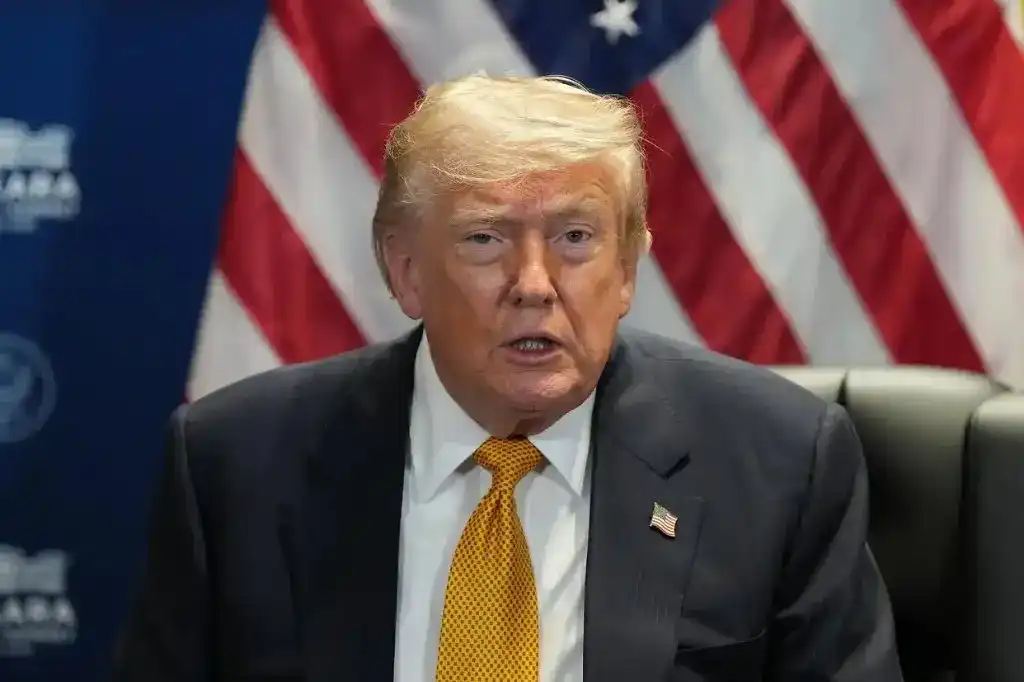
Crude oil prices surged up to 10% intraday as tensions between the US and Iran escalated sharply. President Trump announced the reinstatement of a maritime blockade against Iran, targeting its ships and their customers, while stating the Strait of Hormuz would remain open to all other nations. He further declared that the US, as the "guardian" of the strait, would impose a 20% fee on all cargo transiting the strategic waterway to compensate for security costs. The US Central Command confirmed the naval blockade would commence on July 14 (GMT). Following Trump's statements, reports emerged of explosions near Iran's Larak Island and the port of Bandar Abbas, though Iranian authorities did not confirm their nature. Iran's Foreign Minister criticized the proposed 20% fee as excessive, asserting Iran's role as the guardian of the strait. An Iranian military spokesperson warned of a strong response to any unauthorized US interference in the waterway. The United Nations' International Maritime Organization (IMO) expressed opposition to charging tolls for passage through international straits, stating such measures lack legal foundation. Market reactions were pronounced, with Brent crude briefly surpassing $83 and WTI above $78. The situation intensified as Trump notified Congress of renewed hostilities with Iran, following US airstrikes on Iranian targets.

marsbit1h ago

Crude Oil Surges 10% in Intraday Trading! US Military Restores Blockade on Iran, Trump Warns of 'Heavy Blows' Tonight and Tomorrow, Imposes 20% Fee on Strait Shipping

marsbit1h ago

Trading

Spot

Hot Articles

What is $BITCOIN

DIGITAL GOLD ($BITCOIN): A Comprehensive Analysis Introduction to DIGITAL GOLD ($BITCOIN) DIGITAL GOLD ($BITCOIN) is a blockchain-based project operating on the Solana network, which aims to combine the characteristics of traditional precious metals with the innovation of decentralized technologies. While it shares a name with Bitcoin, often referred to as “digital gold” due to its perception as a store of value, DIGITAL GOLD is a separate token designed to create a unique ecosystem within the Web3 landscape. Its goal is to position itself as a viable alternative digital asset, although specifics regarding its applications and functionalities are still developing. What is DIGITAL GOLD ($BITCOIN)? DIGITAL GOLD ($BITCOIN) is a cryptocurrency token explicitly designed for use on the Solana blockchain. In contrast to Bitcoin, which provides a widely recognized value storage role, this token appears to focus on broader applications and characteristics. Notable aspects include: Blockchain Infrastructure: The token is built on the Solana blockchain, known for its capacity to handle high-speed and low-cost transactions. Supply Dynamics: DIGITAL GOLD has a maximum supply capped at 100 quadrillion tokens (100P $BITCOIN), although details regarding its circulating supply are currently undisclosed. Utility: While precise functionalities are not explicitly outlined, there are indications that the token could be utilized for various applications, potentially involving decentralized applications (dApps) or asset tokenization strategies. Who is the Creator of DIGITAL GOLD ($BITCOIN)? At present, the identity of the creators and development team behind DIGITAL GOLD ($BITCOIN) remains unknown. This situation is typical among many innovative projects within the blockchain space, particularly those aligning with decentralized finance and meme coin phenomena. While such anonymity may foster a community-driven culture, it intensifies concerns about governance and accountability. Who are the Investors of DIGITAL GOLD ($BITCOIN)? The available information indicates that DIGITAL GOLD ($BITCOIN) does not have any known institutional backers or prominent venture capital investments. The project seems to operate on a peer-to-peer model focused on community support and adoption rather than traditional funding routes. Its activity and liquidity are primarily situated on decentralized exchanges (DEXs), such as PumpSwap, rather than established centralized trading platforms, further highlighting its grassroots approach. How DIGITAL GOLD ($BITCOIN) Works The operational mechanics of DIGITAL GOLD ($BITCOIN) can be elaborated on based on its blockchain design and network attributes: Consensus Mechanism: By leveraging Solana’s unique proof-of-history (PoH) combined with a proof-of-stake (PoS) model, the project ensures efficient transaction validation contributing to the network's high performance. Tokenomics: While specific deflationary mechanisms have not been extensively detailed, the vast maximum token supply implies that it may cater to microtransactions or niche use cases that are still to be defined. Interoperability: There exists the potential for integration with Solana’s broader ecosystem, including various decentralized finance (DeFi) platforms. However, the details regarding specific integrations remain unspecified. Timeline of Key Events Here is a timeline that highlights significant milestones concerning DIGITAL GOLD ($BITCOIN): 2023: The initial deployment of the token occurs on the Solana blockchain, marked by its contract address. 2024: DIGITAL GOLD gains visibility as it becomes available for trading on decentralized exchanges like PumpSwap, allowing users to trade it against SOL. 2025: The project witnesses sporadic trading activity and potential interest in community-led engagements, although no noteworthy partnerships or technical advancements have been documented as of yet. Critical Analysis Strengths Scalability: The underlying Solana infrastructure supports high transaction volumes, which could enhance the utility of $BITCOIN in various transaction scenarios. Accessibility: The potential low trading price per token could attract retail investors, facilitating wider participation due to fractional ownership opportunities. Risks Lack of Transparency: The absence of publicly known backers, developers, or an audit process may yield skepticism regarding the project's sustainability and trustworthiness. Market Volatility: The trading activity is heavily reliant on speculative behavior, which can result in significant price volatility and uncertainty for investors. Conclusion DIGITAL GOLD ($BITCOIN) emerges as an intriguing yet ambiguous project within the rapidly evolving Solana ecosystem. While it attempts to leverage the “digital gold” narrative, its departure from Bitcoin's established role as a store of value underscores the need for a clearer differentiation of its intended utility and governance structure. Future acceptance and adoption will likely depend on addressing the current opacity and defining its operational and economic strategies more explicitly. Note: This report encompasses synthesised information available as of October 2023, and developments may have transpired beyond the research period.

780 Total ViewsPublished 2025.05.13Updated 2025.05.13

What is $BITCOIN

Discussions

Welcome to the HTX Community. Here, you can stay informed about the latest platform developments and gain access to professional market insights. Users' opinions on the price of BTC (BTC) are presented below.

活动图片