SignalPlus波动率专栏(20240619):SEC结束对以太坊调查

Odaily星球日报Published on 2024-06-19Last updated on 2024-06-19

Abstract

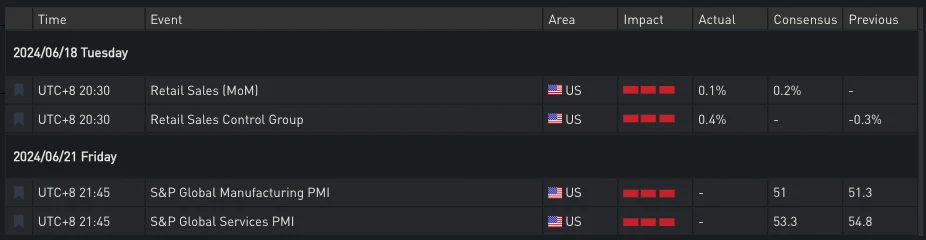
昨日(18 JUN)被市场称为“恐怖数据”的美国5月零售销售月率录得低于预期的0.1% ,同时前值从0%被下修至-0.2% 。数字货币方面,过去一日市场的焦点集中在以太坊身上。

SignalPlus波动率专栏(20240619):SEC结束对以太坊调查

SignalPlus波动率专栏(20240619):SEC结束对以太坊调查

昨日(18 JUN)被市场称为“恐怖数据”的美国 5 月零售销售月率录得低于预期的 0.1% ,同时前值从 0% 被下修至-0.2% 。数据公布后,美债收益率小幅下降,回吐昨日涨幅,三大股指收盘微涨。另一方面,美联储多位官员发表讲话,均表达了需要“再过几个月”亦或是“几个季度”才能看到支持降息的数据相关的保守观点。
SignalPlus波动率专栏(20240619):SEC结束对以太坊调查

Source: SignalPlus, Economic Calendar

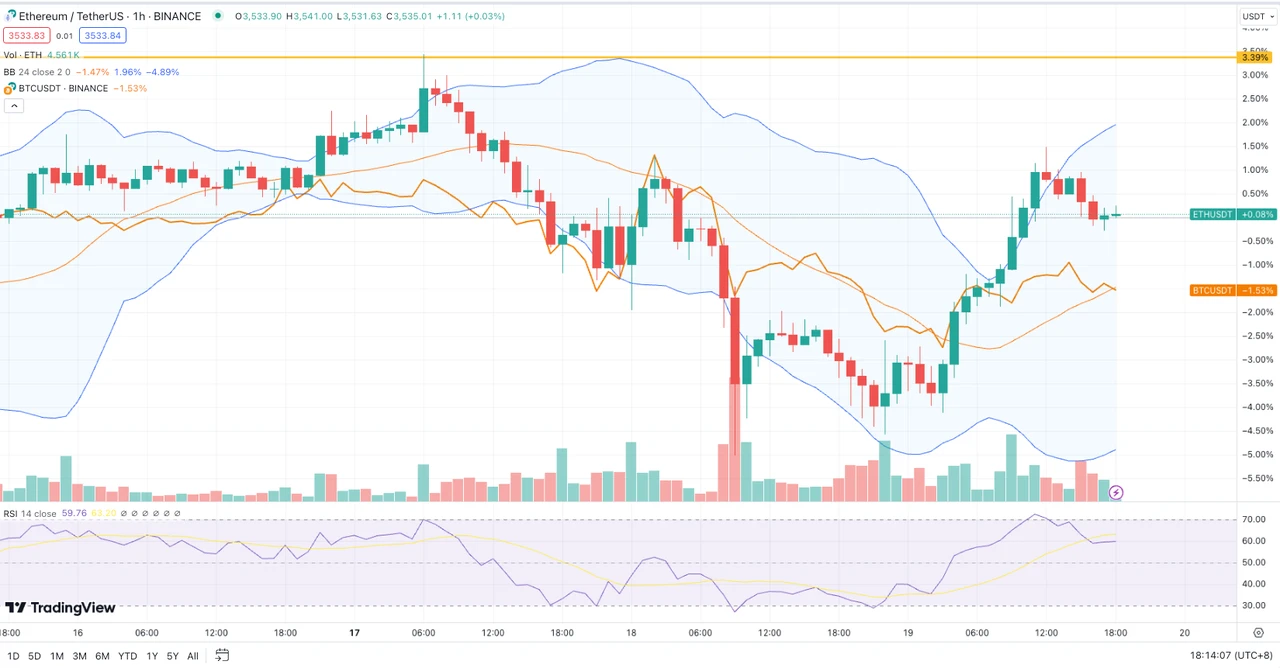
数字货币方面,过去一日市场的焦点集中在以太坊身上。首先要提及的是 SEC 结束对以太坊 2.0 区块链生态系统的调查,以太坊开发上 Consensys 在推特上发文称:“SEC 执法部门已通知我们,将结束对以太坊 2.0 的调查。这意味着 SEC 不会指控以太坊的销售是证券交易。” 市场视之为一道重要利好,推动以太币价格反弹,日内上涨超过 3.+%。

另外,彭博 ETF 分析师 James Seyffart 发文表示以太坊现货可能在 7 月 4 号之前推出,再度吸引到了交易员的下注。值得一提的是,加密货币分析师 Lark Davis 指出,Glassnode 数据显示 ETH 交易所余额已达到 8 年来的最低点,目前只有 10% 的 ETH 在交易所流通。同时他也指出,若未来两周以太坊现货 ETF 开始交易,大量机构资金将涌入市场,一场大规模的供应冲击即将到来。
SignalPlus波动率专栏(20240619):SEC结束对以太坊调查

Source: TradingView,ETH 价格与 BTC 价格走势对比

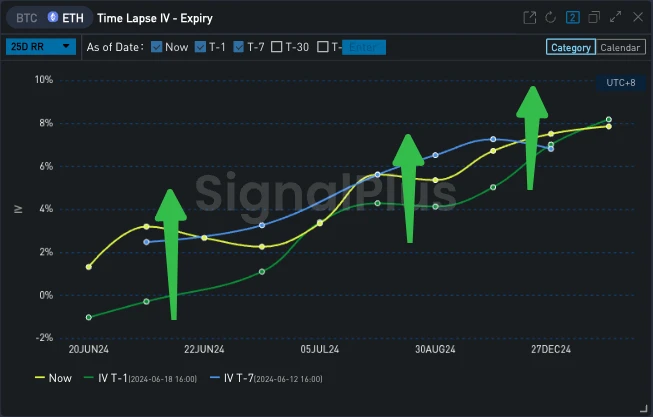
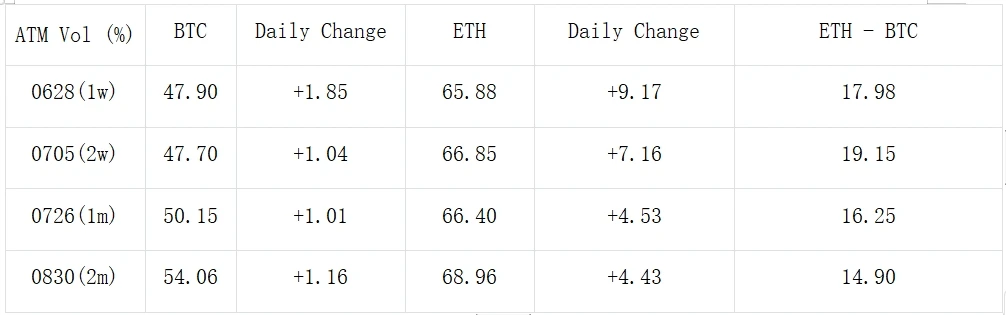
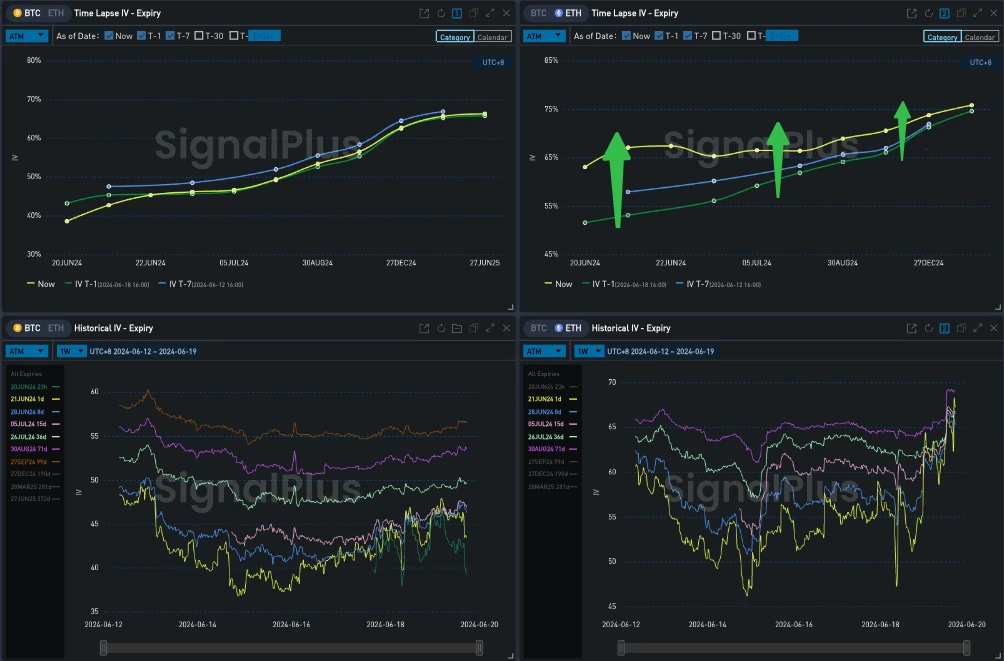
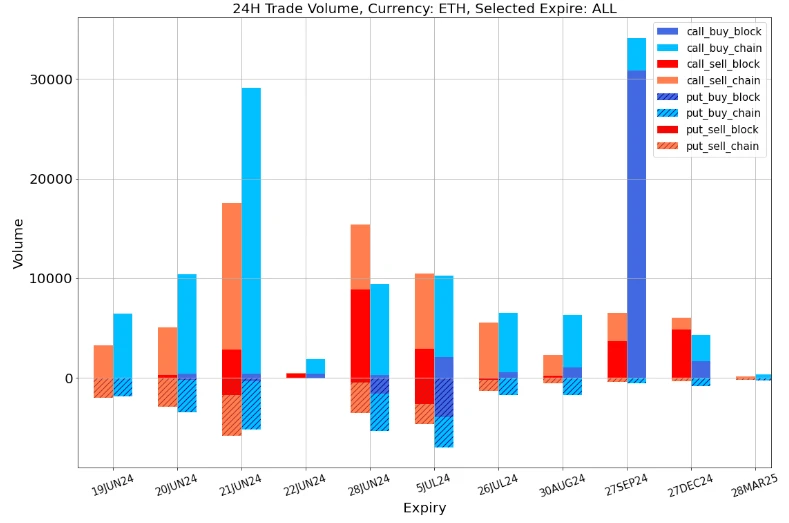
期权方面,受宏观消息影响,ETH 期权隐含波动率曲线走平走高,整体达到 65% 左右。大宗看涨期权交易火热,较为代表的有远期 27 SEP 24-4000-C 共计 30500 张买入,以及 28 JUN 24-4000-C 单笔 7000 张的买入建仓,当周看涨期权也受价格上涨提振而大受散户欢迎,推动微笑曲线整体朝看涨期权倾斜。
SignalPlus波动率专栏(20240619):SEC结束对以太坊调查

Source: Deribit (截至 19 JUN 16: 00 UTC+ 8)
SignalPlus波动率专栏(20240619):SEC结束对以太坊调查

Source: SignalPlus,ETH IV 水平显著上涨

SignalPlus波动率专栏(20240619):SEC结束对以太坊调查

Source: SignalPlus, ETH Vol Skew 向看涨期权倾斜
SignalPlus波动率专栏(20240619):SEC结束对以太坊调查

Data Source: Deribit, ETH 交易总体分布

SignalPlus波动率专栏(20240619):SEC结束对以太坊调查

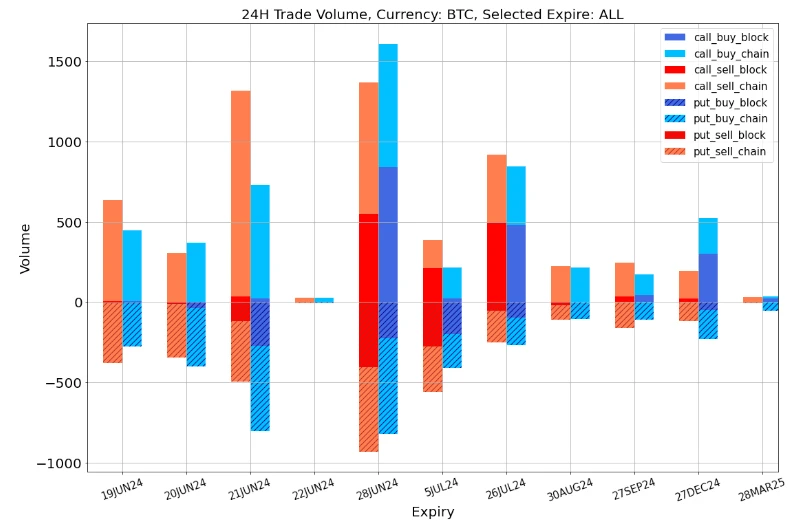
Data Source: Deribit,BTC 交易总体分布

SignalPlus波动率专栏(20240619):SEC结束对以太坊调查

Source: Deribit Block Trade

SignalPlus波动率专栏(20240619):SEC结束对以太坊调查

Source: Deribit Block Trade

SignalPlus波动率专栏(20240619):SEC结束对以太坊调查

您可在 ChatGPT 4.0 的 Plugin Store 搜索 SignalPlus ,获取实时加密资讯。如果想即时收到我们的更新,欢迎关注我们的推特账号@SignalPlus_Web3 ,或者加入我们的微信群(添加小助手微信:SignalPlus 123)、Telegram 群以及 Discord 社群,和更多朋友一起交流互动。SignalPlus Official Website:https://www.signalplus.com

Trending Cryptos

Related Reads

Japanese Rates Return to 1996 Levels, Can Bitcoin Withstand the September Rate Hike?

Japanese borrowing costs have hit their highest levels since 1996, with yields on 30-year bonds reaching 4.185%. This marks a significant shift for a country long reliant on negative rates. Concurrently, Bitcoin surged 22% past $80,000, seemingly decoupled from the bond market turmoil. Historically, the massive yen carry trade has fueled global risk assets, predicated on near-zero Japanese rates. This assumption is now challenged. A potential rate hike by the Bank of Japan in September could strengthen the yen, forcing carry trade unwinds and potentially triggering a global deleveraging event, as seen in August 2024 when Bitcoin fell sharply. Conversely, if the yen weakens further, Bitcoin could attract Japanese investors as a hedge against currency depreciation and the country's massive debt burden. Institutional adoption in Japan is growing, with regulatory changes paving the way for potential crypto ETFs by 2027. The key variable is the BoJ's September policy signal. If it hints at a rapid tightening cycle to combat inflation and support the yen, risk assets like Bitcoin may face selling pressure from carry trade liquidation. However, if debt sustainability concerns limit its hawkishness, leading to a weaker yen, Bitcoin could benefit. Currently, the market is betting on a slow-motion debt crisis, not a sudden collapse. While Bitcoin shows resilience, its fate remains tied to the direction of the yen and the scale of any carry trade unwind.

marsbit4m ago

Japanese Rates Return to 1996 Levels, Can Bitcoin Withstand the September Rate Hike?

marsbit4m ago

How Can Bitcoin Resist Quantum Computers? A Comparison of Three Lattice-Based Signature Schemes

"Bitcoin's Quantum Defense: A Comparison of Three Lattice-Based Signature Schemes" by the Blockstream Research Team explores how Bitcoin can transition to quantum-resistant digital signatures, as current schemes like Schnorr and ECDSA are vulnerable to quantum computers. The report evaluates three lattice-based signature candidates—Dilithium, Falcon, and Hawk—against criteria like on-chain cost (key/signature size), implementation complexity, deployment risks, and support for Bitcoin's key derivation standard (BIP-32). The analysis recommends a minimum Security Level 3 for Bitcoin due to its long-term security needs. Dilithium (ML-DSA) is praised for its simplicity and integer-only operations, making it easier to implement securely, but it has the largest signature size (~5.3 KB for Level 3). Falcon (FN-DSA) offers the most compact signatures (e.g., ~3.1 KB for Level 5) and the fastest verification, though its signing requires complex floating-point sampling—a solvable engineering challenge. Hawk, despite its small size, was withdrawn from NIST standardization after a security vulnerability was discovered, highlighting the importance of conservative security margins. Currently, neither Dilithium nor Falcon has a fully viable, production-ready BIP-32 key derivation method. The report concludes that if a lattice-based scheme had to be chosen now, Falcon-1024 would be the preferred option for its balance of size, speed, and mature security assumptions. However, the short-term recommendation remains hash-based signatures (like SPHINCS+) for their lower risk, with a potential future hybrid or full transition to Falcon once its standard (FN-DSA) is finalized and well-supported.

marsbit6m ago

How Can Bitcoin Resist Quantum Computers? A Comparison of Three Lattice-Based Signature Schemes

marsbit6m ago

Trading

Spot

Hot Articles

Discussions

Welcome to the HTX Community. Here, you can stay informed about the latest platform developments and gain access to professional market insights. Users' opinions on the price of ETH (ETH) are presented below.

活动图片