一文概览Solana上流动性质押发展态势

Odaily星球日报Published on 2024-05-07Last updated on 2024-05-07

Abstract

流动性质押代币要取得成功,最重要的因素是流动性、DeFi 整合 / 合作伙伴、扩展支持多链。

原文作者:Tom Wan,链上数据分析师

原文编译: 1912212.eth,Foresight News

以太坊生态的流动性质押曾经掀起一阵质押风,甚至如今的再质押协议进展也正如火如荼。但一个有趣的现象是,这股热潮似乎并未波及到其他链,这其中的原因,除了以太坊庞大的市值仍占据显著优势外,还有哪些深层次的因素在起作用呢?当我们把实现转向 Solana,与以太坊上的流动性质押协议,Solana 上的 LST 如今发展态势究竟如何?本篇文章为你解开全貌。

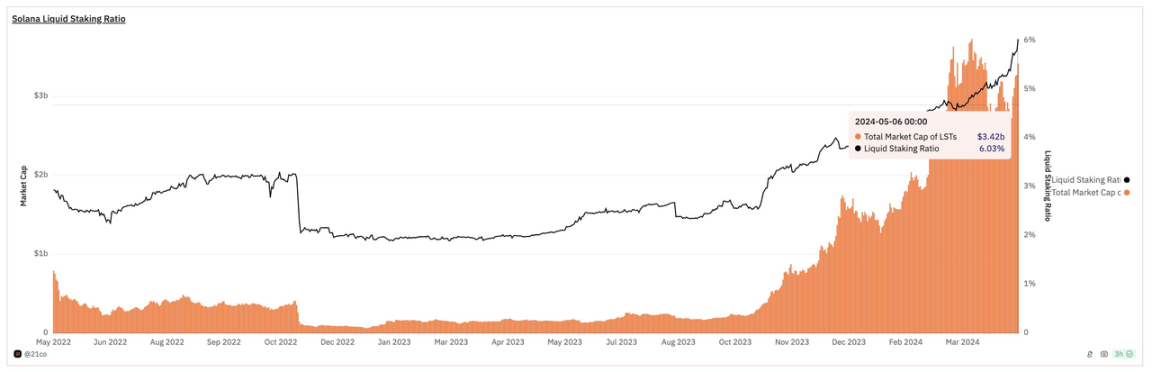
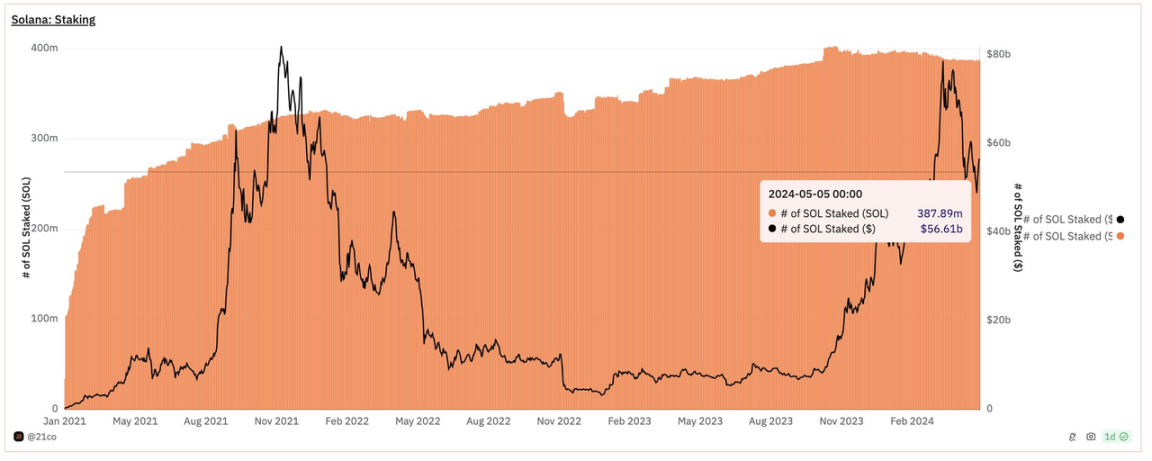
1、尽管质押率超过 60% ,但只有 6% ( 34 亿美元 ) 的被质押 SOL 来自流动性质押
一文概览Solana上流动性质押发展态势

相反,以太坊有 32% 的质押量来自流动性质押。在我看来,造成这种差异的原因在于是否存在「协议内委托」。

Solana 为 SOL 质押者提供了一种简单方法来委托他们的 SOL,而 Lido 是早期委托 ETH 以获得质押奖励的唯一渠道之一。

2、Solana LST(流动性质押代币) 的市场份额比以太坊更均衡
一文概览Solana上流动性质押发展态势

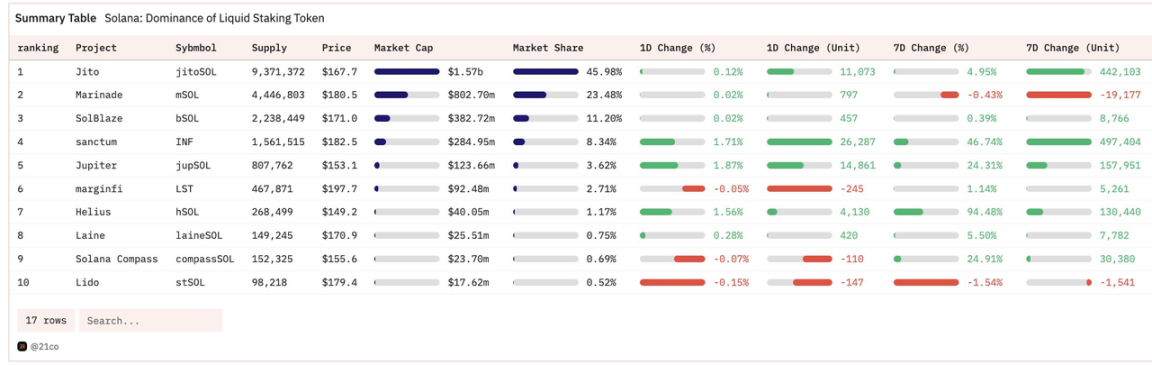
以太坊上, 68% 的市场份额来自 Lido。相比之下,Solana 上的流动性质押代币处于多寡头状态。

Solana 前 3 大流动质押代币占据市场份额的 80% 。

3、Solana 上的流动性质押历史

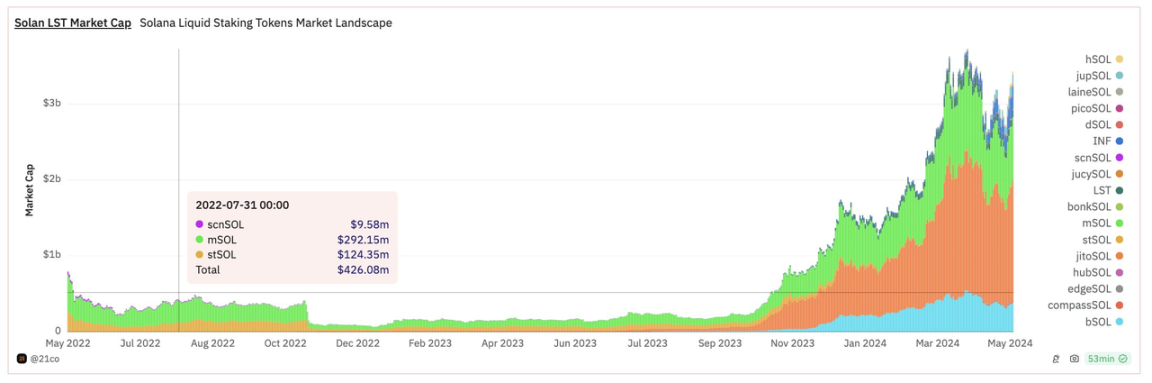
早期市场被 Lido 的 stSOL ( 33% )、Marinade 的 mSOL ( 60% ) 和 Sanctum 的 scnSOL ( 7% ) 瓜分,Solana 的 LST 总市值不到 10 亿美元。
一文概览Solana上流动性质押发展态势

这种缺乏采用可归因于营销和整合。当时,还没有很多针对 LST 的高质量 DeFi 协议,而且叙述的重点也不是流动性质押。

FTX 崩盘时,流动质押比例从 3.2% 下降至 2% 。

4、LST 领导者

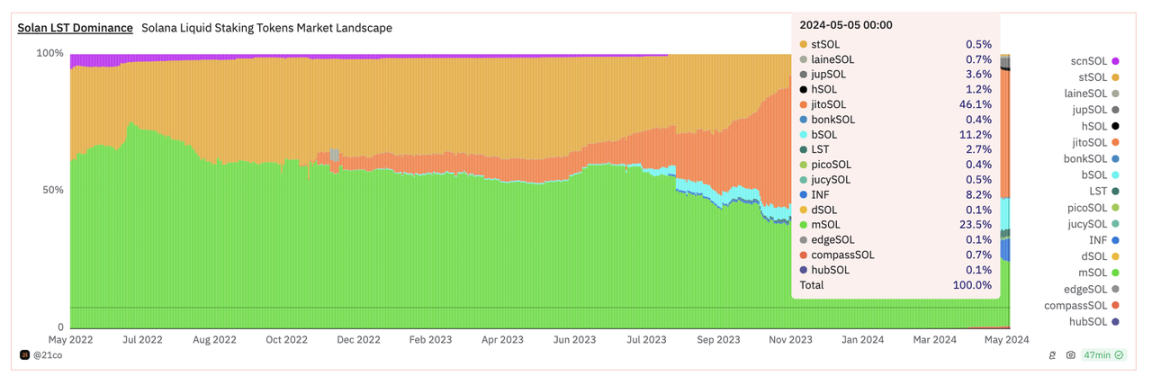
Jito 在 2022 年 11 月推出 jitoSOL,他们用了大约 1 年的时间逆转超越 stSOL 和 mSOL,成为 Solana 上最具主导地位的 LST,拥有 46% 的市场份额。
一文概览Solana上流动性质押发展态势

第二名:mSOL(23.5% )

第三名:bSOL(11.2% )

第四名:INF(8.2% )

第五名:jupSOL(3.6% )

5、Jito 的成功

总而言之,流动性质押代币要取得成功,最重要的因素是流动性、DeFi 整合 / 合作伙伴、扩展支持多链。

6、流动性质押是 Solana DeFi 尚未开发的潜力,这可能会将其 TVL 提高至 15 亿至 17 亿美元

流动性质押代币推动了以太坊 DeFi 生态系统的增长。例如,AAVE v3 的 TVL 的 40% 来自 wstETH。它可以作为产生收益的抵押品,并释放 DeFi 的更多潜力,如 Pendle、Eigenlayer、Ethena 等。
一文概览Solana上流动性质押发展态势

以下是我对 Solana 1-2 年后流动质押比率的预期(基于当前估值):

  • 基本情况: 10% ,DeFi 中额外提供 15 亿美元的流动性;

  • 看涨案例: 15% ,DeFi 中额外提供 50 亿美元流动性;

  • 长期牛市情况: 30% ,与以太坊具有相似的流动质押比例。为 DeFi 添加额外的 135 亿美元的流动性。

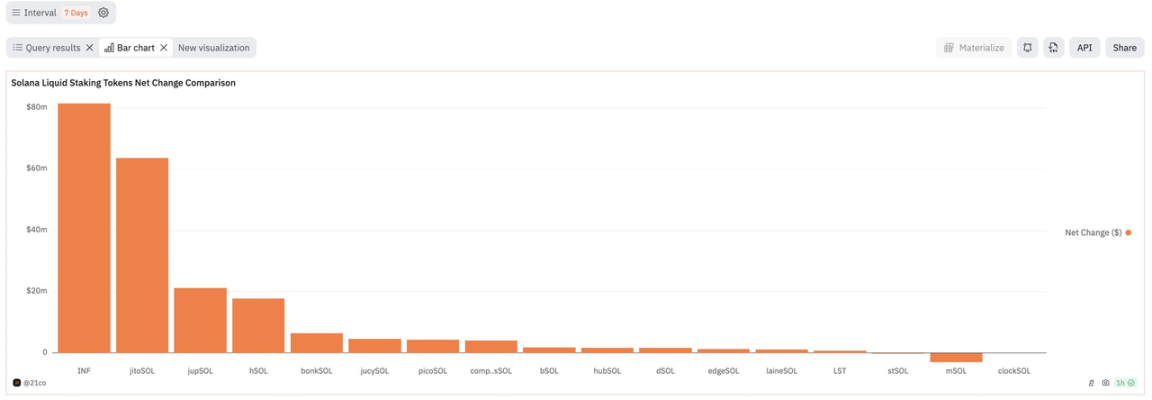
7、很多优秀 DeFi 团队正在共同努力,将更多被质押的 SOL 引入 DeFi
一文概览Solana上流动性质押发展态势

Drift Protocol、Jupiter、Marginifi、BONK、Helius labs、Sanctumso、SolanaCompass 都推出了流动性质押代币。

作为 DeFi 用户,市场上有竞争和创新总是更好。这就是我对 Solana DeFi 未来持乐观态度的理由。

Trending Cryptos

Related Reads

Stablecoin Salaries: Why Are They Becoming the First Choice for Cross-Border Workers?

Stablecoin Salaries: Why They're Becoming the Top Choice for Global Remote Workers The traditional global salary system carries hidden exchange rate risks for freelancers in countries like India, Argentina, and Turkey who earn in USD but spend in local currencies. When salaries are instantly converted to local currency, workers lose purchasing power if that currency depreciates against the dollar. For instance, an Indian designer converting a $2000 monthly salary to rupees lost over 10% in purchasing power last year due to the rupee's decline. Holding even a portion of income in USD or USD-pegged stablecoins can preserve value. Stablecoins offer a solution by breaking down barriers to holding dollars. Opening foreign USD bank accounts is difficult, and international wire transfers incur high fees (averaging 6.5%) and delays. In contrast, stablecoin transfers are fast and low-cost. Furthermore, many countries with high inflation and depreciating currencies restrict citizens' access to foreign currency. Self-custody stablecoin wallets enable workers to hold dollar-equivalent assets without needing bank approval, bypassing these limits. These wallets integrate multiple functions: they allow users to convert only what's needed for daily expenses into local currency, keep the remainder in stablecoins, connect to on-chain lending or yield products, and even link to payment cards for direct spending. While challenges remain—such as the lack of deposit insurance and evolving regulatory frameworks—the trend is clear. Reports indicate a growing preference for USD or stablecoin payments among freelancers in high-inflation countries. This shift represents a fundamental restructuring of salary functions: payment currency, asset storage, yield generation, spending, and cross-border flow. It offers the freedom and flexibility that are core to money's purpose, signaling a profound change in the global financial landscape.

Foresight News10m ago

Stablecoin Salaries: Why Are They Becoming the First Choice for Cross-Border Workers?

Foresight News10m ago

Don't Just Focus on Layoffs, The New Structure of the Ethereum Foundation is More Worthy of Appreciation

The Ethereum Foundation (EF) has undergone a significant organizational restructuring, with the most notable change being a strategic refocusing of its priorities rather than just a 20% staff reduction (approximately 54 people). The new structure clearly prioritizes the Protocol and Access layers, which now comprise the largest teams (57 and 34 people, respectively). This signals EF's intent to concentrate its core resources on fundamental, hard-to-outsource aspects of Ethereum: protocol evolution, security, privacy, client development, and the foundational access layer. Key areas within the Protocol layer, led by an architecture group including Vitalik Buterin and Justin Drake, receive heightened emphasis. These include post-quantum security, zkEVM, formal verification, and long-term roadmap development ("Strawmap"). This reflects a shift towards tackling complex, interdependent challenges like scalability, privacy, and future-proofing the protocol, potentially moving from a pure "redundant security" multi-client model towards more specialized clients aided by AI-assisted formal verification. Financially, EF's budget is being reduced by approximately 40%. The goal is to transition from spending about 15% of its remaining funds annually to a more sustainable 5% rate, akin to a long-term endowment, ensuring its longevity. Concurrently, the restructuring involves pushing certain responsibilities—such as application development, adoption, and ecosystem coordination—to external organizations like EthLabs, the Ethereum Apps Guild, and others. This "multi-node" model aims to increase ecosystem resilience by decentralizing functions beyond the EF, though it introduces new coordination challenges. In essence, the reorganization represents EF consciously narrowing its scope to focus on the hardest, most critical protocol-level problems while fostering a more distributed and sustainable ecosystem structure for Ethereum's future growth.

Foresight News38m ago

Don't Just Focus on Layoffs, The New Structure of the Ethereum Foundation is More Worthy of Appreciation

Foresight News38m ago

Report Analysis: What Is Coherent Planning as CPO Booms?

Title: Report Interpretation: What Moves Is Coherent Making Amid the CPO Boom? Summary: JP Morgan analyst Samik Chatterjee reiterates an Overweight rating on Coherent (COHR), citing undervalued growth potential across three core areas: data center optical transceivers, co-packaged optics (CPO) chips, and industrial lasers/thermal management. COHR's 1.6T data center transceivers are in high demand, with pricing remaining firm. The rise of CPO is seen not as a threat but as a catalyst, creating higher demand for sophisticated optical components, an area where COHR holds a competitive edge with its comprehensive portfolio (lasers, isolators, VCSELs, thermoelectric coolers). Each CPO chip offers significantly greater revenue potential than traditional transceivers. Furthermore, its Optical Circuit Switch (OCS) technology targets a potential $4B market with reliability and power advantages. The company is expanding its InP (Indium Phosphide) device capacity fourfold within two years, securing substrate supply and transitioning to more cost-effective 6-inch wafers. As one of only two major suppliers of high-quality pump lasers—currently in severe shortage—COHR can now move up the value chain from components to complete line cards/systems, boosting ASP over tenfold. Gross margin targets (>42%) may be revised upward due to high-end product premiums, cost improvements from the wafer transition, and contributions from new high-margin products like CPO and OCS. Its efficient thermadite thermal material also offers long-term growth. Industrial segment revenue grows at a steady 5-10%, supported by semiconductor equipment orders. Changes in Apple's Face ID protocol present a re-competition opportunity for 3D sensing. Overall, Coherent is positioned as a key infrastructure provider, with AI-driven compute demand fueling the need for high-speed optical interconnectivity. Growth from CPO/OCS, stable industrial performance, and margin improvement support the bullish thesis. *Disclaimer: This summary interprets a third-party analyst report from JP Morgan. It does not constitute investment advice.*

marsbit1h ago

Report Analysis: What Is Coherent Planning as CPO Booms?

marsbit1h ago

After Laying Off 20% of Staff, What Are the Key Points of EF's New Structure?

Following the completion of a months-long organizational restructuring, the Ethereum Foundation (EF) announced a 20% workforce reduction (approximately 54 employees) on June 23rd. It reorganized its teams into five new core clusters: Protocol, Access, User, Community, and Institutional (plus Operations/Management support units). Officially, this move implements the EF's 2026 Mandate and 2025 Treasury Management Policy, aiming to create a more focused and "self-sovereign" organization. The restructuring prioritizes the CROPS principles—Censorship Resistance, Openness & Freedom, Privacy, and Security—as foundational organizational tenets. The Protocol cluster will focus on core protocol R&D, including MEV reduction and zkEVM. The Access cluster emphasizes preserving user "zero option" for non-custodial, permissionless interaction. The User, Community, and Institutional clusters will manage external engagement, with the latter handling institutional and regulatory matters. While offering enhanced severance and transition support for affected employees, the EF did not disclose budget allocations or specific KPIs for the new clusters. This has led to market uncertainty about the impact on project funding and development priorities. Analysts note the announcement's positive tone of mission focus contrasts with a backdrop of recent EF leadership changes and broader ecosystem pressures. The true impact—whether this signifies strategic realignment or reactive contraction—will become clearer as the new structure's resource allocation and project prioritization are revealed in the coming months.

marsbit1h ago

After Laying Off 20% of Staff, What Are the Key Points of EF's New Structure?

marsbit1h ago

Trading

Spot
Futures

Hot Articles

Discussions

Welcome to the HTX Community. Here, you can stay informed about the latest platform developments and gain access to professional market insights. Users' opinions on the price of ETH (ETH) are presented below.

活动图片