融资千万、注册用户超130万,Solana生态3A链游Nyan Heroes能否引燃GameFi?

Odaily星球日报Published on 2024-05-07Last updated on 2024-05-07

Abstract

20%的Web2游戏玩家为基础,Season 2 NYAN代币空投活动已上线。

原创 | Odaily星球日报

作者 | Asher

融资千万、注册用户超130万,Solana生态3A链游Nyan Heroes能否引燃GameFi?

今年随着比特币创下历史新高,整个加密市场持续火热,人们期待的牛市也随之到来,而在这个热潮中,GameFi 一时成为社区讨论的焦点之一。那么,在众多链游项目的竞争激烈的当下,什么样的链游才能真正激发加密市场的狂热,甚至破圈呢?

在持续两周的 pre-alpha 活动期间,用户注册数超 130 万、日活跃用户超 4.5 万、独立活跃钱包数超 70 万。这样的数据成绩让Odaily星球日报关注到 Solnan 生态头部 GameFi 项目 Nyan Heroes。

Nyan Heroes 是一款建立在 Solana 区块链上的第三人称射击游戏,将快节奏有竞争力的游戏玩法与现实世界的影响相结合,由虚幻引擎 5 和区块链技术支持,并提供 3A 多人游戏体验,具有独特的机械角色和游戏能力,据悉 Nyan Heroes 是Solana 基金会支持的旗舰链游项目下面,Odaily星球日报从团队信息、项目可玩性、代币经济模型、内测数据等角度全面探究 Solana 生态 3A 链游巨作 Nyan Heroes。

当下 GameFi 无法大规模采用的原因

在 Web 2 的用户眼中,Web 3 被视为一个全新且充满未知的领域,其中蕴含着许多潜力和可能性,但同时也存在着种种挑战和障碍。而如何促进其大规模采用一直是从业者们努力的目标。若说 Web 3 将最终取代 Web 2 ,那么毫无疑问,GameFi 必将成为 Web 3 阵营中最锐利的武器。

因此,GameFi 板块备受从业者们青睐。他们吸取了上一轮链游浪潮中的经验教训,不断打磨,从而在本轮行情中涌现大量新 GameFi 项目。然而,目前看来,尚未出现像 Axie Infinity 那样成功破圈的 Play to Earn 概念,或者像 StepN 那样将运动与游戏相结合,并凭借出色的营销和运营,带动更多 Web 2 用户进入 GameFi 的案例。Odaily星球日报根据链游社区大量成员反馈总结得出,目前链游存在以下几点问题:

  • 代币活动激励不足,参与用户少。

  • 服务器不稳定,频繁宕机。

  • 游戏可玩性不佳,无法吸引玩家深度参与。

  • Web 2 用户基础薄弱,代币出现死亡螺旋。

这些问题在当前链游中普遍存在,可以说是一个通病,而其中 Web 2 用户基础薄弱更是其中一个致命的难题。然而,当我们观察 Nyan Heroes 的 pre-alpha 活动数据时,其中一项数据特别引人关注:“有 20% 的玩家来自 Web 2 游戏”。这或许意味着我们真正找到了下一个可能成为爆款 GameFi 项目——Nyan Heroes。

Nyan Heroes:游戏可玩性+代币激励

基本概况

Nyan Heroes 是一款基于 Solana 生态的第三人称射击游戏,玩家扮演的是一只小猫驾驶着巨型机甲,在游戏中利用独特的能力和高级的猫科动物动作来追踪目标并击败对手。

Nyan Heroes 团队在游戏开发领域拥有丰富的经验,其成员曾参与开发诸如 Destiny、Halo、Mass Effect 和 Assassin Creed 等备受瞩目的大作,深耕游戏行业多年。同时,Nyan Heroes 有着强大的生态合作伙伴。该链游得到了 Razer(雷蛇)、Xterio、Immutable、Superverse、NeoTokyo、Elixir、Hyperplay、Saga 等巨企支持,并且与 G2 电竞、Fnatic、Evil Geniuses 等电竞巨头达成深度合作,同时未来会与主流直播平台 Twitch 举行大型电竞赛事。

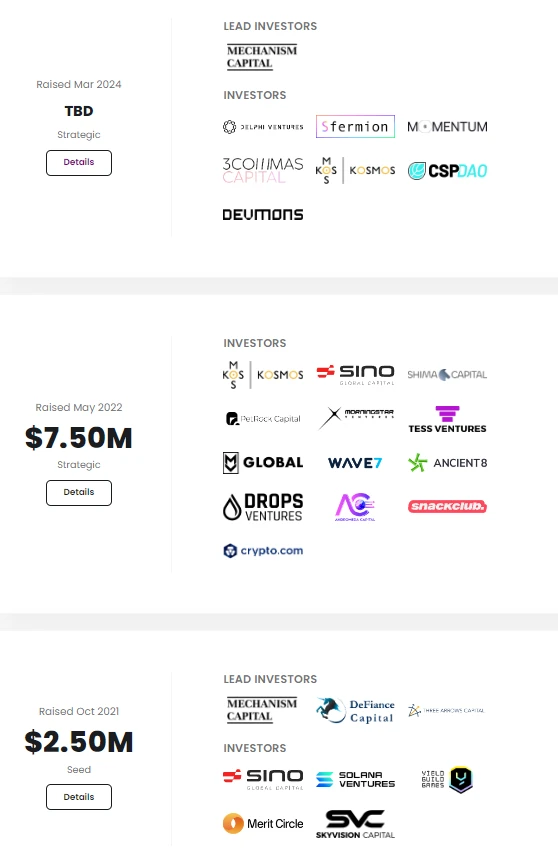
关于融资,根据 CRYPTO fundraising 数据与官方信息,Nyan Heroes 进行多轮融资,总融资金额高达 1300 万美元,具体信息为:

2021 年 11 月 3 日,宣布完成 250 万美元种子轮融资,Three Arrows Capital 等领投;

2022 年 5 月 10 日,宣布以 1 亿美元估值完成 750 万美元战略融资,Kosmos Ventures 等参投;

2024 年 3 月 14 日,宣布完成 300 万美元,本轮投资由 Mechanism Capital 领投,Sfermion 等参投。
融资千万、注册用户超130万,Solana生态3A链游Nyan Heroes能否引燃GameFi?

Nyan Heroes 融资情况

 Nyan Heroes 的可玩性

目前,Nyan Heroes 的 Season 2 正在如火如荼地进行中,为了吸引更多的用户加入其中,Nyan Heroes 推出了丰厚的代币空投活动进行激励。无论是参与过 Season 1 的老玩家,还是刚刚了解 Nyan Heroes 的新玩家,都有机会获得丰厚的奖励。

一方面,对于所有用户,他们只需访问活动官网,并通过推特进行注册即可参与。随后,完成一系列简单的社交任务,如关注、点赞、转推等,即可获得 Catnip 奖励,并且这些 Catnip 奖励在未来可直接兑换成 NYAN 代币。此外,通过邀请好友参与活动,用户还将获得更多的 Catnip 奖励,为社区的扩大贡献一份力量,让更多人能够享受到 Nyan Heroes 带来的乐趣和奖励。


融资千万、注册用户超130万,Solana生态3A链游Nyan Heroes能否引燃GameFi?

交互活动注册参与

融资千万、注册用户超130万,Solana生态3A链游Nyan Heroes能否引燃GameFi?

活动相关任务

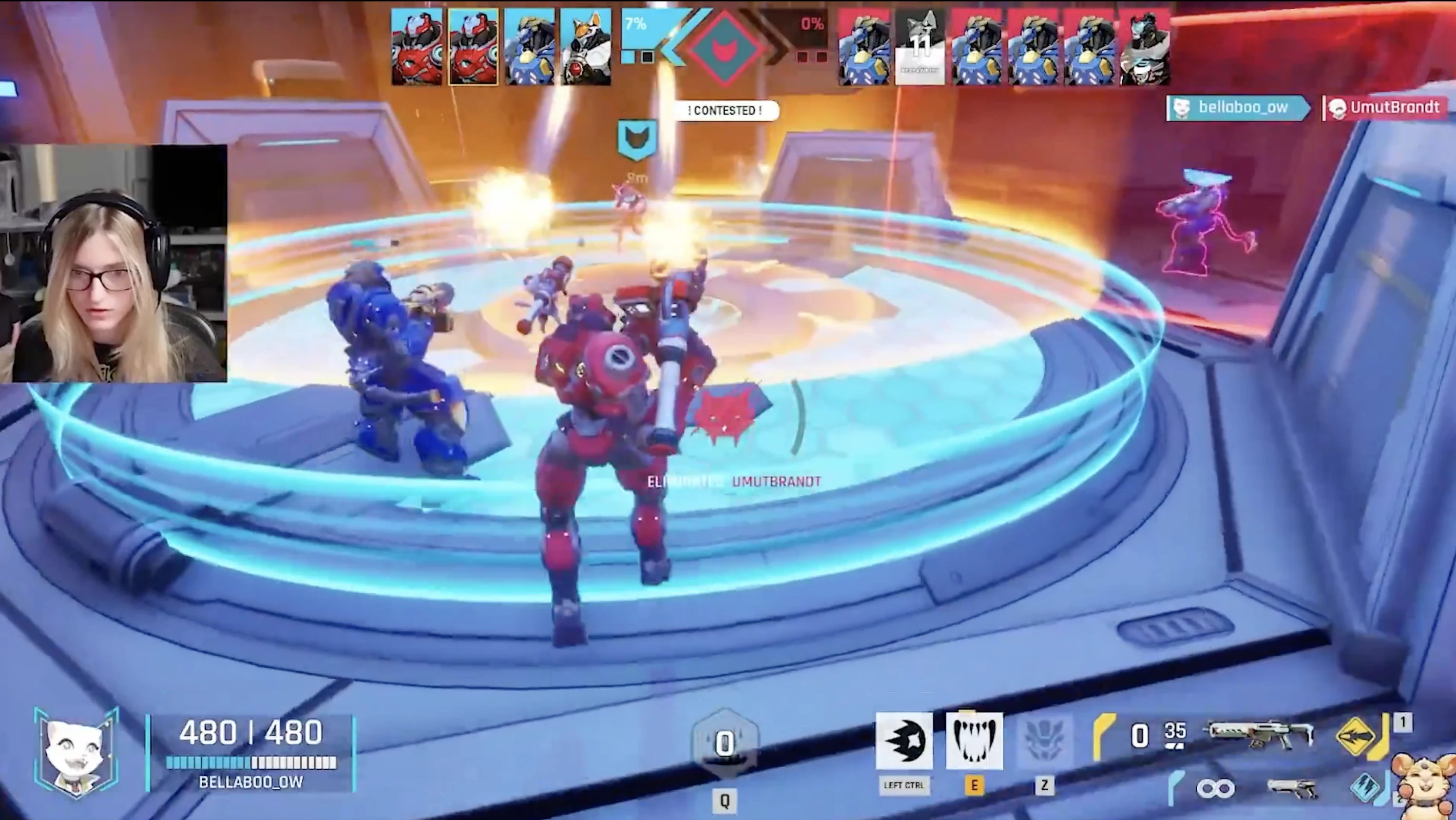
另一方面,Nyan Heroes 将在 5 月 8 日免费向所有用户开启为期两周的游戏体验活动,用户有机会在游戏中体验快乐的同时获得更多的 Catnip 奖励。值得一提的是,在之前的游戏测试中,Nyan Heroes 是为数不多得到传统玩家正面反馈的 3A 游戏,其引人入胜的游戏体验不仅吸引了大量 Web 2 内容创作者和他们的观众,更是赢得了广泛赞誉,游戏体验者甚至一时间忘记了是一款 Web 3 游戏。
融资千万、注册用户超130万,Solana生态3A链游Nyan Heroes能否引燃GameFi?

某直播主游戏体验界面

 Nyan Heroes 的经济模型

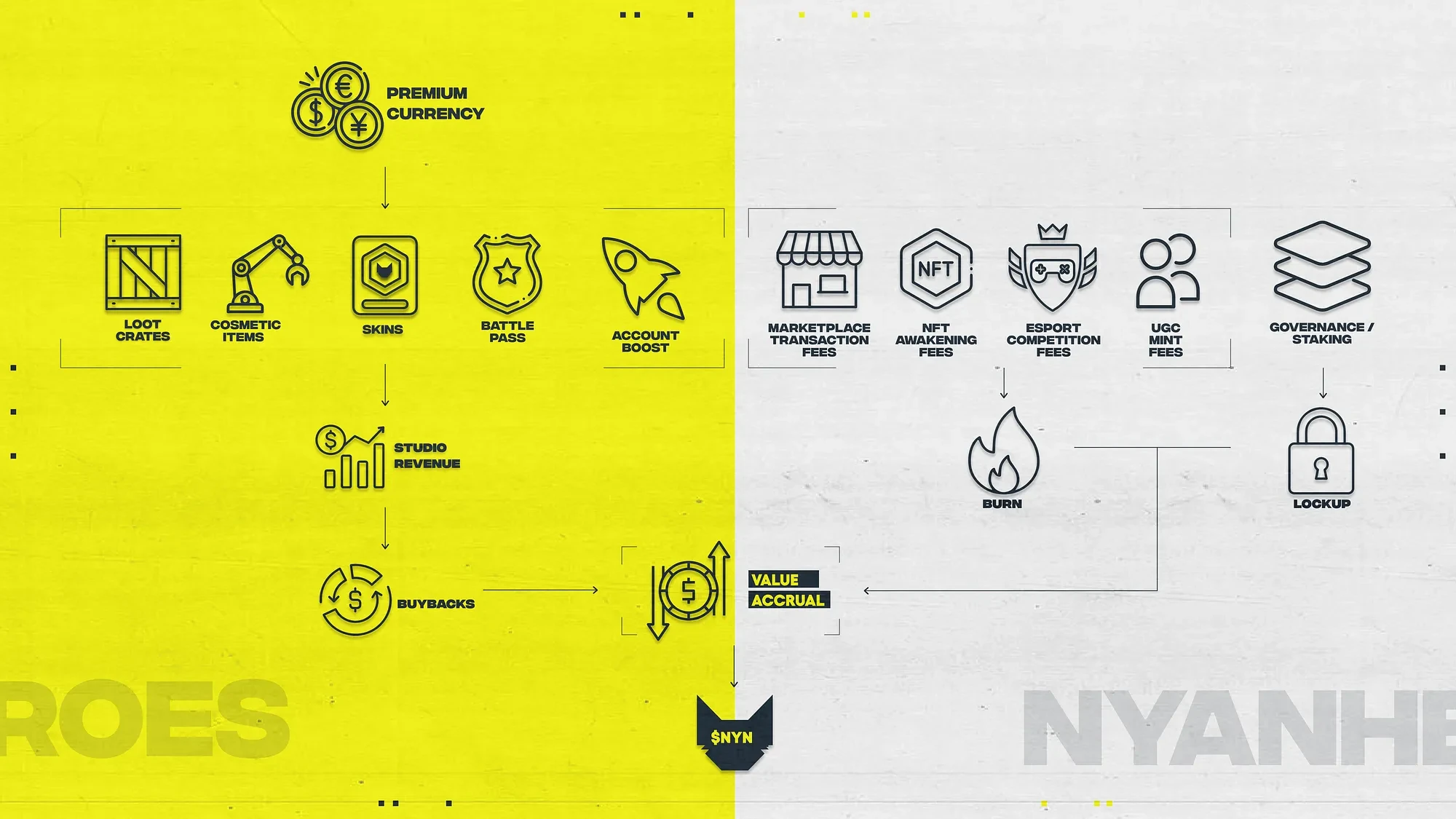
根据 Nyan Heroes 官方公布信息,其原生代币为 NYAN,代币总供应量为 10 亿枚且不会增发。团队表示,NYAN 将作为一种通缩代币存在,未来通过市场手续费收入、铸造收入和工作室收入等途径进行回购并销毁,以实现代币的通缩。通缩速率将取决于实际网络活动和市场交易情况。
融资千万、注册用户超130万,Solana生态3A链游Nyan Heroes能否引燃GameFi?

NYAN 代币机制

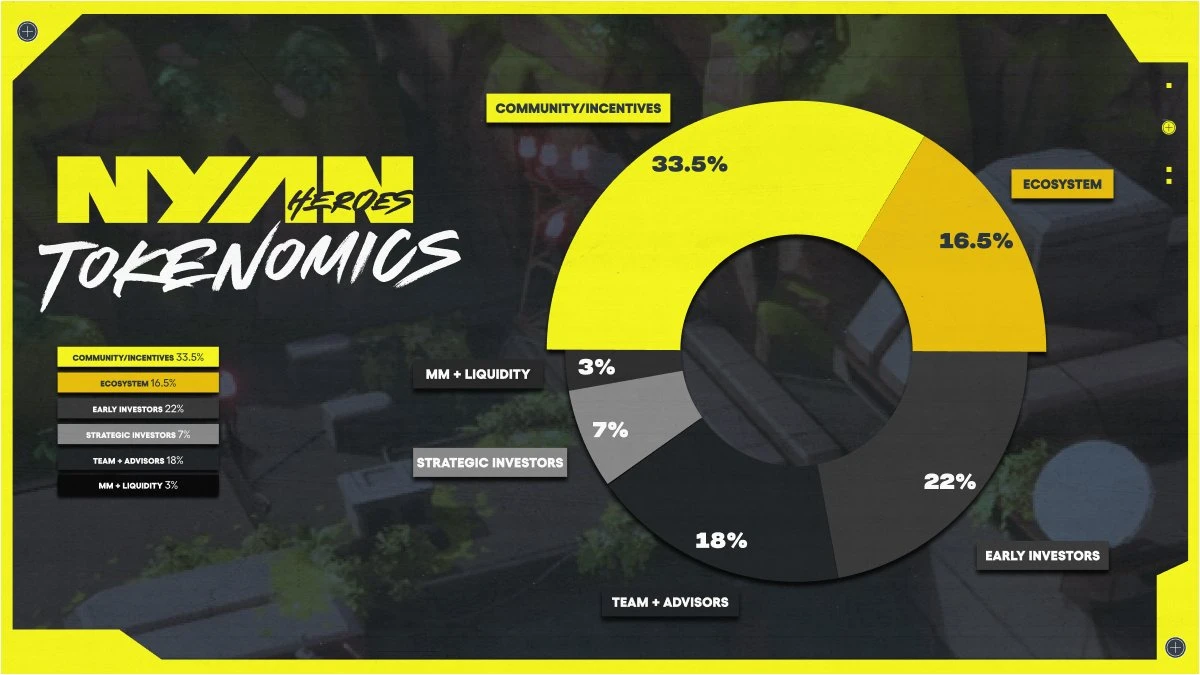
对于初始的 10 亿枚 NYAN,具体分配比例如下:

  • 社区奖励:335,000,000 NYAN,占总供应量的 33.5%。该部分代币将用于空投季、游戏内奖励、竞赛奖池活动等;

  • 生态系统:165,000,000 NYAN,占总供应量的 16.5%。该部分代币将通过 IP 扩展、合作伙伴关系和战略增长机会间接用于社区;

  • 早期投资者:220,000,000 NYAN,占总供应量的 22%;

  • 团队与顾问:180,000,000 NYAN,占总供应量的 18%;

  • 战略投资者:70,000,000 NYAN,占总供应量的 7%;

  • 流动性与做市:30,000,000 NYAN,占总供应量的 3%。
    融资千万、注册用户超130万,Solana生态3A链游Nyan Heroes能否引燃GameFi?

NYAN 代币经济模型

Nyan Heroes 的 Pre-alpha 数据与近期动态

Pre-alpha 期间数据回顾

3 月 26 日,Nyan Heroes 正式上线 Epic 游戏商城,所有玩家都可以 Epic 商城下载并参与赚取 Meow 积分活动。

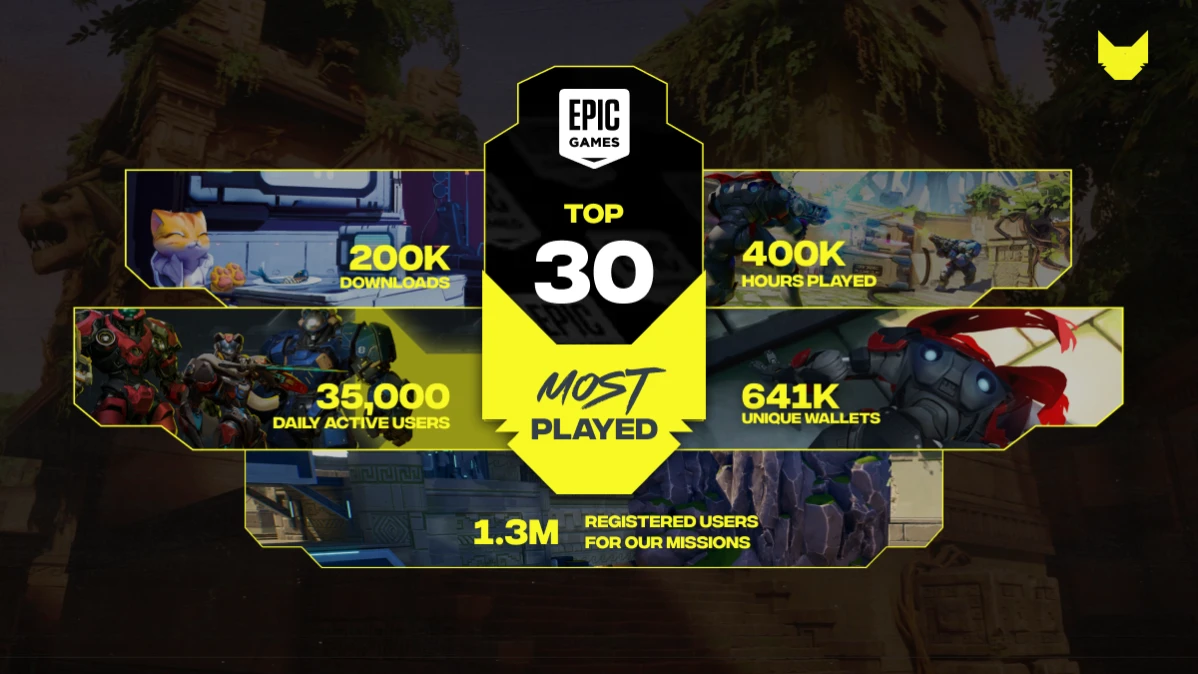
在持续两周的 pre-alpha 活动期间,Nyan Heroes 取得了令人瞩目的成绩,根据官方数据:用户注册数超过 130 万,独立活跃钱包数超过 70 万,日活跃用户超过 4.5 万。同时,Nyan Heroes 在 Epic 游戏商城中下载次数超过 20 万,并成功进入了 Epic 游戏商城最受欢迎游戏的前五名以及全球最受欢迎的 30 款游戏之一。
融资千万、注册用户超130万,Solana生态3A链游Nyan Heroes能否引燃GameFi?

pre-alpha 活动期间数据统计(部分数据有更新)

这些数据显示,Nyan Heroes 在测试阶段不仅吸引了大量 Web 3 玩家,同时也与 Web 2 有机地接轨,得到了一批 Web 2 玩家和直播主的支持和喜爱。这为 Nyan Heroes 在正式公测后顺利“破圈”提供了有利条件,为其进入 Web 2 游戏行业带来了机会。

Season 2 现已正式启动

5 月 1 日,团队宣布 Season 1 代币空投活动圆满结束的同时直接开启 Season 2 代币空投活动,本季度主题为:Hunt For Catnip。

融资千万、注册用户超130万,Solana生态3A链游Nyan Heroes能否引燃GameFi?

Season 2 代币空投活动:Hunt For Catnip

与 Season 1 的 MEOW 积分相比,Season 2 活动所要获取的是 Catnip 将更加珍贵且更难获取。由于获取门槛较高,因此对于那些不懈努力争取的人来说,他们将有机会获得更丰厚的奖励池。

同时,本季活动的亮点在于将于 5 月 8 日启动新的匹配排名系统(MMR),旨在提高竞技技能并向高质量玩家分配奖励。无论玩家是在 Season 1 “身经百战”的老手还是刚刚准备参与 Season 2 的“萌新”,MMR 都将为玩家匹配技术水平相近的其他玩家,提升战略能力。

根据玩家在赛季结束时的排名,他们将获得额外的 Catnip 奖励,排名越高,奖励越丰厚。在第二赛季结束时,Catnip 将直接兑换成 NYAN 代币。最后团队还表示,代币空投活动不仅仅限于两个季度,未来还将推出更多有趣的活动以激励真实玩家。

Nyan Heroes 将引领下一代 GameFi 新范式

在游戏界,无论是 Web 2 还是 Web 3,任何游戏都存在着一定的游戏寿命。具体来说,英雄联盟(League of Legends)就是一个典型的案例。这款由 Riot Games 开发的多人在线战斗竞技游戏于 2009 年发布,凭借其丰富的游戏内容和竞技氛围迅速赢得了大批玩家的喜爱。然而,随着时间的推移,英雄联盟的热度逐渐减退,尽管 Riot Games 不断更新内容和举办赛事,但游戏寿命仍受到了影响。

相对于 Web 2 游戏,Web 3 游戏面临着独特的挑战。一方面,由于可玩性不足,Web 3 游戏难以吸引 Web 2 用户,这导致了用户基数的严重不足。另一方面,Web 3 游戏的代币经济模型存在缺陷,吸引了大量的“挖卖提”用户,这两方面因素相互叠加,导致代币价格不断下跌,从而缩减了游戏的寿命,最终导致了游戏的终结。

以 Axie Infinity 和 StepN 为例,虽然它们在代币经济模型上进行了创新,但在游戏发展到后期时,面临着严重的问题。由于 Web 2 用户基数的严重不足且 Web 3 新用户的参与门槛过高,导致没有足够的新用户为老用户买单,代币一路暴跌,直到最后游戏无人再提起,结束了其短暂的辉煌。

首先,Nyan Heroes 通过不断打磨游戏,增加游戏的可玩性,丰富多样的游戏内容和玩法设计为玩家提供了丰富的游戏体验。这使得游戏能够满足真正热爱游戏的用户,从而在测试阶段就拥有了良好的 Web 2 用户基础。这种基础不仅保持了游戏的热度,还有望延迟游戏的寿命,成为游戏发展的核心所在。

其次,Nyan Heroes 选择了本轮牛市中话题讨论度最高的生态——Solana 生态。在 Solana 生态中,有大量的 Web 3 活跃用户,这为 Nyan Heroes 持续吸引 Web 3 用户提供了可能。通过与 Solana 生态的结合,Nyan Heroes 得以获得更广泛的关注和支持,为游戏的持续发展提供了有力的动力。

最后,Nyan Heroes 采取了分多批次、不断优化的代币激励措施,进一步增加了用户的粘性。通过这种方式,游戏能够更好地激励用户的参与和留存,为游戏的长期发展奠定了坚实的基础。

综上所述,Nyan Heroes 不仅在游戏设计和生态选择上做出了精准的决策,而且在代币经济模型和用户激励方面持续创新。因此,Nyan Heroes 有望成为引领下一代 GameFi 新范式的先锋,为 Web 3 带来新的活力和发展机遇,开启游戏世界的新篇章。

Trending Cryptos

Related Reads

Stablecoin Salaries: Why Are They Becoming the First Choice for Cross-Border Workers?

Stablecoin Salaries: Why They're Becoming the Top Choice for Global Remote Workers The traditional global salary system carries hidden exchange rate risks for freelancers in countries like India, Argentina, and Turkey who earn in USD but spend in local currencies. When salaries are instantly converted to local currency, workers lose purchasing power if that currency depreciates against the dollar. For instance, an Indian designer converting a $2000 monthly salary to rupees lost over 10% in purchasing power last year due to the rupee's decline. Holding even a portion of income in USD or USD-pegged stablecoins can preserve value. Stablecoins offer a solution by breaking down barriers to holding dollars. Opening foreign USD bank accounts is difficult, and international wire transfers incur high fees (averaging 6.5%) and delays. In contrast, stablecoin transfers are fast and low-cost. Furthermore, many countries with high inflation and depreciating currencies restrict citizens' access to foreign currency. Self-custody stablecoin wallets enable workers to hold dollar-equivalent assets without needing bank approval, bypassing these limits. These wallets integrate multiple functions: they allow users to convert only what's needed for daily expenses into local currency, keep the remainder in stablecoins, connect to on-chain lending or yield products, and even link to payment cards for direct spending. While challenges remain—such as the lack of deposit insurance and evolving regulatory frameworks—the trend is clear. Reports indicate a growing preference for USD or stablecoin payments among freelancers in high-inflation countries. This shift represents a fundamental restructuring of salary functions: payment currency, asset storage, yield generation, spending, and cross-border flow. It offers the freedom and flexibility that are core to money's purpose, signaling a profound change in the global financial landscape.

Foresight News10m ago

Stablecoin Salaries: Why Are They Becoming the First Choice for Cross-Border Workers?

Foresight News10m ago

Don't Just Focus on Layoffs, The New Structure of the Ethereum Foundation is More Worthy of Appreciation

The Ethereum Foundation (EF) has undergone a significant organizational restructuring, with the most notable change being a strategic refocusing of its priorities rather than just a 20% staff reduction (approximately 54 people). The new structure clearly prioritizes the Protocol and Access layers, which now comprise the largest teams (57 and 34 people, respectively). This signals EF's intent to concentrate its core resources on fundamental, hard-to-outsource aspects of Ethereum: protocol evolution, security, privacy, client development, and the foundational access layer. Key areas within the Protocol layer, led by an architecture group including Vitalik Buterin and Justin Drake, receive heightened emphasis. These include post-quantum security, zkEVM, formal verification, and long-term roadmap development ("Strawmap"). This reflects a shift towards tackling complex, interdependent challenges like scalability, privacy, and future-proofing the protocol, potentially moving from a pure "redundant security" multi-client model towards more specialized clients aided by AI-assisted formal verification. Financially, EF's budget is being reduced by approximately 40%. The goal is to transition from spending about 15% of its remaining funds annually to a more sustainable 5% rate, akin to a long-term endowment, ensuring its longevity. Concurrently, the restructuring involves pushing certain responsibilities—such as application development, adoption, and ecosystem coordination—to external organizations like EthLabs, the Ethereum Apps Guild, and others. This "multi-node" model aims to increase ecosystem resilience by decentralizing functions beyond the EF, though it introduces new coordination challenges. In essence, the reorganization represents EF consciously narrowing its scope to focus on the hardest, most critical protocol-level problems while fostering a more distributed and sustainable ecosystem structure for Ethereum's future growth.

Foresight News38m ago

Don't Just Focus on Layoffs, The New Structure of the Ethereum Foundation is More Worthy of Appreciation

Foresight News38m ago

Report Analysis: What Is Coherent Planning as CPO Booms?

Title: Report Interpretation: What Moves Is Coherent Making Amid the CPO Boom? Summary: JP Morgan analyst Samik Chatterjee reiterates an Overweight rating on Coherent (COHR), citing undervalued growth potential across three core areas: data center optical transceivers, co-packaged optics (CPO) chips, and industrial lasers/thermal management. COHR's 1.6T data center transceivers are in high demand, with pricing remaining firm. The rise of CPO is seen not as a threat but as a catalyst, creating higher demand for sophisticated optical components, an area where COHR holds a competitive edge with its comprehensive portfolio (lasers, isolators, VCSELs, thermoelectric coolers). Each CPO chip offers significantly greater revenue potential than traditional transceivers. Furthermore, its Optical Circuit Switch (OCS) technology targets a potential $4B market with reliability and power advantages. The company is expanding its InP (Indium Phosphide) device capacity fourfold within two years, securing substrate supply and transitioning to more cost-effective 6-inch wafers. As one of only two major suppliers of high-quality pump lasers—currently in severe shortage—COHR can now move up the value chain from components to complete line cards/systems, boosting ASP over tenfold. Gross margin targets (>42%) may be revised upward due to high-end product premiums, cost improvements from the wafer transition, and contributions from new high-margin products like CPO and OCS. Its efficient thermadite thermal material also offers long-term growth. Industrial segment revenue grows at a steady 5-10%, supported by semiconductor equipment orders. Changes in Apple's Face ID protocol present a re-competition opportunity for 3D sensing. Overall, Coherent is positioned as a key infrastructure provider, with AI-driven compute demand fueling the need for high-speed optical interconnectivity. Growth from CPO/OCS, stable industrial performance, and margin improvement support the bullish thesis. *Disclaimer: This summary interprets a third-party analyst report from JP Morgan. It does not constitute investment advice.*

marsbit1h ago

Report Analysis: What Is Coherent Planning as CPO Booms?

marsbit1h ago

After Laying Off 20% of Staff, What Are the Key Points of EF's New Structure?

Following the completion of a months-long organizational restructuring, the Ethereum Foundation (EF) announced a 20% workforce reduction (approximately 54 employees) on June 23rd. It reorganized its teams into five new core clusters: Protocol, Access, User, Community, and Institutional (plus Operations/Management support units). Officially, this move implements the EF's 2026 Mandate and 2025 Treasury Management Policy, aiming to create a more focused and "self-sovereign" organization. The restructuring prioritizes the CROPS principles—Censorship Resistance, Openness & Freedom, Privacy, and Security—as foundational organizational tenets. The Protocol cluster will focus on core protocol R&D, including MEV reduction and zkEVM. The Access cluster emphasizes preserving user "zero option" for non-custodial, permissionless interaction. The User, Community, and Institutional clusters will manage external engagement, with the latter handling institutional and regulatory matters. While offering enhanced severance and transition support for affected employees, the EF did not disclose budget allocations or specific KPIs for the new clusters. This has led to market uncertainty about the impact on project funding and development priorities. Analysts note the announcement's positive tone of mission focus contrasts with a backdrop of recent EF leadership changes and broader ecosystem pressures. The true impact—whether this signifies strategic realignment or reactive contraction—will become clearer as the new structure's resource allocation and project prioritization are revealed in the coming months.

marsbit1h ago

After Laying Off 20% of Staff, What Are the Key Points of EF's New Structure?

marsbit1h ago

Trading

Spot
Futures

Hot Articles

What is $BITCOIN

DIGITAL GOLD ($BITCOIN): A Comprehensive Analysis Introduction to DIGITAL GOLD ($BITCOIN) DIGITAL GOLD ($BITCOIN) is a blockchain-based project operating on the Solana network, which aims to combine the characteristics of traditional precious metals with the innovation of decentralized technologies. While it shares a name with Bitcoin, often referred to as “digital gold” due to its perception as a store of value, DIGITAL GOLD is a separate token designed to create a unique ecosystem within the Web3 landscape. Its goal is to position itself as a viable alternative digital asset, although specifics regarding its applications and functionalities are still developing. What is DIGITAL GOLD ($BITCOIN)? DIGITAL GOLD ($BITCOIN) is a cryptocurrency token explicitly designed for use on the Solana blockchain. In contrast to Bitcoin, which provides a widely recognized value storage role, this token appears to focus on broader applications and characteristics. Notable aspects include: Blockchain Infrastructure: The token is built on the Solana blockchain, known for its capacity to handle high-speed and low-cost transactions. Supply Dynamics: DIGITAL GOLD has a maximum supply capped at 100 quadrillion tokens (100P $BITCOIN), although details regarding its circulating supply are currently undisclosed. Utility: While precise functionalities are not explicitly outlined, there are indications that the token could be utilized for various applications, potentially involving decentralized applications (dApps) or asset tokenization strategies. Who is the Creator of DIGITAL GOLD ($BITCOIN)? At present, the identity of the creators and development team behind DIGITAL GOLD ($BITCOIN) remains unknown. This situation is typical among many innovative projects within the blockchain space, particularly those aligning with decentralized finance and meme coin phenomena. While such anonymity may foster a community-driven culture, it intensifies concerns about governance and accountability. Who are the Investors of DIGITAL GOLD ($BITCOIN)? The available information indicates that DIGITAL GOLD ($BITCOIN) does not have any known institutional backers or prominent venture capital investments. The project seems to operate on a peer-to-peer model focused on community support and adoption rather than traditional funding routes. Its activity and liquidity are primarily situated on decentralized exchanges (DEXs), such as PumpSwap, rather than established centralized trading platforms, further highlighting its grassroots approach. How DIGITAL GOLD ($BITCOIN) Works The operational mechanics of DIGITAL GOLD ($BITCOIN) can be elaborated on based on its blockchain design and network attributes: Consensus Mechanism: By leveraging Solana’s unique proof-of-history (PoH) combined with a proof-of-stake (PoS) model, the project ensures efficient transaction validation contributing to the network's high performance. Tokenomics: While specific deflationary mechanisms have not been extensively detailed, the vast maximum token supply implies that it may cater to microtransactions or niche use cases that are still to be defined. Interoperability: There exists the potential for integration with Solana’s broader ecosystem, including various decentralized finance (DeFi) platforms. However, the details regarding specific integrations remain unspecified. Timeline of Key Events Here is a timeline that highlights significant milestones concerning DIGITAL GOLD ($BITCOIN): 2023: The initial deployment of the token occurs on the Solana blockchain, marked by its contract address. 2024: DIGITAL GOLD gains visibility as it becomes available for trading on decentralized exchanges like PumpSwap, allowing users to trade it against SOL. 2025: The project witnesses sporadic trading activity and potential interest in community-led engagements, although no noteworthy partnerships or technical advancements have been documented as of yet. Critical Analysis Strengths Scalability: The underlying Solana infrastructure supports high transaction volumes, which could enhance the utility of $BITCOIN in various transaction scenarios. Accessibility: The potential low trading price per token could attract retail investors, facilitating wider participation due to fractional ownership opportunities. Risks Lack of Transparency: The absence of publicly known backers, developers, or an audit process may yield skepticism regarding the project's sustainability and trustworthiness. Market Volatility: The trading activity is heavily reliant on speculative behavior, which can result in significant price volatility and uncertainty for investors. Conclusion DIGITAL GOLD ($BITCOIN) emerges as an intriguing yet ambiguous project within the rapidly evolving Solana ecosystem. While it attempts to leverage the “digital gold” narrative, its departure from Bitcoin's established role as a store of value underscores the need for a clearer differentiation of its intended utility and governance structure. Future acceptance and adoption will likely depend on addressing the current opacity and defining its operational and economic strategies more explicitly. Note: This report encompasses synthesised information available as of October 2023, and developments may have transpired beyond the research period.

440 Total ViewsPublished 2025.05.13Updated 2025.05.13

What is $BITCOIN

Discussions

Welcome to the HTX Community. Here, you can stay informed about the latest platform developments and gain access to professional market insights. Users' opinions on the price of BTC (BTC) are presented below.

活动图片