Ethscriptions2.0?一文读懂最新上线的Blobscriptions

Odaily星球日报Published on 2024-03-28Last updated on 2024-03-28

Abstract

附刻录教程

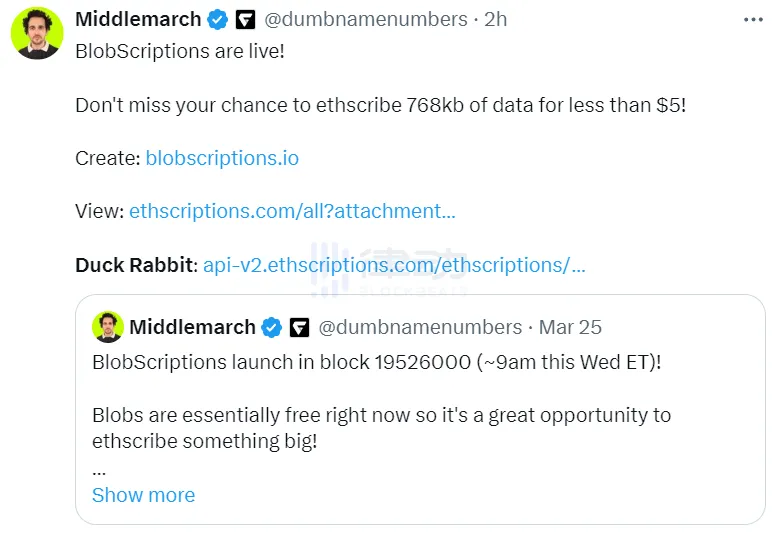
在比特币出现了 OLGA 这个「Bitcoin Stamps 2.0 」后,以太铭文 Ethscriptions 也整出了 Blobscriptions 这个「Ethscriptions 2.0 」。Ethscriptions 联合创始人 @dumbnamenumbers 在北京时间今天凌晨发布推文宣布 Blobscriptions 正式上线。

Ethscriptions2.0?一文读懂最新上线的Blobscriptions

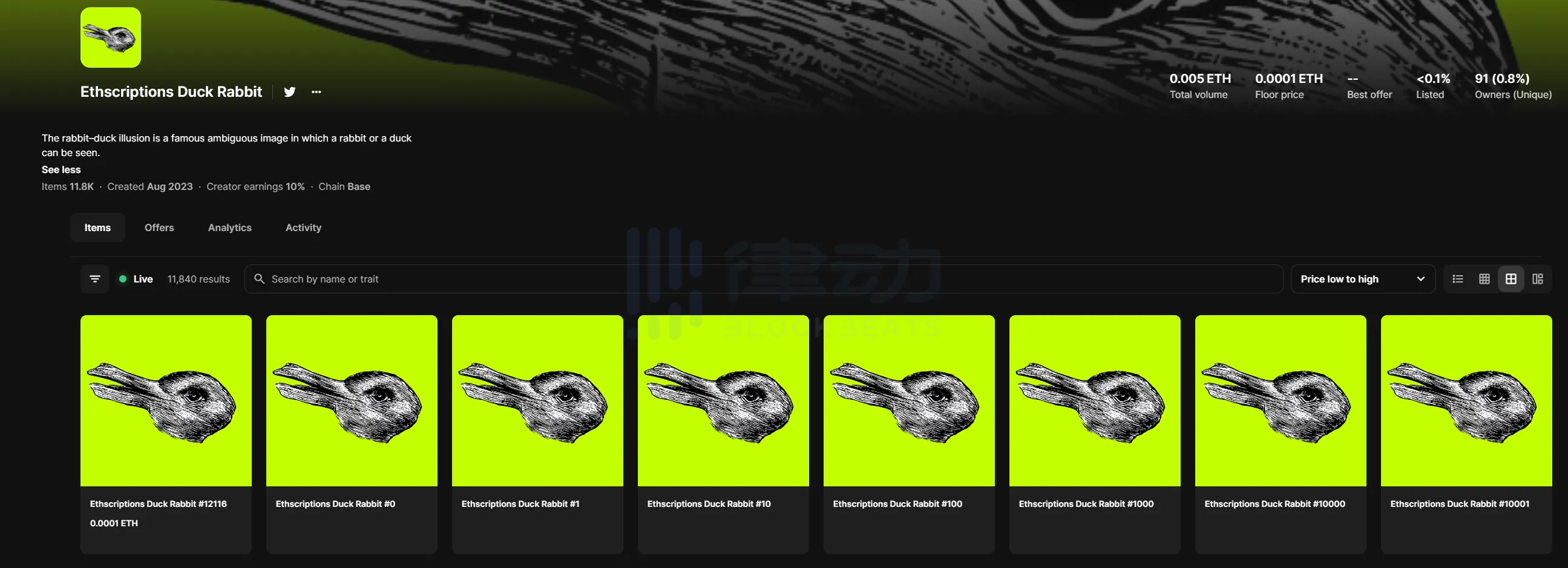
这条推文中提到的「Duck Rabbit」是 @dumbnamenumbers 所喜爱的 meme,他在去年 8 月份曾把这张图放到了 Base 网络上。

Ethscriptions2.0?一文读懂最新上线的Blobscriptions

在当时他也得到了 Base 协议创始人 Jesse Pollak 的回复:

Ethscriptions2.0?一文读懂最新上线的Blobscriptions

Jesse Pollak:感谢你把「Duck Rabbit」放到 Base 上

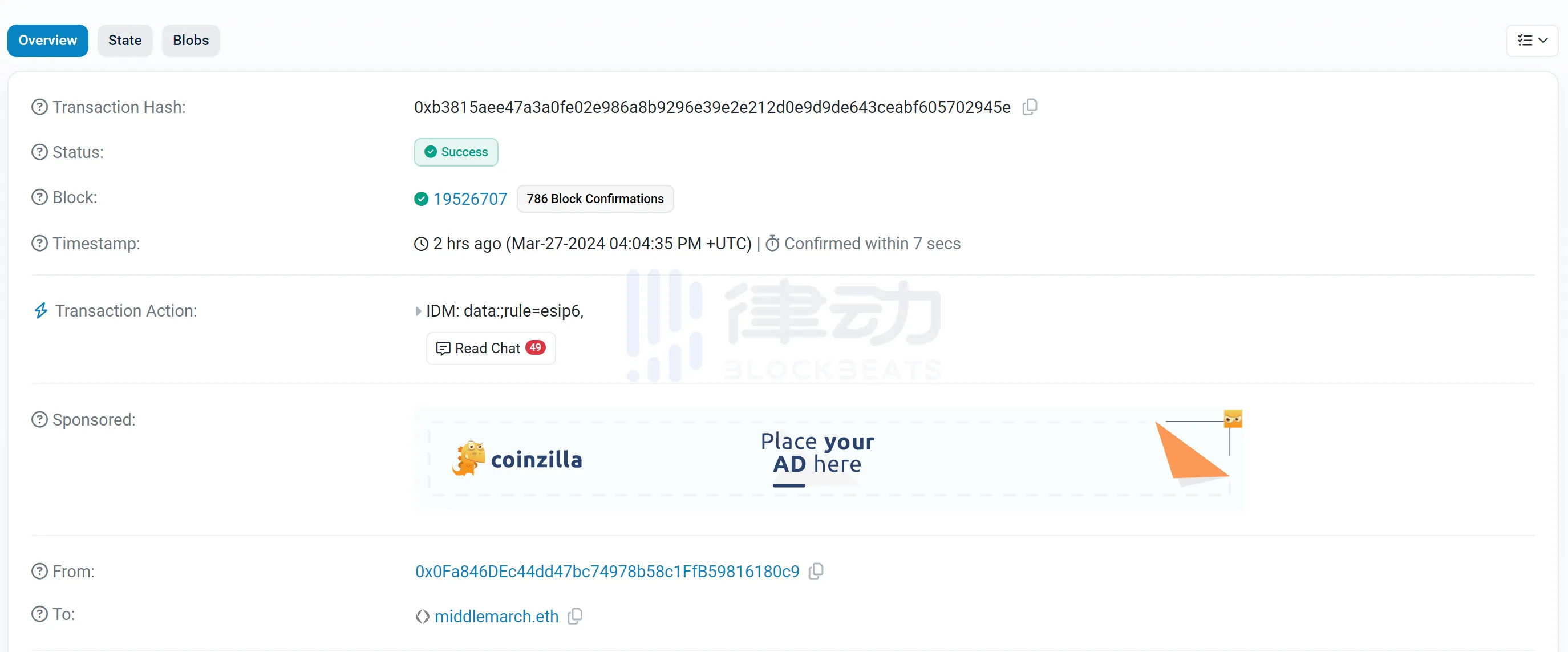
而通过 Etherscan 我们也可以看到,@dumbnamenumbers 本人在发推宣布 Blobscriptions 上线前,自己打了一张 Blobscriptions 版本的「Duck Rabbit」。

Ethscriptions2.0?一文读懂最新上线的Blobscriptions

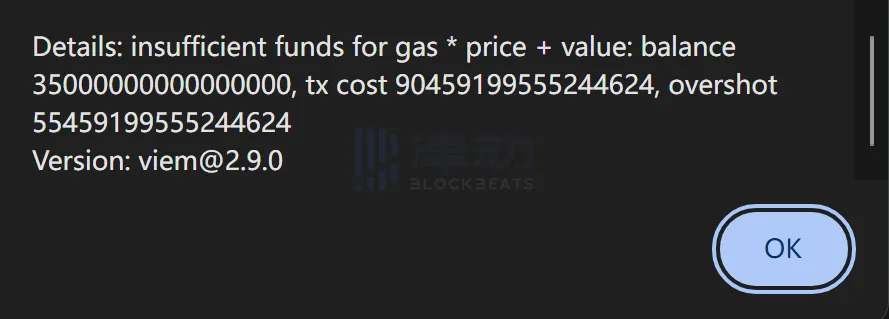
因此,大量玩家开始跟着打 Blobscriptions 版本的「Duck Rabbit」。小编撰写此文的时候,Gas 已经狂飙。根据下图的余额不足提示,此时打一张 Blobscriptions 版本的「Duck Rabbit」成本大约需要 0.1 ETH...

Ethscriptions2.0?一文读懂最新上线的Blobscriptions

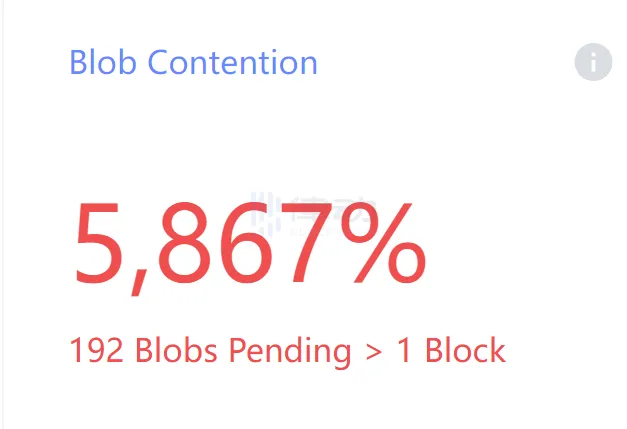
由于一个以太坊区块只能过 6 个 Blob 数据,此时如果打进去,需要等大约 6 个区块。

Ethscriptions2.0?一文读懂最新上线的Blobscriptions

(数据来源:ethernow.xyz)

那么 Blobscriptions 是什么呢?

Blobscriptions 是什么?

EIP-4844 中引入的「Blob」使任何人都能以比 calldata 便宜 10 到 100 倍的价格在以太坊上存储数据,这就能够让以太铭文进一步降低刻录成本。根据 @dumbnamenumbers 的说法,我们可以以不到 5 美元的成本来刻录 768 kb 大小的以太铭文。

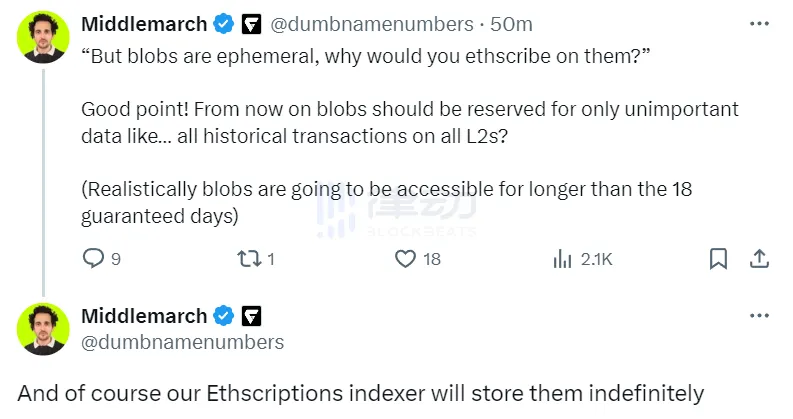
然而,这种「优惠」是有代价的。由于 Blob 是专注于存储 Layer 2 交易数据的数据类型(目的是为了与 Layer 1 的 calldata 区分开以降低 Layer 2 交易费用),以太坊本身不保证 Blob 数据的可用性超过 18 天。

对此,@dumbnamenumbers 专门做了说明——没关系,我们以太铭文的索引器会无限期存储这些数据。

Ethscriptions2.0?一文读懂最新上线的Blobscriptions

所以总结下来,以太铭文巧妙使用了以太坊新特性来为自己降低刻录成本。

如何刻录 Blobscriptions?

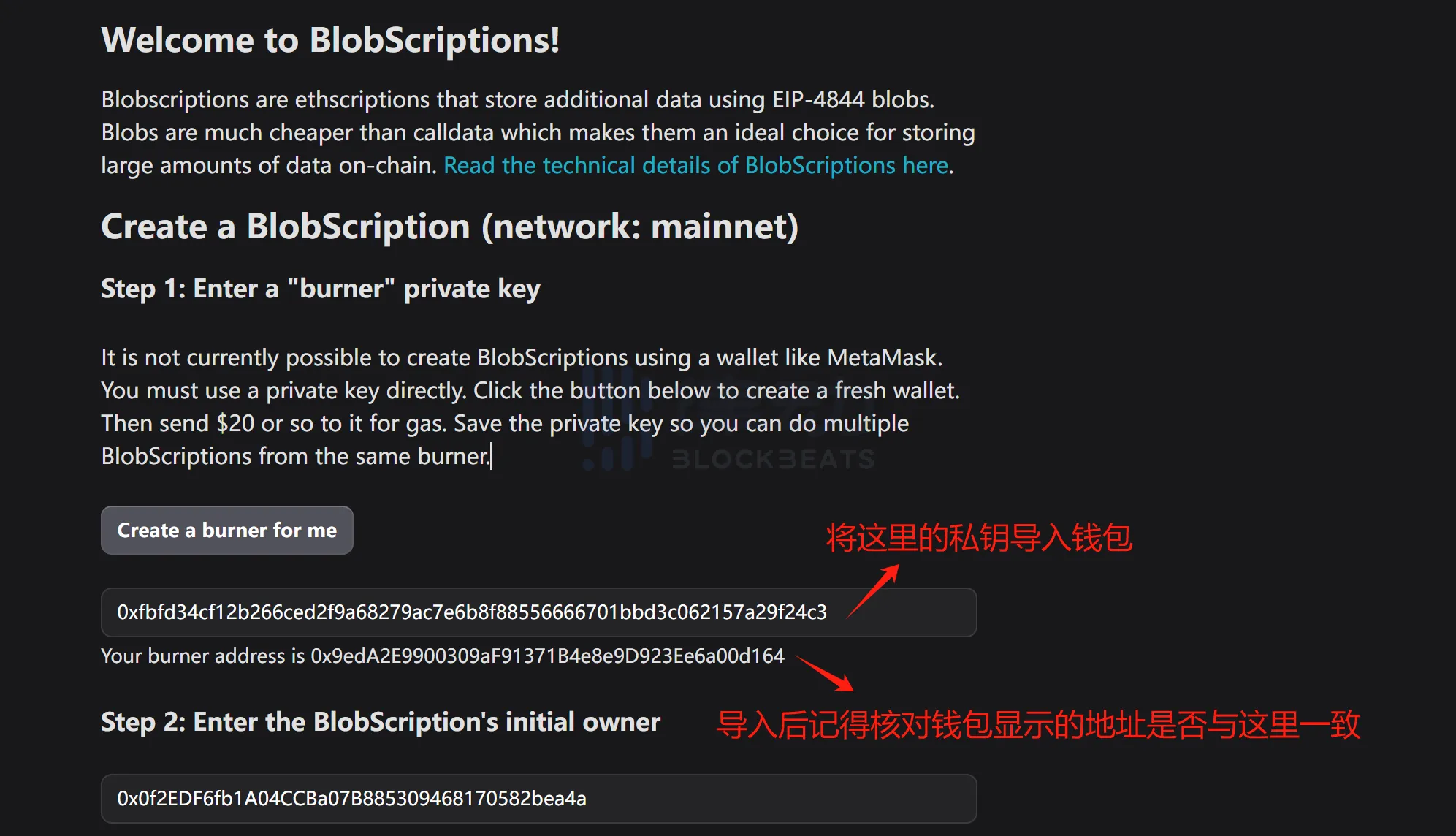
访问 https://blobscriptions.io/ 以进行 Blobscription 刻录。进入该网站后,我们首先点击「Create a burner for me」,然后网站会为我们生成一个新的钱包,将私钥导入到 Metamask 等 Web3 钱包,导入后记得核对一下和显示的地址是否一致。

Ethscriptions2.0?一文读懂最新上线的Blobscriptions

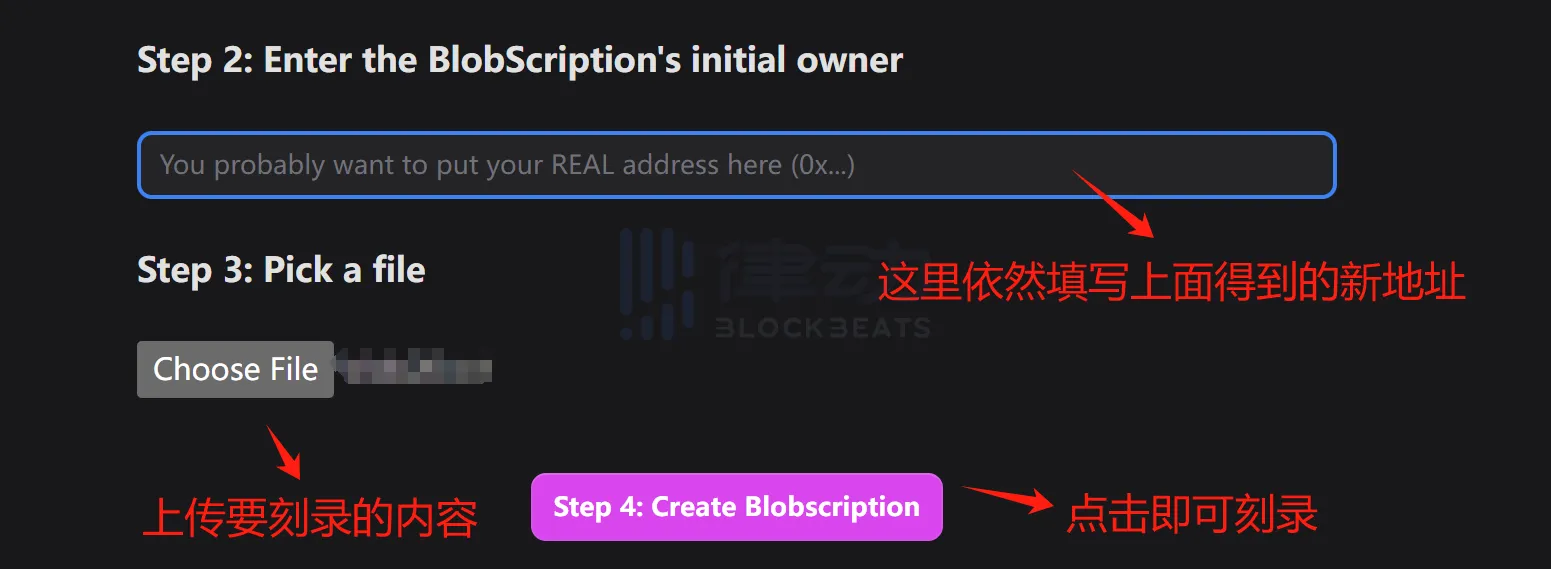
接着按照以下步骤操作即可,记得要往新地址里转入 ETH 用于支付刻录成本。

Ethscriptions2.0?一文读懂最新上线的Blobscriptions

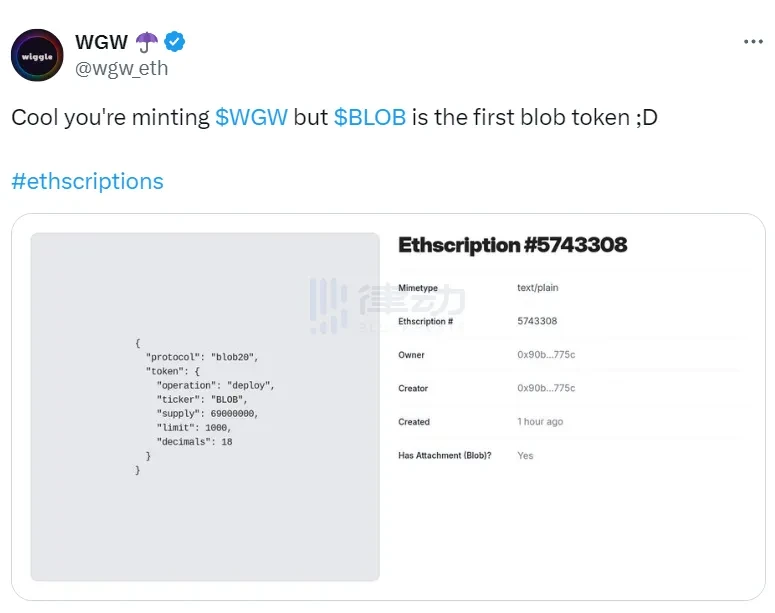
目前有看到人在打 BLOB-20 的 Token,应该是下图这位搞的。他提供了一个专门打 BLOB 20 Token 的工具,安全性需要大家自行鉴别。

Ethscriptions2.0?一文读懂最新上线的Blobscriptions

Trending Cryptos

Related Reads

A Chip Company Releases AIDC Energy Storage Certification Standards. Why NVIDIA? Computing Power Reshapes Power Supply Logic. Who's in the Lead and Who's Left Out?

NVIDIA has released a "Battery Energy Storage System Self-Certification Guide," setting strict technical standards for energy storage systems specifically for AI data centers (AIDC). The guide focuses solely on certifying the Power Conversion System (PCS), not the batteries, with 10 mandatory performance metrics and 12 validation tests requiring real-world and simulation comparisons. Key requirements include rapid dynamic response to AI workloads, high-frequency system telemetry, and detailed electromagnetic transient models. The move is driven by the extreme and fluctuating power demands of next-generation AI hardware. Modern AIDCs require energy storage systems to act as intelligent, controllable grid assets, not just passive backup, to manage instantaneous, massive power load shifts that traditional UPS systems cannot handle. This redefines the competitive landscape for energy storage providers, shifting focus from capacity and cost to advanced control capabilities and system integration. While the market potential is significant—with forecasts of hundreds of GWh in new demand by 2030—the certification creates a high barrier to entry. It requires proven PCS delivery volumes and credible plans for rapid capacity scaling, favoring established, well-resourced players. Early movers like Fluence (partnering with Siemens) and several Chinese companies have secured projects ahead of the standard, but new entrants must now navigate this rigorous, costly, and time-intensive certification process to compete in the AIDC energy storage market.

marsbit38m ago

A Chip Company Releases AIDC Energy Storage Certification Standards. Why NVIDIA? Computing Power Reshapes Power Supply Logic. Who's in the Lead and Who's Left Out?

marsbit38m ago

After Missing the 20x, I've Found a 'Dumb' Method for AI Investing

**Missing the 20x Opportunity: A Simple 'Dumb' Approach to AI Investing** The AI boom, driving NVIDIA's revenue from $60B to $216B in two years, creates immense investment pressure. However, like the internet bubble of 2000, the largest AI opportunities likely lie ahead, perhaps after a correction. Instead of rushing in now or waiting paralyzed for a crash, the author proposes a third way: building a "knowledge warehouse" by systematically mapping the AI industry to be ready when opportunities arise. The core of the strategy is understanding AI's four-layer value chain: 1. **Compute Infrastructure (The "Engine"):** This foundational layer, where all money eventually flows, includes: a) **Chip Design:** NVIDIA's dominance via its CUDA ecosystem, b) **Chip Manufacturing/Packaging/Memory:** TSMC's near-monopoly in advanced manufacturing and SK Hynix's lead in High Bandwidth Memory (HBM), c) **Optical Interconnects:** Essential for large-scale AI clusters (e.g., Lumentum, Coherent), d) **Cooling & Power:** Critical for high-density AI data centers (e.g., Vertiv), e) **Servers/Data Centers & Cloud Platforms:** The physical and virtual wholesale providers. 2. **Models & Tools (The "OS"):** The competitive layer of foundation models (OpenAI, Anthropic, Google, Meta, xAI), now generating real revenue. A key shift is the center of gravity moving from **Training** models to **Inference** (running models), which demands different chip characteristics and could challenge NVIDIA's monopoly. 3. **Middleware & Platform ("The Glue"):** Connects models and applications (e.g., Scale AI, Hugging Face). This layer could explode if applications take off. 4. **Vertical Applications ("The Cash Register"):** Where AI meets end-users (e.g., enterprise AI, coding tools, medical AI, robotics). A critical cross-cutting constraint is **Energy**, as AI's massive power consumption drives investment in nuclear and other energy infrastructure. The author identifies four key questions for further research: 1) How will the shift from Training to Inference reshape the competitive landscape? 2) With tech giants spending over $600B on capex, where is the ROI from AI applications? 3) What are the under-the-radar opportunities in the "second" and "third" circles of the value chain (e.g., cooling, specialty foundries)? 4) How will geopolitics (e.g., U.S.-China chip restrictions) bifurcate the supply chain? The conclusion is that missed opportunities stem from insufficient research, not slow timing. By methodically studying each layer—its business models, competition, and valuations—investors can build the "killer intuition" needed to act decisively when the market presents its chance.

marsbit58m ago
After Missing the 20x, I've Found a 'Dumb' Method for AI Investing

marsbit58m ago

Trading

Spot
Futures

Hot Articles

What is $BITCOIN

DIGITAL GOLD ($BITCOIN): A Comprehensive Analysis Introduction to DIGITAL GOLD ($BITCOIN) DIGITAL GOLD ($BITCOIN) is a blockchain-based project operating on the Solana network, which aims to combine the characteristics of traditional precious metals with the innovation of decentralized technologies. While it shares a name with Bitcoin, often referred to as “digital gold” due to its perception as a store of value, DIGITAL GOLD is a separate token designed to create a unique ecosystem within the Web3 landscape. Its goal is to position itself as a viable alternative digital asset, although specifics regarding its applications and functionalities are still developing. What is DIGITAL GOLD ($BITCOIN)? DIGITAL GOLD ($BITCOIN) is a cryptocurrency token explicitly designed for use on the Solana blockchain. In contrast to Bitcoin, which provides a widely recognized value storage role, this token appears to focus on broader applications and characteristics. Notable aspects include: Blockchain Infrastructure: The token is built on the Solana blockchain, known for its capacity to handle high-speed and low-cost transactions. Supply Dynamics: DIGITAL GOLD has a maximum supply capped at 100 quadrillion tokens (100P $BITCOIN), although details regarding its circulating supply are currently undisclosed. Utility: While precise functionalities are not explicitly outlined, there are indications that the token could be utilized for various applications, potentially involving decentralized applications (dApps) or asset tokenization strategies. Who is the Creator of DIGITAL GOLD ($BITCOIN)? At present, the identity of the creators and development team behind DIGITAL GOLD ($BITCOIN) remains unknown. This situation is typical among many innovative projects within the blockchain space, particularly those aligning with decentralized finance and meme coin phenomena. While such anonymity may foster a community-driven culture, it intensifies concerns about governance and accountability. Who are the Investors of DIGITAL GOLD ($BITCOIN)? The available information indicates that DIGITAL GOLD ($BITCOIN) does not have any known institutional backers or prominent venture capital investments. The project seems to operate on a peer-to-peer model focused on community support and adoption rather than traditional funding routes. Its activity and liquidity are primarily situated on decentralized exchanges (DEXs), such as PumpSwap, rather than established centralized trading platforms, further highlighting its grassroots approach. How DIGITAL GOLD ($BITCOIN) Works The operational mechanics of DIGITAL GOLD ($BITCOIN) can be elaborated on based on its blockchain design and network attributes: Consensus Mechanism: By leveraging Solana’s unique proof-of-history (PoH) combined with a proof-of-stake (PoS) model, the project ensures efficient transaction validation contributing to the network's high performance. Tokenomics: While specific deflationary mechanisms have not been extensively detailed, the vast maximum token supply implies that it may cater to microtransactions or niche use cases that are still to be defined. Interoperability: There exists the potential for integration with Solana’s broader ecosystem, including various decentralized finance (DeFi) platforms. However, the details regarding specific integrations remain unspecified. Timeline of Key Events Here is a timeline that highlights significant milestones concerning DIGITAL GOLD ($BITCOIN): 2023: The initial deployment of the token occurs on the Solana blockchain, marked by its contract address. 2024: DIGITAL GOLD gains visibility as it becomes available for trading on decentralized exchanges like PumpSwap, allowing users to trade it against SOL. 2025: The project witnesses sporadic trading activity and potential interest in community-led engagements, although no noteworthy partnerships or technical advancements have been documented as of yet. Critical Analysis Strengths Scalability: The underlying Solana infrastructure supports high transaction volumes, which could enhance the utility of $BITCOIN in various transaction scenarios. Accessibility: The potential low trading price per token could attract retail investors, facilitating wider participation due to fractional ownership opportunities. Risks Lack of Transparency: The absence of publicly known backers, developers, or an audit process may yield skepticism regarding the project's sustainability and trustworthiness. Market Volatility: The trading activity is heavily reliant on speculative behavior, which can result in significant price volatility and uncertainty for investors. Conclusion DIGITAL GOLD ($BITCOIN) emerges as an intriguing yet ambiguous project within the rapidly evolving Solana ecosystem. While it attempts to leverage the “digital gold” narrative, its departure from Bitcoin's established role as a store of value underscores the need for a clearer differentiation of its intended utility and governance structure. Future acceptance and adoption will likely depend on addressing the current opacity and defining its operational and economic strategies more explicitly. Note: This report encompasses synthesised information available as of October 2023, and developments may have transpired beyond the research period.

431 Total ViewsPublished 2025.05.13Updated 2025.05.13

What is $BITCOIN

Discussions

Welcome to the HTX Community. Here, you can stay informed about the latest platform developments and gain access to professional market insights. Users' opinions on the price of BTC (BTC) are presented below.

活动图片