Author: ARK Invest
Compiled by: Felix, PANews (This article has been abridged)
ARK Invest releases its flagship research report, "Big Ideas," annually. This report filters out short-term noise, aiming to identify and interpret the technologies reshaping the global economy. In this year's report, ARK explores 13 significant ideas spanning AI, robotics, energy, blockchain, space, and biology, which are creating compound effects and redefining productivity, capital allocation, and competitive advantages across industries. This excerpt covers areas like AI and blockchain. Details are as follows.
In the Era of Great Acceleration, AI acts as the core engine, accelerating the development of five major innovation platforms and triggering an inflection point in macroeconomic growth.
Technological convergence is accelerating. Five innovative technologies (AI, public blockchains, robotics, energy storage, and multi-omics) are becoming increasingly interdependent, as performance improvements in one technology unlock new capabilities for another.
Reusable rockets delivering autonomous Mobility AI chips into orbit could be key to scaling next-generation cloud services. Multi-omics data authorized in digital wallets could power neural networks, advancing precision therapies to cure rare diseases.
The world is entering an unprecedented cycle of technological investment. Each disruptive technology has the potential for profound macroeconomic impact.
AI Infrastructure
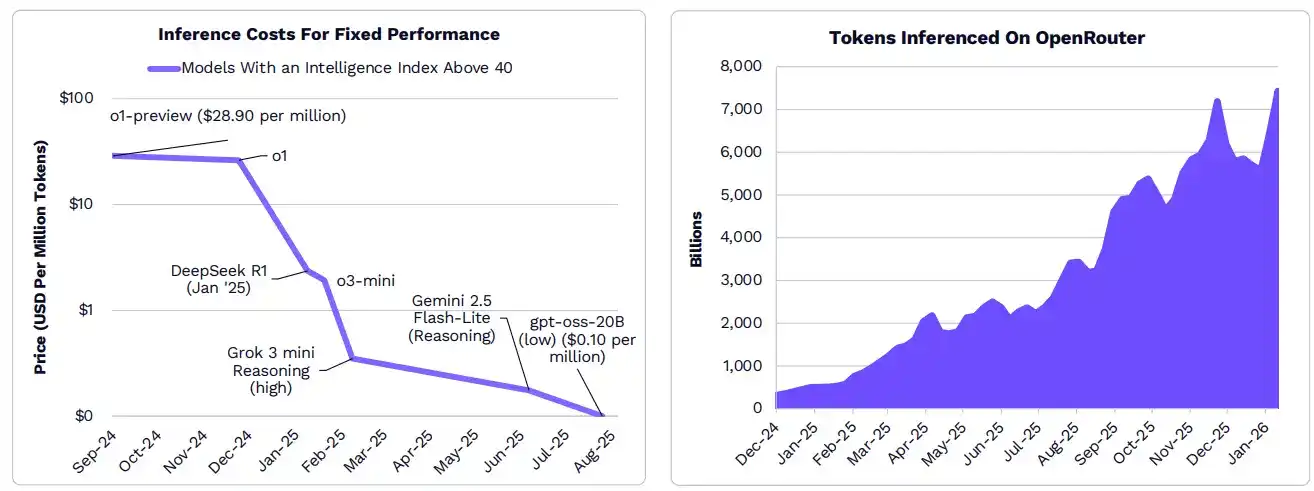
As inference costs decline, demand for AI is growing rapidly.
By some metrics, inference costs have fallen by over 99% in the past year. The decline in costs is driving an explosion in the number of tokens for developer, enterprise, and consumer inference as AI-native applications proliferate. Since December 2024, computational demand on OpenRouter (a unified API for accessing large language models) has grown 25-fold.
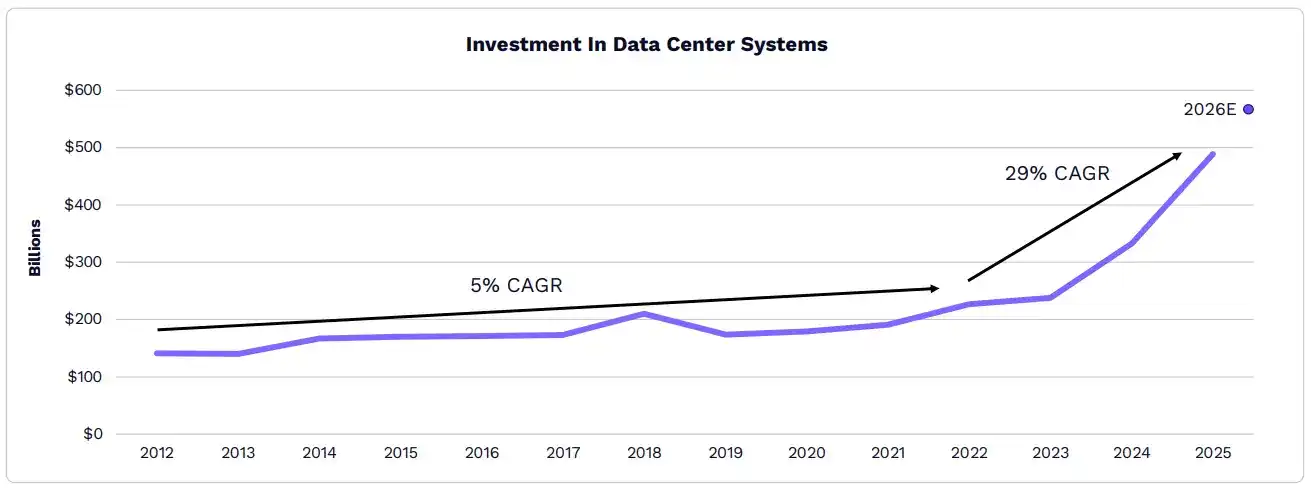
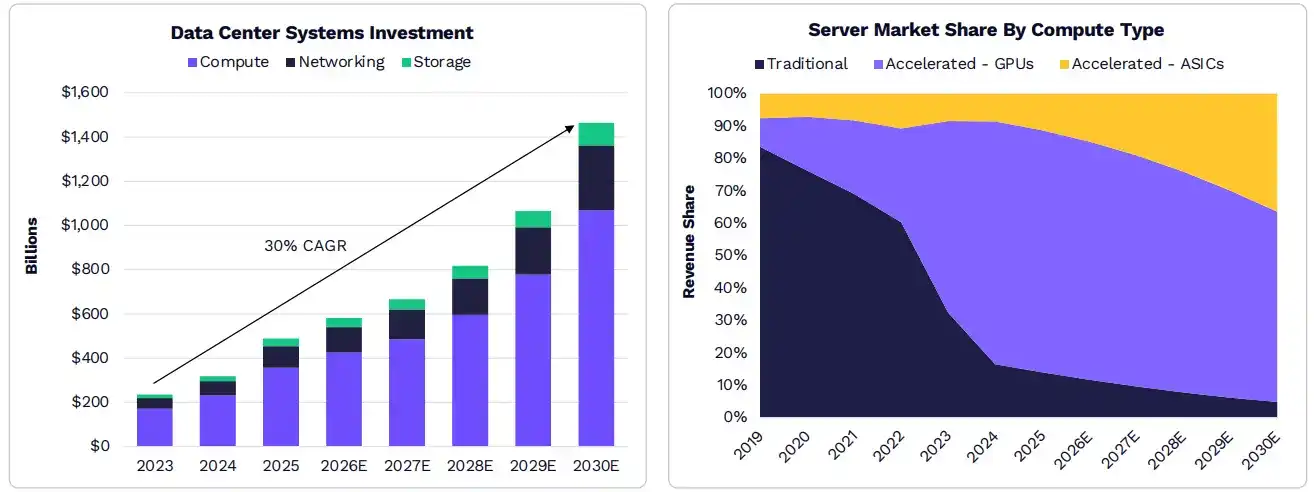
Since the "ChatGPT moment", the growth rate of data center systems has accelerated from 5% to 29%, with the annual growth rate continuing to climb.
By 2025, annual investment in data center systems was approximately $500 billion, nearly 2.5 times the average from 2012 to 2023. According to ARK research, such investment will continue to grow, potentially tripling to approximately $1.4 trillion by 2030.
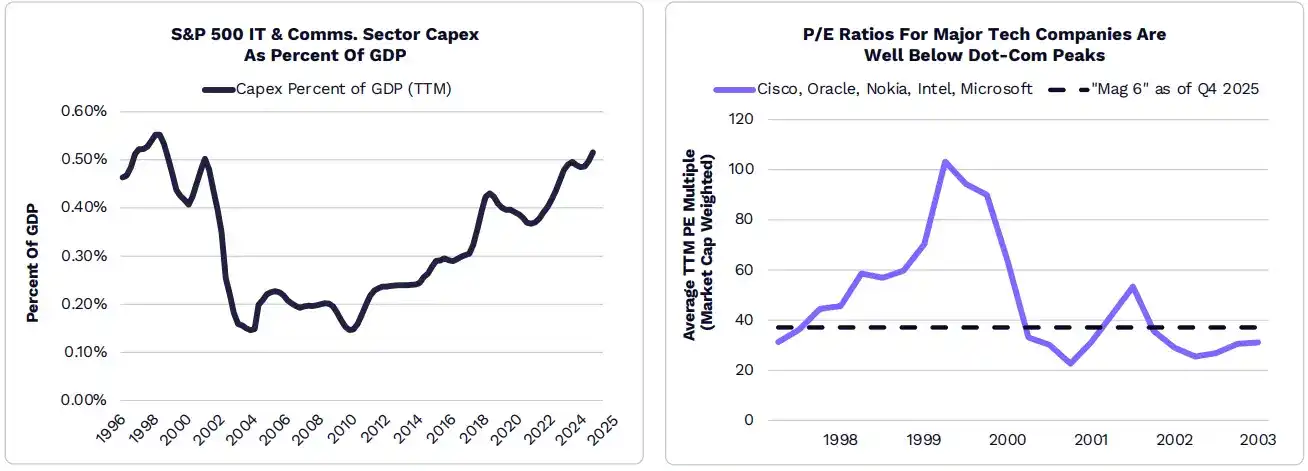
Tech capital expenditure has reached levels seen during the tech and telecom boom, but tech company valuations are far lower than during that period.
According to ARK research, hyperscale data center operators' capital expenditure in 2026 will exceed $500 billion, nearly triple the $135 billion in 2021 (pre-ChatGPT boom in 2022). Although the capital expenditure of the Information Technology and Communication Services sectors as a percentage of GDP has reached its highest level since 1998, the price-to-earnings (P/E) ratio of the tech sector is far below the peak of the tech and telecom bubble era.
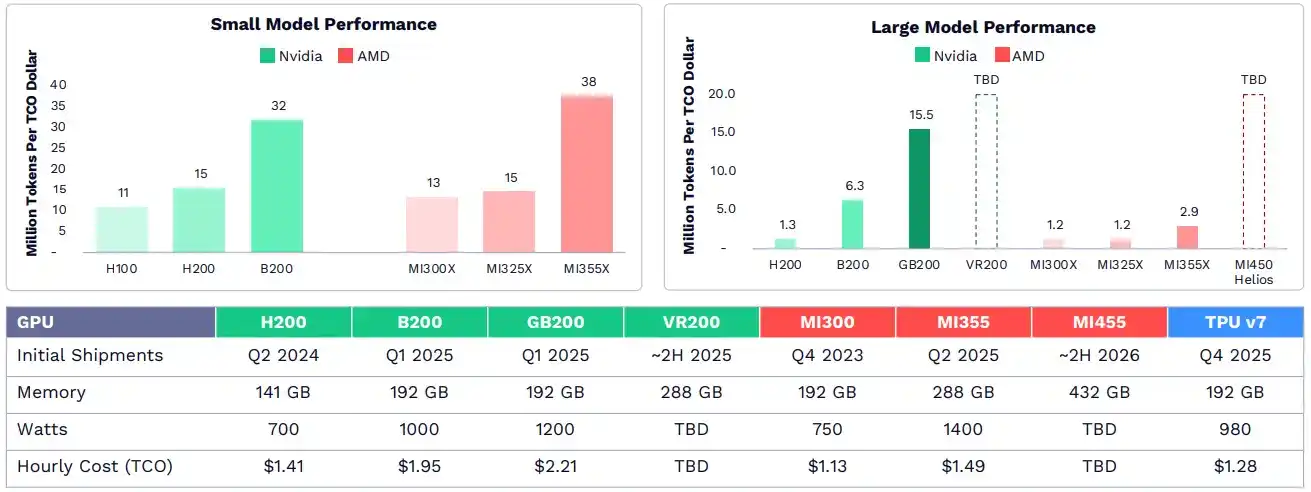
Nvidia faces increasing competition.
Nvidia's early investments in AI chip design, software, and networking gave its graphics processing units (GPUs) an 85% market share and 75% gross margins. Today, competitors like AMD and Google have caught up in certain areas, such as small language model inference. Nvidia's Grace Blackwell rack-scale systems lead in large model inference, supporting the most advanced foundational models.
AI demand will drive sustainable growth in infrastructure.
As AI workloads proliferate in enterprise and consumer environments, AI infrastructure investment could exceed $1.4 trillion by 2030, with the majority going towards accelerated servers. ARK research indicates that ASICs designed by companies like Broadcom and Amazon's Annapurna Labs will continue to gain market share as AI labs and hyperscalers seek cost-effective computing power.
Bitcoin
Bitcoin is gradually becoming the leader of a new institutional asset class.
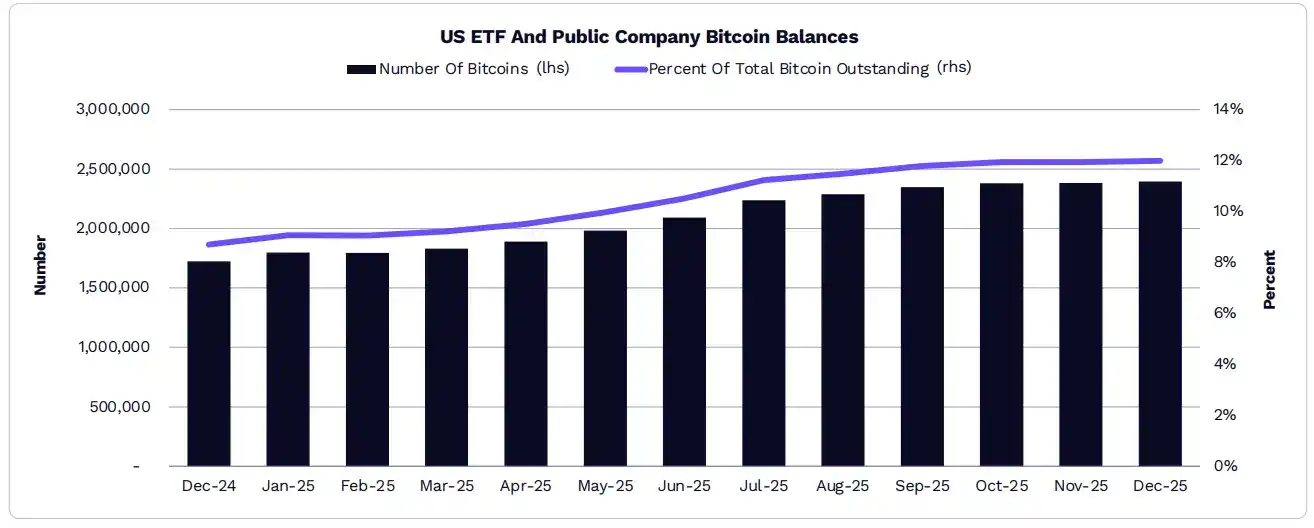
US ETFs and publicly traded companies hold 12% of the total Bitcoin supply.
In 2025, Bitcoin ETF holdings grew 19.7%, from approximately 1.12 million to about 1.29 million BTC; holdings by publicly traded companies grew 73%, from approximately 598,000 to about 1.09 million BTC. Consequently, the total Bitcoin held by ETFs and public companies increased from 8.7% to 12% of the supply.
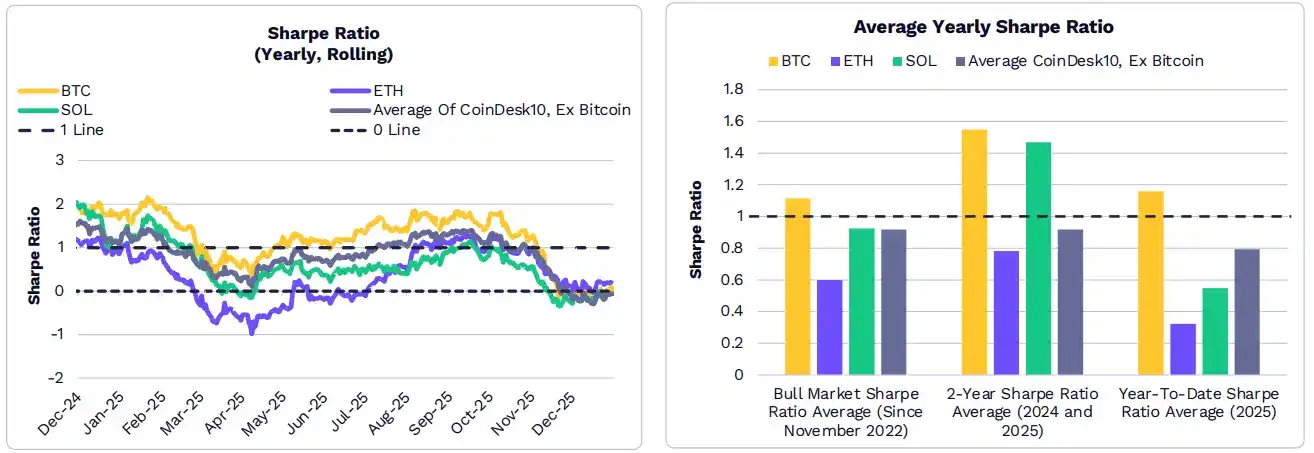
Bitcoin's annual risk-adjusted returns (Sharpe Ratio) have long been higher than those of the broader crypto market.
For most of 2025, Bitcoin's risk-adjusted returns exceeded those of most other large-cap cryptocurrencies and indices. Bitcoin's average annualized Sharpe Ratio also surpassed the averages of Ethereum, SOL, and the other nine constituents of the CoinDesk 10 Index since the recent cycle low (November 2022), the beginning of 2024, and the beginning of 2025.
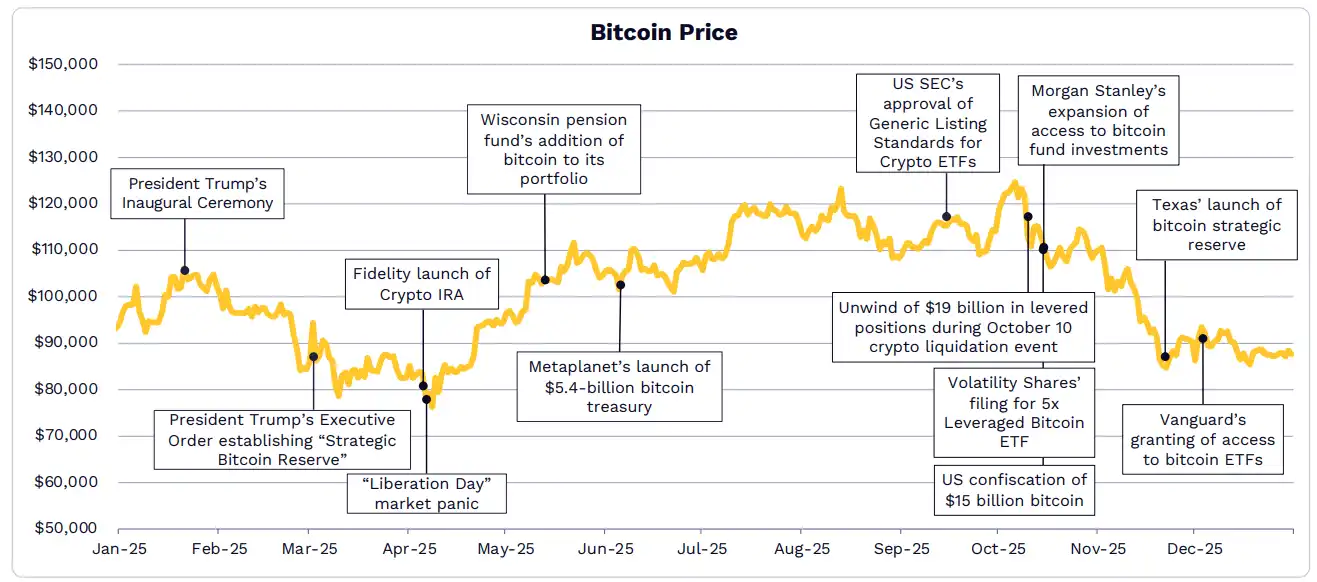
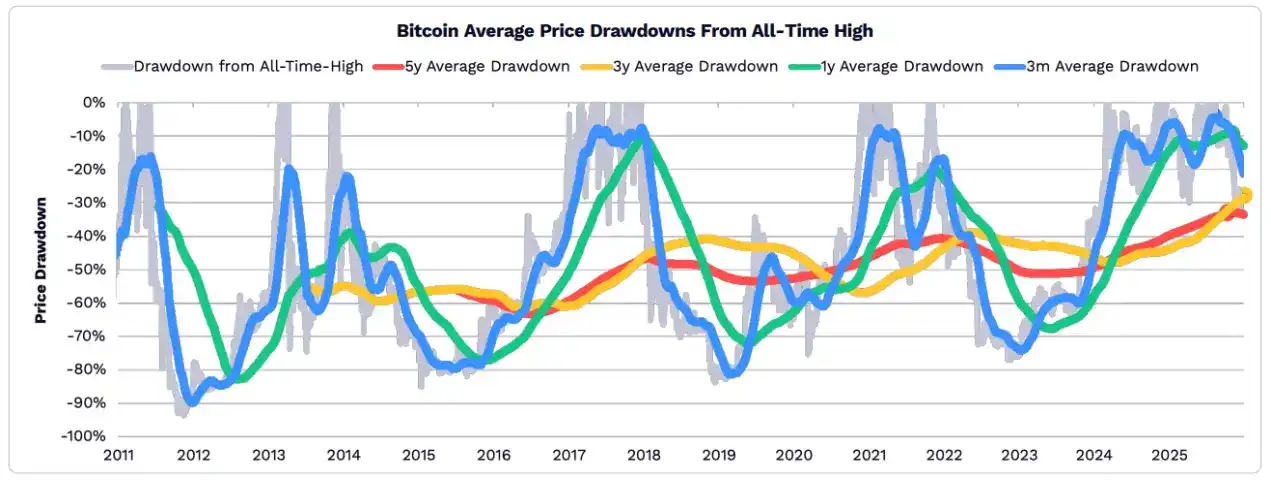
In 2025, the average drawdown of Bitcoin's price from its all-time high has moderated.
As Bitcoin's role as a safe-haven asset strengthens, its volatility has decreased. Looking at 5-year, 3-year, 1-year, and 3-month timeframes, Bitcoin's drawdowns in 2025 were more moderate relative to historical levels.
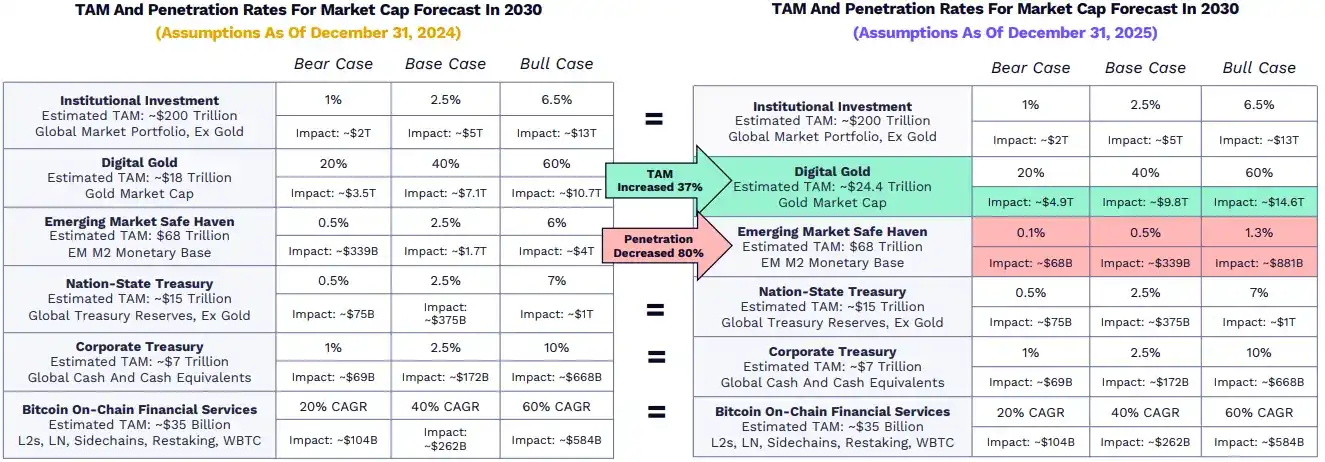
ARK's assumptions for Bitcoin's growth have changed, but the forecast remains largely unchanged.
ARK's forecast for Bitcoin in 2030 has been quite stable, with only two assumption changes: as digital gold, its total addressable market (TAM) grew 37% after gold's market cap surged 64.5% in 2025; as an emerging market safe-haven asset, its projected penetration rate decreased by 80% to reflect the rapid adoption of stablecoins in developing countries.
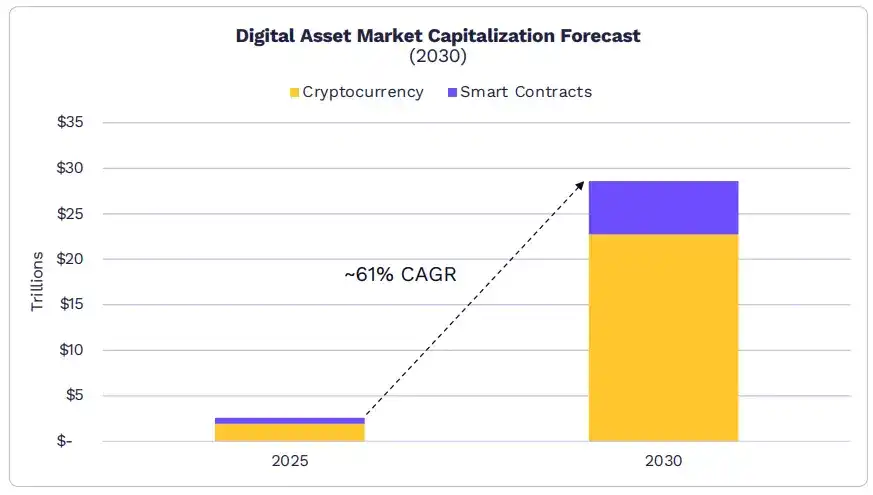
The digital asset market cap could reach $28 trillion by 2030.
The market size for smart contracts and pure digital money (the latter serving as a store of value, medium of exchange, and unit of account on public blockchains) could grow at an annual rate of approximately 61%, reaching $28 trillion by 2030. ARK believes Bitcoin could capture a 70% market share, with the remainder dominated by smart contract networks like Ethereum and Solana.
- According to ARK's projections, Bitcoin is likely to dominate the cryptocurrency market over the next five years with a compound annual growth rate (CAGR) of approximately 63%, growing from nearly $2 trillion to approximately $16 trillion by 2030.
- The market cap of smart contracts could grow at an annual rate of 54% to approximately $6 trillion by 2030, with annualized revenue of about $192 billion and an average fee rate of 0.75%.
- Two to three L1 platforms will capture the majority of the market share, but the市值 they gain will come more from their monetary premium (store of value and reserve asset characteristics) than discounted cash flows.
Tokenized Assets
Thanks to the GENIUS Act, financial institutions are reassessing their stablecoin and tokenization strategies.
Benefiting from the regulatory clarity brought by the GENIUS Act, stablecoin activity has surged to record highs. Multiple companies and institutions have announced their own stablecoins, while BlackRock revealed it is preparing an internal tokenization platform. Major stablecoin issuers and fintech companies like Tether, Circle, and Stripe have launched/supported L1 blockchains optimized for stablecoins.
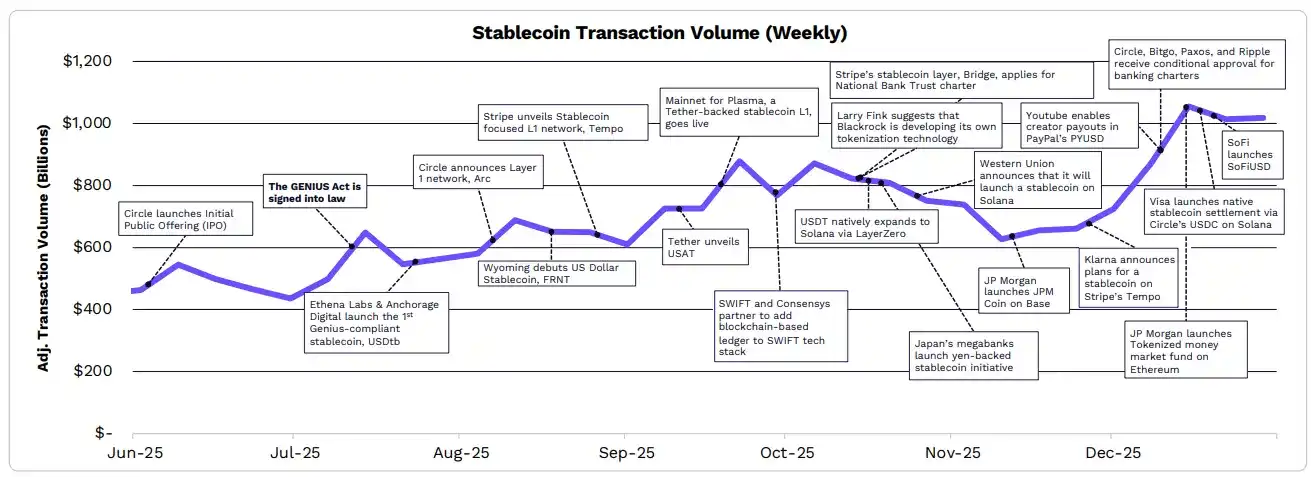
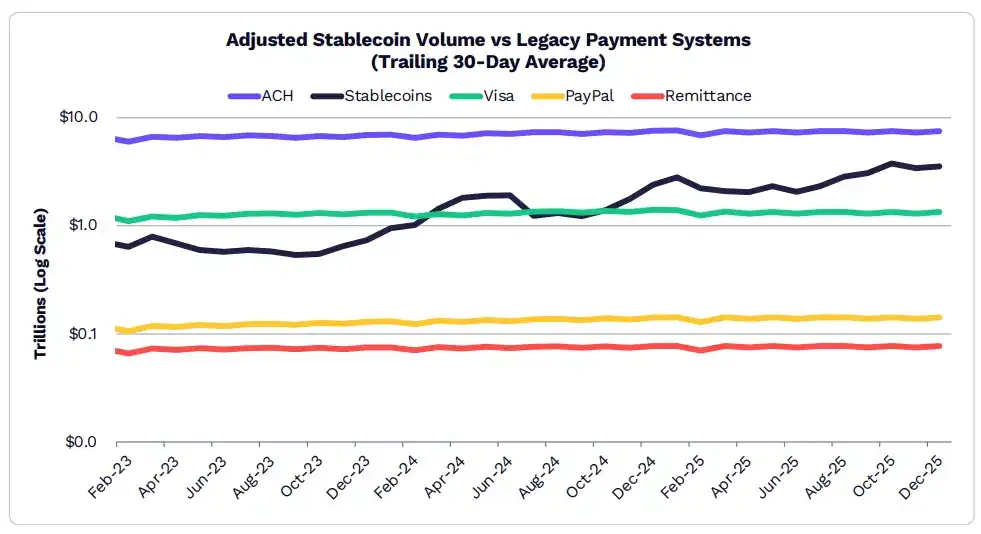
Stablecoin transaction volume reached $3.5 trillion in December, far exceeding most traditional payment systems.
In December 2025, the 30-day moving average of stablecoin transaction volume was $3.5 trillion, 2.3 times the combined value of Visa, PayPal, and Remittances.
Circle's stablecoin USDC dominated transaction volume with a share of approximately 60%, followed by Tether's USDT at approximately 35%.
In 2025, stablecoin supply grew approximately 50%, from $210 billion to $307 billion, with USDT and USDC accounting for 61% and 25%, respectively.
Sky Protocol was the only stablecoin issuer other than the major ones to reach a market cap exceeding $10 billion by the end of 2025.
Notably, PayPal's PYUSD market cap grew more than sixfold to $3.4 billion.
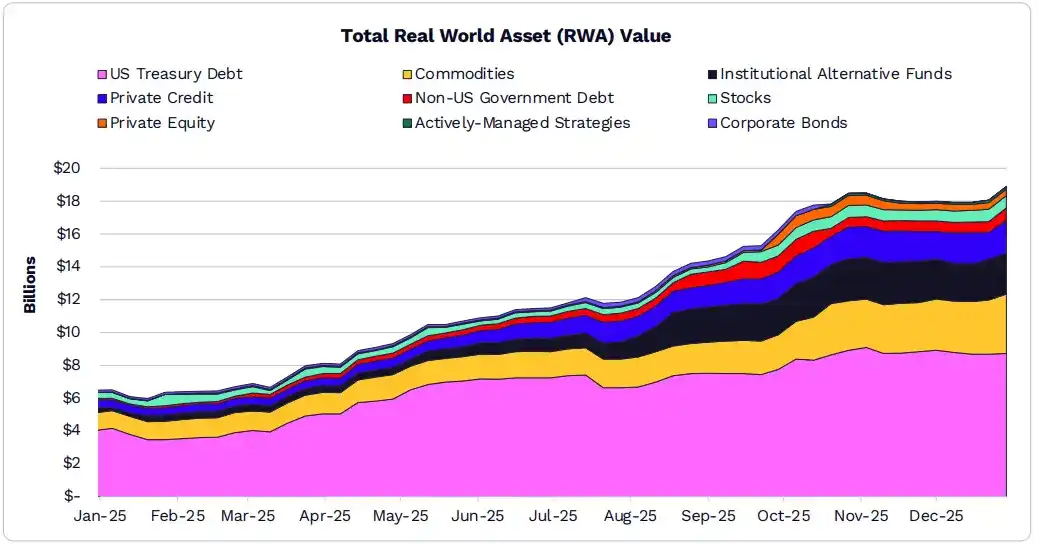
Driven primarily by US Treasuries and commodities, the tokenized asset market tripled in 2025, reaching $18.9 billion.
The market cap of RWAs grew 208% in 2025 to $18.9 billion.
BlackRock's $1.7 billion BUIDL money market fund was one of the largest products, accounting for 20% of the $9 billion in US Treasuries.
Tokenized gold products from Tether (XAUT) and Paxos (PAXG) led the tokenized commodities market, with market caps reaching $1.8 billion and $1.6 billion, respectively, combining for 83%.
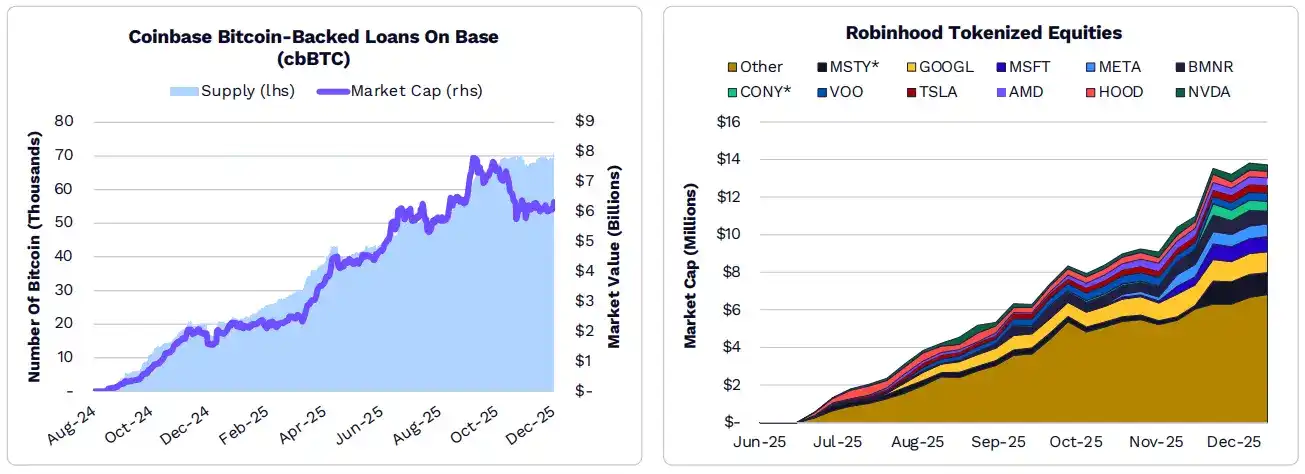
Tokenization of public equities approached $750 million.
Ethereum remains the blockchain of choice for on-chain assets.
The total value of assets on Ethereum now exceeds $400 billion. On seven of the eight most popular blockchains, 90% of the market cap is supported by stablecoins and the top 50 tokens.
On blockchains other than Solana, meme coins account for approximately 3% or less of the market cap. On Solana, meme coins account for approximately 21% of assets.
Tokenization of RWAs is expected to be one of the fastest-growing categories. As most global value exists off-chain, off-chain assets remain the largest growth opportunity for on-chain adoption.

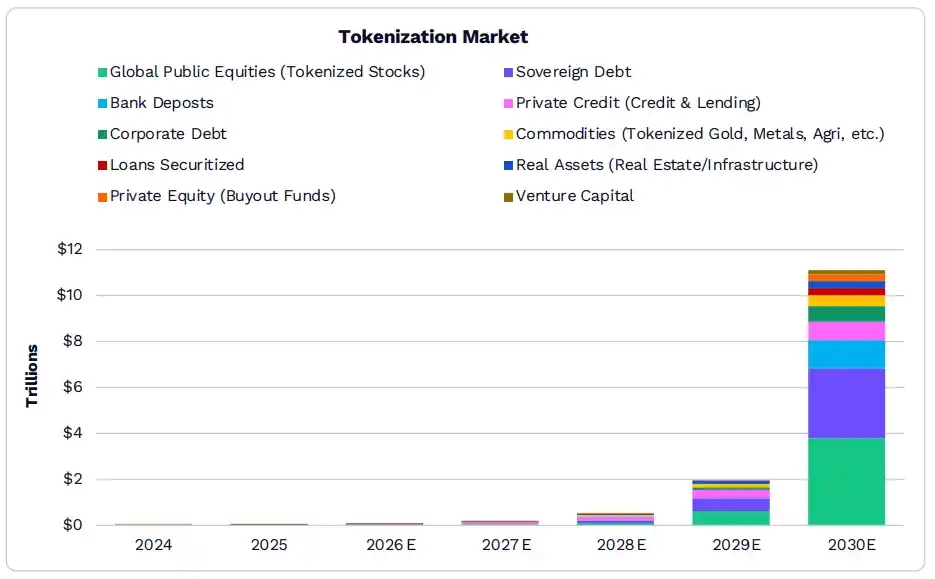
By 2030, the global tokenized asset market size could exceed $11 trillion.
According to our research, the scale of tokenized assets could grow from $189 billion to $11 trillion,届时 accounting for approximately 1.38% of all financial assets.
Although sovereign debt currently dominates tokenization, within the next 5 years, the on-chain value of bank deposits and globally listed equities could see higher penetration rates than current levels.
ARK believes widespread tokenization will depend on clearer regulatory policies and the maturation of institutional-grade infrastructure.
Traditional enterprises are expanding their on-chain presence by building their own infrastructure.
Traditional enterprises are building their own on-chain infrastructure. Circle (Arc), Coinbase (Base, cbBTC), Kraken (Ink), OKX (X Layer), Robinhood (Robinhood Chain), and Stripe (Tempo) are launching company-branded L1/L2 networks to support their own products, such as Bitcoin-collateralized loans, tokenized stocks and ETFs, and stablecoin-based payment channels.
DeFi Applications
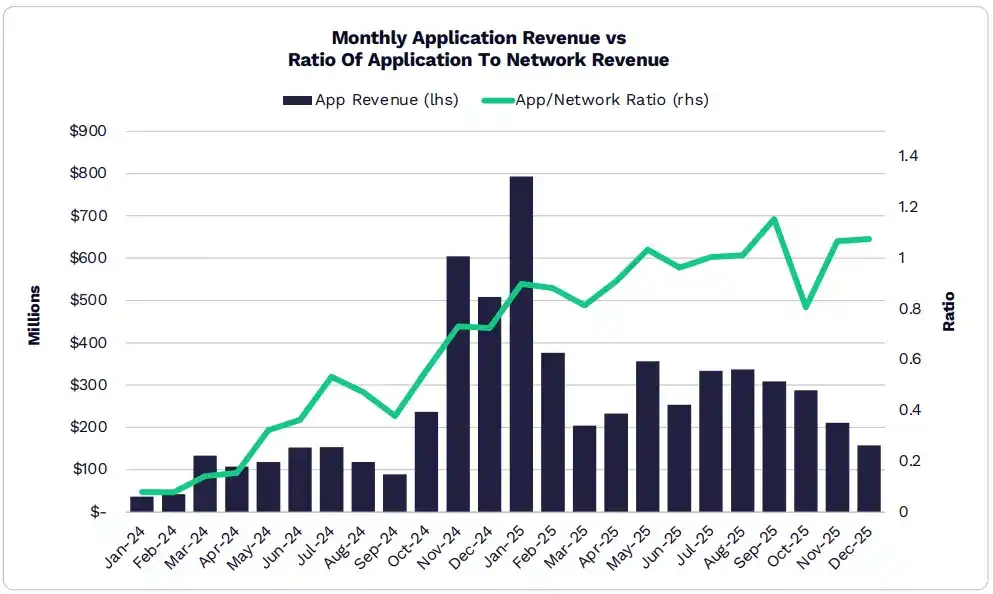
Digital asset value capture is shifting from networks to applications.
Networks are increasingly becoming utilities, transferring user economic benefits and profit margins to the application layer.
Led by Hyperliquid, Pump.fun, and Pancakeswap, application total revenue reached a record high of approximately $3.8 billion in 2025.
One-fifth of all application revenue in 2025 came from January, the highest monthly revenue ever.
Today, 70 applications and protocols have monthly recurring revenue (MRR) exceeding $1 million.
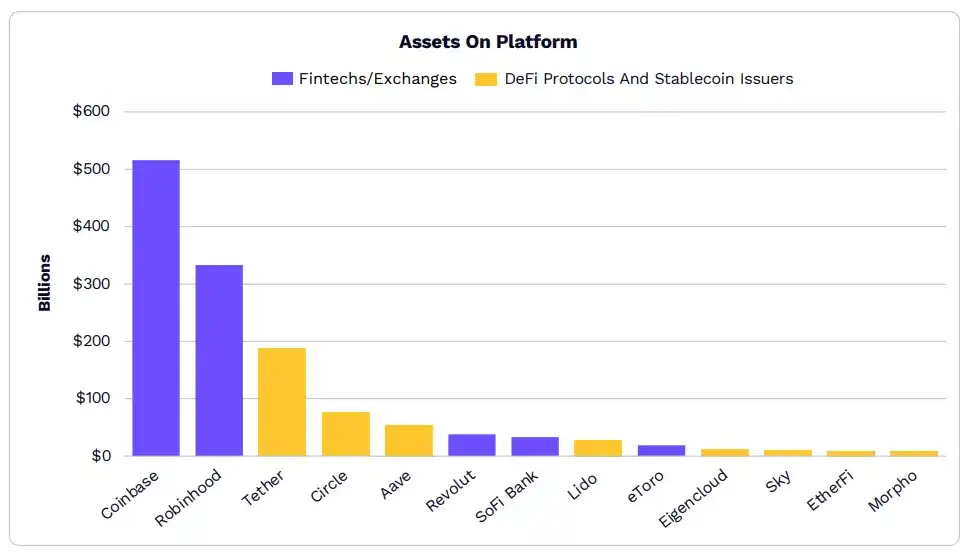
DeFi and stablecoin issuers' asset sizes are catching up to many fintech companies.
The gap in asset size between traditional fintech platforms and crypto-native platforms is narrowing, indicating a convergence of traditional and on-chain infrastructure.
DeFi protocols like liquid staking or lending platforms are attracting institutional capital and expanding rapidly.
The TVL of the top 50 DeFi platforms has entered the billion-dollar club, with the top 12 protocols each exceeding $5 billion.
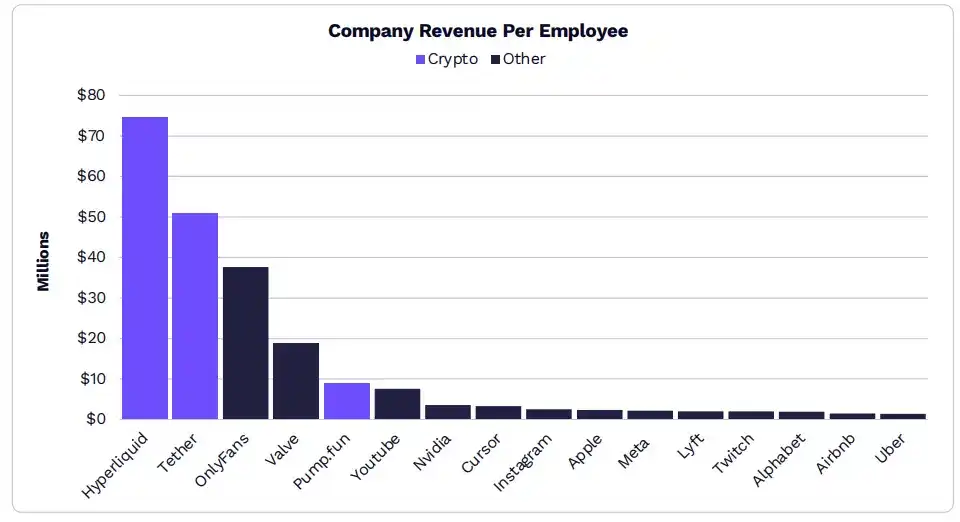
The world's most revenue-efficient companies include Hyperliquid,Tether and Pump.fun.
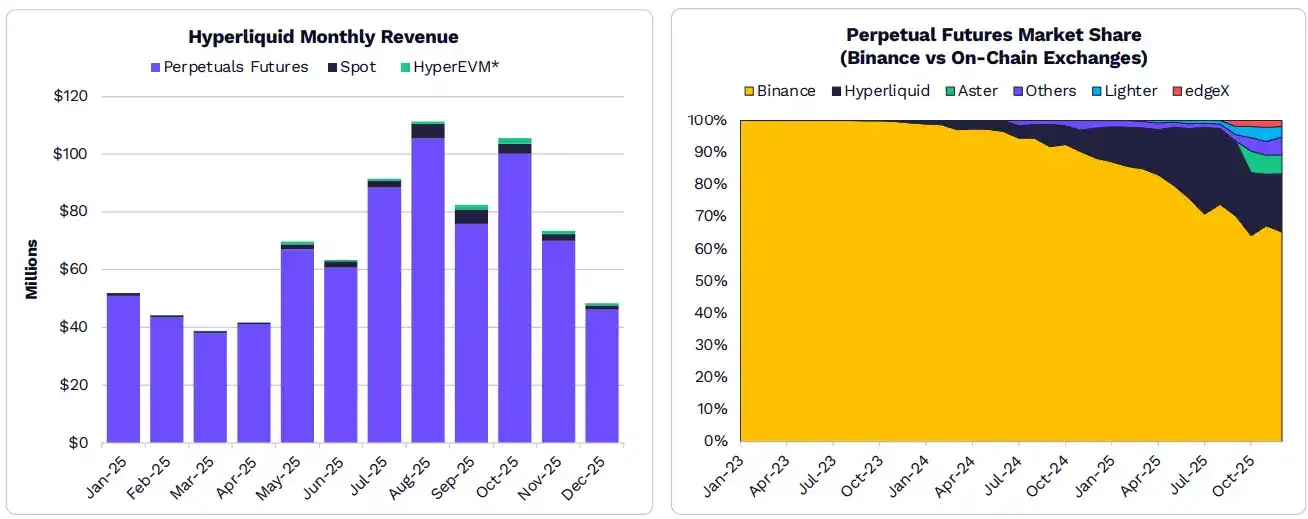
In 2025, Hyperliquid generated over $800 million in annual revenue with just 15 employees.
Through its focus on on-chain verticals like perpetual contracts, stablecoins, and meme coins, Hyperliquid is attracting users and capital at an astonishing scale with clear product-market fit.
On-chain businesses and protocols are redefining productivity, as a handful of people can create revenue and profitability rivaling world-class enterprises.
Led by Hyperliquid,DeFi derivatives are taking perpetual swap market share from Binance.
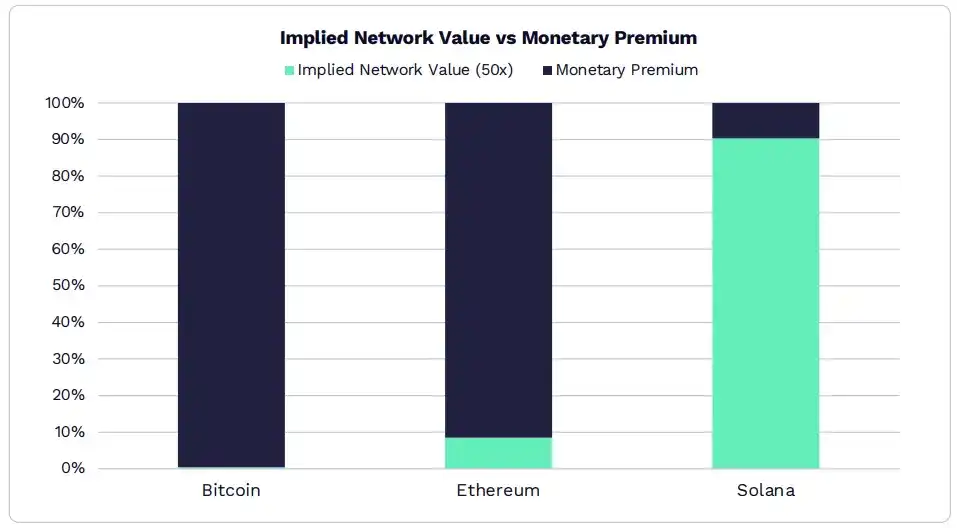
L1 networks are evolving from revenue-generating networks to monetary assets.
If valued based on a 50x revenue multiple, over 90% of Ethereum's market cap is attributable to its role as a monetary asset.
Solana generated $1.4 billion in revenue, proving that 90% of its valuation comes from network utility.
According to ARK research, only a few digital assets will retain monetary properties to become liquid stores of value.
Related reading: Cathie Wood's 2026 Macro and Tech Investment Roadmap
Trending Cryptos











Related Questions
QAccording to ARK's 2026 Big Ideas report, what is the projected market capitalization for digital assets by 2030?
AAccording to ARK's research, the digital asset market capitalization is projected to reach $28 trillion by 2030.
QWhat major factor is driving the surge in stablecoin activity to all-time highs, as mentioned in the report?
AThe surge in stablecoin activity is primarily driven by the regulatory clarity provided by the GENIUS Act.
QWhich company's GPU currently holds an 85% market share in AI chips but is facing increasing competition?
ANvidia's GPU currently holds an 85% market share in AI chips but is facing increasing competition from companies like AMD and Google.
QWhat percentage of Bitcoin's total supply is now held by US ETFs and public companies combined?
AUS ETFs and public companies combined now hold 12% of Bitcoin's total supply.
QWhich blockchain does the report identify as the preferred choice for on-chain assets?
AThe report identifies Ethereum as the preferred blockchain for on-chain assets.
Related Reads


Trading
Hot Articles
What is $BITCOIN
DIGITAL GOLD ($BITCOIN): A Comprehensive Analysis Introduction to DIGITAL GOLD ($BITCOIN) DIGITAL GOLD ($BITCOIN) is a blockchain-based project operating on the Solana network, which aims to combine the characteristics of traditional precious metals with the innovation of decentralized technologies. While it shares a name with Bitcoin, often referred to as “digital gold” due to its perception as a store of value, DIGITAL GOLD is a separate token designed to create a unique ecosystem within the Web3 landscape. Its goal is to position itself as a viable alternative digital asset, although specifics regarding its applications and functionalities are still developing. What is DIGITAL GOLD ($BITCOIN)? DIGITAL GOLD ($BITCOIN) is a cryptocurrency token explicitly designed for use on the Solana blockchain. In contrast to Bitcoin, which provides a widely recognized value storage role, this token appears to focus on broader applications and characteristics. Notable aspects include: Blockchain Infrastructure: The token is built on the Solana blockchain, known for its capacity to handle high-speed and low-cost transactions. Supply Dynamics: DIGITAL GOLD has a maximum supply capped at 100 quadrillion tokens (100P $BITCOIN), although details regarding its circulating supply are currently undisclosed. Utility: While precise functionalities are not explicitly outlined, there are indications that the token could be utilized for various applications, potentially involving decentralized applications (dApps) or asset tokenization strategies. Who is the Creator of DIGITAL GOLD ($BITCOIN)? At present, the identity of the creators and development team behind DIGITAL GOLD ($BITCOIN) remains unknown. This situation is typical among many innovative projects within the blockchain space, particularly those aligning with decentralized finance and meme coin phenomena. While such anonymity may foster a community-driven culture, it intensifies concerns about governance and accountability. Who are the Investors of DIGITAL GOLD ($BITCOIN)? The available information indicates that DIGITAL GOLD ($BITCOIN) does not have any known institutional backers or prominent venture capital investments. The project seems to operate on a peer-to-peer model focused on community support and adoption rather than traditional funding routes. Its activity and liquidity are primarily situated on decentralized exchanges (DEXs), such as PumpSwap, rather than established centralized trading platforms, further highlighting its grassroots approach. How DIGITAL GOLD ($BITCOIN) Works The operational mechanics of DIGITAL GOLD ($BITCOIN) can be elaborated on based on its blockchain design and network attributes: Consensus Mechanism: By leveraging Solana’s unique proof-of-history (PoH) combined with a proof-of-stake (PoS) model, the project ensures efficient transaction validation contributing to the network's high performance. Tokenomics: While specific deflationary mechanisms have not been extensively detailed, the vast maximum token supply implies that it may cater to microtransactions or niche use cases that are still to be defined. Interoperability: There exists the potential for integration with Solana’s broader ecosystem, including various decentralized finance (DeFi) platforms. However, the details regarding specific integrations remain unspecified. Timeline of Key Events Here is a timeline that highlights significant milestones concerning DIGITAL GOLD ($BITCOIN): 2023: The initial deployment of the token occurs on the Solana blockchain, marked by its contract address. 2024: DIGITAL GOLD gains visibility as it becomes available for trading on decentralized exchanges like PumpSwap, allowing users to trade it against SOL. 2025: The project witnesses sporadic trading activity and potential interest in community-led engagements, although no noteworthy partnerships or technical advancements have been documented as of yet. Critical Analysis Strengths Scalability: The underlying Solana infrastructure supports high transaction volumes, which could enhance the utility of $BITCOIN in various transaction scenarios. Accessibility: The potential low trading price per token could attract retail investors, facilitating wider participation due to fractional ownership opportunities. Risks Lack of Transparency: The absence of publicly known backers, developers, or an audit process may yield skepticism regarding the project's sustainability and trustworthiness. Market Volatility: The trading activity is heavily reliant on speculative behavior, which can result in significant price volatility and uncertainty for investors. Conclusion DIGITAL GOLD ($BITCOIN) emerges as an intriguing yet ambiguous project within the rapidly evolving Solana ecosystem. While it attempts to leverage the “digital gold” narrative, its departure from Bitcoin's established role as a store of value underscores the need for a clearer differentiation of its intended utility and governance structure. Future acceptance and adoption will likely depend on addressing the current opacity and defining its operational and economic strategies more explicitly. Note: This report encompasses synthesised information available as of October 2023, and developments may have transpired beyond the research period.
939 Total ViewsPublished 2025.05.13Updated 2025.05.13

Meet ZetaChain: The Universal L1 for Apps That Work Everywhere — Even on Bitcoin
ZetaChain is the first ever Universal Blockchain to enable native connection across all blockchain ecosystems.
48.7k Total ViewsPublished 2025.06.16Updated 2025.06.16

Fractal Bitcoin: Scaling Bitcoin as a Recursive System
Fractal Bitcoin is a Layer-1 scalability solution built on the Bitcoin core code, enabling infinite scalability through a recursive approach.
48.2k Total ViewsPublished 2025.06.30Updated 2025.06.30

