比特币飙升,散户最爱的“山寨季”要来了?

Web3动向Published on 2024-03-05Last updated on 2024-03-05

Abstract

比特币飙升至 6 万美元以上,但我们持有的山寨币却涨幅落后?

比特币飙升至 6 万美元以上,但我们持有的山寨币却涨幅落后?

无需惊慌,从长远来看,大家手里的山寨币们目前正是最有利的长期投资之一。

本文就是加密研究员 Jake Pahor 的最新报告,对当下的山寨币市场做了详细的研究,并从市场周期阶段、比特币主导地位、ETH/BTC 汇率、稳定币资金流入、DeFi TVL、新散户是否入场等多个角度对此进行了深入的探究,Foresight News 对全文进行了编译。

市场周期阶段

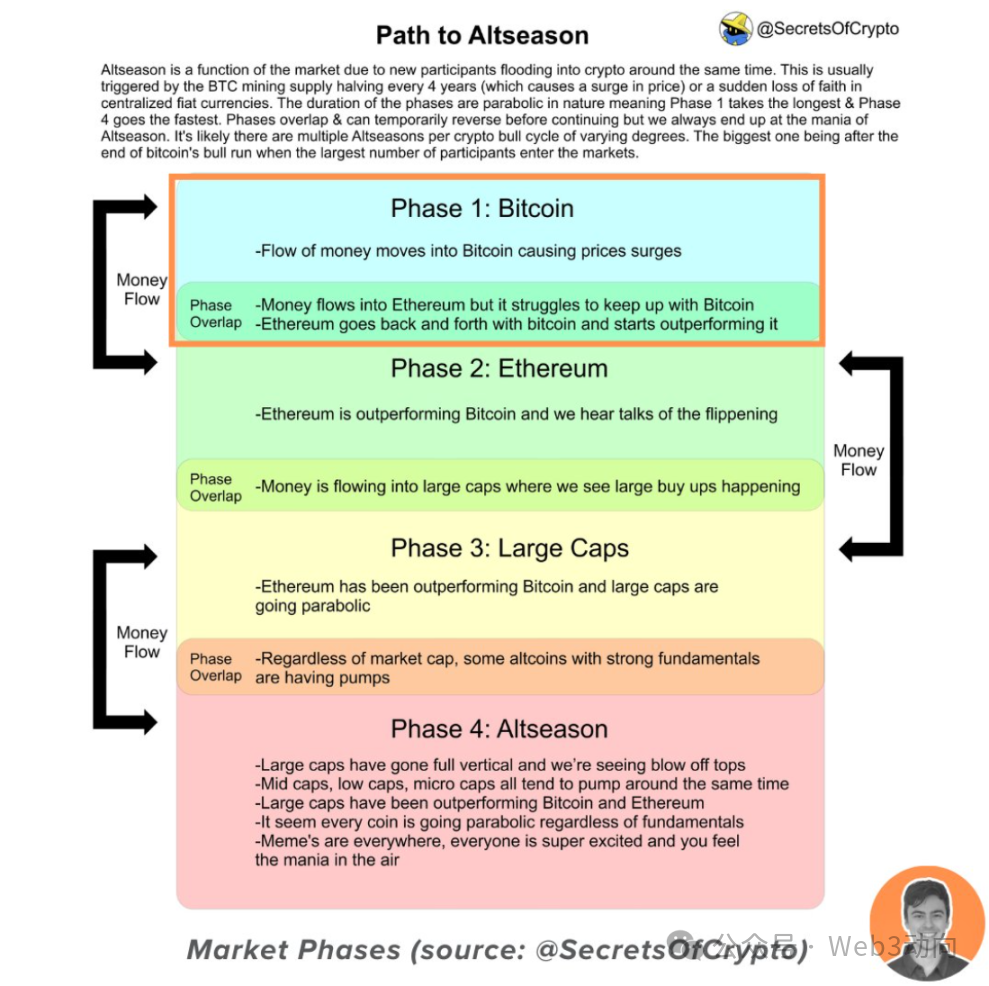
在牛市的初期阶段,比特币往往吸收了大部分流动性并首先上涨(第一阶段),由此导致比特币的主导地位增加。

在这个时期,大多数山寨币(当然不是全部)通常表现不如比特币,实际上,这是一种健康市场的迹象。
比特币主导地位

比特币在市场的主导地位越高,我们就越有可能在之后看到漫长的山寨币 Summer。

其中 BTC 的市场主导地位在 2024 年 1 月短暂地跌破 20 周移动平均线后,已经重新回升并稳定在 55%(关键阻力位),如果突破这个阻力位,下一个阻力位可能会达到 58-60%。
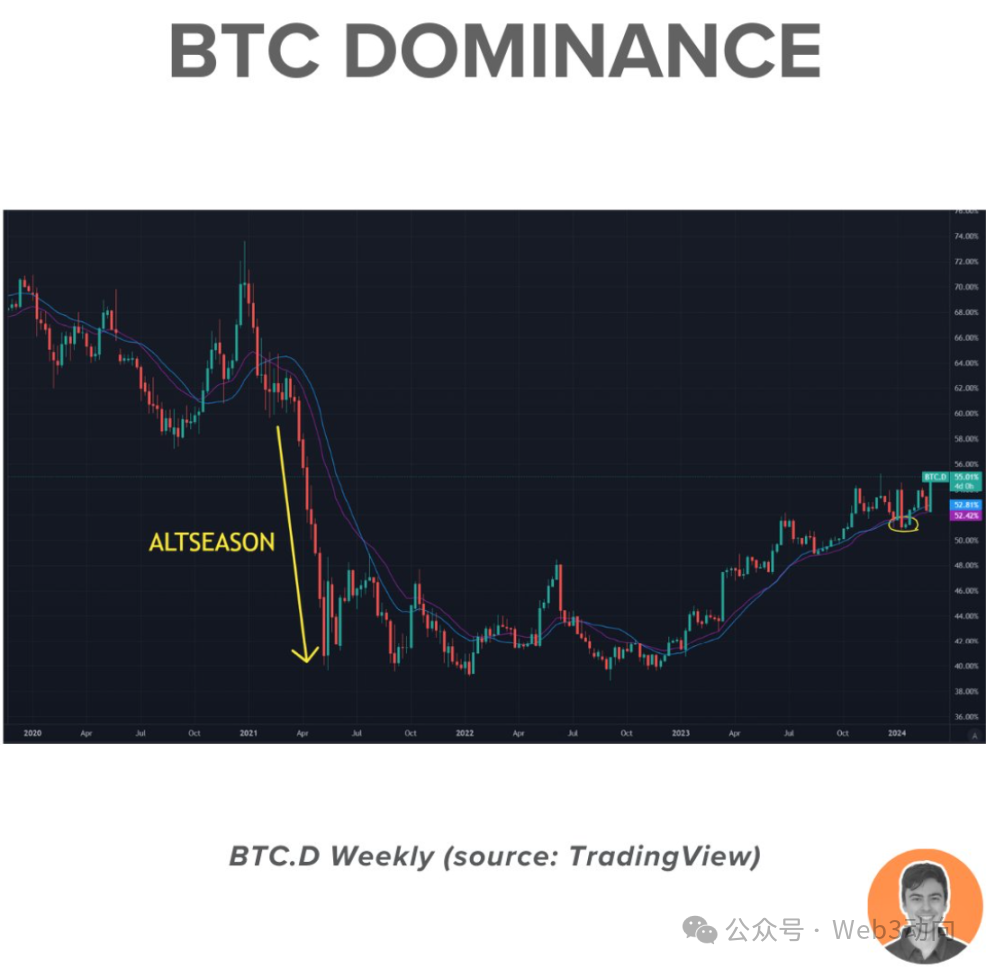
最终,BTC 的市场主导地位将达到周期的峰值,并开始回落。

随着风险偏好的增加,资本将依次转向 ETH → 大盘蓝筹币 → 山寨币,「历史不会重演,但往往会押着相同的韵脚」。

ETH/BTC 汇率

现在来看看 ETH/BTC 汇率的图表数据,同样的情况发生了,只不过方向相反——自 2021 年 12 月以来,ETH/BTC 汇率一直处于长期下降趋势。

2024 年 1 月,ETH/BTC 汇率在 20 周移动平均线上方曾一度出现了假突破,让人误以为趋势开始转变。

然而,如今我们再次回落,并重新测试 20 周移动平均线的阻力位。
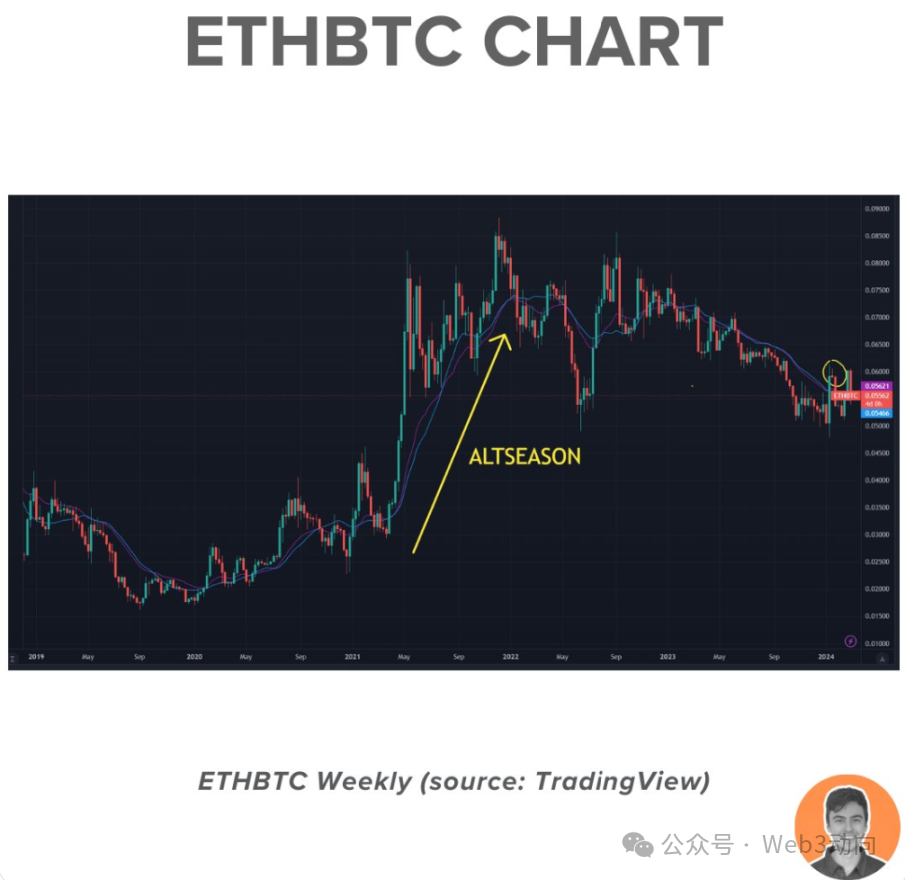
如果 ETH/BTC 汇率跌破之前作为关键阻力位的 0.05 ,我们可能会看到汇率价格暴跌至更低的水平。

然而,如果后续 ETH/BTC 汇率将这个 0.05 作为新的支撑位,这可能表明以太坊逐渐变得强势,并且可能标志着市场周期第二阶段的开始,这或许会与现货以太坊 ETF 的获批同时发生。

稳定币资金流入

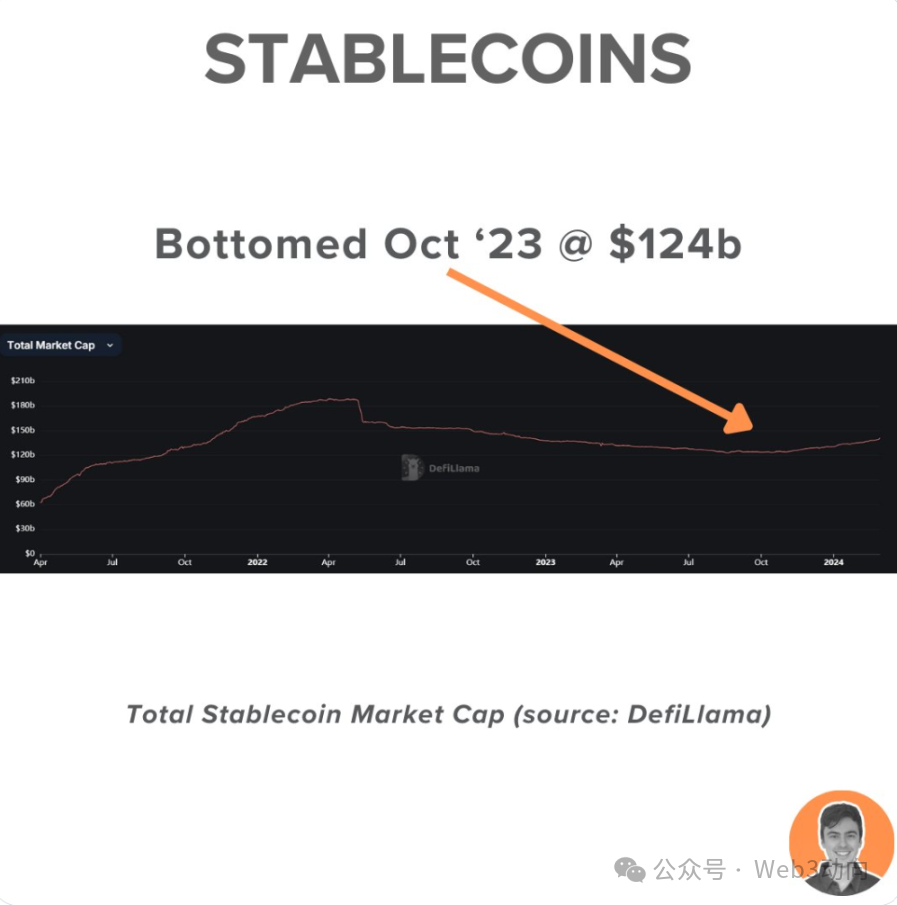
自 2022 年以来,稳定币的市值一直处于强劲下降趋势,这与资本不断流出加密领域的熊市特征相一致。

然而,从数据上看,2023 年第四季度似乎已经形成了一个底部:

2023 年 10 月,稳定币市值= 1240 亿美元;

2024 年 2 月,稳定币市值 = 1410 亿美元;

期间共计增长 14%,所以牛市也与稳定币资金的流入密切相关。
DeFi TVL

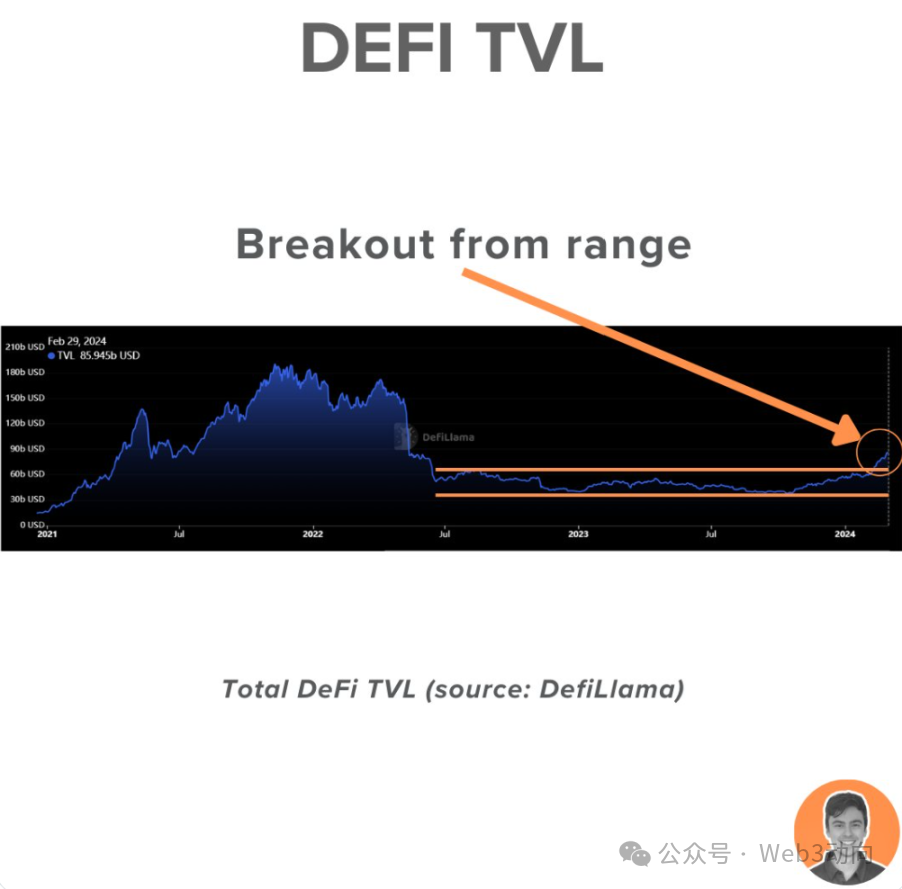
TVL 通常被视为滞后指标,然而用于检查和了解总体趋势仍然是有用的。

自 2022 年 6 月以来,DeFi TVL 一直在一个范围内波动(350 - 650 亿美元)。然而步入 2024 年,看起来我们正在突破这一区间:

2023 年 10 月 DeFi TVL 为 360 亿美元;

2024 年 2 月 DeFi TVL 为 860 亿美元;

短短 4 个月,DeFi TVL 暴涨 239%!
新散户是否入场

场外的新散户肯定还没有入场(至少目前如此),因为我的家人和「圈外」朋友都没有给我发关于加密货币的信息,新闻上也找不到相关报道。

关于「Bitcoin」和「Crypto」的谷歌搜索趋势在 2021 年 5 月达到高峰,这也是在比特币价格达到 6.4 万美元之后。

但目前,新散户的投资兴趣仍然非常低——二者对应的得分为 19% 和 29%。
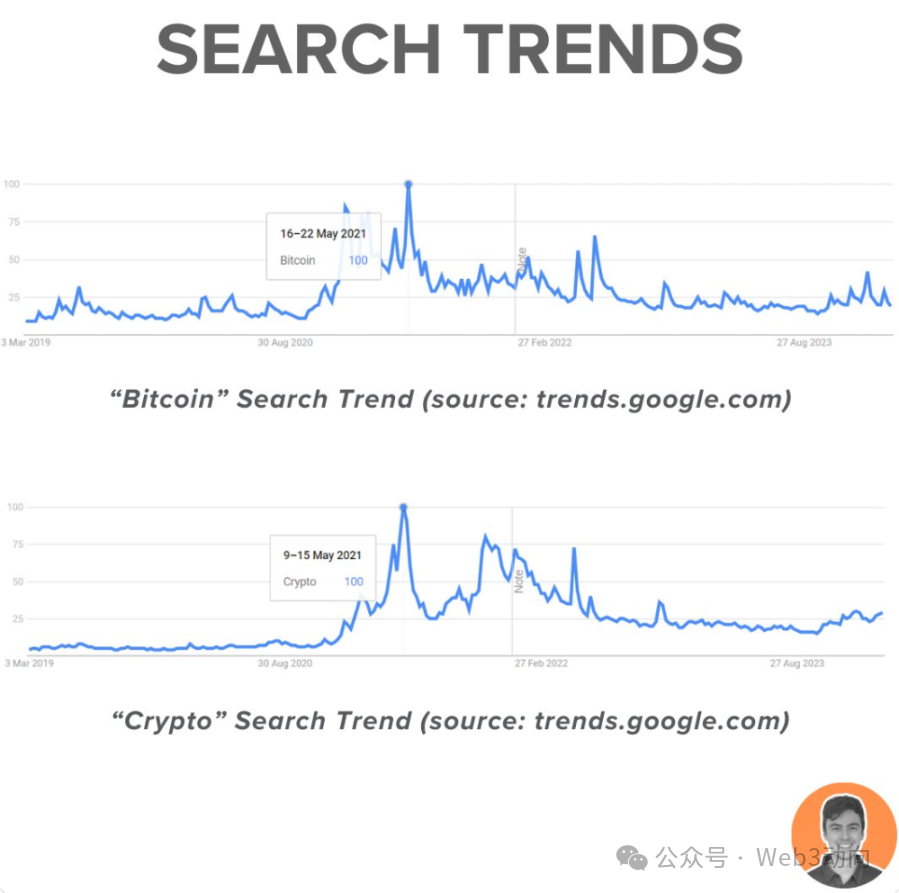
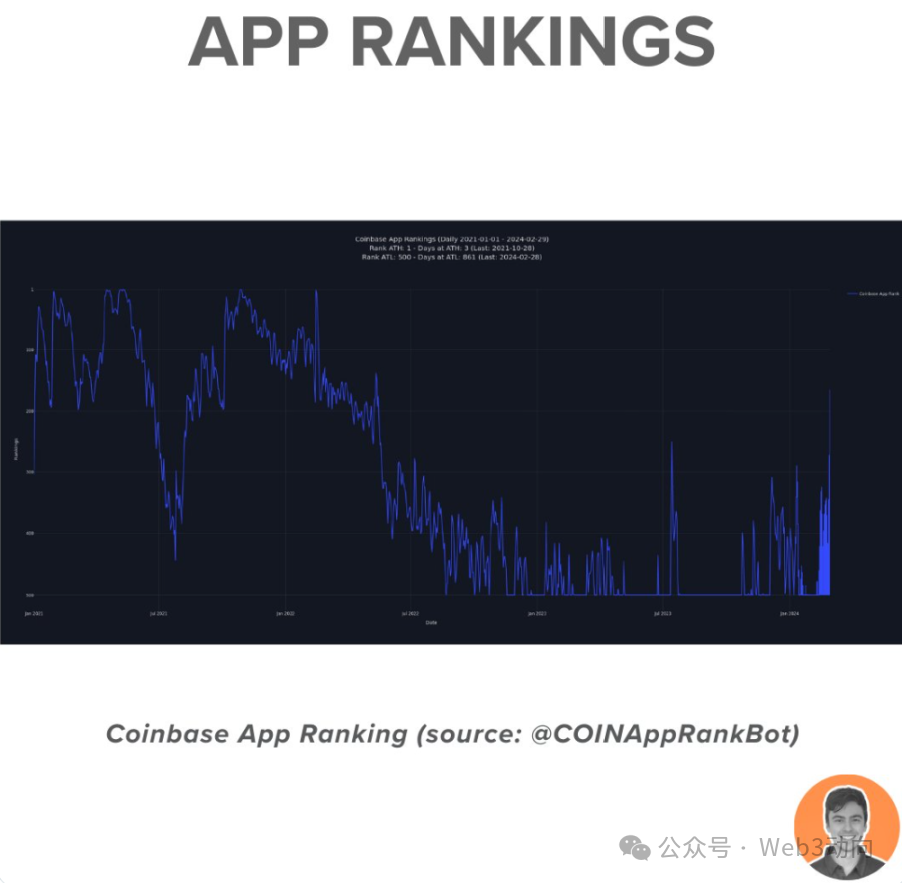
不过可以看到的是,散户的投资兴趣正在恢复增长,最直接的例证,就是由于需求过大,Coinbase 应用程序一度崩溃,并且它在应用程序商店的排名正快速攀升。

当前排名=165;

历史最低排名=500;

历史最高排名=1;

所以当它再次达到第 1 的排名时,我们无疑将处于牛市巅峰。
总的来看,我仍然不太相信 BTC 已经突破了 6 万美元,且我们距离历史高点咫尺之遥。

不过,2024 年有如此多的催化剂,我们很难不更加疯狂地看涨:BTC ETF 持续的资金流入、现货 ETH ETF 获批、比特币减半、美联储降息、美国选举年。

毫无疑问我们现在正处于牛市周期的早期阶段,资金仍主要流入比特币,接下来我们将看到资金流入以太坊,然后流入山寨币。

因此,现在绝对是加倍努力并为不可避免的山寨季做好准备的时候了。

不管你做什么,现在都不要卖掉你的山寨币组合,大多数人只需保持现状并保持冷静,直至达到牛市巅峰状态即可——你只需在预计会出现疯狂波动与上涨的过程中获利了结。

Trending Cryptos

Related Reads

After R&D Investment Catches Up with the U.S., Is the Sino-U.S. Chip Competition Still Just About Money?

The article examines the significance of recent data showing China's total R&D expenditure, measured by purchasing power parity (PPP), catching up to or slightly surpassing that of the United States in 2024. It argues that while this milestone reflects China's immense capacity to mobilize research resources, the competition in semiconductors now extends far beyond sheer financial input. The analysis highlights key differences: China's R&D is heavily skewed towards experimental development (over 80%), focusing on product engineering and industrialization, whereas the U.S. allocates a proportionally larger share (about 15%) to basic research. Furthermore, leading U.S. semiconductor firms reinvest a significant portion of their substantial global sales revenue into R&D, creating a sustainable commercial innovation cycle that is difficult to replicate. The article emphasizes that semiconductor progress depends on converting R&D into commercially viable products that pass rigorous customer validation and achieve repeat orders, not just on spending levels. It concludes that as China enters the top tier of R&D spenders, the critical challenges shift to improving resource allocation efficiency, fostering long-term basic research, and building effective mechanisms to bridge the gap between laboratory discoveries and reliable, market-ready industrial capabilities.

marsbit45m ago

After R&D Investment Catches Up with the U.S., Is the Sino-U.S. Chip Competition Still Just About Money?

marsbit45m ago

Top 10% of American Households Capture 88% of Wealth, How Is the AI Era Cake Divided?

AI Worsens Wealth Inequality as Top 10% of US Families Garner 88% of Stock Gains (2019-2026) A report from the China Finance 40 Forum highlights that the AI boom is significantly widening wealth inequality in the United States. From 2019 to Q1 2026, wealth from directly held stocks by US households nearly doubled from $29 trillion to approximately $55 trillion, with rapid growth concentrated post-2023, coinciding with the AI-driven stock market surge. The distribution of these gains has been starkly uneven. Between 2022 and Q1 2026, the wealth increase of about $21 trillion was captured almost entirely by the wealthiest families: the top 10% secured roughly 88% ($18.5 trillion), while the bottom 50% received only about 1% ($0.2 trillion). This has contributed to a growing disparity in disposable income shares. The report, referencing economic historian Robert Allen, draws parallels to historical technological shifts like the "Engels' Pause" during the First Industrial Revolution, where worker wages stagnated despite productivity gains. It suggests AI could induce a similar period where capital收益 outpace labor income, exacerbating inequality. Huang Yiping of Peking University identifies four mechanisms through which AI impacts income distribution: capital-bias (reducing labor's income share), task polarization (hollowing out middle-skill jobs), skill-based digital divides, and wealth amplification through assets. He warns that if this trend continues, strong supply growth driven by AI could be undermined by persistently weak consumer demand, threatening sustainable economic growth. To address these challenges, the report proposes a three-pronged strategy: 1) Defensive measures like strengthening social safety nets and antitrust enforcement; 2) Empowering workers through education reform and lifelong learning to collaborate with AI; and 3) Rebalancing via policies such as potential taxes on AI超额收益 and mechanisms for broader sharing of technology's benefits, ensuring AI's红利 are more equitably distributed.

marsbit50m ago

Top 10% of American Households Capture 88% of Wealth, How Is the AI Era Cake Divided?

marsbit50m ago

Trading

Spot

Hot Articles

What is $BITCOIN

DIGITAL GOLD ($BITCOIN): A Comprehensive Analysis Introduction to DIGITAL GOLD ($BITCOIN) DIGITAL GOLD ($BITCOIN) is a blockchain-based project operating on the Solana network, which aims to combine the characteristics of traditional precious metals with the innovation of decentralized technologies. While it shares a name with Bitcoin, often referred to as “digital gold” due to its perception as a store of value, DIGITAL GOLD is a separate token designed to create a unique ecosystem within the Web3 landscape. Its goal is to position itself as a viable alternative digital asset, although specifics regarding its applications and functionalities are still developing. What is DIGITAL GOLD ($BITCOIN)? DIGITAL GOLD ($BITCOIN) is a cryptocurrency token explicitly designed for use on the Solana blockchain. In contrast to Bitcoin, which provides a widely recognized value storage role, this token appears to focus on broader applications and characteristics. Notable aspects include: Blockchain Infrastructure: The token is built on the Solana blockchain, known for its capacity to handle high-speed and low-cost transactions. Supply Dynamics: DIGITAL GOLD has a maximum supply capped at 100 quadrillion tokens (100P $BITCOIN), although details regarding its circulating supply are currently undisclosed. Utility: While precise functionalities are not explicitly outlined, there are indications that the token could be utilized for various applications, potentially involving decentralized applications (dApps) or asset tokenization strategies. Who is the Creator of DIGITAL GOLD ($BITCOIN)? At present, the identity of the creators and development team behind DIGITAL GOLD ($BITCOIN) remains unknown. This situation is typical among many innovative projects within the blockchain space, particularly those aligning with decentralized finance and meme coin phenomena. While such anonymity may foster a community-driven culture, it intensifies concerns about governance and accountability. Who are the Investors of DIGITAL GOLD ($BITCOIN)? The available information indicates that DIGITAL GOLD ($BITCOIN) does not have any known institutional backers or prominent venture capital investments. The project seems to operate on a peer-to-peer model focused on community support and adoption rather than traditional funding routes. Its activity and liquidity are primarily situated on decentralized exchanges (DEXs), such as PumpSwap, rather than established centralized trading platforms, further highlighting its grassroots approach. How DIGITAL GOLD ($BITCOIN) Works The operational mechanics of DIGITAL GOLD ($BITCOIN) can be elaborated on based on its blockchain design and network attributes: Consensus Mechanism: By leveraging Solana’s unique proof-of-history (PoH) combined with a proof-of-stake (PoS) model, the project ensures efficient transaction validation contributing to the network's high performance. Tokenomics: While specific deflationary mechanisms have not been extensively detailed, the vast maximum token supply implies that it may cater to microtransactions or niche use cases that are still to be defined. Interoperability: There exists the potential for integration with Solana’s broader ecosystem, including various decentralized finance (DeFi) platforms. However, the details regarding specific integrations remain unspecified. Timeline of Key Events Here is a timeline that highlights significant milestones concerning DIGITAL GOLD ($BITCOIN): 2023: The initial deployment of the token occurs on the Solana blockchain, marked by its contract address. 2024: DIGITAL GOLD gains visibility as it becomes available for trading on decentralized exchanges like PumpSwap, allowing users to trade it against SOL. 2025: The project witnesses sporadic trading activity and potential interest in community-led engagements, although no noteworthy partnerships or technical advancements have been documented as of yet. Critical Analysis Strengths Scalability: The underlying Solana infrastructure supports high transaction volumes, which could enhance the utility of $BITCOIN in various transaction scenarios. Accessibility: The potential low trading price per token could attract retail investors, facilitating wider participation due to fractional ownership opportunities. Risks Lack of Transparency: The absence of publicly known backers, developers, or an audit process may yield skepticism regarding the project's sustainability and trustworthiness. Market Volatility: The trading activity is heavily reliant on speculative behavior, which can result in significant price volatility and uncertainty for investors. Conclusion DIGITAL GOLD ($BITCOIN) emerges as an intriguing yet ambiguous project within the rapidly evolving Solana ecosystem. While it attempts to leverage the “digital gold” narrative, its departure from Bitcoin's established role as a store of value underscores the need for a clearer differentiation of its intended utility and governance structure. Future acceptance and adoption will likely depend on addressing the current opacity and defining its operational and economic strategies more explicitly. Note: This report encompasses synthesised information available as of October 2023, and developments may have transpired beyond the research period.

1.1k Total ViewsPublished 2025.05.13Updated 2025.05.13

What is $BITCOIN

Discussions

Welcome to the HTX Community. Here, you can stay informed about the latest platform developments and gain access to professional market insights. Users' opinions on the price of BTC (BTC) are presented below.

活动图片