现货ETF和坎昆升级,以太坊或将迎来爆发?

MarsBitPublished on 2024-02-22Last updated on 2024-02-22

Abstract

多家机构向SEC提交以太坊现货ETF申请,价格短时突破3000美元,创下近2年最高纪录。以太坊面临证券论争议,SEC可能会拒绝,但外部环境看好通过。升级驱动和再质押协议推动市场对以太坊的关注,大型机构开始囤积。升级将降低交易费用和提升性能,但也可能带来抛售风险和中心化风险。参与者需保持警惕。

.details .details-cont p, p {word-break: normal; text-align: unset} p img {text-align: center !important;} 比特币现货ETF叙事犹在持续,在比特币大涨的背景下,以太坊也不甘寂寞出头来。
从外部环境来看,ETF的叙事再次来到以太坊,除了灰度外,目前已有贝莱德、富达、 VanEck等6家机构向SEC提交了现货ETF的发行申请,3月将迎来最近的一次审批潮。
而从内部条件而言,以太坊的确定性利好坎昆升级也已迫在眉睫;再质押协议在年初的再度兴起也让沉寂颇久的以太坊备受瞩目。2月20日,以太坊价格短时突破3000美元,创下2022年4月以来的最高纪录。
种种表现来看,台上的聚光灯,似乎真的照到了以太坊这边。
01
ETF的博弈,这次来到了以太坊
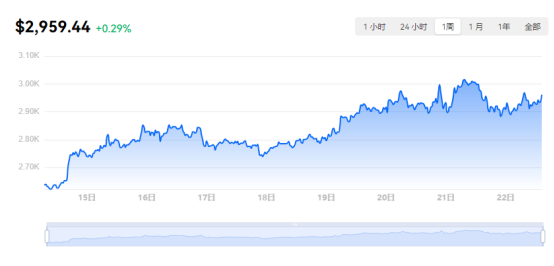
这厢比特币突破53000美元,那厢以太坊也不甘示弱。2月20日,以太坊短时突破3000美元,尽管后续滑落至2900美元左右,现报2958美元,但仍成功创下了近2年来的最高纪录。实际上,与23年比特币引领大盘增长略有不同的是,仅从今年来看,以太坊驱动超过了比特币,截至2月22日,以太坊上涨28%,而比特币上涨为21%。可以看出,从某个角度而言,当前的加密叙事逐渐转至以太坊身上。
比特币


以太坊近7日价格走势,来源:OKX
从叙事来看,当前以太坊主要有两大驱动因素,一是现货ETF的申请潮,二是即将到来的坎昆升级。现阶段最为重要的,无疑是可吸引传统资金入市的ETF。
从比特币来看,自11只比特币现货ETF被批后,尽管比特币经历过短时间的结利抛售,但在机构加持下,已有超过52亿美元净流入比特币ETF市场,带动比特币成功收复失地,现报51759美元。
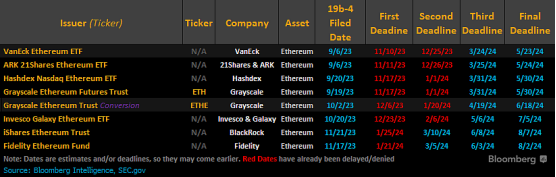
正因为比特币ETF的成功经验,以太坊ETF的叙事也广受关注。截至目前,除了灰度在原有信托中申请了可转换现货ETF,其他包括贝莱德、富达、景顺、Hashdex、21shares、VanEck等6家机构均已提交了以太坊现货ETF的申请。在此前,SEC推迟了所有申请者的第一轮与第二轮申请,目前临近的审批日期是3月5日,最晚审批日期为7月,其中3、5月为密集审批期。
比特币


以太坊现货ETF申请一览,来源:彭博社
纵观比特币的申请历程,临近审批日反而是价格最易拉升与堆积的时期,本次以太坊的短期拉升也有此原因助力。仅从外部环境来看,以太坊与此前的比特币有着极为类似的情况,一是期货ETF已然被批,并在芝加哥商业交易所作为受监管的期货合约上市;二是申请机构颇为一致,均有大型金融巨头的进驻。
但从审批结果预测来看,行业内的预测口径仍存在差异。立足于可通过的机构普遍秉持期货已通过则难以拒绝现货的论点,毕竟在比特币的申请中,正是该点成功推动了比特币现货ETF的通过。彭博社分析师 Eric Balchunas就表示以太坊 ETF 获得批准的可能性为 70%,原因是SEC无法在期货ETF通过的基础上拒绝现货ETF,否则会引来诉讼。经纪公司Bernstein表示,以太坊现货ETF在5月份获得批准的可能性约为50%,几乎肯定会在未来12个月内获得批准。而渣打银行更是直接认为5月23日SEC将批准以太坊现货ETF。
而从拒绝口径来看,当前以太坊面临的情况与比特币略有不同,核心就是以太坊的属性认定问题。
在加密界,商品论与证券论的争议已旷日持久,证券论通常意味着要遵守更为严格的监管,而以太坊作为主流币的典型之一,其定性的代表意义重大。在公开场合,SEC明确表示过比特币是一种商品,但以太坊由于存在质押生息等特性,因而去年3月SEC主席Gary Gensler曾表示根据美国法律,使用质押协议的代币应被视为证券。
但值得注意的是,在去年币安的诉讼中,SEC曾明确将十余种代币列为证券,包括但不限于 Solana (SOL)、Cardano (ADA)、Polygon (MATIC)、Coti (COTI)、Algorand (ALGO)、Filecoin (FIL)、Cosmos (ATOM)、Sandbox (SAND)、Axie Infinity (AXS)、Decentraland (MANA)。然而,在整个诉讼中,SEC并未提及以太坊,而在被追问属性时,SEC主席也避而不谈,这让以太坊的监管属性愈发扑朔迷离。
在此背景下,也有众多机构认为以太坊现货ETF的审批难言顺利。摩根大通的一份报告表示未来3个月以太坊现货ETF不太可能获得批准,其支持将以太币归类为商品的观点,但认为美SEC不太可能会在5月前做出通过决定。而针对以太坊现货ETF将于2024年3月底获得批准这一论调,彭博分析师James Seyffart在X平台直言,”我用4枚ETH打赌这不会发生“。
争论一直延续至今。就在近日,美SEC就灰度以太坊信托(ETHE)转换为现货 ETF 的申请征求意见。Coinbase 从法律、技术和经济层面,在长达 27 页的评论信中讲述了SEC 应该批准该申请的理由,其认为当前市场共识已明确ETH是一种商品而非证券,同时强调ETH的权益证明(PoS)具有显著的治理能力,在所有权集中度、共识、流动性和治理方面表现出强大的特征,从而降低了欺诈和操纵的风险。而经济理论也表明,在满足 SEC ETP 批准标准方面,ETH与BTC均具有弹性,可应对系统以及市场性风险。
当然,对此,SEC尚未回应。
02
坎昆升级,以太坊的确定性叙事
相比尚在博弈中的现货ETF,以太坊第二大叙事则相当明确——坎昆升级(Dencun)。
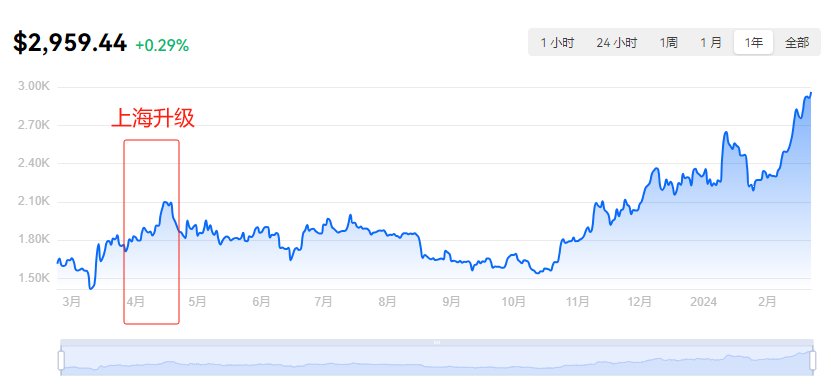
升级是以太坊历年来的重要驱动之一,尤其是在转POS后,升级后通常会利好众多可扩展性板块。纵观每次升级提案的价格表现,德州大学斯汀分校的 Cesare Fracassi 和 Moazzam Khoja研究认为,在主要提案前的最后一次以太坊电话会议前的几周内,以太坊价格会上涨18%。而事实也基本一致,在去年上海升级时,尽管面临质押解锁抛压,以太坊价格不降反涨至2100美元。
比特币


以太坊近一年价格走势,来源:OKX
具体来看,本次坎昆升级原定于2023年10月,后由于各种原因持续推迟,根据最新消息,坎昆升级计划于2024年3月13日进行,为此以太坊客户端Geth已于2月9日发布 v1.13.12 版本,为以太坊主网坎昆硬分叉奠定基础。此次升级是以太坊实现进一步扩容的关键,能够增加以太坊网络每秒能够响应的交易量,也将开启以太坊数据存储和检索能力的发展新阶段。完成升级后,以太坊 Layer2 网络上的数字资产交易所需的Gas费用将显著降低,降幅或将达到14倍。可以看出,升级所带来的性能提升将极大利好以太坊的长期发展。
而在升级之外,近月来再质押协议的火热也推动了市场对于以太坊的关注。根据DefiLlama的数据,在暂时取消质押上限后,再质押协议迅速增长,目前在众多协议中排名第六,总TVL超69.9 亿美元。以典型项目EigenLayer为例,EigenLayer 的TVL从2月5日的21.5亿美元增长到2月10日的60.5亿美元。
03
以太坊的炒作,已然开始
在上述种种预期叠加下,以太坊也不负众望,再度突破3000美元。而从市场来看,大型机构也已用行动表现了对以太坊的看涨趋势,根据链上追踪器 Spotonchain,已有大量鲸鱼开始囤积以太坊,数据显示过去三天由未知钱包地址购买了大约65,000个ETH。稳定币供应量也体现出类似趋势,DefiLlama 数据显示,自1月1日以来,以太坊稳定币供应量增长了4.4%,从680亿美元增至710亿美元。
看似一切向好,但也有不少行业人士表达出其他的担忧。在比特币ETF通过后,比特币反而迅速跌落15%,直至一个月后才重返高地,该种情况也让众多人士认为以太坊ETF通过后也会面临巨大抛售。此外,考虑到质押机制的存在,评级机构标准普尔全球的分析师表示,以太坊 ETF 可能会“给区块链网络带来新的中心化风险”,原因是机构托管会让ETH的控制更为集中,尽管目前去中心化协议Lido已占据以太坊份额的31%。
但无论如何,围绕以太坊的炒作已然开始。一个典型的数据是,自2023年11月9日贝莱德首次提交以太坊现货ETF申请以来,以太坊价格上涨了27.9%。而此前,贝莱德首次提交比特币现货ETF申请后,比特币暴涨了55%。
以此来看,在ETF申请尚未尘埃落地前,机会与风险并存,其中的参与者们,也仅能保持警惕,管理头寸,毕竟无论外界如何FOMO,盈亏最终的落点,仍是由自身承受。


Trending Cryptos

Related Reads

TechFlow Intelligence Bureau: Anthropic IPO Odds Exceed 80%, Iran Closes Strait of Hormuz Again, Triggering Oil Price Volatility

**Market Digest** **AI & Tech:** Anthropic is widely expected to announce an IPO before November 2026, raising questions about balancing its trillion-dollar valuation ambitions with its core "AI safety" mission. Brands are increasingly adopting AI-generated virtual influencers for marketing. Cloudflare introduced temporary accounts for AI agents to ease automation workflows. **Infrastructure & Hardware:** Google's IPv6 traffic surpassed 50%, marking a major internet milestone. Goldman Sachs warned that massive projected AI capital expenditure ($5.3T) is approaching credit saturation limits, potentially curbing the "AI arms race." **Space & Robotics:** SpaceX's IPO saw a historic $370M retail buying frenzy in three days. Hyundai Motor Group plans to acquire full ownership of Boston Dynamics. Elon Musk speculated about future "septillion-dollar" investments in antimatter for interstellar travel. **Energy & Geopolitics:** Iran's military announced another closure of the strategic Strait of Hormuz, accusing Israel of violating a ceasefire, causing oil market volatility. However, ship-tracking data indicated some traffic continued. Concurrently, Iran resumed crude loadings at Kharg Island, potentially releasing up to 20 million barrels to the market. **Finance & Macro:** A European CLO (collateralized loan obligation) experienced its first post-2008-crisis-era equity tranche default, raising alarms in credit markets. Nomura warned that new Federal Reserve Chair Wash's perceived hawkish debut speech could signal a significant policy shift. **The Undercurrent:** Seemingly disparate events—the Strait of Hormuz tension, the European CLO default, and warnings on AI spending—point to a tightening of global liquidity and rising marginal costs across energy, credit, and tech investment. Meanwhile, capital continues chasing grand narratives like space exploration and advanced AI, highlighting a divergence where old-world leverage frays as new-world stories grow more ambitious.

marsbit12h ago

TechFlow Intelligence Bureau: Anthropic IPO Odds Exceed 80%, Iran Closes Strait of Hormuz Again, Triggering Oil Price Volatility

marsbit12h ago

Trading

Spot
Futures

Hot Articles

What is $BITCOIN

DIGITAL GOLD ($BITCOIN): A Comprehensive Analysis Introduction to DIGITAL GOLD ($BITCOIN) DIGITAL GOLD ($BITCOIN) is a blockchain-based project operating on the Solana network, which aims to combine the characteristics of traditional precious metals with the innovation of decentralized technologies. While it shares a name with Bitcoin, often referred to as “digital gold” due to its perception as a store of value, DIGITAL GOLD is a separate token designed to create a unique ecosystem within the Web3 landscape. Its goal is to position itself as a viable alternative digital asset, although specifics regarding its applications and functionalities are still developing. What is DIGITAL GOLD ($BITCOIN)? DIGITAL GOLD ($BITCOIN) is a cryptocurrency token explicitly designed for use on the Solana blockchain. In contrast to Bitcoin, which provides a widely recognized value storage role, this token appears to focus on broader applications and characteristics. Notable aspects include: Blockchain Infrastructure: The token is built on the Solana blockchain, known for its capacity to handle high-speed and low-cost transactions. Supply Dynamics: DIGITAL GOLD has a maximum supply capped at 100 quadrillion tokens (100P $BITCOIN), although details regarding its circulating supply are currently undisclosed. Utility: While precise functionalities are not explicitly outlined, there are indications that the token could be utilized for various applications, potentially involving decentralized applications (dApps) or asset tokenization strategies. Who is the Creator of DIGITAL GOLD ($BITCOIN)? At present, the identity of the creators and development team behind DIGITAL GOLD ($BITCOIN) remains unknown. This situation is typical among many innovative projects within the blockchain space, particularly those aligning with decentralized finance and meme coin phenomena. While such anonymity may foster a community-driven culture, it intensifies concerns about governance and accountability. Who are the Investors of DIGITAL GOLD ($BITCOIN)? The available information indicates that DIGITAL GOLD ($BITCOIN) does not have any known institutional backers or prominent venture capital investments. The project seems to operate on a peer-to-peer model focused on community support and adoption rather than traditional funding routes. Its activity and liquidity are primarily situated on decentralized exchanges (DEXs), such as PumpSwap, rather than established centralized trading platforms, further highlighting its grassroots approach. How DIGITAL GOLD ($BITCOIN) Works The operational mechanics of DIGITAL GOLD ($BITCOIN) can be elaborated on based on its blockchain design and network attributes: Consensus Mechanism: By leveraging Solana’s unique proof-of-history (PoH) combined with a proof-of-stake (PoS) model, the project ensures efficient transaction validation contributing to the network's high performance. Tokenomics: While specific deflationary mechanisms have not been extensively detailed, the vast maximum token supply implies that it may cater to microtransactions or niche use cases that are still to be defined. Interoperability: There exists the potential for integration with Solana’s broader ecosystem, including various decentralized finance (DeFi) platforms. However, the details regarding specific integrations remain unspecified. Timeline of Key Events Here is a timeline that highlights significant milestones concerning DIGITAL GOLD ($BITCOIN): 2023: The initial deployment of the token occurs on the Solana blockchain, marked by its contract address. 2024: DIGITAL GOLD gains visibility as it becomes available for trading on decentralized exchanges like PumpSwap, allowing users to trade it against SOL. 2025: The project witnesses sporadic trading activity and potential interest in community-led engagements, although no noteworthy partnerships or technical advancements have been documented as of yet. Critical Analysis Strengths Scalability: The underlying Solana infrastructure supports high transaction volumes, which could enhance the utility of $BITCOIN in various transaction scenarios. Accessibility: The potential low trading price per token could attract retail investors, facilitating wider participation due to fractional ownership opportunities. Risks Lack of Transparency: The absence of publicly known backers, developers, or an audit process may yield skepticism regarding the project's sustainability and trustworthiness. Market Volatility: The trading activity is heavily reliant on speculative behavior, which can result in significant price volatility and uncertainty for investors. Conclusion DIGITAL GOLD ($BITCOIN) emerges as an intriguing yet ambiguous project within the rapidly evolving Solana ecosystem. While it attempts to leverage the “digital gold” narrative, its departure from Bitcoin's established role as a store of value underscores the need for a clearer differentiation of its intended utility and governance structure. Future acceptance and adoption will likely depend on addressing the current opacity and defining its operational and economic strategies more explicitly. Note: This report encompasses synthesised information available as of October 2023, and developments may have transpired beyond the research period.

414 Total ViewsPublished 2025.05.13Updated 2025.05.13

What is $BITCOIN

Discussions

Welcome to the HTX Community. Here, you can stay informed about the latest platform developments and gain access to professional market insights. Users' opinions on the price of BTC (BTC) are presented below.

活动图片