时隔一年 Solana 再宕机:回顾 Solana 历史宕机记录

吴说Published on 2024-02-08Last updated on 2024-02-08

Abstract

2 月 6 日, Solana 网络再次发生“久违”的宕机,上次宕机时间约为 2023 年 2 月 25 日。据 VanEck 数字资产研究负责人 matthew sigel 表示,本次Solana 宕机是由于 BPF(Berkley Packet Filter)加载器发生故障,这是在 Solana 上部署、升级和执行程序的机制。这可能与之前的一项 SMID 提案有关,该提案增加了一个阻止在 BPF 中使用元数据的拦截器,因为这些元数据已经不再需要了。这来自 0093 升级,但里面出现了某种错误,该错误在测试网上被发现并且创建了修复方案,但尚未实施。猜测有人手动触发了该错误,导致 Solana 宕机。

2 月 6 日, Solana 网络再次发生“久违”的宕机,上次宕机时间约为 2023 年 2 月 25 日。据 VanEck 数字资产研究负责人 matthew sigel 表示,本次Solana 宕机是由于 BPF(Berkley Packet Filter)加载器发生故障,这是在 Solana 上部署、升级和执行程序的机制。这可能与之前的一项 SMID 提案有关,该提案增加了一个阻止在 BPF 中使用元数据的拦截器,因为这些元数据已经不再需要了。这来自 0093 升级,但里面出现了某种错误,该错误在测试网上被发现并且创建了修复方案,但尚未实施。猜测有人手动触发了该错误,导致 Solana 宕机。

Solana 的“宕机”问题此前常遭社区诟病,虽然过去一年网络基本稳定运行,但过去 Solana 已经经历了数次宕机或者网络卡死的情况,吴说整理如下:

1. 2024 年 2 月 6 日,BPF(Berkley Packet Filter)加载器发生故障,宕机的时间为 4 小时 46 分钟。

2. 2023 年 2 月 25 日,Solana 主网性能出现问题,无法处理用户交易。后 Solana 发布改进网络升级计划,包括改进 Solana 升级过程、组建对抗团队、改进重启过程等措施。

3. 2022 年 10 月 1 日附近,由于节点配置错误导致网络宕机。

4. 2022 年 8 月 3 日附近,Solana 钱包出现大规模盗币,最终发现是由于中心化 Sentry 服务器引发的漏洞。

5. 2022 年 6 月 1 日附近,由于交易中的 durable nonce 功能漏洞,导致网络重启,中断时间约 4.5 小时。

6. 2022 年 5 月 1 日附近,由于一个 NFT 新项目铸造,大量机器人交易涌现导致主网节点失去共识,之后暂停出块长达 7 小时。

7. 2022 年 1 月 21 日附近,由于市场波动较大,网络充斥着大量套利机器人提交的交易,导致网络引发严重负载,中断时间长达30小时。不过当时官方仅是将其定性为性能下降(Degraded Performance),Solana 社区随后将主网更新至 1.8.14 版本,尝试改善网络状态。

8. 2021年9月14日附近,由于去中心化社交网络协议Grape Protocol 在 Raydium 平台上的 IDO 活动火热,许多用户通过编写的机器脚本发送大量交易,这些交易造成「内存溢出」,导致验证节点崩溃,最终整个网络无法出块,中断时间长达 17 小时。

9. 2021 年 9 月 3 日附近,网络不稳定,性能下降,持续时间约为 1 小时。

10. 2021 年 5 月 4 日附近,网络性能下降,导致大量交易无法成交。

回顾历史网络事件,我们会发现大量交易的涌现是造成历史网络中断的主要原因,这可能跟 Solana 的机制相关,据边界智能研究院院长胡智威表示,由于 Solana 将共识消息也作为一种特殊的事务消息在验证节点间传递,大量的消息堵塞导致了共识消息无法正常传递,而使得共识无法正常进行。同时 Solana 的一些特性被针对性的利用导致了网络宕机。例如为了并发处理事务的写入锁定(write-lock)在很多重要地址上被锁定,使得事务变成顺序执行而非并发,极大的影响了对消息的处理能力;节点为处理分叉,不断保留了可能的分叉信息,导致内存溢出等。

面对常见的垃圾交易涌现导致网络性能下降甚至宕机,Solana 联合创始人 Anatoly Yakovenko 此前也承认了该问题,并表示引入「实际的流量控制(actual flow control)来解决该问题。至于像交易 nonce、节点配置错误等起因导致的网络宕机,Solana 官方事后也迅速发布修复版以供节点升级。

这时隔一年的再度宕机,可能既是好消息也是坏消息,但更多地是一种警惕,特别是在当前 Solana 生态热度逐渐升温的背景下,网络稳定性依旧是需要重力投入的环节。

Trending Cryptos

Related Reads

Latin America's Payments Landscape Is Not What You Think It Is

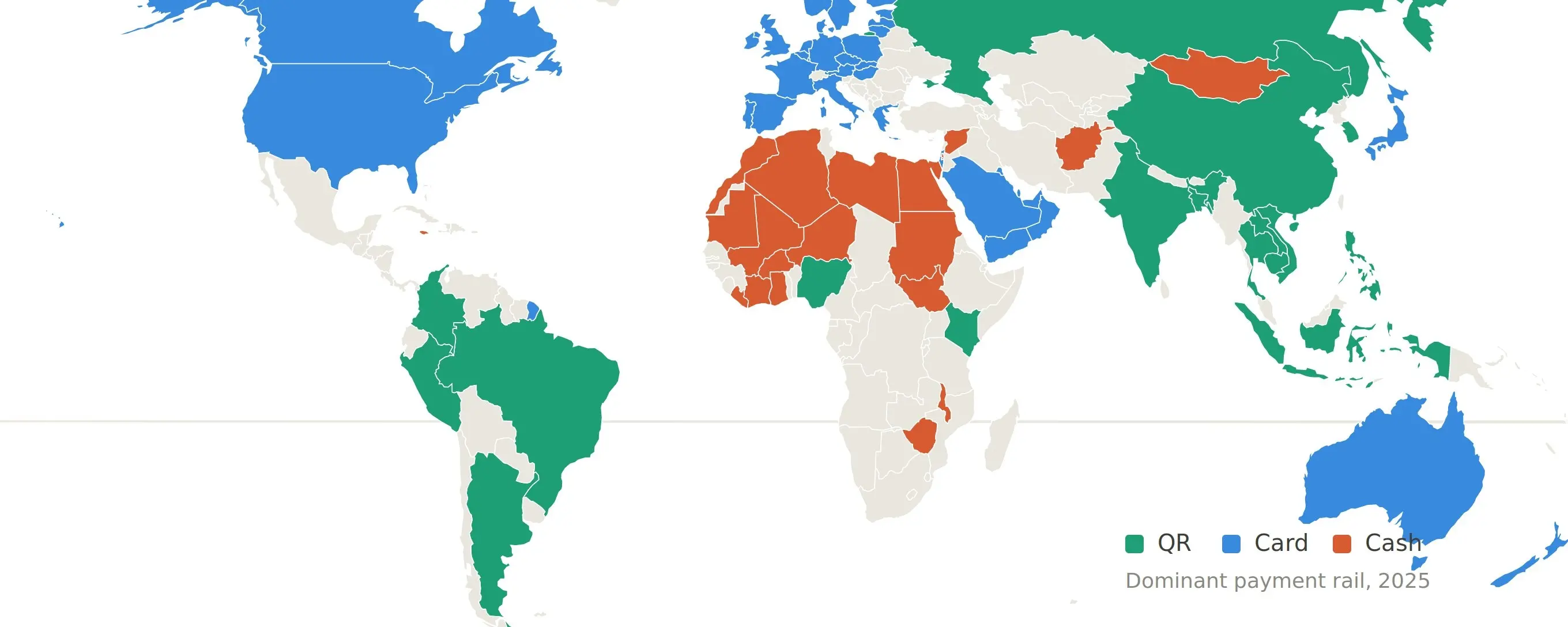
This report challenges common misconceptions about Latin America's payment landscape, based on over 500 hours of firsthand research. Key findings include: 1) Crypto card transaction volume primarily comes from high-net-worth individuals receiving USDT salaries, not retail spending. 2) QR code payments (e.g., Brazil's Pix, Argentina's Mercado Pago) are the dominant payment method across most emerging markets, not cards. 3) A major untapped opportunity lies in enabling cross-border interoperability between domestic instant payment systems. 4) Payment competition is shifting from customer acquisition to owning the settlement layer (e.g., acquiring banks). 5) Latin America is not a single market; Brazil, Mexico, Argentina, and smaller "forgotten five" countries (e.g., Guatemala, Honduras) have vastly different dynamics. 6) Stablecoin-to-fiat conversion margins are collapsing toward zero, pushing companies to build value-added services on top. 7) Future payment winners will be multi-country brands, not single-corridor specialists. 8) Marketing must target specific user segments (e.g., digital nomads, unbanked immigrants) with tailored messaging, not a generic "Brazilian" audience. 9) Contrary to perception, Latin American regulators are often ahead of the US in creating frameworks for digital assets and instant payments, with clear licensing deadlines. The core takeaway is that the region's payment rules are being rewritten, moving beyond cards and stablecoin arbitrage towards integrated, cross-border QR-based solutions.

链捕手2m ago

Latin America's Payments Landscape Is Not What You Think It Is

链捕手2m ago

Vitalik's Algorithmic Stablecoin Vision: Interpreting the Mechanism and Challenges from an Options Perspective

Vitalik Buterin's recent algorithmic stablecoin proposal envisions using an option-like mechanism to create a stablecoin without the liquidation risks inherent in traditional collateralized debt position (CDP) models. The design splits one unit of ETH into two components: a 'stable' leg (P) that maintains value up to a certain strike price, and an 'upside' leg (N) that captures any appreciation above that price. Together, they always sum to one ETH, eliminating the need for debt or liquidation mechanisms. From an options perspective, the stable leg essentially functions as a synthetic, covered call position. However, significant challenges exist. For the stable asset to maintain its peg, it must continuously roll deep in-the-money call options, leading to potential rollover slippage, predictable trading paths vulnerable to front-running, and liquidity issues. Crucially, the system's scalability depends on a constant demand for the upside leg—a form of leveraged ETH long position without funding rates or liquidation risk. It's unclear if such persistent, specific demand will materialize from speculators or market makers who have simpler alternatives like perpetual swaps. The author, drawing from experience with Rysk, argues that DeFi options have struggled as standalone trading products due to complexity and fragmented liquidity. Their potential lies instead as foundational infrastructure underpinning more complex financial primitives like stablecoins, structured yields, or index products—transforming from a direct product into a core pricing and risk distribution engine for the next generation of on-chain finance.

marsbit1h ago

Vitalik's Algorithmic Stablecoin Vision: Interpreting the Mechanism and Challenges from an Options Perspective

marsbit1h ago

GPT-5.6 Countdown: Abandon the Illusion of a Single API, Computational Iteration Can't Outpace a Single Page of Compliance

In mid-June, three seemingly independent industry events—the compliance-driven throttling of Fable 5, the open-sourcing of GLM-5.2, and the leaked release timeline for GPT-5.6—are pushing the global AI industry toward a watershed moment. These shifts signal a fundamental restructuring of the industry's underlying logic. First, **"usability" has substantially overtaken "advanced capabilities"** as the primary weight, pushing the global large language model (LLM) supply chain into a "dual-track" phase of controlled closed-source and local open-source coexistence. Second, **the competitive moats of closed-source giants are shifting**. Their technical focus is moving from "language intelligence" toward "spatial intelligence (world models)"—a domain heavily reliant on computing power. Third, faced with常态化 transnational compliance risks, **a "model-agnostic" decoupled design has become a survival necessity for application-layer developers to maintain business continuity.** The article details how Anthropic's Fable 5, despite its advanced engineering feats, was restricted for non-U.S. citizens within 72 hours of launch, highlighting how geopolitical compliance can instantly limit even the most advanced models. In response, the open-source camp, exemplified by Zhipu AI's MIT-licensed GLM-5.2, is gaining market share by offering stable performance improvements and significant cost advantages (up to 70% savings for enterprises), while achieving full adaptation with domestic semiconductor platforms. Meanwhile, closed-source leaders like OpenAI are pivoting. The anticipated GPT-5.6 reportedly shifts focus from language to spatial intelligence and world models, aiming to rebuild a generational gap in areas like 3D understanding, simulation, and industrial design that demand immense compute. The core conclusion is that the LLM supply chain's logic has changed. Enterprises must now evaluate infrastructure based on a composite of technical performance and policy compliance. For developers, complete reliance on a single closed-source API poses unacceptable risk. Implementing a truly model-agnostic architecture—enabling swift switches to compliant, locally deployable open-source alternatives—is no longer just good practice but a fundamental baseline for business continuity.

marsbit4h ago

GPT-5.6 Countdown: Abandon the Illusion of a Single API, Computational Iteration Can't Outpace a Single Page of Compliance

marsbit4h ago

Trading

Spot
Futures

Hot Articles

How to Buy NFT

Welcome to HTX.com! We've made purchasing AINFT (NFT) simple and convenient. Follow our step-by-step guide to embark on your crypto journey.Step 1: Create Your HTX AccountUse your email or phone number to sign up for a free account on HTX. Experience a hassle-free registration journey and unlock all features.Get My AccountStep 2: Go to Buy Crypto and Choose Your Payment MethodCredit/Debit Card: Use your Visa or Mastercard to buy AINFT (NFT) instantly.Balance: Use funds from your HTX account balance to trade seamlessly.Third Parties: We've added popular payment methods such as Google Pay and Apple Pay to enhance convenience.P2P: Trade directly with other users on HTX.Over-the-Counter (OTC): We offer tailor-made services and competitive exchange rates for traders.Step 3: Store Your AINFT (NFT)After purchasing your AINFT (NFT), store it in your HTX account. Alternatively, you can send it elsewhere via blockchain transfer or use it to trade other cryptocurrencies.Step 4: Trade AINFT (NFT)Easily trade AINFT (NFT) on HTX's spot market. Simply access your account, select your trading pair, execute your trades, and monitor in real-time. We offer a user-friendly experience for both beginners and seasoned traders.

7.1k Total ViewsPublished 2024.03.29Updated 2026.06.02

How to Buy NFT

What is Altura NFT?

Altura: Providing One-Stop NFT Solutions for Game Developers

56.0k Total ViewsPublished 2024.06.12Updated 2024.06.12

What is Altura NFT?

What is AINFT

EternaFi Agents and $AINFT: A Comprehensive Analysis of AI-Powered NFT Infrastructure in the Web3 Ecosystem The intersection of artificial intelligence (AI) and blockchain technology is rapidly evolving, establishing innovative platforms that redefine ownership models and economic participation. EternaFi Agents, along with its native token $AINFT, exemplifies a groundbreaking approach to the tokenization of AI infrastructures through the means of non-fungible tokens (NFTs). Launched in July 2025 by the development team at Nova Club, EternaFi merges the advancements of AI with the decentralized financial mechanisms of blockchain, presenting a unique investment opportunity for participants within the web3 ecosystem. This article aims to provide an in-depth assessment of EternaFi Agents, covering its core components, functionality, and significance within the crypto landscape. Introduction and Project Overview EternaFi Agents stands as a salient example of how blockchain technology can democratize access to advanced AI capabilities. The project endeavors to reshape the paradigm of AI ownership by diversifying economic participation, making sophisticated AI systems accessible to a larger pool of stakeholders. At its core, the project tokenizes a proprietary large language model (LLM) developed by Nova Club, allowing NFT holders to gain fractional exposure to the model's economic performance. By utilizing NFTs representing stakes in the LLM, EternaFi Agents fosters a model wherein stakeholders not only participate in AI service consumption but also enjoy sharing in the economic rewards generated by the platform. This transformative approach enables the development of sustainable revenue models for AI services, all the while promoting broad community engagement and facilitating transparent governance. What is EternaFi Agents? EternaFi Agents represents an AI-NFT infrastructure project that aims to blend the capabilities of AI with blockchain technology in a coherent ecosystem. The essential feature of this project is the creation of NFTs that serve as financial instruments, representing fractions of ownership in Nova Club's proprietary AI infrastructure. Each NFT symbolizes direct exposure to the economic performance of the underlying AI system, providing a lucrative opportunity for investors. The project operates on the Base blockchain, known for its scalability and efficiency, thus ensuring manageable transaction costs while facilitating a seamless operational experience. One of the notable features includes a revenue-sharing mechanism, wherein NFT holders can receive portions of subscription income generated by the AI services provided on the platform. This innovative approach establishes a connection between the success of the AI services and the economic dividends distributed among the holders, thus ensuring an alignment of interests across the community. Who is the Creator of EternaFi Agents? The creative force behind EternaFi Agents is Nova Club, a development team based in Singapore proficient in the amalgamation of AI and blockchain technology. Their prior experience in AI development and cryptocurrency analysis gives credence to the project, contributing a breadth of expertise to the creation of EternaFi Agents. Nova Club’s mission centers on democratizing access to cutting-edge AI technologies while building sustainable economic models that benefit users alongside developers. Their commitment to transparency, community governance, and innovation is reflected in the design and implementation of the EternaFi platform, aiming to establish a unique ecosystem that fosters positive engagement and long-term value creation. Who are the Investors of EternaFi Agents? The specific details concerning investors or investment organizations backing EternaFi Agents are not publicly available. However, EternaFi has adopted an inclusive approach to funding its development through the sale of NFTs to the public, allowing a wide array of participants to invest in the ecosystem. The project’s architecture ensures that core infrastructure is funded responsibly while allowing community members to partake in the ownership and economic returns generated from the AI services. This model emphasizes community engagement by aligning the interests of investors and project developers, creating a collaborative environment where long-term participation is incentivized. How Does EternaFi Agents Work? EternaFi Agents operates through a multifaceted ecosystem where NFTs serve as a primary means of ownership representation within the project. Each NFT holder is entitled to a share of the monthly subscription income produced by the underlying AI-powered platform, thereby positioning NFT ownership as a lucrative investment vehicle. Revenue Generation Mechanism The primary source of revenue generation for the EternaFi platform stems from subscription fees related to the AI services provided. Users can access various tiered services, ranging from basic market analysis tools to comprehensive AI-assisted trading solutions. These services are monetized and form the basis for the revenue-sharing framework, which distributes profits to NFT holders through automated smart contracts. An innovative feature of the EternaFi ecosystem is the revenue-sharing mechanism that operates transparently, ensuring that rewards are allocated based on verifiable metrics from the AI platform's operations. This creates a direct link between the performance of AI services and the returns available to community investors, establishing a sustainable economic model. Staking and Vesting Mechanisms Participants within EternaFi can engage in staking their NFTs to unlock additional economic benefits. The vesting schedule is designed to promote long-term commitment among participants, rewarding those who exhibit ongoing support for the project. This ensures a robust alignment of interests and fosters a sense of community engagement essential for achieving the project's long-term goals. Transparent Governance EternaFi Agents embraces decentralized governance, allowing NFT holders to play an active role in decision-making regarding the platform's development and future directions. The governing structure includes community voting mechanisms, providing NFT holders with the opportunity to influence significant decisions and contributing to a collaborative approach to project growth. Timeline of EternaFi Agents The development trajectory of EternaFi Agents showcases a systematic approach toward building a sustainable AI infrastructure while meeting the needs of community participants. Below is a timeline of important milestones in the project’s history: July 2025: Launch of EternaFi Agents, including the public sale of NFTs and deployment of the $AINFT token on the Base blockchain. Q4 2025: Establishment of market infrastructure including liquidity pools and launch of staking dashboards for NFT holders. 2026: Initiation of community engagement programs, expanding AI capabilities, and integration with cross-chain technologies. Q4 2026: Implementation of the dividend distribution system, allowing NFT holders to reap economic benefits from their investments. These milestones signify the focus on establishing a functional and participative ecosystem while ensuring continuous evolution to meet market demands. Technological Infrastructure and Blockchain Integration EternaFi Agents is anchored in an advanced technological framework combining AI systems with blockchain capabilities. Operating on the Base blockchain, the project leverages the advantages of scalability and low transaction costs. The underlying smart contract architecture governs the NFT ownership, revenue sharing, and community management features, ensuring efficiency and transparency. AI System Development The proprietary large language model underpinning EternaFi Agents has been independently developed and designed to cater to revenue-generating applications without reliance on proprietary external frameworks. This endeavor reflects a commitment to creating a versatile and adaptable AI infrastructure capable of delivering meaningful services to users, thus generating economic value for investors. Security Measures The robustness of EternaFi’s security infrastructure is paramount. Regular audits and stringent security measures ensure the integrity of the AI systems and blockchain mechanisms, safeguarding against potential vulnerabilities while fostering confidence among participants. Conclusion EternaFi Agents signifies a landmark innovation within the realm of artificial intelligence and blockchain technology, opening avenues for community ownership and economic participation in advanced AI capabilities. The project’s comprehensive strategy to tokenize AI infrastructure via NFTs establishes a precedent for future decentralized ecosystems. By harmonizing technical sophistication with user-centric economic models, EternaFi not only fosters engagement but also generates a sustainable revenue-sharing framework for community participants. The significance of EternaFi extends well beyond its operational success as it exemplifies how blockchain can democratize cutting-edge AI technologies, paving the way for future ventures in this intersectional space. The evolution of EternaFi Agents may herald a new era of AI development characterized by participant-driven governance, sustainable economic models, and transparent verification, ultimately contributing to the broader democratization of AI and technology accessibility across industries.

4.0k Total ViewsPublished 2025.08.14Updated 2025.08.14

What is AINFT

Discussions

Welcome to the HTX Community. Here, you can stay informed about the latest platform developments and gain access to professional market insights. Users' opinions on the price of NFT (NFT) are presented below.

活动图片