The dollar started the week on a shaky footing on Monday as markets took stock of cautious remarks from Federal Reserve Chair Jerome Powell as they waited on a key employment report that could influence the outlook for U.S. interest rates.
Bitcoin grabbed the spotlight in the Asian morning, reaching the $40,000 level for the first time in over a year.
Powell said on Friday it was clear that U.S. monetary policy was slowing the economy as expected, with the benchmark overnight interest rate "well into restrictive territory."
While Powell reiterated that the Fed is prepared to tighten policy further if deemed appropriate, traders were convinced the rate-hike cycle was over.
Markets were pricing in a 60% chance of a rate cut by the March meeting compared with 21% just over a week ago, according to the CME's FedWatch tool.
The U.S. dollar index, which tracks the currency against six major counterparts, was last hovering around Friday's close at 103.28.
U.S. data remains the "primary driver" of the G10 currencies, making non-farm payrolls the "most important risk event" this week, said Kyle Rodda, senior financial market analyst at Capital.com. The closely-watched November jobs report will be released on Friday.
"What we are seeing is the pricing out of U.S. economic exceptionalism, compounded by an unwinding of stretched long positioning in the U.S. dollar."
That means dollar pairs could continue to get a boost depending on U.S. economic data, Rodda said.
Against the yen, the dollar was fetching $146.58 yen, after falling to 146.24 earlier in the session, its lowest since Sept. 11. The yen has recently pulled away from the near 33-year low of 151.92 per dollar touched in the middle of November.
The Australian dollar rose to a fresh four-month high against the greenback of $0.669, while the kiwi ticked up to as high as $0.6222, its strongest level since late July.
Sterling was last trading around $1.2682, easing off a three-month high against the greenback of $1.2733 hit last week.
Currency markets could also be swayed this week by speeches from several European Central Bank officials ahead of a slew of economic data from the region, including revised third quarter gross domestic product data for the euro bloc on Thursday.
Euro zone inflation fell to 2.4% in November, data showed last week, providing fresh fuel to bets that the ECB will cut interest rates quicker than the bank has been suggesting.
The euro was mostly flat on Monday at $1.0874 after ticking down to as low as $1.0829 in the wake of last week's inflation data.
President Christine Lagarde is slated to give a speech later on Monday.
"Lagarde will certainly welcome last week's Eurozone CPI report but I doubt she will entertain the idea of ECB rate cuts yet," said Carol Kong, a currency strategist at Commonwealth Bank of Australia, adding that the eurozone labor market is still tight.
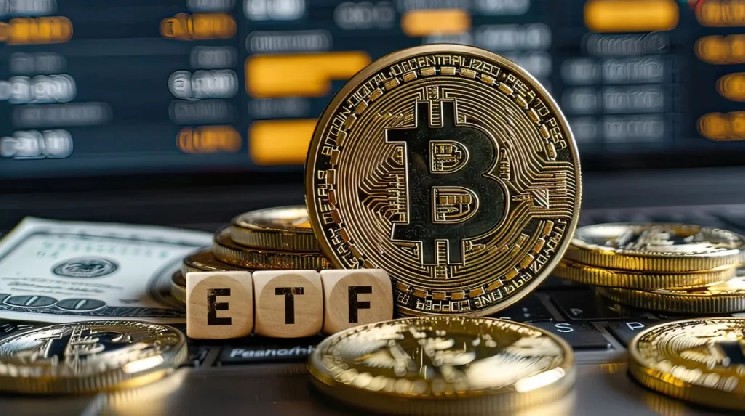
Elsewhere in cryptocurrencies, bitcoin touched the $40,000 level for the first time in almost a year and a half on bets that U.S. regulators will soon approve stock-market traded bitcoin funds.
Dollar on shaky ground as Fed rate cut bets strengthen
CNBCPublished on 2023-12-04Last updated on 2023-12-04
Abstract
The dollar started the week on a shaky footing on Monday as markets took stock of cautious remarks from Federal Reserve Chair Jerome Powell as they waited on a key employment report that could influence the outlook for U.S. interest rates.
Trending Cryptos













Related Reads



Trading
Hot Articles
What is $BITCOIN
DIGITAL GOLD ($BITCOIN): A Comprehensive Analysis Introduction to DIGITAL GOLD ($BITCOIN) DIGITAL GOLD ($BITCOIN) is a blockchain-based project operating on the Solana network, which aims to combine the characteristics of traditional precious metals with the innovation of decentralized technologies. While it shares a name with Bitcoin, often referred to as “digital gold” due to its perception as a store of value, DIGITAL GOLD is a separate token designed to create a unique ecosystem within the Web3 landscape. Its goal is to position itself as a viable alternative digital asset, although specifics regarding its applications and functionalities are still developing. What is DIGITAL GOLD ($BITCOIN)? DIGITAL GOLD ($BITCOIN) is a cryptocurrency token explicitly designed for use on the Solana blockchain. In contrast to Bitcoin, which provides a widely recognized value storage role, this token appears to focus on broader applications and characteristics. Notable aspects include: Blockchain Infrastructure: The token is built on the Solana blockchain, known for its capacity to handle high-speed and low-cost transactions. Supply Dynamics: DIGITAL GOLD has a maximum supply capped at 100 quadrillion tokens (100P $BITCOIN), although details regarding its circulating supply are currently undisclosed. Utility: While precise functionalities are not explicitly outlined, there are indications that the token could be utilized for various applications, potentially involving decentralized applications (dApps) or asset tokenization strategies. Who is the Creator of DIGITAL GOLD ($BITCOIN)? At present, the identity of the creators and development team behind DIGITAL GOLD ($BITCOIN) remains unknown. This situation is typical among many innovative projects within the blockchain space, particularly those aligning with decentralized finance and meme coin phenomena. While such anonymity may foster a community-driven culture, it intensifies concerns about governance and accountability. Who are the Investors of DIGITAL GOLD ($BITCOIN)? The available information indicates that DIGITAL GOLD ($BITCOIN) does not have any known institutional backers or prominent venture capital investments. The project seems to operate on a peer-to-peer model focused on community support and adoption rather than traditional funding routes. Its activity and liquidity are primarily situated on decentralized exchanges (DEXs), such as PumpSwap, rather than established centralized trading platforms, further highlighting its grassroots approach. How DIGITAL GOLD ($BITCOIN) Works The operational mechanics of DIGITAL GOLD ($BITCOIN) can be elaborated on based on its blockchain design and network attributes: Consensus Mechanism: By leveraging Solana’s unique proof-of-history (PoH) combined with a proof-of-stake (PoS) model, the project ensures efficient transaction validation contributing to the network's high performance. Tokenomics: While specific deflationary mechanisms have not been extensively detailed, the vast maximum token supply implies that it may cater to microtransactions or niche use cases that are still to be defined. Interoperability: There exists the potential for integration with Solana’s broader ecosystem, including various decentralized finance (DeFi) platforms. However, the details regarding specific integrations remain unspecified. Timeline of Key Events Here is a timeline that highlights significant milestones concerning DIGITAL GOLD ($BITCOIN): 2023: The initial deployment of the token occurs on the Solana blockchain, marked by its contract address. 2024: DIGITAL GOLD gains visibility as it becomes available for trading on decentralized exchanges like PumpSwap, allowing users to trade it against SOL. 2025: The project witnesses sporadic trading activity and potential interest in community-led engagements, although no noteworthy partnerships or technical advancements have been documented as of yet. Critical Analysis Strengths Scalability: The underlying Solana infrastructure supports high transaction volumes, which could enhance the utility of $BITCOIN in various transaction scenarios. Accessibility: The potential low trading price per token could attract retail investors, facilitating wider participation due to fractional ownership opportunities. Risks Lack of Transparency: The absence of publicly known backers, developers, or an audit process may yield skepticism regarding the project's sustainability and trustworthiness. Market Volatility: The trading activity is heavily reliant on speculative behavior, which can result in significant price volatility and uncertainty for investors. Conclusion DIGITAL GOLD ($BITCOIN) emerges as an intriguing yet ambiguous project within the rapidly evolving Solana ecosystem. While it attempts to leverage the “digital gold” narrative, its departure from Bitcoin's established role as a store of value underscores the need for a clearer differentiation of its intended utility and governance structure. Future acceptance and adoption will likely depend on addressing the current opacity and defining its operational and economic strategies more explicitly. Note: This report encompasses synthesised information available as of October 2023, and developments may have transpired beyond the research period.
2.3k Total ViewsPublished 2025.05.13Updated 2025.05.13

Meet ZetaChain: The Universal L1 for Apps That Work Everywhere — Even on Bitcoin
ZetaChain is the first ever Universal Blockchain to enable native connection across all blockchain ecosystems.
49.4k Total ViewsPublished 2025.06.16Updated 2025.06.16

Fractal Bitcoin: Scaling Bitcoin as a Recursive System
Fractal Bitcoin is a Layer-1 scalability solution built on the Bitcoin core code, enabling infinite scalability through a recursive approach.
49.0k Total ViewsPublished 2025.06.30Updated 2025.06.30

Discussions

Top Questions
- What are analysts predicting for Bitcoin’s next support level?01/16 19:13
- Is Ethereum’s on-chain surge challenging Bitcoin’s dominance?11/07 02:18
- How do traditional markets like stocks and gold influence Bitcoin trends?11/07 02:18
- What are Elon Musk’s predictions for the next Bitcoin all-time high?11/07 02:17
- What indicators should traders watch to predict Bitcoin’s next move?11/07 02:17